Jackery Solar Generator 300 Plus Kit Review: 40W Mini Panel vs. 100W Solar Economics
Evaluating the Jackery Solar Generator 300 Plus kit: why the 40W Mini panel takes 2+ days to refill 288Wh, NREL sun-hour recovery tables, and 100W upgrades.
Bundling the 288Wh LiFePO4 Explorer 300 Plus with Jackery's 2.6 lb SolarSaga 40W Mini creates an ultra-packable kit, yet real-world 58%–72% solar derating limits 40W harvest to ~23–29W—requiring ~11–14 effective sun-hours (7–10+ peak sun hours minimum, or 2–3 camp days) for a full 0%–100% refill. Swapping to a 100W panel hits the station's 100W USB-C DC cap (12–27V) and cuts solar recharge to ~3.5–4.5 peak sun hours.
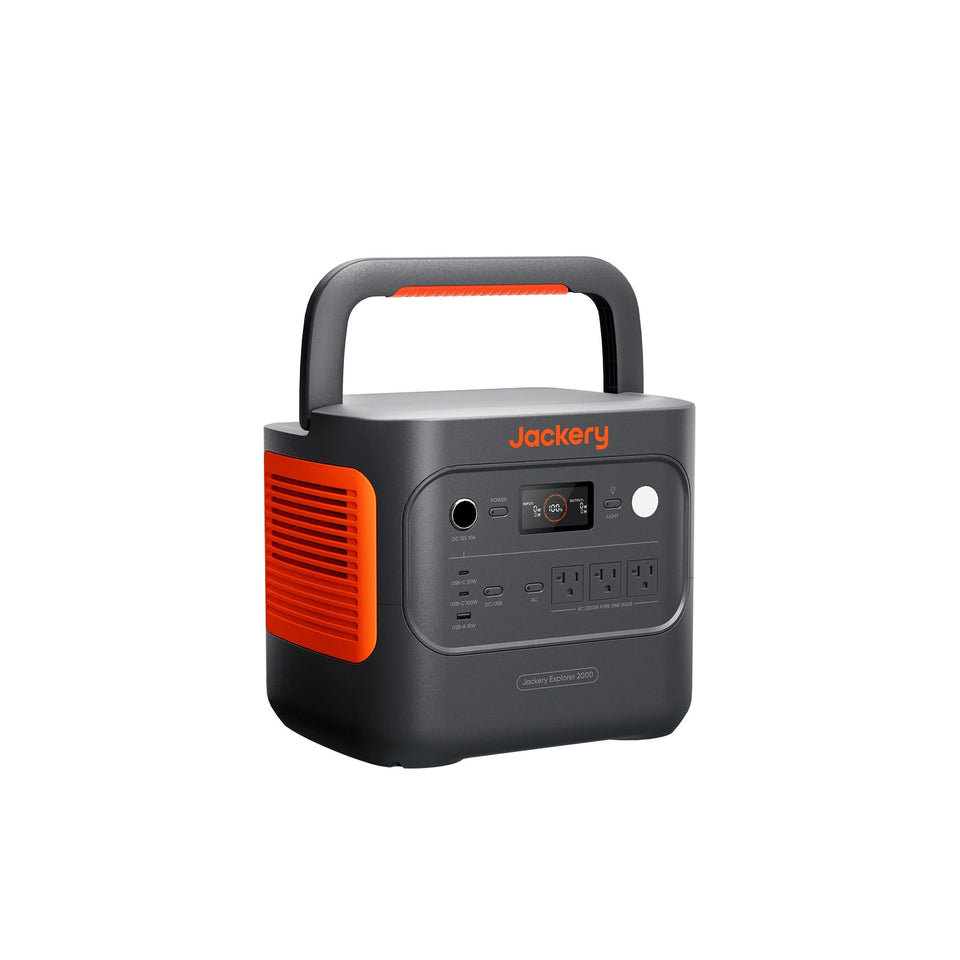
Buyers searching for the Jackery Solar Generator 300 Plus often assume a “solar generator” bundle automatically delivers same-day solar autonomy. Open the box, however, and you find an intriguing engineering mismatch: an 8.27 lb, 288Wh LiFePO4 power station capable of 100W solar input paired with Jackery’s 2.6 lb, book-sized SolarSaga 40W Mini panel.
Rather than repeating standalone hardware specs covered in our dedicated Explorer 300 Plus review, this breakdown evaluates the complete solar kit economics—comparing the bundled 40W Mini against a 100W panel across real NREL Peak Sun Hours, weather states, and alternative car or USB-C PD recharge paths.
What Comes in the Solar Generator 300 Plus Bundle
When Jackery sells the Solar Generator 300 Plus kit (typically $379–$449 MSRP, frequently promoted near $319 during US sales), it combines two purpose-built pieces:
- Jackery Explorer 300 Plus (
288Wh/300WAC): LiFePO4 pack rated for3,000cycles to80%+, single120VAC outlet (600Wsurge),100Wbidirectional USB-C PD +15WUSB-C +15WUSB-A,12V/10Acar socket,~20 msEPS switchover, and a12V–27V/5A(100Wmax) solar/DC input routed through USB-C. - Jackery SolarSaga 40W Mini (
~2.6 lbs): Four-fold monocrystalline panel (~22.8%–23.3%rated cell conversion) measuring 9.9 × 11.8 × 1.2 inches folded (roughly a thick 13-inch laptop) and40.1 × 11.8 × 0.7 inchesunfolded. Unlike the power station itself, the 40W panel carries IP68 dustproof/waterproof sealing, skips rigid kickstands in favor of corner attachment loops, and includes direct USB-C / USB-A ports on its junction box.
That design choice tells you immediately who Jackery built this bundle for: space-constrained travelers, hikers, and emergency go-bags where fitting a folding panel inside a backpack sleeve matters more than fast full-pack solar recovery.
The Solar Math: Why 40W Takes 2+ Days While 100W Finishes in One Afternoon
Marketing copy occasionally advertises “9.5 hours solar recharge” for a 40W panel on a 288Wh battery. That number assumes unrealistic 100% Standard Test Conditions (77°F lab flash test, perpendicular sunlight, zero haze) and ignores ~10% MPPT and lithium charging overhead.
As detailed in our Solar Charging Time Guide, filling an empty 288Wh pack to 100% requires roughly ~320Wh of gross DC solar energy (288Wh ÷ 0.90). Using NREL PVWatts outdoor irradiance baselines, here is how long the 40W Mini kit actually takes versus upgrading to a 100W solar panel (SolarSaga 100W or equivalent 18V–22V Voc 100W folding panel):
| Sky & Temperature State | Real-World Panel Yield (% of STC) | SolarSaga 40W Mini Input (W) | 40W Mini Time to Fill 288Wh (~320Wh Gross) |
100W Panel Input (W) | 100W Panel Time to Fill 288Wh (~320Wh Gross) |
|---|---|---|---|---|---|
| Crisp, Cool Clear Midday (Optimal tilt) | 72% – 80% | 29 – 32 W | ~10.0 – 11.0 sun-hrs (~2 clear days) | 72 – 80 W | ~4.0 – 4.4 sun-hrs (1 clear day) |
| Typical Warm Sunny Camp Day (Panel heats to 120°F+) | 58% – 72% | 23 – 29 W | ~11.0 – 13.9 sun-hrs (~2–3 days) | 58 – 72 W | ~4.4 – 5.5 sun-hrs (~1 summer day) |
| Partly Cloudy / Partial Tree Canopy | 32% – 52% | 13 – 21 W | ~15.2 – 24.6 sun-hrs (~4–5 days) | 32 – 52 W | ~6.2 – 10.0 sun-hrs (~1.5–2 days) |
| Heavy Overcast / Winter Low Sun | 15% – 28% | 6 – 11 W | 29+ sun-hrs (Maintenance trickle only) | 15 – 28 W | ~11.4 – 21.3 sun-hrs (3–6 winter days) |
Look closely at the two columns side by side:
- Even in ideal crisp sun, a 40W panel needs ~7–10+ Peak Sun Hours (realistically 11–14 hours on a warm summer afternoon) to completely refill
288Wh. Under typical NREL US averages of 4.5 to 5.5 Peak Sun Hours/day, the 40W Mini adds only~105Wh to 155Whper sunny day—great for keeping phones, headlamps, GPS units, and cameras topped up, yet insufficient if you run a laptop (65W) or12Vcamp cooler (~35Wcycling) continuously. - Stepping up to a
100Wpanel pushes harvest right up to the Explorer 300 Plus’s100Wceiling (~58–80Woutdoors), recovering~260Wh–360Whacross one sunny 4.5-hour window (~3.5–4.5peak sun hours under strong alignment).
Critical Solar
VocWarning: Check voltage before buying any third-party100Wor200Wsolar panel. The Explorer 300 Plus DC input enforces a strict12V–27Vopen-circuit voltage (Voc) and5Aceiling (100Wmax). Standard12V-nominalfolding panels (~18V–23VVoc) plug in safely via Jackery’s DC8020-to-USB-C adapter, whereas24V/36Vrigid panels or series-wired panels (35V–45V+Voc) risk tripping over-voltage shutoff or damaging the charge controller. Review Solar Input Limits & MPPT Explained before mixing brands.
Cost-Per-Watt Economics: 40W Kit vs. Standalone + 100W vs. Rivals
Evaluating street pricing reveals why bundle shopping requires a quick spreadsheet check:
| Configuration | Typical US Street Price | Effective Sunny-Day Harvest (5 Peak Sun Hrs) | Cost per Daily Solar Wh Harvested | Best Fit |
|---|---|---|---|---|
| Jackery Solar Generator 300 Plus (Unit + 40W Mini) | ~$319 – $379 |
~115 – 145 Wh/day |
~$2.40 – $3.00 / daily solar Wh | Backpacking, compact car go-bag, direct USB phone charging |
| Explorer 300 Plus + 100W Panel (Kit or Standalone + 100W) | ~$360 – $449 |
~290 – 360 Wh/day (full daily pack refill) |
~$1.10 – $1.40 / daily solar Wh | Multi-day car camping, remote laptop work, 12V cooler loops |
| Anker SOLIX C300 (A1722) + 100W Third-Party Panel | ~$329 – $389 |
~290 – 360 Wh/day (11–28V XT60) |
~$0.95 – $1.25 / daily solar Wh | Fast <10 ms UPS + dual 140W USB-C + standard XT60 panel support |
| BLUETTI AC70 + 200W–400W Panel | ~$650 – $850 |
~580 – 1,400+ Wh/day (12–58V, 500W max) |
~$0.60 – $1.10 / daily solar Wh | True multi-day storm resilience, overnight CPAP, and camp refrigerators |
Notice two economic realities:
- Paying
$129standalone for the SolarSaga 40W Mini ($3.22per rated solar watt) buys extreme folded size and2.6 lbweight, not wattage value. A generic100Wfolding panel costs roughly the same while more than doubling daily energy recovery. - If you already own standard
MC412Vsolar panels, the Anker SOLIX C300 uses a universal XT60 (11–28V) solar port rather than Jackery’s proprietary USB-C adapter ecosystem—saving adapter headaches while matching the100Wcharge cap.
Wall AC, Vehicle 12V & USB-C PD Recharging Alternatives
Off-grid solar isn’t your only way to top up 288Wh between camp stops or rolling blackouts:
- Standard Wall AC (
~2 HoursFull): Unlike legacy~5–7 hourwall bricks, the Explorer 300 Plus integrates its AC charger directly inside the chassis (100V–120V), filling0%–100%in roughly 2 hours at<=45 dBacoustic output. - Vehicle 12V Cigarette Port (
~5.5 HoursFull): Driving between trailheads feeds roughly50W–65Winto the USB-C DC input (via optional12Vcar-to-USB-C adapter), refilling a depleted unit across a half-day road leg—zero sunlight required. - 100W USB-C PD Wall Adapter / Vehicle PD Socket (
~2.8–3.2 Hours): Using a100WGaN USB-C charger or high-output truck USB-C PD port lets you leave the heavy AC power cord at home and top up at~90W–100Wdirectly via DC (88%–93%transfer efficiency).
(Remember Jackery’s cold-weather charging lock: like standard LiFePO4 batteries, the 300 Plus stops charging below 32°F (0°C) to avoid lithium plating—bring the pack inside a vehicle cab or insulated tent before plugging in solar panels on freezing mornings.)
Final Verdict on the Solar Generator 300 Plus Kit
Choose the Jackery Solar Generator 300 Plus + 40W Mini kit only if packed volume (9.9 × 11.8 × 1.2 in) and 2.6 lb panel weight are non-negotiable—such as slipping solar capability inside an emergency closet tote, kayak hatch, or small daypack strictly to maintain phones, radios, and camera batteries (~115–145Wh per sunny day).
For everyone else camping out of a car, truck, or camper—or trying to sustain laptops and 12V camp coolers off-grid—buy the standalone power station paired with a 100W (<=27V Voc) solar panel, or jump to the 500W-solar BLUETTI AC70 (768Wh) so cloudy afternoons don’t stall your camp power budget. Test your regional panel recovery directly in our Solar Charging Time Calculator or browse top-rated solar kits in Best Solar Generators.
Models Discussed in This Article
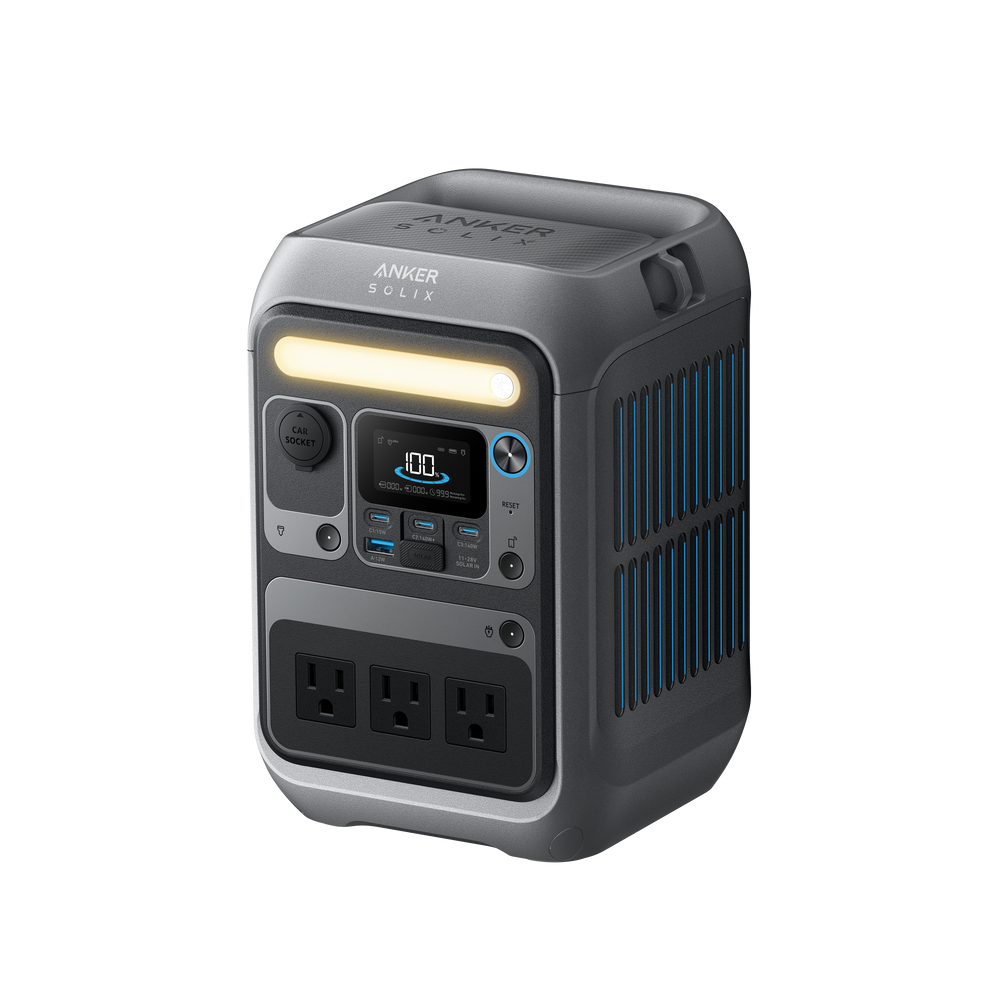
Anker SOLIX C300
A 9.1 lb vertical LiFePO4 station delivering 300W AC, dual 140W USB-C ports, and <10 ms UPS backup for routers, laptops, and day trips — just don't confuse it with the DC-only C300 DC or expect appliance runtime.

BLUETTI AC70
With 705–730.6 Wh of independently measured usable AC output from a 768Wh battery and 500W solar input at ~$399–$449 street price, the AC70 punches above typical 500Wh–700Wh units.
Frequently Asked Questions
How long does the included SolarSaga 40W Mini actually take to recharge the Jackery 300 Plus?+
Once you include ~10% MPPT and battery charging overhead (~320Wh gross energy needed for a full 0%–100% fill) and outdoor panel derating (typically 58%–72% of 40W, or ~23W–29W), expect roughly 11 to 14 effective sun-hours. Because most US campsites average 4 to 5.5 NREL peak sun hours per day, a full recharge usually takes 2 to 3 sunny days.
Does the Jackery SolarSaga 40W Mini have kickstands or direct phone-charging ports?+
The four-fold SolarSaga 40W Mini lacks integrated folding kickstands, relying instead on carabiners/eyelets to prop against gear or hang from packs, and weighs just 2.6 lbs (9.9 x 11.8 x 1.2 in folded). It carries an IP68 waterproof rating and includes built-in USB-C and USB-A ports so you can trickle-charge phones or headlamps directly without the power station.
Can I plug a 200W or 400W solar panel into the Jackery Explorer 300 Plus?+
Do not exceed the Explorer 300 Plus USB-C DC input ceiling of 12V–27V Voc and 5A (100W max). Any solar panel whose open-circuit voltage (Voc) rises above 27V—including many high-voltage 200W–400W folding arrays and residential rigid panels—can trigger over-voltage lockout or risk charge-circuit damage, and wattage above 100W gets clipped.
Is it cheaper to buy the Explorer 300 Plus standalone and pair a third-party 100W panel?+
Often yes. While the 40W Mini bundle regularly drops to ~$319–$379 on promotion, buying the standalone Explorer 300 Plus around ~$229–$269 plus a 100W folding 12V-nominal panel (around ~$110–$160) with a compatible DC-to-USB-C adapter delivers more than double the daily solar watts per dollar—just verify panel Voc stays at or below 27V.
Sources & Technical References
- View Source →[1]Manufacturer SpecificationJackery US OfficialVerified 2026-11-25Jackery Explorer 300 Plus Portable Power Station Specifications
288Wh LiFePO4, 300W continuous AC (600W surge), 100W bidirectional USB-C PD, 100W solar max, 8.27 lbs weight.
- View Source →[2]Government Research ResourceNational Renewable Energy Laboratory (NREL)Verified 2026-11-24PVWatts & US Peak Sun Hours Reference Data
Documents regional peak sun hours and real-world photovoltaic derating factors (ambient heat, angle, shading, controller loss).
- View Source →[3]Manufacturer SpecificationAnker SOLIX US OfficialVerified 2026-11-24Anker SOLIX C300 Portable Power Station (Model A1722) Specifications
288Wh LFP AC-equipped model (distinct from DC-only C300 DC), 300W AC, 600W SurgePad, 100W XT60 solar, <10ms UPS.
- View Source →[4]Manufacturer SpecificationBLUETTI US OfficialVerified 2026-11-24BLUETTI AC70 Portable Power Station Official Specifications
768Wh LFP, 1,000W continuous AC, 2,000W Power Lifting resistive mode, 500W MPPT solar (12-58V, 10A), 950W Turbo AC charge.