Portable Power Station Comparison Tool & Matchups
Select any two US models below to inspect capacity, continuous/surge output, solar Voc limits, expansion ecosystems, weight, and verified third-party test records side by side.
| Specification | EcoFlow DELTA Pro Ultra | Anker SOLIX F3800 |
|---|---|---|
| Hardware Visual | 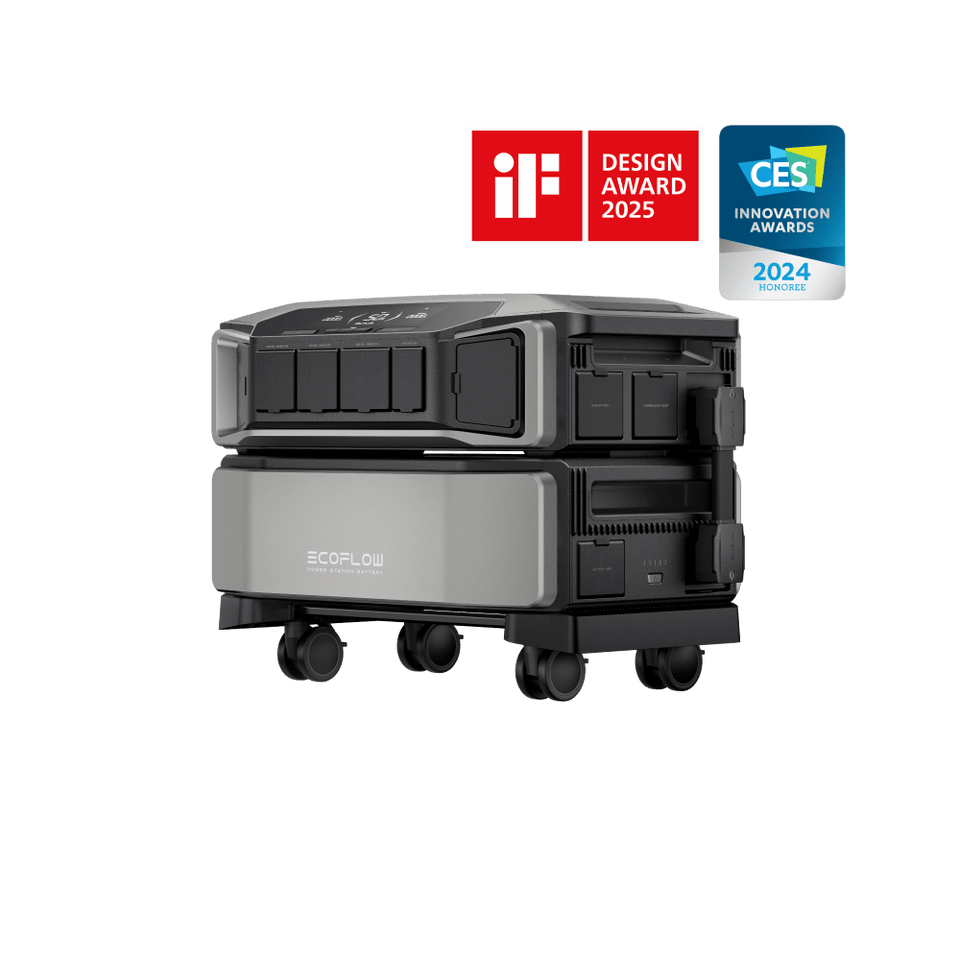 |  |
| Battery Capacity | 6,144 Wh (LiFePO4 (LFP)) | 3,840 Wh (LiFePO4 (LFP)) |
| Continuous / Surge AC | 7,200W / 10,800W | 6,000W / 9,000W |
| AC Output Voltage | 120V / 240V Split-Phase | 120V / 240V Split-Phase |
| Solar Input & Voc | 5,600W (High-PV: 80V–450V Voc | Low-PV: 30V–150V Voc) | 2,400W (11V–60V Voc per dual XT60 port (Note: F3800 Plus expands to 11V–165V / 3,200W)) |
| Weight & Portability | 181.8 lbs — Modular split weight: ~70 lbs (inverter) + ~111.8 lbs (1 × 6,144Wh battery) | 132.3 lbs — Single-chassis wheeled suitcase unit (~60 kg) with telescopic handle |
| 3rd-Party Usable AC Wh | Not Independently Verified | Not Independently Verified |
| Typical Street / $/Rated Wh | $4,599 ($0.75/Wh) | $2,999 ($0.78/Wh) |
Built specifically for homeowners seeking high-voltage solar input (up to 5,600W) and modular 6kWh-per-stack scaling, though total kit cost and modular footprint exceed casual portable needs.
One of the most approachable plug-and-play 120V/240V wheeled units thanks to built-in NEMA 14-50R and L14-30R ports, though high idle overhead on light loads and the 60V solar cap (on the original non-Plus SKU) require careful sizing.
Editorial Model-vs-Model Matchups
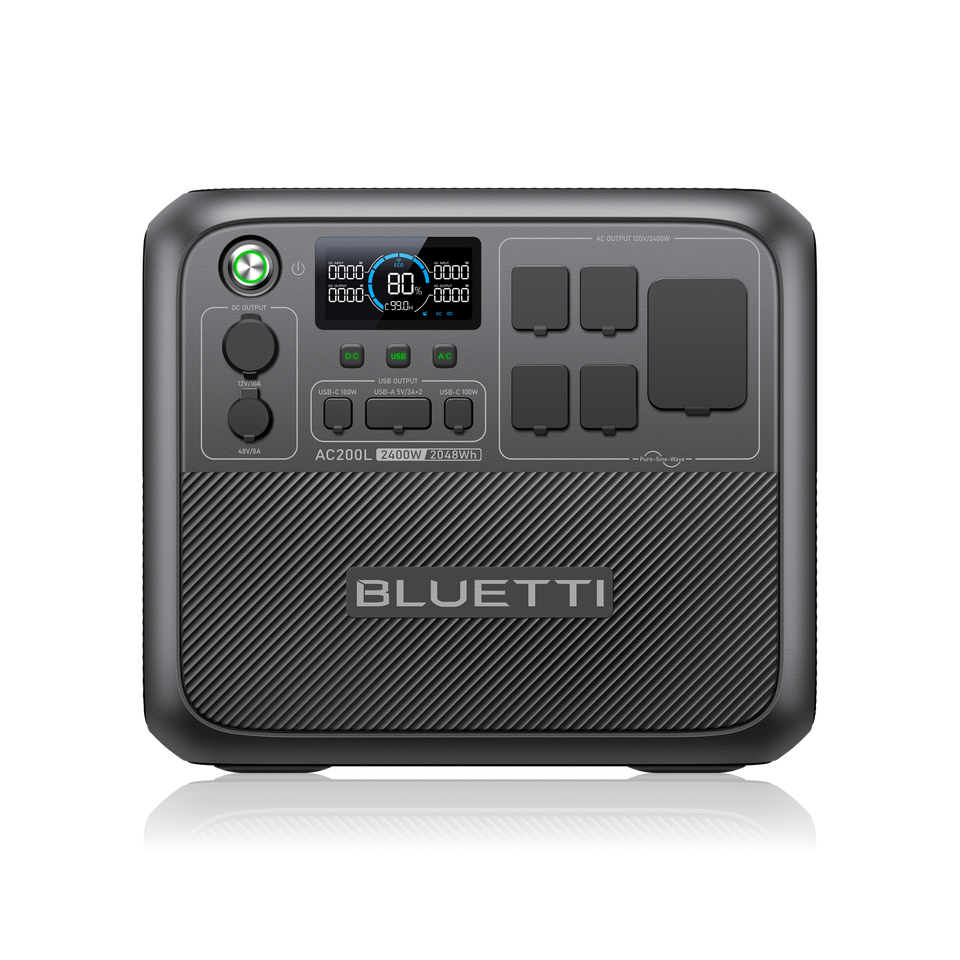
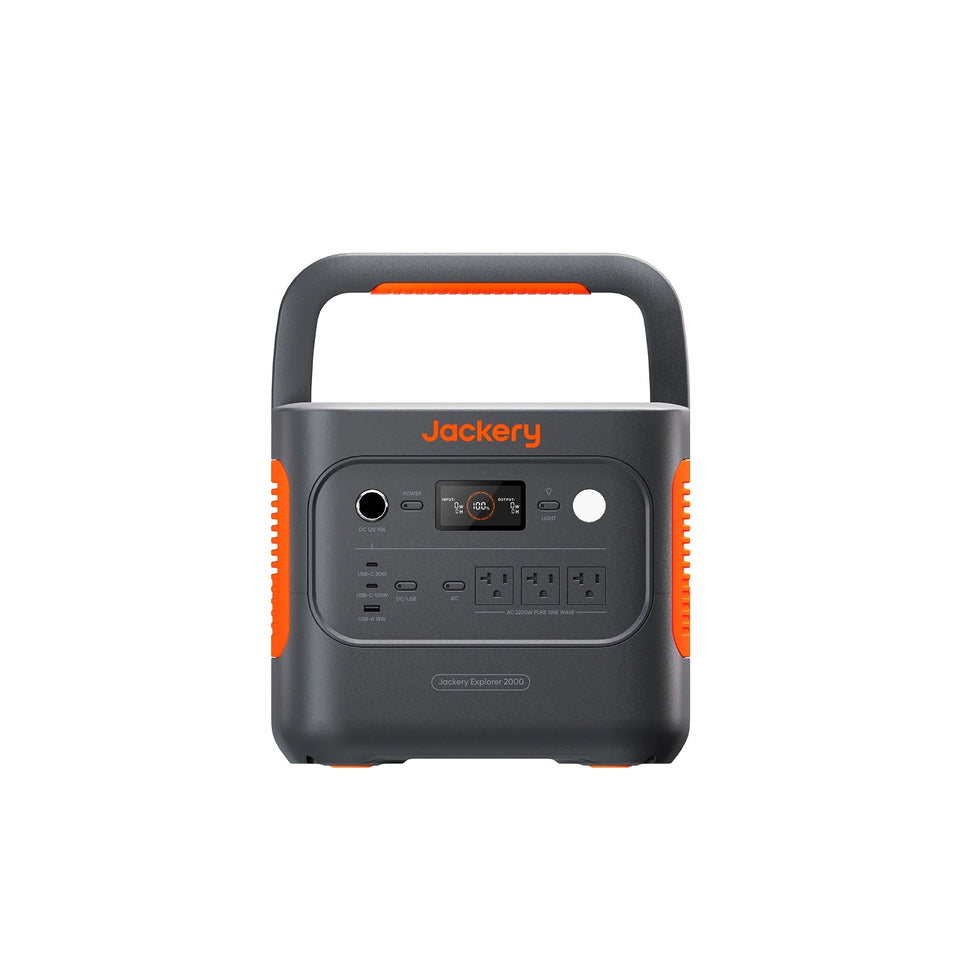
BLUETTI AC200L vs. Jackery Explorer 2000 v2 (2026): 2kWh Efficiency vs. Weight
Despite sharing nearly identical 2,048Wh vs 2,042Wh capacities and ~$999–$1,099 US street pricing, the BLUETTI AC200L and Jackery Explorer 2000 v2 serve opposite priorities. Choose the BLUETTI AC200L for CNET-verified efficiency (77.76% RTE, >29-hour fridge runtime), 1,200W high-voltage solar (12–145V), a 30A TT-30R + 48V RV port, and expansion up to 8,192Wh. Choose the Jackery Explorer 2000 v2 if carrying 39.5 lbs instead of 62.4 lbs is decisive and you primarily recharge via AC outlets.
EcoFlow DELTA Pro Ultra vs. Anker SOLIX F3800 (2026): 240V Home Backup Matchup
Both the EcoFlow DELTA Pro Ultra and Anker SOLIX F3800 provide native 120V/240V split-phase home backup with 5-year US warranties, yet they serve different budgets and solar setups. Choose the EcoFlow DELTA Pro Ultra (~$4,599 kit street) for 6,144Wh base capacity, 7,200W output, split-module lifting weight (70 lb inverter + 111.8 lb battery), 5,600W dual MPPT solar (up to 450V Voc), and -4°F automatic cell heating. Choose the Anker SOLIX F3800 (~$2,999 street) for ~$1,600 lower upfront entry cost, direct NEMA 14-50R and L14-30R ports on one wheeled unit, and 3,840Wh capacity if 60V portable solar suffices.
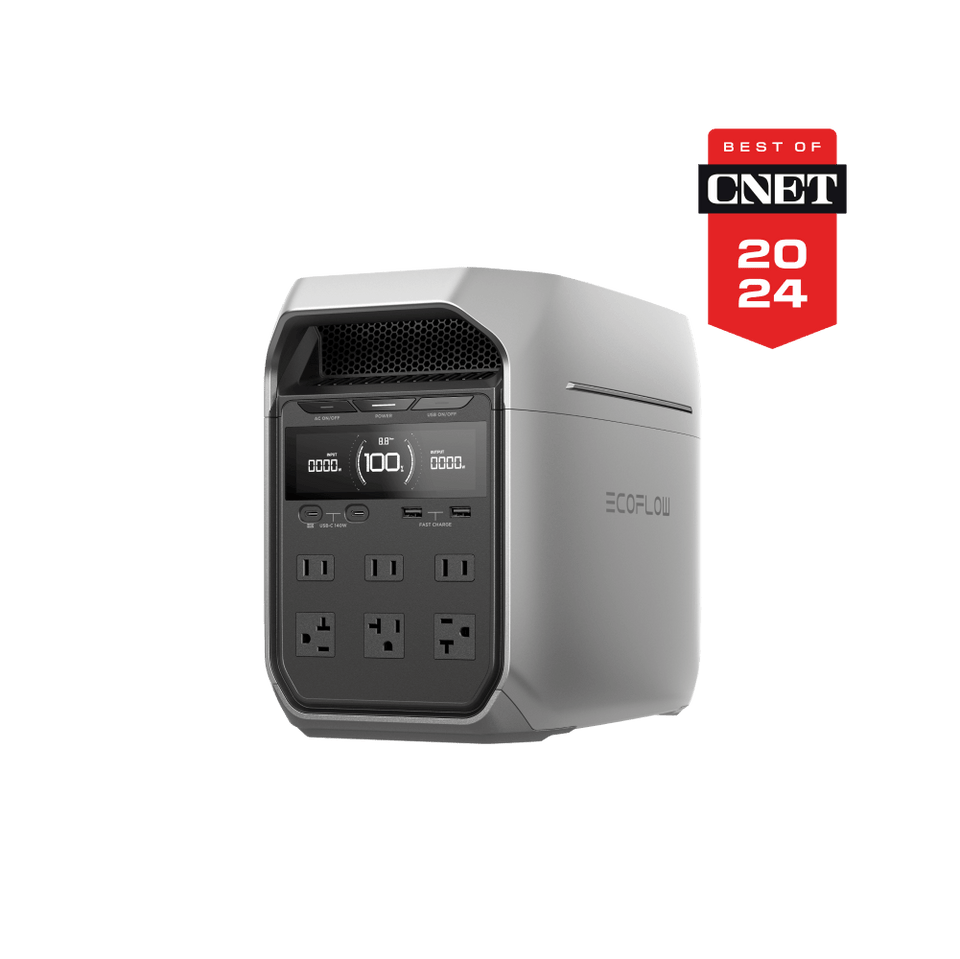
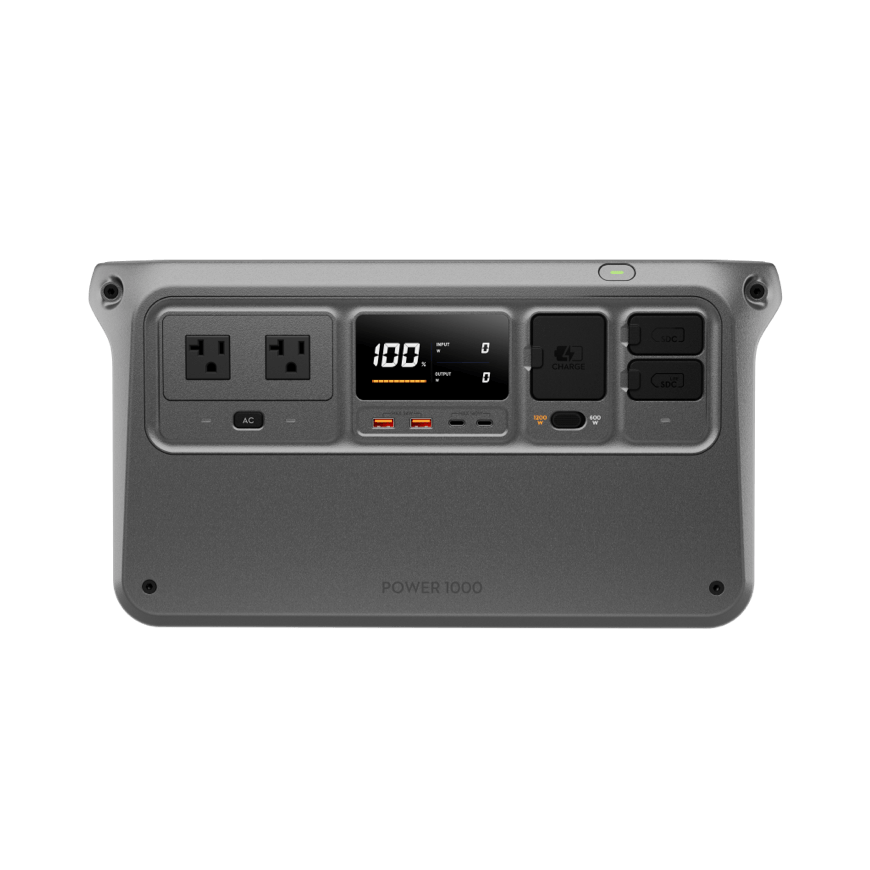
EcoFlow DELTA 3 Plus vs. DJI Power 1000 (2026): 1kWh Solar/UPS vs. Quiet 2,200W
Both the EcoFlow DELTA 3 Plus and DJI Power 1000 pack 1,024Wh LFP batteries and dual 140W USB-C PD ports under 29 lbs, yet they serve notably different users. Choose the EcoFlow DELTA 3 Plus (~$699 street) for plug-and-play versatility: built-in 1,000W dual-MPPT solar (11–60V), six AC outlets, a 12V car socket, Wi-Fi telemetry, and <10 ms HID USB UPS support. Choose the DJI Power 1000 (~$549 street) if 2,200W continuous AC output, ultra-quiet 23 dB charging, drone SDC speed, and lower upfront street cost outweigh needing external SDC adapters for solar and 12V.
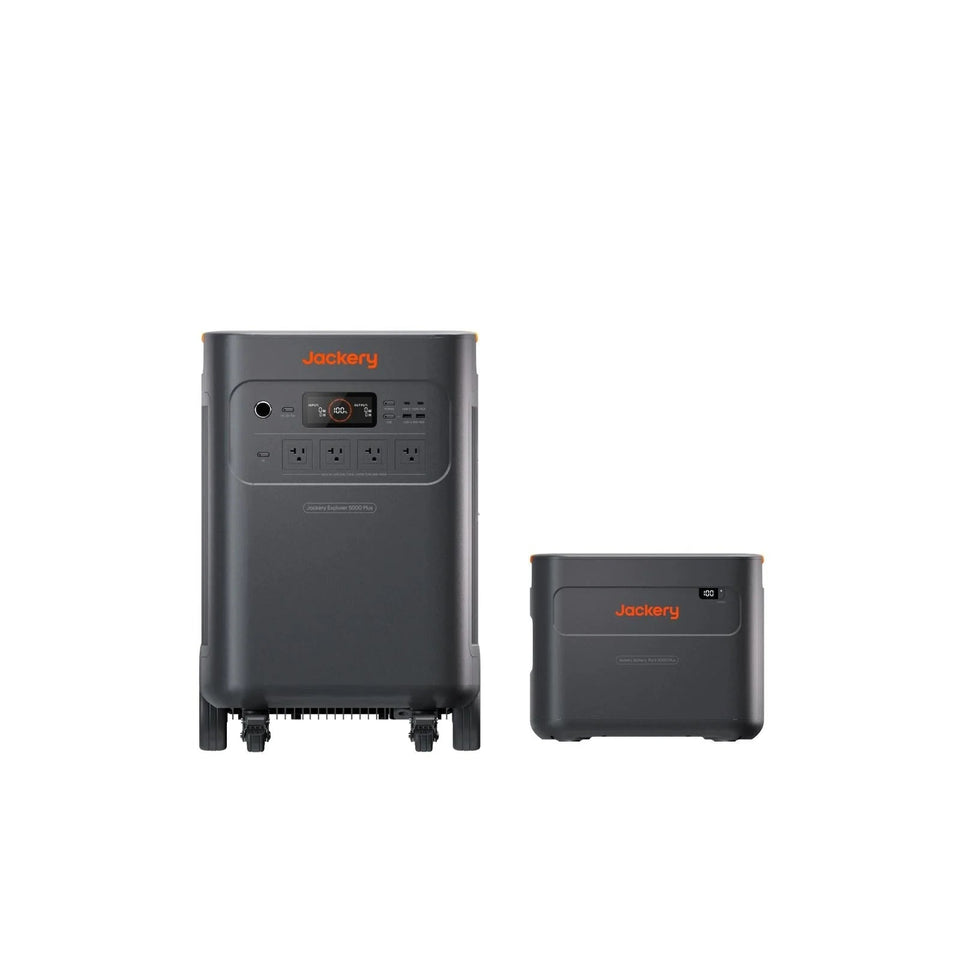
Jackery Explorer 5000 Plus vs. Anker SOLIX F3800 (2026): Single-Tower 240V Showdown
Trading around the same ~$2,999 typical US street price, the Jackery Explorer 5000 Plus and Anker SOLIX F3800 are the closest direct rivals in wheeled 240V backup. On paper, Jackery packs more base storage (5,040Wh vs 3,840Wh), higher continuous/surge ratings (7,200W/14,400W vs 6,000W/9,000W), 0 ms direct Online UPS, and High-PV 135–450V solar support (4,000W). Anker counters with 80% cycle retention rating (vs >=70% on Jackery), broader low-voltage solar tolerance (2,400W at 11–60V vs Jackery's 1,200W Low-PV limit), and wider street discounts.
Brand Ecosystem Comparisons
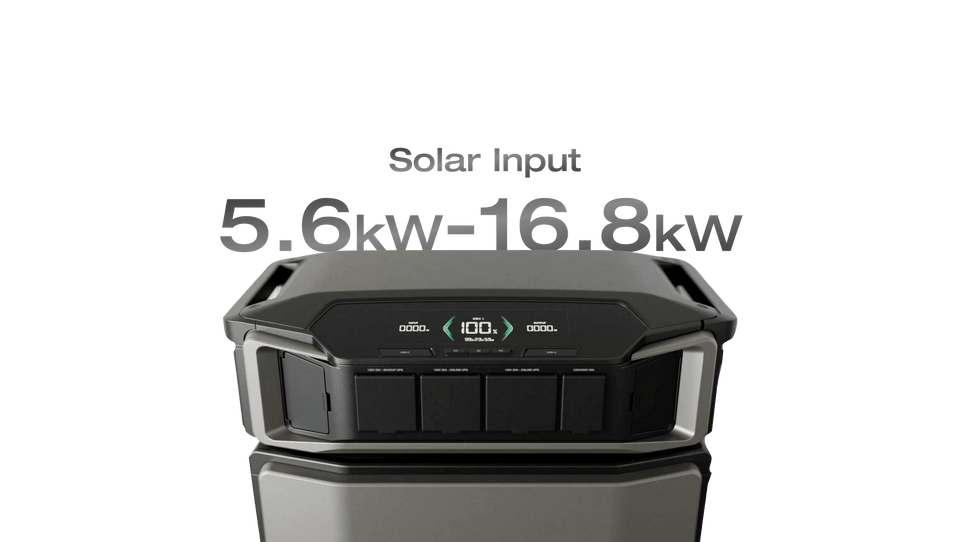

EcoFlow vs. Anker SOLIX (2026): Modular Stacks vs. Plug-and-Play 240V
EcoFlow and Anker SOLIX both back their current LiFePO4 lineups with 5-year US warranties and span compact travel gear to whole-home 240V backup. EcoFlow leads in solar input ceilings (up to 5,600W / 450V Voc on DELTA Pro Ultra and 1,000W dual MPPT on DELTA 3 Plus), modular split lifting weight, and sub-freezing self-heating. Anker SOLIX stands out for aggressive street pricing (~$2,999 on the 240V F3800 with direct 14-50R/L14-30R ports; ~$229 on the 9.1 lb C300 router UPS) and Bellevue, WA North American support.
EcoFlow vs. Jackery (2026): Charging Speed, Portability & Home Backup
EcoFlow and Jackery prioritize different engineering trade-offs across both portable and 240V home tiers. EcoFlow leads in fast AC/solar charging speed, dual-MPPT flexibility (up to 5,600W on DELTA Pro Ultra and 1,000W on DELTA 3 Plus), sub-10 ms HID UPS support, and sub-freezing battery self-heating. Jackery counters with lightweight Cell-to-Body portability (39.5 lbs on the 2,042Wh Explorer 2000 v2), high 14,400W surge specs on the Explorer 5000 Plus, lower entry 240V pricing, and broad US brick-and-mortar retail presence.
EcoFlow vs. BLUETTI (2026): Fast Charging & Modularity vs. Efficiency & RV Ports
EcoFlow and BLUETTI both build long-life LiFePO4 ecosystems with 5-year US warranties, but they excel in different setups. EcoFlow emphasizes rapid charging, lightweight 1kWh fast-solar portability (DELTA 3 Plus), HID USB UPS support, and split-stack 240V residential systems (DELTA Pro Ultra). BLUETTI stands out for third-party verified inverter efficiency (77.76% RTE on AC200L; 705–730.59 Wh usable AC on AC70), native 30A TT-30R + 48V RV ports, wide 12–145V midsize solar windows, and strong street price-per-Wh value.
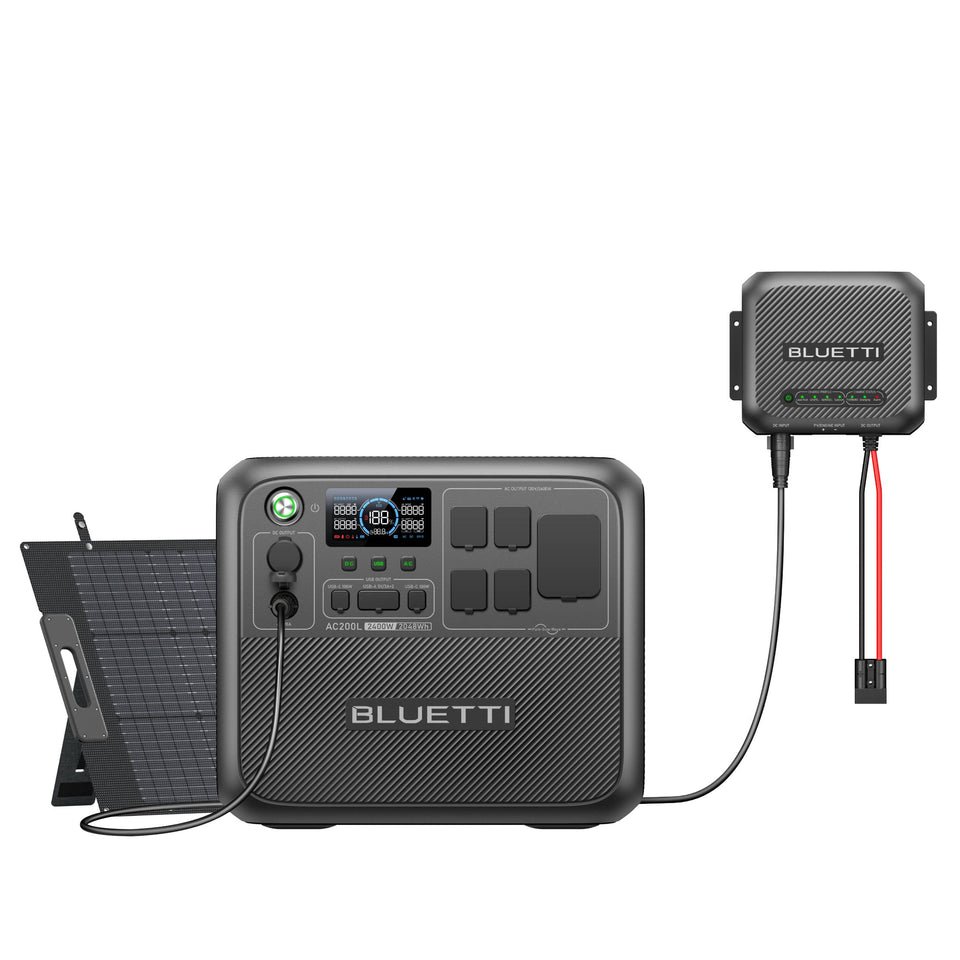
Jackery vs. BLUETTI (2026): Lightweight Simplicity vs. RV & Efficiency Value
Jackery and BLUETTI represent a classic portability-versus-feature-density matchup. Jackery (headquartered in Fremont, CA) delivers standout weight reduction in the 2kWh tier (39.5 lb Explorer 2000 v2), high 14,400W surge specs on its 240V Explorer 5000 Plus, and wide US retail reach. BLUETTI counters with independently verified AC efficiency (CNET, APH Networks, PowerOffGrid), dedicated 30A TT-30R RV and 48V DC ports, 12–145V solar compatibility on the AC200L, and aggressive street value per watt-hour.