Pecron Portable Power Stations & Solar Generators: Brand Guide
Assess Pecron E-Series and F-Series LiFePO4 power stations, budget watt-hour value, 12V/30A XT60 outputs, asymmetric solar Voc limits, and warranties.
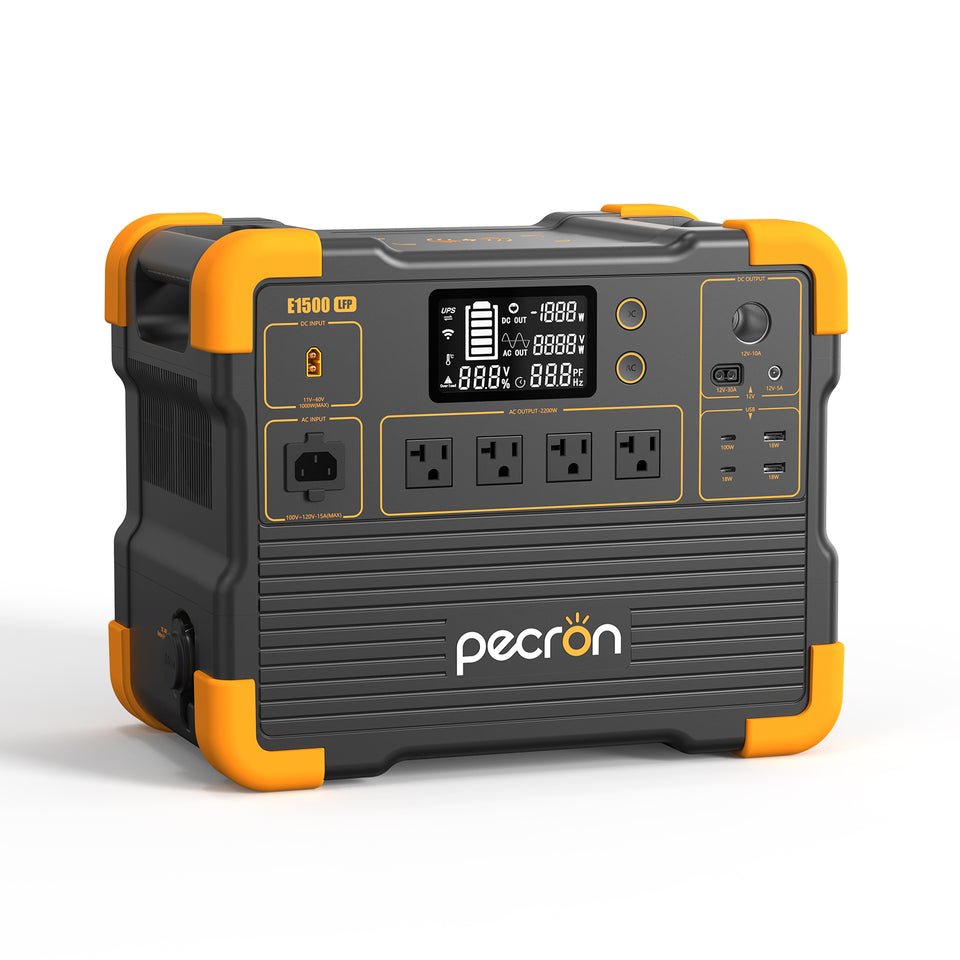
Pecron Brand Strengths
- ✓Strong street price-per-watt-hour and high inverter output (e.g., 1,536Wh / 2,200W AC around $599 street)
- ✓Rare high-current 12V/30A XT60 DC outputs ideal for camper van fuse blocks and 12V off-grid gear
- ✓48V cascade battery architecture (EP3000-48V) expands midsize units cleanly up to multi-kilowatt-hour banks
Brand Trade-offs & Considerations
- !Asymmetric solar ports (e.g., 32–95V GX16MF on E1500LFP) won't trigger from a single 18V portable panel
- !Smaller US retail and service footprint compared with Jackery, EcoFlow, or Anker SOLIX
- !Independent third-party usable-AC-Wh lab testing is less documented across US review publications
Reviewed Pecron Models
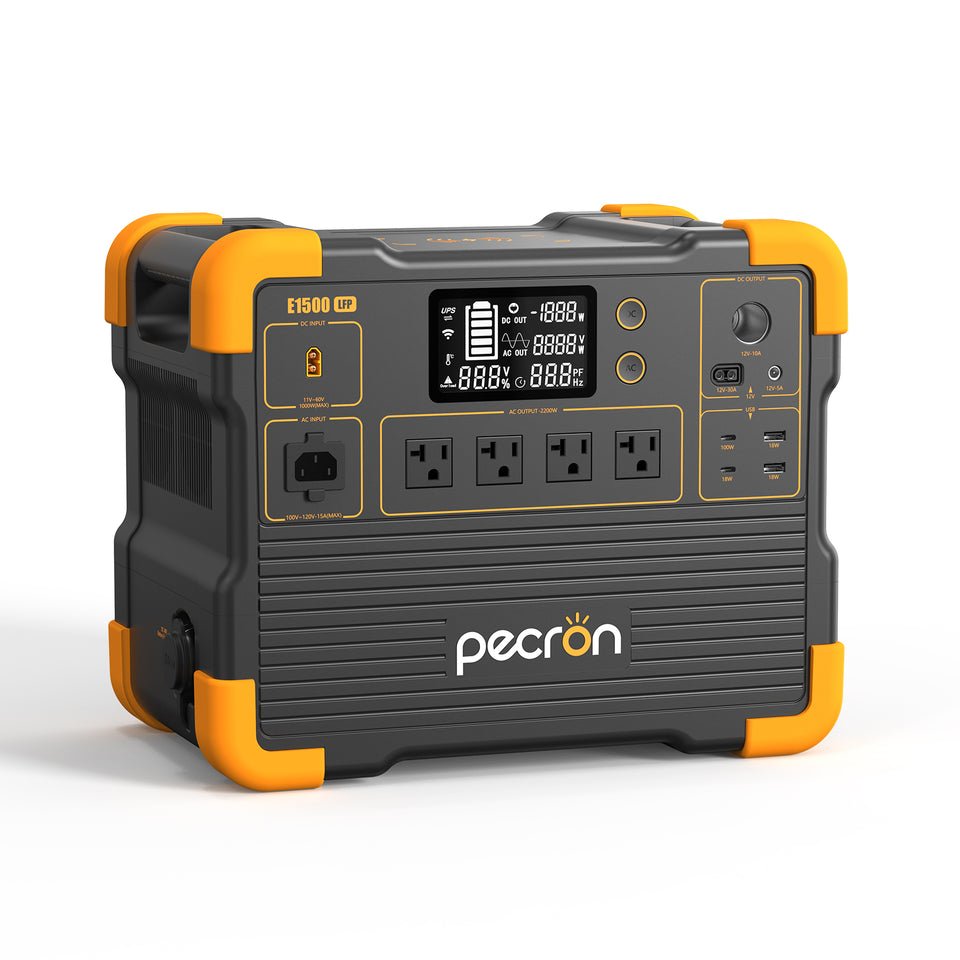
Pecron E1500LFP
Delivers 1,536Wh, a 2,200W continuous inverter, and a rare 12V/30A XT60 DC port around $599 street price, though its asymmetric 32–95V GX16MF solar input requires careful panel voltage matching.
Pecron Official Hardware & Application Gallery

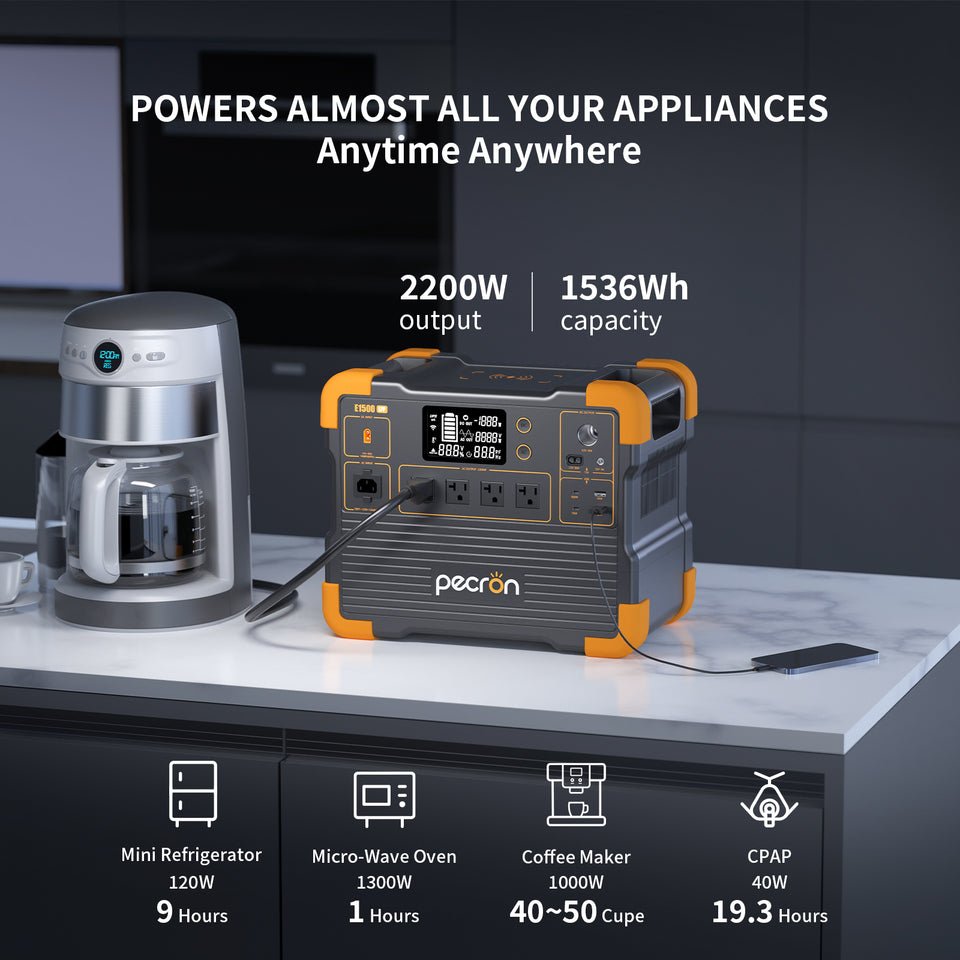
Brand Overview & US Market Position
Pecron has earned a loyal following among US DIY camper van builders, off-grid hobbyists, and budget-focused emergency preparedness shoppers. Manufacturing in China while fulfilling orders out of California warehouses, Pecron avoids heavy big-box retail markups and invests instead in generous battery capacity, high-wattage inverters, and high-amperage 12V DC outputs at street prices well below tier-one household names.
While Pecron lacks the polished marketing and brick-and-mortar shelf presence of Jackery or EcoFlow, models like the E1500LFP deliver specification-sheet performance per dollar that few rivals match.
Product Families & Lineup Architecture
Pecron organizes its US LFP catalog around three core pillars:
- E-Series LFP Stations: Value-engineered portable workhorses ranging from compact units up to midsize and high-output generators. The Pecron E1500LFP exemplifies this line: 1,536Wh capacity, 2,200W continuous AC (4,400W surge), and a 39.7 lb chassis typically retailing around
$599street price (~$0.39/rated Wh). - F-Series & High-Capacity Systems: Higher-wattage models (including 3,000W+ class units) built for multi-appliance emergency power and off-grid cabins.
- EP-48V Expansion Batteries: Dedicated 48V expansion packs such as the
EP3000-48V(3,072Wh) that cascade with compatible E-series power stations to scale total storage.
Battery Chemistry & Expansion Ecosystem
Current Pecron E-Series and F-Series power stations use LiFePO4 (LFP) cells rated for 3,500+ cycles to 80% original capacity under standard 25°C cycling. One of Pecron’s standout design choices is its 48V cascade architecture: on the E1500LFP, adding EP3000-48V expansion batteries scales total capacity up to 7,680Wh without needing to swap into an expensive proprietary 240V residential cabinet.
Hardware Differentiators & Engineering Trade-Offs
Pecron makes deliberate hardware choices that reward technically informed buyers while occasionally tripping up first-time solar shoppers:
- 12V/30A XT60 High-Current DC Port: Most portable power stations limit 12V DC output to a
10A(120W) cigarette lighter socket. The E1500LFP includes a dedicated XT60 12V/30A (360W) port alongside a standard 12V/10A socket and wireless pad—making it unusually well suited for van builds running DC compressor fridges, diesel heaters, and DC fuse blocks without running the AC inverter. - Asymmetric Solar Voltage Requirements: On the E1500LFP, the primary
700Wsolar input (GX16MFconnector) requires 32V–95V Voc (15A max), while the secondary100WDC5521port accepts 12V–18V Voc. A single standard 12V-nominal folding panel (~18V–22V Voc) will not meet the 32V minimum threshold on the primary port unless paired appropriately within controller limits, and users must verifyVoclimits carefully to avoid under-voltage non-charging or over-voltage damage. Learn more in our Solar Input Limits & MPPT guide. - Outlet Count & Certification Checks: With three standard
5-20RAC receptacles and no native 30ATT-30RRV outlet, the E1500LFP favors budget wattage over RV-park plug convenience. Buyers should also verify specific UL listing status per model batch directly with Pecron if required by local insurance or inspection authorities.
US Warranty, Documentation & Customer Support
Pecron typically provides a 1-to-3-year standard limited warranty depending on model, with an extended warranty path (for example, 2-year standard + 3-year extension for 5 years total on the E1500LFP) when registered through Pecron’s official portal within 30 days of purchasing a new unit from an authorized channel. Support operates primarily through online email and portal tickets rather than domestic phone hotlines or brick-and-mortar retail counters.
Brand Pros & Cons Summary
Strengths:
- Exceptional watt-hour and continuous AC wattage per dollar (
~$0.39/rated Whstreet on E1500LFP) - High-current
12V/30AXT60 DC output rarely offered in sub-$700 power stations - Clean 48V cascade expandability up to 7.68kWh on midsize platforms
Trade-Offs:
- Primary
32V–95VGX16MF solar input requires higher-voltage panels than single 18V portable folding panels - Fewer independent third-party lab runtime benchmarks published in major US media outlets
- Online-only support structure with smaller US domestic infrastructure than tier-one competitors
Buyer Guidance: Who Should Choose Pecron
Pecron is an ideal choice for value-focused emergency planners and camper van DIYers who understand solar voltage matching and want maximum inverter watts plus 30A 12V DC capability under $700. Compare Pecron directly against sub-$1,000 rivals in our Best Power Stations Under $1,000 and Best Power Stations for RVs buying guides, or test price efficiency in our Price per Wh Calculator.
Sources & Technical References
- View Source →[1]Manufacturer SpecificationPecron US OfficialVerified 2026-11-24Pecron E1500LFP Official Specifications
1,536Wh LFP, 2,200W AC, 800W dual-port solar (GX16MF 32-95V 700W + DC5521 100W), EP3000-48V expansion support.
- View Source →[2]Government Research ResourceNational Renewable Energy Laboratory (NREL)Verified 2026-11-24PVWatts & US Peak Sun Hours Reference Data
Documents regional peak sun hours and real-world photovoltaic derating factors (ambient heat, angle, shading, controller loss).