Best Portable Power Stations Under $1,000 (2026): Maximum Wh & Output Value
Compare the best portable power stations under $1,000 street price, from 2,042Wh lightweight Jackery 2000 v2 to 1,000W-solar EcoFlow DELTA 3 Plus and Pecron value.
Under $1,000 street pricing, buyers can now step up to 1,024Wh–2,042Wh LiFePO4 stations with 1,800W–2,200W continuous inverters. The Jackery Explorer 2000 v2 (~$999 street) leads on capacity and 39.5 lb weight-to-Wh ratio, the EcoFlow DELTA 3 Plus (~$699) leads on 1,000W dual-MPPT solar and <10 ms HID UPS backup, and the Pecron E1500LFP (~$599) maximizes raw watt-hours per dollar ($0.39/Wh).
Recommended Models for This Category
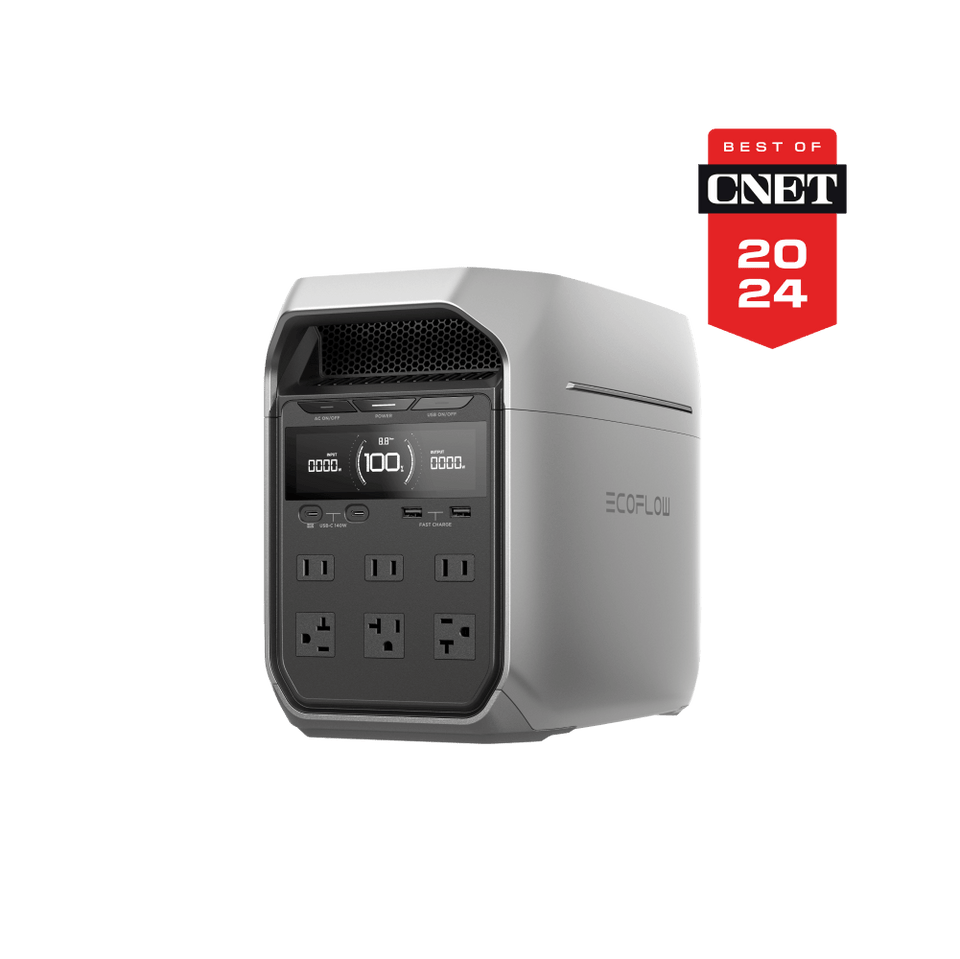
EcoFlow DELTA 3 Plus
Packs 1,000W dual-MPPT solar charging, sub-1-hour AC replenishment, and a sub-10 ms HID-capable UPS into a 27.6 lb chassis, making it more versatile than non-Plus 1kWh units.
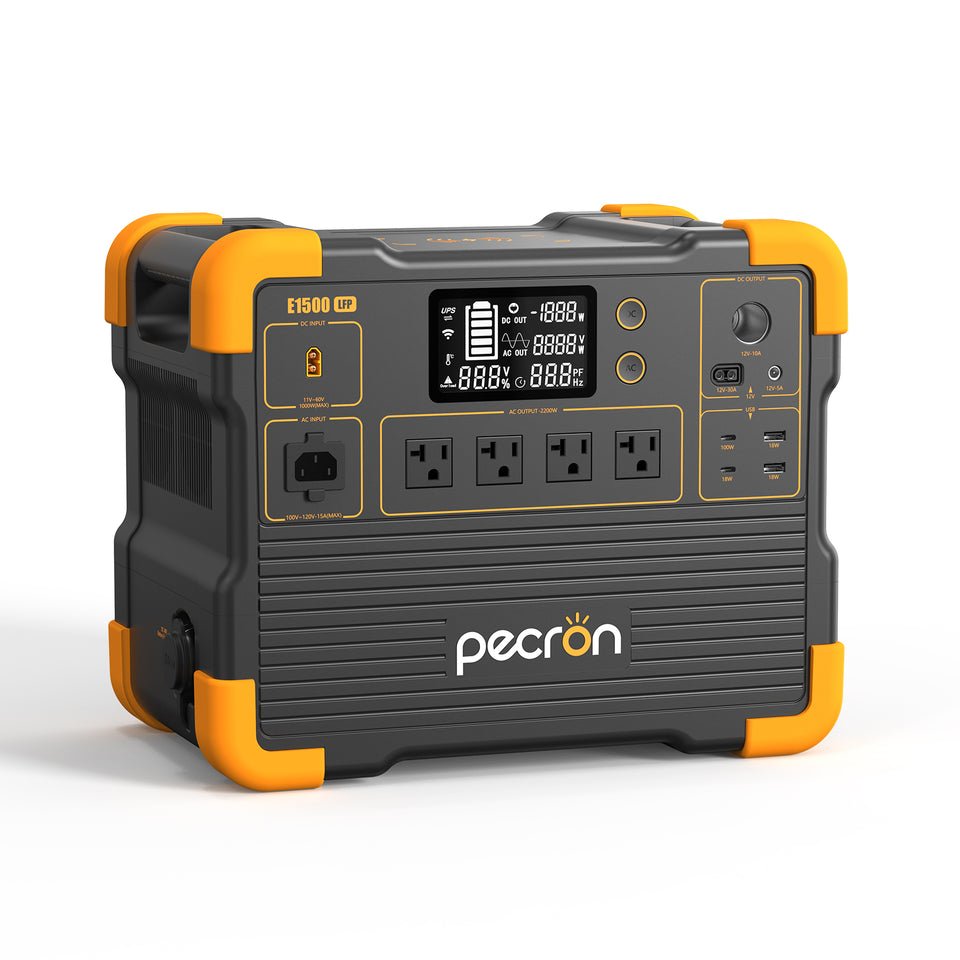
Pecron E1500LFP
Delivers 1,536Wh, a 2,200W continuous inverter, and a rare 12V/30A XT60 DC port around $599 street price, though its asymmetric 32–95V GX16MF solar input requires careful panel voltage matching.
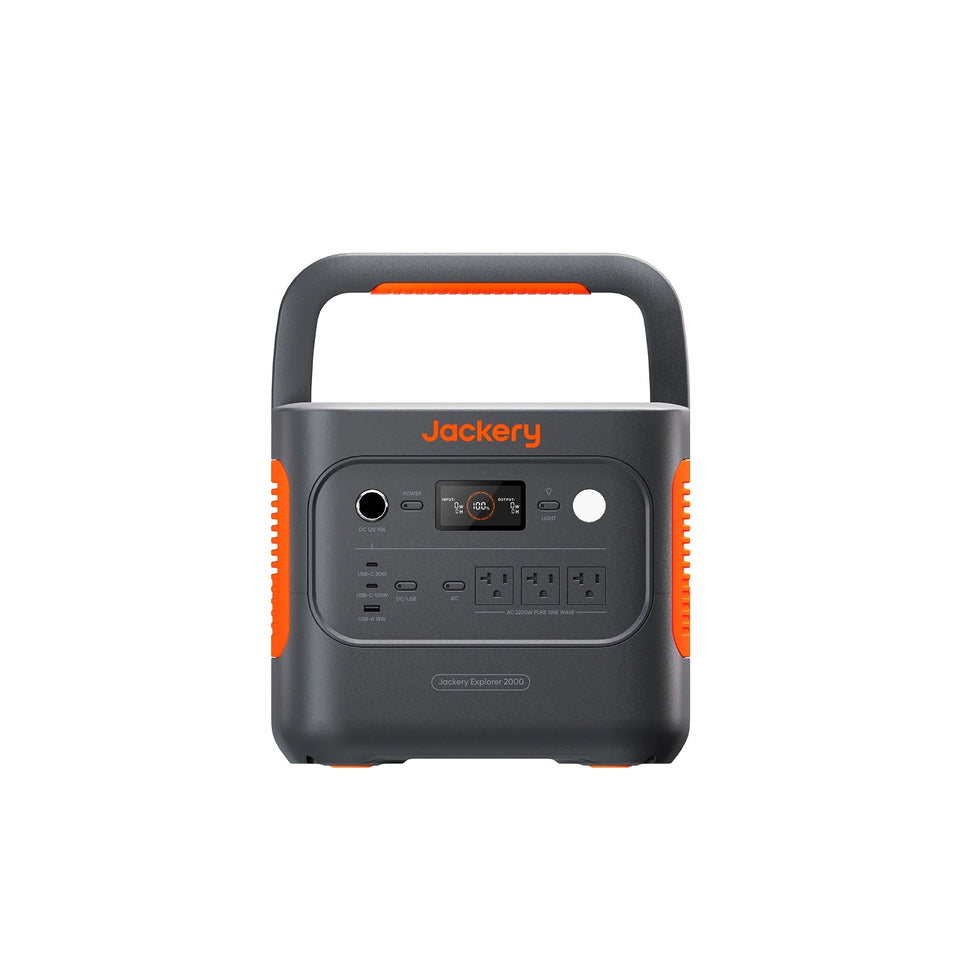
Jackery Explorer 2000 v2
A breakthrough 39.5 lb chassis makes 2,042Wh genuinely single-hand portable for camping and apartments, provided you accept its 400W solar recharge ceiling and non-expandable battery.

BLUETTI AC70
With 705–730.6 Wh of independently measured usable AC output from a 768Wh battery and 500W solar input at ~$399–$449 street price, the AC70 punches above typical 500Wh–700Wh units.
Side-by-Side Specification Table
| Model | Capacity | Cont. / Surge AC | Solar Max | Weight | UPS | Street ($/Wh) |
|---|---|---|---|---|---|---|
| EcoFlow DELTA 3 Plus | 1,024 Wh | 1,800W / 3,600W | 1,000 W | 27.6 lbs | <10 ms (manufacturer rated) | $699 ($0.68) |
| Pecron E1500LFP | 1,536 Wh | 2,200W / 4,400W | 800 W | 39.7 lbs | 8–20 ms (manufacturer rated) | $599 ($0.39) |
| Jackery Explorer 2000 v2 | 2,042 Wh | 2,200W / 4,400W | 400 W | 39.5 lbs | <=20 ms (manufacturer rated) | $999 ($0.49) |
| BLUETTI AC70 | 768 Wh | 1,000W / 2,000W | 500 W | 22.5 lbs | <=20 ms (manufacturer rated) | $429 ($0.56) |
Selection Criteria for This Guide
- Verified typical US street price under $1,000 (separating promotional street values from MSRP)
- Continuous AC inverter capacity (1,000W–2,200W) capable of running standard 120V kitchen appliances and refrigerators
- Balance of battery capacity (Wh), carry weight under 40 lbs, and solar recharge speed
- Warranty durability (5-year registered or manufacturer coverage) and transparent safety ratings
Selection Criteria & Evaluation Priorities
The $500–$999 tier is the most competitive segment in the US market because it unlocks 1,800W to 2,200W pure sine wave inverters—enough continuous wattage for full-size microwaves, coffee makers, sump pumps, and refrigerators—paired with 1kWh to 2kWh LiFePO4 storage. Rather than picking a single winner, we selected four models representing distinct priorities: solar/UPS speed, raw $/Wh value, 2kWh portability, and verified sub-$500 efficiency.
Individual Model Summaries
EcoFlow DELTA 3 Plus — Best 1kWh Solar & Home-Office UPS (~$699 Street)
Priced near $699 street ($899 MSRP), the EcoFlow DELTA 3 Plus pairs 1,024Wh capacity and 1,800W continuous AC (3,600W surge) with dual 500W MPPT solar inputs (1,000W total, 11V–60V Voc), 56-minute X-Stream wall charging (1,500W), six AC outlets, dual 140W USB-C ports, and <10 ms HID UPS protection. It expands up to 5,120Wh via EcoFlow extra batteries while keeping standalone weight at 27.6 lbs.
Pecron E1500LFP — Best Capacity & Wattage Value (~$599 Street)
At ~$599 street (~$0.39/rated Wh), the Pecron E1500LFP undercuts 1kWh rivals while offering 1,536Wh, a 2,200W continuous inverter (4,400W surge), 1,400W AC charging, a 12V/30A XT60 DC port for van fuse blocks, and 48V cascade expansion up to 7,680Wh. Its primary limitation is an asymmetric solar input where the 700W GX16MF port requires 32V–95V Voc (meaning single 18V portable folding panels won’t trigger that port).
Jackery Explorer 2000 v2 — Best 2kWh Portability Under $1,000 (~$999 Street)
Frequently promoted at $799–$1,099 (~$999 typical street vs. $1,499 MSRP), the Jackery Explorer 2000 v2 fits 2,042Wh and 2,200W AC (4,400W surge) into a 39.5 lb Cell-to-Body chassis. Independent testing by OutdoorGearLab measured a ~2.5 hour full AC recharge, and TechRadar praised its quiet ~30 dB operation and kitchen appliance capability. To achieve its price and weight, Jackery omitted battery expansion and capped solar input at 400W (DC8020 ports).
BLUETTI AC70 — Best Budget Pick Well Below $1,000 (~$429 Street)
For shoppers whose target budget sits comfortably below $1,000, the BLUETTI AC70 leaves over $500 in your pocket while still delivering 768Wh, 1,000W continuous AC, 500W MPPT solar input, and independently verified 705–730.59 Wh AC output across PowerOffGrid and APH Networks tests.
Performance & Specification Analysis
- Inverter Headroom (
1,000Wvs1,800W–2,200W): Stepping from the$429AC70 (1,000W) into the$599–$999group (1,800W–2,200W) unlocks standard 120V/15A household loads—including microwave ovens, space heaters (short-term), induction burners, and residential refrigerators—without relying on voltage-dropping boost tricks. - Price per Rated Watt-Hour: At typical street prices, the Pecron E1500LFP (
$0.39/Wh) and Jackery Explorer 2000 v2 ($0.49/Wh) offer exceptional capacity density under$1,000, while the EcoFlow DELTA 3 Plus ($0.68/Wh) channels its budget into1,000Wsolar speed, six outlets, and<10 msHID UPS hardware. Check live ratios using our Price per Wh Calculator. - Solar Recharge Reality: Under typical sunny conditions (
~65%of panel STC rating),1,000Wof panels into a DELTA 3 Plus refills1,024Whin under 2 peak sun hours, whereas400Winto the Explorer 2000 v2 takes roughly 8–9 sun hours for a full2,042Whcycle.
Advantages & Disadvantages
- Advantages: True
1,800W–2,200Whousehold appliance support; all recommended models stay under40 lbsfor single-person trunk loading; LFP cells rated for3,000–4,000+cycles;5-yearwarranty coverage (with registration where applicable). - Disadvantages: Zero
240Vsplit-phase support (all units under$1,000are 120V only); none include a native30A TT-30RRV socket;1kWh–2kWhstandalone storage lasts roughly 6–15 hours on a cyclic full-size fridge unless paired with solar or expansion batteries.
Buying Considerations
Decide upfront whether you prioritize runtime per dollar (Jackery Explorer 2000 v2 or Pecron E1500LFP) or solar/UPS speed (EcoFlow DELTA 3 Plus). If you live in an apartment and mainly charge from wall outlets before storms, the Explorer 2000 v2’s 39.5 lb weight and 2,042Wh bank are hard to beat under $1,000. If you intend to run an off-grid solar camp setup, verify panel Voc compatibility carefully—especially Pecron’s 32V minimum start threshold and Jackery’s DC8020 adapter needs.
Alternatives
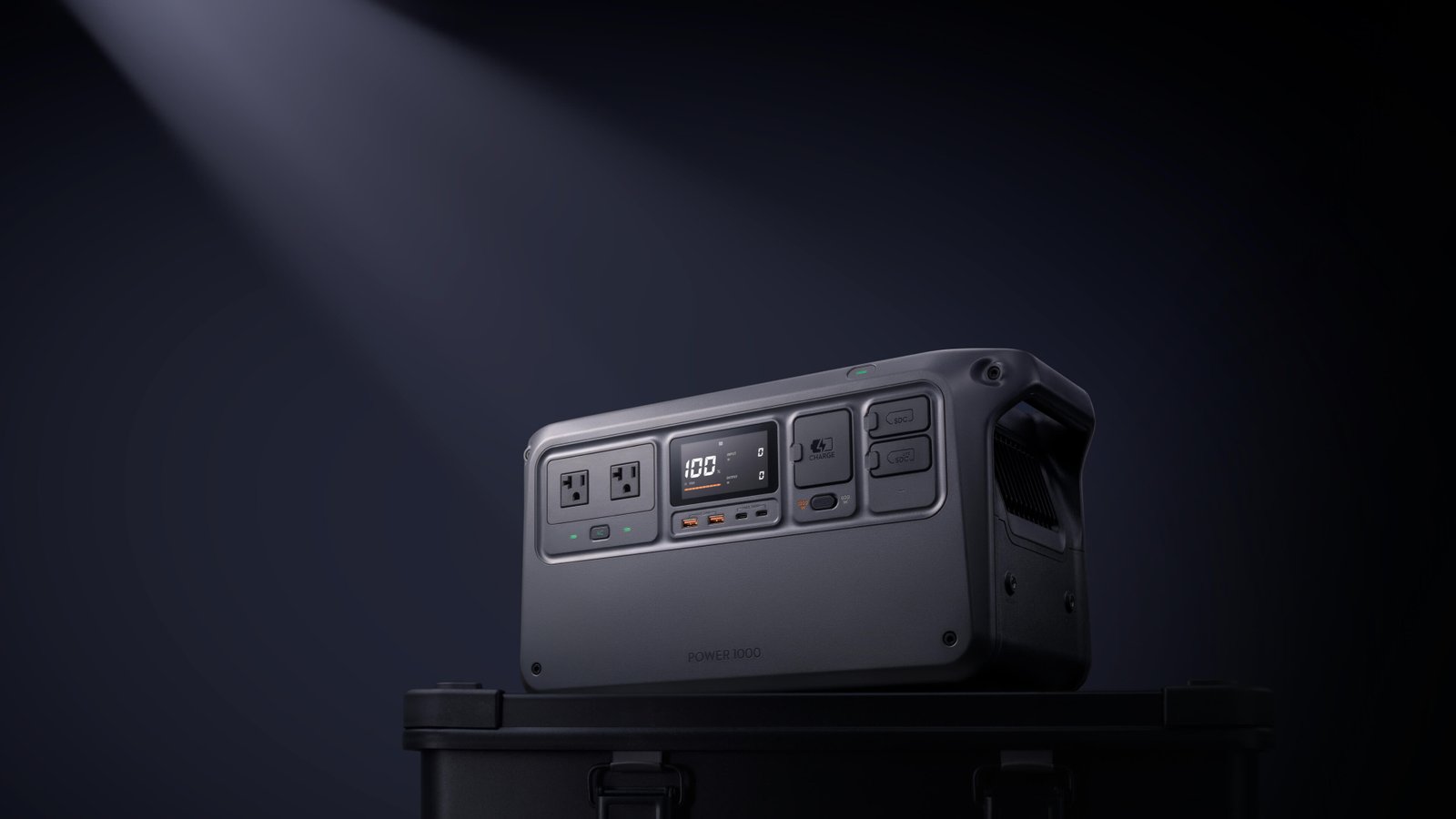
- Quiet Indoor Alternative (~$549 Street): The DJI Power 1000 delivers
2,200Wcontinuous AC and23 dBquiet standard charging, making it an appealing indoor/studio choice if you don’t need built-in XT60 solar ports. - Just Above $1,000 (~$1,099 Street): Stepping up slightly to the BLUETTI AC200L (
$899–$1,199street promos) adds1,200Wsolar (12–145V), a nativeTT-30RRV outlet, battery expansion to8,192Wh, and CNET-verified>29-hourfridge endurance.
Frequently Asked Questions
Can you get a 2,000Wh LiFePO4 power station under $1,000?+
Yes. At typical US street promotions (~$799–$1,099, averaging ~$999), the Jackery Explorer 2000 v2 delivers 2,042Wh LFP capacity and 2,200W AC output at 39.5 lbs—trading away external battery expansion and fast solar input (>400W) to hit that price and weight.
Which under-$1,000 power station is best for a home office desktop or NAS server?+
The EcoFlow DELTA 3 Plus (~$699 street) combines <10 ms UPS switchover with USB HID communication so compatible computers or NAS devices can execute graceful shutdowns, unlike <=20 ms units.
Why is the Pecron E1500LFP so much cheaper per watt-hour than Jackery or EcoFlow?+
Pecron sells primarily online from US fulfillment warehouses without big-box retail markups, packing 1,536Wh and 2,200W AC into a ~$599 street price—though its main solar port requires 32V–95V Voc and lacks major retail counter support.
Sources & Technical References
- View Source →[1]Manufacturer SpecificationEcoFlow US OfficialVerified 2026-11-24EcoFlow DELTA 3 Plus Official Specifications
1,024Wh LFP, 1,800W continuous AC, 1,000W dual 500W MPPT solar, <10ms UPS, 1,500W X-Stream AC charging.
- View Source →[2]Manufacturer SpecificationPecron US OfficialVerified 2026-11-24Pecron E1500LFP Official Specifications
1,536Wh LFP, 2,200W AC, 800W dual-port solar (GX16MF 32-95V 700W + DC5521 100W), EP3000-48V expansion support.
- View Source →[3]Manufacturer SpecificationJackery US OfficialVerified 2026-11-24Jackery Explorer 2000 v2 Product Page & User Guide
2,042Wh LFP Cell-to-Body design, 39.5 lbs weight, 2,200W continuous AC, 400W dual DC8020 solar input.
- View Source →[4]Manufacturer SpecificationBLUETTI US OfficialVerified 2026-11-24BLUETTI AC70 Portable Power Station Official Specifications
768Wh LFP, 1,000W continuous AC, 2,000W Power Lifting resistive mode, 500W MPPT solar (12-58V, 10A), 950W Turbo AC charge.
- View Source →[5]Third-Party Independent ReviewOutdoorGearLabVerified 2026-11-24Jackery Explorer 2000 v2 Independent Review & Benchmark Testing
Reports ~2.5 hour full AC recharge (~817 Wh/hr average), high portability score for 2kWh class, and solar expansion trade-offs.
- View Source →[6]Third-Party Independent ReviewTechRadarVerified 2026-11-24Jackery Explorer 2000 v2 Hands-On Review
Evaluates kitchen appliance support, Cell-to-Body weight reduction (39.5 lbs), quiet charging profile, and 400W solar ceiling.
- View Source →[7]Third-Party Independent ReviewAPH NetworksVerified 2026-11-24BLUETTI AC70 Portable Power Station Load Test Review
Constant 136W AC load discharge test measured 730.59 Wh usable output (~95% of rated 768Wh cell capacity; ~92.5% net inverter efficiency).