EcoFlow DELTA 3 Plus vs. DJI Power 1000 (2026): 1kWh Solar/UPS vs. Quiet 2,200W
Compare EcoFlow DELTA 3 Plus and DJI Power 1000 across 1,000W built-in dual MPPT solar, <10ms HID UPS, 2,200W output, 23 dB acoustics, and SDC adapter costs.
Both the EcoFlow DELTA 3 Plus and DJI Power 1000 pack 1,024Wh LFP batteries and dual 140W USB-C PD ports under 29 lbs, yet they serve notably different users. Choose the EcoFlow DELTA 3 Plus (~$699 street) for plug-and-play versatility: built-in 1,000W dual-MPPT solar (11–60V), six AC outlets, a 12V car socket, Wi-Fi telemetry, and <10 ms HID USB UPS support. Choose the DJI Power 1000 (~$549 street) if 2,200W continuous AC output, ultra-quiet 23 dB charging, drone SDC speed, and lower upfront street cost outweigh needing external SDC adapters for solar and 12V.
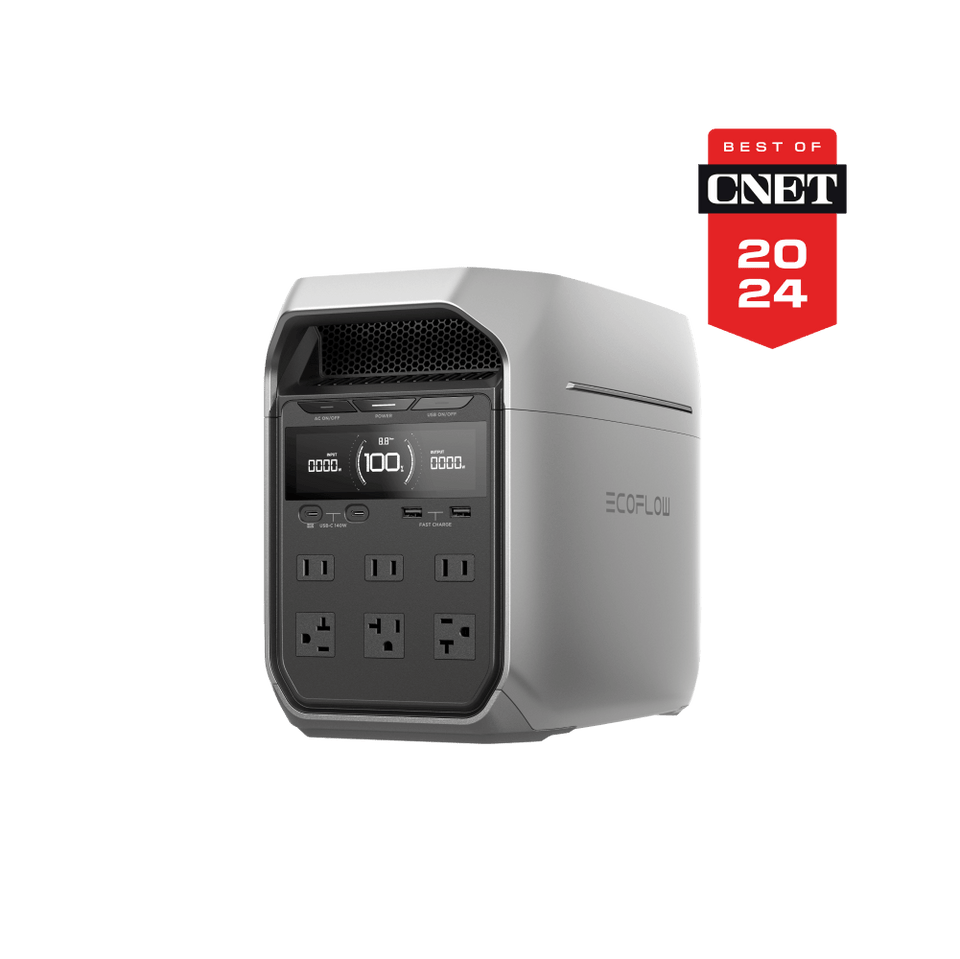
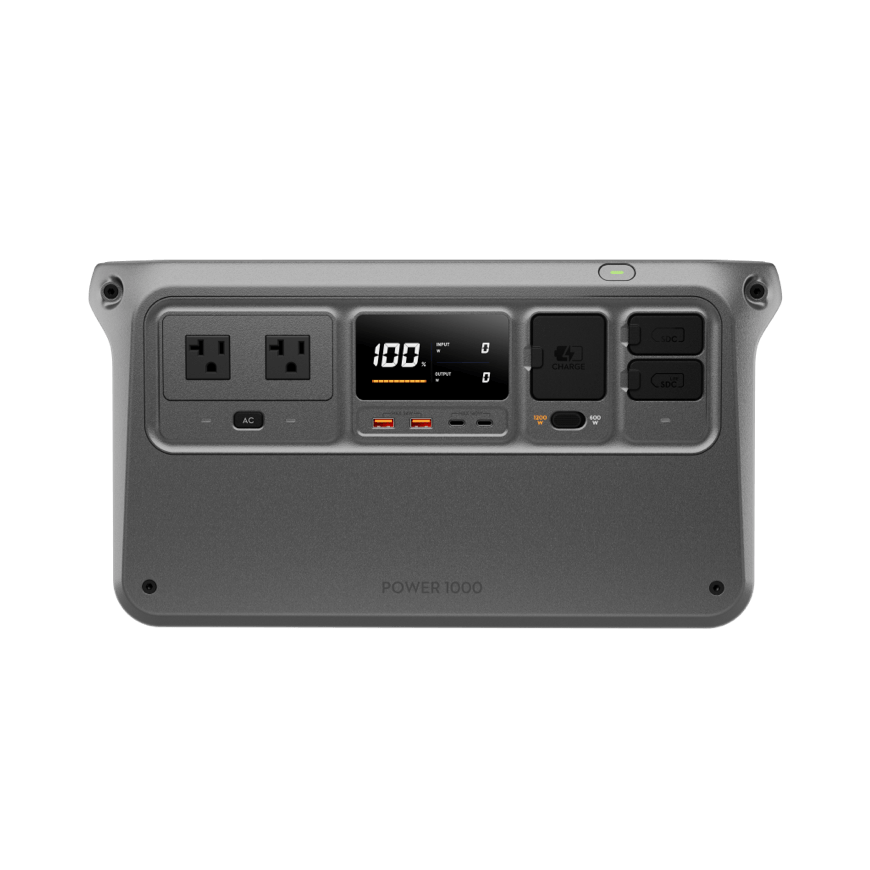
Technical Specifications Comparison
| Specification | EcoFlow DELTA 3 Plus | DJI Power 1000 |
|---|---|---|
| Hardware Visual | | |
| Battery Capacity | 1,024 Wh (LiFePO4 (LFP)) | 1,024 Wh (LiFePO4 (LFP)) |
| Continuous / Surge AC | 1,800W / 3,600W | 2,200W / 4,400W |
| AC Output Voltage | 120V | 120V |
| Solar Input & Voc | 1,000W (11V–60V Voc per XT60i port) | 800W (Requires DJI Power Solar Panel Adapter Module (MPPT) via SDC port (supports up to ~400W per module / 800W max dual)) |
| Weight & Portability | 27.6 lbs — Approx. 12.5 kg compact rectangular profile with dual handles | 28.7 lbs — Approx. 13 kg (~28.7 lbs V1; ~31.3 lbs V2) without integrated wheels |
| 3rd-Party Usable AC Wh | Not Independently Verified | Not Independently Verified |
| Typical Street / $/Rated Wh | $699 ($0.68/Wh) | $549 ($0.54/Wh) |
Packs 1,000W dual-MPPT solar charging, sub-1-hour AC replenishment, and a sub-10 ms HID-capable UPS into a 27.6 lb chassis, making it more versatile than non-Plus 1kWh units.
Exceptional 2,200W inverter density and 23 dB acoustic refinement in a 28.7 lb frame, though solar charging and 12V car sockets require optional DJI SDC adapters.
Product Overview
At first glance, the EcoFlow DELTA 3 Plus (1,024Wh, 27.6 lbs, ~$699 street) and DJI Power 1000 (1,024Wh, 28.7 lbs, ~$549 street) look nearly interchangeable: both pack 1kWh LiFePO4 cells, dual 140W USB-C PD 3.1 outputs, sub-30 lb carry weights, and 5-year warranties (including DJI registration terms). Look closer at their port panels and power electronics, however, and they serve two distinct buyer profiles.
Key Differences
- Inverter Output vs. AC Outlet Count: DJI Power 1000 V1 delivers a stout 2,200W continuous (
4,400Wsurge)—beating DELTA 3 Plus’s1,800W(3,600Wsurge) without relying on voltage-lowering boost tricks—yet includes only two5-20RAC sockets. EcoFlow provides six120VAC outlets natively, minimizing power-strip clutter at a desk or campsite. - Built-In Solar & 12V Car Ports vs. SDC Adapters: EcoFlow includes dual
500WMPPT solar ports (1,000Wtotal,11V–60V Voc) plus a12.6V/10Acar socket and twoDC5521ports built right in. DJI Power 1000 omits native solar XT60 connectors and a 12V cigarette socket, requiring optional DJI SDC MPPT Solar Adapter Modules (up to800Wdual) and SDC 12V cables—adding accessory cost and bulk. - UPS & Software Integration: DELTA 3 Plus offers
<10 msUPS switchover with USB HID signaling for automatic NAS/PC shutdowns plus native Wi-Fi/Bluetooth monitoring. DJI Power 1000 V1 is rated<=20 ms(~10 mson V2) and requires an optional external dongle for Wi-Fi telemetry. - Acoustics (
23 dBvs~30 dB): DJI specifies as low as23 dBduring600Wstandard charging (~70 minfull at1,200W), making it marginally quieter in dead-silent bedrooms or van bunks than EcoFlow’s~30 dB(<600Wload) profile.
Which Specifications Matter & Real-World Effects
- Real Total Cost with Solar: While DJI’s
~$549street price ($449–$699range) undercuts EcoFlow’s~$699typical street price ($599–$699promos), adding one or two DJI MPPT solar modules plus a 12V SDC car cable narrows or eliminates that upfront savings for off-grid solar users. - Cycle Life Benchmarks: EcoFlow specifies
4,000cycles to 80% capacity retention, whereas DJI rates4,000cycles to >=70% capacity under 25°C lab cycling. - Expansion Ceilings: EcoFlow DELTA 3 Plus scales up to
5,120Whusing compatible DELTA 3, DELTA 2 Max, or DELTA Pro 3 Extra Batteries; DJI Power 1000 scales higher up to11,264Whusing DJIPower Expansion Battery 2000modules viaSDC.
Best Use Cases
- EcoFlow DELTA 3 Plus fits: Off-grid campers using
1,000Wportable solar, home-office workstations and NAS boxes requiring<10 msHID UPS, and multi-device setups needing six AC outlets plus native 12V plugs out of the box. - DJI Power 1000 fits: Drone pilots and field video crews needing direct
SDCbattery fast charging, noise-sensitive van sleepers prioritizing23 dBacoustics, and indoor grid-backup buyers wanting2,200Winverter headroom at promotional V1 prices.
Advantages & Trade-offs
Neither model dominates across all criteria. Choosing DJI Power 1000 strictly for its 2,200W wattage or $549 street cost can surprise solar campers once extra SDC adapter costs and the two-outlet limit hit. Conversely, choosing EcoFlow DELTA 3 Plus means trading away 400W of native continuous inverter headroom (1,800W vs. 2,200W) if you occasionally run heavy 2,000W inductive tools or dual kitchen heaters.
Evidence Supporting the Conclusion
Official EcoFlow and DJI product specifications document the exact 1,800W vs 2,200W inverters, 1,000W built-in dual MPPT vs external SDC solar architecture, <10 ms HID UPS vs <=20 ms V1 rating, and 4,000-cycle (80% vs >=70%) definitions. Note that independent third-party usable-AC-Wh lab benchmarks are not yet recorded in our registry for either SKU, so runtime planning in our Battery Runtime Estimator relies on standard 78%–88% AC conversion estimates.
Final Decision Matrix
- You want built-in 1,000W dual-MPPT solar charging and a 12V car port with zero extra adapter boxes
- You need <10 ms UPS switchover with HID USB communication to protect a NAS or desktop workstation
- You want six 120V AC outlets and built-in Wi-Fi app control straight out of the box
- You need 2,200W continuous AC output (4,400W surge) to run heavier appliances than 1,800W allows
- You prioritize a whisper-quiet 23 dB acoustic floor during standard charging for sleeping in vans or bedrooms
- You charge DJI drone batteries via SDC or find promotional $449–$549 street pricing for indoor grid backup
Frequently Asked Questions
Why doesn't the DJI Power 1000 plug directly into solar panels or 12V car coolers?+
To prioritize dual 140W USB-C ports and direct DJI drone battery SDC fast charging in a clean faceplate, DJI omitted built-in XT60 solar terminals and a 12V cigarette lighter socket. Using solar panels (up to 800W) or 12V car accessories requires buying external DJI SDC adapter modules or cables.
What changed between DJI Power 1000 V1 and V2 compared to EcoFlow DELTA 3 Plus?+
Our reviewed US DJI Power 1000 V1 (Model DYM1000L) offers 2,200W AC, <=20 ms UPS, and requires a dongle for Wi-Fi app monitoring. DJI's newer Power 1000 V2 increases continuous AC to 2,600W and tightens UPS transfer to ~10 ms—closer to EcoFlow DELTA 3 Plus's <10 ms HID UPS.
Which unit charges faster from a 120V wall outlet?+
EcoFlow DELTA 3 Plus reaches 100% in ~56 minutes at 1,500W X-Stream AC charging, while DJI Power 1000 reaches 100% in ~70 minutes at 1,200W fast mode (or runs at 600W standard mode for ultra-quiet 23 dB acoustics).
Sources & Technical References
- View Source →[1]Manufacturer SpecificationEcoFlow US OfficialVerified 2026-11-24EcoFlow DELTA 3 Plus Official Specifications
1,024Wh LFP, 1,800W continuous AC, 1,000W dual 500W MPPT solar, <10ms UPS, 1,500W X-Stream AC charging.
- View Source →[2]Manufacturer SpecificationDJI OfficialVerified 2026-11-24DJI Power 1000 Specifications & Official Overview
1,024Wh LFP, 2,200W continuous AC (V1 US model; V2 increases to 2,600W), dual 140W USB-C, 800W solar via MPPT adapter.
- View Source →[3]Government Research ResourceNational Renewable Energy Laboratory (NREL)Verified 2026-11-24PVWatts & US Peak Sun Hours Reference Data
Documents regional peak sun hours and real-world photovoltaic derating factors (ambient heat, angle, shading, controller loss).