EcoFlow DELTA 3 Plus Review (2026): 1,000W Dual-MPPT Solar & Sub-10ms HID UPS
EcoFlow DELTA 3 Plus US review: 1,024Wh LFP, 1,800W AC, dual 500W MPPT solar, 56-minute AC charge, <10ms HID UPS, and trade-offs vs DELTA 3 & DJI.
The EcoFlow DELTA 3 Plus packs 1,000W dual-MPPT solar input, 56-minute 1,500W AC fast charging, six AC outlets, dual 140W USB-C ports, and a sub-10 ms HID-capable UPS into a 27.6 lb chassis. While its 1,024Wh base battery yields modest multi-day fridge runtime without extra batteries and independent usable-AC lab data remains unverified here, it outpaces the standard non-Plus DELTA 3 and 500W solar competitors on recharge speed and home-office UPS utility.
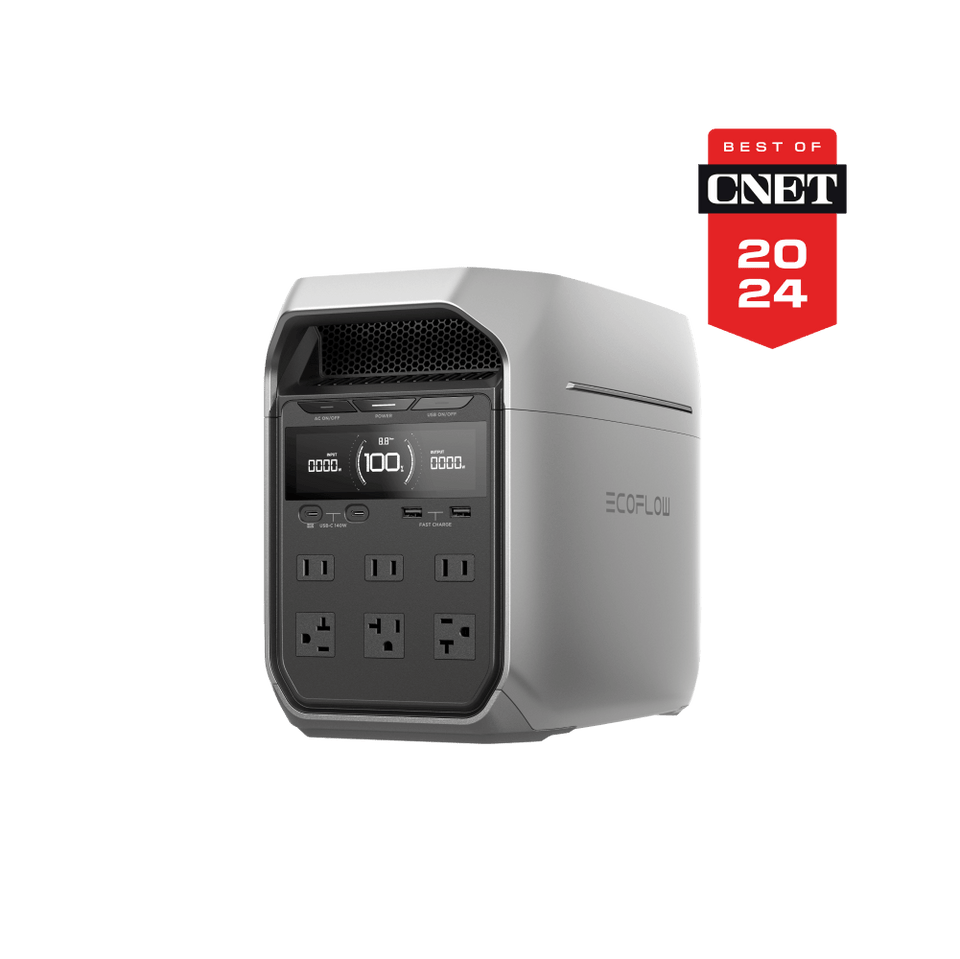
MSRP ~$719–$899; typical US street pricing $599–$699 during promotions ($0.68/rated Wh at street pricing).
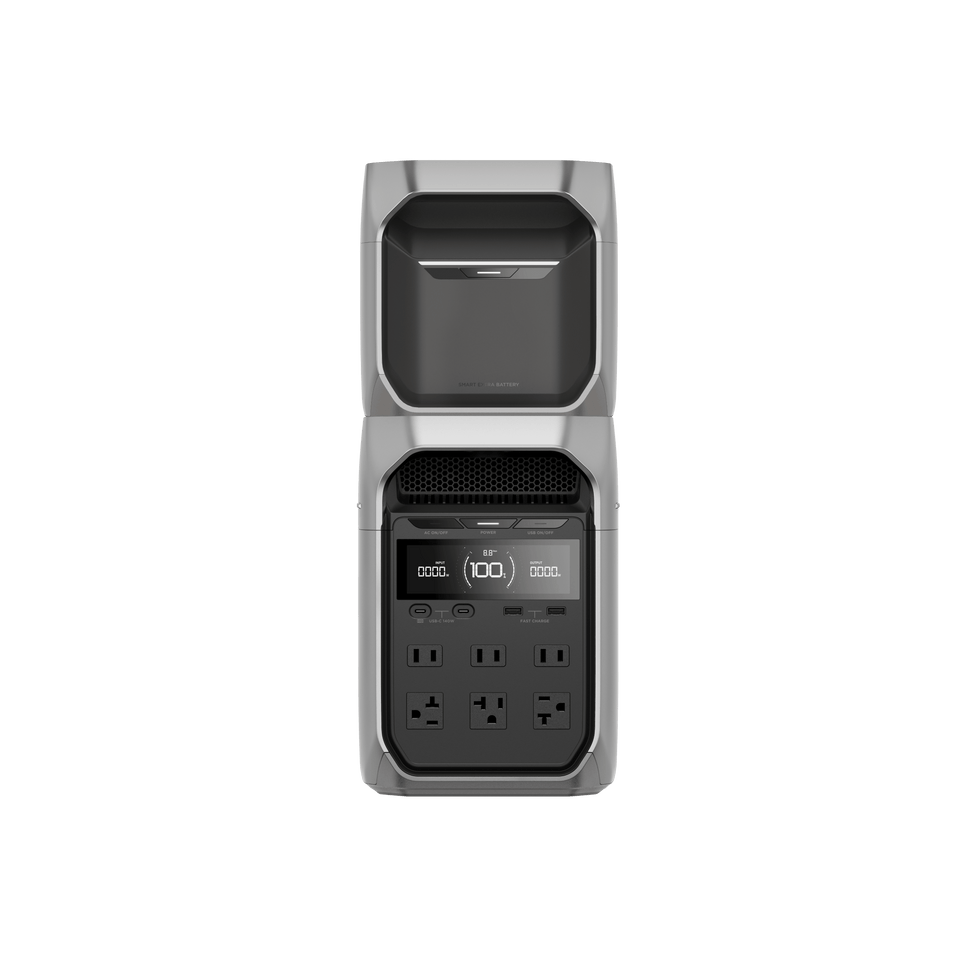
Official Hardware & Application Gallery
Sourced from EcoFlow official product media 
Key Advantages
- ✓Dual 500W MPPT ports (1,000W total) recharge 1,024Wh roughly twice as fast as 500W competitors
- ✓<10 ms UPS with HID USB signal support protects desktop workstations and NAS servers
- ✓Six 120V AC outlets plus dual 140W USB-C PD 3.1 ports in a 27.6 lb footprint
Trade-offs & Limitations
- !1,024Wh capacity delivers limited multi-day runtime for full-size refrigerators without extra batteries
- !60V per-port Voc limit requires keeping portable solar strings below 60V open-circuit
- !Independent third-party usable AC capacity figures are not yet recorded in our source registry
Ideal Applications
- Home office workstations, routers, NAS backups, and weekend car camping
- Buyers wanting fast 1,000W solar recovery in a <30 lb package
Situations Where It May Not Fit
- Extended multi-day whole-fridge backup without expansion batteries
- 240V split-phase appliances
Complete Verified Specifications
| Specification | Verified Data | Data Provenance |
|---|---|---|
| Product Name & Revision | EcoFlow DELTA 3 Plus (DELTA 3 Plus (3rd Generation 1kWh Class)) | Manufacturer Spec |
| US Market Version | US 120V Edition | Manufacturer Spec |
| Battery Capacity (Rated) | 1,024 Wh | Manufacturer Spec |
| Measured Usable AC Output | Not Independently Verified | Unverified |
| Battery Chemistry | LiFePO4 (LFP) | Manufacturer Spec |
| Published Cycle Life | 4,000 cycles to 80% original capacity — Manufacturer specification at 25°C under standard cycling | Manufacturer Spec |
| Continuous AC Output | 1,800 W (X-Boost powers select resistive loads above 1,800W (commonly up to ~2,200W–2,600W by lowering voltage; unsuitable for voltage-sensitive electronics)) | Manufacturer Spec |
| Published Surge Output | 3,600 W | Manufacturer Spec |
| Published Surge Duration | Not Disclosed (brief startup surge rating) | Not Disclosed |
| AC Output Voltage | 120V | Manufacturer Spec |
| AC Outlet Types | 6 × 120V NEMA 5-20R/5-15R AC outlets | Manufacturer Spec |
| USB-A Output | 2 × USB-A (36W fast charge max each) | Manufacturer Spec |
| USB-C Output | 2 × USB-C (140W PD 3.1 max each) | Manufacturer Spec |
| DC Output Ports | 1 × 12.6V/10A Car Port + 2 × DC5521 outputs | Manufacturer Spec |
| Max Solar Input | 1,000 W | Manufacturer Spec |
| Solar Input Voltage Range (Voc) | 11V–60V Voc per XT60i port | Manufacturer Spec |
| Solar Input Current Limit | 15A max per port (500W × 2) | Manufacturer Spec |
| MPPT Configuration | Dual independent 500W MPPT controllers (1,000W total solar input) | Manufacturer Spec |
| AC Charging Rate | 1,500 W max — Up to 1,500W X-Stream AC fast charge (0–100% in ~56 minutes) | Manufacturer Spec |
| Car / Alternator Charging | 12V/24V 8A car charging; supports EcoFlow 800W Alternator Charger | Manufacturer Spec |
| Published Recharge Time | ~56 mins on 1,500W AC wall outlet; ~70 mins under full 1,000W dual MPPT solar | Mfr / Attributed Test |
| Expandable Capacity | Yes — up to 5,120 Wh (Expandable up to 5kWh with compatible EcoFlow DELTA 3, DELTA 2 Max, or DELTA Pro 3 Extra Battery packs) | Manufacturer Spec |
| Supported Expansion Batteries | DELTA 3 Extra Battery (1,024Wh), DELTA 2 Max Extra Battery (2,048Wh), DELTA Pro 3 Extra Battery (4,096Wh) | Manufacturer Spec |
| UPS / EPS Functionality | Sub-10 ms UPS switchover with HID USB communication support for NAS/PC graceful shutdown | Manufacturer Spec |
| Published Switching Time | <10 ms (manufacturer rated) | Manufacturer Spec |
| Weight | 27.6 lbs (Approx. 12.5 kg compact rectangular profile with dual handles) | Manufacturer Spec |
| Dimensions (L × W × H) | 15.7 × 8.3 × 11.2 in | Manufacturer Spec |
| Operating Temp (Charging) | 32°F to 113°F (0°C to 45°C) | Manufacturer Spec |
| Operating Temp (Discharging) | 14°F to 113°F (-10°C to 45°C) | Manufacturer Spec |
| Noise Rating (Manufacturer) | ~30 dB under 600W output (manufacturer rated) | Manufacturer Spec |
| App & Connectivity | Wi-Fi & Bluetooth via EcoFlow App (Storm Guard alerts) | Manufacturer Spec |
| Warranty & Verification Date | 5-Year Manufacturer Warranty (Verified 2026-11-24) | Manufacturer Policy |
| Pricing & Value per Rated Wh | Typical Street ~$699 ($0.68/rated Wh) | MSRP $899 ($0.88/rated Wh) | Checked 2026-11-24 |
Evidence & Data Provenance Breakdown
SolarGeneratorWholeHouse separates official specifications, third-party measurements, owner patterns, and editorial estimates.
Capacity (1,024Wh LiFePO4 (LFP)), continuous AC (1,800W), surge (3,600W), solar voltage limits (11V–60V Voc per XT60i port), and warranty (5-Year Manufacturer Warranty) are sourced directly from EcoFlow documentation.
Not Independently Verified in Our Source Registry: Independent laboratory usable-AC-Wh discharge benchmarks for this exact US SKU are not yet recorded in our verified registry; runtime figures below use clearly labeled engineering estimates.
Noise (~30 dB under 600W output (manufacturer rated)) and cycle retention (4,000 cycles to 80% original capacity) reflect EcoFlow's published ratings under manufacturer-specified test temperatures rather than independent long-term wear tests.
Reviewers and owners consistently note quiet low-load acoustics, rapid sub-1-hour AC top-offs, and genuine NAS/desktop UPS utility via the HID port.
Unpublished fields: Surge duration (Not Disclosed (brief startup surge rating)).
Estimated AC Runtime Scenarios
| Sample Load | Estimated Runtime Range | Calculation Basis |
|---|---|---|
| Wi-Fi Router & Modem (~25W AC) | 31.9–36 hrs | Estimated 78%–88% usable AC range (untested model; accounts for inverter conversion & idle draw) |
| CPAP Machine (~45W AC avg) | 17.7–20 hrs | Estimated 78%–88% usable AC range (untested model; accounts for inverter conversion & idle draw) |
| Modern Refrigerator Avg Draw (~150W) | 5.3–6 hrs | Estimated 78%–88% usable AC range (untested model; accounts for inverter conversion & idle draw) |
| Home Office / Mixed Essential Load (~400W) | 2–2.3 hrs | Estimated 78%–88% usable AC range (untested model; accounts for inverter conversion & idle draw) |
| Portable AC / Heavy Load (~1,200W) | 0.7–0.8 hrs | Estimated 78%–88% usable AC range (untested model; accounts for inverter conversion & idle draw) |
Overview & US Market Positioning
The EcoFlow DELTA 3 Plus (3rd Generation US 120V Edition) refines the classic 1kWh portable power station into an agile dual-role platform: a fast-recovering off-grid camp unit and a genuine home-office UPS. Whereas many compact 1,024Wh stations—including the standard non-Plus DELTA 3—cap solar input around 500W and rely on slower 15–20 ms EPS switching, the DELTA 3 Plus doubles MPPT solar speed to 1,000W, integrates sub-10 ms HID-capable UPS support, and retains a manageable 27.6 lb footprint.
In the US market, its closest spec rival is the DJI Power 1000, compared head-to-head in our EcoFlow DELTA 3 Plus vs. DJI Power 1000 guide. While DJI delivers a heavier 2,200W inverter and lower street clearance pricing ($549 vs. $699), EcoFlow counters with built-in XT60i solar ports (no external adapter boxes required), six AC outlets (versus DJI’s two), built-in Wi-Fi/Bluetooth app control (no dongle required), and true HID computer UPS signaling.
Battery Capacity, Chemistry & Cycle Longevity
EcoFlow houses 1,024Wh of LiFePO4 (LFP) cells rated for 4,000 cycles to 80% original capacity at 25°C under standard cycling—a step up from the 3,000-cycle rating of the previous DELTA 2 generation and higher retention than DJI’s 4,000-cycle rating to >=70%. For daily home-office UPS buffering or heavy weekend overlanding, 4,000 cycles to 80% offers long-horizon durability.
Thermal limits cover 32°F to 113°F (0°C to 45°C) for charging and 14°F to 113°F (-10°C to 45°C) for discharging. Note that minimum discharge stops at 14°F (-10°C) rather than the -4°F (-20°C) cold-discharge floor of BLUETTI AC70 or Pecron E1500LFP, and there is no internal heater—so extreme sub-zero camp use requires insulated storage.
Continuous AC Output, Surge Behavior & Voltage Support
The 120V pure sine inverter delivers 1,800W continuous output and 3,600W peak surge (with published surge duration Not Disclosed). For specialized high-wattage resistive tools or heating elements, X-Boost mode can drive select resistive loads above 1,800W (commonly up to ~2,200W–2,600W) by lowering voltage—strictly unsuitable for voltage-sensitive electronics, induction compressors, or medical gear.
Port density is exceptional for a 27.6 lb chassis:
- 6 × 120V NEMA 5-20R / 5-15R AC outlets (three times the outlet count of DJI Power 1000 and BLUETTI AC70)
- 2 × USB-C PD 3.1 (140W max each) + 2 × USB-A (36W fast charge each)
- 1 × 12.6V/10A car port + 2 × DC5521 outputs
That six-outlet rear layout lets desktop setups plug monitors, routers, NAS boxes, and desk lamps straight in without crowding oversized wall warts.
Solar Charging, AC Charging & Expansion Ecosystem
EcoFlow’s dual independent 500W MPPT XT60i solar inputs (1,000W total) give the DELTA 3 Plus a huge recovery advantage in its weight class. Each port accepts 11V to 60V Voc at up to 15A max. Because 1,000W matches the full 1,024Wh battery closely, strong midday solar conditions can replenish the pack in roughly 70 minutes (real-world cloudy/angled yields vary—check our Solar Charging Time Estimator). Always ensure portable or rigid panel strings remain strictly below 60V Voc per port in cold weather per our solar input limits and MPPT guide.
Wall charging via X-Stream AC reaches 1,500W, charging 0–100% in approximately 56 minutes on a standard 120V wall outlet. Vehicle charging works either through the 12V/24V 8A car socket or via EcoFlow’s optional 800W Alternator Charger for van lifers. Expansion is another surprise at 1kWh: compatible extra batteries (DELTA 3 1,024Wh, DELTA 2 Max 2,048Wh, or DELTA Pro 3 4,096Wh) scale total storage up to 5,120Wh without replacing the core inverter.
UPS/EPS Behavior, Cooling Noise & App Features
Sub-10 ms backup protection is a cornerstone feature here. EcoFlow rates transfer speed at <10 ms alongside HID USB communication, bridging the gap between portable camping stations and dedicated desktop/NAS UPS appliances. Paired with EcoFlow’s Wi-Fi and Bluetooth app—which includes Storm Guard automated weather pre-charging and granular AC charge-speed throttling—it fits seamlessly under a home-office desk.
Acoustically, EcoFlow rates noise at ~30 dB under 600W output (louder fan speeds above 600W or during 1,500W AC charging are Not Disclosed in dB terms and unverified in our lab registry). In everyday office UPS pass-through or light laptop workloads, owners report near-silent fan behavior.
Runtime Considerations & Real-World Performance Data
Independent third-party laboratory usable AC watt-hour tests and standardized round-trip efficiency figures for the EcoFlow DELTA 3 Plus are Not Independently Verified in our source registry. Using our conservative 78% to 88% AC conversion estimation range on the 1,024Wh pack (799Wh to 901Wh estimated usable AC energy):
- Wi-Fi Router & Modem (~25W AC): Approx. 32.0 to 36.0 hours (even longer if powered via 12V DC or USB-C PD).
- CPAP Machine (~45W AC): Approx. 17.8 to 20.0 hours.
- Modern Refrigerator (~150W avg): Approx. 5.3 to 6.0 hours steady draw (typically longer with cyclic compressor pauses, though multi-day fridge protection requires expansion or daytime solar).
- Home Office / Mixed Essential Load (~400W): Approx. 2.0 to 2.3 hours.
- Portable AC / Space Heating (~1,200W): Approx. 0.7 to 0.8 hours (~40–45 minutes).
Calculate custom workstation or camping runtimes with our Battery Runtime Estimator.
Build Quality, Portability & Dimensions
At 27.6 lbs (12.5 kg) and 15.7 × 8.3 × 11.2 inches, the DELTA 3 Plus adopts a slim, flat-top rectangular silhouette with dual side handles. Being 1.1 lbs lighter and narrower than the DJI Power 1000 makes it easy to tuck under desks, behind SUV seats, or inside van cabinets, while its flat top allows stable gear stacking.
Advantages, Disadvantages & Ideal Applications
Key Advantages
- 1,000W dual-MPPT solar (two 500W XT60i channels) and 56-minute 1,500W AC charging eliminate recharge downtime.
- <10 ms UPS with HID USB telemetry protects desktop workstations and NAS servers natively.
- Six AC outlets, dual 140W USB-C PD 3.1 ports, built-in Wi-Fi/Bluetooth, and cross-generation expansion up to 5,120Wh in a 27.6 lb chassis.
Trade-offs & Limitations
- 1,024Wh base storage provides limited multi-day full-fridge backup unless paired with an expansion battery or steady solar.
- 60V Voc ceiling per PV port excludes high-voltage series strings above 60V.
- Minimum 14°F (-10°C) discharge floor is slightly warmer than -4°F peers; third-party usable AC Wh figures remain Not Independently Verified.
Ideal Applications: Home-office professionals protecting workstations/NAS servers/routers with a <10 ms HID UPS, and car campers or van travelers wanting maximum solar recovery speed in a sub-30 lb package.
Price, Value per Rated Wh & Warranty
Listing between $719 and $899 MSRP ($0.88/rated Wh at $899) and trading typically at $699 street price ($599–$699 during US promotions), the DELTA 3 Plus lands at $0.68 per rated Wh ($0.58/rated Wh at $599). While its upfront $/Wh sits higher than discounted DJI Power 1000 clearance units ($0.54/rated Wh), factoring in DJI’s optional solar adapter and Wi-Fi dongle fees brings real-world out-of-the-box system costs much closer together. Cost per measured usable AC Wh is Not Independently Verified. EcoFlow includes a 5-Year Manufacturer Warranty.
Close Alternatives to Consider
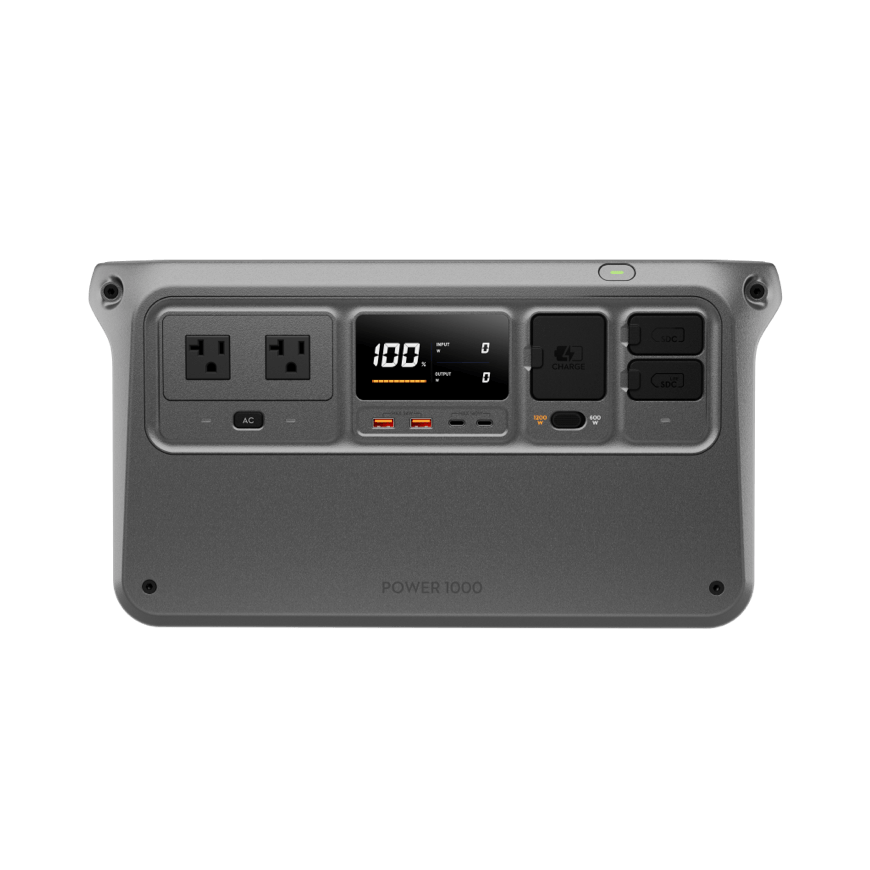
DJI Power 1000
Exceptional 2,200W inverter density and 23 dB acoustic refinement in a 28.7 lb frame, though solar charging and 12V car sockets require optional DJI SDC adapters.

BLUETTI AC70
With 705–730.6 Wh of independently measured usable AC output from a 768Wh battery and 500W solar input at ~$399–$449 street price, the AC70 punches above typical 500Wh–700Wh units.
Frequently Asked Questions
What separates the EcoFlow DELTA 3 Plus from the standard DELTA 3?+
The DELTA 3 Plus upgrades solar intake to dual independent 500W MPPT ports (1,000W total vs. single 500W on standard DELTA 3), adds dual 140W USB-C PD 3.1 ports (versus 100W), and includes HID USB communication support alongside its <10 ms UPS for graceful PC and NAS shutdowns.
Can the EcoFlow DELTA 3 Plus act as a real computer and NAS UPS?+
Yes. Beyond its manufacturer-rated <10 ms AC switchover speed, the DELTA 3 Plus supports HID USB UPS signaling—allowing compatible desktop PCs and Network Attached Storage (NAS) units to detect outage status and initiate clean automated shutdowns before the 1,024Wh battery empties.
Which extra batteries expand the EcoFlow DELTA 3 Plus?+
EcoFlow supports scaling from 1,024Wh up to 5,120Wh using compatible EcoFlow Extra Battery packs including the DELTA 3 Extra Battery (1,024Wh), DELTA 2 Max Extra Battery (2,048Wh), and DELTA Pro 3 Extra Battery (4,096Wh).
Sources & Technical References
- View Source →[1]Manufacturer SpecificationEcoFlow US OfficialVerified 2026-11-24EcoFlow DELTA 3 Plus Official Specifications
1,024Wh LFP, 1,800W continuous AC, 1,000W dual 500W MPPT solar, <10ms UPS, 1,500W X-Stream AC charging.
- View Source →[2]Government Research ResourceNational Renewable Energy Laboratory (NREL)Verified 2026-11-24PVWatts & US Peak Sun Hours Reference Data
Documents regional peak sun hours and real-world photovoltaic derating factors (ambient heat, angle, shading, controller loss).
Model & Brand Comparisons
Related Sizing Guides & Tools
- What Is UPS & EPS Switching in Portable Power Stations? (0ms vs <10ms vs 20ms) →
- Solar Input Limits & MPPT Explained: Voc Ceilings, Cold Weather & Panel Sizing →
- Understanding Power Station Efficiency: Why Rated Wh Never Equals Usable AC Energy →
- Expandable Battery Systems Explained: Modular Stacks, Cascade Cables & Hidden Costs →
- Calculate custom runtime for EcoFlow DELTA 3 Plus →