BLUETTI EB3A Review (2026): 268.8Wh LFP & 600W Inverter Trade-Offs
2026 audit of BLUETTI EB3A (268.8Wh LFP, 600W AC): Power Lifting resistive tricks, 12-28V solar voltage trap, noisy 430W Turbo charging, and AC70/C300 upgrades.
The BLUETTI EB3A pairs a 268.8Wh LiFePO4 battery with a 600W continuous pure sine wave AC inverter (1,200W Power Lifting for simple resistive heaters) and 200W solar input at 10.14 lbs. Expect roughly 210–236Wh usable AC (78%–88%) or 237–250Wh via DC/USB-C (88%–93%). Key trade-offs include a strict 12V–28V Voc solar limit, loud fans under 430W dual/Turbo charging, ~15–20ms UPS speed, and a 2-year warranty versus 5-year Anker SOLIX C300 and BLUETTI AC70 rivals.

Most sub-300Wh portable power stations cap AC output at 200W or 300W, which immediately trips overload protection if you plug in a 450W portable blender, a corded rotary sander, or a 550W electric lunchbox. The BLUETTI EB3A broke that entry-tier bottleneck by mounting a genuine 600W continuous pure sine wave AC inverter onto a 268.8Wh (12Ah) LiFePO4 (LFP) battery pack weighing just 10.14 lbs.
That asymmetrical engineering—big inverter watts strapped to a small battery—makes the EB3A uniquely capable in short bursts while exposing strict compromises in solar panel voltage (12V–28V Voc), Turbo charging fan acoustics, UPS switchover speed (~15–20ms), and warranty length (2 years) compared with newer 2026 arrivals like the Anker SOLIX C300 and BLUETTI AC70.
268.8Wh Capacity vs. 600W Continuous AC: What Actually Works
Separating inverter ceiling (W) from energy capacity (Wh) prevents almost every buyer disappointment with entry-tier stations. On the EB3A, BLUETTI provides two 120V/5A AC sockets backed by 600W continuous output and a 1,200W peak rating (Power Lifting), alongside 1 × 100W USB-C PD 3.0, 2 × 5V/3A USB-A ports (15W total), 1 × 12V/10A regulated car socket, 2 × 12V/10A DC5521 barrel ports, and a 15W top wireless pad.
Because standalone third-party usable AC discharge numbers for the EB3A are Not Independently Verified in our database, realistic runtime planning applies standard conversion bands: 78%–88% usable AC (~210–236Wh) and 88%–93% usable DC/USB-C (~237–250Wh) after inverter losses, BMS overhead, and low-voltage battery cutoff.
| Load Scenario | Typical Draw | Output Path | Estimated EB3A Runtime | Engineering Caveat |
|---|---|---|---|---|
| Fiber Modem + Wi-Fi Router | 15W–20W |
12V DC / USB-C (AC OFF) |
11.8–16.6 hrs | Leaving the 600W AC inverter enabled wastes ~8W–12W in standby overhead. |
| CPAP Machine (No Heated Humidifier) | 30W–40W |
12V DC adapter (AC OFF) |
5.9–8.3 hrs (1 night) |
Heated tubing + AC inverter use cuts runtime to ~3.5–4.5 hours. |
| Ultrabook / MacBook Air | 45W–60W |
100W USB-C PD (AC OFF) |
3.9–5.5 hrs (~3.5–4 full charges) | USB-C avoids DC-to-AC-to-DC double conversion losses. |
| Portable 12V Compressor Fridge | 45W active (~18W cyclic avg) |
12V/10A regulated car port |
12–14 hrs | Full-size residential kitchen fridges are not viable (high compressor surge + ~2–4h limit). |
| 500W Corded Blender / Small Appliance | 450W–550W |
120V AC |
22–28 mins continuous | Works cleanly at full 120V—unlike 300W stations that shut off immediately. |
| 1,000W Travel Kettle / Hair Dryer | ~580W–600W (voltage-dropped) |
120V AC (Power Lifting ON) |
20–24 mins (1–2 quick uses) |
Resistive heating elements only; never use Power Lifting on motors or electronics. |
The Catch Behind 1,200W Power Lifting
BLUETTI’s 1,200W Power Lifting feature (disabled by default and toggled in the BLUETTI Bluetooth app) does not magically double inverter power to 1,200W at 120V. Instead, it intentionally drops output voltage so simple resistive loads—such as a 1,000W travel hair dryer, compact space heater, or immersion boiler—pull under 600W without tripping overload protection.
Because reduced voltage starves inductive motors and stresses voltage-sensitive power supplies, keep Power Lifting turned OFF whenever powering laptops, CPAP hardware, audio gear, or pumps. For deeper electrical mechanics, read Continuous Output vs. Surge Output Explained.
The Strict 12V–28V (8.5A / 200W) Solar Input Bottleneck
Solar compatibility is the easiest place to make an expensive mistake on the BLUETTI EB3A. Its built-in MPPT solar port accepts a strict 12V to 28V open-circuit voltage (Voc) window at 8.5A max (200W ceiling).
- Easy to Over-Voltage With
24VPanels: Standard24V-nominal or rigid residential rooftop panels typically spec36V–50VVoc at77°F (25°C)—and spike even higher on cold mornings. Plugging a36Vpanel (or wiring two12Vcamping panels in series) into the EB3A’s28Vport triggers immediate over-voltage shutdown or risks permanently destroying the MPPT MOSFETs. - Amperage Clipping Near
150W–165W: Because current clips at8.5A, pairing a typical12V-nominal200Wportable panel operating around18.5VVmp caps actual power draw at18.5V × 8.5A = ~157W—even under ideal noon sun. Reaching close to the200Wrating requires higher-voltage12V-class panels running near23V–24VVmp while staying strictly below28VVoc in winter air.
Check your panel’s temperature-adjusted Voc margin carefully using Solar Input Limits & MPPT Explained. Under realistic outdoor derating (~125W–155W real input from a 200W portable panel), empty-to-full solar recovery takes roughly 2 to 2.5 hours of strong midday peak sun.
Charging Noise, 430W Turbo Mode & ~15–20ms UPS Reality
Unlike early power stations burdened with external plastic AC power bricks, the EB3A integrates its charger inside the 10.14 lb case using a standard IEC AC cord. That convenience introduces three real-world operating traits:
- Aggressive Cooling Fan Under
350W–430WTurbo Charging: In Standard AC mode (268W), charging completes in roughly1.3 hourswith modest fan hum. Toggling Turbo Mode raises wall AC draw to350W—and simultaneous AC + Solar Dual Charging pushes input up to430Wmax (reaching80%in roughly30 minutes). Pushing350W–430Wthrough a tight10-inchchassis causes the small internal cooling fan to spin up loudly with a noticeable high-pitched whine. Selecting Silent Mode in the BLUETTI Bluetooth app dials down both charge wattage and acoustic intrusion overnight. - Bluetooth-Only App Control (No Wi-Fi): You must stand within Bluetooth range to switch charging speeds, toggle Power Lifting, or activate Eco auto-shutoff; remote cloud outage monitoring is absent.
~15–20msStandard UPS Switchover: BLUETTI includes an automatic grid-to-battery bypass UPS rated around~15–20ms(<=20ms). That handoff cleanly bridges Wi-Fi routers, cable modems, LED lamps, and most CPAP power bricks, yet sensitive desktop workstations or NAS servers can occasionally reboot during brownouts—a clear gap compared to<10msUPS units like the Anker SOLIX C300 or EcoFlow DELTA 3 Plus.
2026 Peer Audit: BLUETTI EB3A vs. Anker SOLIX C300 & BLUETTI AC70
Although the EB3A originally launched at higher retail pricing, street discounts frequently push it under $210–$230—directly overlapping newer 2026 contenders with longer warranties and smarter I/O.
| Specification | BLUETTI EB3A | Anker SOLIX C300 (Model A1722) | BLUETTI AC70 |
|---|---|---|---|
| Battery Capacity & Chemistry | 268.8Wh LFP (2,500+ cycles to 80%) |
288Wh LFP (3,000+ cycles to 80%) |
768Wh LFP (3,000+ cycles to 80%) |
| Continuous AC Inverter | 600W (1,200W resistive Power Lifting) |
300W (600W resistive SurgePad) |
1,000W (2,000W resistive Power Lifting) |
| Verified Usable AC Data | Not Independently Verified | Not Independently Verified | 705 Wh (250W) / 730.59 Wh (136W) |
| USB-C PD Ports | 1 × 100W |
2 × 140W bidirectional + 1 × 15W |
2 × 100W |
| Solar Input & Voc Limit | 200W (12V–28V, 8.5A) |
100W (11V–28V, 8.2A) |
500W (12V–58V, 10A) |
| Wall AC Fast Charge | 350W Turbo AC / 430W Dual AC+PV |
330W HyperFlash (~68 mins) |
950W Turbo AC (~1.5 hrs) |
| UPS Transfer Speed | ~15–20ms standard bypass |
<10ms fast UPS (~25 dB quiet) |
<=20ms automatic UPS |
| Connectivity & Weight | Bluetooth only • 10.14 lbs |
Wi-Fi + Bluetooth • 9.1 lbs |
Bluetooth only • 22.5 lbs |
| US Warranty | 2 Years | 5 Years | 5 Years |
Note on Anker C300 SKU confusion: Make sure to verify Model A1722 (AC-equipped C300) rather than the similarly shaped C300 DC, which deletes all AC sockets entirely.
Where Each Model Wins
- Stay With the BLUETTI EB3A when you catch deep clearance pricing and genuinely need
600Wcontinuous120VAC for short-duration350W–550Wappliances, plus200Wsolar recovery at10.14 lbs. - Switch to the Anker SOLIX C300 for modern desk/travel electronics: dual
140WUSB-C PD ports eliminate bulky AC laptop bricks,<10msUPS protects home office gear silently (~25 dB), Wi-Fi alerts warn during outages, and Anker includes a 5-year warranty versus BLUETTI’s 2-year EB3A term. - Step Up to the BLUETTI AC70 if multi-night CPAP use, mini-fridge cooling, or real blackout readiness matters. Independently tested by APH Networks (
730.59 Wh@ 136W) and PowerOffGrid (705 Wh@ 250W), the AC70 delivers more than triple the EB3A’s usable AC energy, raises solar Voc tolerance safely to58V(500W), and upgrades coverage to a 5-year warranty while regularly retailing under$450.
Calculate exact runtime minutes for your gear in our Battery Runtime Estimator or browse Best Portable Power Stations Under $500 before locking in an entry-tier pack.
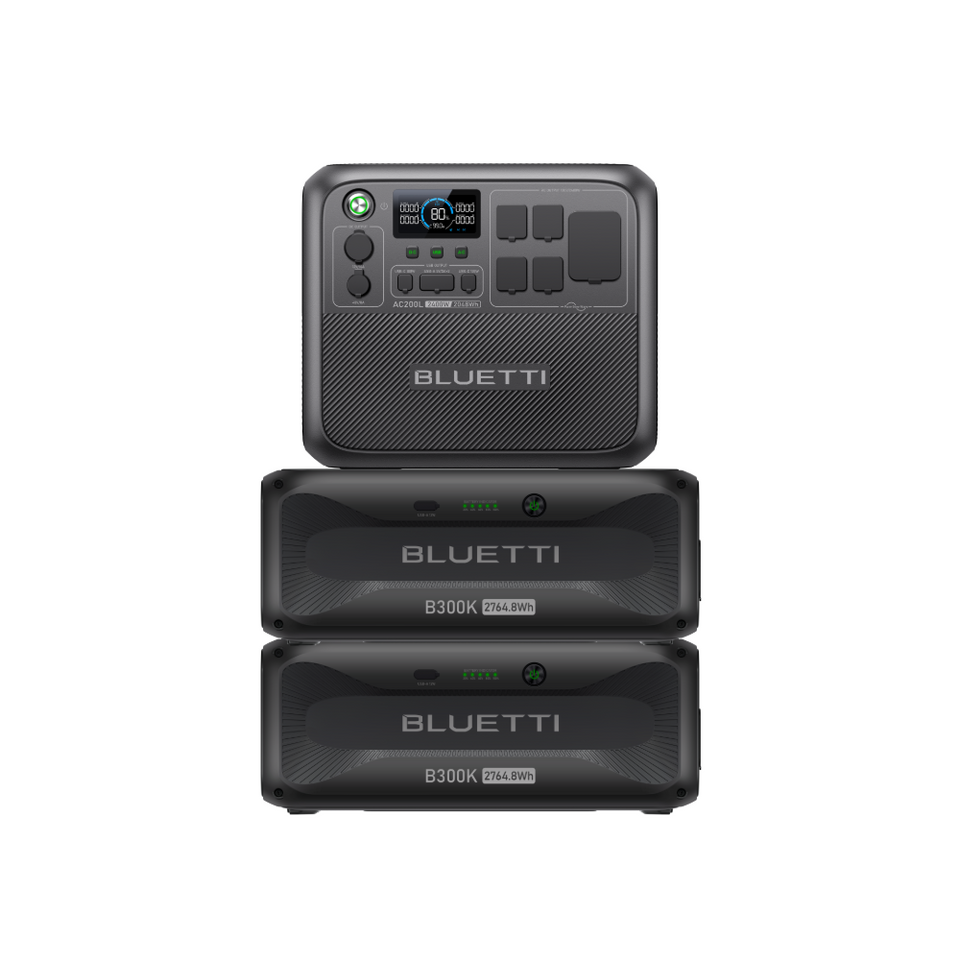
Models Discussed in This Article
BLUETTI AC70
With 705–730.6 Wh of independently measured usable AC output from a 768Wh battery and 500W solar input at ~$399–$449 street price, the AC70 punches above typical 500Wh–700Wh units.
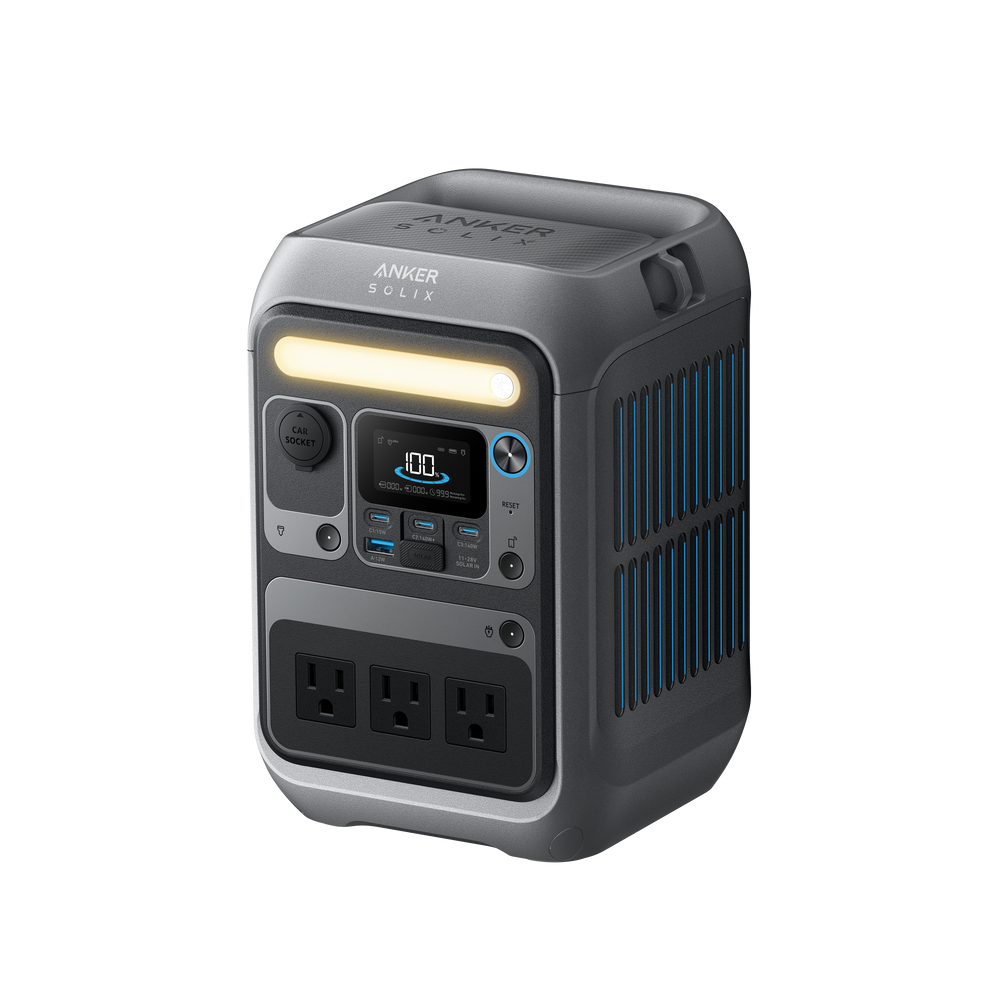
Anker SOLIX C300
A 9.1 lb vertical LiFePO4 station delivering 300W AC, dual 140W USB-C ports, and <10 ms UPS backup for routers, laptops, and day trips — just don't confuse it with the DC-only C300 DC or expect appliance runtime.
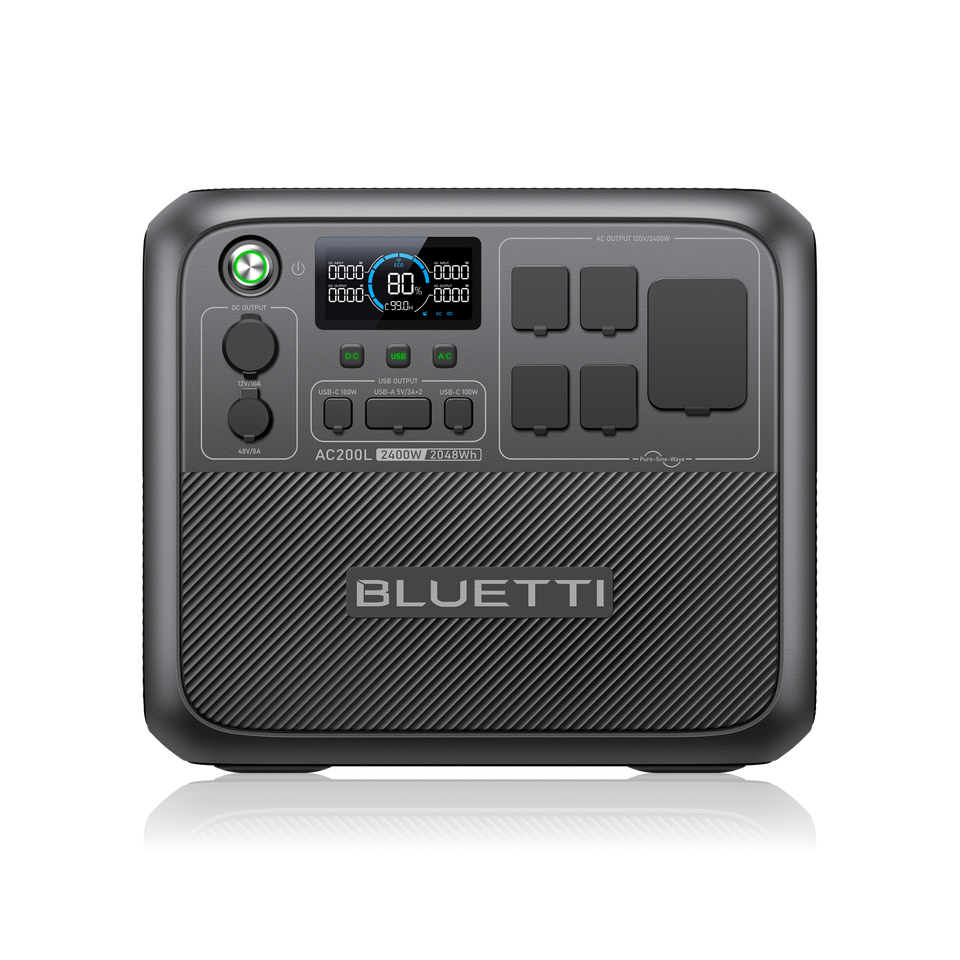
BLUETTI AC200L
Combines a high-efficiency 2,048Wh expandable platform, 1,200W high-voltage solar input (12–145V), and dedicated 30A TT-30R + 48V DC RV outputs at strong street pricing, trading away light weight and built-in wheels.
Frequently Asked Questions
Can the BLUETTI EB3A run a hair dryer or electric kettle using 1,200W Power Lifting?+
Only select compact resistive heating appliances, and only for a few minutes. Power Lifting intentionally lowers AC output voltage so a 1,000W–1,200W resistive heating coil draws under 600W continuously—causing a travel kettle or hair dryer to run noticeably cooler/slower. At ~580W real draw, the 268.8Wh battery empties in roughly 21–24 minutes.
Why won't a 24V residential solar panel work with the BLUETTI EB3A?+
The EB3A's MPPT input has a hard open-circuit voltage ceiling of 28V (12V–28V Voc, 8.5A max). Typical 24V-nominal or rigid residential panels output 36V–50V Voc, which triggers an immediate over-voltage lockout or risks permanent damage to the charge controller. Stick strictly to 12V-class portable panels whose cold-weather Voc stays safely below 28V.
Why does the BLUETTI EB3A fan sound loud during Turbo charging?+
In its compact 10.04 × 7.09 × 7.20-inch housing, pulling up to 350W AC Turbo charging (or up to 430W combined AC + solar dual charging) generates concentrated heat inside the bidirectional inverter. The small high-RPM cooling fan ramps aggressively to protect internal components. Switching to Standard (268W) or Silent mode inside the BLUETTI Bluetooth app keeps bedroom or desk noise far calmer.
Should I buy the BLUETTI EB3A or step up to the Anker SOLIX C300 or BLUETTI AC70 in 2026?+
Buy the EB3A only if you specifically need 600W continuous AC power at a sub-$220 discount and accept a 2-year warranty. Choose the Anker SOLIX C300 (Model A1722, 288Wh) for dual 140W USB-C PD, <10ms UPS router protection, quiet ~25 dB acoustics, and a 5-year warranty—or step up to the BLUETTI AC70 (768Wh, 1,000W AC, 500W 12–58V solar) for serious camping or outage reserves.
Sources & Technical References
- View Source →[1]Manufacturer SpecificationBLUETTI US OfficialVerified 2026-11-25BLUETTI EB3A Portable Power Station Specifications
268.8Wh LiFePO4, 600W continuous AC (1,200W Power Lifting resistive mode), 200W MPPT solar input (12-28V, 8.5A), 10.14 lbs weight.
- View Source →[2]Manufacturer SpecificationAnker SOLIX US OfficialVerified 2026-11-24Anker SOLIX C300 Portable Power Station (Model A1722) Specifications
288Wh LFP AC-equipped model (distinct from DC-only C300 DC), 300W AC, 600W SurgePad, 100W XT60 solar, <10ms UPS.
- View Source →[3]Manufacturer SpecificationBLUETTI US OfficialVerified 2026-11-24BLUETTI AC70 Portable Power Station Official Specifications
768Wh LFP, 1,000W continuous AC, 2,000W Power Lifting resistive mode, 500W MPPT solar (12-58V, 10A), 950W Turbo AC charge.
- View Source →[4]Third-Party Independent ReviewAPH NetworksVerified 2026-11-24BLUETTI AC70 Portable Power Station Load Test Review
Constant 136W AC load discharge test measured 730.59 Wh usable output (~95% of rated 768Wh cell capacity; ~92.5% net inverter efficiency).
- View Source →[5]Third-Party Independent ReviewPowerOffGridVerified 2026-11-24BLUETTI AC70 Usable AC Capacity & Inverter Efficiency Test
250W continuous resistive load AC discharge test recorded 705 Wh usable AC output (~90% overall system efficiency).