EcoFlow DELTA 2 Max Review (2026): 2,048Wh LFP, Dual 500W MPPT & 2,400W AC
In-depth 2026 review of EcoFlow DELTA 2 Max (2,048Wh LFP, 2,400W AC, 1,000W dual solar), covering <=20ms EPS limits and comparisons with AC200L and 2000 v2.
The EcoFlow DELTA 2 Max packs a 2,048Wh LiFePO4 battery (3,000+ cycles to 80%), 2,400W continuous AC inverter (4,800W surge; 3,400W US X-Boost), 1,800W X-Stream AC charging, and dual independent 500W MPPT solar channels (1,000W total, 11–60V) into a 50 lb frame expandable to 6,144Wh. Expect roughly 1,600–1,800Wh of usable AC output (78%–88% AC / 88%–93% DC estimate), while noting its <=20ms EPS switchover suits appliances rather than critical <10ms workstation UPS duties.
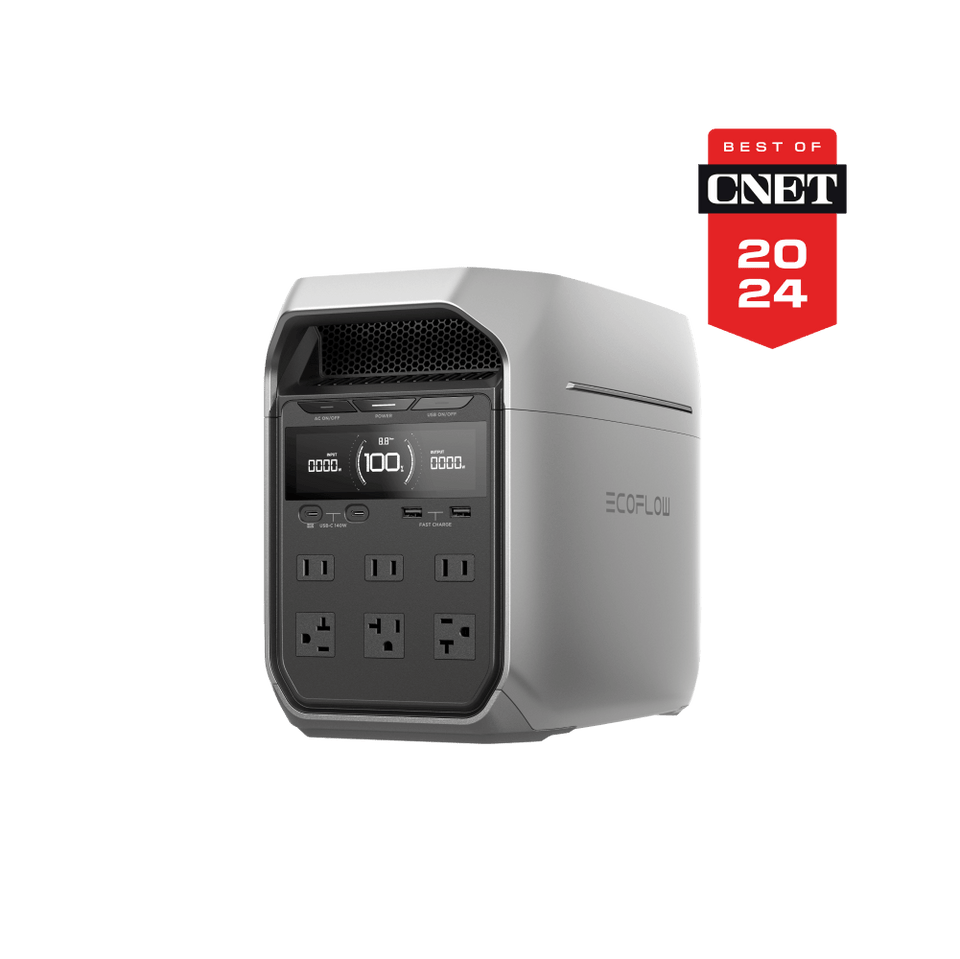
In the 2,000Wh portable power tier, buyers hit an immediate engineering trade-off: weight you can carry versus solar speed you can live off-grid with. Lightweight standalone boxes stay easy on your back by slashing solar ports and blocking battery expansion, while heavy RV workhorses top 60+ pounds without wheels.
The EcoFlow DELTA 2 Max threads that needle better than almost any mid-generation 2,048Wh LiFePO4 unit still sold in 2026. By packing a 2,400W pure sine wave inverter, 1,800W wall charging, and two independent 500W MPPT solar controllers into a 50 lb (23 kg) shell expandable to 6,144Wh, it remains a compelling bridge between casual blackout prep and serious off-grid cabins—provided you understand its 60V Voc solar ceiling and <=20ms EPS limits.
Core Architecture & Verified US Specifications
EcoFlow engineered the DELTA 2 Max (19.6 × 9.5 × 12.0 in) as a complete LiFePO4 overhaul of its older NCM DELTA Max series:
- Battery Capacity & Chemistry:
2,048WhLFP rated for 3,000+ cycles to 80%+ capacity under standard25°C(77°F) conditions, backed by a 5-year US manufacturer warranty. - AC Inverter Output:
2,400Wcontinuous across six120VNEMA 5-20R/5-15R outlets,4,800Wpeak surge, and X-Boost supporting resistive appliances up to3,400W(US edition) by stepping output voltage down. - USB & DC Ports: Two
100WUSB-C PD ports (200Wcombined), two18Wfast-charge USB-A ports, two12Wstandard USB-A ports, one12.6V/10A(126W) car outlet, and dualDC5521ports (38Weach). - X-Stream AC Charging: Draws up to
1,800Wdirectly from a standard120V/15AUS wall receptacle—recovering0–80%in roughly53 minutesand0–100%in around80–85 minutes, with adjustable charge wattage in the EcoFlow app to cut fan volume or protect weak generator circuits.
Usable Energy Note: Standardized third-party discharge data for the DELTA 2 Max is Not Independently Verified in our lab registry. Applying transparent engineering conversion windows, its 2,048Wh LFP pack typically delivers roughly 1,600–1,800Wh of usable AC power (78%–88% AC efficiency) or 1,800–1,905Wh via DC/USB-C outputs (88%–93% DC efficiency).
Dual 500W XT60i Solar Channels: Why Two MPPTs Matter
Many power stations advertise "1,000W solar input" using a single combined circuit. The DELTA 2 Max splits its 1,000W solar budget across two independent 500W MPPT controllers (11V–60V Voc, 15A max per port).
Why does dual-channel independence help in real deployments?
- Shade & Orientation Resilience: If you run a pair of portable folding arrays—say, one facing morning east sun and one facing afternoon west sun, or one clipped by a pine tree shadow—each channel tracks its own maximum power point without pulling the sunlit panel down.
- Easy Panel Mixing: Because the two inputs are independent, you can connect completely different panel sizes or brands to
PV1andPV2without mismatch penalties, as long as each individual string stays within11V–60VVoc. - Combined AC + Solar Speed: Need emergency speed between storm waves? The DELTA 2 Max supports dual AC + Solar recharging up to
2,400Wcombined input, bringing a depleted battery back to80%in roughly43 minutes.
Two Solar Caveats to Plan Around
- Strict
60VOpen-Circuit Ceiling: Each channel caps safely at60VVoc (15A). Remember that solar panel Voc rises sharply in freezing winter air—never wire two high-Voc panels in series if combined cold-adjusted Voc approaches60V, or you risk damaging the MPPT board. Check our Solar Input Limits & MPPT Explained guide before sizing strings. - No Solar Cable Included: Standard retail base packages include AC, car, and
DC5521cords, but typically omitMC4-to-XT60isolar adapter cables—budget for properXT60ileads (which signal the station to unlock the full15Asolar current rather than throttling to8Acar-charging amperage).
EPS Switchover vs. Modern <10ms UPS Hardware
EcoFlow advertises Emergency Power Supply (EPS) pass-through on the DELTA 2 Max, and EcoFlow’s official user manual specifies a <=20 ms switchover (<30 ms on earlier preliminary notes) when wall grid power drops.
In household outage use, <=20 ms is plenty fast for:
- Full-size kitchen refrigerators and chest freezers
- CPAP therapy machines (though DC power adapters maximize overnight hours)
- Sump pumps, Wi-Fi routers, LED lighting, and televisions
However, EcoFlow explicitly cautions that the DELTA 2 Max does not provide 0 ms online UPS protection. Desktop workstations with power-factor-corrected PSUs, enterprise NAS arrays, or medical lab equipment sensitive to sub-cycle drops can still reboot during a 20 ms relay click. If desktop/NAS continuity is your primary goal, compare the newer EcoFlow DELTA 3 Plus, which upgrades transfer speed to <10 ms with USB HID shutdown signaling.
Expansion, Smart Generator Automation & Acoustics
On the side housing, two heavy XT150 DC ports unlock modular growth:
- Tripling Capacity (
2,048Wh->6,144Wh): Adding one2,048WhDELTA 2 Max Smart Extra Battery doubles storage to4,096Wh; adding two brings total energy to6,144Whwhile auto-balancing charge state across modules. The expansion pack also includes a recessed top cable compartment for neat stacking. - Automated Smart Generator Triggering: Plugging EcoFlow’s Dual Fuel Smart Generator into an
XT150port allows automated DC battery replenishment inside the EcoFlow app—starting automatically at a low battery threshold (such as15%–20%) and shutting down once it hits your upper target (80%–100%) to avoid wasteful inverter conversion loops. - Acoustic Profile: EcoFlow rates the DELTA 2 Max around
30 dBunder light~500Wloads, making overnight fridge operation unobtrusive indoors. Cooling fans ramp audibly only during full1,800WX-Stream AC charging or sustained1,500W+AC output—and dialing AC charge speed down to400W–600Win the app restores near-silent charging.
Read more on modular scaling economics in Expandable Battery Systems Explained.
Head-to-Head: DELTA 2 Max vs. BLUETTI AC200L & Jackery 2000 v2
In 2026, shoppers shopping 2,048Wh stations almost always cross-shop EcoFlow against the BLUETTI AC200L and the Jackery Explorer 2000 v2. Each optimizes a completely different priority:
| Feature | EcoFlow DELTA 2 Max | BLUETTI AC200L | Jackery Explorer 2000 v2 |
|---|---|---|---|
| Capacity & Chemistry | 2,048Wh LFP (3,000+ cycles) |
2,048Wh LFP (3,000+ cycles) |
2,042Wh LFP (4,000 cycles to >=70%) |
| Continuous AC / Surge | 2,400W / 4,800W (3,400W X-Boost) |
2,400W / 3,600W Power Lifting |
2,200W / 4,400W |
| AC Outlets & RV Plug | 6 × 120V (No TT-30R) | 4 × 120V + 1 × 30A TT-30R | 3 × 120V (No TT-30R) |
| Solar Input & Voc Limit | 1,000W (11V–60V dual MPPT) |
1,200W (12V–145V MPPT) |
400W (16V–60V dual DC8020) |
| AC Recharge Rate | 1,800W (~80 mins full) |
2,400W Turbo (~1.5 hrs full) |
1,800W (~2.5 hrs OutdoorGearLab test) |
| Expandability | Up to 6,144Wh |
Up to 8,192Wh |
Non-expandable |
| Chassis Weight | 50.0 lbs |
62.4 lbs |
39.5 lbs |
| Verified 3rd-Party Data | Not Independently Verified | CNET Labs: 77.76% RTE, >29h fridge |
OutdoorGearLab: ~2.5h AC; TechRadar: 4.5/5 |
How to Pick Between the Three
- Buy the EcoFlow DELTA 2 Max if you want the balanced middle ground: six AC ports,
1,000Wdual-MPPT solar for shaded campsites,6kWhexpansion capability, and a50 lblift weight that splits the difference between Jackery’s featherweight and BLUETTI’s heavy iron. - Buy the BLUETTI AC200L if you own a travel trailer needing a 30A TT-30R RV shore outlet, want a
48VDC port, plan to wire higher-voltage residential solar strings (12V–145VVoc), or value CNET-verified>29-hourrefrigerator efficiency—and don’t mind lifting62.4 lbs. - Buy the Jackery Explorer 2000 v2 if weight per watt-hour (
39.5 lbs) is king for trunk loading or apartment stairs, and you mainly recharge from wall outlets rather than relying on solar (400Wcap) or extra battery expansion.
Bottom Line for 2026 Buyers
The EcoFlow DELTA 2 Max does not hold the single-hand portability crown anymore (Jackery 2000 v2 owns that at 39.5 lbs), nor does it offer BLUETTI’s 145V solar headroom and native TT-30R RV socket. Where it continues to win is versatile everyday usability: dual independent 500W MPPT ports that tolerate partial shading, 53-minute 0–80% wall charging, six spaced 120V AC outlets, and quiet indoor refrigerator backup expandable to 6.1kWh whenever storms turn multi-day. Check our Product Comparison Tool or estimate exact outage hours in our Battery Runtime Estimator before ordering.
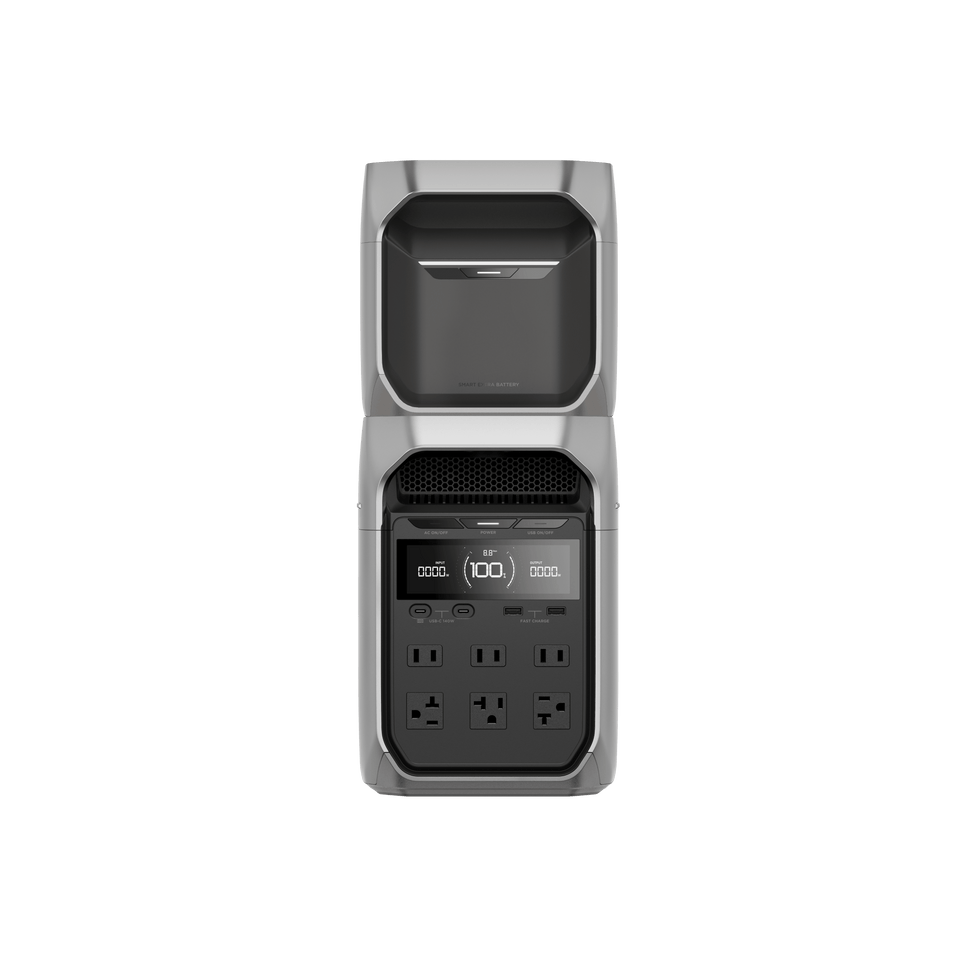
Models Discussed in This Article
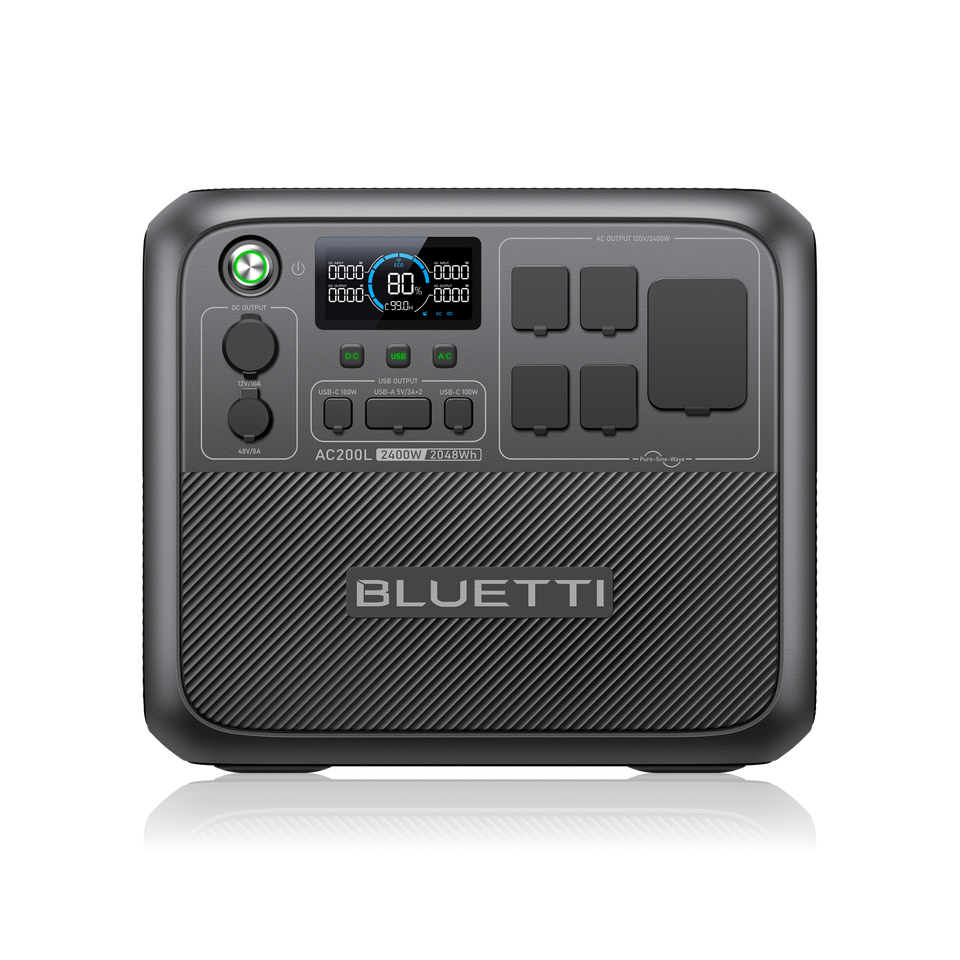
BLUETTI AC200L
Combines a high-efficiency 2,048Wh expandable platform, 1,200W high-voltage solar input (12–145V), and dedicated 30A TT-30R + 48V DC RV outputs at strong street pricing, trading away light weight and built-in wheels.
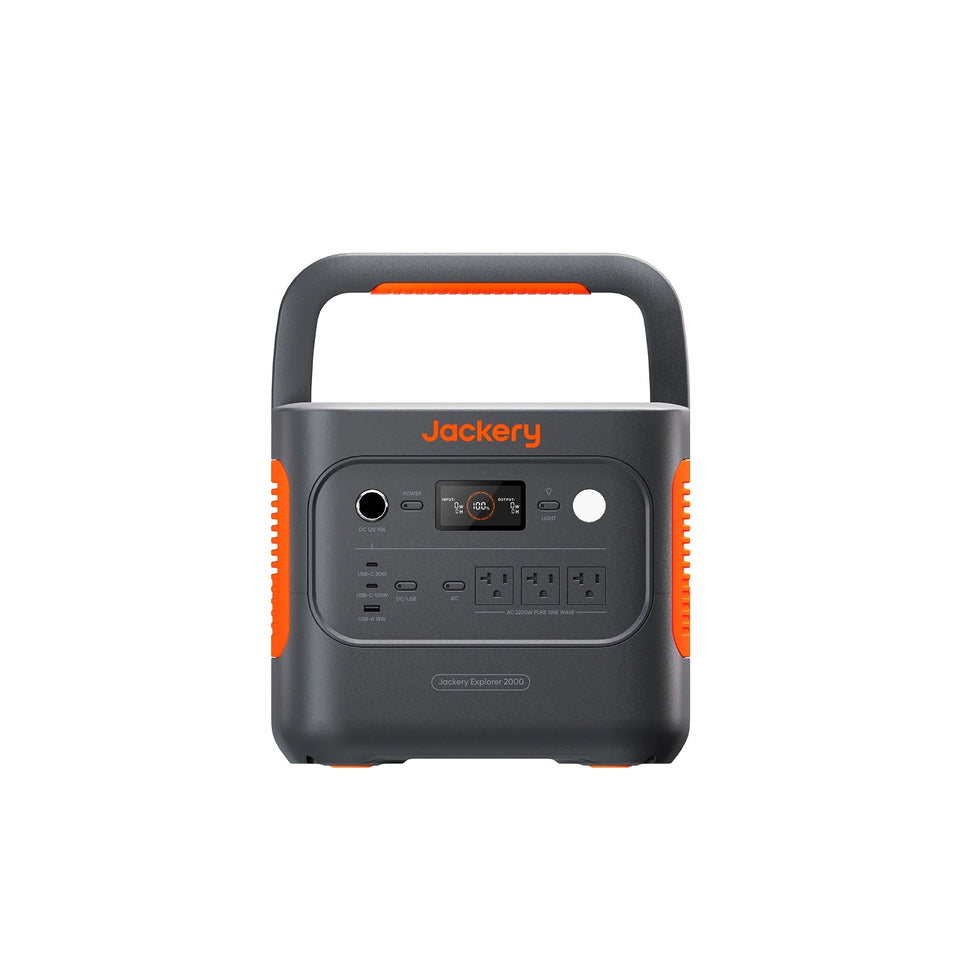
Jackery Explorer 2000 v2
A breakthrough 39.5 lb chassis makes 2,042Wh genuinely single-hand portable for camping and apartments, provided you accept its 400W solar recharge ceiling and non-expandable battery.
EcoFlow DELTA 3 Plus
Packs 1,000W dual-MPPT solar charging, sub-1-hour AC replenishment, and a sub-10 ms HID-capable UPS into a 27.6 lb chassis, making it more versatile than non-Plus 1kWh units.
Frequently Asked Questions
How do the dual 500W MPPT solar inputs on the EcoFlow DELTA 2 Max work?+
The DELTA 2 Max features two independent XT60i solar input channels, each rated for 11V–60V Voc and up to 15A (500W max per port, 1,000W combined). Because the controllers operate independently, partial shade on one panel array will not drag down energy harvest on the second array—provided both stay strictly below 60V open-circuit voltage.
Can the EcoFlow DELTA 2 Max act as a computer UPS?+
Its Emergency Power Supply (EPS) switches over within <=20 ms per the official manual (older listings noted <30 ms). That speed keeps refrigerators, routers, CPAP machines, and TVs running seamlessly, but EcoFlow notes it does not support 0 ms switching and recommends dedicated <10 ms HID UPS units like the DELTA 3 Plus for sensitive workstations or servers.
How much extra battery capacity can the DELTA 2 Max support?+
Through its dual XT150 expansion ports, the 2,048Wh base station connects to up to two EcoFlow DELTA 2 Max Smart Extra Batteries (2,048Wh each), tripling total capacity to 6,144Wh. One XT150 port can also link to EcoFlow's Dual Fuel Smart Generator for automated low-SOC DC recharging.
Should I buy the EcoFlow DELTA 2 Max or the BLUETTI AC200L?+
Choose the DELTA 2 Max if you want a 12.4 lb lighter chassis (50 lbs vs. 62.4 lbs), two extra 120V AC outlets (6 vs. 4), and dual independent 60V MPPT channels. Choose the BLUETTI AC200L if you need a built-in 30A TT-30R RV outlet, 48V DC output, higher 145V solar voltage tolerance, or CNET-verified >29-hour refrigerator efficiency.
Sources & Technical References
- View Source →[1]Manufacturer SpecificationEcoFlow US OfficialVerified 2026-11-25EcoFlow DELTA 2 Max Portable Power Station Specifications
2,048Wh LFP expandable to 6,144Wh, 2,400W continuous AC, and dual 500W (1,000W combined) MPPT solar inputs.
- View Source →[2]Manufacturer SpecificationBLUETTI US OfficialVerified 2026-11-24BLUETTI AC200L Portable Power Station Official Specifications
2,048Wh LFP, 2,400W continuous AC, 3,600W Power Lifting mode, NEMA TT-30R + 48V/8A DC RV port, 1,200W solar (12-145V).
- View Source →[3]Manufacturer SpecificationJackery US OfficialVerified 2026-11-24Jackery Explorer 2000 v2 Product Page & User Guide
2,042Wh LFP Cell-to-Body design, 39.5 lbs weight, 2,200W continuous AC, 400W dual DC8020 solar input.
- View Source →[4]Manufacturer SpecificationEcoFlow US OfficialVerified 2026-11-24EcoFlow DELTA 3 Plus Official Specifications
1,024Wh LFP, 1,800W continuous AC, 1,000W dual 500W MPPT solar, <10ms UPS, 1,500W X-Stream AC charging.
- View Source →[5]Third-Party Independent ReviewCNETVerified 2026-11-24CNET Portable Power Station Lab Efficiency & Refrigerator Runtime Benchmarks
Documents standardized refrigerator runtime and round-trip efficiency testing including BLUETTI AC200L (77.76% RTE, >29h fridge test) and Anker SOLIX F3800 (~25.68h fridge stress runtime due to dual-voltage inverter overhead).