Expandable Battery Systems Explained: Modular Stacks, Cascade Cables & Hidden Costs
Learn how expandable portable power stations scale from 1kWh to 60kWh+, the difference between true parallel expansion and DC power-bank charging, and compatibility pitfalls.
Expandable power stations let you buy a manageable 1kWh–6kWh core inverter today and add matching slave battery packs later as budget or outage needs grow. However, expansion batteries are brand-locked, heavy, and do not increase your inverter's continuous AC wattage unless the ecosystem supports parallel multi-inverter linking.
Key Technical Takeaways
- Adding expansion batteries increases runtime (Wh) only—not continuous AC inverter output (W)—unless two main inverter heads are linked in parallel.
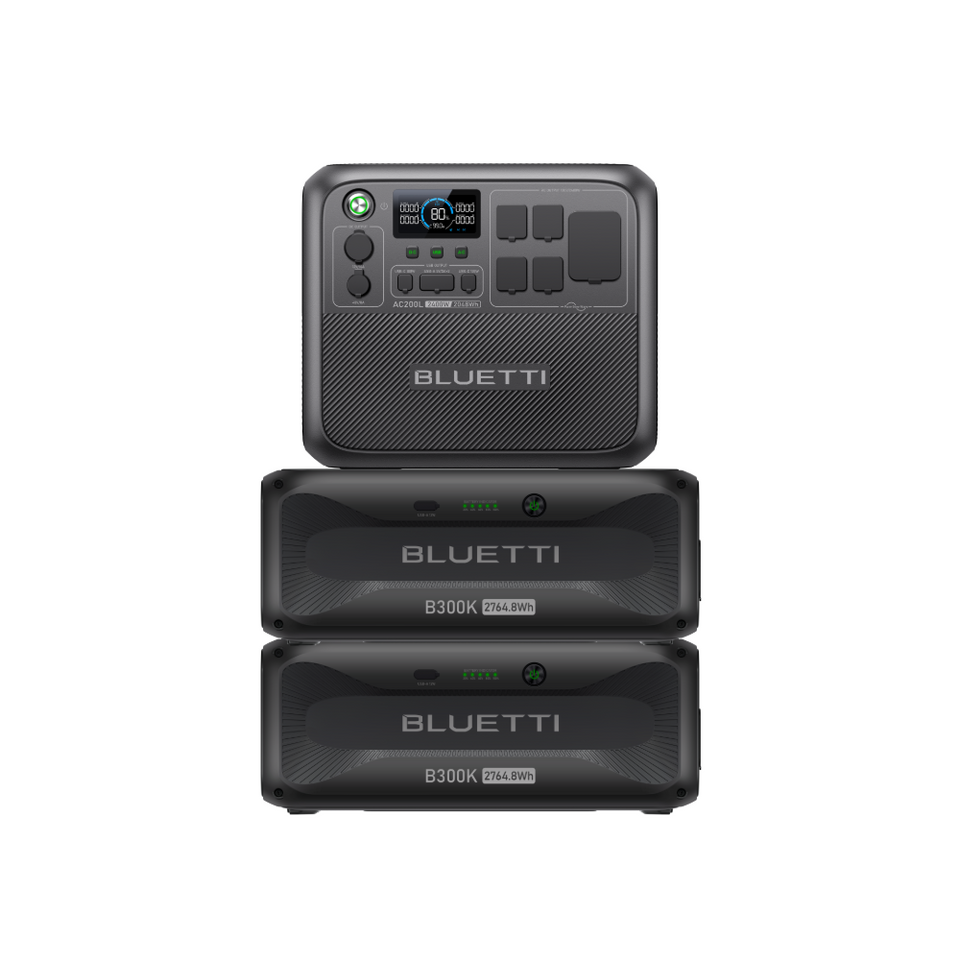
- True bidirectional expansion buses (e.g., EcoFlow, Anker, Jackery 5000+, BLUETTI AC200L) integrate BMS telemetry directly, whereas DC Power Bank mode (BLUETTI AC70) behaves like an external solar/DC charger.
- Compare expansion-pack $/Wh against buying a larger base unit or a second standalone station, which avoids single-point inverter failure.
One of the sharpest divides in the portable power market separates self-contained standalone units from modular, expandable battery systems. Buying a modest core station with an expansion port looks appealing because you can spread costs out over time. Yet modular expansion involves strict proprietary boundaries, weight trade-offs, and value math that surprises many first-time buyers.
Three Distinct Expansion Architectures in Our Database
Manufacturers use the word “expandable” to describe three noticeably different engineering designs:
1. Whole-Home Modular Stacks (6 kWh – 90 kWh)
Systems built for residential transfer integration separate or stack massive LiFePO4 modules via high-voltage DC interconnects:
- EcoFlow DELTA Pro Ultra: Separates the ~70 lb inverter head from ~111.8 lb 6,144Wh battery blocks. One inverter manages up to 5 batteries (30,720Wh), and pairing three inverters via Smart Home Panel 2 reaches 90,000Wh (90kWh) and 21,600W.
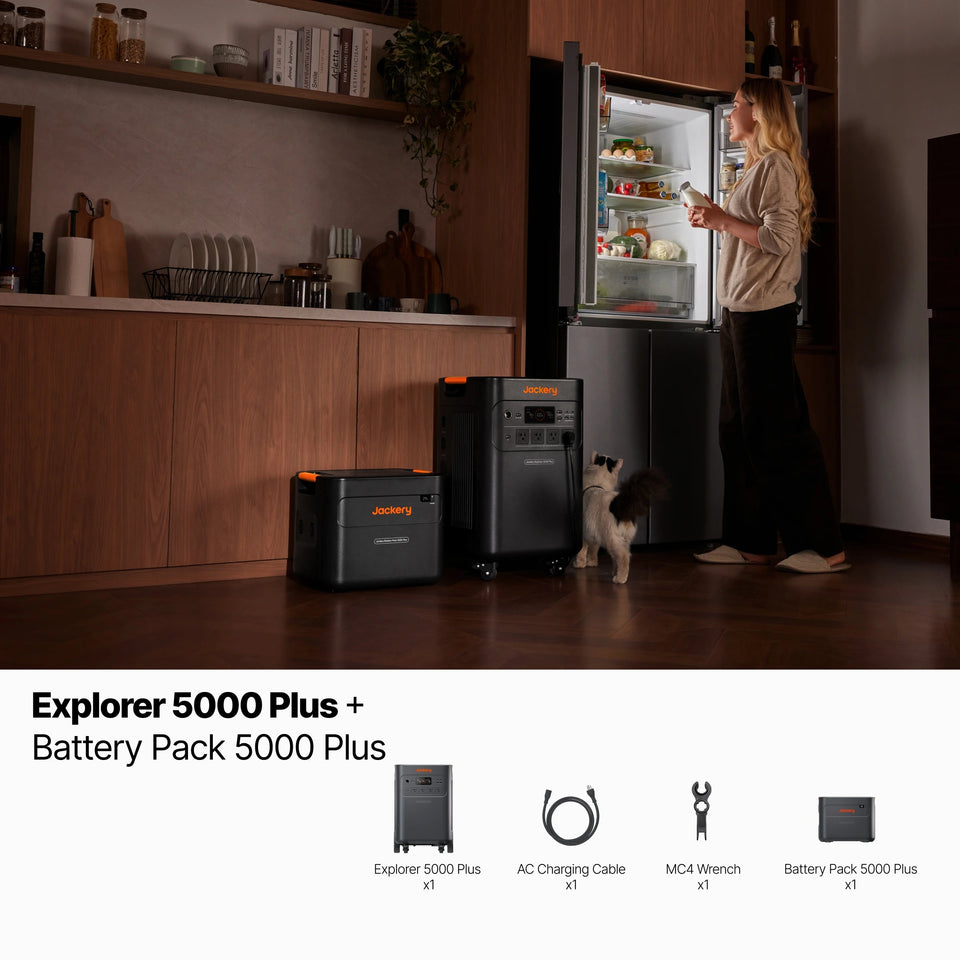
- Jackery Explorer 5000 Plus: Scales a 5,040Wh core with up to five Battery Pack 5000 Plus units (30,240Wh per tower) or 60,480Wh across two linked units.
- Anker SOLIX F3800: Connects up to six BP3800 packs (26,880Wh per F3800) or 53,760Wh across two parallel units.
- Zendure SuperBase V4600: Stacks up to four B4600 Satellite Batteries (23,040Wh per head) or 46,080Wh dual-linked.
2. Midsize & Compact Bidirectional Buses (2 kWh – 11 kWh)
Midsize stations keep an integrated inverter/battery chassis and add one or two expansion packs on a single cable:
- BLUETTI AC200L: Expands from 2,048Wh up to 8,192Wh using B210, B230, or B300/B300K packs.
- EcoFlow DELTA 3 Plus: Scales 1,024Wh up to 5,120Wh using cross-compatible EcoFlow Extra Batteries (1kWh DELTA 3, 2kWh DELTA 2 Max, or 4kWh DELTA Pro 3 packs).
- DJI Power 1000: Connects via SDC interface to DJI Power Expansion Battery 2000 packs up to 11,264Wh.
- Pecron E1500LFP: Uses a 48V cascade port with EP3000-48V packs up to 7,680Wh.
3. DC “Power Bank Mode” vs. Non-Expandable Standalone Units
Not every advertised “expansion” shares a true parallel BMS bus. For example, the compact BLUETTI AC70 supports BLUETTI’s Power Bank Mode—feeding regulated DC power from B80/B230/B300 batteries into the AC70’s solar/DC input rather than acting as a single unified AC/DC bus. Meanwhile, units like the Jackery Explorer 2000 v2, Goal Zero Yeti 700, and Anker SOLIX C300 omit expansion ports entirely to minimize cost, connectors, and carry weight.
Key Engineering Realities Before Buying an Expansion Pack
- Runtime Increases, Continuous Watts Usually Do Not: Plugging one or four extra batteries into a single BLUETTI AC200L or Anker SOLIX F3800 does not turn a 2,400W or 6,000W inverter into a bigger inverter. Only parallel-linking two separate main inverter heads boosts continuous AC output.
- Standby Inverter Overhead Applies to the Whole Stack: Because extra batteries feed the same main inverter, powering a tiny 30W router from a 15kWh single-inverter stack still incurs that large inverter’s full idle overhead unless you use DC ports or cycle the inverter selectively.
- Firmware & Voltage Balancing Requirements: Expansion systems typically require both the main unit and external batteries to run compatible firmware and charge/balance smoothly before heavy discharge. Verify official expansion compatibility tables before buying older clearance extra batteries.
- Single Point of Failure vs. Redundancy: If your sole expandable head unit experiences a fault or requires warranty repair, your extra batteries sit unusable without an inverter. By contrast, two independent 1kWh–2kWh stations (or an expandable kit paired with a small backup unit) can keep a fridge and router running independently in separate rooms.
Cost-per-Wh Reality Check
Extra battery modules eliminate the cost of a second AC inverter, screen, and MPPT solar controller, which often makes expansion packs cheaper per rated Wh than buying a second main station—especially at promotional pricing. Still, always compare an expansion battery’s street price per Wh against a larger base model using our Price per Wh Calculator, and use the Power Station Finder to filter explicitly for expandable systems when multi-day storage is on your roadmap.
Frequently Asked Questions
Does adding an expansion battery increase the AC wattage output of my power station?+
No, in nearly all single-inverter setups, expansion batteries only add watt-hours (runtime). Your continuous AC watts and surge limit remain capped by the main unit's inverter unless you link two full inverter units using a manufacturer parallel hub or transfer panel.
Can I mix expansion batteries from different brands?+
No. Proprietary expansion cables carry high-current DC power plus encrypted BMS communication signals. Using third-party cables or mixing brands via main expansion ports is unsupported and can damage electronics or void warranties.
Is an expandable system always better than a non-expandable unit?+
Not always. Non-expandable Cell-to-Body designs like the Jackery Explorer 2000 v2 save significant weight (39.5 lbs for 2,042Wh) and floor space. Expandable systems also create a single point of failure if the main inverter goes down, whereas owning two standalone stations provides redundancy.
Sources & Technical References
- View Source →[1]Manufacturer SpecificationEcoFlow US OfficialVerified 2026-11-24EcoFlow DELTA Pro Ultra Product Page & Specifications
Official North American 120V/240V split-phase inverter and 6,144Wh LiFePO4 battery module specs.
- View Source →[2]Manufacturer SpecificationAnker SOLIX US OfficialVerified 2026-11-24Anker SOLIX F3800 Portable Power Station Official Specifications
North American model specs including NEMA 14-50R, L14-30R, 6,000W output, 3,840Wh capacity, and 11-60V dual solar input.
- View Source →[3]Manufacturer SpecificationJackery US OfficialVerified 2026-11-24Jackery Explorer 5000 Plus Official Product Specifications
5,040Wh LFP capacity, 7,200W/14,400W AC specs, High-PV (135-450V) and Low-PV (16-60V) limits, and warranty terms.
- View Source →[4]Manufacturer SpecificationBLUETTI US OfficialVerified 2026-11-24BLUETTI AC200L Portable Power Station Official Specifications
2,048Wh LFP, 2,400W continuous AC, 3,600W Power Lifting mode, NEMA TT-30R + 48V/8A DC RV port, 1,200W solar (12-145V).
- View Source →[5]Manufacturer SpecificationPecron US OfficialVerified 2026-11-24Pecron E1500LFP Official Specifications
1,536Wh LFP, 2,200W AC, 800W dual-port solar (GX16MF 32-95V 700W + DC5521 100W), EP3000-48V expansion support.
- View Source →[6]Manufacturer SpecificationEcoFlow US OfficialVerified 2026-11-24EcoFlow DELTA 3 Plus Official Specifications
1,024Wh LFP, 1,800W continuous AC, 1,000W dual 500W MPPT solar, <10ms UPS, 1,500W X-Stream AC charging.