VTOMAN Jump 1000 vs. Jackery Explorer 1000 v2: Endurance & Expansion vs. Peak Output & Portability
Compare the 1,408Wh expandable VTOMAN Jump 1000 (1,000W AC, 200W solar, 38.6 lbs) vs. the 23.8 lb Jackery Explorer 1000 v2 (1,070Wh LFP, 1,500W AC).
The VTOMAN Jump 1000 delivers 32% more base capacity (1,408Wh LFP, expandable to 2,956Wh) plus a 12V vehicle jump-start port, yet carries a 38.6 lb weight penalty and a slow 200W charging ceiling (8–9 hrs on AC; 7–10+ sun hrs on solar). The Jackery Explorer 1000 v2 trims weight to 23.8 lbs and boosts output to 1,500W AC (3,000W surge) with 1–1.7 hr AC charging and 400W solar.
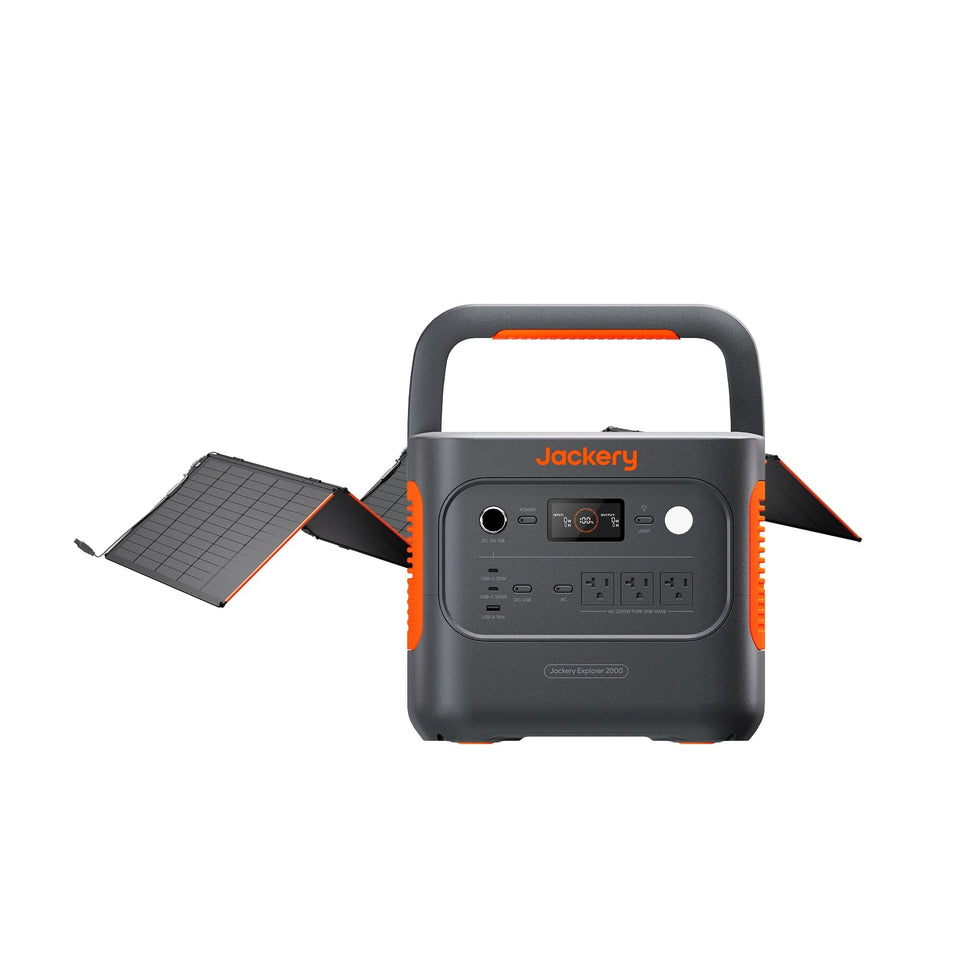
Two portable power stations can share the "1000" nameplate and LiFePO4 chemistry while behaving completely differently when the lights go out or your campsite settles in for the night. Older online comparisons pitted the VTOMAN Jump 1000 against Jackery’s original NMC Explorer 1000—making VTOMAN’s 1,408Wh LFP pack an easy endurance winner. In 2026, however, Jackery replaced that slow-charging NMC box with the Explorer 1000 v2 (1,070Wh LiFePO4, 1,500W AC, 23.8 lbs), turning this matchup into a sharp clash between battery volume and charging/inverter speed.
Look past the "1000" badge, and one unit hides a 200W charging bottleneck inside a 38.6 lb frame, while the other trades 24% less base watt-hours and zero battery expansion for 50% more continuous AC power and 4× to 5× faster AC replenishment.
VTOMAN Jump 1000 vs. Jackery Explorer 1000 v2: Spec Breakdown
| Specification | VTOMAN Jump 1000 | Jackery Explorer 1000 v2 |
|---|---|---|
| Base Capacity & Chemistry | 1,408Wh LiFePO4 |
1,070Wh LiFePO4 |
| Expandable Capacity | Up to 2,956Wh (via Jump 1500 Extra Battery) |
Not expandable |
| Rated Cycle Life | 3,000+ cycles to 80% |
4,000 cycles to >=70% |
| Continuous AC Inverter | 1,000W (110V/120V pure sine) |
1,500W (120V pure sine) |
| Surge / Resistive Boost | 2,000W peak (V-Beyond resistive boost) |
3,000W true surge |
| AC Outlets & USB-C | 3 × AC, 1 × 100W USB-C PD, 4 × USB-A |
3 × AC, 1 × 100W + 1 × 30W USB-C, 1 × 18W USB-A |
| Special DC Hardware | Dedicated 12V car jump-start port + dual DC5521 |
Standard 12V/10A car port; Wi-Fi & Bluetooth App |
| AC Wall Charging Speed | External ~180W brick (~8–9 hrs full) |
Built-in fast AC (~1.7 hrs; 1 hr Emergency App mode) |
| Solar Input Ceiling & Ports | 200W max (12V–30V dual DC5521) |
400W max (16V–60V dual DC8020) |
| Chassis Weight | 38.6 lbs (17.5 kg) |
23.8 lbs (10.8 kg) |
Capacity Endurance & Expansion vs. Carry Weight
On raw stored electricity, the VTOMAN Jump 1000 holds a decisive lead. Its 1,408Wh internal battery packs roughly 32% more energy than the 1,070Wh Jackery Explorer 1000 v2—and adding VTOMAN’s 1,548Wh expansion module pushes total storage to 2,956Wh, something Jackery’s non-expandable 1000 v2 cannot match at any price.
Applying standard inverter efficiency expectations (78%–88% AC delivery; 88%–93% direct DC/USB-C—since controlled third-party usable Wh benchmarks are Not Independently Verified for either model in our source registry):
- VTOMAN Jump 1000 (
1,408Whbase): Delivers roughly1,098–1,239Whusable AC or1,239–1,309WhDC, stretching an average cycling refrigerator (~50–65Waverage draw) roughly 17–23 hours on a single charge without extra batteries. - Jackery Explorer 1000 v2 (
1,070Wh): Delivers roughly835–942Whusable AC or942–995WhDC, covering roughly 13–17 hours on that same fridge load or 2+ nights of CPAP backup with heated humidification turned off.
That runtime margin comes with a steep physical tax. At 38.6 lbs, the VTOMAN Jump 1000 is 14.8 lbs (62%) heavier than the 23.8 lb Jackery Explorer 1000 v2—effectively matching the weight of full 1.5kWh–2kWh models rather than modern 1kWh camp units. Moving 23.8 lbs from an apartment closet or SUV hatch is effortless with one arm; hauling 38.6 lbs across uneven campsites or stairs demands far more effort.
The 200W Charging Bottleneck: Wall Outlets and Real Solar Sun Hours
Where the VTOMAN Jump 1000 shows its older 2022–2023 power electronics most starkly is on the input side. Instead of an internal bidirectional AC charger, VTOMAN relies on an external ~180W wall power brick feeding the same 12V–30V / 200W max DC5521 input architecture used for solar panels.
- Pre-Storm AC Wall Recovery: If a hurricane or winter storm warning gives you two hours before grid power drops, the Jackery Explorer 1000 v2 refills from empty to full in ~1.7 hours (or ~1 hour using Emergency Super Charge inside the Jackery App) with a simple AC cord. By contrast, an empty VTOMAN Jump 1000 needs 8 to 9 hours tethered to its external brick—and nearly 16–18 hours if you also drained the expansion pack!
- Off-Grid Solar Recovery: Under NREL solar irradiance field conditions (where heat, panel tilt, and controller losses commonly trim outdoor solar yield to
60%–75%of nameplate STC watts), VTOMAN’s200WDC5521cap realistically harvests~120W–150Win clear midday sun. Recovering1,408Whcompletely takes 7 to 10+ peak sun hours—often spanning two clear days off-grid. Meanwhile, Jackery’s400WdualDC8020solar input (16V–60VVoc) harvests roughly~240W–300Wreal power, recovering1,070Whin roughly 4 to 5 peak sun hours—still slower than the1,000Wdual-MPPT EcoFlow DELTA 3 Plus, yet more than twice as fast per watt-hour as the VTOMAN. Always keep panel open-circuit voltage (Voc) strictly under30Von VTOMAN’sDC5521ports or60Von Jackery’sDC8020ports, factoring in freezing-morning voltage rise.
Continuous 1,500W AC vs. 1,000W + Jump-Start Versatility
Inverter sizing creates the second sharp divide between these stations (review our Watt-Hours vs. Watts guide if you are sizing heavy appliances):
- Jackery Explorer 1000 v2 (
1,500Wcontinuous /3,000Wsurge): Runs standard1,100W–1,400Wcountertop appliances—full-size drip coffee makers, microwaves, portable induction burners on medium-high, and corded circular saws—without derating output voltage. It also adds Wi-Fi/Bluetooth app control and<=20 msEPS pass-through switching. - VTOMAN Jump 1000 (
1,000Wcontinuous /2,000WV-Beyond): Safely powers any clean<=1,000WAC load (fridges, TVs, CPAP, blenders, laptops). When loads push past1,000Wup to2,000W, VTOMAN’s V-Beyond mode reduces output voltage—adequate for simple resistive heating coils (water kettles, toasters) running slower, but unsuitable for sensitive compressors, microwaves, or motor startups that require stable120Vwave amplitude.
VTOMAN counters with two genuinely practical field features missing on Jackery: a dedicated 12V vehicle jump-starter port (great for remote overlanders with dead starter batteries—just double-check whether your retail kit includes the clamp cable or requires buying it separately) and regulated 12V/10A DC ports alongside a 100W USB-C PD output.
A Crucial 39-Pound Cross-Shop Check Before Buying Either
Notice something surprising on the scale: at 38.6 lbs, the VTOMAN Jump 1000 weighs within one pound of two far stronger 2026 LiFePO4 alternatives:
- Pecron E1500LFP (
39.7 lbs,~$599street): Delivers1,536WhLFP (3,500+cycles), a massive2,200Wcontinuous AC inverter,1,400WAC wall charging (~1.5–1.8 hrs),800Wdual-port solar (note its mainGX16MFport requires32V–95VVoc), a12V/30AXT60 DC port, and cascade expansion up to7,680Wh. - Jackery Explorer 2000 v2 (
39.5 lbs,~$999street): Packs2,042WhLFP and2,200Wcontinuous AC in a39.5 lbCell-to-Body chassis with~1.7–2.5 hrwall recharging (validated in OutdoorGearLab testing).
If VTOMAN’s 38.6 lb footprint already fits your trunk or closet, verify what street discounts are running on Pecron E1500LFP or Explorer 2000 v2 before settling for 200W brick charging. Check realistic solar refill timelines in our How Long to Charge a Power Station with Solar guide or test your household appliances with the Battery Runtime Calculator.
Final Verdict: Which One Fits Your Setup?
- Buy the VTOMAN Jump 1000 only if: Steep promotional pricing places it well under $450, you want
1,408Wh(or modular2,956Whexpansion) strictly for sub-1,000Wloads like refrigerators, CPAPs, and lights, you don’t mind leaving it plugged into a wall for8–9hours overnight between storms, or you specifically value a built-in12Vjump-start port in an emergency vehicle kit. - Buy the Jackery Explorer 1000 v2 if: You frequently carry your station single-handed (
23.8 lbs), rely on1,200W–1,500Wkitchen or tool loads, need1–1.7 hourfast AC recovery before severe weather hits, or want400Wsolar charging twice as fast as VTOMAN’s200Winput.
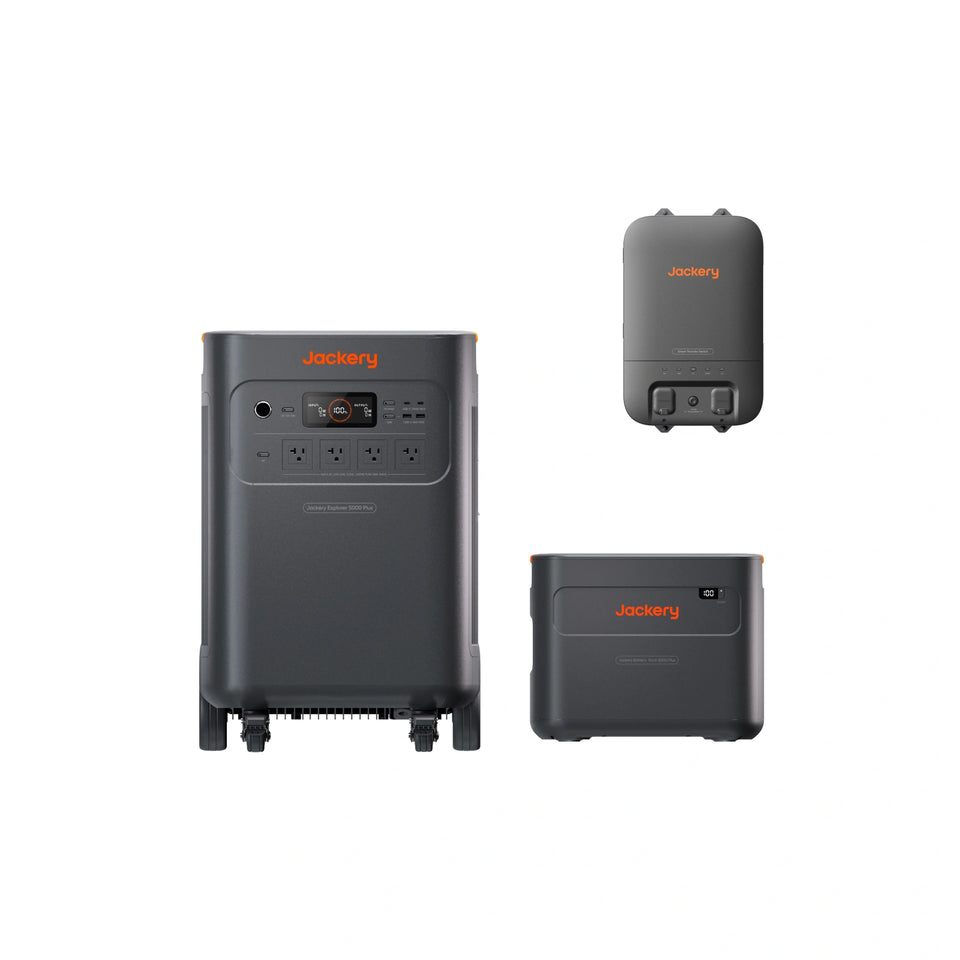
Models Discussed in This Article
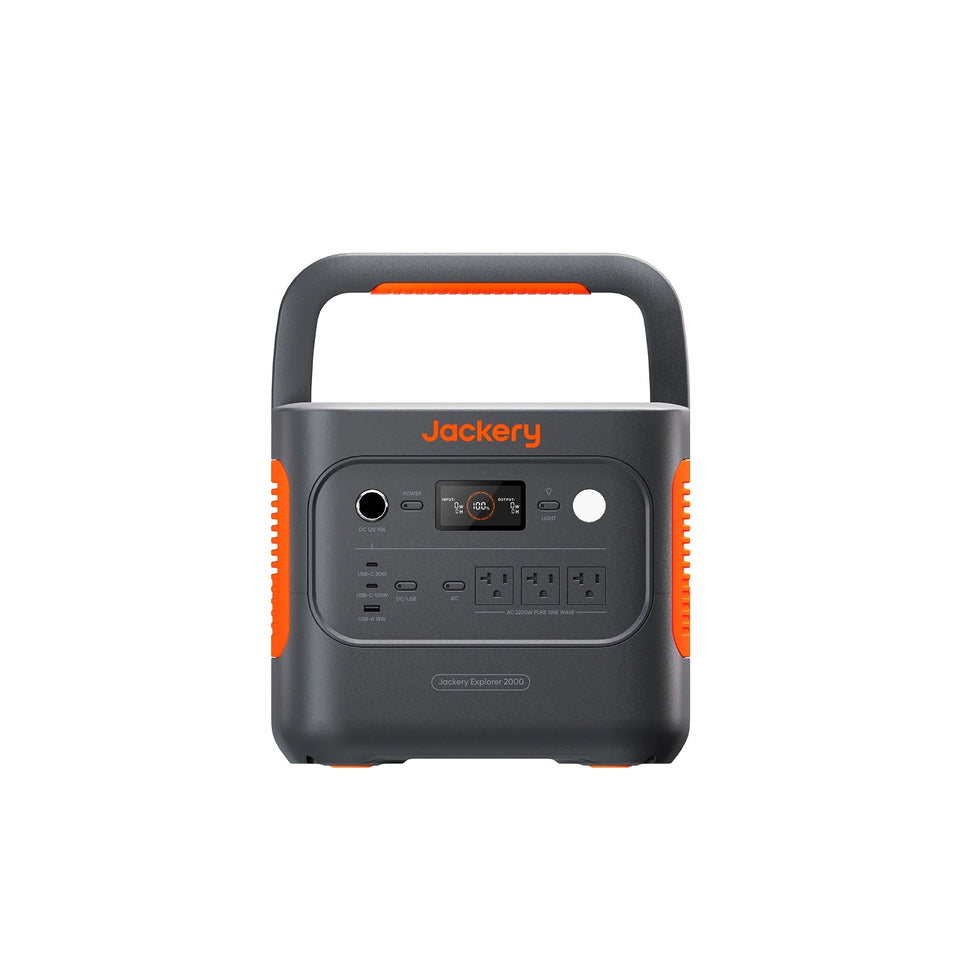
Jackery Explorer 2000 v2
A breakthrough 39.5 lb chassis makes 2,042Wh genuinely single-hand portable for camping and apartments, provided you accept its 400W solar recharge ceiling and non-expandable battery.
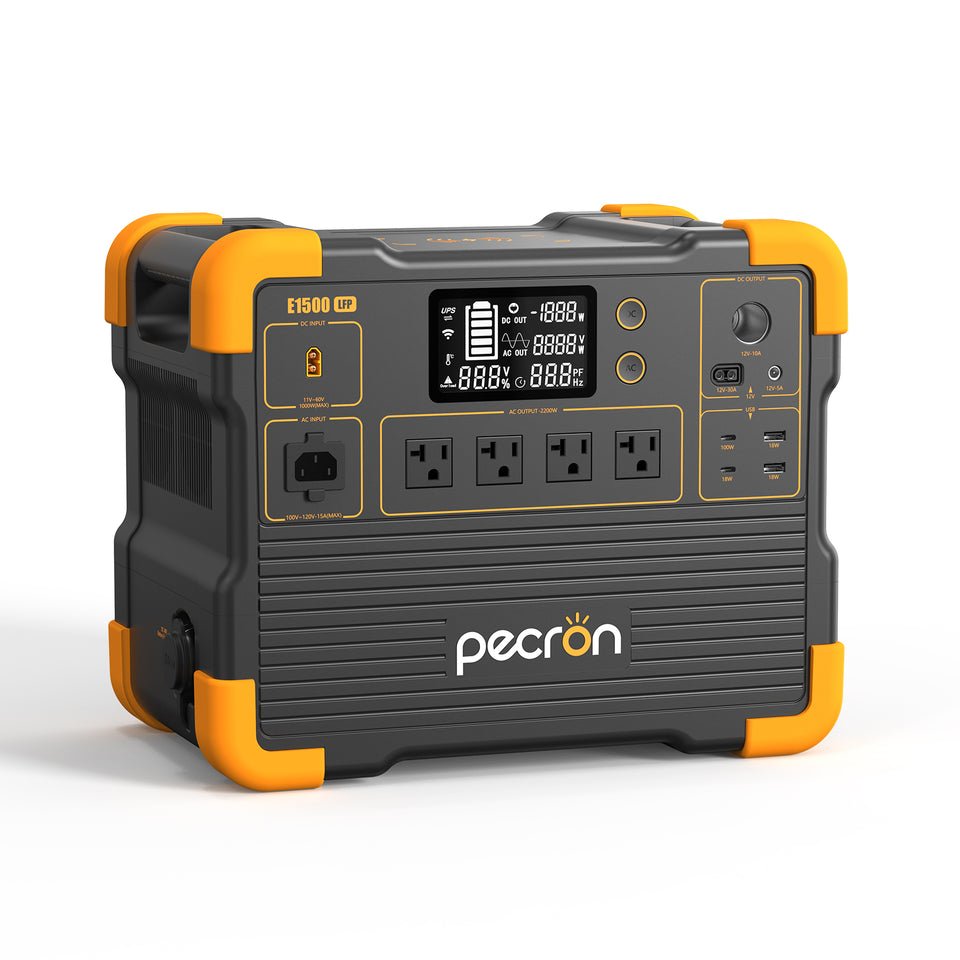
Pecron E1500LFP
Delivers 1,536Wh, a 2,200W continuous inverter, and a rare 12V/30A XT60 DC port around $599 street price, though its asymmetric 32–95V GX16MF solar input requires careful panel voltage matching.
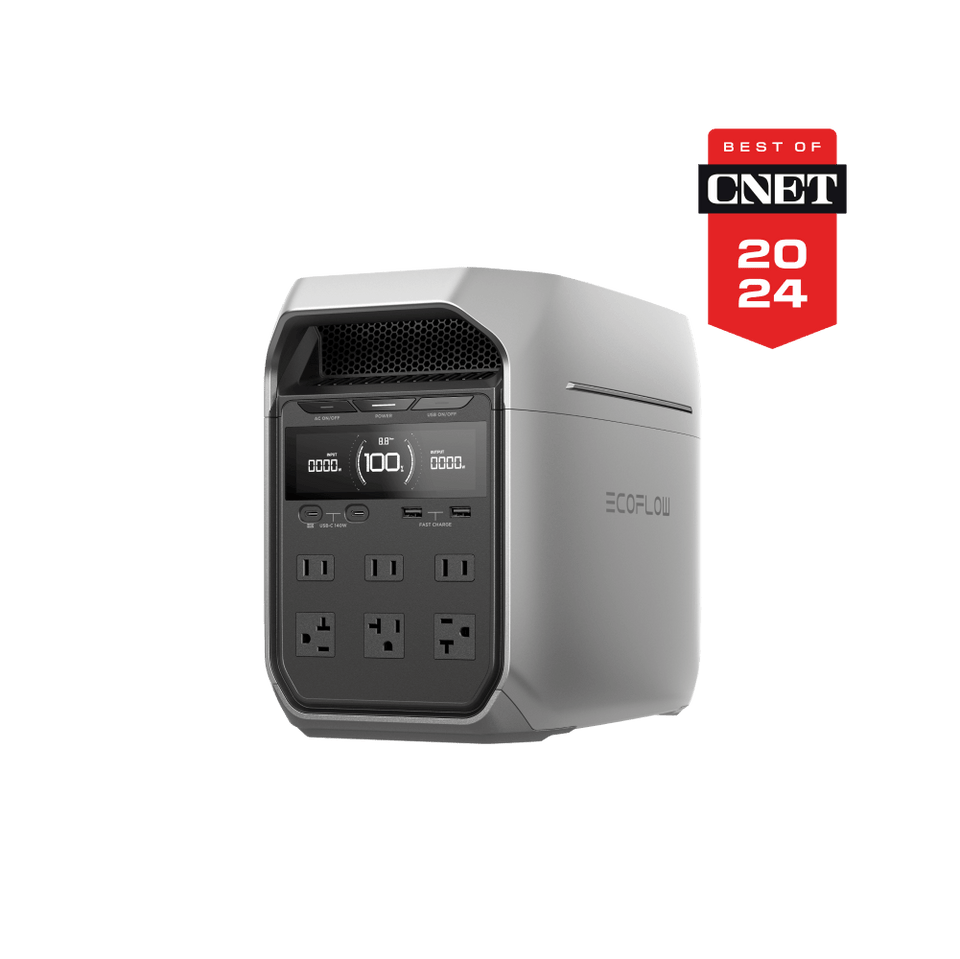
EcoFlow DELTA 3 Plus
Packs 1,000W dual-MPPT solar charging, sub-1-hour AC replenishment, and a sub-10 ms HID-capable UPS into a 27.6 lb chassis, making it more versatile than non-Plus 1kWh units.
Frequently Asked Questions
Why does the VTOMAN Jump 1000 take so much longer to recharge than the Jackery Explorer 1000 v2?+
The VTOMAN Jump 1000 routes charging through two DC5521 barrel inputs capped at 12V–30V and 200W total, paired with an external ~180W AC power brick. Filling its 1,408Wh pack therefore takes 8–9 hours on a wall outlet or 7–10+ real sun hours on solar. Jackery Explorer 1000 v2 integrates a bidirectional fast AC inverter (~1–1.7 hours) and 400W solar capability.
Can VTOMAN Jump 1000's 2,000W V-Beyond mode safely run 1,500W kitchen appliances?+
Only simple resistive heating devices tolerate voltage-lowering boost tricks reliably. VTOMAN's native continuous rating is 1,000W; V-Beyond allows select resistive loads up to 2,000W by stepping down AC voltage, which is unsuitable for voltage-sensitive electronics or heavy inductive motor startups. Jackery Explorer 1000 v2 supplies a true 1,500W continuous inverter (3,000W surge).
Does the VTOMAN Jump 1000 come with jumper cables included?+
Not always—verify the exact bundle listing before buying. While the Jump 1000 has a dedicated 12V vehicle jump-start port on its chassis, VTOMAN sells the specialized jumper clamps separately on several retail SKUs.
If I am willing to carry ~39 lbs like the VTOMAN Jump 1000, what else should I compare?+
At 38.6 lbs, the Jump 1000 weighs almost the same as two much faster-charging LiFePO4 models: the Pecron E1500LFP (39.7 lbs, 1,536Wh, 2,200W AC, 800W solar, ~$599 street) and the Jackery Explorer 2000 v2 (39.5 lbs, 2,042Wh, 2,200W AC, ~1.7–2.5 hr AC recharge).
Sources & Technical References
- View Source →[1]Manufacturer SpecificationVTOMAN Official USVerified 2026-11-25VTOMAN Jump 1000 Portable Power Station Specifications
1,408Wh LiFePO4, 1,000W continuous AC (2,000W V-Beyond surge mode), 200W DC5521 solar input limit, jump-starter port.
- View Source →[2]Manufacturer SpecificationJackery US OfficialVerified 2026-11-25Jackery Explorer 1000 v2 Official Specifications
1,070Wh LiFePO4, 1,500W continuous / 3,000W surge AC output, 400W solar input (dual DC8020), ~23.8 lbs weight.
- View Source →[3]Government Research ResourceNational Renewable Energy Laboratory (NREL)Verified 2026-11-24PVWatts & US Peak Sun Hours Reference Data
Documents regional peak sun hours and real-world photovoltaic derating factors (ambient heat, angle, shading, controller loss).
- View Source →[4]Manufacturer SpecificationPecron US OfficialVerified 2026-11-24Pecron E1500LFP Official Specifications
1,536Wh LFP, 2,200W AC, 800W dual-port solar (GX16MF 32-95V 700W + DC5521 100W), EP3000-48V expansion support.