LiFePO4 (LFP) vs. NMC Batteries in Portable Power Stations: Cycle Life, Weight & Safety
Compare LiFePO4 (LFP) and Lithium NMC battery chemistries across cycle life ratings, thermal stability, weight, cold-weather limits, and capacity retention specs.
LiFePO4 (LFP) has become the standard chemistry for modern portable power stations because it typically offers 3,000–4,000 manufacturer-rated charge cycles, stronger thermal stability than NMC, and cobalt-free longevity. NMC cells pack slightly more energy per pound, though modern LFP engineering has narrowed the weight gap—and neither chemistry can charge safely below freezing without self-heating or charge-protection cutoffs.
Key Technical Takeaways
- All 12 models in our verified US database use LiFePO4 (LFP) cells rated between 3,000 and 4,000 cycles under 25°C lab conditions.
- Read capacity retention thresholds carefully: some manufacturers specify 80% remaining capacity while others specify >=70%.
- LFP improves thermal runaway resistance compared to NMC, but no lithium battery is completely immune to electrical, mechanical, or thermal failure.
Battery chemistry shapes how long a portable power station lasts, how much it weighs, how it handles heat and cold, and whether it can survive daily solar cycling or continuous UPS duty. Over the past few years, the US portable power market shifted decisively from Nickel Manganese Cobalt (NMC) lithium-ion cells to Lithium Iron Phosphate (LiFePO4 or LFP)—to the point where every current model in our verified 12-unit database uses LFP.
Understanding the engineering trade-offs between LFP and legacy NMC packs—and reading manufacturer cycle-life footnotes carefully—prevents surprises when shopping older clearance models or comparing spec sheets.
Head-to-Head Chemistry Comparison
| Attribute | LiFePO4 (LFP) | Lithium NMC (Legacy / Ultralight) |
|---|---|---|
| Typical Manufacturer Cycle Rating | 3,000 to 4,000+ cycles (to 70%–80% capacity at 25°C) | ~500 to 800 cycles (to 80% capacity) |
| Energy Density (Wh per lb) | Moderate (~45–52 Wh/lb at system level in compact LFP builds) | Higher (~60–75+ Wh/lb in older portable packs) |
| Thermal Stability | Higher thermal decomposition threshold (~518°F / 270°C cell chemistry range) | Lower thermal runaway threshold; stricter thermal management needed |
| Daily Solar / UPS Suitability | Well suited for daily cycling & frequent shallow discharges | Degrades faster under daily full cycling |
| Cold-Weather Charging Rule | Never charge standard cells below 32°F (0°C) unless self-heating | Also restricted near/below freezing to prevent lithium plating |
| Typical US Warranty Pairing | Commonly 5 years (3 years on select models like Zendure V4600) | Often 2–3 years on older NMC generations |
Cycle Life Claims: Watch the Retention Threshold and Test Conditions
Manufacturers advertise cycle counts prominently, but two nuances govern what those numbers mean:
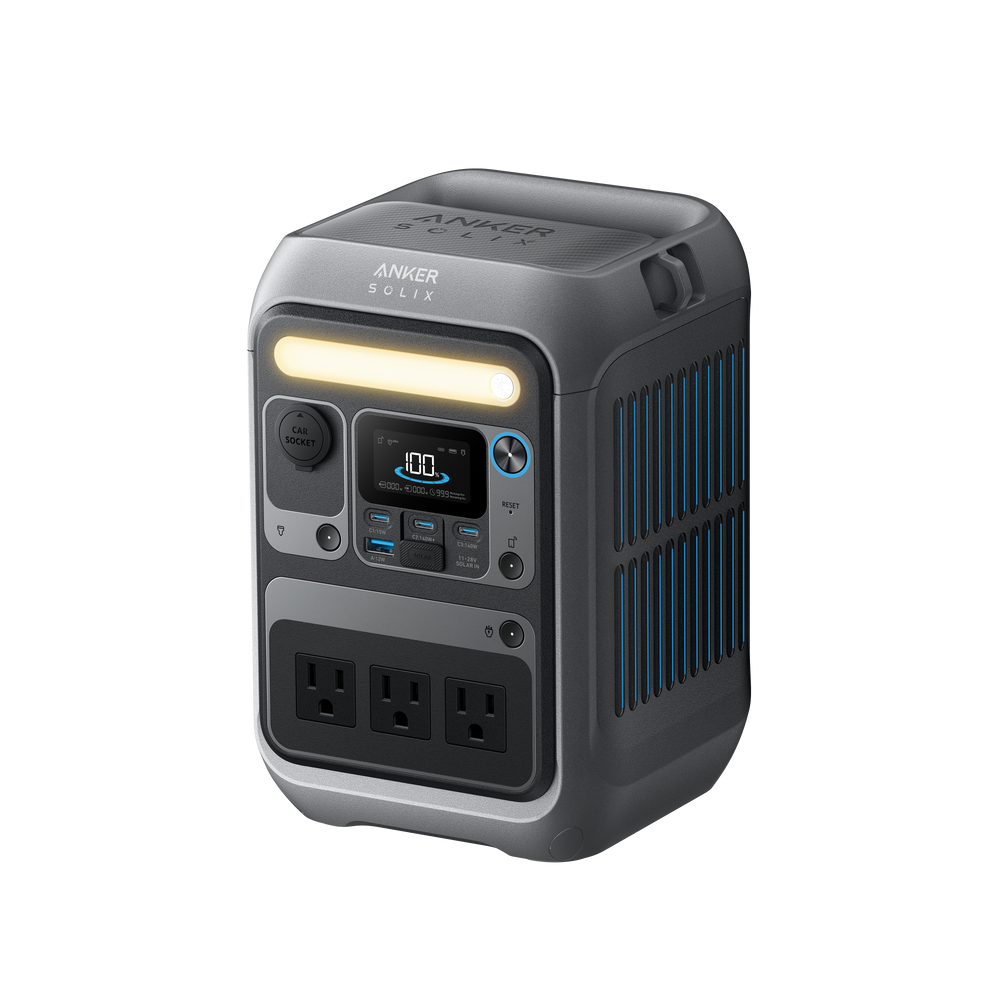
- 80% vs. >=70% Retention Endpoints: EcoFlow (3,500+ cycles on DELTA Pro Ultra; 4,000 cycles on DELTA 3 Plus), BLUETTI (3,000+ cycles on AC200L and AC70), and Anker SOLIX (3,000 cycles on F3800 and C300) rate cycle life down to 80% of original capacity. By contrast, models such as the Jackery Explorer 2000 v2, Jackery Explorer 5000 Plus, and DJI Power 1000 specify 4,000 cycles to >=70% capacity. Neither rating is misleading when disclosed, but comparing 4,000 cycles at 70% directly against 3,000 cycles at 80% compares different end-of-life definitions.
- 25°C Controlled Lab Conditions: Published cycle numbers reflect controlled 77°F (25°C) laboratory cycling (such as EcoFlow’s documented 0.5C/0.5C test rate). High ambient temperatures, continuous maximum-wattage fast charging, and prolonged storage at 100% state of charge accelerate calendar aging even when cycle count is low.
Note also that hitting the rated cycle threshold does not mean the battery stops working overnight; it simply holds 70%–80% of its original watt-hour capacity.
Closing the Weight Penalty: Cell-to-Body LFP Designs
Historically, NMC’s primary advantage was weight—especially important for hikers, solo campers, and apartment renters carrying units up stairs. While LFP cells remain slightly heavier per watt-hour at the bare cell level, structural integration has reduced enclosure overhead:
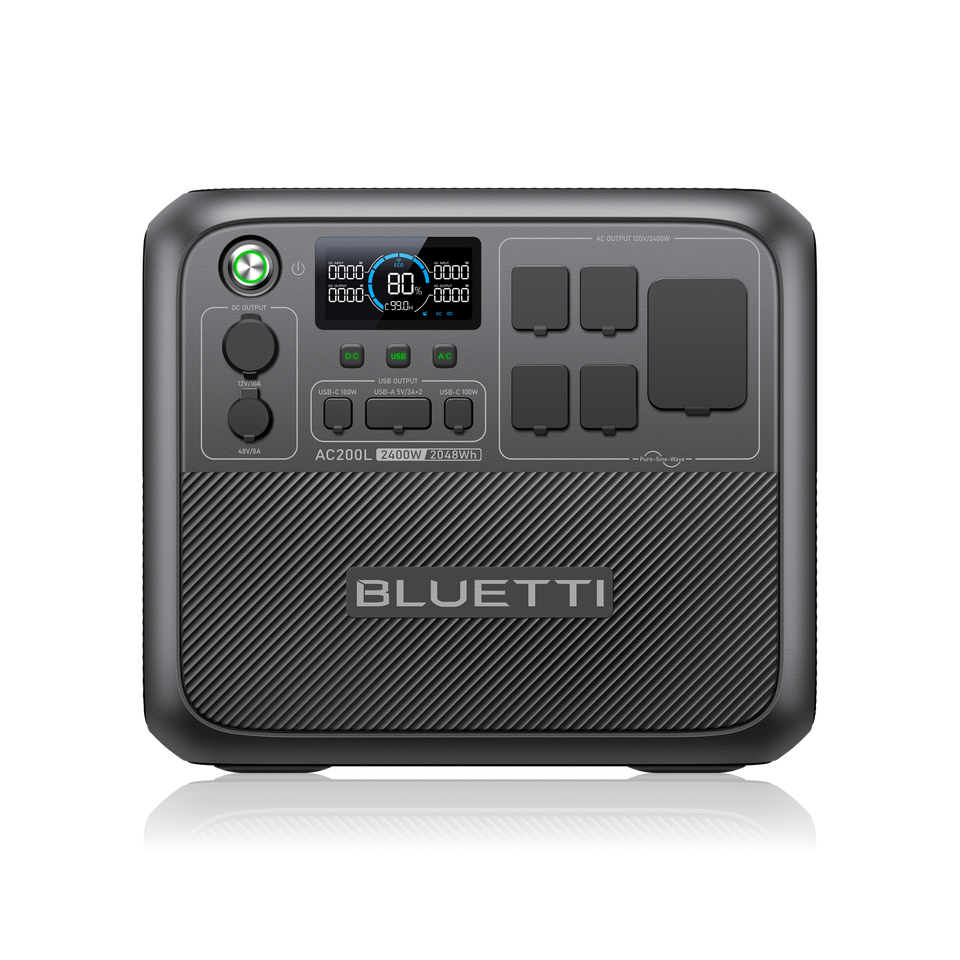
- The 2,042Wh Jackery Explorer 2000 v2 uses a Cell-to-Body (CTB) chassis to achieve 39.5 lbs—nearly 23 lbs lighter than the 62.4 lb BLUETTI AC200L of virtually identical 2,048Wh capacity (though the trade-off is that the Explorer 2000 v2 is non-expandable).
- In the 1,024Wh class, the EcoFlow DELTA 3 Plus weighs 27.6 lbs and the DJI Power 1000 weighs 28.7 lbs, bringing LFP very close to older NMC 1kWh stations while quadrupling cycle longevity.
Thermal Safety Reality: Better Stability Does Not Mean Zero Risk
LiFePO4 cathodes have stronger phosphorus-oxygen covalent bonds than cobalt/nickel-oxide cathodes, making them far less prone to oxygen release during mechanical puncture or overheating. Because of this property, LFP has become the preferred chemistry for indoor home backup installations and UL-listed residential storage.
However, no lithium battery chemistry is completely risk-free. High-voltage DC busbars, AC inverters, BMS MOSFETs, and high-amperage plugs can still fail or overheat if abused, flooded, crushed, or operated in violation of manufacturer specs. Always verify UL/FCC/UN38.3 documentation, inspect power cords before heavy loads, and never attempt DIY cell modifications.
Cold-Weather Charging and Discharge Limits
Every LFP power station shares an important cold-weather asymmetry:
- Discharging in Cold: Most LFP stations safely discharge down to -4°F (-20°C) (e.g., BLUETTI AC200L, Anker F3800, Zendure V4600, Goal Zero Yeti 700) or 5°F to 14°F (Jackery 2000 v2 / 5000 Plus, DELTA 3 Plus, DJI Power 1000), albeit with somewhat higher internal resistance.
- Charging Below Freezing: Standard LFP units prohibit charging below 32°F (0°C) because cold lithium ions cannot intercalate cleanly into the graphite anode, causing metallic lithium plating. Only systems equipped with integrated battery heaters—such as the EcoFlow DELTA Pro Ultra, rated down to -4°F (-20°C) for charging via automatic self-heating—warm the pack before accepting solar or grid current.
For winter cabin or unheated-garage planning, consult our Battery Storage, Temperature & Safety Guide or compare chemistry specs across all 12 verified models in the Price per Wh Calculator.
Frequently Asked Questions
What is the real-world difference between 3,000 cycles to 80% and 4,000 cycles to >=70%?+
Even if you fully cycle a power station every single day, 3,000 cycles represents over 8 years of daily use before capacity drops to the rated retention threshold. Pay attention to whether a brand specifies 80% remaining capacity (common at EcoFlow, BLUETTI, and Anker) or >=70% (used on several Jackery and DJI specs), as those thresholds represent different end-of-spec points.
Why did brands switch from NMC to LiFePO4 in newer power stations?+
Earlier NMC portable stations lasted roughly 500–800 cycles to 80% capacity and relied on cobalt/nickel cathodes with lower thermal stability thresholds. As LFP energy density improved and costs dropped, brands adopted LFP to match 5-year warranties and daily solar/UPS cycling.
Can LiFePO4 batteries charge below freezing (32°F / 0°C)?+
Standard LFP cells must not be charged below 32°F (0°C) because lithium plating can permanently damage the anode and create safety risks. Most units enforce a BMS low-temp charging cutoff at 32°F, though specialized home systems like the EcoFlow DELTA Pro Ultra include automatic self-heating down to -4°F (-20°C).
Sources & Technical References
- View Source →[1]Manufacturer User ManualEcoFlow Support DocumentationVerified 2026-11-24EcoFlow DELTA Pro Ultra User Manual & Technical Datasheet
Documents High-PV (80-450V, 15A, 4,000W) and Low-PV (30-150V, 15A, 1,600W) limits, operating temps, and UPS switching behavior.
- View Source →[2]Manufacturer SpecificationJackery US OfficialVerified 2026-11-24Jackery Explorer 2000 v2 Product Page & User Guide
2,042Wh LFP Cell-to-Body design, 39.5 lbs weight, 2,200W continuous AC, 400W dual DC8020 solar input.
- View Source →[3]Manufacturer SpecificationJackery US OfficialVerified 2026-11-24Jackery Explorer 5000 Plus Official Product Specifications
5,040Wh LFP capacity, 7,200W/14,400W AC specs, High-PV (135-450V) and Low-PV (16-60V) limits, and warranty terms.
- View Source →[4]Manufacturer SpecificationDJI OfficialVerified 2026-11-24DJI Power 1000 Specifications & Official Overview
1,024Wh LFP, 2,200W continuous AC (V1 US model; V2 increases to 2,600W), dual 140W USB-C, 800W solar via MPPT adapter.
- View Source →[5]Manufacturer SpecificationBLUETTI US OfficialVerified 2026-11-24BLUETTI AC200L Portable Power Station Official Specifications
2,048Wh LFP, 2,400W continuous AC, 3,600W Power Lifting mode, NEMA TT-30R + 48V/8A DC RV port, 1,200W solar (12-145V).
- View Source →[6]Manufacturer SpecificationAnker SOLIX US OfficialVerified 2026-11-24Anker SOLIX F3800 Portable Power Station Official Specifications
North American model specs including NEMA 14-50R, L14-30R, 6,000W output, 3,840Wh capacity, and 11-60V dual solar input.