Anker SOLIX F2000 (PowerHouse 767) 2026 Review: 2,048Wh RV & Outage Analysis
2026 engineering review of Anker SOLIX F2000 (PowerHouse 767): 2,048Wh LFP to 4,096Wh, 2,400W TT-30R RV port, 1,000W 11-60V solar, vs AC200L & Jackery 2000 v2.
Originally launched as the PowerHouse 767 and rebranded as the Anker SOLIX F2000, this 2,048Wh LiFePO4 station pairs 2,400W continuous 120V AC output and a native 30A TT-30R RV port with GaNPrime thermal efficiency and 4,096Wh expansion on a 67.2 lb wheeled chassis. Expect ~1,597–1,802Wh usable AC (78%–88%), though its 1,000W (11–60V) solar limit, Bluetooth-only app, and 67.2 lb bulk trail the 145V-solar BLUETTI AC200L and 39.5 lb Jackery Explorer 2000 v2.

When Anker consolidated its portable battery lineup under the SOLIX sub-brand, its rugged wheeled PowerHouse 767 was quietly rebadged as the Anker SOLIX F2000—keeping identical 2,048Wh LiFePO4 (LFP) cells, 2,400W AC output, and suitcase wheels intact.
Because discounted F2000 bundles continue circulating across US retailers alongside newer 2kWh entries, prospective buyers need a clear 2026 engineering comparison—stripped of outdated launch hype and unverified claims—measuring how the F2000 holds up against the BLUETTI AC200L and featherweight Jackery Explorer 2000 v2.
PowerHouse 767 to SOLIX F2000: Core Hardware & GaNPrime Architecture
Inside the F2000 chassis sits 2,048Wh of LFP chemistry rated by Anker for 3,000 cycles to 80%+ capacity, backed by a 5-Year US warranty (32°F–104°F charge range / -4°F–104°F discharge range without internal heaters). Unlike early 120V competitors built with bulky silicon-based power boards, Anker incorporated Gallium Nitride (GaNPrime) components inside its bidirectional inverter to trim switching heat and keep fan acoustics noticeably calmer under light-to-moderate loads.
Key output and recharging hardware includes:
- AC Inverter:
2,400Wcontinuous pure sine wave (120Vsingle-phase), with3,600WSurgePad support (Note: SurgePad lowers voltage to keep resistive heating elements running up to3,600W—never rely on voltage-dropping boost modes for inductive compressor motors). - AC & RV Outlets:
4 × 120V/20Astandard AC outlets +1 × 120V/30A NEMA TT-30RRV shore receptacle. - USB & 12V DC Array:
3 × 100WUSB-C PD ports,2 × 12WUSB-A ports, and2 × 12V/10A(120Weach) car cigarette sockets. - Wall Recharge Speed: Up to
1,440WHyperFlash AC input, taking roughly1.4 hoursto hit80%and~2 hoursto100%—accompanied by<20msautomatic EPS/UPS bypass for household routers or fridges. - Connectivity Caveat: The F2000 relies strictly on Bluetooth app telemetry—lacking built-in Wi-Fi for remote cloud monitoring when you leave home during an outage.
RV TT-30R Hookup & 67.2 lb Suitcase Ergonomics
Among 2,048Wh stations, Anker deserves real credit for recognizing that dragging a 67-pound battery across gravel campsites gets old fast. Integrating 4.7-inch wheels and an extendable suitcase handle at 67.2 lbs (20.7 × 15.5 × 9.8 inches) makes rolling the F2000 from garage to camper tongue effortless on solid ground—unlike the 62.4 lb wheelless BLUETTI AC200L, which must be carried by side grips or placed on a folding dolly.
That mobility pairs cleanly with the front NEMA TT-30R 30A RV socket. Travel-trailer owners can plug a 30A shore cord directly into the F2000 without hunting for 15A dogbone adapters that bottleneck induction cooktops or microwaves. Two caveats remain for RV campers, as outlined in our RV Power Station Compatibility Guide:
- Disable Your RV’s Built-In Converter Charger: Leaving the trailer’s AC-to-12V battery converter switched ON while plugged into the F2000 wastes power charging your RV’s house batteries from the power station.
- SUV & Truck Lifting Reality: Wheels help on concrete, yet lifting
67.2 lbsinto a tall SUV cargo area or up RV steps still demands careful two-hand posture compared to lifting the39.5 lbJackery Explorer 2000 v2.
The 1,000W (11–60V) Solar Input Step & 4,096Wh Expansion Cap
Where the older F2000 hardware shows its 2022–2023 engineering roots most clearly is solar voltage flexibility and modular scalability:
- Two-Stage
10A/20ASolar Throttling (11–60VVoc): The F2000 accepts1,000Wmax solar through anXT60port (11V–60VVoc). Critically, Anker enforces an internal current split: inputs between11V–32Vcap at10Amax, whereas inputs between32V–60Vunlock20Amax. If you connect typical12V-class~18V–20VVmp portable panels, the controller limits current to10A(~180W–200Wper panel string!). Reaching800W–1,000Wrequires solar configurations operating cleanly inside32V–60V(while maintaining cold-weather Voc headroom below60V). - One-Battery Expansion Ceiling (
4,096WhMax): Adding a single BP2000 / 760 (2,048Wh) Expansion Battery doubles storage to4,096Wh. Unlike the BLUETTI AC200L (which scales up to8,192Whacross B300K packs), the F2000 stops at one add-on module.
2026 Showdown: Anker SOLIX F2000 vs. BLUETTI AC200L & Jackery Explorer 2000 v2
For 2kWh shoppers in 2026, choosing between discounted Anker F2000 stock and newer generation rivals comes down to weight vs. solar voltage vs. verified efficiency:
| Specification | Anker SOLIX F2000 (767) | BLUETTI AC200L | Jackery Explorer 2000 v2 |
|---|---|---|---|
| Battery Capacity & Chemistry | 2,048Wh LFP (3,000 cycles to 80%) |
2,048Wh LFP (3,000+ cycles to 80%) |
2,042Wh LFP (4,000 cycles to >=70%) |
| Max Expansion | 4,096Wh (1 × 2kWh pack) |
8,192Wh (B210/B230/B300/B300K) |
None (standalone Cell-to-Body) |
| Continuous AC Inverter | 2,400W (3,600W SurgePad resistive) |
2,400W (3,600W Power Lifting resistive) |
2,200W (4,400W surge) |
| RV / High-Amp DC Ports | NEMA TT-30R (30A) + 2 × 12V car |
NEMA TT-30R + 48V/8A DC RV port |
Standard 5-20R only (12V car) |
Solar Input & Voc Range |
1,000W (11V–60V; 10A <32V / 20A >=32V) |
1,200W (12V–145V Voc, 15A) |
400W (16V–60V, dual DC8020) |
| AC Charging Speed | 1,440W (~2 hrs full) |
2,400W Turbo (~1.5 hrs full) |
1,800W (~1.7 hrs / ~2.5 hrs OGL test) |
| App Connectivity | Bluetooth only | Wi-Fi + Bluetooth | Wi-Fi + Bluetooth |
| Third-Party Lab Benchmarks | Not Independently Verified | CNET: 77.76% RTE, >29h fridge test |
OutdoorGearLab: ~2.5h AC charge; TechRadar 4.5/5 |
| Weight & Mobility | 67.2 lbs (built-in wheels + handle) |
62.4 lbs (no wheels) |
39.5 lbs (solo carryable) |
Because standalone third-party usable AC discharge metrics for the F2000 are Not Independently Verified, model expected runtime using transparent conversion ranges (78%–88% usable AC = ~1,597–1,802Wh; 88%–93% usable DC = ~1,802–1,905Wh):
- Standard Kitchen Fridge (
~150Wcompressor / cyclic avg): Expect roughly 18 to 26+ hours depending on ambient room temperature and standby inverter draw (compare to CNET’s independently tested>29 hourson the BLUETTI AC200L). - CPAP Machine (
35WDC /50WAC w/ humidifier): Roughly 38–54 hours via DC car socket, or 28–36 hours over AC. - RV 13,500 BTU Rooftop AC (
1,350Wsteady w/ soft-start): Roughly 1.1 to 1.3 hours on the base unit (roughly2.2–2.6 hoursexpanded to4,096Wh).
Compare these two-kilowatt rivals head-to-head in BLUETTI AC200L vs. Jackery Explorer 2000 v2 and Best 2000Wh Portable Power Stations.
Buying Verdict: When F2000 Clearance Deals Still Win
- Buy the Anker SOLIX F2000 only if deep promotional clearance drops it noticeably below
$950–$1,050, you specifically want rolling luggage wheels + a nativeTT-30RRV outlet, and you charge primarily from AC shore power or32V–60Vsolar panels without needing Wi-Fi app control. - Choose the BLUETTI AC200L at comparable
$999–$1,199street prices if solar flexibility (12V–145V/1,200W), CNET-verified refrigerator longevity (>29 hours),48V/8ADC camper van outputs, or8kWhscalability matter more than built-in wheels. - Choose the Jackery Explorer 2000 v2 if carrying
62–67 lbsup stairs or into a car trunk is a dealbreaker—its39.5 lbchassis transforms2kWhportability as long as400Wsolar and non-expandable capacity fit your trips.
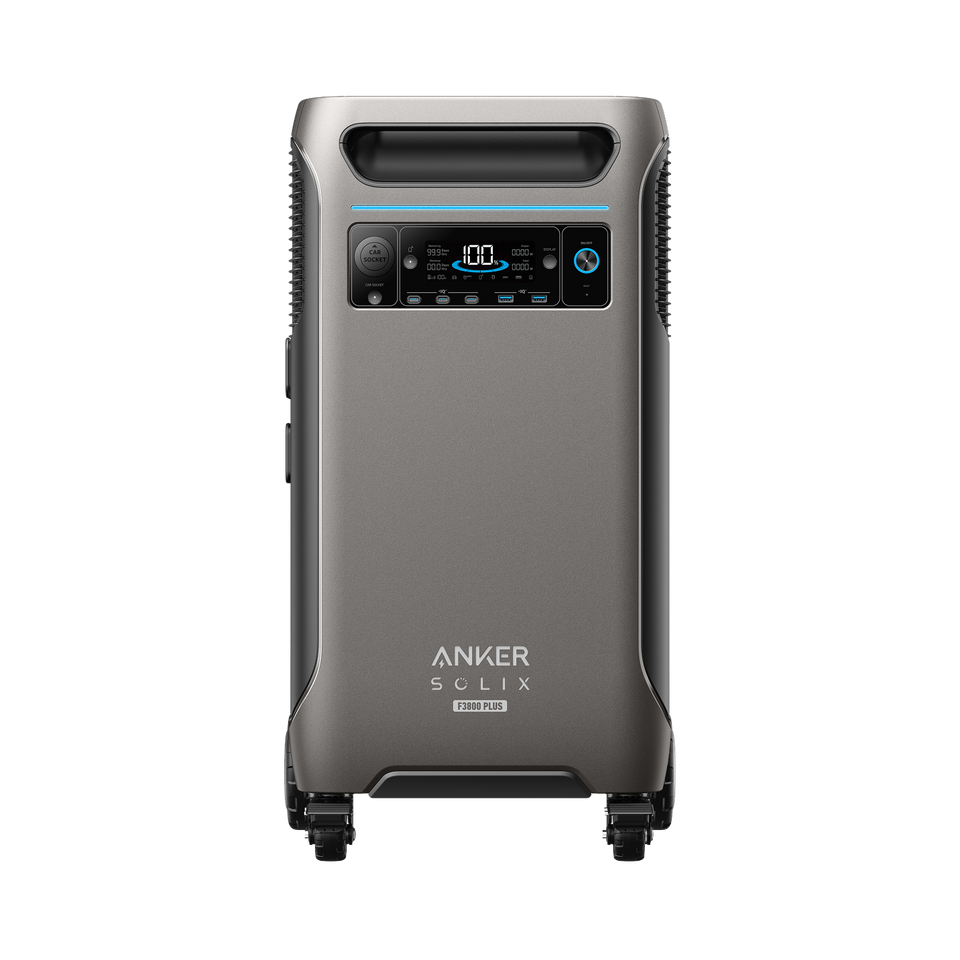
Models Discussed in This Article
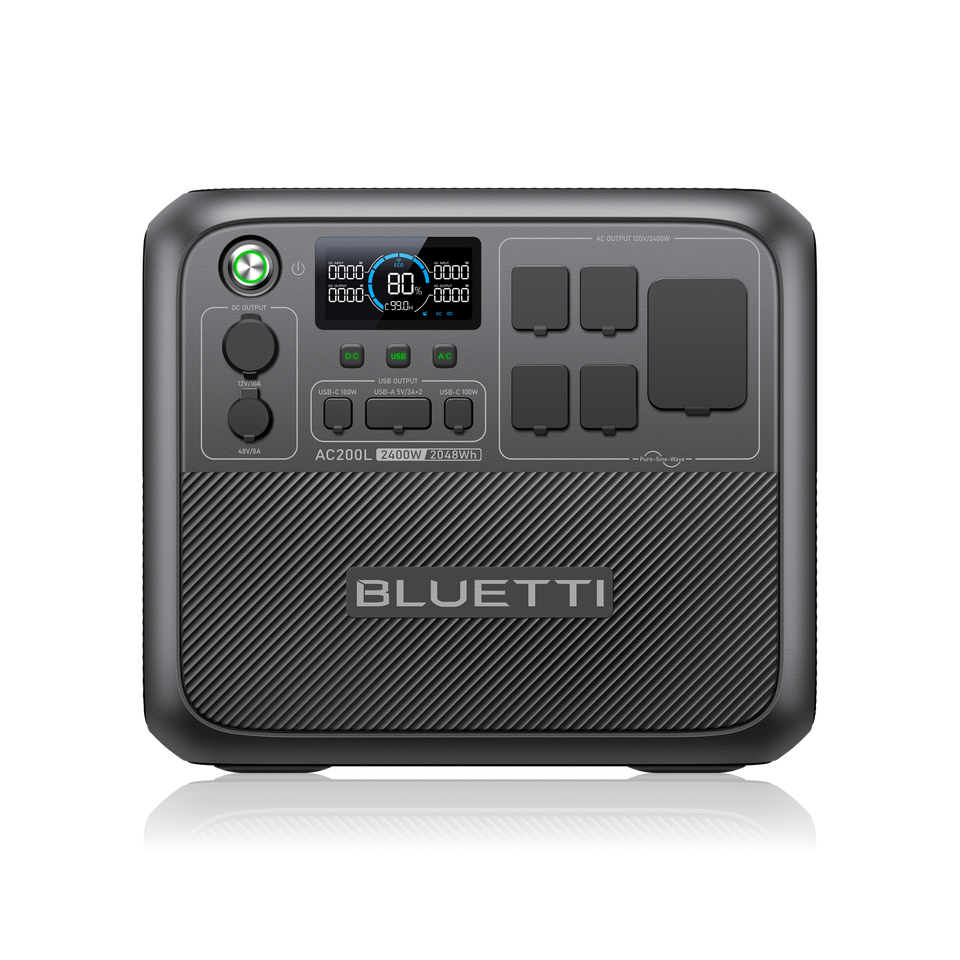
BLUETTI AC200L
Combines a high-efficiency 2,048Wh expandable platform, 1,200W high-voltage solar input (12–145V), and dedicated 30A TT-30R + 48V DC RV outputs at strong street pricing, trading away light weight and built-in wheels.
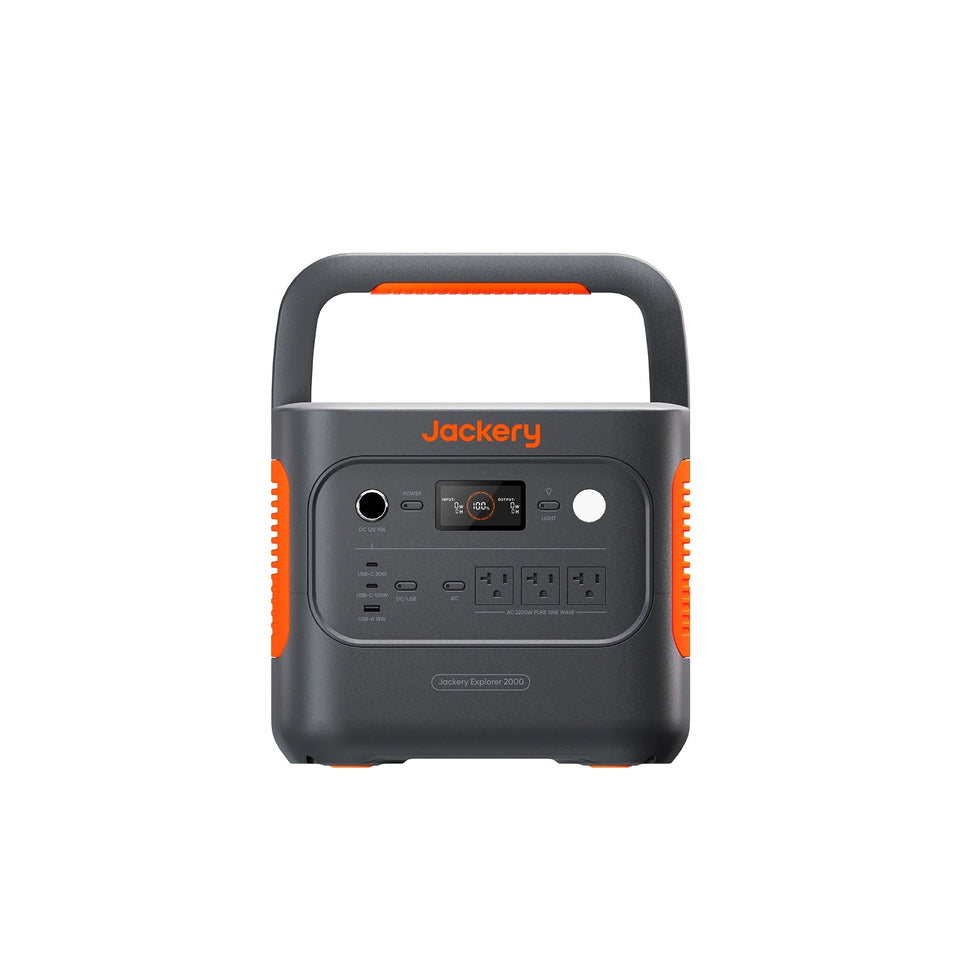
Jackery Explorer 2000 v2
A breakthrough 39.5 lb chassis makes 2,042Wh genuinely single-hand portable for camping and apartments, provided you accept its 400W solar recharge ceiling and non-expandable battery.
Anker SOLIX F3800
One of the most approachable plug-and-play 120V/240V wheeled units thanks to built-in NEMA 14-50R and L14-30R ports, though high idle overhead on light loads and the 60V solar cap (on the original non-Plus SKU) require careful sizing.
Frequently Asked Questions
Are the Anker PowerHouse 767 and Anker SOLIX F2000 the exact same unit?+
Yes. Anker originally launched the hardware as the PowerHouse 767 (2,048Wh LFP, 2,400W continuous AC, 1,000W solar, 67.2 lbs) and subsequently unified it under the Anker SOLIX F2000 badge without altering core electrical ratings or expansion battery compatibility.
Why does the Anker SOLIX F2000 limit low-voltage solar panels to 10A while supporting 20A above 32V?+
Anker's XT60 MPPT input on the F2000 enforces a two-tier current threshold: 11V–32V inputs are capped at 10A max (~180W–220W from typical 12V-class panels), whereas 32V–60V inputs unlock 20A max to hit the full 1,000W ceiling. Reaching 800W–1,000W solar requires panels operating in the 32V–60V Voc window.
Can the Anker SOLIX F2000 run a 30A RV air conditioner?+
Yes, for short intervals—its native 30A NEMA TT-30R receptacle delivers 2,400W continuous 120V AC (with 3,600W SurgePad resistive handling), enough for many 13,500 BTU RV rooftop ACs especially with a soft-start kit. However, pulling 1,300W–1,500W continuously drains a standalone 2,048Wh battery in roughly 1.1 to 1.4 hours without the 4,096Wh expansion pack or steady solar.
How does the Anker SOLIX F2000 compare to the BLUETTI AC200L and Jackery Explorer 2000 v2?+
The F2000 wins on rolling suitcase ergonomics (telescopic handle + wheels vs wheelless AC200L), while BLUETTI AC200L wins on 12V–145V (1,200W) solar flexibility, 8,192Wh max expansion, Wi-Fi monitoring, and CNET-verified >29h refrigerator runtime. Jackery Explorer 2000 v2 cuts weight dramatically to 39.5 lbs for solo lifting, though it lacks TT-30R and expansion ports.
Sources & Technical References
- View Source →[1]Manufacturer SpecificationAnker SOLIX US OfficialVerified 2026-11-25Anker SOLIX F2000 (PowerHouse 767) Specifications
2,048Wh LiFePO4 (expandable to 4,096Wh), 2,400W continuous AC including NEMA TT-30R RV port, 1,000W (11-60V) MPPT solar input, 67.2 lbs.
- View Source →[2]Manufacturer SpecificationBLUETTI US OfficialVerified 2026-11-24BLUETTI AC200L Portable Power Station Official Specifications
2,048Wh LFP, 2,400W continuous AC, 3,600W Power Lifting mode, NEMA TT-30R + 48V/8A DC RV port, 1,200W solar (12-145V).
- View Source →[3]Manufacturer SpecificationJackery US OfficialVerified 2026-11-24Jackery Explorer 2000 v2 Product Page & User Guide
2,042Wh LFP Cell-to-Body design, 39.5 lbs weight, 2,200W continuous AC, 400W dual DC8020 solar input.
- View Source →[4]Third-Party Independent ReviewCNETVerified 2026-11-24CNET Portable Power Station Lab Efficiency & Refrigerator Runtime Benchmarks
Documents standardized refrigerator runtime and round-trip efficiency testing including BLUETTI AC200L (77.76% RTE, >29h fridge test) and Anker SOLIX F3800 (~25.68h fridge stress runtime due to dual-voltage inverter overhead).
- View Source →[5]Third-Party Independent ReviewOutdoorGearLabVerified 2026-11-24Jackery Explorer 2000 v2 Independent Review & Benchmark Testing
Reports ~2.5 hour full AC recharge (~817 Wh/hr average), high portability score for 2kWh class, and solar expansion trade-offs.