RV & Camper Van Power Station Compatibility Guide: TT-30R, Roof AC & 12V/48V DC
How portable power stations connect to 30A/50A RVs and DIY camper vans, including TT-30R shore outlets, rooftop AC startup surge limits, converter loop traps, and high-amp DC ports.
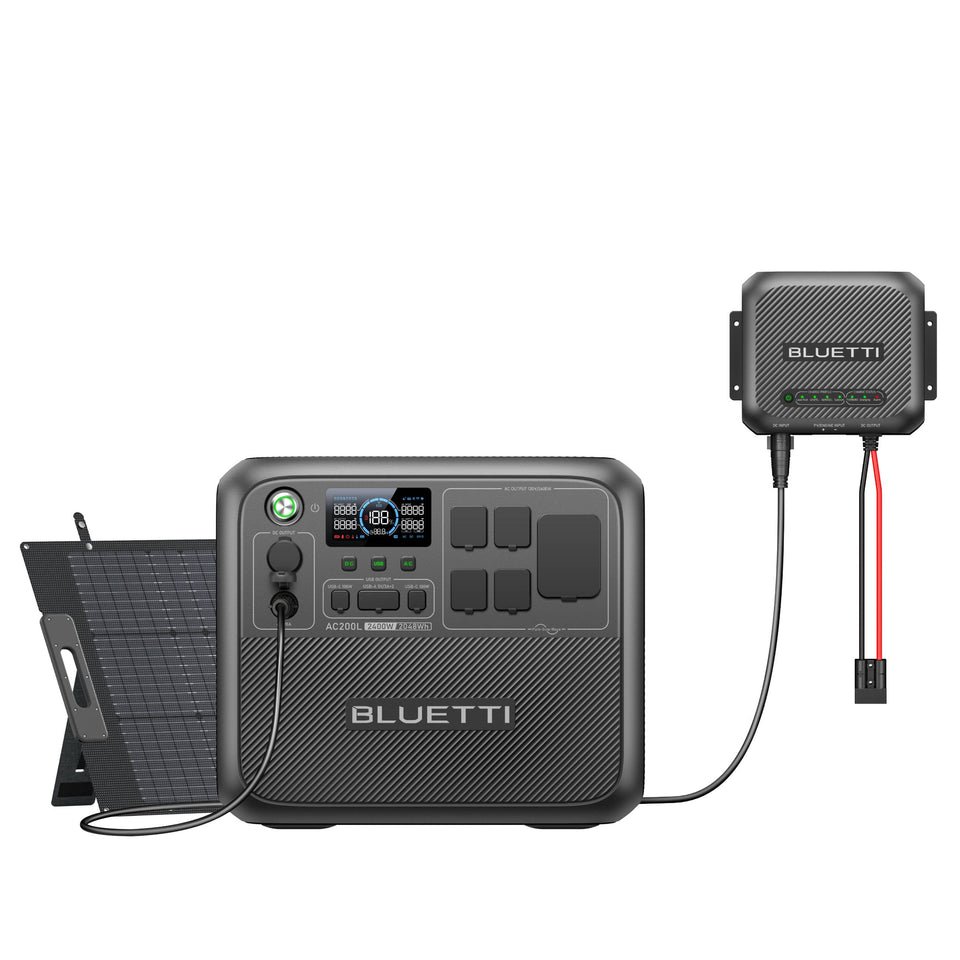
To plug a standard 30A travel trailer directly into a power station without dogbone bottlenecks, choose a model with a built-in 120V NEMA TT-30R port (such as BLUETTI AC200L or Zendure SuperBase V4600) or use appropriate 240V/30A adapter hardware where supported—and always switch off your RV's onboard AC-to-12V battery converter so you don't waste energy charging your RV house battery from the power station.
Key Technical Takeaways
- Native 30A NEMA TT-30R outlets deliver up to the station's continuous 120V wattage (e.g., 2,400W on BLUETTI AC200L) cleanly into standard 30A RV shore cords.
- A 13,500 BTU RV rooftop air conditioner draws ~1,500W running and ~3,200W+ startup surge without a soft-start kit—rapidly draining 2kWh batteries.
- Turning off the RV's onboard AC-to-DC converter prevents wasteful double conversion; DIY van builders benefit from dedicated 12V/30A or 48V/8A DC outputs.
Portable power stations have become a compelling alternative to permanent RV lithium battery-and-inverter installs—offering an all-in-one MPPT solar controller, pure sine wave inverter, and battery pack you can move between your RV, truck, and home. Yet RV electrical systems come with unique outlet standards, air-conditioner surge limits, and parasitic charging traps that differ sharply from household appliances.
Understanding RV Shore Power Plugs: 30A TT-30R vs. 50A 14-50R vs. 15A/20A
US RVs use three main shore power connections:
- Standard 15A/20A Household (NEMA 5-15/5-20R): Limits draw to 1,800W–2,400W on a single outlet. Using a common “15A-to-30A hockey puck” adapter on a 1,800W station like the EcoFlow DELTA 3 Plus works fine for lights, outlets, fridge, and microwave (one at a time), provided total draw stays under the adapter and inverter ceiling.
- 30A RV Shore Plug (NEMA TT-30R — 120V): Standard on travel trailers and Class C motorhomes, allowing up to 3,600W from pedestal power or the full continuous 120V inverter rating of a power station without overheating a standard 15A plug.
- Built-in TT-30R in our database: BLUETTI AC200L (2,400W continuous) and Zendure SuperBase V4600 (3,800W continuous), plus the newer Anker SOLIX F3800 Plus revision.
- 50A RV / Appliance Plug (NEMA 14-50R — 120V/240V): Found on large fifth-wheels and Class A coaches running dual AC units. On the original Anker SOLIX F3800 (6,000W) and Jackery Explorer 5000 Plus (7,200W), built-in NEMA 14-50 outlets accept a 50A RV cord directly (observing each station’s continuous wattage ceiling rather than expecting full 12,000W campground pedestal power).
Can You Run an RV Rooftop Air Conditioner?
A typical 13,500 BTU RV roof AC draws roughly 1,500W continuous while cooling, with an unassisted locked-rotor startup surge often reaching 3,200W or higher:
- Startup Surge & Soft Starters: A 2,200W–2,400W inverter can struggle with older RV compressors if surge duration exceeds the inverter’s undocumented millisecond ceiling. Adding an aftermarket RV AC soft-start module typically lowers startup inrush substantially, making compressor starts smoother on 2,400W–3,800W stations.
- Energy Math Reality: Running 1,500W continuously for just 4 hours consumes 6,000 Wh—meaning a standalone 2,048Wh station provides roughly 1 hour of continuous AC cooling before shutdown. Comfortable off-grid RV AC operation generally requires 3,800Wh–10kWh+ of expandable capacity (e.g., BLUETTI AC200L + B300K expansion, Anker F3800 + BP3800, or Zendure V4600 + Satellite batteries).
Avoid the RV Converter Charging Loop
When you plug a portable power station into an RV’s exterior shore inlet, 120V power automatically reaches the RV’s onboard AC-to-12V converter/charger, which immediately tries to charge the trailer’s built-in lead-acid or AGM house battery at 300W–600W!
This creates a wasteful loop (Power Station DC -> Power Station 120V AC -> RV Converter 12V DC -> RV Battery), burning 25%–35%+ in compounded conversion losses and draining your power station overnight while you sleep.
The Fix: Locate the “Converter” breaker inside your RV’s interior breaker panel and switch it OFF whenever running from a portable power station (unless you specifically intend to recharge a depleted RV chassis/house battery temporarily). Let your RV’s roof solar or alternator maintain the house battery separately.
High-Current 12V and 48V DC Ports for Camper Van Builds
DIY camper van builders often wire 12V ceiling fans, puck lights, diesel heaters, water pumps, and 12V compressor fridges directly to a fuse block rather than running an AC inverter 24/7. A standard 12V/10A cigarette lighter socket caps out at 120W—too small for a diesel heater startup glow plug plus a fridge and lights simultaneously.
Models in our database with dedicated high-current DC outputs skip the AC inverter completely:
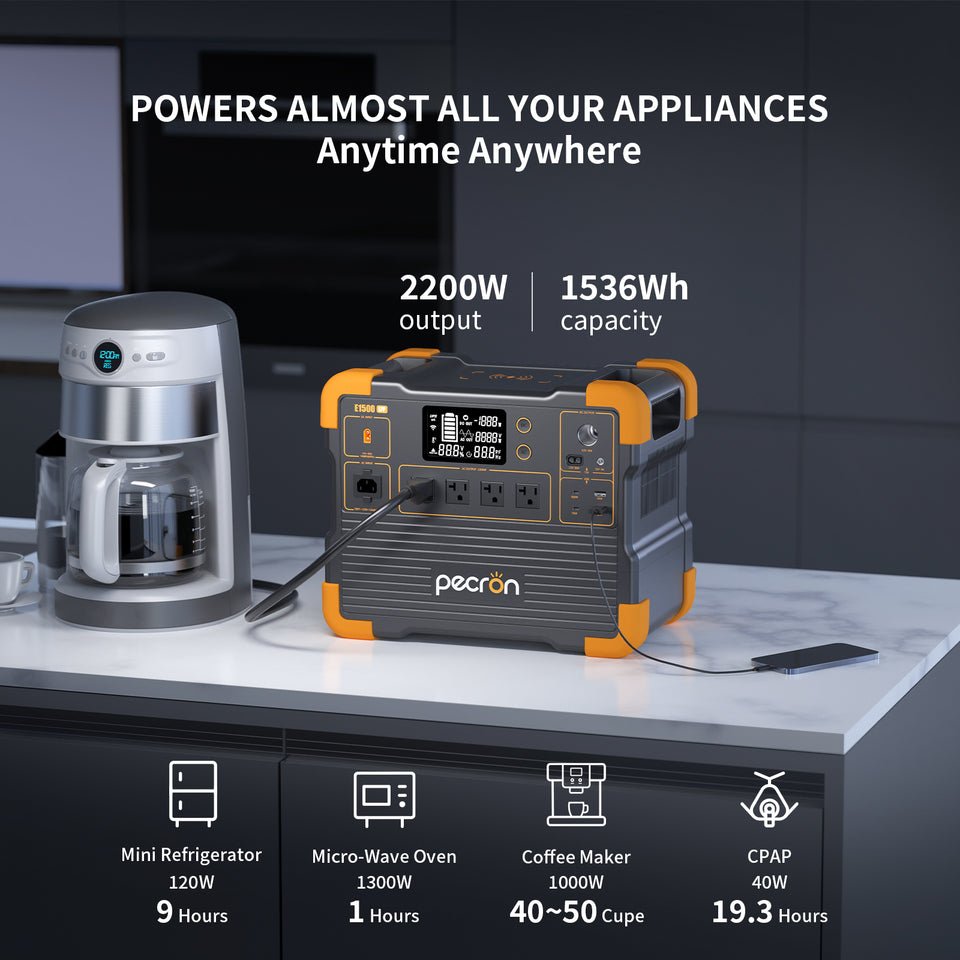
- Pecron E1500LFP: Includes a 12V/30A XT60 DC output (360W) right on the front panel at ~$599 street price.
- Zendure SuperBase V4600: Provides a 12.6V/30A Anderson port (378W) alongside its AC outlets.
- EcoFlow DELTA Pro Ultra: Features a 12.6V/30A Anderson / Low-Voltage DC output (378W).
- BLUETTI AC200L: Offers a 48V/8A RV DC port (~384W, compatible with 48V van systems or external step-down converters).
Road Charging: Roof Solar & Alternator Speeds
Standard 12V dashboard cigarette ports limit car recharging to ~100W–120W—taking 15–20+ hours to replenish a 2kWh unit while driving. RVers and van travelers should evaluate:
- Solar Voc Compatibility: High-Voc inputs like the BLUETTI AC200L (
12V–145V, 1,200W) and Zendure V4600 (12V–150V, 3,000W) accommodate rigid RV roof solar panels much more easily than 400W / 60V-capped models like the Jackery Explorer 2000 v2 (16V–60V, 400W). Note also that the DJI Power 1000 requires optional external MPPT SDC adapters for solar or 12V car charging. - High-Power Alternator Chargers: Units like the EcoFlow DELTA 3 Plus (with optional EcoFlow 800W Alternator Charger) or DJI Power 1000 (with DJI 1kW Super Fast Car Charger) recover 800W–1,000W directly from vehicle electrical systems while driving—always ensure professional installation sized safely for your vehicle alternator.
Browse our Best Power Stations for RVs or size your trailer appliances in the Wattage Calculator.
Frequently Asked Questions
Can a portable power station run a 13,500 BTU RV roof air conditioner?+
Only high-output stations (typically 2,400W–3,800W+ continuous with strong startup surge—or a soft-start kit installed on the AC compressor) can reliably start a 13,500 BTU RV AC (~1,500W running / ~3,200W+ typical surge). Even then, running AC for 4 hours consumes roughly 6,000 Wh—emptying a 2,048Wh unit in about an hour unless expanded.
Why does my power station drain quickly when plugged into my RV shore power inlet even with lights off?+
Your RV's built-in AC-to-DC converter/charger automatically begins charging your trailer's onboard 12V house battery the moment 120V shore power arrives—burning hundreds of watts in double DC-to-AC-to-DC conversion losses. Switch off the converter breaker inside your RV distribution panel when running on a portable power station.
Do all 240V or 2kWh power stations include a 30A TT-30R RV plug?+
No. In our verified catalog, the BLUETTI AC200L and Zendure SuperBase V4600 include native TT-30R outlets (as does the newer Anker F3800 Plus), whereas the Jackery Explorer 2000 v2 and Pecron E1500LFP provide only standard 20A NEMA 5-20R outlets, and the original Anker F3800 provides NEMA 14-50R and L14-30R.
Sources & Technical References
- View Source →[1]Manufacturer SpecificationBLUETTI US OfficialVerified 2026-11-24BLUETTI AC200L Portable Power Station Official Specifications
2,048Wh LFP, 2,400W continuous AC, 3,600W Power Lifting mode, NEMA TT-30R + 48V/8A DC RV port, 1,200W solar (12-145V).
- View Source →[2]Manufacturer SpecificationZendure US OfficialVerified 2026-11-24Zendure SuperBase V4600 Product Overview & Specifications
4,608Wh LFP model specs, 3,800W continuous dual-voltage output, 3,000W solar input (12-150V), and 3-year US limited warranty.
- View Source →[3]Manufacturer SpecificationAnker SOLIX US OfficialVerified 2026-11-24Anker SOLIX F3800 Portable Power Station Official Specifications
North American model specs including NEMA 14-50R, L14-30R, 6,000W output, 3,840Wh capacity, and 11-60V dual solar input.
- View Source →[4]Manufacturer SpecificationAnker SOLIX US OfficialVerified 2026-11-24Anker SOLIX F3800 Plus Official Product Page
Successor revision increasing PV voltage range up to 165V and solar input to 3,200W.
- View Source →[5]Manufacturer SpecificationPecron US OfficialVerified 2026-11-24Pecron E1500LFP Official Specifications
1,536Wh LFP, 2,200W AC, 800W dual-port solar (GX16MF 32-95V 700W + DC5521 100W), EP3000-48V expansion support.
- View Source →[6]Manufacturer SpecificationJackery US OfficialVerified 2026-11-24Jackery Explorer 2000 v2 Product Page & User Guide
2,042Wh LFP Cell-to-Body design, 39.5 lbs weight, 2,200W continuous AC, 400W dual DC8020 solar input.