CPAP Backup Power Sizing Guide: Humidifiers, DC Efficiency & Quiet Nighttime Runtime
How to size a quiet portable power station for overnight or multi-day CPAP outages—comparing heated humidifier draw, DC adapters vs. AC inverter overhead, and UPS behavior.
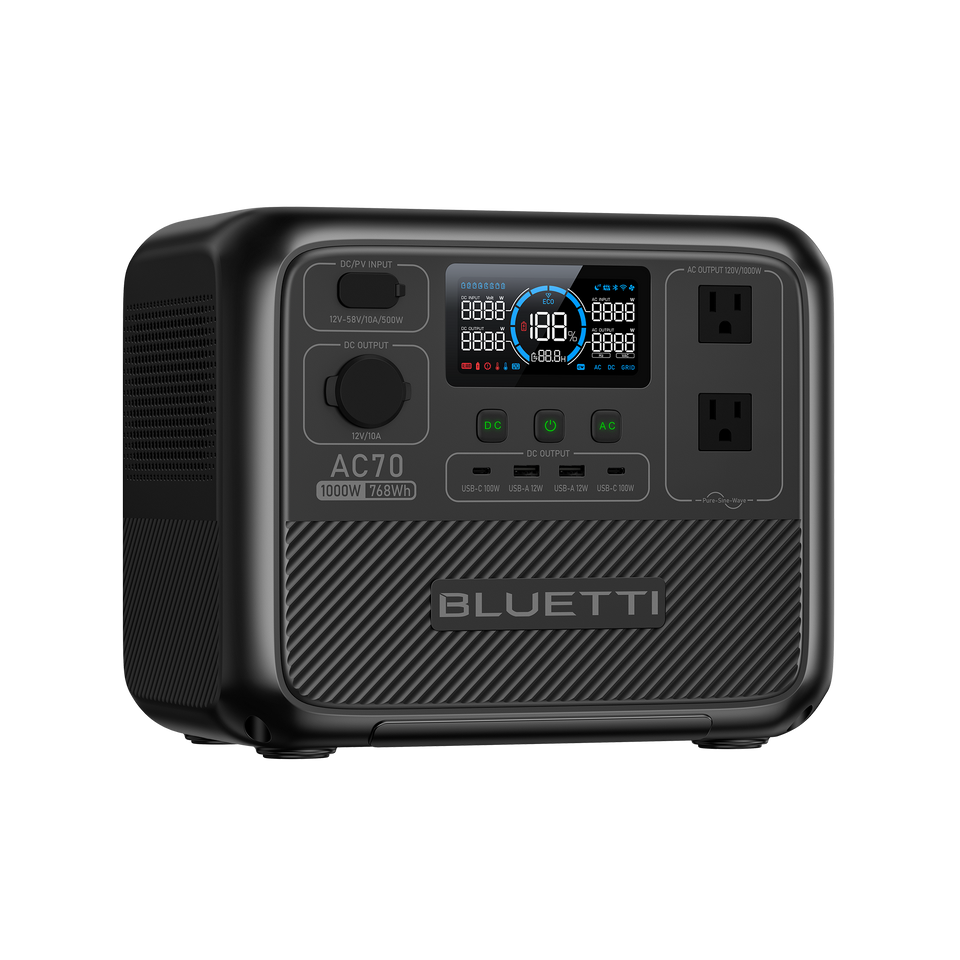
A standard CPAP machine typically draws roughly 30W–50W (~45W baseline, or ~360 Wh over 8 hours) when heated humidifiers and heated tubing are turned off, jumping to ~70W–90W+ (560–720+ Wh/night) with heat enabled. Using a CPAP manufacturer's DC power adapter on a 768Wh–1,024Wh quiet LiFePO4 station (such as BLUETTI AC70 or EcoFlow DELTA 3 Plus) eliminates AC inverter standby losses and typically yields 2–3 nights without heat.
For anyone relying on Continuous Positive Airway Pressure (CPAP) therapy, losing power overnight isn’t just inconvenient—it disrupts sleep and breathing continuity. Yet sizing a backup battery strictly by reading the wattage on a CPAP wall brick often yields inaccurate expectations, because real power draw swings wildly based on pressure settings, heated humidifiers, and whether you plug into AC or DC.
Medical & Equipment Safety Notice: Portable power stations are consumer electronics and no battery system is completely risk-free or guaranteed uninterruptible. Always consult your sleep clinician and check your CPAP manufacturer’s documentation before using aftermarket DC cables or relying on EPS/UPS pass-through modes for medical therapy.
Real CPAP Power Draw: Heated vs. Unheated Operation
Using baseline figures from our Appliance Wattage Calculator:
- CPAP Without Heated Humidifier or Heated Tubing: Typically averages ~30W to 50W (~45W reference average, consuming roughly 360 Wh over an 8-hour night).
- CPAP With Heated Humidifier & Heated Hose Active: Heating plates and coils push typical average draw to ~70W to 90W+ (roughly 560–720+ Wh per 8-hour night, and potentially higher on dry winter nights at high pressure settings).
If your CPAP device manual permits running in passover (unheated) mode during emergencies, disabling the heater immediately cuts your battery size requirement nearly in half.
Why DC Power Adapters Beat AC Wall Bricks Overnight
When you plug a CPAP’s standard AC power brick into a portable power station’s 120V outlet, energy undergoes double conversion (Battery DC -> 120V AC Inverter -> CPAP Power Brick DC). Worse, leaving the power station’s AC inverter switched on all night incurs continuous inverter idle draw (often 10W–20W on compact stations, or 40W+ on large 240V units).
When your CPAP runs only 40W, a 15W AC inverter overhead reduces real-world delivered efficiency by roughly a quarter!
By contrast, using a CPAP-manufacturer-approved 12V/24V DC power adapter (or USB-C PD converter where explicitly supported by the CPAP maker) lets you keep the power station’s AC inverter OFF, cutting conversion losses to an estimated 88%–93% DC efficiency range in our Battery Runtime Estimator.
Comparing Quiet Power Stations for Nightstand CPAP Duty
Acoustic noise matters right next to your bed—and note which compact units include native 12V cigarette sockets versus requiring optional adapters:
| Model | Capacity & Weight | Noise Spec (Mfr-Rated) | UPS Rating | Native 12V Car Socket? | Typical Nighttime Outlook (45W Unheated Baseline) |
|---|---|---|---|---|---|
| Anker SOLIX C300 | 288 Wh / 9.1 lbs | ~25 dB (mfr) | <10 ms |
Yes (12V/10A) | ~5–6 hrs est. (tight for full 8 hrs at 45W; works better on DC at <=30W draw or brief travel) |
| BLUETTI AC70 | 768 Wh / 22.5 lbs | Silent/Std modes (dB Not Disclosed) | <=20 ms |
Yes (12V/10A) | ~11–14 hrs AC / ~15 hrs DC est. (~1–2 nights unheated; APH Networks verified 730.59 Wh AC @ 136W) |
| EcoFlow DELTA 3 Plus | 1,024 Wh / 27.6 lbs | ~30 dB under 600W (mfr) | <10 ms |
Yes (12.6V/10A) | ~16–20 hrs AC / ~20–21 hrs DC est. (2+ nights unheated; 1,000W solar / 56-min AC recovery) |
| DJI Power 1000 | 1,024 Wh / 28.7 lbs | As low as 23 dB (mfr) | <=20 ms (V1) |
No (needs SDC cable) | ~16–20 hrs AC est. (whisper-quiet charging floor; verify V1 vs V2 and budget for SDC 12V cable) |
Important C300 Note: Always confirm you are buying the AC-equipped Anker SOLIX C300 (Model A1722) if you want 120V AC backup outlets, rather than the cheaper DC-only C300 DC variant—and verify overnight draw with a watt meter before a storm if you run high pressures or heated humidity.
Practical Checklist Before Relying on CPAP Backup
- Test Your Exact Setup Before an Emergency: Run your CPAP through a full 8-hour night in your bedroom on battery power beforehand to measure true state-of-charge consumption and confirm your CPAP’s power brick rides smoothly through a simulated wall-plug pull if using pass-through UPS mode.
- Check Auto-Shutoff / Eco Settings: Ensure your power station’s “AC/DC Auto-Timeout” setting in the brand app will not switch off ports at low wattage (for instance, when a breathing pause lowers momentary CPAP draw below 10W–15W).
- Plan Multi-Day Recharge: For multi-day storms, a 768Wh–1,024Wh unit with 500W–1,000W solar capability (such as the BLUETTI AC70 or EcoFlow DELTA 3 Plus) recovers a night’s CPAP draw quickly whenever clear sunlight appears.
Model your specific CPAP wattage in our Runtime Calculator and read Understanding Power Station Efficiency to understand DC vs. AC runtime math.
Models Discussed in This Article
Anker SOLIX C300
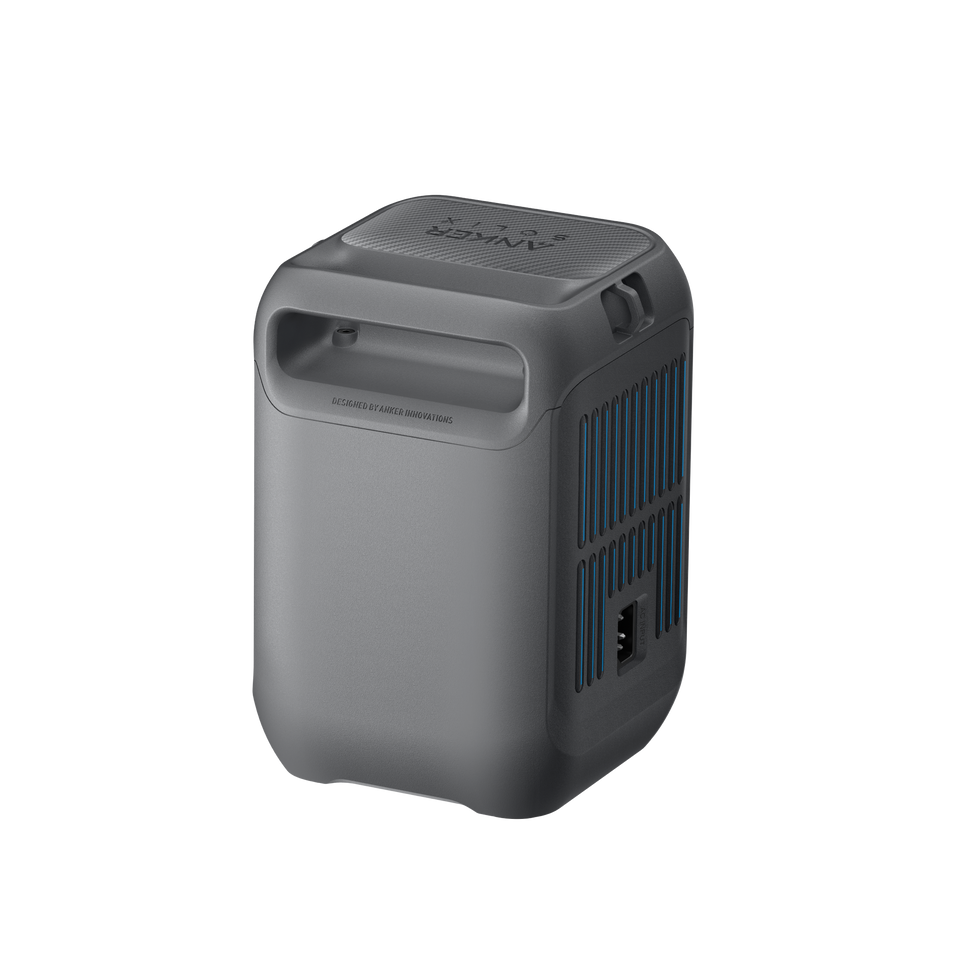
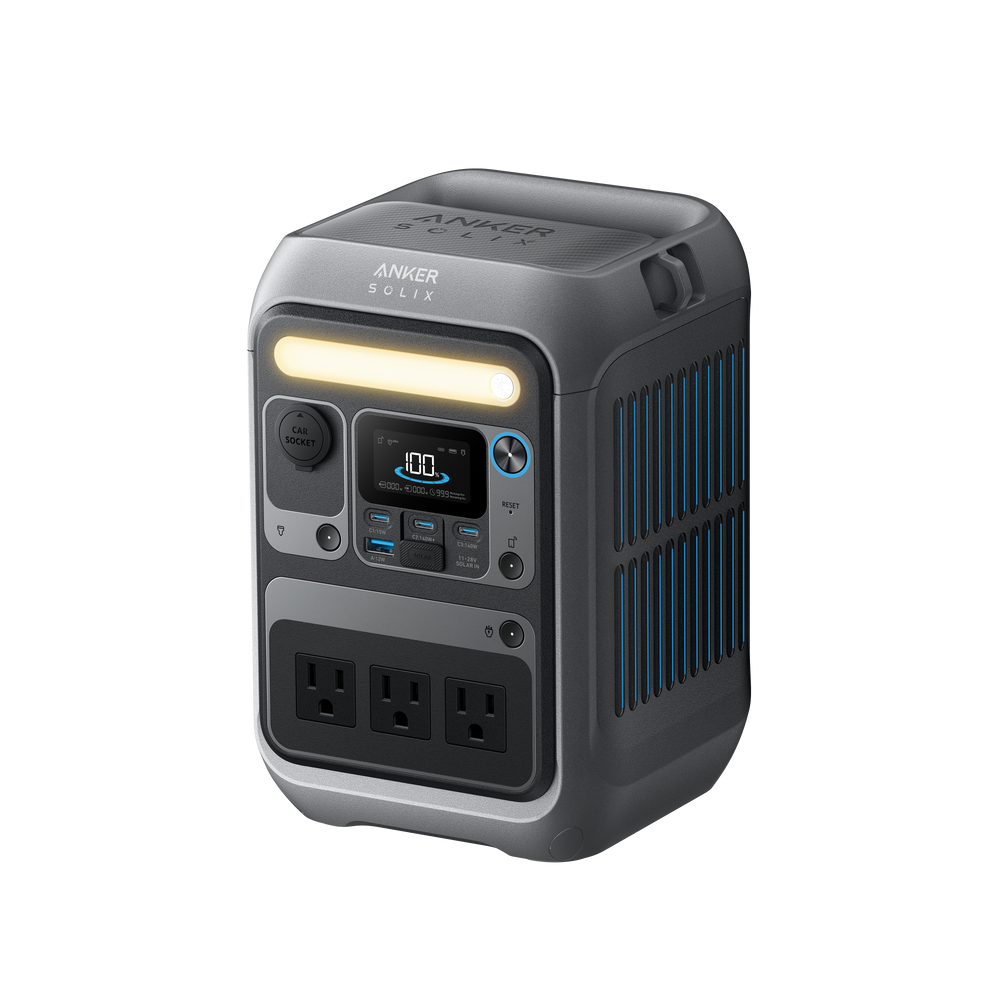
A 9.1 lb vertical LiFePO4 station delivering 300W AC, dual 140W USB-C ports, and <10 ms UPS backup for routers, laptops, and day trips — just don't confuse it with the DC-only C300 DC or expect appliance runtime.

BLUETTI AC70
With 705–730.6 Wh of independently measured usable AC output from a 768Wh battery and 500W solar input at ~$399–$449 street price, the AC70 punches above typical 500Wh–700Wh units.
EcoFlow DELTA 3 Plus
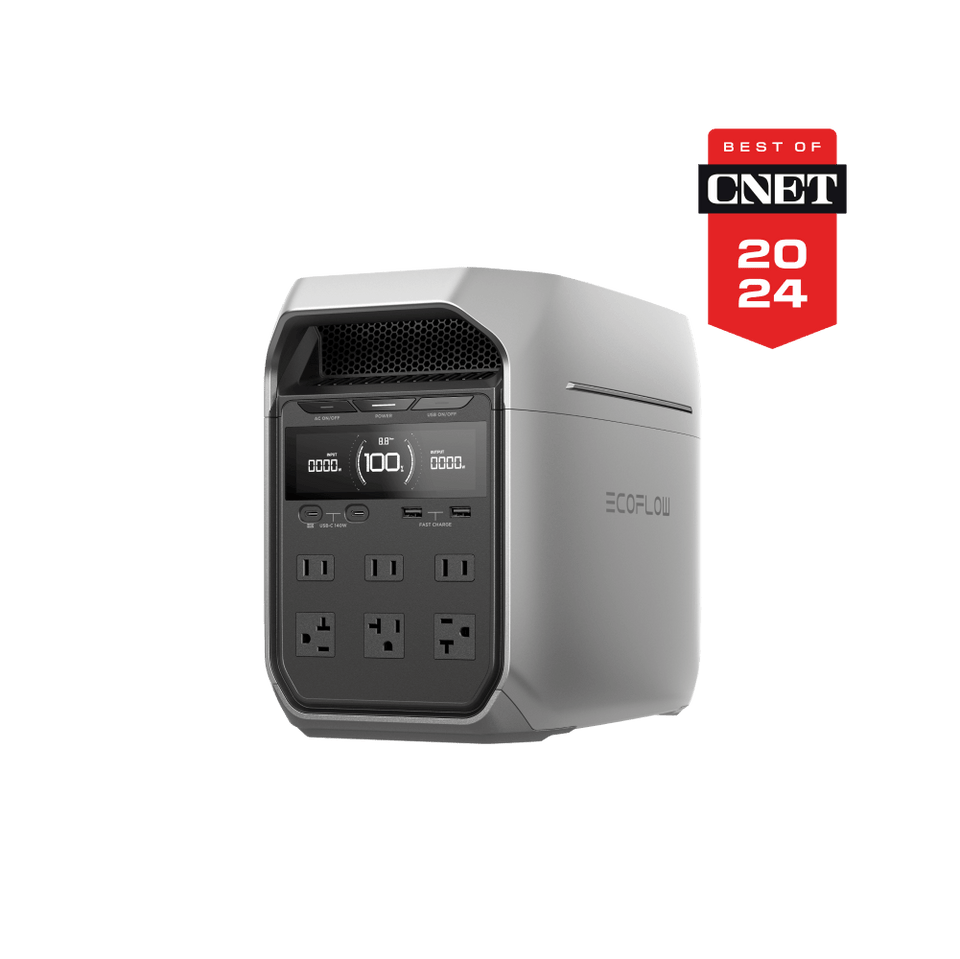
Packs 1,000W dual-MPPT solar charging, sub-1-hour AC replenishment, and a sub-10 ms HID-capable UPS into a 27.6 lb chassis, making it more versatile than non-Plus 1kWh units.
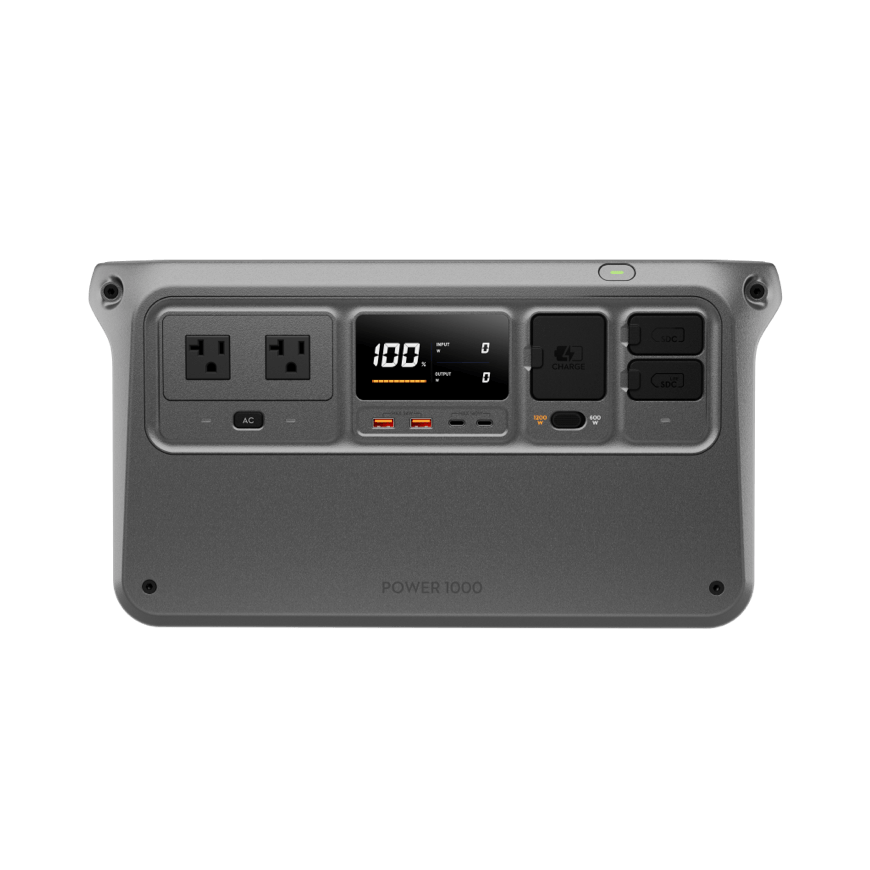
DJI Power 1000
Exceptional 2,200W inverter density and 23 dB acoustic refinement in a 28.7 lb frame, though solar charging and 12V car sockets require optional DJI SDC adapters.
Frequently Asked Questions
Why does turning off the CPAP heated humidifier make such a massive runtime difference?+
Generating heat with electricity requires continuous power. The CPAP blower motor itself often averages only 25W–45W depending on pressure settings, whereas running a heated water chamber and heated hose frequently doubles total draw to 70W–90W+. Disabling heat during an outage stretches battery runtime roughly 1.5x–2x.
Can I use a portable power station as an overnight UPS so my CPAP doesn't turn off during a blackout?+
Many stations offer pass-through UPS/EPS switching (<10 ms on EcoFlow DELTA 3 Plus and Anker SOLIX C300; <=20 ms on BLUETTI AC70 and DJI Power 1000 V1). However, never assume automatic switchover without testing your specific CPAP power supply first, and always consult your physician and CPAP manufacturer regarding medical backup contingency plans—no consumer battery unit is guaranteed failure-free.
Sources & Technical References
- View Source →[1]Manufacturer SpecificationAnker SOLIX US OfficialVerified 2026-11-24Anker SOLIX C300 Portable Power Station (Model A1722) Specifications
288Wh LFP AC-equipped model (distinct from DC-only C300 DC), 300W AC, 600W SurgePad, 100W XT60 solar, <10ms UPS.
- View Source →[2]Manufacturer SpecificationBLUETTI US OfficialVerified 2026-11-24BLUETTI AC70 Portable Power Station Official Specifications
768Wh LFP, 1,000W continuous AC, 2,000W Power Lifting resistive mode, 500W MPPT solar (12-58V, 10A), 950W Turbo AC charge.
- View Source →[3]Third-Party Independent ReviewAPH NetworksVerified 2026-11-24BLUETTI AC70 Portable Power Station Load Test Review
Constant 136W AC load discharge test measured 730.59 Wh usable output (~95% of rated 768Wh cell capacity; ~92.5% net inverter efficiency).
- View Source →[4]Manufacturer SpecificationEcoFlow US OfficialVerified 2026-11-24EcoFlow DELTA 3 Plus Official Specifications
1,024Wh LFP, 1,800W continuous AC, 1,000W dual 500W MPPT solar, <10ms UPS, 1,500W X-Stream AC charging.
- View Source →[5]Manufacturer SpecificationDJI OfficialVerified 2026-11-24DJI Power 1000 Specifications & Official Overview
1,024Wh LFP, 2,200W continuous AC (V1 US model; V2 increases to 2,600W), dual 140W USB-C, 800W solar via MPPT adapter.