How to Choose a Portable Power Station: Complete Sizing & Spec Guide
A five-step framework for sizing continuous watts, startup surge, rated vs. usable watt-hours, output ports, solar Voc limits, and warranty coverage for US buyers.
Start with the appliances you need to run simultaneously rather than the biggest battery number on the box. Match continuous inverter watts and startup surge to your heaviest motor loads, size battery watt-hours for an estimated 78%–88% AC usable range (unless third-party test data exists), verify 120V vs. 120V/240V outlet requirements, and check solar input Voc limits before buying.
Key Technical Takeaways
- Watts (W) determine which appliances can turn on; Watt-hours (Wh) determine how long they stay on.
- Rated battery Wh never equals delivered AC energy—account for DC-to-AC conversion losses and inverter idle draw.
- Confirm 120V-only vs. 120V/240V split-phase support, RV TT-30R outlets, and UPS switchover speeds for your actual use case.
Choosing a portable power station often feels confusing because marketing headlines highlight peak capacity numbers or promotional surge specs without explaining how real appliances behave. A 6,144Wh modular backup tower is needlessly heavy and expensive for weekend car camping, while a 288Wh ultralight pack cannot sustain a full-size kitchen refrigerator.
Using a structured five-step checklist keeps you from under-sizing a critical appliance or overpaying for features you will never use. You can also run your exact appliance list through our Wattage Calculator or narrow our verified database using the 10-Point Power Station Finder.
Step 1: Audit Running Watts and Single-Motor Startup Surge
Every electrical device requires a steady flow of continuous watts (W) while running, and appliances with electric motors—such as refrigerators, sump pumps, well pumps, and portable air conditioners—demand a brief startup surge (locked-rotor current) when the compressor or motor kicks on.
- Light electronics (25W–150W): Wi-Fi routers, fiber ONTs, LED lighting, laptops, and CPAP machines (without heated humidifiers) run smoothly on compact 300W–1,000W inverters such as the Anker SOLIX C300 or BLUETTI AC70.
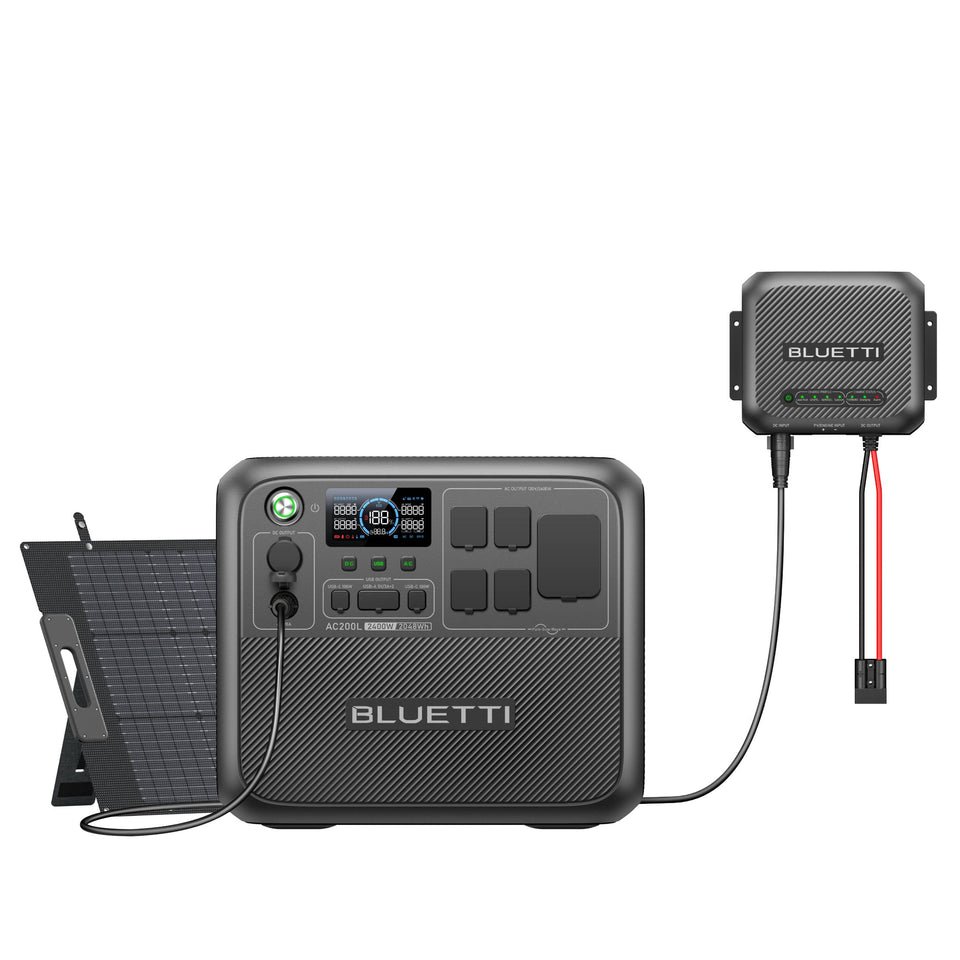
- Kitchen & 120V home essentials (1,200W–2,400W): Microwaves (~1,450W input), electric kettles (~1,200W), refrigerators (~150W running / ~600W typical startup), and 1/2 HP sump pumps (~800W running / ~2,200W startup) typically require an 1,800W to 2,400W continuous inverter such as the EcoFlow DELTA 3 Plus, Jackery Explorer 2000 v2, or BLUETTI AC200L.
- Heavy 240V split-phase loads (3,800W–7,200W+): A 240V 1 HP submersible well pump (~1,800W running / ~4,800W typical startup) or multi-circuit backup panel requires native 120V/240V split-phase hardware such as the EcoFlow DELTA Pro Ultra, Jackery Explorer 5000 Plus, or Anker SOLIX F3800.
When evaluating surge specs, do not assume every motor in your home starts at the exact same millisecond, and avoid relying on resistive “boost” modes (such as X-Boost or Power Lifting) to run motor loads or sensitive electronics. See our Continuous Output vs. Surge Output guide for full details.
Step 2: Size Battery Capacity (Wh) for Real Usable Energy
Battery capacity is listed in Watt-hours (Wh), which represents raw DC energy stored inside the internal cells. However, converting DC battery energy into 120V or 240V AC household power creates unavoidable conversion losses, inverter standby overhead, and Battery Management System (BMS) reserves.
| Capacity Tier | Example Verified Models | Typical Realistic Use Case | Estimated AC Usable Window (Untested Models: 78%–88%) |
|---|---|---|---|
| 300Wh – 770Wh (Compact) | Anker SOLIX C300 (288Wh), Goal Zero Yeti 700 (677Wh), BLUETTI AC70 (768Wh) | Phones, laptops, routers, LED lights, CPAP travel | ~225–680 Wh (BLUETTI AC70 measured 705–730.59 Wh in 3rd-party tests) |
| 1,000Wh – 1,550Wh (Mid-Compact) | EcoFlow DELTA 3 Plus (1,024Wh), DJI Power 1000 (1,024Wh), Pecron E1500LFP (1,536Wh) | Home-office UPS, short outage essentials, power tools | ~800–1,350 Wh estimated |
| 2,000Wh Class (Midsize) | Jackery Explorer 2000 v2 (2,042Wh), BLUETTI AC200L (2,048Wh) | Full-size refrigerator (~24–30 hrs), RV 30A trips, apartment outages | ~1,590–1,800 Wh estimated (BLUETTI AC200L achieved 77.76% RTE in CNET tests) |
| 3,800Wh – 6,150Wh+ (Home Backup) | Anker SOLIX F3800 (3,840Wh), Zendure V4600 (4,608Wh), Jackery 5000 Plus (5,040Wh), EcoFlow DELTA Pro Ultra (6,144Wh) | Multi-circuit home backup, 240V loads, expandable multi-day outages | ~3,000–5,400+ Wh base pack (expandable up to 46–90 kWh) |
Where independent third-party discharge data exists (such as APH Networks and PowerOffGrid tests on the BLUETTI AC70, or CNET’s efficiency comparison on the BLUETTI AC200L), we surface those attributed measurements directly. For models without verified third-party usable-Wh benchmarks in our registry, use a transparent 78%–88% AC range in our Runtime Calculator—or lower (72%–84%) if powering tiny sub-150W loads on a large dual-voltage inverter.
Step 3: Match Ports, Voltage Architecture, and UPS Speed
Capacity and wattage numbers do not tell you whether the station has the physical connectors your equipment requires:
- 120V vs. 120V/240V Split-Phase: Standard portable stations output 120V only. Hardwired 240V appliances require a true split-phase unit and proper transfer hardware installed by a licensed electrician. Read 120V vs. 240V Home Backup Explained.
- RV 30A (TT-30R) and High-Current DC: RVers wanting a plug-and-play 30A shore receptacle need a native NEMA TT-30R port (found on the BLUETTI AC200L and Zendure SuperBase V4600, or via L14-30/14-50 adapters on F3800). Van builders may prefer high-current 12V/30A XT60 or 48V DC ports.
- USB-C PD & DC Efficiency: Powering laptops, Starlink adapters, or compatible CPAP DC bricks over USB-C (up to 140W on C300, DELTA 3 Plus, and DJI Power 1000) or 12V DC avoids inverter standby waste.
- UPS / EPS Switchover Speed: If protecting a desktop PC or NAS, look for
0 msOnline UPS or<10 msfast switchover (e.g., EcoFlow DELTA 3 Plus with HID shutdown support, Anker SOLIX C300) rather than standard<=20 msEPS units. See What Is UPS & EPS Switching?.
Step 4: Evaluate AC Wall Charging and Solar Input Limits
How fast a power station refills matters just as much as how long it runs during a prolonged blackout or off-grid trip:
- AC Wall Speed: Modern LiFePO4 stations recharge much faster than older generations—ranging from ~56 minutes on the 1,500W AC input of the EcoFlow DELTA 3 Plus to ~2.5–3.5 hours on larger 2kWh–5kWh units over a standard 120V/15A wall circuit.
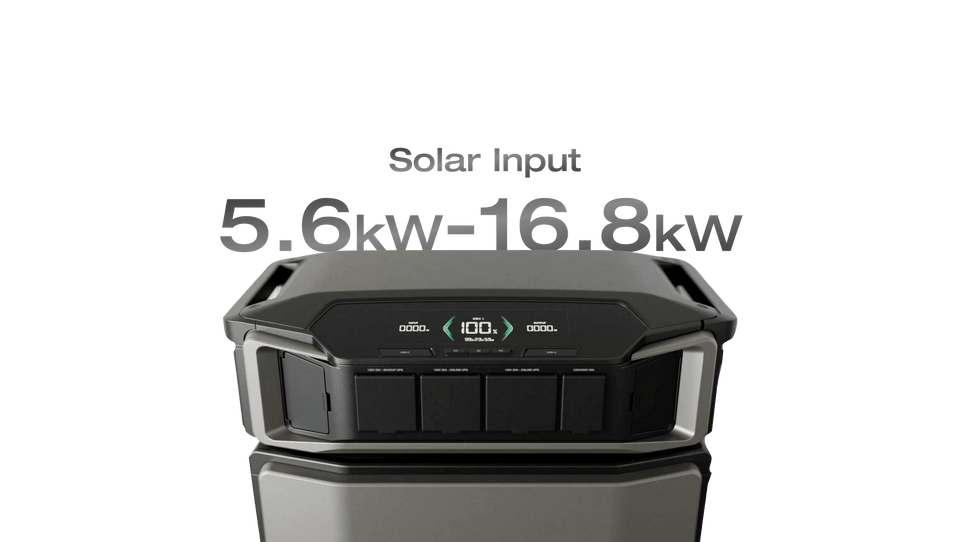
- Solar Input Wattage & Voc Window: Check both the maximum solar wattage and the open-circuit voltage (Voc) range. Entry units like the Anker SOLIX C300 cap solar at 100W (11V–28V Voc), while midsize units span from 400W on the Jackery Explorer 2000 v2 (16V–60V) up to 1,200W on the BLUETTI AC200L (12V–145V). Whole-home systems like the EcoFlow DELTA Pro Ultra accept up to 5,600W across 80V–450V High-PV and 30V–150V Low-PV MPPT channels. Never exceed a station’s published Voc limit; learn why in Solar Input Limits & MPPT Explained.
Step 5: Weigh Portability, Expandability, Chemistry, and Warranty
Finally, verify how you will physically live with the unit:
- Carry Weight vs. Wheeled Mass: A 39.5 lb Jackery Explorer 2000 v2 can be lifted into an SUV trunk by one person, whereas the 62.4 lb BLUETTI AC200L has no wheels and the 132+ lb Anker SOLIX F3800 / Jackery Explorer 5000 Plus require ramps or two-person lifting for vehicles despite rolling on floors.
- Chemistry & Warranty: Almost all current mainstream models use LiFePO4 (LFP) cells rated for 3,000–4,000 cycles, backed by 5-year US warranties on brands like EcoFlow, Jackery, BLUETTI, Anker SOLIX, Goal Zero, and DJI (after registration where applicable), compared to a 3-year US limited warranty on the Zendure SuperBase V4600.
- Safety Boundaries: No battery system is completely risk-free. Follow NFPA/NEC guidelines for any residential transfer equipment, keep vents clear, observe 32°F+ charging limits unless the battery self-heats, and review our Battery Storage, Temperature & Safety Guide.
Ready to compare specific units? Browse our Best Portable Power Stations overview or test real-world numbers in the Price per Wh Calculator.
Frequently Asked Questions
What size portable power station do I need for a home power outage?+
For basic electronics, lights, and Wi-Fi overnight, a 300Wh–1,000Wh unit like the Anker SOLIX C300 or EcoFlow DELTA 3 Plus covers light loads. Running a standard kitchen refrigerator plus essentials for 24+ hours generally calls for a 2,000Wh-class station such as the BLUETTI AC200L or Jackery Explorer 2000 v2, while 240V circuits require a 120V/240V split-phase system and licensed transfer equipment.
Why shouldn't I just buy the cheapest price per Watt-hour?+
A low price per rated Wh does not guarantee high usable AC energy, fast solar recharging, or adequate inverter output. Large dual-voltage units can lose more energy to standby idle draw on light loads, while budget models may have higher minimum solar voltages, fewer outlets, or shorter warranties.
Is a LiFePO4 battery station completely maintenance-free and risk-free?+
No. While LiFePO4 (LFP) chemistry offers strong thermal stability and 3,000–4,000 manufacturer-rated cycles, no lithium battery system is completely risk-free. Buyers must still avoid freezing-temperature charging (unless self-heating is built in), maintain proper airflow, respect continuous wattage limits, and follow manufacturer storage guidelines.
Sources & Technical References
- View Source →[1]Manufacturer SpecificationBLUETTI US OfficialVerified 2026-11-24BLUETTI AC200L Portable Power Station Official Specifications
2,048Wh LFP, 2,400W continuous AC, 3,600W Power Lifting mode, NEMA TT-30R + 48V/8A DC RV port, 1,200W solar (12-145V).
- View Source →[2]Manufacturer SpecificationEcoFlow US OfficialVerified 2026-11-24EcoFlow DELTA 3 Plus Official Specifications
1,024Wh LFP, 1,800W continuous AC, 1,000W dual 500W MPPT solar, <10ms UPS, 1,500W X-Stream AC charging.
- View Source →[3]Manufacturer SpecificationJackery US OfficialVerified 2026-11-24Jackery Explorer 2000 v2 Product Page & User Guide
2,042Wh LFP Cell-to-Body design, 39.5 lbs weight, 2,200W continuous AC, 400W dual DC8020 solar input.
- View Source →[4]Manufacturer SpecificationEcoFlow US OfficialVerified 2026-11-24EcoFlow DELTA Pro Ultra Product Page & Specifications
Official North American 120V/240V split-phase inverter and 6,144Wh LiFePO4 battery module specs.
- View Source →[5]Third-Party Independent ReviewCNETVerified 2026-11-24CNET Portable Power Station Lab Efficiency & Refrigerator Runtime Benchmarks
Documents standardized refrigerator runtime and round-trip efficiency testing including BLUETTI AC200L (77.76% RTE, >29h fridge test) and Anker SOLIX F3800 (~25.68h fridge stress runtime due to dual-voltage inverter overhead).
- View Source →[6]Technical & Safety StandardNational Fire Protection Association (NFPA)Verified 2026-11-24NFPA 70 National Electrical Code (NEC) Transfer Equipment & Standby Power Overview
Governs transfer switches, panel interlocks, and prohibition of unsafe backfeeding on US residential electrical panels.