EcoFlow DELTA 2 Review: 1,800W LiFePO4 Portable Power Station (2026 Update)
Technical 2026 breakdown of EcoFlow DELTA 2 (1,024Wh, 1,800W AC): 500W 11-60V solar math, expansion packs, appliance runtime table, and DJI/BLUETTI rivals.
The EcoFlow DELTA 2 delivers 1,024Wh of 51.2V LiFePO4 storage, 1,800W continuous pure sine wave AC output (2,700W surge; 2,200W resistive X-Boost), and 500W MPPT solar charging (11V–60V, 15A max) in a 27 lb wheelless chassis. Expect roughly 800–900Wh of usable AC energy (78%–88% AC) or 900–952Wh via direct DC/USB-C (88%–93% DC), expandable to 2,048Wh or 3,040Wh—competing directly against the 2,200W DJI Power 1000 and 768Wh BLUETTI AC70.
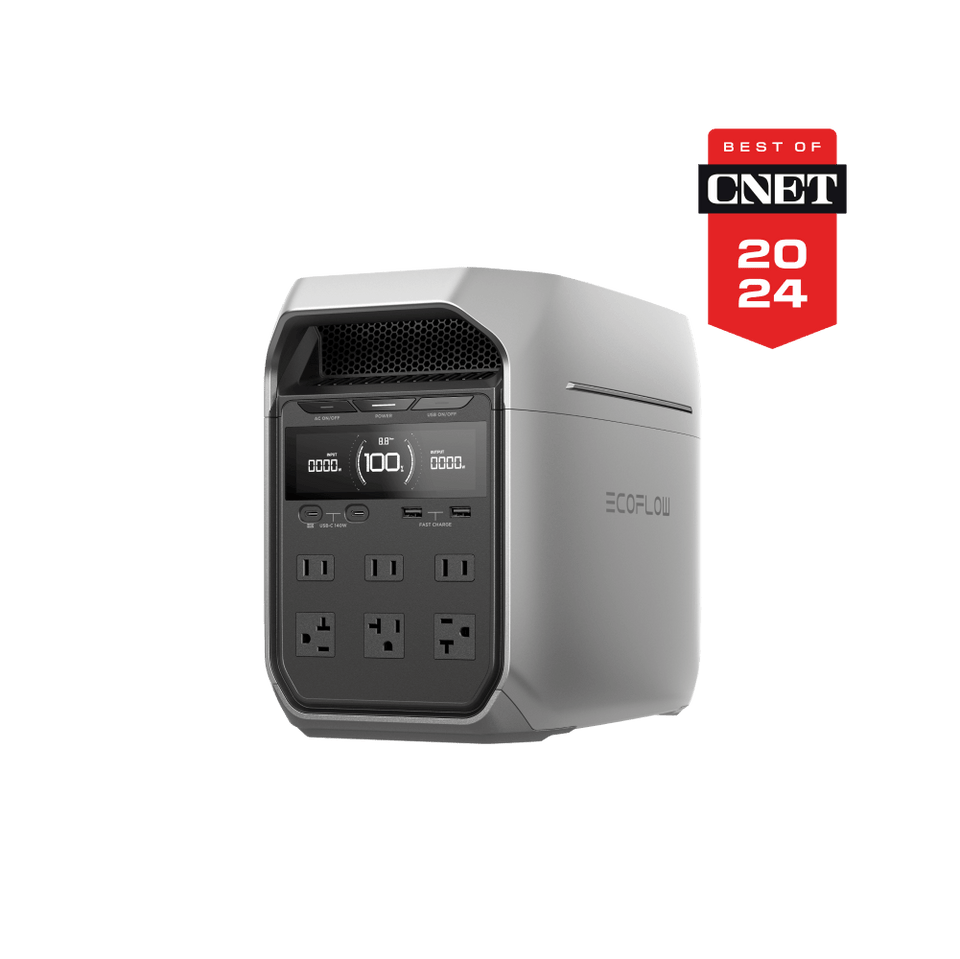
On paper, a 1,024Wh battery paired with a 1,800W AC inverter looks straightforward—until you plug in two 200W folding solar panels and discover the screen stalling under 300W, or connect an electric heater alongside a fridge expecting both to run all night. Matching a 1kWh station to real electrical loads requires reading past headline wattages into voltage windows, amperage ceilings, and conversion math.
This 2026 technical update corrects persistent spec errors around the EcoFlow DELTA 2 (which weighs 27 lbs across a wheelless 15.7 × 8.3 × 11.1 in body—not 22 lbs with luggage wheels, as older blogs erroneously claimed) and maps out its load sizing, 500W solar recharge math, 2kWh–3kWh expansion paths, and standing against the DJI Power 1000 and BLUETTI AC70.
Verified Technical Specification Profile
EcoFlow built the DELTA 2 (51.2V nominal LFP pack) to replace its early 1,260Wh NCM DELTA 1300 while shrinking dimensions and extending battery longevity:
- Battery Capacity & Chemistry:
1,024Wh(20Ah@51.2V)LiFePO4rated for3,000+cycles to80%+capacity at25°C(77°F), covered by a 5-year US warranty. - AC Output Architecture: Six
120Voutlets (1,800Wcontinuous pure sine wave,2,700Wpeak surge,2,200WX-Boost via intentional voltage reduction for resistive heaters only). - DC & USB Array: Two
100WUSB-C PD ports, two18Wfast USB-A ports, two12Wstandard USB-A ports, one12.6V/10A(126Wmax) car socket, and two12.6V/3A(38Wmax)DC5521barrel outputs. - Charging Inputs:
1,200Wmax X-Stream AC input (0–80%in~50 mins,0–100%in~80 mins);500Wmax MPPT solar input (11V–60VVoc,15Amax viaXT60i);12V/24V8A(~100W–200W) car input. - EPS Transfer Time:
~30 msbasic emergency switchover (not0 ms/<10 msworkstation UPS).
Transparency Note: Because third-party discharge figures for the original DELTA 2 are Not Independently Verified in our lab registry, we model runtime using transparent conversion bands: 78%–88% usable AC (800–900Wh) and 88%–93% usable DC/USB-C (900–952Wh). Review Watt-Hours vs. Watts Explained to see how those two numbers govern every outage calculation.
Load Profile Matching & Estimated Appliance Runtime Table
A 1,800W inverter handles virtually every standard 15A household plug-in load individually (120V × 15A = 1,800W), but 1,024Wh of energy empties rapidly under heavy heating elements. Meanwhile, running the AC inverter continuously for small night loads adds ~20W–30W of standby overhead.
| Appliance / Load Profile | Typical Wattage | Output Path | Estimated DELTA 2 Runtime (800–900Wh AC / 900–952Wh DC) |
Engineering Caveat |
|---|---|---|---|---|
| Wi-Fi Router + ONT Modem | 15W–25W |
Direct 12V DC / USB-C adapter |
36–63 hrs | Leaving the AC inverter ON cuts runtime dramatically via standby overhead. |
| CPAP Machine (No Humidifier) | 30W–40W |
12V DC converter (AC off) |
22–31 hrs (3–4 nights) |
Heated tubing + humidifier on AC drops runtime to 1–2 nights (~9–13 hrs). |
| Laptop + Dual Monitors (Workstation) | 90W–130W |
USB-C PD + AC | 6.5–9.5 hrs | ~30 ms EPS may reboot sensitive PCs during grid drops; use <10 ms UPS for desktop towers. |
| Full-Size Kitchen Refrigerator | 120W–160W compressor (~55W–75W cyclic avg) |
120V AC |
9–14 hrs (including AC inverter idle draw) | Overnight compressor duty varies with kitchen heat and door openings. |
12V Portable Compressor Fridge (45L) |
45W running (~15W–20W avg) |
12V Car Socket (AC OFF) |
45–60+ hrs | Best-case off-grid food preservation path for 1kWh stations. |
Microwave Oven (1,000W rated cooking) |
1,400W–1,550W AC draw |
120V AC |
~30–36 mins active cook time | Easily covers 10–15 short 2-minute meal reheats; turn off X-Boost. |
| Electric Kettle / Single Induction Burner | 1,500W–1,800W |
120V AC |
~26–34 mins continuous (~5–7 boils) |
Heavy heating quickly drains 1,024Wh packs—use propane/butane stoves for multi-day trips. |
Test your own household device mix using our Battery Runtime Estimator.
Solar Recharge Math: Decoding the 500W (11–60V, 15A) MPPT Limit
Understanding the DELTA 2’s single XT60i solar port prevents the single most common frustration among off-grid shoppers: amperage clipping.
Your maximum solar wattage equals operating panel voltage (Vmp) × current (Imp), subject to two strict hardware ceilings inside the DELTA 2:
- Voltage Ceiling (
60VVoc absolute max): Exceeding60Vopen-circuit voltage—especially on cold mornings when panel Voc increases—can permanently damage the internal MPPT board. Always verify cold-adjusted Voc per the manufacturer manual before connecting panels. - Current Ceiling (
15Amax viaXT60i): Note that generic third-partyMC4-to-XT60cables lacking the middle sensing pin on anXT60iconnector often default the unit to8Acar-charge mode (8A × 20V = ~160W)! Always use a genuineXT60isolar cable.
Even with an XT60i cord, look at what happens across common panel configurations:
- Low-Voltage
12V-Class Panel (~18V–20VVmp): Even if you hook up400Wworth of low-voltage panels that stay around19VVmp,19V × 15A = 285Wmax. The controller clips the rest. - Higher-Voltage Portable / Rigid Array (
~36V–45VVmp,<60VVoc): At38VVmp ×13.2A, the controller hits the full500Wceiling.
Applying realistic NREL outdoor derating factors (ambient panel heat, non-tracking angles, and haze typically yield 70%–85% of nameplate wattage, i.e., 350W–425W real input from a well-matched 500W array), recharging 1,024Wh from near-empty takes roughly 2.8 to 3.5 hours of strong midday peak sun—or most of a partly cloudy afternoon. Dive deeper into seasonal sun math in How Long to Charge a Power Station with Solar.
Expansion Options: 1,024Wh LFP vs. 2,016Wh Legacy NCM Pack
EcoFlow gave the DELTA 2 an XT150 side expansion port compatible with two distinct external batteries:
- DELTA 2 Smart Extra Battery (
1,024WhLiFePO4 ->2,048WhTotal): Matches the base unit’s3,000-cycle LFP chemistry cleanly. - DELTA Max Smart Extra Battery (
2,016WhNCM ->3,040WhTotal): Unlocks3kWhcapacity on a singleXT150cord—often found discounted—but mixes older~800-cycle NCM chemistry with a3,000-cycle LFP head unit and carries higher bulk (~40 lbs).
Expansion Economics Warning: Adding an extra battery still leaves your system capped at a single 500W solar input and ~30 ms EPS. If you already know you need 2kWh+ capacity and 1,000W+ solar replenishment, buying a native 2,048Wh unit like the DELTA 2 Max or BLUETTI AC200L (1,200W solar, 2,400W AC, CNET-verified >29h fridge runtime) typically yields better value per watt-hour and faster recharging than piecing together a 1kWh head unit + expansion pack.
Direct Comparison: EcoFlow DELTA 2 vs. DJI Power 1000 & BLUETTI AC70
Shoppers comparing sub-$700 compact LFP stations in 2026 frequently pit the discounted DELTA 2 against two sharply different competitors:
| Specification | EcoFlow DELTA 2 | DJI Power 1000 (V1 US) | BLUETTI AC70 |
|---|---|---|---|
| Battery Capacity | 1,024Wh LFP (3,000+ cycles) |
1,024Wh LFP (4,000 cycles to >=70%) |
768Wh LFP (3,000+ cycles) |
| Continuous / Surge AC | 1,800W / 2,700W |
2,200W / 4,400W (V2: 2,600W) |
1,000W / 2,000W Power Lifting |
| AC Outlets | 6 × 120V | 2 × 120V | 2 × 120V |
| USB-C PD Output | 2 × 100W |
2 × 140W PD 3.1 |
2 × 100W |
| Solar Input Setup | Built-in 500W XT60i (11–60V, 15A) |
800W max (requires DJI SDC MPPT adapters) |
Built-in 500W (12–58V, 10A) |
| Car Socket Built-In? | Yes (12.6V/10A) |
No (requires SDC adapter cable) | Yes (12V/10A) |
| AC Charge Speed & Noise | 1,200W (~80 mins; audible fan) |
1,200W (~70 mins; 23 dB standard mode) |
950W (~1.5 hrs; quiet mode in app) |
| Verified Usable AC Test | Not Independently Verified | Not Independently Verified | Verified: 705 Wh @ 250W / 730.59 Wh @ 136W |
| Weight | 27.0 lbs |
28.7 lbs |
22.5 lbs |
Picking the Right Compact Architecture
- Pick the DJI Power 1000 if discounted around
$449–$549and you prioritize whisper-quiet23 dBindoor operation,2,200WAC muscle, or dual140WUSB-C charging—provided you factor in DJI’s optionalSDCadapters for solar or12Vcar ports (plus external Wi-Fi dongle on V1). - Pick the BLUETTI AC70 if your budget sits under
$450, loads stay under1,000W(CPAP, laptops, compact12Vcoolers), and you appreciate independently verified~90%–92.5%AC delivery efficiency recorded by APH Networks (730.59 Wh@ 136W) and PowerOffGrid (705 Wh@ 250W). - Pick the EcoFlow DELTA 2 (or step up to the EcoFlow DELTA 3 Plus) if you want six built-in AC sockets, native
XT60isolar +12Vcar socket convenience with zero external adapters, and Wi-Fi telemetry included out of the box.
Need help balancing capacity against daily solar replenishment? Run your exact panel wattage through our Solar Charging Calculator or explore Portable Power Stations Under $1,000.
Models Discussed in This Article
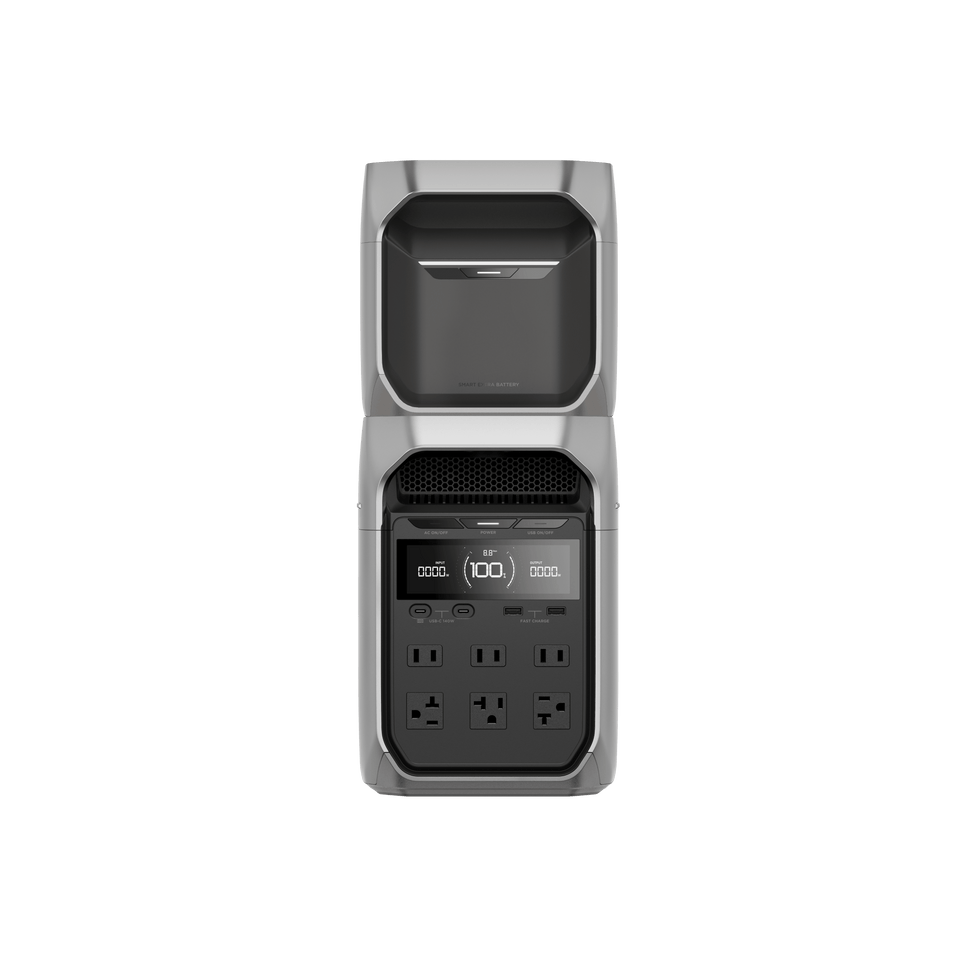
EcoFlow DELTA 3 Plus
Packs 1,000W dual-MPPT solar charging, sub-1-hour AC replenishment, and a sub-10 ms HID-capable UPS into a 27.6 lb chassis, making it more versatile than non-Plus 1kWh units.
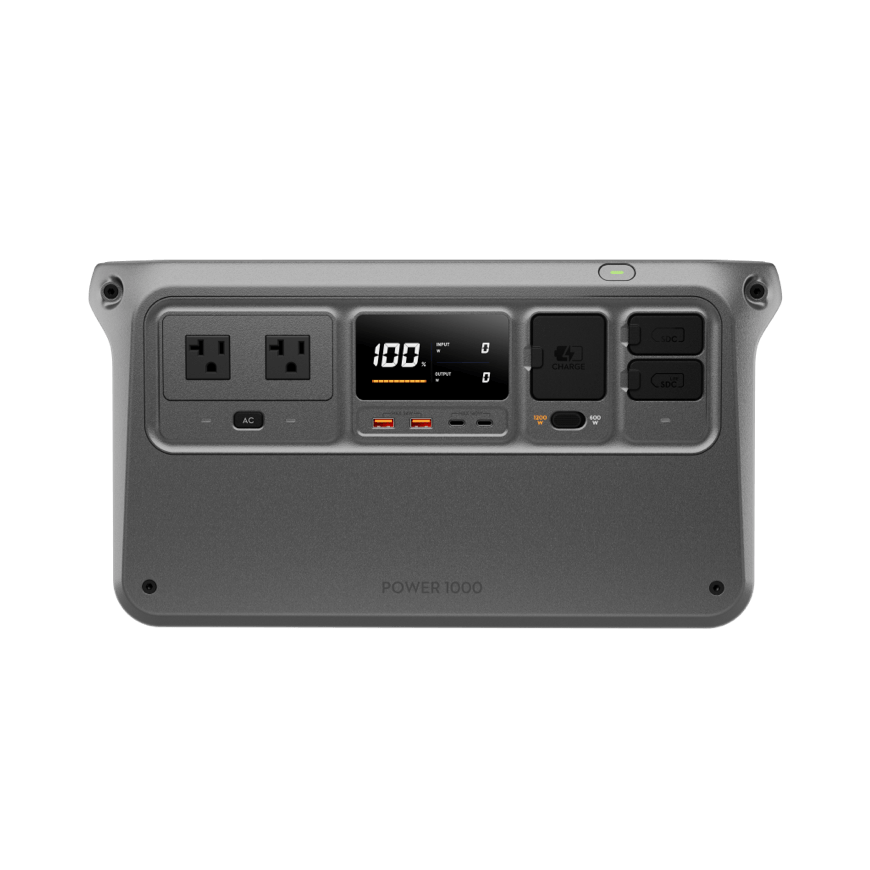
DJI Power 1000
Exceptional 2,200W inverter density and 23 dB acoustic refinement in a 28.7 lb frame, though solar charging and 12V car sockets require optional DJI SDC adapters.

BLUETTI AC70
With 705–730.6 Wh of independently measured usable AC output from a 768Wh battery and 500W solar input at ~$399–$449 street price, the AC70 punches above typical 500Wh–700Wh units.
Frequently Asked Questions
Does the EcoFlow DELTA 2 have built-in wheels or a telescoping handle?+
No. Despite erroneous legacy listings elsewhere online, the EcoFlow DELTA 2 measures 15.7 × 8.3 × 11.1 inches, weighs 27 lbs (12 kg), and uses fixed dual side carry handles—only larger EcoFlow models like the original DELTA Pro and DELTA Pro Ultra kits roll on built-in wheels or trolleys.
Why won't two standard 12V portable solar panels give me the full 500W on a DELTA 2?+
The DELTA 2's XT60i MPPT port caps solar voltage at 60V Voc and input current at 15A. Typical 12V-class portable panels operate around 18V–20V under load (Vmp). At 19V Vmp × 15A max, the station clips current at ~285W even if panels are rated higher. Reaching 450W–500W requires higher operating voltage (roughly 34V–45V Vmp) while keeping cold-weather Voc strictly under 60V.
Which extra batteries work with the EcoFlow DELTA 2?+
The DELTA 2 accepts either the 1,024Wh DELTA 2 Smart Extra Battery (LFP, bringing capacity to 2,048Wh) or the legacy 2,016Wh DELTA Max Smart Extra Battery (NCM, bringing total storage to 3,040Wh). Remember that the DELTA Max pack uses older NCM chemistry with shorter cycle ratings than the LFP base unit.
Can the EcoFlow DELTA 2 charge from AC wall power and solar panels at the same time?+
On standard firmware, AC grid input takes priority on the DELTA 2 rather than blending full 1,200W AC + 500W solar simultaneously—unlike dual-input charging found on the larger DELTA 2 Max (up to 2,400W combined) or BLUETTI AC200L.
Sources & Technical References
- View Source →[1]Manufacturer SpecificationEcoFlow US OfficialVerified 2026-11-25EcoFlow DELTA 2 Portable Power Station Specifications
1,024Wh LFP, 1,800W continuous / 2,700W surge AC output, X-Boost resistive mode, 500W (11-60V, 15A) solar input, and Smart Extra Battery expansion.
- View Source →[2]Manufacturer SpecificationDJI OfficialVerified 2026-11-24DJI Power 1000 Specifications & Official Overview
1,024Wh LFP, 2,200W continuous AC (V1 US model; V2 increases to 2,600W), dual 140W USB-C, 800W solar via MPPT adapter.
- View Source →[3]Manufacturer SpecificationBLUETTI US OfficialVerified 2026-11-24BLUETTI AC70 Portable Power Station Official Specifications
768Wh LFP, 1,000W continuous AC, 2,000W Power Lifting resistive mode, 500W MPPT solar (12-58V, 10A), 950W Turbo AC charge.
- View Source →[4]Third-Party Independent ReviewAPH NetworksVerified 2026-11-24BLUETTI AC70 Portable Power Station Load Test Review
Constant 136W AC load discharge test measured 730.59 Wh usable output (~95% of rated 768Wh cell capacity; ~92.5% net inverter efficiency).
- View Source →[5]Government Research ResourceNational Renewable Energy Laboratory (NREL)Verified 2026-11-24PVWatts & US Peak Sun Hours Reference Data
Documents regional peak sun hours and real-world photovoltaic derating factors (ambient heat, angle, shading, controller loss).