Jackery Explorer 300 vs. 500: Camping, Nightstand CPAP & Remote Work Decision Guide
Scenario guide comparing Jackery Explorer 300/300 Plus vs. 500 for car camping, tent CPAP noise, laptop work, 100W solar recovery, and Yeti 700 / AC70 picks.
Choosing between the Jackery Explorer 300/300 Plus (7.1–8.27 lbs, 288–293Wh) and Explorer 500 (13.3 lbs, 518Wh NMC) depends on daily travel ergonomics and recharging speed rather than watt-hours alone. The 300 Plus wins tent portability, quiet 2-hour wall charging, and 100W USB-C laptop work (~253–268Wh DC at 88%–93%), while the Explorer 500 stretches single-night unheated CPAP (~456–482Wh DC) at double the weight and ~9.5-hour 100W solar drag—often making Yeti 700 or BLUETTI AC70 smarter upgrades.
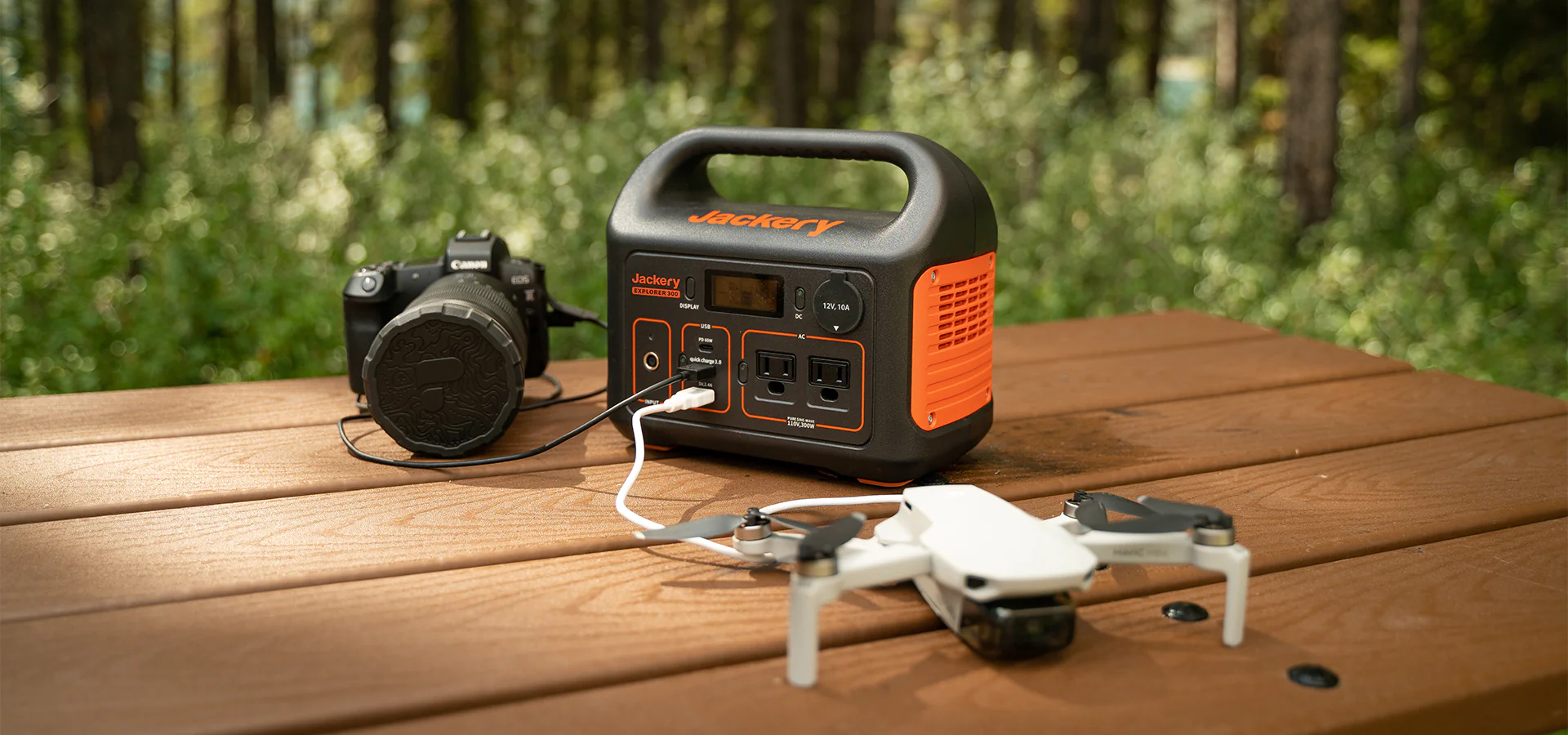
Four everyday situations expose why comparing the Jackery Explorer 300 / 300 Plus (288–293Wh) against the Jackery Explorer 500 (518Wh) solely by watt-hour stickers leads buyers to the wrong gear: a freezing night inside a canvas tent with a CPAP mask, an unexpected afternoon video call from a trailhead, a three-day cooler weekend with only one folding solar panel, and an apartment storm closet that only opens twice a year.
Rather than repeating an electrical teardown, this scenario guide maps carry weight, tent noise, laptop port logistics, and single-panel solar turnaround directly onto real trips—so you can tell immediately whether the compact 300 Plus, legacy 500, or a ~700Wh LiFePO4 upgrade fits your routine.
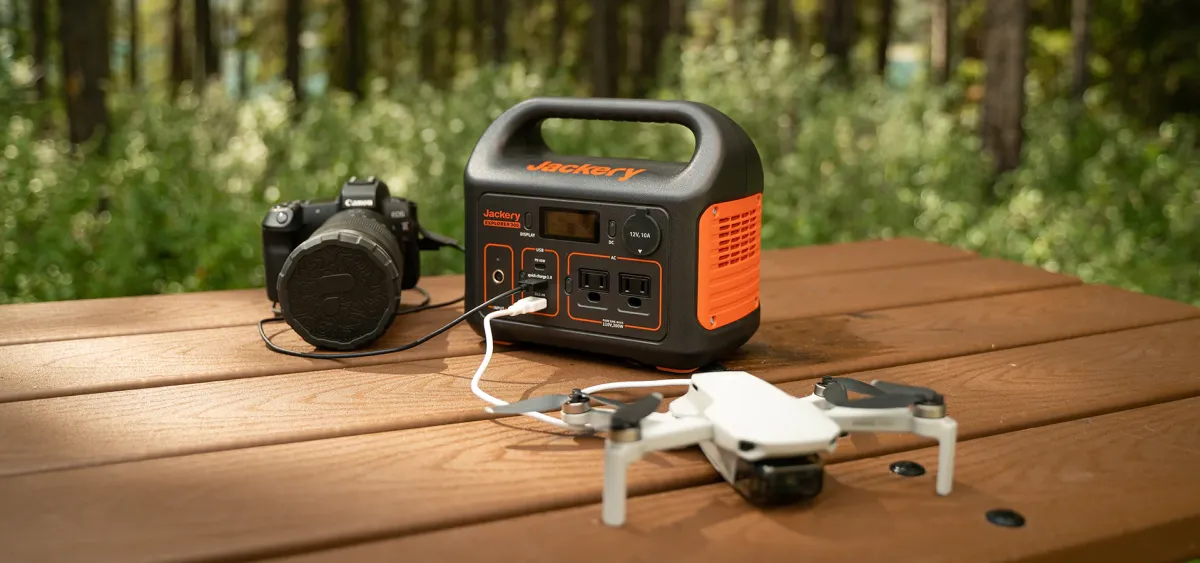
Scenario 1: Car Camping & Trunk Ergonomics (7.1–8.27 lbs vs. 13.3 lbs)
Lift both boxes side by side on camp morning and physical proportions matter instantly:
- Jackery Explorer 300 Plus (
8.27 lbs/9.1 × 6.1 × 6.6 in): Weighs roughly like a gallon of milk. Slides effortlessly under a front passenger seat, inside a camp chuck-box, or between sleeping pads with a fold-flat handle on top—leaving flat packable space above it. - Jackery Explorer 500 (
13.3 lbs/11.8 × 7.6 × 9.5 in): Roughly 60% heavier and takes up more than double the cargo volume, plus uses a fixed non-folding handle that complicates tight hatchback stacking.
Weekend 12V Cooler Reality: Running a 12V compressor camp cooler (~35W–45W while cooling, cycling ~30%–40% of the day inside a shaded vehicle) pulls ~320–420Wh over 24 hours:
- On
~253–268Whusable DC (88%–93%), the 300 Plus keeps food cold roughly 14 to 19 hours—great for overnight trips or Friday-to-Sunday loops if your vehicle alternator tops it up via the12Vsocket while driving. - On
~456–482Whusable DC, the Explorer 500 crosses 26 to 34 hours, spanning a full weekend cooler run without engine idling.
Scenario 2: Emergency Nightstand CPAP Backup & Tent Noise
Sleep quality inside a quiet bedroom or tent hinges on two things: whether the power station wakes you with fan hum and whether it reaches sunrise without dying at 4:00 a.m.
Medical Safety Reminder: Portable power stations are consumer electronics—not certified medical life-support hardware—and no battery system is risk-free. Always confirm approved DC adapter cables and storm contingency steps with your physician and CPAP maker.
- Acoustic Profile Next to Your Pillow: Both units stay essentially silent (
0 dB) when running exclusively over12VDC (ACinverter switched OFF). If you plug into the120VAC wall outlet instead, the Explorer 300 Plus caps quiet-mode noise at<=45 dB(gentle library whisper), while the Explorer 500 cycles an older cooling fan periodically—and its external wall charger stays noisy if charging nearby. - Overnight Runtime Truth (
~45WUnheated vs.~80WHeated):- 300 / 300 Plus (
288–293Wh): An unheated CPAP (~45Waverage =~360Whover 8 hours) drains~253–272WhDC in roughly 5.5 to 6 hours, cutting sleep short unless your specific blower averages<=30Won a manufacturer12Vcord. - Explorer 500 (
518Wh): Covers one full 8-to-10-hour unheated night reliably via12VDC (~456–482Whusable), though turning on a heated humidifier (~75W–90W) still depletes it around hour 5–6.
- 300 / 300 Plus (
(Crucial Tip: Check auto-shutoff settings before bed! Compact stations sometimes auto-power-off low-wattage ports after several hours if draw dips below 10W–15W.)
Scenario 3: Remote Laptop Work & Mobile Tech
If your weekend trip includes answering Slack messages, backing up drone footage, or hosting Zoom calls from a state park, the Explorer 300 Plus embarrasses the older Explorer 500:
- Explorer 300 Plus (
100W+15WUSB-C PD): Plug a 14-inch or 16-inch laptop straight into the100WUSB-C PD port with the AC inverter switched OFF. You get88%–93%DC transfer efficiency, zero bulky AC charger brick clutter, and 3–4 full laptop top-offs from a single288Whpack. (Compare also the Anker SOLIX C300 Model A1722 if you need dual 140W USB-C plus<10 msrouter UPS at9.1 lbs.) - Explorer 500 (
ZeroUSB-C Ports): Only offers three slow12W(5V/2.4A) USB-A sockets. Powering any USB-C laptop forces you to turn on the120VAC inverter (78%–88%efficiency +~10–15Widle drain) and haul your wall brick—or buy a third-party12Vcar cigarette-socket USB-C PD adapter (~60–100W) just to bypass inverter overhead.
Scenario 4: Weekend Van Trips & Single-100W Solar Recovery
Both Jackery models share a subtle off-grid bottleneck: both cap solar input right around 100W (12V–27V on 300 Plus; 12V–30V on Explorer 500).
Under NREL outdoor sunlight conditions (58%–72% of nameplate STC watts on a typical sunny day = ~58W–72W actual harvest from a single 100W folding panel):
- Recharging the 300 Plus (
~320Whgross solar needed): Finishes in~4.4 to 5.5sunny hours—meaning a single clear afternoon at camp completely resets your battery for night two. Plus, plugging into grid power between stops takes~2 hourstotal. - Recharging the Explorer 500 (
~575Whgross solar needed): Requires~8.0 to 9.9effective sunny hours on a single100Wpanel—stretching across 1.5 to 2 clear camp days! Worse, its slow7.5-hourwall AC brick means stopping at a diner or RV hookup pedestal for lunch adds less than15%battery. Check our RV Compatibility Guide and Solar Charging Guide for full van trip sizing math.
(Cold-Weather Reminder: Both standard lithium packs halt charging below 32°F (0°C)—store either station inside a heated cabin overnight per our Battery Storage & Temperature Guide.)
Scenario 5: Apartment Storm Closets & Emergency Turnaround
For renters who keep a backup battery in a hallway closet strictly for severe weather blackouts, chemistry aging and wall recharge turnaround matter far more than weekend trail volume:
- Shelf Readiness (
500NMC vs.3,000LFP Cycles): Storing either battery around50%–80%indoors keeps cells healthy between storms, yet the Explorer 300 Plus brings3,000+LiFePO4 cycles and a 5-year registered warranty, whereas the older Explorer 500 relies on500-cycleNMC cells. If you also test or drain the unit regularly during seasonal storm prep, LFP preserves full capacity for roughly a decade. - Rolling Blackout Recovery (
2 Hoursvs.7.5 Hours): When utility power flickers back on for two or three hours between storm bands, the Explorer 300 Plus finishes a0%–100%wall charge in roughly 2 hours, while the Explorer 500 recovers less than 40% over that same brief window on its slow external brick—a major disadvantage if another overnight outage hits before dawn. - Safety Note on Apartment Power: Neither station can legally or physically connect to household breaker panels without specialized transfer hardware, and neither should ever be confused with gas generators that require outdoor placement due to carbon monoxide exhaust.
Clear Decision Matrix: 300 Plus vs. 500 vs. ~700Wh Upgrades
| Buyer Profile | Verdict | Why This Choice Wins |
|---|---|---|
| Day Trips, Laptops, Drones & Light Car Camping | Choose Jackery Explorer 300 Plus | 8.27 lb one-hand carry, 3,000-cycle LFP longevity, 100W USB-C PD, 2-hr wall charge, ~1-day recovery on one 100W solar panel, and 5-yr registered warranty. |
| Clearance Budget 1-Night Unheated CPAP Only | Choose Jackery Explorer 500 Only If <$275 |
Covers 1 full unheated DC CPAP night (~456–482Wh DC) or a weekend cooler—but legacy 500-cycle NMC cells, 7.5-hr wall charging, and zero USB-C make full retail $449–$499 uncompetitive. |
| Wet Weather, Overlanding & Truck Beds | Step Up to Goal Zero Yeti 700 | 677Wh LFP (4,000 cycles), IPX4 weather-resistant chassis, 600W AC, 100W USB-C, 200W solar, 1.5-hr wall charge, and 5-year US support at 20.3 lbs. |
| Multi-Night CPAP, High-Watt Gear & Fast Solar | Step Up to BLUETTI AC70 | 768Wh LFP (705–730.6Wh verified AC), 1,000W AC, 500W solar (~2 hrs recovery), dual 100W USB-C, and 950W AC charge (1.5 hrs) around ~$429 street. |
Run your exact overnight camping or outage load list in our Runtime Calculator or narrow down pack weights and capacities in the Power Station Finder.
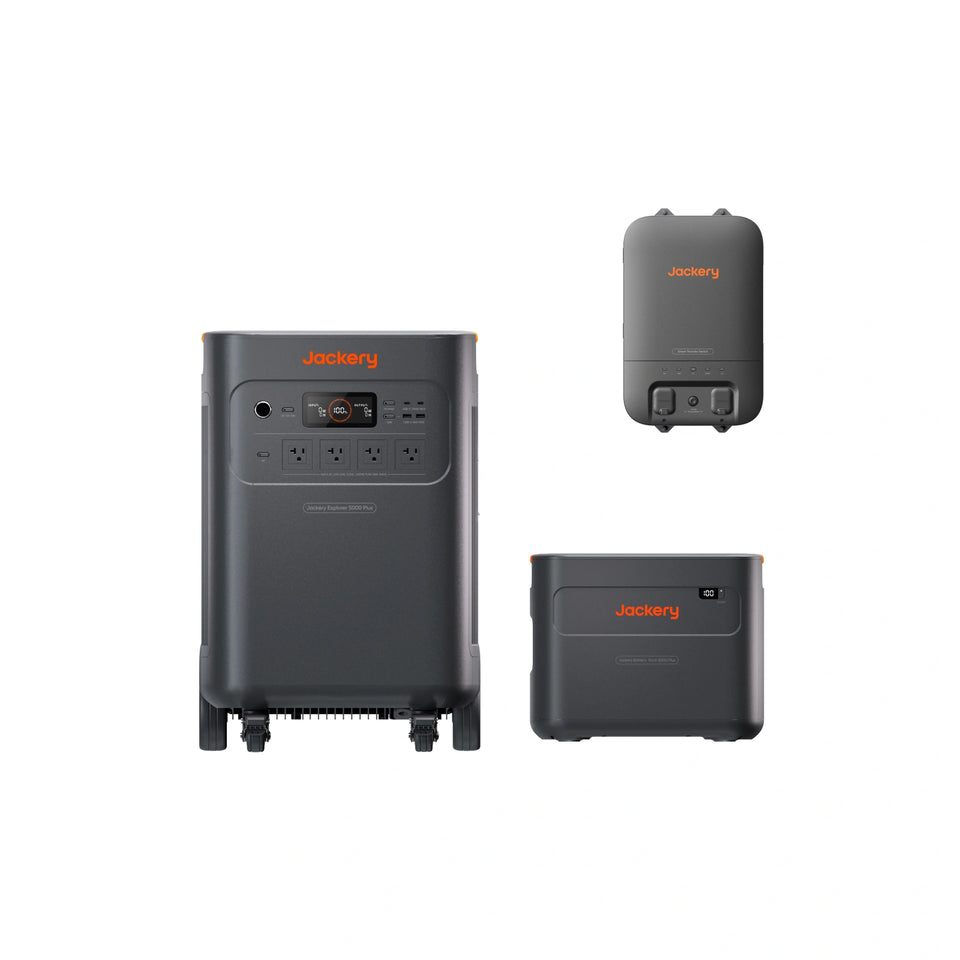
Models Discussed in This Article

BLUETTI AC70
With 705–730.6 Wh of independently measured usable AC output from a 768Wh battery and 500W solar input at ~$399–$449 street price, the AC70 punches above typical 500Wh–700Wh units.
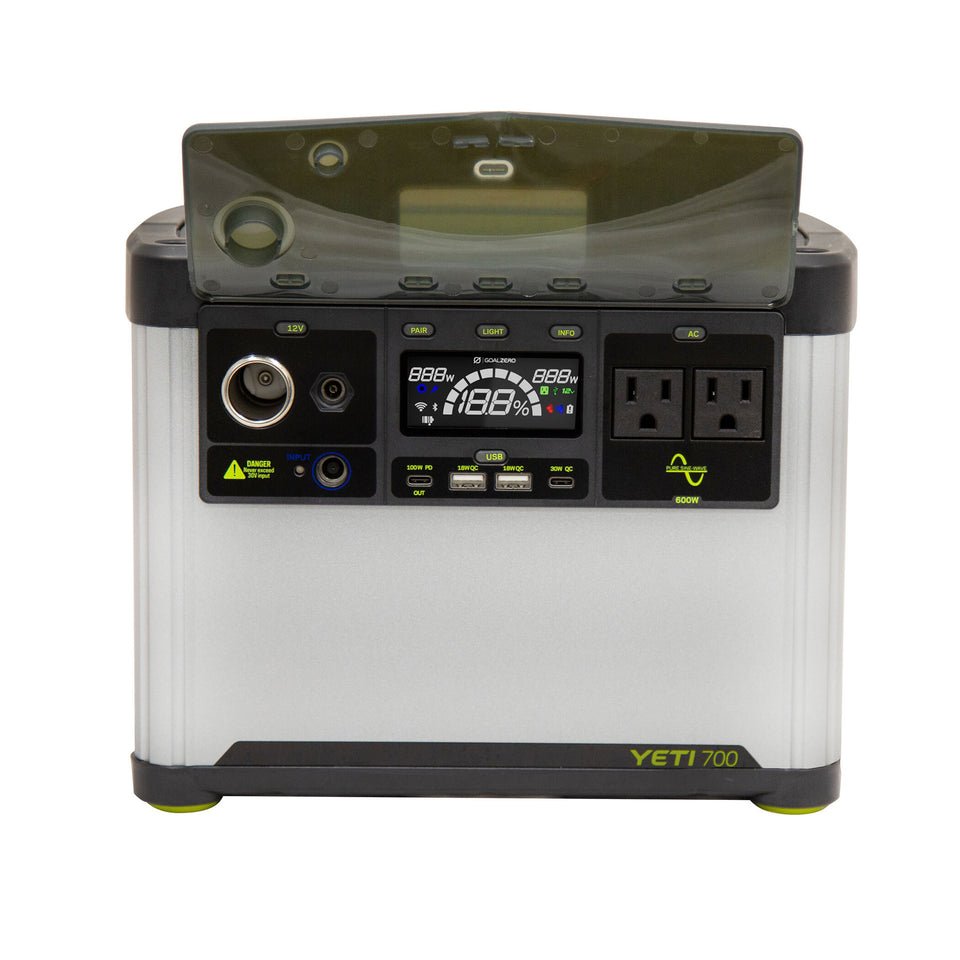
Goal Zero Yeti 700
Prioritizes IPX4 splash resistance, 4,000-cycle LFP longevity, and US-based warranty support over raw inverter wattage or solar charging speed.
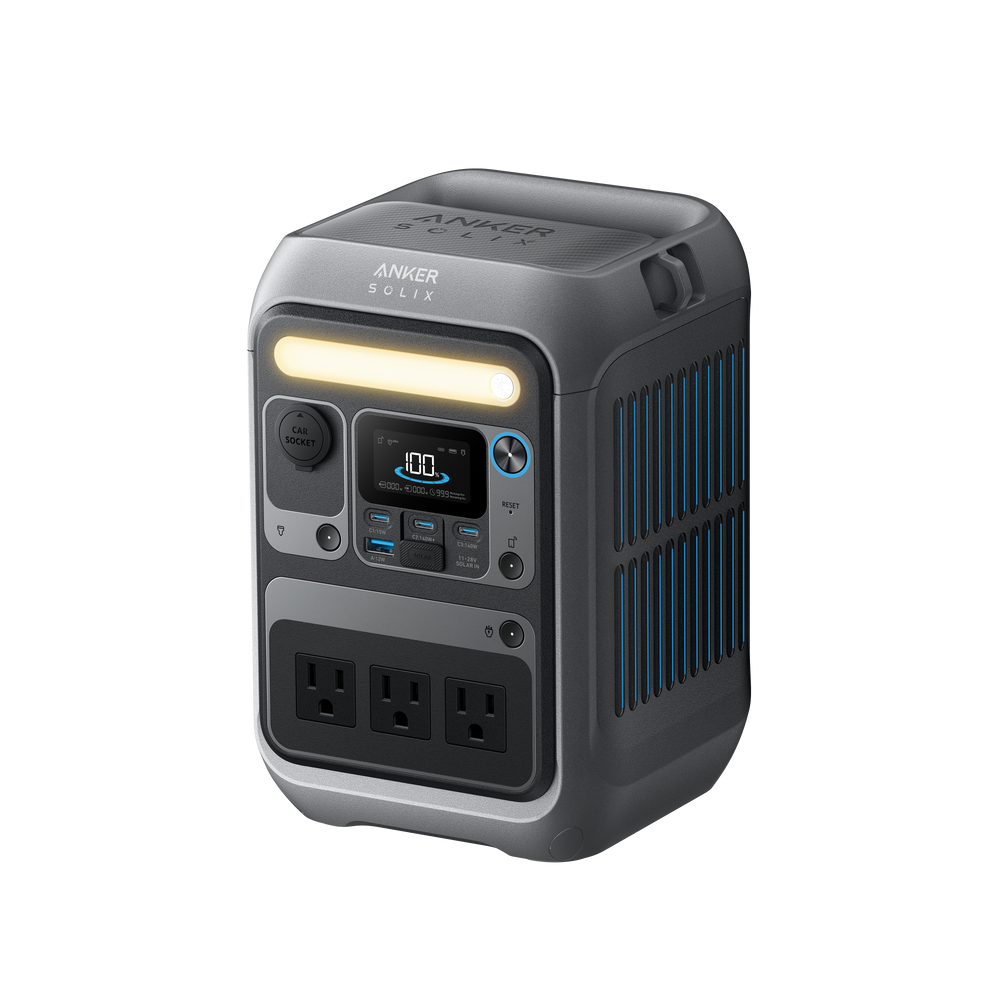
Anker SOLIX C300
A 9.1 lb vertical LiFePO4 station delivering 300W AC, dual 140W USB-C ports, and <10 ms UPS backup for routers, laptops, and day trips — just don't confuse it with the DC-only C300 DC or expect appliance runtime.
Frequently Asked Questions
Is the Jackery Explorer 300 Plus or Explorer 500 quiet enough to run inside a sleeping tent or bedroom?+
Yes, especially over 12V DC or USB-C with the AC inverter off—when inverter cooling fans normally stay completely silent (0 dB). Under AC charging or heavier AC inverter load, the Explorer 300 Plus holds <=45 dB in quiet mode, whereas older Explorer 500 units run modest cooling fans intermittently under load or 7.5-hour brick charging.
How many days can a single 100W solar panel keep the Explorer 300 Plus vs. Explorer 500 running on a camp trip?+
On a typical sunny summer camp day (4.5–5.5 NREL peak sun hours at 58%–72% real panel output, ~58–72W), a single 100W solar panel recovers ~260–360Wh. That completely refills a 288Wh Explorer 300 Plus in one afternoon (~4–5 sun-hours), whereas a drained 518Wh Explorer 500 needs roughly 1.5 to 2 sunny camp days (~8–10 effective sun-hours).
Which Jackery is easier for remote laptop work from a truck cab or picnic table?+
The Explorer 300 Plus (or classic Explorer 300) wins cleanly for laptop work because native USB-C PD (100W on 300 Plus; 60W on classic 300) charges laptops directly at ~88%–93% DC efficiency without bulky wall bricks. The Explorer 500 has zero USB-C ports, forcing 120V AC inverter conversion losses (~78%–88%) unless you add a 12V car PD adapter.
When should weekend van travelers skip both and buy the Goal Zero Yeti 700 or BLUETTI AC70?+
Skip both Jackery 300 and 500 if you sleep with a heated CPAP humidifier, run a 12V compressor fridge across multi-day overcast weekends, or want fast solar recovery above 100W. Goal Zero Yeti 700 (677Wh, IPX4 splash resistance, 200W solar) and BLUETTI AC70 (768Wh, 1,000W AC, 500W solar) cover multi-day trips far more reliably.
Sources & Technical References
- View Source →[1]Manufacturer SpecificationJackery US OfficialVerified 2026-11-25Jackery Explorer 300 Plus Portable Power Station Specifications
288Wh LiFePO4, 300W continuous AC (600W surge), 100W bidirectional USB-C PD, 100W solar max, 8.27 lbs weight.
- View Source →[2]Manufacturer SpecificationBLUETTI US OfficialVerified 2026-11-24BLUETTI AC70 Portable Power Station Official Specifications
768Wh LFP, 1,000W continuous AC, 2,000W Power Lifting resistive mode, 500W MPPT solar (12-58V, 10A), 950W Turbo AC charge.
- View Source →[3]Manufacturer SpecificationGoal Zero OfficialVerified 2026-11-24Goal Zero Yeti 700 Portable Power Station Specifications
677Wh LFP, 600W AC, 1,000W surge, 200W solar max, IPX4 weather-resistant chassis, 5-year warranty.
- View Source →[4]Government Research ResourceNational Renewable Energy Laboratory (NREL)Verified 2026-11-24PVWatts & US Peak Sun Hours Reference Data
Documents regional peak sun hours and real-world photovoltaic derating factors (ambient heat, angle, shading, controller loss).
- View Source →[5]Manufacturer SpecificationAnker SOLIX US OfficialVerified 2026-11-24Anker SOLIX C300 Portable Power Station (Model A1722) Specifications
288Wh LFP AC-equipped model (distinct from DC-only C300 DC), 300W AC, 600W SurgePad, 100W XT60 solar, <10ms UPS.