OUPES Mega 2 Expansion & Deployment Guide: Scaling to 10.24kWh vs. Rivals
Compare OUPES Mega 2 + B2 battery scaling against BLUETTI AC200L + B300K and Pecron E1500LFP. Includes $/Wh math, TT-30R RV setups, and runtime planning.
Adding OUPES B2 2,048Wh expansion batteries scales the Mega 2 from 2,048Wh to 10,240Wh at roughly $0.25–$0.35 per extra rated Wh—dramatically cheaper than BLUETTI B300K expansion modules ($0.40–$0.47/Wh) while matching Pecron EP3000-48V value. Paired with 2,100W high-voltage solar and a 30A TT-30R port, it excels for 120V RV shore power and multi-day fridge backup, delivering 78%–88% usable AC runtime.

Buyers shopping in the 2,000Wh power station class frequently fixate on the sticker price of the base unit, only to hit a brutal realization during a multi-day storm or extended boondocking trip: 2,048Wh disappears quickly once a refrigerator, sump pump, or RV climate gear cycles around the clock. When you decide to double or triple storage capacity, the price and weight of proprietary expansion batteries—not the main unit—determine whether a system remains economical.
Rather than repeating standalone product specs, this deployment guide breaks down the expansion economics, 120V/30A RV hardware matching, solar panel Voc sizing, and runtime planning of the OUPES Mega 2 + B2 ecosystem compared directly against the BLUETTI AC200L (+ B300K), Pecron E1500LFP (+ EP3000-48V), and standalone Jackery Explorer 2000 v2.
Expansion Ecosystem Economics: $/Wh Scaling Breakdown
Every modular LiFePO4 ecosystem locks you into proprietary expansion cables and BMS communication protocols. Looking at typical US street pricing shows how sharply scaling costs diverge once you move past 2kWh.
| Ecosystem Stack | Base Capacity & Street Price | Expansion Module | Scaled Capacity (1 Extra Pack) | System Max Ceiling | Incremental Extra Battery $/Wh |
|---|---|---|---|---|---|
| OUPES Mega 2 + B2 | 2,048Wh (~$900–$1,050) | B2 (2,048Wh, ~41.8 lbs, ~$500–$580) | 4,096Wh (~$1,450–$1,630) | 10,240Wh (4 × B2) | ~$0.24–$0.28 / Wh |
| Pecron E1500LFP + EP3000-48V | 1,536Wh (~$599) | EP3000-48V (3,072Wh, ~57 lbs, ~$699) | 4,608Wh (~$1,298) | 7,680Wh (2 × EP3000) | ~$0.23 / Wh |
| BLUETTI AC200L + B300K | 2,048Wh (~$1,099) | B300K (2,764.8Wh, ~65 lbs, ~$1,100–$1,299) | 4,812.8Wh (~$2,199–$2,398) | 8,192Wh (2 × B300K) | ~$0.40–$0.47 / Wh |
| Jackery Explorer 2000 v2 | 2,042Wh (~$999) | None (non-expandable) | 2,042Wh max | 2,042Wh | N/A |
Notice the strategic gap: Jackery Explorer 2000 v2 gives you the lightest standalone 2kWh lift at 39.5 lbs, making it unbeatable for apartment stairs or single-night vehicle trips—but you hit a hard ceiling at 2,042Wh. Meanwhile, stepping from 2kWh to ~4–4.8kWh with BLUETTI adds a hefty 65 lb B300K module costing roughly $1,100+, whereas OUPES and Pecron expand for roughly half the incremental cost per watt-hour. If you want to compare rated vs. street price economics across all sizes, run the numbers through our price-per-Wh calculator.
120V Emergency Circuits & 30A RV TT-30R Deployment
Capacity alone doesn’t determine what a power station can run—outlet topology and voltage architecture dictate real-world deployment:
- 30A RV Shore Hookup (NEMA TT-30R): Both the OUPES Mega 2 (2,500W continuous / 5,400W surge) and the BLUETTI AC200L (2,400W continuous / 3,600W Power Lifting) include a built-in 120V/30A TT-30R receptacle. You can plug a standard 30A travel trailer umbilical cord straight into the power station. Keep in mind that 2,500W continuous equals roughly 20.8 amps at 120V, not a full 30A (3,600W). Running a 13,500 BTU RV rooftop air conditioner (typically 1,200W–1,600W running, higher locked-rotor startup amps) works well when equipped with a soft-start capacitor, provided you avoid running a microwave or electric water heater element at the same time.
- High-Amperage 12V/48V DC Integration: Van builders differ sharply from RV shore-cord users. The Mega 2 provides a 12V/30A Anderson port (matching Pecron E1500LFP’s 12V/30A XT60 port) for feeding a 12V fuse block directly—saving 10%–15% inverter losses on lights, Maxxfan vents, and 12V compressor fridges. By contrast, the BLUETTI AC200L adds a specialized 48V/8A DC RV port (expandable via BLUETTI’s D40 voltage regulator), while the Jackery 2000 v2 limits DC output to a standard 12V/10A (120W) car socket.
- Residential 120V Emergency Circuits: None of these four 120V platforms can backfeed a 240V split-phase breaker like a deep well pump or central A/C. Connecting any 120V portable power station to home furnace blowers, refrigerators, or lighting circuits must use heavy-duty outdoor extension cords directly to appliances or an NFPA 70 (NEC) compliant 120V manual transfer switch/inlet installed by a licensed electrician—never a makeshift male-to-male “suicide cord.” See our transfer equipment safety guide for legal home integration pathways.
Solar Panel Voc Compatibility Across the Four Platforms
When building a multi-day off-grid array, Open-Circuit Voltage (Voc) limits determine which solar panels you can actually wire together without frying the charge controller:
- OUPES Mega 2 (2,100W max | 12V–150VDC / 18V–140V MPPT, 15A): Accepts high-voltage residential/rigid 36V–48V Voc panels wired in 2S or 3S series strings easily, delivering up to 2,100W through a single high-voltage pathway. (Note: if using a single portable 12V-nominal folding panel whose Voc sits around 21V–23V, verify its Vmp stays comfortably above the 18V MPPT floor under hot summer cell derating.)
- BLUETTI AC200L (1,200W max | 12V–145V Voc, 15A): Equally accommodating across both single low-voltage camp panels and multi-panel rigid strings, though capped at 1,200W total PV.
- Pecron E1500LFP (800W combined | GX16MF 32V–95V 700W + DC5521 12V–18V 100W): Carries an important trap for beginners—its main 700W GX16MF port will not charge from a single 18V–22V portable solar panel because it requires at least 32V to wake up. You must wire two panels in series (or buy higher-Voc 36V+ rigid panels) while keeping cold-morning Voc under 95V.
- Jackery Explorer 2000 v2 (400W max | 16V–60V dual DC8020): Engineered for portable SolarSaga panels; third-party MC4 panels require DC8020 adapters, and recharging 2,042Wh exclusively on solar takes a full sunny day.
Remember that solar arrays rarely hit laboratory STC ratings outdoors; real-world US harvests typically settle around 65%–80% of panel nameplate wattage multiplied by local NREL Peak Sun Hours. Read our RV power station compatibility guide and solar input limits breakdown to match panels safely.
Multi-Day Backup Runtime Planning (4,096Wh vs. 2,048Wh)
Assuming a conservative 82% AC usable yield (within the realistic 78%–88% range for pure sine wave inverters) and 90% DC usable yield (88%–93% range), here is what a typical US residential outage load draws across base and expanded Mega 2 setups:
- Base 2,048Wh Unit (~1,680Wh usable AC): Running a modern residential refrigerator (~120W compressor draw cycling 40% of the hour = ~48W average, plus inverter standby ~15–20W = ~65W total) alongside a fiber modem/router (15W DC) and LED lamps (20W) consumes roughly 100W average, yielding roughly 16 to 18 hours before needing AC or solar replenishment.
- Mega 2 + 1 × B2 Pack (4,096Wh -> ~3,360Wh usable AC): Using the same ~100W essential load—plus periodic 1,100W microwave reheats (10 minutes/day = ~185Wh) and an overnight CPAP (40W DC for 8 hours = ~355Wh with DC efficiency)—extends autonomy cleanly past 28 to 32 hours without any sun. Adding just 800W of portable solar across 4 Peak Sun Hours (~2,300Wh–2,500Wh net daily harvest) creates indefinite blackout endurance for essential 120V circuits.
To model your exact household refrigerators, chest freezers, sump pumps, and medical devices before buying expansion packs, plug your wattage list into our runtime calculator and explore how expandable battery systems work.
Which Expansion Architecture Should You Choose?
- Choose the OUPES Mega 2 + B2 ecosystem if you want the lowest cost per expandable watt-hour alongside 2,100W solar recovery and a native 30A TT-30R RV outlet, and you are comfortable buying direct online.
- Choose the Pecron E1500LFP + EP3000-48V if absolute lowest upfront dollar per watt-hour under $1,300 for 4.6kWh matters most and you plan to wire series solar panels cleanly inside the 32V–95V window.
- Choose the BLUETTI AC200L + B300K if you prefer Tier-1 retail service availability, a 48V DC RV bus, and CNET-verified efficiency despite higher expansion battery cost and 62.4 lb base weight.
- Choose the Jackery Explorer 2000 v2 if portability under 40 lbs matters more than adding expansion batteries or high-wattage solar arrays.
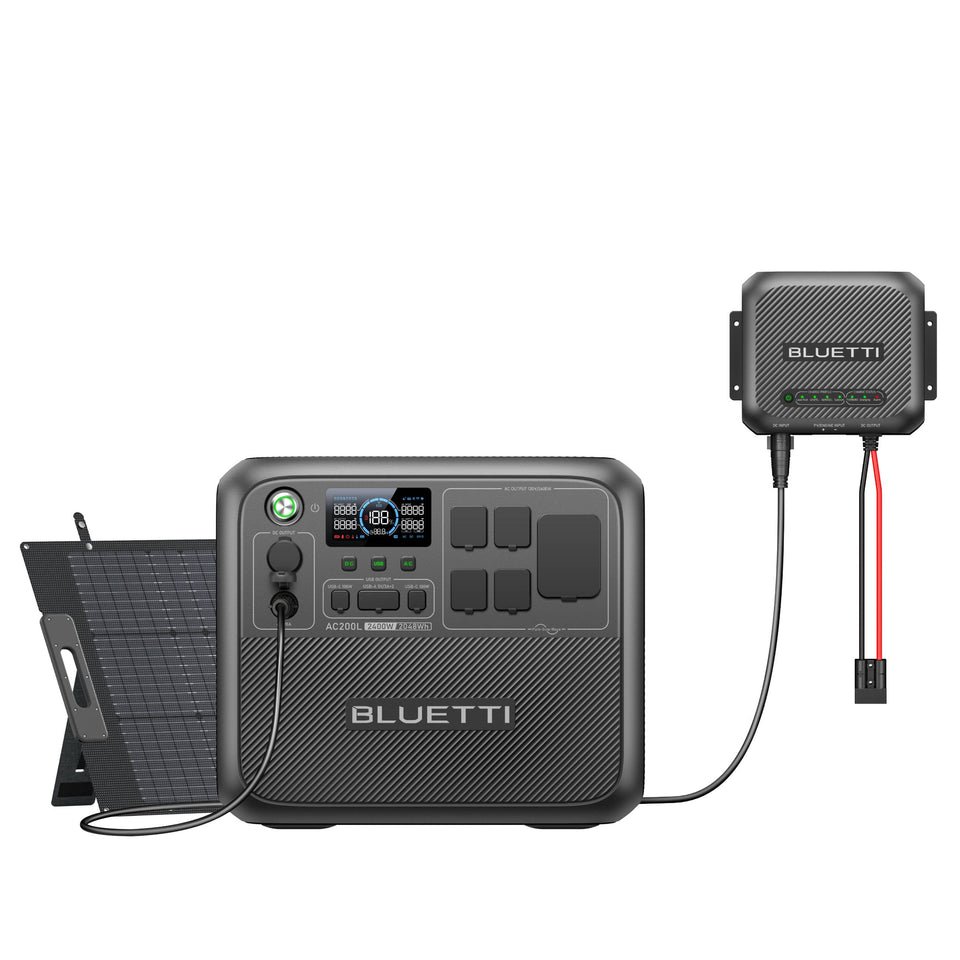
Models Discussed in This Article
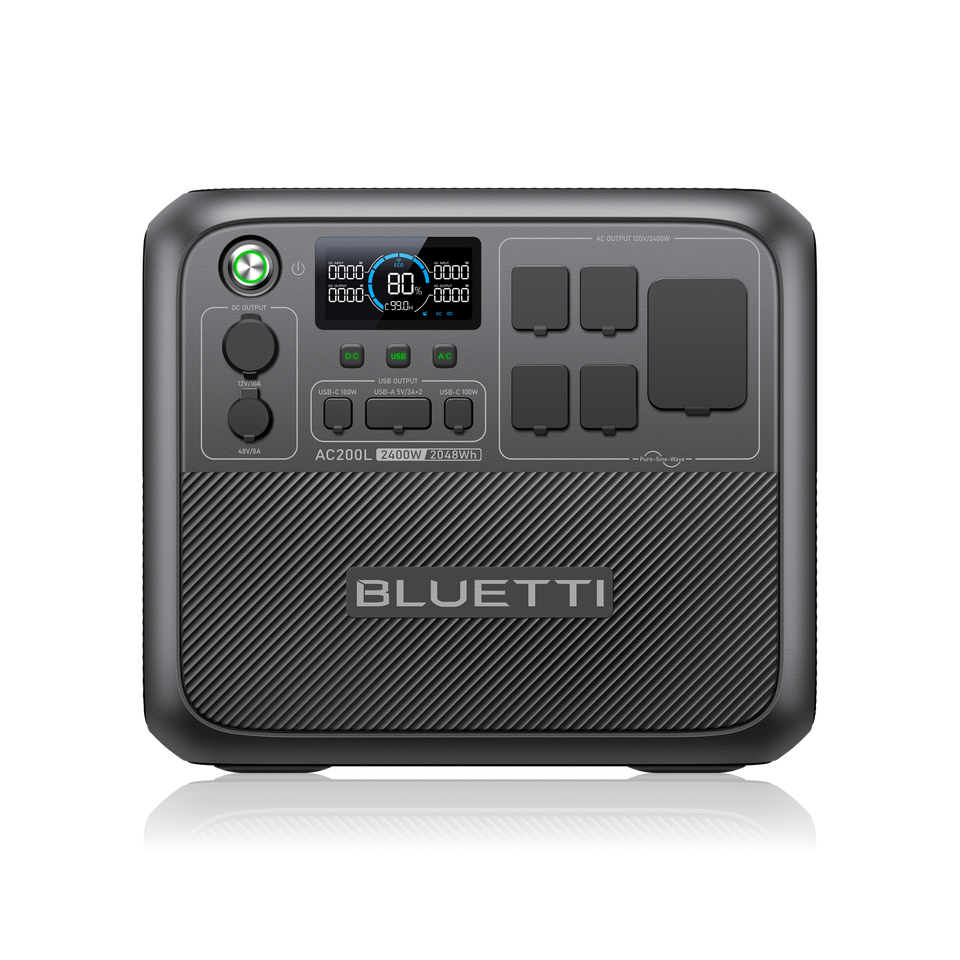
BLUETTI AC200L
Combines a high-efficiency 2,048Wh expandable platform, 1,200W high-voltage solar input (12–145V), and dedicated 30A TT-30R + 48V DC RV outputs at strong street pricing, trading away light weight and built-in wheels.
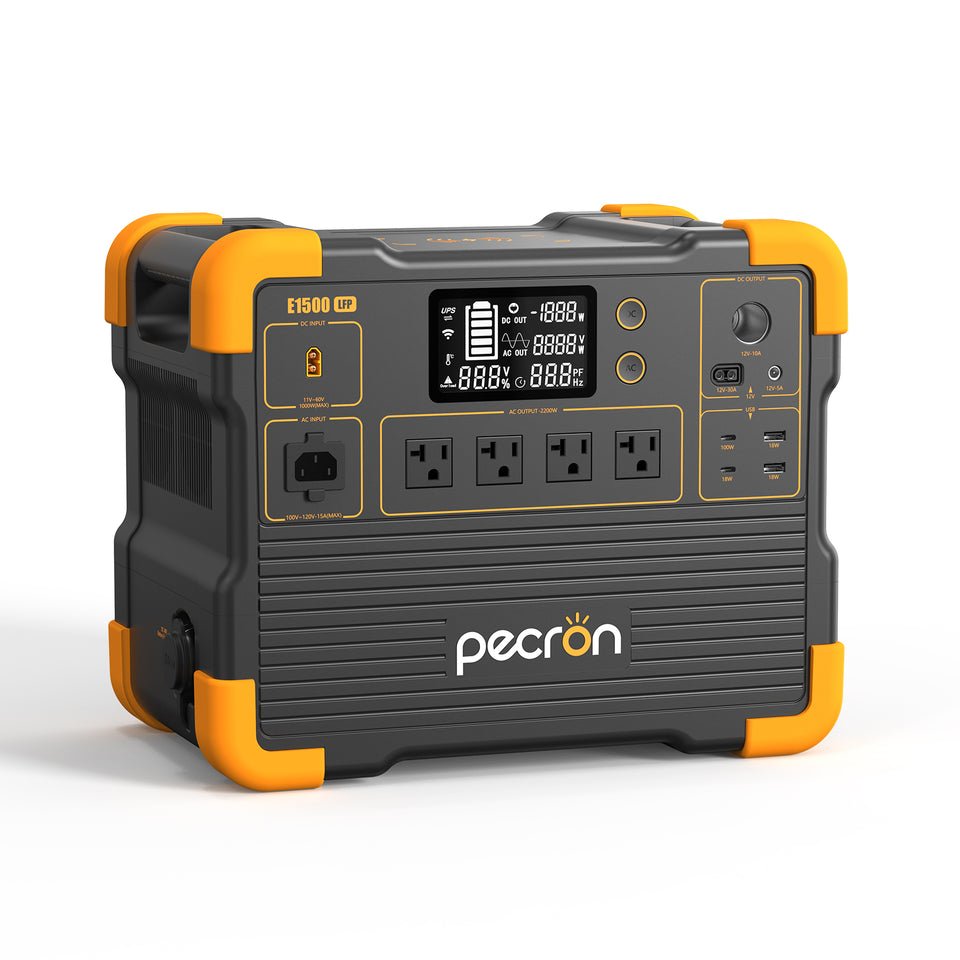
Pecron E1500LFP
Delivers 1,536Wh, a 2,200W continuous inverter, and a rare 12V/30A XT60 DC port around $599 street price, though its asymmetric 32–95V GX16MF solar input requires careful panel voltage matching.
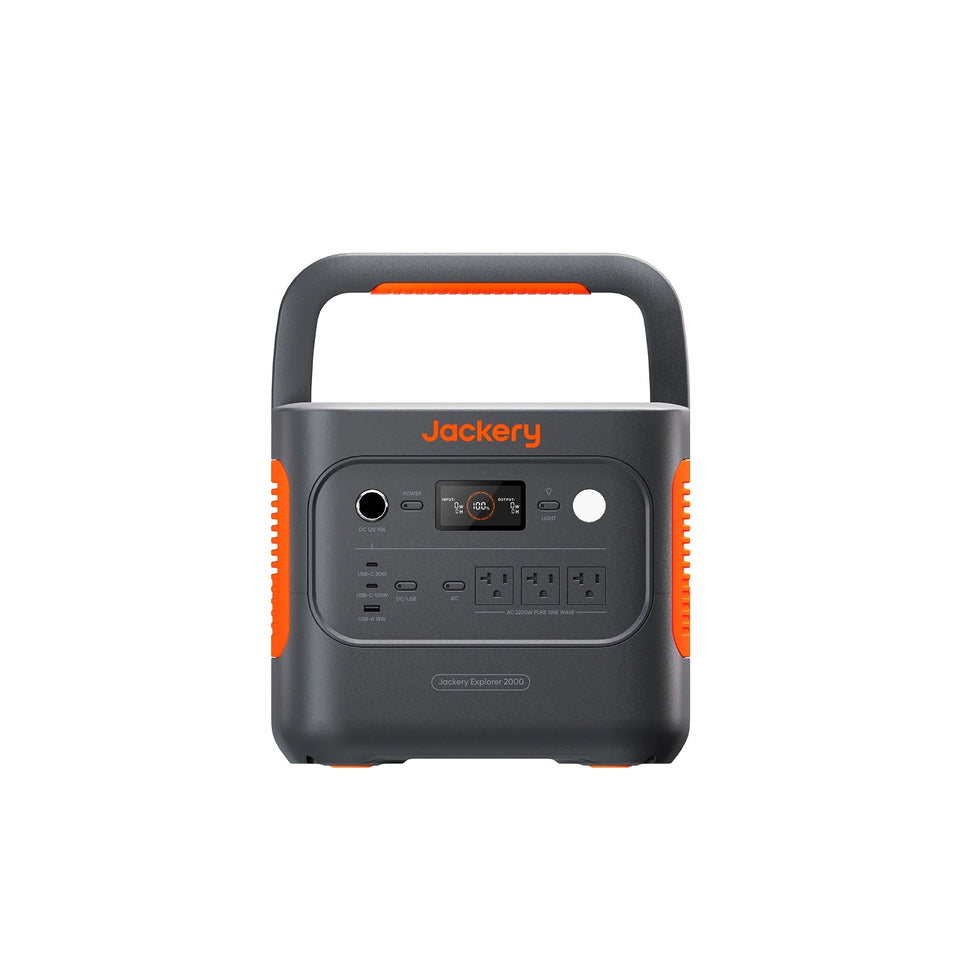
Jackery Explorer 2000 v2
A breakthrough 39.5 lb chassis makes 2,042Wh genuinely single-hand portable for camping and apartments, provided you accept its 400W solar recharge ceiling and non-expandable battery.
Frequently Asked Questions
How much capacity can the OUPES Mega 2 expand to with B2 batteries?+
Starting from a 2,048Wh base unit, the OUPES Mega 2 connects up to four B2 extra batteries (2,048Wh each) via side expansion ports, scaling total energy storage to 10,240Wh (10.24kWh) while keeping AC output at 2,500W continuous (120V).
Can I mix OUPES B2 batteries with BLUETTI B300K or Pecron EP3000-48V packs?+
No. Expansion batteries use proprietary communication cables, BMS handshakes, and voltage buses. OUPES Mega 2 units only communicate with OUPES B2 batteries, BLUETTI AC200L units require BLUETTI B210/B230/B300/B300K packs, and Pecron E1500LFP stations use Pecron 48V cascade batteries.
Will a 30A RV TT-30R outlet on the OUPES Mega 2 run an entire travel trailer?+
Yes for 120V 30A travel trailers—up to the 2,500W continuous inverter limit (about 20.8A at 120V). You can run a 13,500 BTU RV A/C or microwave one at a time, plus lights and a 12V fridge, though simultaneous A/C + electric water heater + microwave draws will trip overload protection.
Why can't a Jackery Explorer 2000 v2 scale like the Mega 2 or AC200L?+
Jackery engineered the Explorer 2000 v2 around a compact, non-expandable Cell-to-Body chassis to cut weight down to 39.5 lbs. Buyers needing modular battery growth inside Jackery's lineup must step up to the heavier Explorer 2000 Plus or Explorer 5000 Plus.
Sources & Technical References
- View Source →[1]Manufacturer SpecificationOUPES Official USVerified 2026-11-25OUPES Mega 2 Home Backup Portable Power Station Specs
2,048Wh LiFePO4 expandable to 10,240Wh, 2,500W continuous AC (5,400W surge), up to 2,100W high-voltage PV solar input, <20ms EPS switching.
- View Source →[2]Manufacturer SpecificationBLUETTI US OfficialVerified 2026-11-24BLUETTI AC200L Portable Power Station Official Specifications
2,048Wh LFP, 2,400W continuous AC, 3,600W Power Lifting mode, NEMA TT-30R + 48V/8A DC RV port, 1,200W solar (12-145V).
- View Source →[3]Manufacturer SpecificationPecron US OfficialVerified 2026-11-24Pecron E1500LFP Official Specifications
1,536Wh LFP, 2,200W AC, 800W dual-port solar (GX16MF 32-95V 700W + DC5521 100W), EP3000-48V expansion support.
- View Source →[4]Manufacturer SpecificationJackery US OfficialVerified 2026-11-24Jackery Explorer 2000 v2 Product Page & User Guide
2,042Wh LFP Cell-to-Body design, 39.5 lbs weight, 2,200W continuous AC, 400W dual DC8020 solar input.
- View Source →[5]Government Research ResourceNational Renewable Energy Laboratory (NREL)Verified 2026-11-24PVWatts & US Peak Sun Hours Reference Data
Documents regional peak sun hours and real-world photovoltaic derating factors (ambient heat, angle, shading, controller loss).