Transfer Equipment & Professional Installation: Safe Home Backup Integration
Conceptual overview of extension-cord isolation, manual transfer switches, listed interlock kits, smart home panels, NEC compliance, and why licensed electricians are essential.
You can safely power essential home appliances from a portable power station either by plugging standalone 120V cords directly into the unit (completely isolated from house wiring) or by having a licensed electrician install NEC-compliant transfer hardware—such as a manual transfer switch, listed panel interlock kit, or manufacturer smart home panel. Never use DIY backfeed cords or modify electrical panels yourself.
Key Technical Takeaways
- Listed transfer switches, interlocks, and smart panels physically or mechanically prevent your backup power station from backfeeding utility power lines.
- Stand-alone extension cords are safe only for plug-in 120V appliances and cannot power hardwired furnaces, ceiling lights, or 240V well pumps.
- Neutral-ground bonding behavior varies by power station and transfer switch type—verify manufacturer manuals and local NEC/AHJ code with a licensed electrician.
Buying a high-capacity power station is only half the equation for home blackout readiness. If you want to power hardwired appliances—such as a gas furnace blower, overhead lighting, or a 240V submersible well pump—without snaking extension cords down hallways, you need safe, code-compliant transfer equipment.
This guide explains the four safe backup integration concepts recognized under US residential electrical standards (NFPA 70 / National Electrical Code), along with what requires a licensed electrician. Note: We intentionally do not provide step-by-step wiring tutorials or breaker-panel connection instructions.
Option 1: Direct Plug-In With Heavy-Gauge Extension Cords (No Panel Connection)
For renters, apartment residents, or homeowners needing basic emergency coverage on a budget:
- How It Works Conceptually: You keep the power station completely isolated from your home’s breaker box and plug essential 120V cord-and-plug appliances (refrigerator, freezer, Wi-Fi router, desk lamp, CPAP) directly into the station’s AC outlets using appropriately rated, undamaged indoor/outdoor heavy-gauge extension cords.
- Pros: Zero installation cost, zero panel modification, works with compact and midsize 120V units like the BLUETTI AC200L or Jackery Explorer 2000 v2.
- Limitations: Cannot power hardwired circuits (furnace blowers, hardwired sump pumps, overhead lights, or 240V well pumps), and cords across floors create trip hazards.
Option 2: Manual Transfer Switch + Exterior/Utility Power Inlet Box
A manual transfer switch is the classic, reliable bridge for portable generators and power stations:
- How It Works Conceptually: A licensed electrician installs a dedicated transfer switch box beside your main breaker panel and moves a curated group of essential circuits (commonly 6 to 10 circuits) onto it. During an outage, you connect your power station (via a locking cord such as NEMA L14-30 or L5-30 depending on 240V vs 120V hardware) to a power inlet box—a male-pronged recessed inlet—and flip individual circuit toggles from
LINE(Utility) toGEN(Backup). - Safety Advantage: Each circuit toggle physically breaks contact with the utility line before engaging backup power, preventing backfeeding.
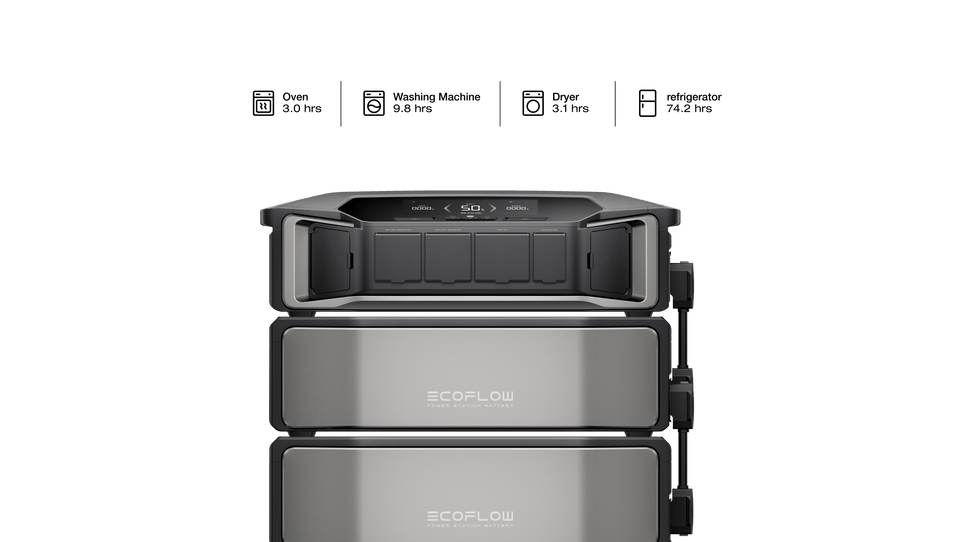
- Best Match: Works cleanly with both 120V essential switches and 120V/240V split-phase stations like the Anker SOLIX F3800, Jackery Explorer 5000 Plus, or EcoFlow DELTA Pro Ultra.
Option 3: Listed Mechanical Panel Interlock Kit + Inlet
- How It Works Conceptually: A manufacturer-listed mechanical interlock plate attaches directly to a compatible main electrical panel cover. Its sliding bracket makes it physically impossible to turn on the dedicated generator back-fed breaker unless the Main Utility Breaker is switched completely OFF first.
- Pros: Allows flexible circuit choice across the entire panel—you turn off heavy unnecessary breakers (like electric ovens or central AC) and turn on only the circuits your battery inverter can safely carry.
- Crucial Code & Neutral Note: Interlock kits are panel-model-specific, must carry UL/NEC listing for your exact breaker box, and may not be permitted in all local jurisdictions or multi-tenant setups. Your licensed electrician verifies local Authority Having Jurisdiction (AHJ) approval.
Option 4: Branded Smart Home Panels & Smart Transfer Switches
Major modular ecosystems offer dedicated automatic transfer panels designed for seamless integration:
- Examples: EcoFlow Smart Home Panel 2 (for DELTA Pro Ultra), Jackery Smart Transfer Switch (for Explorer 5000 Plus), and Anker Home Power Panel (for SOLIX F3800).
- How They Work Conceptually: These systems provide automated outage switchover (typically rated
<20 msautomatic transfer time per EcoFlow and Jackery specs), app-based per-circuit load shedding, scheduled time-of-use battery cycling, and higher-rate 240V charging paths. - Cost & Permitting Reality: Beyond the power station kit itself, branded smart panels add substantial hardware costs plus licensed electrician installation, permit fees, and sometimes utility interconnection review. Verify total installed budget before committing.
Critical Safety Rules Every Homeowner Must Respect
- Never Use Double-Ended Male “Suicide Cords”: Backfeeding through an ordinary household wall receptacle or dryer outlet violates the National Electrical Code, voids insurance/warranties, risks electrocuting household members on exposed prongs, and creates fatal backfeed voltage on downed utility lines.
- Verify Neutral-Ground Bonding With an Electrician: Portable power stations typically operate with a floating neutral unless bonded internally during grid bypass or configured through specific bonding setups. How your transfer equipment handles switched vs. solid neutrals determines whether GFCI/AFCI protection works properly and prevents nuisance ground-fault trips. Always let a licensed electrician verify neutral-ground compliance against both NEC rules and your power station’s manual.
- Verify Total System Certifications (UL / NEC): For permanent wall-mounted transfer panels and batteries, confirm UL listing status (such as UL 9540 / UL 1741 / panel-specific listings referenced in manufacturer manuals) required by your city or county inspector before purchase.
- No Backup System Is Completely Risk-Free: Maintain manufacturer clearance around battery enclosures, keep equipment dry, and inspect inlet cords regularly.
Still deciding between a 120V portable unit and a 240V split-phase setup? Compare both in 120V vs. 240V Home Backup Explained or review our Best Home Backup Picks.
Frequently Asked Questions
Why is plugging a power station into a wall or dryer outlet ('backfeeding') illegal and dangerous?+
Backfeeding through a wall or dryer outlet leaves live exposed voltage on cord prongs and sends electricity backward through your home panel into utility transformer lines—stepping voltage back up to thousands of volts and endangering utility workers, neighbors, and your own home wiring. Under NFPA 70 (NEC), proper transfer isolation is mandatory.
What is the difference between a manual transfer switch and a mechanical interlock kit?+
A manual transfer switch moves specific pre-wired branch circuits (e.g., fridge, furnace, select lights) onto an isolated backup bus via dedicated switches, while a listed panel interlock kit uses a physical sliding plate on your main breaker panel so the main utility breaker and generator inlet breaker can never be turned on simultaneously. A licensed electrician determines which option fits your panel and local code.
Do smart home panels like EcoFlow Smart Home Panel 2 or Anker Home Power Panel replace an electrician?+
No. Branded smart home panels are complex residential electrical subpanels/automatic transfer systems that tie directly into household utility mains and branch circuits. They require permitting, local utility/AHJ compliance checks, and installation by a qualified licensed electrician.
Sources & Technical References
- View Source →[1]Technical & Safety StandardNational Fire Protection Association (NFPA)Verified 2026-11-24NFPA 70 National Electrical Code (NEC) Transfer Equipment & Standby Power Overview
Governs transfer switches, panel interlocks, and prohibition of unsafe backfeeding on US residential electrical panels.
- View Source →[2]Manufacturer SpecificationEcoFlow US OfficialVerified 2026-11-24EcoFlow DELTA Pro Ultra Product Page & Specifications
Official North American 120V/240V split-phase inverter and 6,144Wh LiFePO4 battery module specs.
- View Source →[3]Manufacturer SpecificationAnker SOLIX US OfficialVerified 2026-11-24Anker SOLIX F3800 Portable Power Station Official Specifications
North American model specs including NEMA 14-50R, L14-30R, 6,000W output, 3,840Wh capacity, and 11-60V dual solar input.
- View Source →[4]Manufacturer SpecificationJackery US OfficialVerified 2026-11-24Jackery Explorer 5000 Plus Official Product Specifications
5,040Wh LFP capacity, 7,200W/14,400W AC specs, High-PV (135-450V) and Low-PV (16-60V) limits, and warranty terms.
- View Source →[5]Manufacturer User ManualEcoFlow Support DocumentationVerified 2026-11-24EcoFlow DELTA Pro Ultra User Manual & Technical Datasheet
Documents High-PV (80-450V, 15A, 4,000W) and Low-PV (30-150V, 15A, 1,600W) limits, operating temps, and UPS switching behavior.