Pros and Cons of EcoFlow DELTA 2 (2026 Audit): 5 Trade-Offs to Check First
Balanced 2026 pros and cons of EcoFlow DELTA 2 (1,024Wh, 1,800W): 500W solar cap, ~30ms EPS limits, charging fan noise, X-Boost voltage drops, and DELTA 3 Plus.
The EcoFlow DELTA 2 packs a 1,024Wh LiFePO4 battery (3,000+ cycles), 1,800W continuous AC output (2,700W surge; 2,200W X-Boost), six AC outlets, and 1,200W wall charging into 27 lbs—yielding roughly 800–900Wh usable AC (78%–88% AC / 88%–93% DC). Key trade-offs: a 500W single-MPPT solar ceiling, ~30ms EPS switching (unsuitable for sensitive PCs), audible fast-charge fan noise, X-Boost voltage drops, and strong pressure from the newer DELTA 3 Plus.
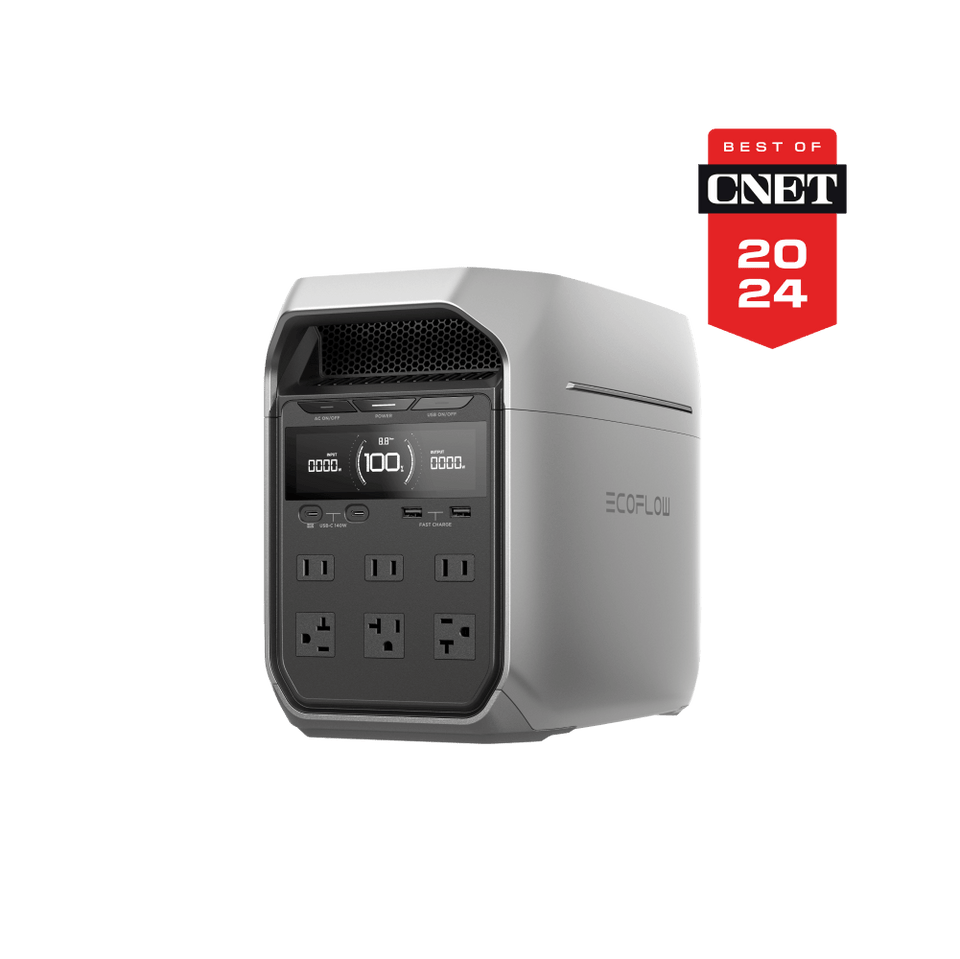
Steep promotional markdowns have turned the EcoFlow DELTA 2 into an impulse buy for campers and budget blackout preppers. Before adding a discounted 1,024Wh station to your cart just because the price looks low, run it through an architectural audit.
Clearance discounts don’t fix mismatched hardware specs. While the DELTA 2 delivers legitimate LiFePO4 durability (3,000+ cycles to 80%) and a stout 1,800W pure sine wave inverter in a 27 lb box, five specific design limitations separate it sharply from newer 2026 contenders like the EcoFlow DELTA 3 Plus and DJI Power 1000.
Where the EcoFlow DELTA 2 Excels (Architectural Strengths)
Credit where due: EcoFlow got the fundamentals right when moving from its older NCM lineup to the DELTA 2 (15.7 × 8.3 × 11.1 in, 27 lbs):
- Strong
1,800WAC Density in a27 lbCarry: Most compact1kWhpacks used to top out at1,000W–1,500W. With1,800Wcontinuous (2,700Wsurge) across six120VAC outlets, the DELTA 2 comfortably runs1,200Wmicrowaves, electric kettles, coffee brewers, and single-zone induction hotplates at campsites without tripping overload shutdown. - No External Power Brick (
1,200WX-Stream AC): An integrated bidirectional inverter lets a standard IEC power cord charge the pack from0–80%in roughly50 minutes(0–100%in~80 minutes). You don’t haul heavy external AC adapter bricks. - Generous Port Variety (15 Total Outputs): Six AC sockets, dual
100WUSB-C PD ports, two18WUSB-A fast-charge ports, two12WUSB-A ports, a12.6V/10A(126W) car socket, and dualDC5521ports let families power laptops, phones, and12Vcoolers simultaneously without extra splitters. 3,000+Cycle LFP Longevity & 5-Year US Warranty: Moving to51.2VLiFePO4 cells backed by a 5-year warranty keeps the battery safe for regular weekend cycling rather than hoarding cycles like legacy NCM stations.- Expandable Smart Extra Battery Port: A single
XT150port lets owners double capacity to2,048Wh(with a DELTA 2 Extra Battery) or reach3,040Wh(with a DELTA Max Extra Battery) later.
Usable Output Reality: Independent lab test numbers for the original DELTA 2 are Not Independently Verified in our third-party source registry. Based on standard inverter conversion overhead, budget roughly 800–900Wh of usable AC energy (78%–88% AC efficiency) or 900–952Wh via direct DC/USB-C outputs (88%–93% DC efficiency).
Five Trade-Offs & Buyer Disqualifications to Check First
Every compact power station involves compromises. On the EcoFlow DELTA 2, these five constraints frequently catch unprepared buyers off guard:
1. Single 500W MPPT Solar Ceiling (11V–60V, 15A)
The DELTA 2 carries a single XT60i solar port capped at 500W, 60V Voc, and 15A. While 500W handles casual weekend camping (~3–4 hours in ideal midday sun, or 5–6+ hours in real partial-sun conditions), it represents half the solar intake of the DELTA 3 Plus (1,000W via dual 500W channels). Even worse, buyers using 18V–20V portable panels hit the 15A current clamp around ~280W–300W unless they pick higher-voltage panels—while still staying safely under 60V Voc. Also note: EcoFlow omits the MC4-to-XT60i solar cable from standard US base packages.
2. ~30 ms EPS Switching — Not a True Workstation UPS
EcoFlow markets emergency backup pass-through, but the DELTA 2’s manual specifies an EPS switchover time around 30 ms and explicitly warns it is not a 0 ms UPS. Why does that matter? Many modern active-PFC desktop power supplies and home NAS servers only hold stable internal DC rails for 16–20 ms. A 30 ms relay blip can hard-reboot your workstation or corrupt an active disk write. Look closely at What Is UPS & EPS Switching?—and step up to the <10 ms HID-equipped DELTA 3 Plus if protecting office computers.
3. Noticeable Fan Noise During 1,200W Fast Charging & High Loads
Pushing 1,200W into or 1,500W+ out of a tight 27 lb housing generates real inverter heat, and the DELTA 2’s small cooling fans spin loudly when taxed—often drawing owner complaints in quiet bedrooms, vans, or tents. While you can cap wall charging down to 200W–400W inside the EcoFlow app to tame noise overnight, newer architectures like the DELTA 3 Plus (~30 dB under 600W) and DJI Power 1000 (~23 dB standard AC charge) run dramatically quieter right out of the box.
4. X-Boost Voltage-Drop Behavior (1,800W -> 2,200W)
X-Boost is frequently misunderstood as “free extra watts.” In reality, EcoFlow achieves ~2,200W X-Boost by intentionally reducing output AC voltage below normal 120V grid spec so inverter amperage stays safe.
- Safe for: Simple resistive heating elements like space heaters, electric kettles, toaster ovens, and basic hotplates (they just heat slightly slower).
- Risky / Incompatible with: Sensitive electronics, microwaves with digital boards, inductive motor compressors, or variable-speed power tools that expect steady
110V–120V. Understand the mechanics in Continuous Output vs. Surge Output and toggle X-Boost off in the app for household electronics.
5. App/Firmware Friction & Slow Native Car Charging
Without an aftermarket 400W–800W DC-DC alternator charger, the included 12V car socket cable pulls only ~100W (8A at 12.6V), requiring ~10–12 hours of driving for a full fill. Additionally, because the DELTA 2 relies heavily on the EcoFlow app to customize AC charge wattage, toggle X-Boost, or update firmware, occasional Wi-Fi pairing hiccups annoy buyers expecting completely offline push-button control.
Head-to-Head: DELTA 2 vs. DELTA 3 Plus vs. 1kWh Rivals
| Decision Metric | EcoFlow DELTA 2 | EcoFlow DELTA 3 Plus | DJI Power 1000 (V1 US) | BLUETTI AC70 |
|---|---|---|---|---|
| Capacity & Cycle Rating | 1,024Wh (3,000+ cycles) |
1,024Wh (4,000 cycles) |
1,024Wh (4,000 cycles to >=70%) |
768Wh (3,000+ cycles) |
| Continuous / Surge AC | 1,800W / 2,700W |
1,800W / 3,600W |
2,200W / 4,400W |
1,000W / 2,000W Power Lifting |
| Solar Input Ceiling | 500W (11–60V single MPPT) |
1,000W (11–60V dual MPPT) |
800W (requires external SDC adapters) |
500W (12–58V MPPT) |
| UPS / EPS Transfer | ~30 ms EPS |
<10 ms UPS + USB HID |
<=20 ms EPS |
<=20 ms UPS |
| USB-C PD Max | 2 × 100W |
2 × 140W PD 3.1 |
2 × 140W PD 3.1 |
2 × 100W |
| Acoustic Floor | Audible under fast charge/load | ~30 dB (<600W) |
23 dB (standard charge) |
Quiet mode in Bluetooth app |
| Weight & Typical Street | 27.0 lbs / Clearance dependent |
27.6 lbs / ~$599–$699 |
28.7 lbs / ~$449–$699 |
22.5 lbs / ~$349–$449 |
Buyer Disqualification Checklist: Pass or Buy?
Skip the EcoFlow DELTA 2 If:
- You are backing up a desktop PC, router/modem + NAS server and want
<10 msUPS insurance—choose the EcoFlow DELTA 3 Plus. - You want whisper-quiet van sleeping or indoor creator power—the DJI Power 1000 beats it on noise and
2,200Winverter ceiling (factoring in DJI’s SDC accessory costs). - You spend $450 or less and mainly run
<=1,000WCPAPs, laptops, and camp coolers—the BLUETTI AC70 carries third-party measured efficiency (705–730.6 Whusable AC) at lower cost. - You need multi-day off-grid solar replenishment above
500W.
Buy the EcoFlow DELTA 2 If:
- You find a clean authorized retailer clearance deal around
$429–$499($150+cheaper than the DELTA 3 Plus). - Your primary needs are car camping cooking (
<=1,800W), tailgate appliances, and brief storm outages where six AC outlets and100WUSB-C ports beat lower-wattage700Whstations. - You don’t need true
<10 msPC UPS protection and plan to recharge mostly from wall outlets or200W–400Wportable solar panels.
Still narrowing down your exact wattage and capacity tier? Walk through How to Choose a Portable Power Station or filter by real-world budget in our Best 1,000Wh Portable Power Stations guide.
Models Discussed in This Article
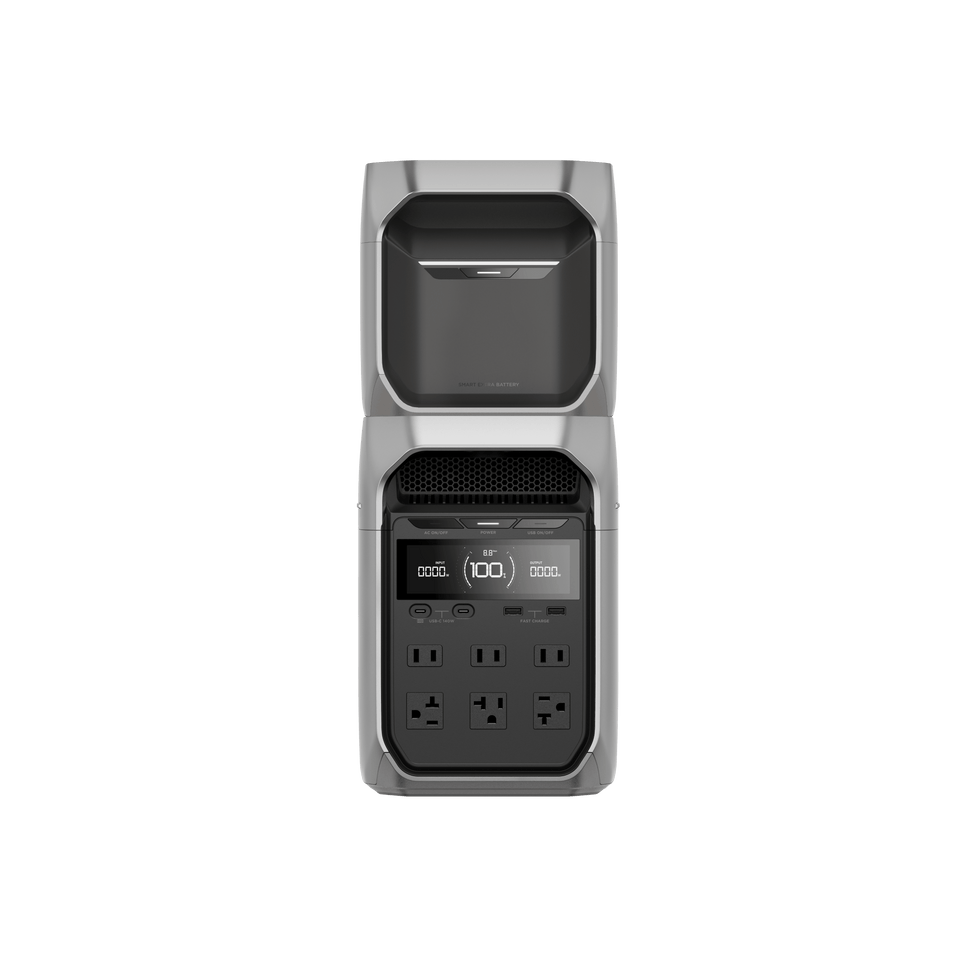
EcoFlow DELTA 3 Plus
Packs 1,000W dual-MPPT solar charging, sub-1-hour AC replenishment, and a sub-10 ms HID-capable UPS into a 27.6 lb chassis, making it more versatile than non-Plus 1kWh units.
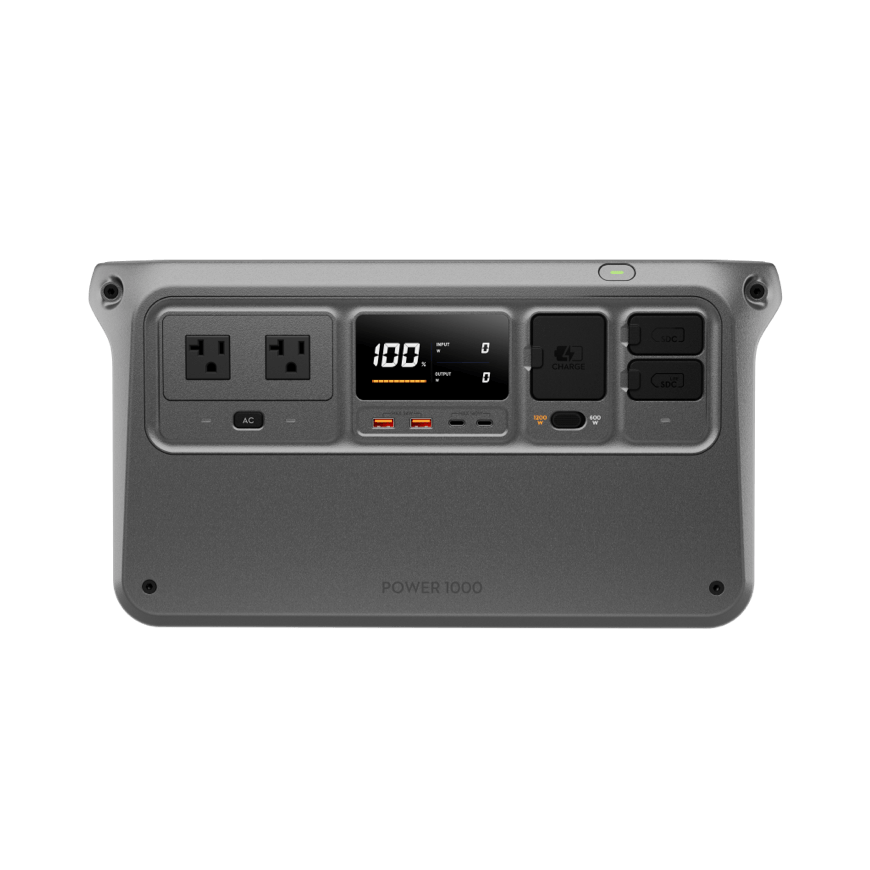
DJI Power 1000
Exceptional 2,200W inverter density and 23 dB acoustic refinement in a 28.7 lb frame, though solar charging and 12V car sockets require optional DJI SDC adapters.

BLUETTI AC70
With 705–730.6 Wh of independently measured usable AC output from a 768Wh battery and 500W solar input at ~$399–$449 street price, the AC70 punches above typical 500Wh–700Wh units.
Frequently Asked Questions
Is EcoFlow DELTA 2 safe to use as a desktop PC or NAS UPS?+
Not for mission-critical desktops or servers. EcoFlow specifies a ~30 ms EPS switchover time on the DELTA 2 and explicitly notes it does not support 0 ms switching—sensitive PC power supplies can reboot during outages. If you need true workstation/NAS protection, step up to the EcoFlow DELTA 3 Plus (<10 ms with USB HID support).
Can EcoFlow X-Boost damage electronics plugged into the DELTA 2?+
X-Boost pushes output up to ~2,200W by deliberately lowering AC voltage so current stays within the 1,800W inverter's safe thermal ceiling. That works smoothly on simple resistive heating elements (space heaters, electric kettles, single-burner induction plates), but under-voltage can malfunction or damage voltage-sensitive electronics, variable-speed motors, and compressors. Leave X-Boost off unless powering purely resistive gear.
Why is the EcoFlow DELTA 2 loud when wall charging?+
Packing a 1,200W internal AC-to-DC bidirectional inverter into a compact 27 lb chassis creates dense heat during 50-minute 0–80% fast charging, forcing internal cooling fans to spin aggressively. Using the EcoFlow app to throttle AC charging down to 200W–400W dramatically reduces fan noise for bedroom or camper use.
When does buying the original DELTA 2 make sense over the DELTA 3 Plus?+
Only when clearance pricing creates a meaningful $150+ gap (typically when the DELTA 2 drops near $429–$499 vs. ~$599–$699 for the DELTA 3 Plus), and you don't need >500W solar, sub-10ms UPS switching, or 140W USB-C PD 3.1 ports.
Sources & Technical References
- View Source →[1]Manufacturer SpecificationEcoFlow US OfficialVerified 2026-11-25EcoFlow DELTA 2 Portable Power Station Specifications
1,024Wh LFP, 1,800W continuous / 2,700W surge AC output, X-Boost resistive mode, 500W (11-60V, 15A) solar input, and Smart Extra Battery expansion.
- View Source →[2]Manufacturer SpecificationEcoFlow US OfficialVerified 2026-11-24EcoFlow DELTA 3 Plus Official Specifications
1,024Wh LFP, 1,800W continuous AC, 1,000W dual 500W MPPT solar, <10ms UPS, 1,500W X-Stream AC charging.
- View Source →[3]Manufacturer SpecificationDJI OfficialVerified 2026-11-24DJI Power 1000 Specifications & Official Overview
1,024Wh LFP, 2,200W continuous AC (V1 US model; V2 increases to 2,600W), dual 140W USB-C, 800W solar via MPPT adapter.
- View Source →[4]Manufacturer SpecificationBLUETTI US OfficialVerified 2026-11-24BLUETTI AC70 Portable Power Station Official Specifications
768Wh LFP, 1,000W continuous AC, 2,000W Power Lifting resistive mode, 500W MPPT solar (12-58V, 10A), 950W Turbo AC charge.