Best 1000Wh Portable Power Stations (2026): Compact Power & Fast Charging
Compare the best 1,000Wh-class portable power stations, weighing EcoFlow DELTA 3 Plus solar/UPS speed against DJI Power 1000 2,200W acoustics and Pecron E1500LFP.
In the 1,000Wh class, the EcoFlow DELTA 3 Plus (1,024Wh, 1,800W AC) is the most balanced all-rounder thanks to 1,000W dual-MPPT solar charging, six AC outlets, and <10 ms HID UPS support. Choose the DJI Power 1000 (1,024Wh, 2,200W AC) if quiet 23 dB operation and higher inverter wattage matter more than built-in solar ports, or step up to the 1,536Wh Pecron E1500LFP (~$599 street) for maximum capacity and 12V/30A DC output under $700.
Recommended Models for This Category
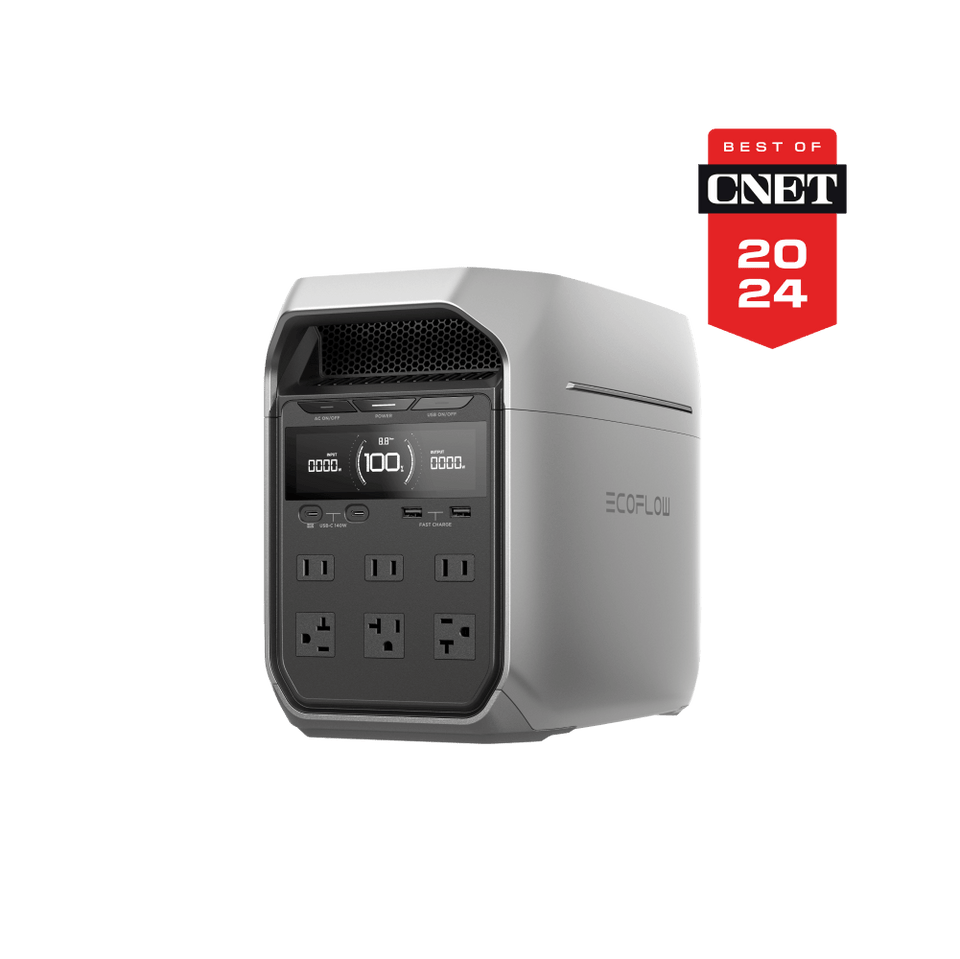
EcoFlow DELTA 3 Plus
Packs 1,000W dual-MPPT solar charging, sub-1-hour AC replenishment, and a sub-10 ms HID-capable UPS into a 27.6 lb chassis, making it more versatile than non-Plus 1kWh units.
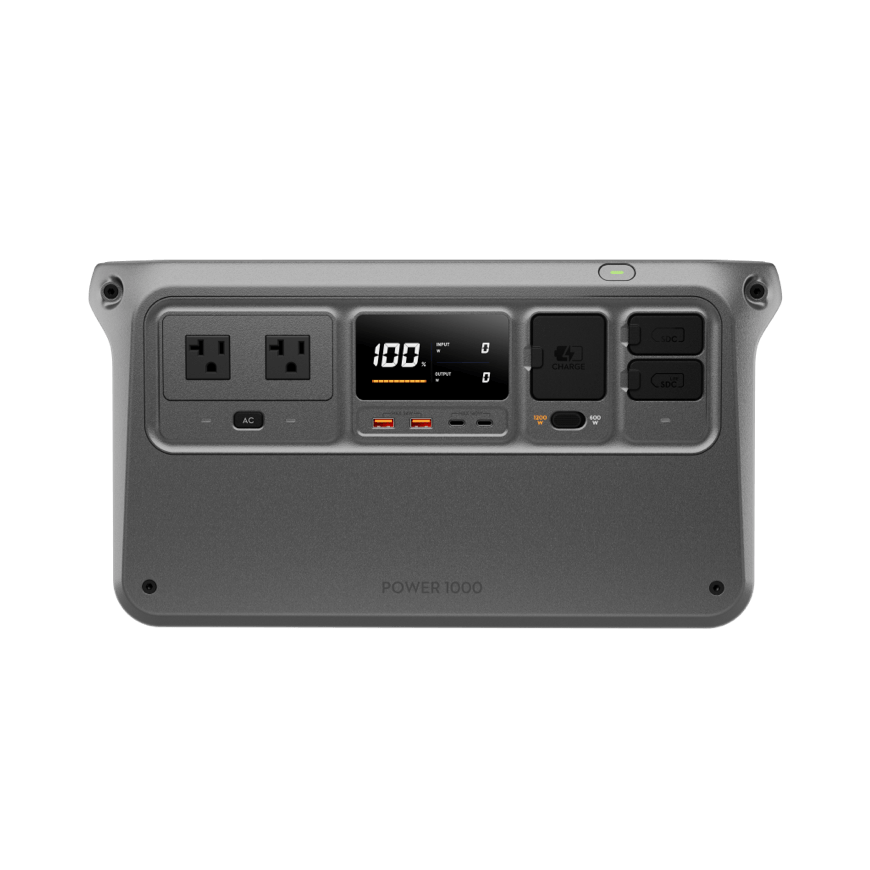
DJI Power 1000
Exceptional 2,200W inverter density and 23 dB acoustic refinement in a 28.7 lb frame, though solar charging and 12V car sockets require optional DJI SDC adapters.
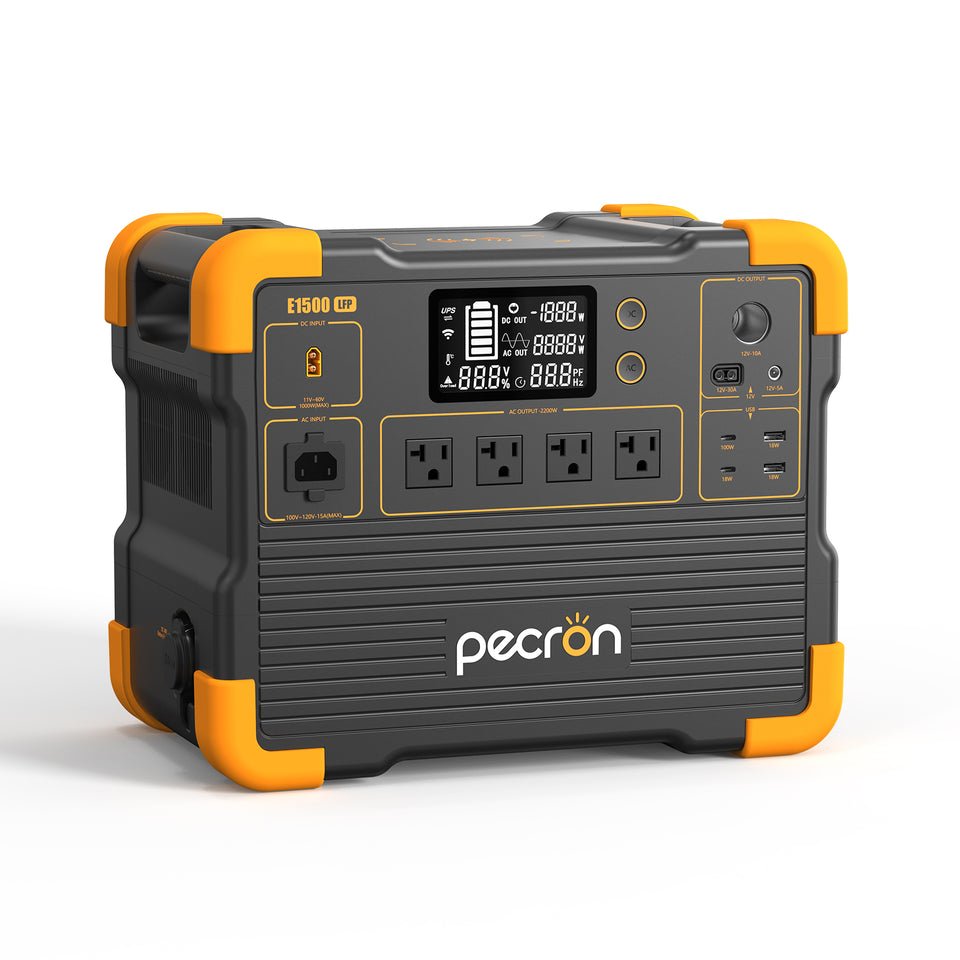
Pecron E1500LFP
Delivers 1,536Wh, a 2,200W continuous inverter, and a rare 12V/30A XT60 DC port around $599 street price, though its asymmetric 32–95V GX16MF solar input requires careful panel voltage matching.
Side-by-Side Specification Table
| Model | Capacity | Cont. / Surge AC | Solar Max | Weight | UPS | Street ($/Wh) |
|---|---|---|---|---|---|---|
| EcoFlow DELTA 3 Plus | 1,024 Wh | 1,800W / 3,600W | 1,000 W | 27.6 lbs | <10 ms (manufacturer rated) | $699 ($0.68) |
| DJI Power 1000 | 1,024 Wh | 2,200W / 4,400W | 800 W | 28.7 lbs | <=20 ms (V1 rated <=20 ms; V2 rated ~10 ms) | $549 ($0.54) |
| Pecron E1500LFP | 1,536 Wh | 2,200W / 4,400W | 800 W | 39.7 lbs | 8–20 ms (manufacturer rated) | $599 ($0.39) |
Selection Criteria for This Guide
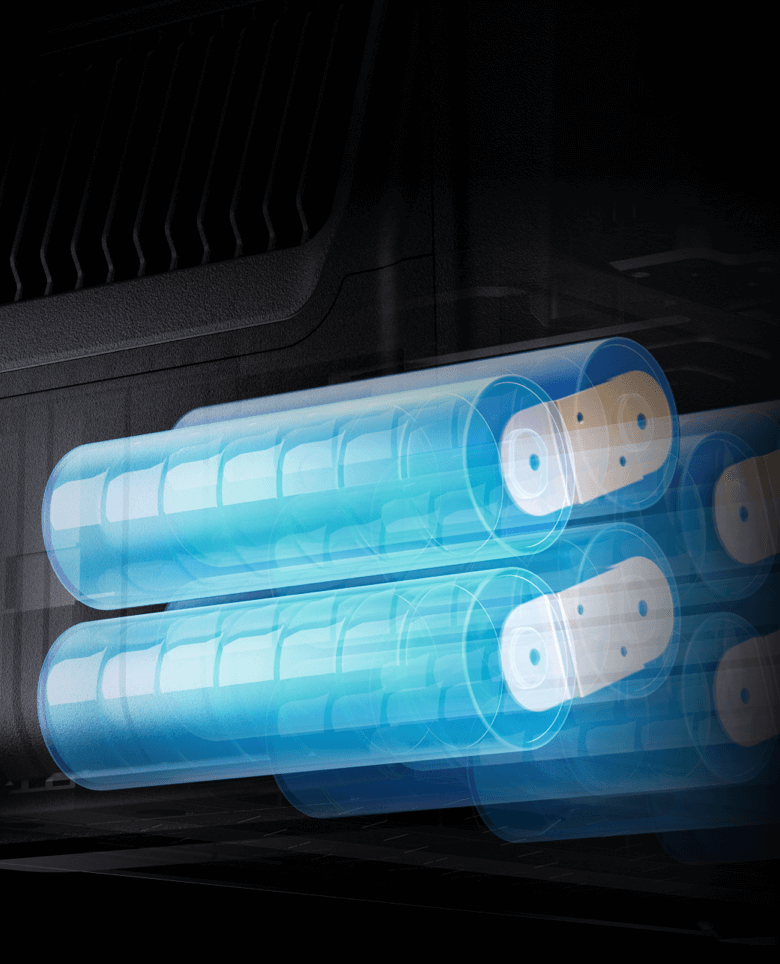
- 1,024Wh–1,536Wh LiFePO4 capacity balancing weekend outage utility with sub-40 lb single-hand portability
- Continuous AC inverter capability (1,800W–2,200W) and USB-C PD 3.1 (140W) output
- Charging flexibility across AC wall speed (56–90 mins), solar MPPT input, and noise dB acoustics
- Port density, <10 ms vs <=20 ms UPS response, and expansion battery compatibility

Selection Criteria & Evaluation Priorities
The 1,000Wh class (~1kWh) has replaced 500Wh units as the mainstream starting point for US shoppers because modern LFP packaging delivers 1,800W–2,200W inverters under 30 lbs. That wattage lets a compact suitcase power almost any single 120V/15A household plug-in appliance—electric skillets, hair dryers, Sump pumps (within surge limits), or coffee makers—while keeping carry weight manageable.
Individual Model Summaries
EcoFlow DELTA 3 Plus — Best All-Around 1,024Wh Station (~$699 Street)
Weighing 27.6 lbs, the EcoFlow DELTA 3 Plus combines 1,024Wh LFP storage (4,000 cycles to 80%) and 1,800W continuous AC (3,600W surge) with six AC outlets, dual 140W USB-C PD 3.1 ports, 1,500W X-Stream AC charging (~56 mins), and 1,000W dual-MPPT solar (11V–60V Voc). Its <10 ms UPS includes USB HID communication for graceful PC/NAS shutdowns, and capacity expands up to 5,120Wh.
DJI Power 1000 — Best Acoustics & 2,200W AC Density (~$549 Street)
Built for creators and quiet indoor spaces, the DJI Power 1000 (28.7 lbs) delivers a superior 2,200W continuous AC inverter (4,400W surge)—and 2,600W on the V2 variant—at a manufacturer-rated 23 dB during standard 600W recharging. It includes dual 140W USB-C ports and direct SDC drone fast charging, though it provides only two AC outlets and relies on optional SDC adapters for solar (up to 800W), 12V car plugs, and V1 Wi-Fi app control.
Pecron E1500LFP — 1.5kWh Step-Up at 1kWh Street Pricing (~$599 Street)
Although technically a 1,536Wh unit (39.7 lbs), the Pecron E1500LFP competes directly against 1kWh models on price (~$599 street). Buyers gain 50% more battery capacity, a 2,200W inverter, a rare 12V/30A XT60 DC terminal, and expansion to 7,680Wh, while accepting heavier carry weight and a 32V–95V primary solar minimum voltage that excludes single 18V portable panels on the 700W port.
Performance & Specification Analysis
- Continuous Output & Surge Headroom: Both DJI Power 1000 and Pecron E1500LFP reach
2,200Wcontinuous (4,400Wsurge) compared to1,800W(3,600Wsurge) on the DELTA 3 Plus. While EcoFlow’s X-Boost handles simple resistive heaters higher by dropping voltage, native2,200Wheadroom handles simultaneous kitchen or power-tool loads cleanly. - Out-of-the-Box Port Ergonomics: Here the DELTA 3 Plus leads decisively—six AC sockets,
12.6V/10Acar socket,DC5521outputs, and dual nativeXT60isolar ports work immediately with standard cables. DJI Power 1000 requires budgeting extra for SDC solar and 12V accessories. - Cold-Weather & UPS Nuances: Both EcoFlow DELTA 3 Plus and DJI Power 1000 specify a
14°F(-10°C) minimum discharge floor (whereas Pecron E1500LFP discharges down to-4°F). For computer backup, DELTA 3 Plus’s<10 msHID UPS beats DJI Power 1000 V1’s<=20 msrating (note DJI V2 tightens to~10 ms).
Advantages & Disadvantages
- Advantages: Compact
27–40 lbfootprint fits apartment closets and car trunks; fast ~1-hour wall top-ups;140WUSB-C PD ports eliminate laptop bricks; expandable battery options exist across all three ecosystems. - Disadvantages:
1,024Whprovides only ~5–6 hours on an intermittent150Wrefrigerator load without extra batteries or solar;60Vsolar limits on DELTA 3 Plus restrict high-voltage array strings; zero independent lab usable-AC-Wh data is currently recorded in our registry for these three specific SKUs (runtime numbers use standard78%–88%engineering estimates).
Buying Considerations
Before choosing a 1kWh unit, calculate your exact runtime expectations using our Battery Runtime Estimator. If overnight refrigerator autonomy is critical, either plan on adding an expansion battery later or step straight up to the 2,000Wh class (BLUETTI AC200L or Jackery Explorer 2000 v2). Conversely, if you want a whisper-quiet desktop UPS or fast 1,000W solar recharge for weekend trips, a 1,024Wh station hits the portability sweet spot.
Alternatives
- Under-$500 High-Efficiency Alternative: The
768WhBLUETTI AC70 ($429street) delivers1,000WAC and705–730.59 Whof independently verified AC output if you don’t need1,800W+inverter headroom. - Lightweight 2kWh Alternative: The Jackery Explorer 2000 v2 (
~$999street) doubles battery capacity to2,042Whwhile keeping weight at39.5 lbs.
Frequently Asked Questions
How long will a 1,024Wh power station run a residential refrigerator?+
Assuming a modern refrigerator draws roughly 150W average over its compressor duty cycle and accounting for 78%–88% AC inverter conversion efficiency (799–901 Wh usable AC), a 1,024Wh station typically runs roughly 5.0–6.1 hours on a single charge without solar top-ups.
What is the main catch with the DJI Power 1000 compared to the EcoFlow DELTA 3 Plus?+
The DJI Power 1000 offers higher continuous AC output (2,200W vs 1,800W) and ultra-quiet 23 dB charging, but it lacks built-in XT60 solar ports and a 12V car socket—requiring separate DJI SDC adapter accessories.
Can 1,000Wh stations be expanded later if I need overnight runtime?+
Yes. All three picks support external expansion: EcoFlow DELTA 3 Plus scales up to 5,120Wh, DJI Power 1000 scales up to 11,264Wh via Expansion Battery 2000 packs, and Pecron E1500LFP scales up to 7,680Wh via EP3000-48V packs.
Sources & Technical References
- View Source →[1]Manufacturer SpecificationEcoFlow US OfficialVerified 2026-11-24EcoFlow DELTA 3 Plus Official Specifications
1,024Wh LFP, 1,800W continuous AC, 1,000W dual 500W MPPT solar, <10ms UPS, 1,500W X-Stream AC charging.
- View Source →[2]Manufacturer SpecificationDJI OfficialVerified 2026-11-24DJI Power 1000 Specifications & Official Overview
1,024Wh LFP, 2,200W continuous AC (V1 US model; V2 increases to 2,600W), dual 140W USB-C, 800W solar via MPPT adapter.
- View Source →[3]Manufacturer SpecificationPecron US OfficialVerified 2026-11-24Pecron E1500LFP Official Specifications
1,536Wh LFP, 2,200W AC, 800W dual-port solar (GX16MF 32-95V 700W + DC5521 100W), EP3000-48V expansion support.
- View Source →[4]Government Research ResourceNational Renewable Energy Laboratory (NREL)Verified 2026-11-24PVWatts & US Peak Sun Hours Reference Data
Documents regional peak sun hours and real-world photovoltaic derating factors (ambient heat, angle, shading, controller loss).