OUPES Mega 2 Review (2026): 2,048Wh Specs, Surge Headroom & Trade-Offs
2026 US review of the OUPES Mega 2: 2,048Wh LiFePO4, 2,500W continuous AC, 2,100W solar input, and honest trade-offs vs. BLUETTI AC200L and Jackery 2000 v2.
The OUPES Mega 2 delivers 2,048Wh of LiFePO4 capacity, 2,500W continuous AC output (5,400W surge), and up to 2,100W high-voltage solar charging (18V–140V MPPT) around $900–$1,050 street pricing. Expect roughly 1,600–1,800Wh of usable AC energy (78%–88% efficiency) or 1,800–1,900Wh via DC. It beats Tier-1 rivals on solar wattage per dollar, though BLUETTI AC200L and Jackery 2000 v2 offer stronger retail dealer maturity and verified third-party bench tests.

Value-tier power stations rarely break into mainstream buyer shortlists unless their spec sheet creates an obvious pricing dislocation. That is exactly why the OUPES Mega 2 draws intense scrutiny in 2026: on paper, it packs a 2,048Wh LiFePO4 battery, a 2,500W continuous pure sine wave inverter (5,400W surge), a 30A TT-30R RV port, and an unusually generous 2,100W high-voltage solar input into a sub-50-pound frame that routinely sells well below $1,050 during promotions.
Early buyer confusion hasn’t helped—older aggregator listings frequently mangled its specs, and OUPES has rolled out minor chassis revisions (Mega 2 V1 vs. Mega 2 V2) that altered weight and USB-C PD ratings. Stepping back from promotional claims, this technical review evaluates the OUPES Mega 2 strictly against verified manufacturer specifications and its closest Tier-1 competitors: the BLUETTI AC200L and Jackery Explorer 2000 v2.
Core Specifications vs. Tier-1 2kWh Rivals
On hardware metrics alone, OUPES designed the Mega 2 to out-spec established 2kWh stations on inverter ceiling and solar intake while maintaining an expandable ecosystem.
| Specification | OUPES Mega 2 | BLUETTI AC200L | Jackery Explorer 2000 v2 |
|---|---|---|---|
| Rated Capacity | 2,048Wh LiFePO4 | 2,048Wh LiFePO4 | 2,042Wh LiFePO4 |
| Cycle Life Rating | 3,500+ cycles to 80% | 3,000+ cycles to 80% | 4,000 cycles to >=70% |
| Continuous AC Output | 2,500W (120V) | 2,400W (120V) | 2,200W (120V) |
| Peak / Surge Rating | 5,400W | 3,600W (Power Lifting*) | 4,400W |
| Max Solar Input | 2,100W (18V–140V MPPT, 15A) | 1,200W (12V–145V, 15A) | 400W (16V–60V, dual DC8020) |
| Max AC Wall Charging | 1,600W (800W/1,600W selectable) | 2,400W Turbo AC | 1,800W Emergency Super Charge |
| RV / High-Amp Ports | TT-30R + 12V/30A Anderson | TT-30R + 48V/8A DC | Standard 5-20R outlets only |
| UPS / EPS Switchover | <=20 ms | <=20 ms | <=20 ms |
| Max Expansion | Up to 10,240Wh (B2 packs) | Up to 8,192Wh (B300K/B210) | Non-expandable |
| Chassis Weight | ~48.5 lbs (V1) / ~42.7 lbs (V2) | 62.4 lbs (no wheels) | 39.5 lbs (Cell-to-Body) |
| US Warranty | 5 Years (+1 yr registration) | 5 Years | 5 Years (3+2 yr registration) |
*Note: BLUETTI’s 3,600W Power Lifting mode lowers voltage for resistive heating loads only, whereas OUPES’s 5,400W rating and Jackery’s 4,400W rating reflect brief inductive startup surge ceilings.
Inverter Headroom vs. Real-World Usable Energy
A 2,500W continuous inverter paired with a 5,400W peak surge spec gives the OUPES Mega 2 noticeable breathing room on 120V circuits. Standard 15A and 20A household branch appliances—full-size refrigerators, 1,500W microwaves, portable induction burners, sump pumps, and circular saws—stay comfortably under the 2,500W ceiling without forcing you to turn off other small loads simultaneously. Even a 13,500 BTU RV roof air conditioner without a soft-start kit benefits from the higher surge headroom compared to 2,000W–2,200W units, though hard-start LRA spikes vary widely by compressor age and ambient heat.
However, inverter size and battery efficiency always exist in tension. Across modern LiFePO4 portable power stations, converting DC battery energy into 120V pure sine wave AC incurs inverter switching overhead, cooling fan draw, and BMS reserve cutoffs. Real-world AC delivery on 2kWh LFP stations generally lands between 78% and 88% of rated capacity—meaning the Mega 2’s 2,048Wh pack typically yields 1,600Wh to 1,800Wh of usable AC power, or roughly 1,800Wh to 1,900Wh (88%–93%) when powering 12V DC and USB-C devices directly.
Here is where Tier-1 rivals hold an important evidentiary edge: independent labs have benchmarked them under controlled loads. CNET Labs tested the BLUETTI AC200L at 77.76% round-trip efficiency and logged over 29 hours on a continuous refrigerator load, while OutdoorGearLab and TechRadar documented the Jackery Explorer 2000 v2 recharging at ~817 Wh/hr and powering heavy kitchen appliances reliably. By contrast, no standardized CNET or OutdoorGearLab bench dataset is verified in our source registry for the OUPES Mega 2, so buyers are relying on manufacturer datasheets and owner discharge logs rather than third-party lab verification. For deeper math on why nameplate watt-hours shrink under AC loads, check our guide on understanding power station efficiency.
The 2,100W Solar Advantage (and MPPT Voltage Rules)
Where the OUPES Mega 2 cleanly separates itself from almost every sub-$1,200 competitor is its solar charge controller. Many midsize stations cap solar intake at 400W to 1,000W, stranding large battery banks during winter outages or overcast days.
- OUPES Mega 2 (2,100W max): Accepts 12V–150VDC input with an 18V–140V MPPT operating window at up to 15A. That wide voltage ceiling lets you wire three or four rigid 400W residential-style solar panels in series (staying safely beneath the voltage cap) without buying expensive parallel combiner boxes.
- Jackery Explorer 2000 v2 (400W max): Caps solar at 400W across dual DC8020 ports (16V–60V), prioritizing trunk weight over fast off-grid solar replenishment.
- BLUETTI AC200L (1,200W max): Offers a strong 12V–145V high-voltage MPPT window, matching OUPES’s series-string flexibility, though at 900W lower maximum wattage.
With 2,100W of solar input under ideal noon conditions, the Mega 2 can replenish its 2,048Wh base pack in roughly 1.3 to 1.8 hours—or combine 1,600W AC charging and solar simultaneously for ~3,700W hybrid recovery in under 45 minutes. Always calculate cold-weather Open-Circuit Voltage (Voc) rise before wiring panels in series: solar panel voltage climbs sharply on freezing mornings, and exceeding the 150V maximum input limit will permanently damage the MPPT controller. Read our solar input limits and MPPT guide before finalizing panel strings.
Ports, <20ms EPS Switching & Weight Ergonomics
OUPES configured the Mega 2 for emergency home circuits and RV shore hookups rather than minimalist tent camping:
- AC & RV Output Bay: Four 120V/20A NEMA 5-20R outlets plus one 120V/30A NEMA TT-30R outlet allow direct RV trailer plug-in without dogbone adapters.
- DC & USB Ports: Includes a 12V/30A Anderson terminal (ideal for DC fuse blocks, ham radios, or 12V diesel heaters), a regulated 12V/10A car socket, USB-A ports, and dual USB-C PD ports (100W per port on V1; upgraded to 140W per port on V2).
- <=20 ms EPS Pass-Through: The Mega 2 automatically transfers grid pass-through loads within 20 milliseconds during a blackout. That is fast enough to keep refrigerators, CPAP machines, Sump pumps, and most modern desktop switching power supplies online, though sensitive workstation servers or NAS arrays requiring sub-10ms protection are better served by the EcoFlow DELTA 3 Plus (<10ms with USB HID signaling).
- Portability & Acoustics: At roughly 48.5 lbs (early Mega 2) or ~42.7 lbs (Mega 2 V2), the Mega 2 carries dramatically easier than the wheel-less 62.4 lb BLUETTI AC200L, though it still lacks integrated luggage wheels and feels noticeably heavier than Jackery’s 39.5 lb Cell-to-Body Explorer 2000 v2. Under light loads and gentle 800W AC charging, cooling fans stay subdued; pushing full 1,600W AC charge or 2,000W+ loads naturally ramps fan acoustics higher.
Warranty, Firmware Polish & Dealer Reality
Price savings on value brands usually show up in software refinement and retail infrastructure rather than battery cells. OUPES backs the Mega 2 with a 5-year warranty (frequently promoted as 5+1 years upon online registration), matching Tier-1 coverage periods on paper. However, three practical distinctions separate OUPES from BLUETTI, Jackery, and EcoFlow:
- App Telemetry & Polish: While the OUPES Wi-Fi/Bluetooth app provides outlet switching, battery state-of-charge tracking, and AC charge-rate throttling (800W vs. 1,600W), owner feedback regularly notes simpler scheduling logic and occasional telemetry lag compared to EcoFlow or Anker SOLIX apps.
- Retail & Parts Ecosystem: Jackery and BLUETTI maintain wide US retail availability across big-box hardware chains and established service centers, simplifying exchanges or accessory sourcing. OUPES operates predominantly direct-to-consumer and via online marketplaces.
- 120V-Only Ceiling: Even if you stack four B2 packs up to 10,240Wh, output stays strictly 120V single-phase. There is no 240V split-phase bonding box—and any connection to residential breaker circuits must go through a code-compliant manual transfer switch or inlet installed by a licensed electrician under NFPA 70 (NEC).
Verdict: Where the OUPES Mega 2 Wins and Loses
The OUPES Mega 2 makes the strongest case for buyers who measure value in usable 120V surge watts and solar MPPT ceiling per dollar. At street prices often hovering between $899 and $1,050, getting 2,048Wh LFP, 2,500W continuous output, a TT-30R port, and 2,100W high-voltage solar input undercuts nearly every comparable Tier-1 bundle—especially if you plan to add affordable B2 batteries later.
Choose the BLUETTI AC200L instead if you want CNET-verified efficiency, a 48V/8A DC RV port, and broader US retail support. Choose the Jackery Explorer 2000 v2 if carrying a 39.5 lb compact box upstairs matters far more than solar charging speed or battery expansion. For deeper head-to-head comparisons in this capacity tier, see our BLUETTI AC200L vs. Jackery Explorer 2000 v2 breakdown or browse our best 2,000Wh power stations guide.
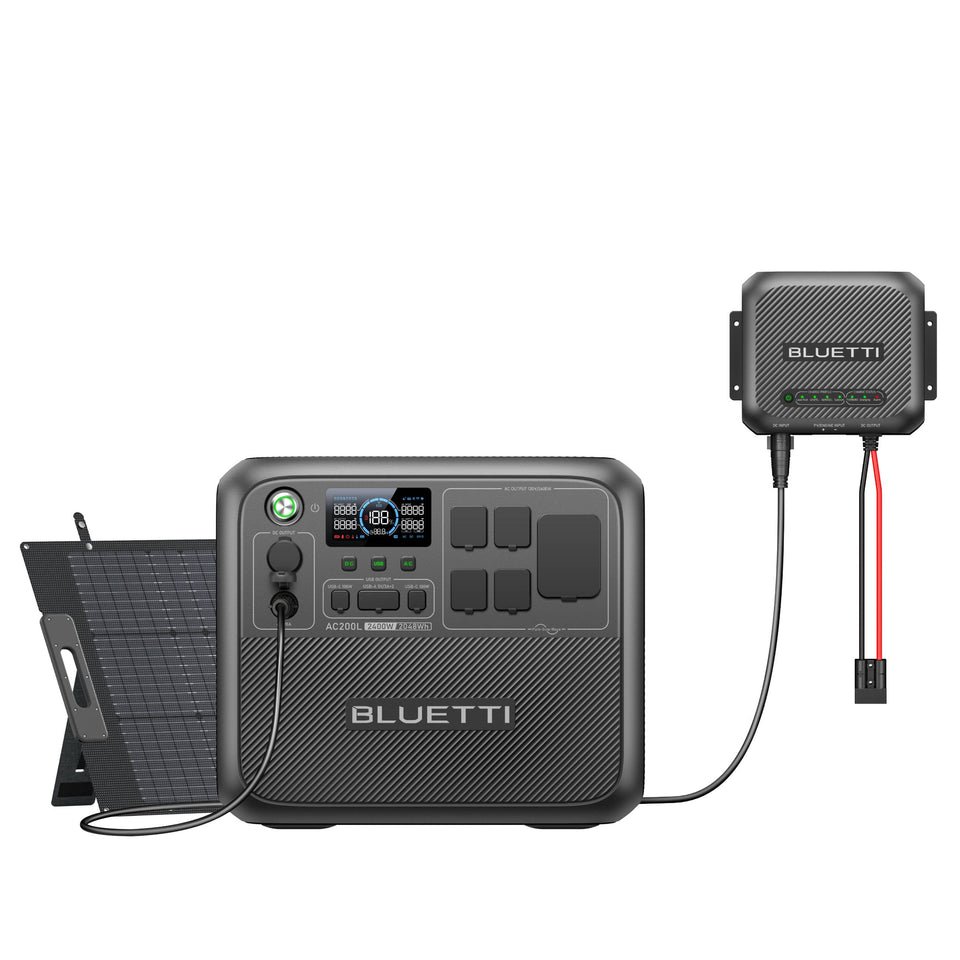
Models Discussed in This Article
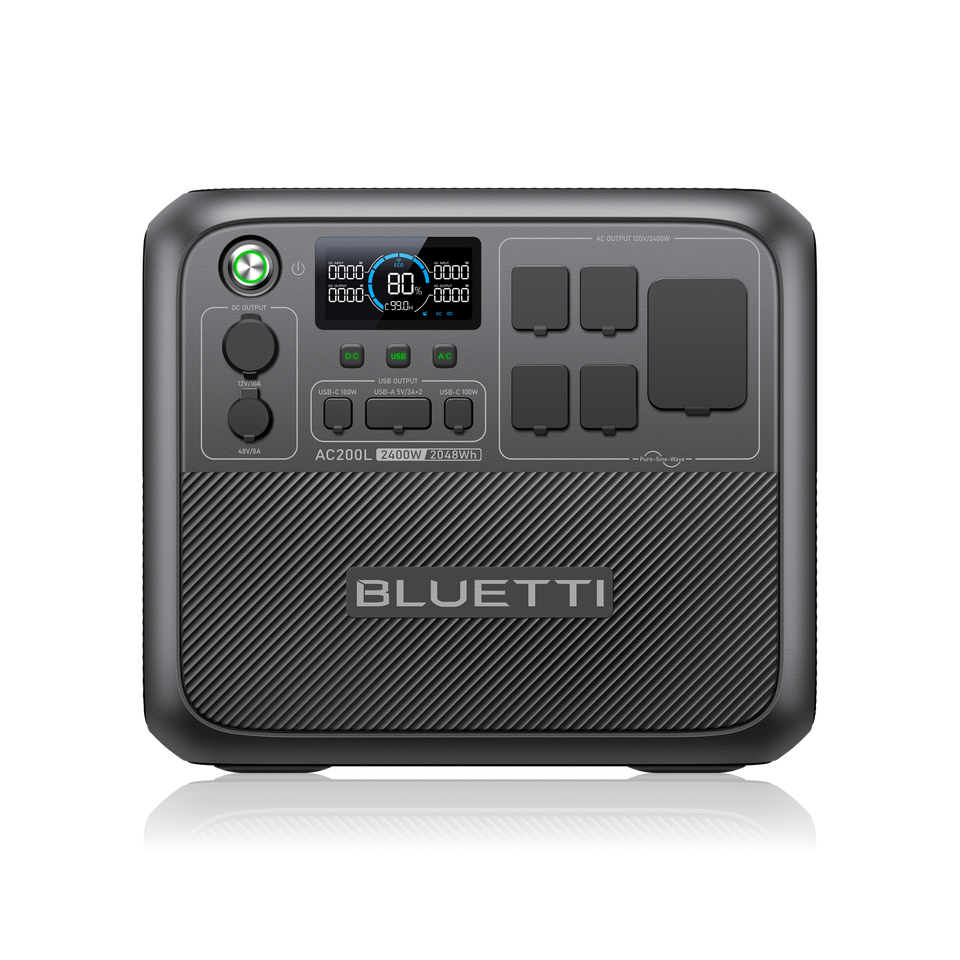
BLUETTI AC200L
Combines a high-efficiency 2,048Wh expandable platform, 1,200W high-voltage solar input (12–145V), and dedicated 30A TT-30R + 48V DC RV outputs at strong street pricing, trading away light weight and built-in wheels.
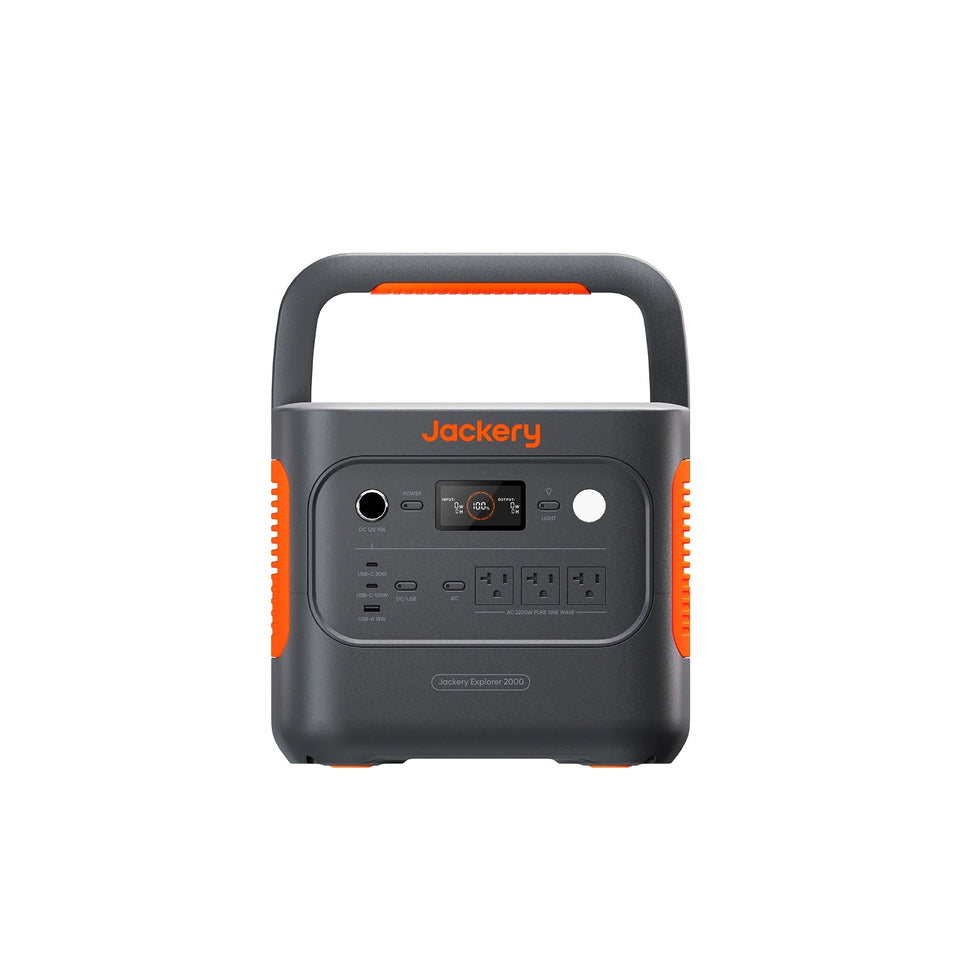
Jackery Explorer 2000 v2
A breakthrough 39.5 lb chassis makes 2,042Wh genuinely single-hand portable for camping and apartments, provided you accept its 400W solar recharge ceiling and non-expandable battery.
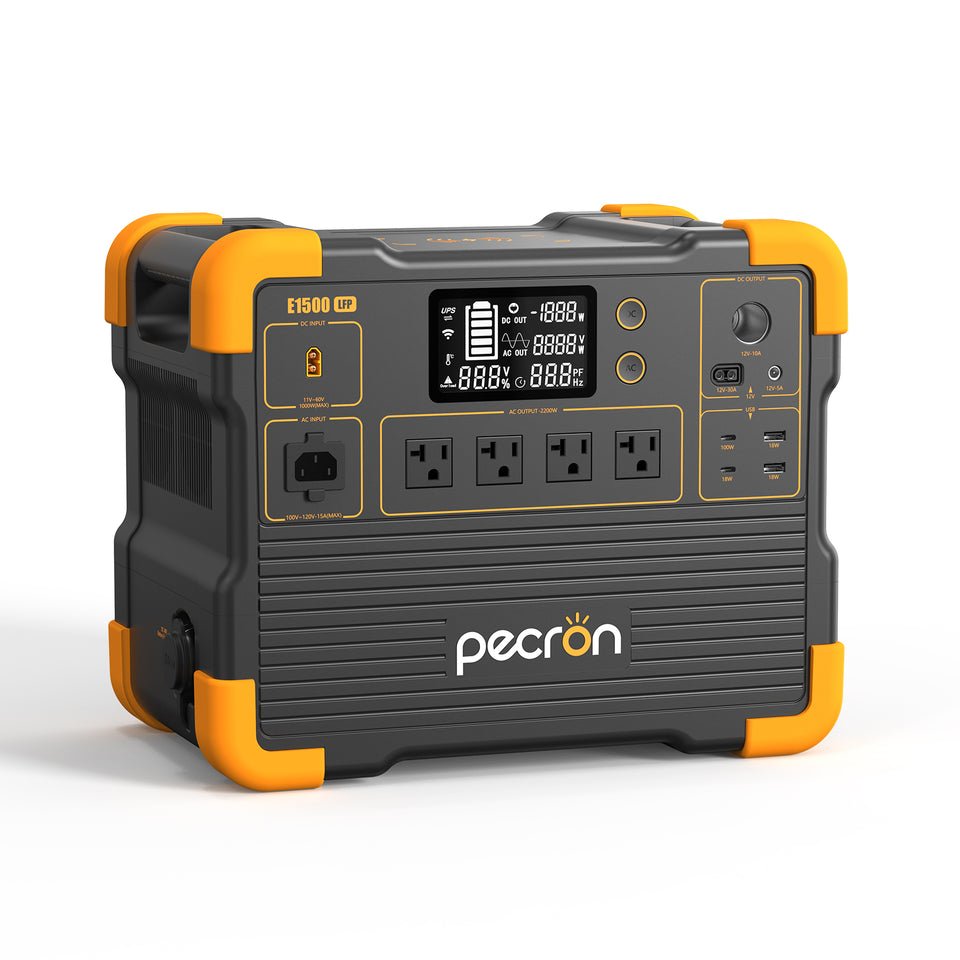
Pecron E1500LFP
Delivers 1,536Wh, a 2,200W continuous inverter, and a rare 12V/30A XT60 DC port around $599 street price, though its asymmetric 32–95V GX16MF solar input requires careful panel voltage matching.
Frequently Asked Questions
What is the real usable battery capacity of the OUPES Mega 2?+
Although the OUPES Mega 2 carries a 2,048Wh nominal LiFePO4 battery pack, inverter conversion, BMS reserve, and standby draw mean realistic AC usable output typically falls in the 78%–88% range (about 1,600Wh to 1,800Wh). Running 12V or USB-C DC loads avoids AC inverter overhead and recovers roughly 88%–93% (1,800Wh–1,900Wh).
Can the OUPES Mega 2 power a 240V well pump or electric clothes dryer?+
No. The OUPES Mega 2 is strictly a 120V single-phase portable power station, even when expanded with B2 batteries. Running 240V split-phase appliances requires a native dual-voltage system such as the Anker SOLIX F3800, EcoFlow DELTA Pro Ultra, or Jackery Explorer 5000 Plus.
What changed between the original OUPES Mega 2 and the Mega 2 V2 revision?+
OUPES updated the Mega 2 hardware revision with a lighter chassis (dropping roughly from 48.5 lbs on early units to about 42.7 lbs on V2 SKUs) and upgraded USB-C Power Delivery from dual 100W ports to dual 140W ports. Core 2,048Wh capacity, 2,500W continuous output, and 2,100W solar limits remain the platform's defining specs.
How fast does the OUPES Mega 2 charge from solar panels vs. a wall outlet?+
From a 120V wall outlet at its 1,600W AC ceiling, the Mega 2 recharges in roughly 1.5 to 2.1 hours (with an app option to lower AC draw to 800W for gentler daily charging). Under peak 2,100W solar input within its 18V–140V MPPT window, a full solar refill takes roughly 1.3 hours—or around 36–40 minutes with combined AC + solar input.
Sources & Technical References
- View Source →[1]Manufacturer SpecificationOUPES Official USVerified 2026-11-25OUPES Mega 2 Home Backup Portable Power Station Specs
2,048Wh LiFePO4 expandable to 10,240Wh, 2,500W continuous AC (5,400W surge), up to 2,100W high-voltage PV solar input, <20ms EPS switching.
- View Source →[2]Manufacturer SpecificationBLUETTI US OfficialVerified 2026-11-24BLUETTI AC200L Portable Power Station Official Specifications
2,048Wh LFP, 2,400W continuous AC, 3,600W Power Lifting mode, NEMA TT-30R + 48V/8A DC RV port, 1,200W solar (12-145V).
- View Source →[3]Manufacturer SpecificationJackery US OfficialVerified 2026-11-24Jackery Explorer 2000 v2 Product Page & User Guide
2,042Wh LFP Cell-to-Body design, 39.5 lbs weight, 2,200W continuous AC, 400W dual DC8020 solar input.
- View Source →[4]Third-Party Independent ReviewCNETVerified 2026-11-24CNET Portable Power Station Lab Efficiency & Refrigerator Runtime Benchmarks
Documents standardized refrigerator runtime and round-trip efficiency testing including BLUETTI AC200L (77.76% RTE, >29h fridge test) and Anker SOLIX F3800 (~25.68h fridge stress runtime due to dual-voltage inverter overhead).
- View Source →[5]Third-Party Independent ReviewOutdoorGearLabVerified 2026-11-24Jackery Explorer 2000 v2 Independent Review & Benchmark Testing
Reports ~2.5 hour full AC recharge (~817 Wh/hr average), high portability score for 2kWh class, and solar expansion trade-offs.