Milliamps to Amps (mA to A) & Watt-Hour Conversion Guide for Batteries
Convert mA to A (mA / 1000), decode misleading power-bank mAh vs. Wh ratings, calculate USB-C PD watts, and check 15A/20A US 120V AC circuit limits.
Divide milliamps by 1,000 to get amps (Amps = mA / 1,000, so 1,000 mA = 1 A). For batteries, convert milliamp-hours to Watt-hours using Wh = (mAh / 1,000) × Voltage—meaning a '20,000 mAh' 3.7V power bank holds just 74Wh, not 240Wh at 12V. On US 120V outlets, use Amps = Watts / 120V to avoid tripping 15A (1,800W peak / 1,440W continuous) or 20A (2,400W peak / 1,920W continuous) household breakers during fast charging.
Shoppers comparing backup batteries online regularly hit the same marketing mirage: a $45 pocket power bank advertised at “20,000 mAh” sitting right next to a $229 compact power station labeled “288 Wh.” On the surface, 20,000 looks far bigger than 288—and even someone converting 20,000 mAh into 20 Ah might wrongly multiply by 12V to get 240 Wh.
In fact, that 20,000 mAh bank stores only 74 Wh—roughly one-quarter of the 288 Wh inside an Anker SOLIX C300. Clearing up how milliamps (mA), amps (A), amp-hours (Ah), volts (V), and watt-hours (Wh) lock together eliminates both mAh shopping traps and tripped 120V wall breakers.
1. The Core Formula: Amps = mA ÷ 1,000
Current measures the flow rate of electrical charge past a point in a circuit. Because small electronics sip fractions of an amp while household appliances draw full amps, datasheets switch freely between the two units:
- Milliamps to Amps:
Amps (A) = Milliamps (mA) ÷ 1,000(move the decimal three places left) - Amps to Milliamps:
Milliamps (mA) = Amps (A) × 1,000(move the decimal three places right)
| Milliamps (mA) | Amps (A) | Typical Real-World Portable Power Example |
|---|---|---|
| 100 mA | 0.1 A | Small battery monitor or standby LED indicator |
| 500 mA | 0.5 A | Legacy USB 2.0 port (5V × 0.5A = 2.5W) |
| 1,200 mA | 1.2 A | Typical 12V Wi-Fi fiber router brick (12V × 1.2A = 14.4W) |
| 2,400 mA | 2.4 A | Standard USB-A port (5V × 2.4A = 12W per port on DELTA Pro Ultra) |
| 3,000 mA | 3.0 A | Standard un-e-marked USB-C cable (20V × 3A = 60W max) |
| 5,000 mA | 5.0 A | High-power 5A USB-C PD 3.1 cable (28V × 5A = 140W) |
| 10,000 mA | 10.0 A | Typical regulated 12V car cigarette socket (12V × 10A = 120W) |
| 15,000 mA | 15.0 A | Standard US 120V bedroom/living room circuit (120V × 15A = 1,800W peak) |
| 20,000 mA | 20.0 A | Kitchen/bathroom/garage 120V NEMA 5-20R circuit (120V × 20A = 2,400W peak) |
2. Why mAh Misleads Shoppers Without Voltage (Wh = Ah × V)
An amp-hour (Ah) or milliamp-hour (mAh) counts electric charge flow over time—not total energy. To turn mAh into real energy (Watt-hours / Wh), you must know the battery’s nominal voltage:
Wh = (mAh ÷ 1,000) × Nominal Cell Voltage (V)
Because internal lithium-ion cells in pocket power banks average 3.7V (whereas 12V marine/RV LiFePO4 batteries sit at 12.8V, and internal power-station LFP banks run at 25.6V to 51.2V+), comparing mAh across different voltages gives completely false rankings:
| Battery Type | Advertised mAh or Ah |
Nominal Voltage Used for Rating | True Stored Energy (Wh) |
|---|---|---|---|
| Phone / Laptop Power Bank | 20,000 mAh (20 Ah) |
3.7 V (internal Li-ion cell) | 20 × 3.7V = 74 Wh |
| Max Airline Carry-On Bank | 27,000 mAh (27 Ah) |
3.7 V (FAA 100Wh ceiling) | 27 × 3.7V = 99.9 Wh |
| 12V Deep-Cycle LiFePO4 Battery | 100 Ah (100,000 mAh) |
12.8 V (4S LFP pack) | 100 × 12.8V = 1,280 Wh |
| Anker SOLIX C300 | Equivalent ~90,000 mAh @ 3.2V |
Always sold in Wh | 288 Wh |
| EcoFlow DELTA 3 Plus | Equivalent ~320,000 mAh @ 3.2V |
Always sold in Wh | 1,024 Wh |
| BLUETTI AC200L | Equivalent 40 Ah @ 51.2V |
Always sold in Wh | 2,048 Wh |
This is why reputable portable power stations always advertise Watt-hours (Wh) rather than inflated mAh numbers. (And remember: usable AC energy still trails nameplate Wh—budget roughly 78%–88% usable AC or 88%–93% direct DC/USB-C, as explained in Understanding Power Station Efficiency.)
3. USB-C PD Voltage Stepping: Same Amps, Dramatically Different Watts
Modern USB-C Power Delivery (PD) ports show why voltage and amperage always work as a pair (Watts = Volts × Amps):
- At
5V / 3A(3,000 mA):15 W(slow phone or earbud charge). - At
9V / 3A(3,000 mA):27 W(modern smartphone fast charge). - At
15V / 3A(3,000 mA):45 W(tablets and ultrabooks). - At
20V / 3A(3,000 mA):60 W(ceiling for standard un-e-marked USB-C cords). - At
20V / 5A(5,000 mA):100 W(PD 3.0 standard using a 5A e-marked cable). - At
28V / 5A(5,000 mA):140 W(PD 3.1 EPR, available natively on the Anker SOLIX C300, EcoFlow DELTA 3 Plus, and DJI Power 1000).
If your 140W laptop only pulls 60W from a 140W port, the culprit is almost always a 3A (3,000 mA) cable capping current before the port can negotiate 5A!
4. AC Inverter Amp Math & US 15A / 20A Household Breaker Safety
When switching from DC gadgets to 120V AC household plugs—both outputting power to appliances and wall-charging your station rapidly—reverse the formula:
Amps (A) = Watts (W) ÷ 120V(for resistive loads; inductive motors draw extra reactive/surge current)
Under U.S. Department of Energy and National Electrical Code (NEC) continuous-load guidance, circuits should not sustain more than 80% of breaker capacity for loads running three hours or longer:
- Standard US 15A Circuit (NEMA 5-15R):
120V × 15A = 1,800Wabsolute trip ceiling; 1,440W (12A) continuous 80% safe target. - Heavy US 20A Circuit (NEMA 5-20R):
120V × 20A = 2,400Wabsolute trip ceiling; 1,920W (16A) continuous 80% safe target.
Why this matters every time you plug a fast-charging power station into the wall:
- Charging an EcoFlow DELTA 3 Plus at 1,500W pulls 12.5A (
12,500 mA) on a 120V outlet. Plug it into the same 15A hallway/bedroom circuit as a 1,000W hair dryer or space heater (8.3A), and20.8Ainstantly trips the house breaker. - Charging a BLUETTI AC200L at its full 2,400W Turbo rate pulls 20 Amps—requiring a true 20A circuit (or dialing AC charging wattage down to 1,200W–1,500W inside the BLUETTI app on standard 15A outlets).
- Sizing Appliance Runtime From Amp Labels: When an emergency heater, pump, or DC cooler only prints Amps on its nameplate (
12V / 4.5ADC or120V / 6AAC), convert to Watts first (W = V × A), then apply realistic power station efficiency. A12V / 4.5A(54W) DC compressor cooler running from the 12V port of a1,024Whstation bypasses inverter conversion (~88%–93%DC efficiency), lasting roughly 16.5–17.5 hours of continuous compressor run time (1,024Wh × 0.90 ÷ 54W). By contrast, a120V / 6A(720W) AC appliance pulls 78%–88% usable AC energy—emptying that same1,024Whstation in roughly 1.1 to 1.25 hours. - Storage & Thermal Check: Store LFP stations at a mid-range state of charge (typically 50%–80% per manufacturer manual—never locked at 100% in hot garages) and check every device’s running plus startup amperage in our Appliance Wattage Calculator.
Ready to translate your amp and watt numbers into real blackout hours? Read Watt-Hours (Wh) vs. Watts (W) Explained or test your exact setup in our Battery Runtime Estimator.
Models Discussed in This Article
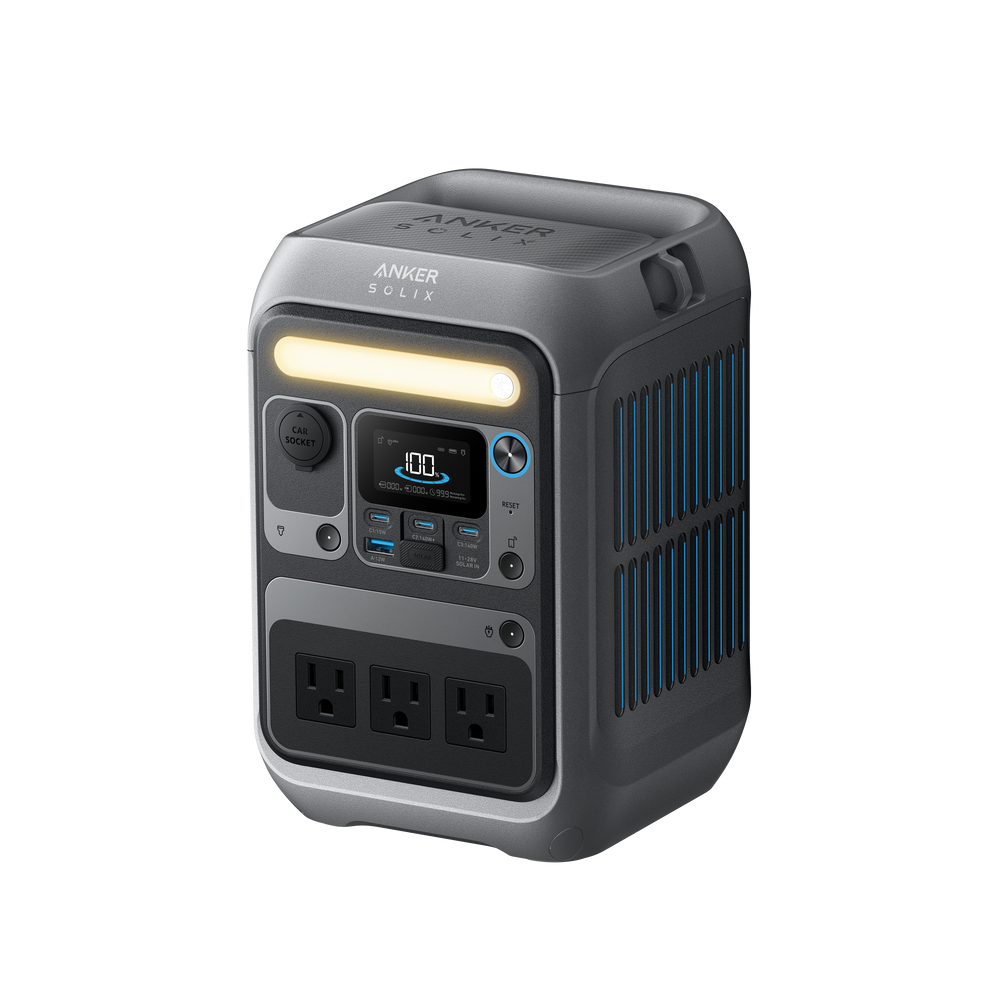
Anker SOLIX C300
A 9.1 lb vertical LiFePO4 station delivering 300W AC, dual 140W USB-C ports, and <10 ms UPS backup for routers, laptops, and day trips — just don't confuse it with the DC-only C300 DC or expect appliance runtime.
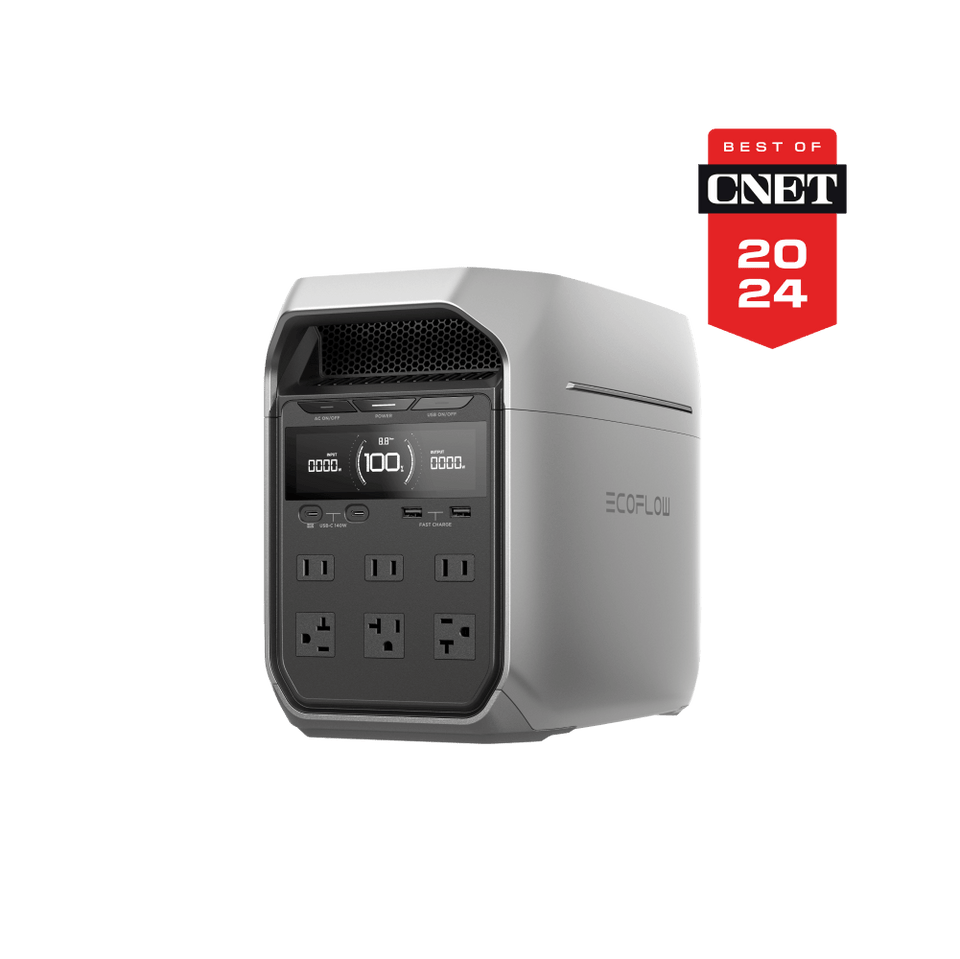
EcoFlow DELTA 3 Plus
Packs 1,000W dual-MPPT solar charging, sub-1-hour AC replenishment, and a sub-10 ms HID-capable UPS into a 27.6 lb chassis, making it more versatile than non-Plus 1kWh units.
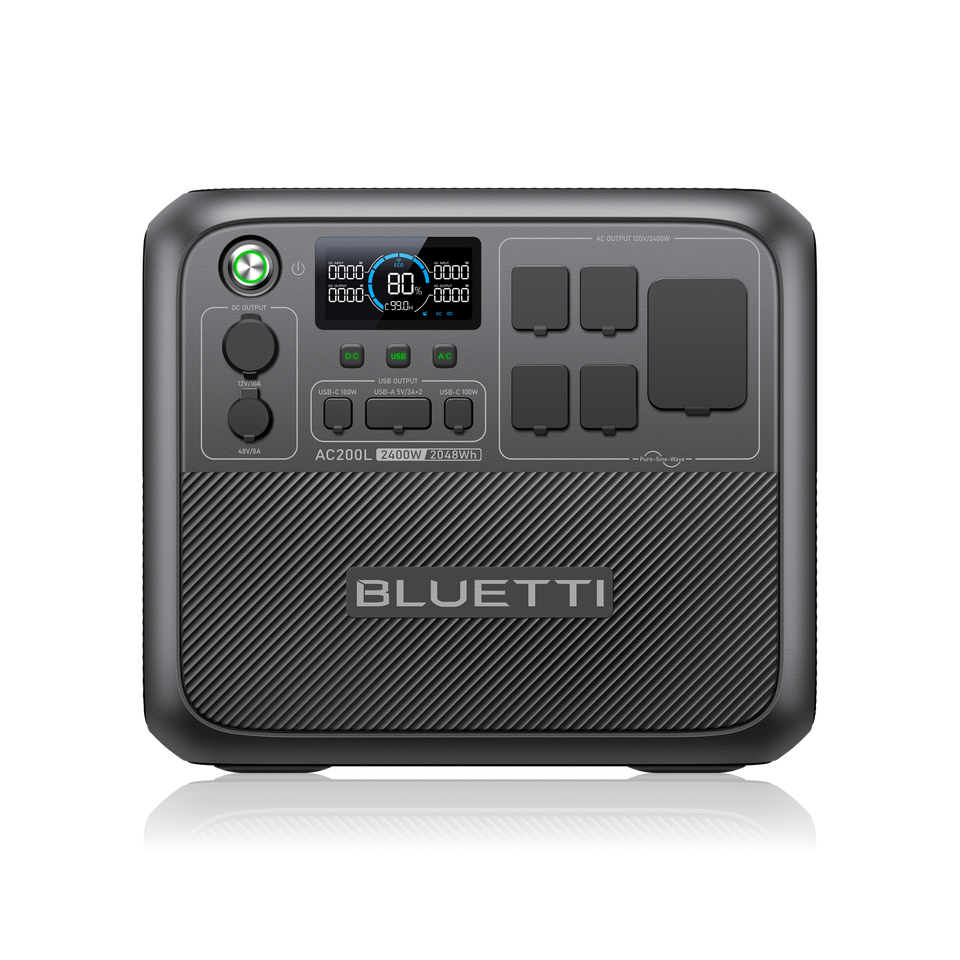
BLUETTI AC200L
Combines a high-efficiency 2,048Wh expandable platform, 1,200W high-voltage solar input (12–145V), and dedicated 30A TT-30R + 48V DC RV outputs at strong street pricing, trading away light weight and built-in wheels.
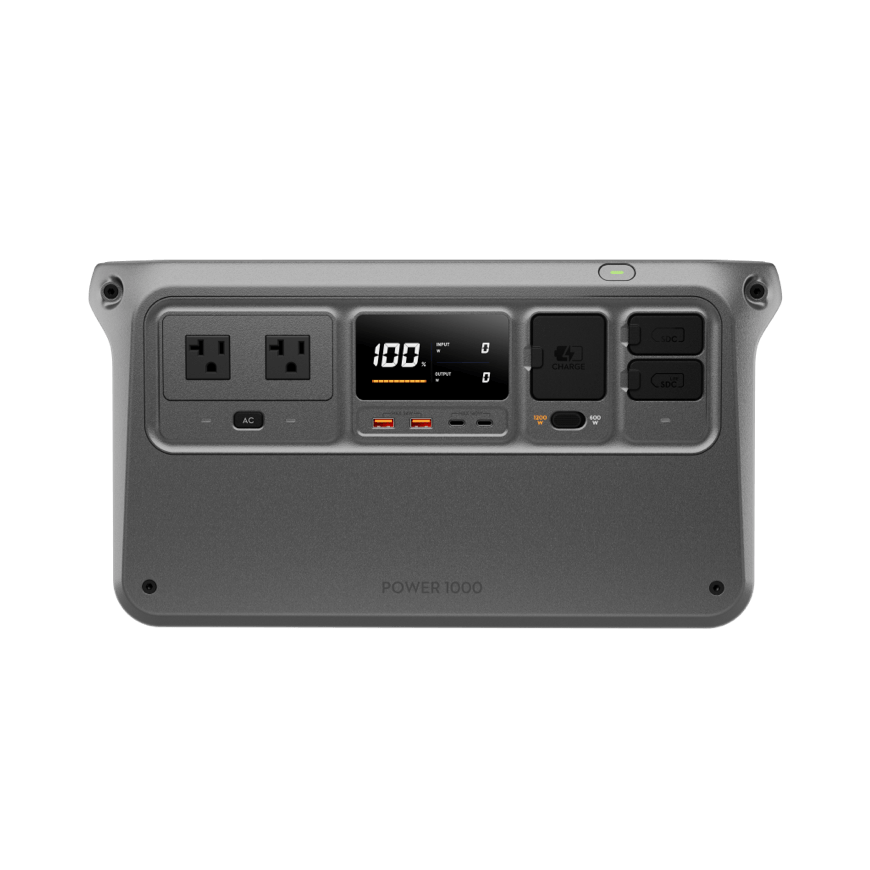
DJI Power 1000
Exceptional 2,200W inverter density and 23 dB acoustic refinement in a 28.7 lb frame, though solar charging and 12V car sockets require optional DJI SDC adapters.
Frequently Asked Questions
How do you convert mA to Amps quickly in your head?+
Move the decimal point three places to the left (divide by 1,000). For example, 500 mA equals 0.5 A, 2,400 mA equals 2.4 A, and 15,000 mA equals 15 A. To go from Amps back to milliamps, multiply by 1,000 (1 A = 1,000 mA).
Why isn't a 20,000 mAh power bank nearly as large as a 300Wh portable power station?+
Because milliamp-hour (mAh) labels on pocket power banks are calculated at the internal lithium cell voltage (3.7V), not at 12V. Converting 20,000 mAh (20 Ah) × 3.7V gives only 74 Wh of energy—roughly one-fourth the 288 Wh stored inside a compact LiFePO4 station like the Anker SOLIX C300.
How do USB-C Power Delivery (PD) voltage steps change wattage on the same 3A or 5A cable?+
Power equals Volts × Amps (W = V × A). A 3A (3,000 mA) USB-C cable delivers 15W at 5V, 27W at 9V, 45W at 15V, and 60W at 20V. Stepping up to an e-marked 5A (5,000 mA) PD 3.1 cable at 28V unlocks 140W—available on ports built into the Anker SOLIX C300, EcoFlow DELTA 3 Plus, and DJI Power 1000.
Can fast-charging a 1,800W or 2,400W power station trip my household wall breaker?+
Yes. At US 120V, 1,800W pulls 15 Amps—the exact maximum limit of a standard 15A bedroom/living-room breaker (and above the NEC 1,440W / 12A continuous 80% rule). Sharing that circuit with a microwave or heater will trip the breaker; charging a BLUETTI AC200L at its 2,400W peak requires a dedicated 20A circuit or lowering charge wattage in the app.
Sources & Technical References
- View Source →[1]Manufacturer SpecificationAnker SOLIX US OfficialVerified 2026-11-24Anker SOLIX C300 Portable Power Station (Model A1722) Specifications
288Wh LFP AC-equipped model (distinct from DC-only C300 DC), 300W AC, 600W SurgePad, 100W XT60 solar, <10ms UPS.
- View Source →[2]Manufacturer SpecificationEcoFlow US OfficialVerified 2026-11-24EcoFlow DELTA 3 Plus Official Specifications
1,024Wh LFP, 1,800W continuous AC, 1,000W dual 500W MPPT solar, <10ms UPS, 1,500W X-Stream AC charging.
- View Source →[3]Manufacturer SpecificationBLUETTI US OfficialVerified 2026-11-24BLUETTI AC200L Portable Power Station Official Specifications
2,048Wh LFP, 2,400W continuous AC, 3,600W Power Lifting mode, NEMA TT-30R + 48V/8A DC RV port, 1,200W solar (12-145V).
- View Source →[4]Manufacturer SpecificationDJI OfficialVerified 2026-11-24DJI Power 1000 Specifications & Official Overview
1,024Wh LFP, 2,200W continuous AC (V1 US model; V2 increases to 2,600W), dual 140W USB-C, 800W solar via MPPT adapter.
- View Source →[5]Government Research ResourceU.S. DOE Alternative Fuels Data CenterVerified 2026-11-25Electric Vehicle Charging Levels, NEMA Receptacles & Home Circuit Loads
Documents Level 1 (120V) vs. Level 2 (240V) continuous 80% NEC circuit loading rules and NEMA 6-50 / 14-50 wiring distinctions.