Jackery Portable Power Stations & Solar Generators: Brand Guide
Explore Jackery Explorer Plus and v2 LiFePO4 power stations, Cell-to-Body portability, dual-PV solar limits, Smart Transfer Switch, and US warranties.
Jackery Brand Strengths
- ✓Strong weight-to-capacity efficiency on Cell-to-Body LFP models like the 39.5 lb Explorer 2000 v2
- ✓High published surge headroom (14,400W on Explorer 5000 Plus) plus dual High-PV and Low-PV inputs
- ✓Wide US retail availability, recognizable Fremont, CA brand presence, and 5-year registered warranties
Brand Trade-offs & Considerations
- !Explorer v2 models sacrifice battery expandability and use proprietary DC8020 solar ports
- !Explorer 2000 v2 caps solar recharging at 400W total, slowing multi-day off-grid recovery
- !Cycle life on several current LFP units is rated to >=70% retention rather than 80% used by some competitors
Reviewed Jackery Models
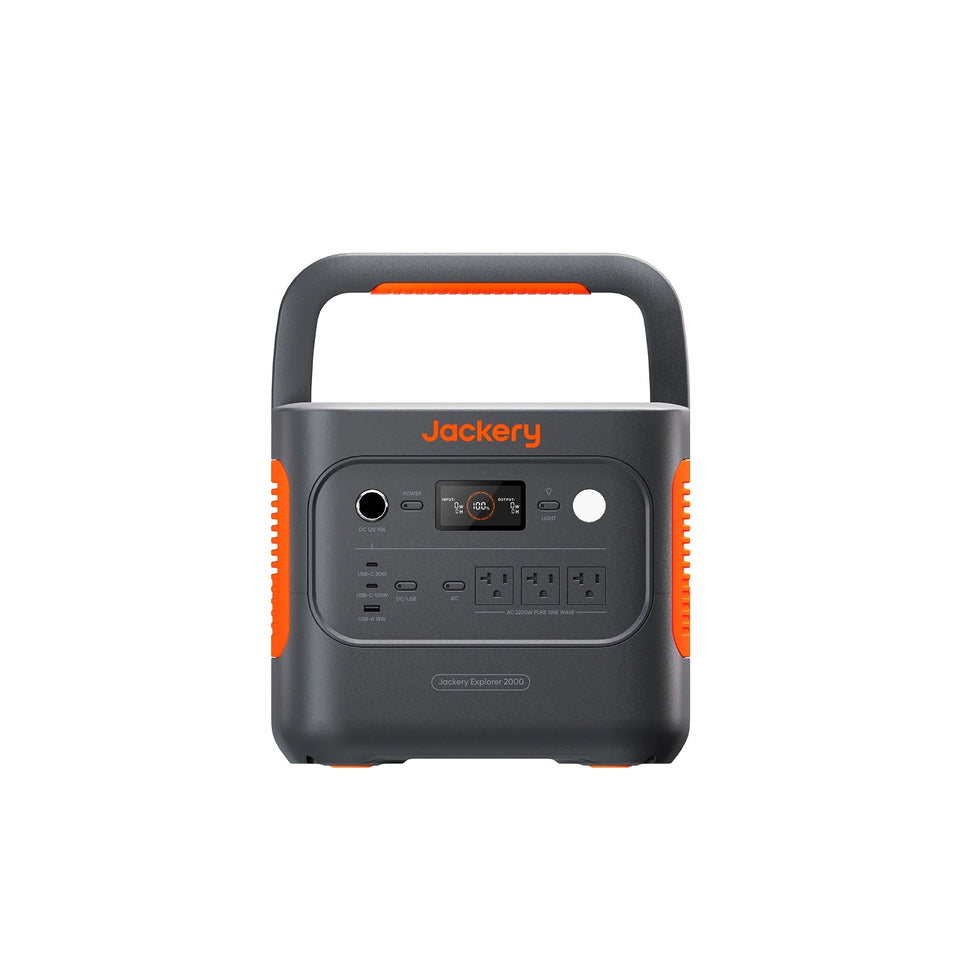
Jackery Explorer 2000 v2
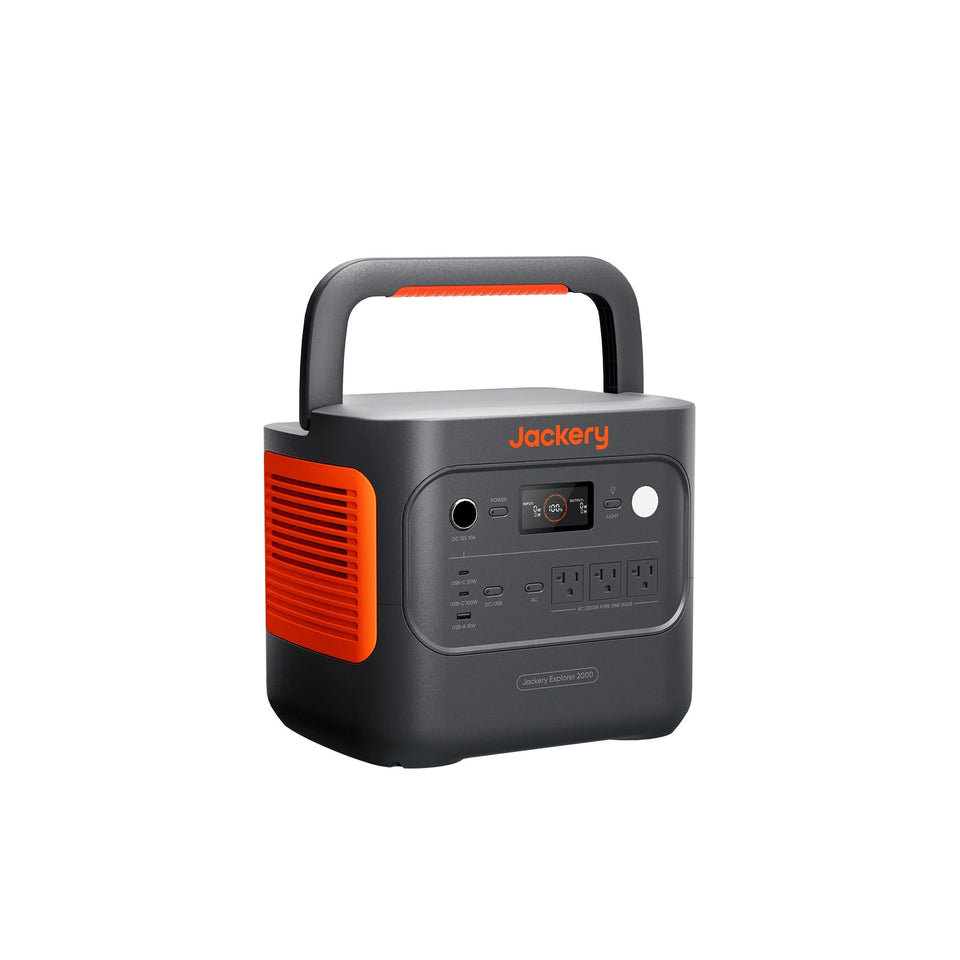
A breakthrough 39.5 lb chassis makes 2,042Wh genuinely single-hand portable for camping and apartments, provided you accept its 400W solar recharge ceiling and non-expandable battery.
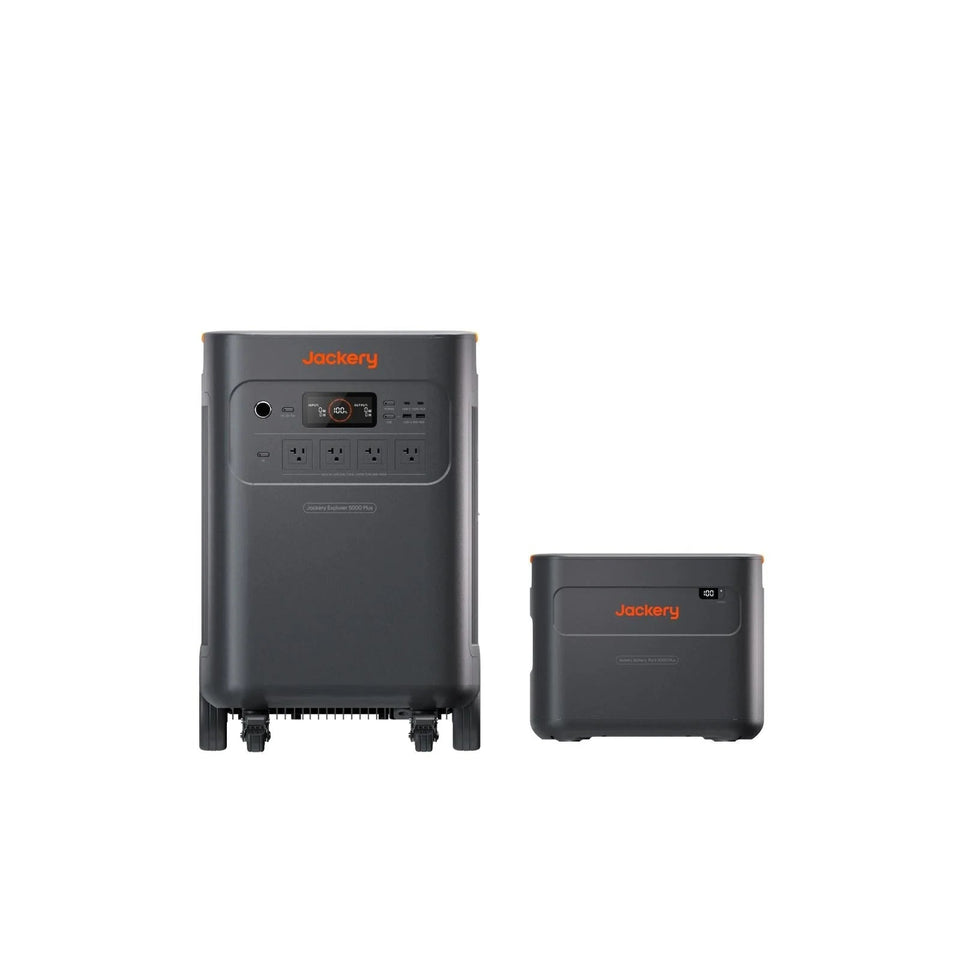
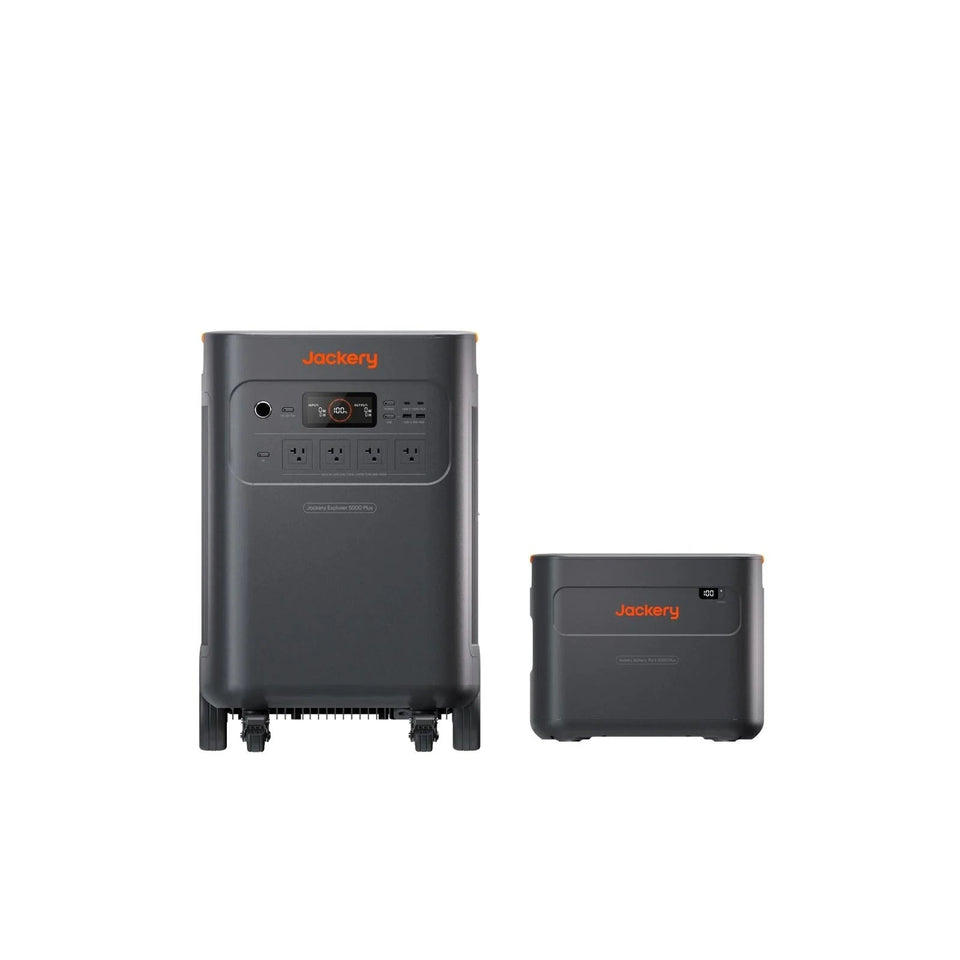
Jackery Explorer 5000 Plus
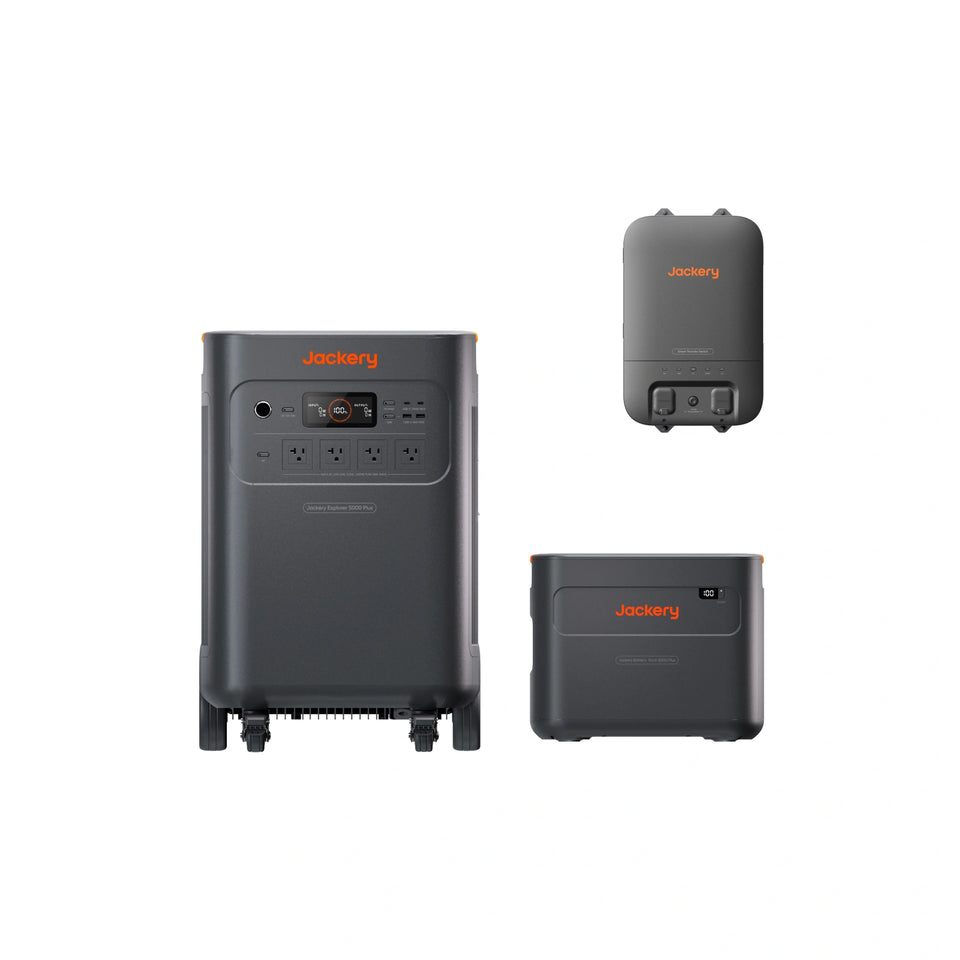
Combines a 5,040Wh LFP core, 7,200W split-phase output, 14,400W published surge headroom, and both High-PV (135–450V) and Low-PV solar inputs in a single wheeled chassis.
Jackery Official Hardware & Application Gallery
Brand Overview & US Market Position
Founded in 2012 and headquartered in Fremont, California, Jackery helped popularize the consumer portable solar generator category across North America. While early Jackery Explorer models relied on lithium-ion NMC chemistry with shorter cycle life, current-generation Plus and v2 releases have transitioned squarely to LiFePO4 (LFP) cells engineered for 4,000+ cycles and rapid AC recharging.
Jackery’s US distribution footprint spans direct online sales as well as major home improvement and outdoor brick-and-mortar chains, giving homeowners and campers straightforward retail return and warranty access compared with smaller direct-to-consumer brands.
Product Families & Lineup Architecture
Understanding Jackery’s current US catalog requires separating two distinct design philosophies:
- Explorer v2 (Cell-to-Body) Series: Prioritizes minimum physical volume and carry weight by integrating cells directly into the structural chassis. The Jackery Explorer 2000 v2 packs 2,042Wh and a 2,200W inverter into just 39.5 lbs—roughly 23 lbs lighter than traditional expandable 2kWh competitors—at the expense of external battery expansion.
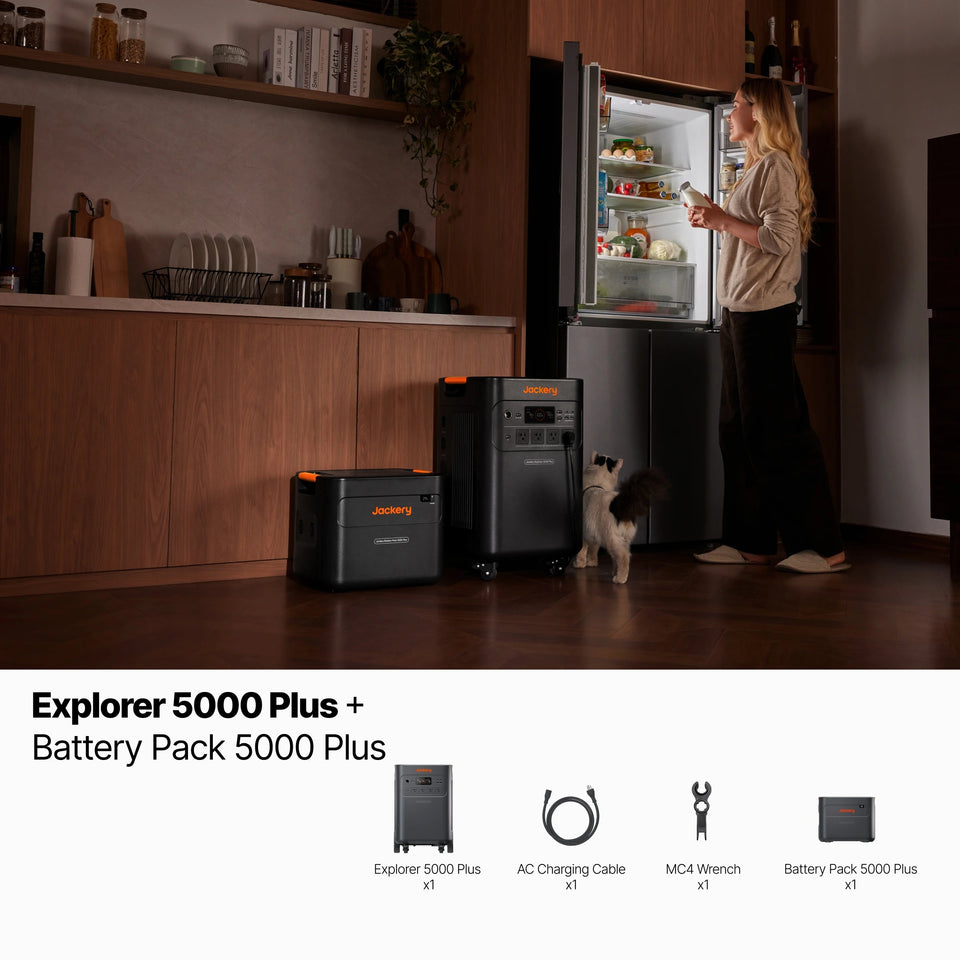
- Explorer Plus Series: Built for scalability and higher solar/home backup demand. Models scale from compact Plus units up to the wheeled Jackery Explorer 5000 Plus, which provides 5,040Wh base storage, 7,200W continuous 120V/240V split-phase power, 14,400W published surge headroom, and expansion up to 60.48kWh across dual linked systems.
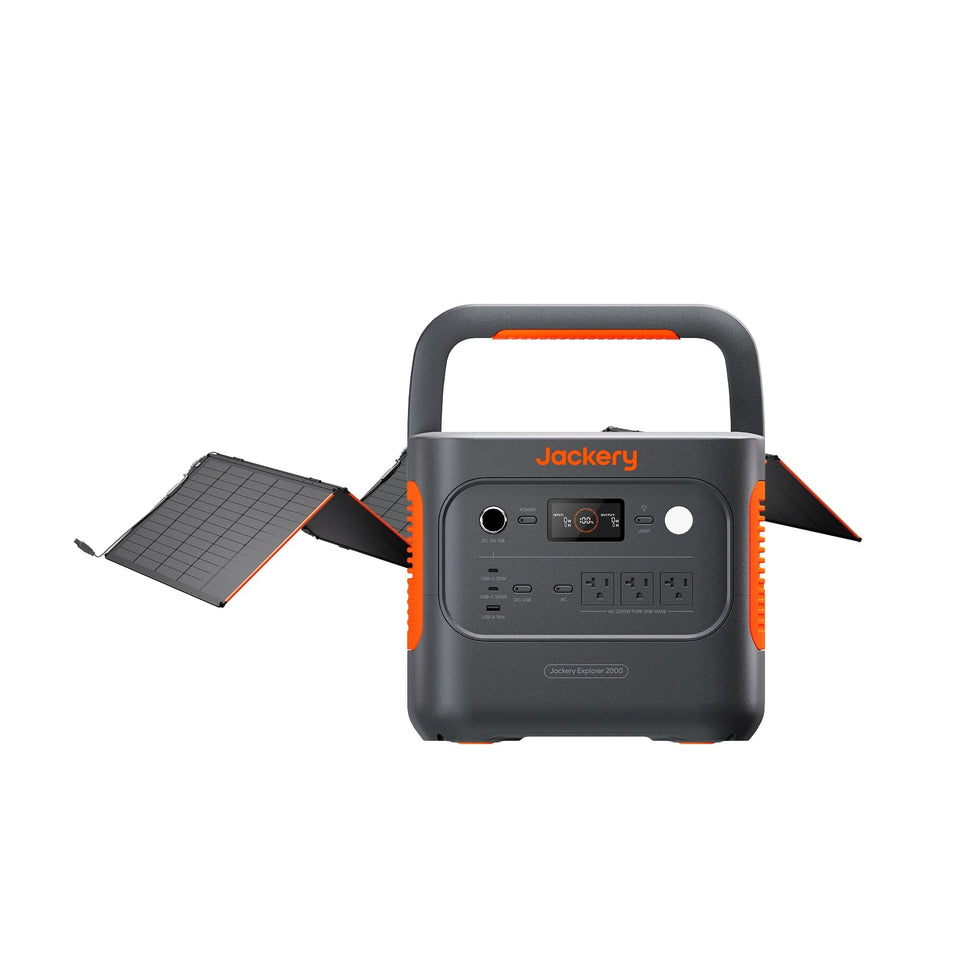
- SolarSaga Panels & Smart Transfer Switch: Jackery pairs its generators with foldable SolarSaga panels (connecting via DC8020 inputs on portable units) and a Smart Transfer Switch for licensed-electrician residential integration.
Battery Chemistry & Expansion Ecosystem
All current Explorer Plus and v2 units use LiFePO4 (LFP) chemistry. Notably, Jackery specifies cycle life on models like the Explorer 2000 v2 and Explorer 5000 Plus at 4,000 cycles to >=70% original capacity, whereas several competitors quote 3,000–4,000 cycles to 80% retention. That distinction matters when comparing long-term capacity degradation curves under heavy daily cycling.
In terms of expansion:
- v2 Models (Non-Expandable): The Explorer 2000 v2 has no expansion port, keeping cost and weight down for trunk transport and short blackouts.
- Plus Models (Modular Scaling): The Explorer 5000 Plus links with up to five Battery Pack 5000 Plus modules per inverter (30,240Wh) or two main towers plus expansion packs for up to 60,480Wh.
Hardware Differentiators & Engineering Trade-Offs
Jackery makes clear architectural trade-offs across its two flagship classes:
- Weight Efficiency vs. Solar Speed (2kWh Class): Independent reviews from OutdoorGearLab and TechRadar highlight the Explorer 2000 v2’s
~2.5 hourreal-world AC recharge rate, quiet~30 dBcharging mode, and single-person39.5 lbportability. However, its dual DC8020 solar ports cap total solar input at 400W (16–60V Voc), which takes over 6 peak sun hours to replenish 2,042Wh and requires adapters for generic MC4 solar panels. - Dual-Voltage Solar & Surge Headroom (Home Class): By contrast, the Explorer 5000 Plus features both a High-PV input (135–450V Voc, up to 4,000W) and Low-PV inputs (16–60V Voc, up to 1,200W), plus
0 msOnline UPS mode on direct outlets and<20 msautomatic switching via Jackery’s Smart Transfer Switch. Its 134.5 lb single-body weight makes stairs difficult without ramps, contrasting with EcoFlow’s split inverter/battery stack. - Port Selection: Jackery emphasizes clean, straightforward consumer outlets (
NEMA 5-20,L14-30R,14-50on the 5000 Plus), though the Explorer 2000 v2 omits a dedicated 30ATT-30RRV socket found on rivals like the BLUETTI AC200L.
US Warranty, Documentation & Customer Support
Jackery backs current Explorer Plus and v2 power stations with a 3-year standard limited warranty plus an automatic or registration-based 2-year extension (5 years total) for units bought through Jackery or authorized US sellers. Having a long-established California headquarters and major US retailer partnerships provides accessible customer service and return logistics, though shoppers should always keep proof of purchase and register serial numbers promptly.
Brand Pros & Cons Summary
Strengths:
- Class-leading portability in the 2kWh tier (Explorer 2000 v2 at 39.5 lbs) verified in independent field reviews
- High
14,400Wpublished surge rating and4,000WHigh-PV support on the Explorer 5000 Plus - 5-year registered US warranty backed by Fremont, CA operations and nationwide retail availability
Trade-Offs:
- Explorer 2000 v2 is non-expandable, omits a TT-30R RV port, and caps solar charging at 400W
- Proprietary DC8020 ports require adapters when connecting standard MC4 portable panels
- Cycle retention rated to >=70% at 4,000 cycles rather than the 80% benchmark used by some peers
Buyer Guidance: Who Should Choose Jackery
Jackery fits buyers who value lightweight trunk portability, clean residential styling, strong surge specs on 240V home units, and wide US retail support. Compare Jackery directly against EcoFlow and BLUETTI in our EcoFlow vs. Jackery, Jackery vs. BLUETTI, and BLUETTI AC200L vs. Jackery Explorer 2000 v2 guides, or check home backup compatibility in our Jackery Explorer 5000 Plus vs. Anker SOLIX F3800 matchup.
Sources & Technical References
- View Source →[1]Manufacturer SpecificationJackery US OfficialVerified 2026-11-24Jackery Explorer 5000 Plus Official Product Specifications
5,040Wh LFP capacity, 7,200W/14,400W AC specs, High-PV (135-450V) and Low-PV (16-60V) limits, and warranty terms.
- View Source →[2]Manufacturer SpecificationJackery US OfficialVerified 2026-11-24Jackery Explorer 2000 v2 Product Page & User Guide
2,042Wh LFP Cell-to-Body design, 39.5 lbs weight, 2,200W continuous AC, 400W dual DC8020 solar input.
- View Source →[3]Third-Party Independent ReviewOutdoorGearLabVerified 2026-11-24Jackery Explorer 2000 v2 Independent Review & Benchmark Testing
Reports ~2.5 hour full AC recharge (~817 Wh/hr average), high portability score for 2kWh class, and solar expansion trade-offs.
- View Source →[4]Third-Party Independent ReviewTechRadarVerified 2026-11-24Jackery Explorer 2000 v2 Hands-On Review
Evaluates kitchen appliance support, Cell-to-Body weight reduction (39.5 lbs), quiet charging profile, and 400W solar ceiling.