EcoFlow vs. Jackery (2026): Charging Speed, Portability & Home Backup
Compare EcoFlow and Jackery portable power stations across solar MPPT speed, Cell-to-Body weight savings, 240V modular backup, and US warranties.
EcoFlow and Jackery prioritize different engineering trade-offs across both portable and 240V home tiers. EcoFlow leads in fast AC/solar charging speed, dual-MPPT flexibility (up to 5,600W on DELTA Pro Ultra and 1,000W on DELTA 3 Plus), sub-10 ms HID UPS support, and sub-freezing battery self-heating. Jackery counters with lightweight Cell-to-Body portability (39.5 lbs on the 2,042Wh Explorer 2000 v2), high 14,400W surge specs on the Explorer 5000 Plus, lower entry 240V pricing, and broad US brick-and-mortar retail presence.
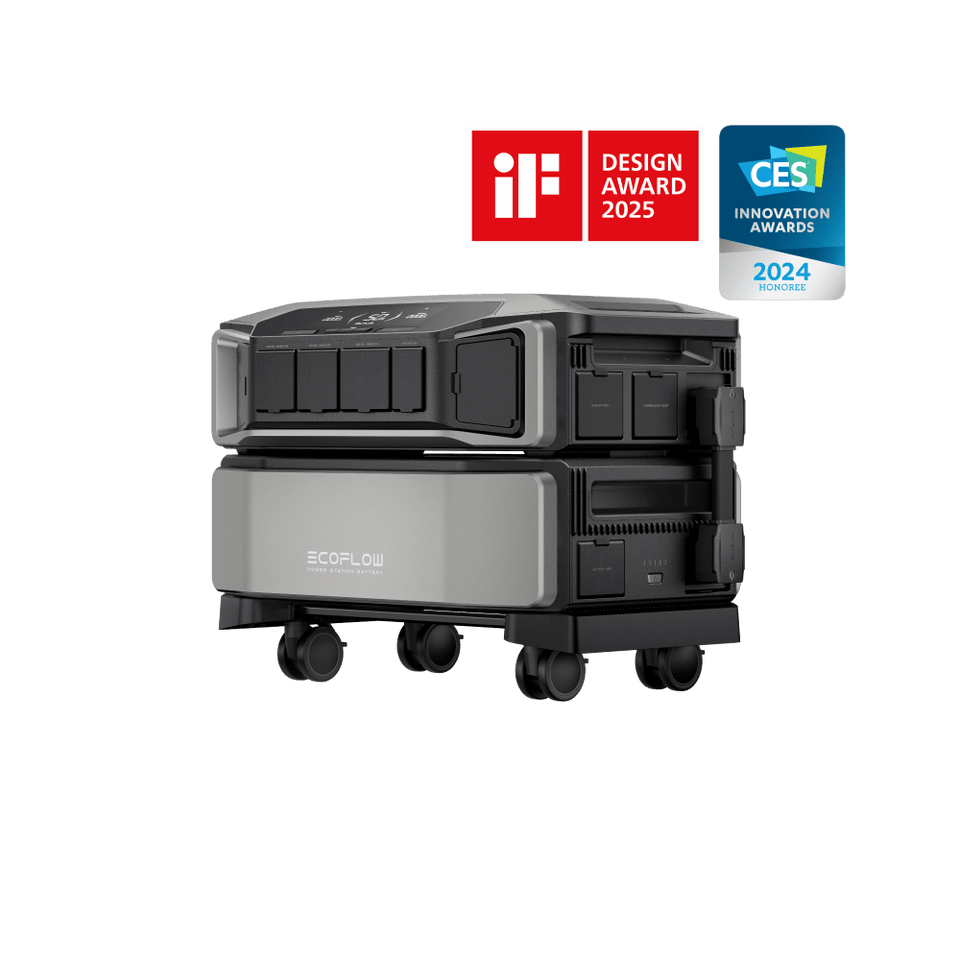
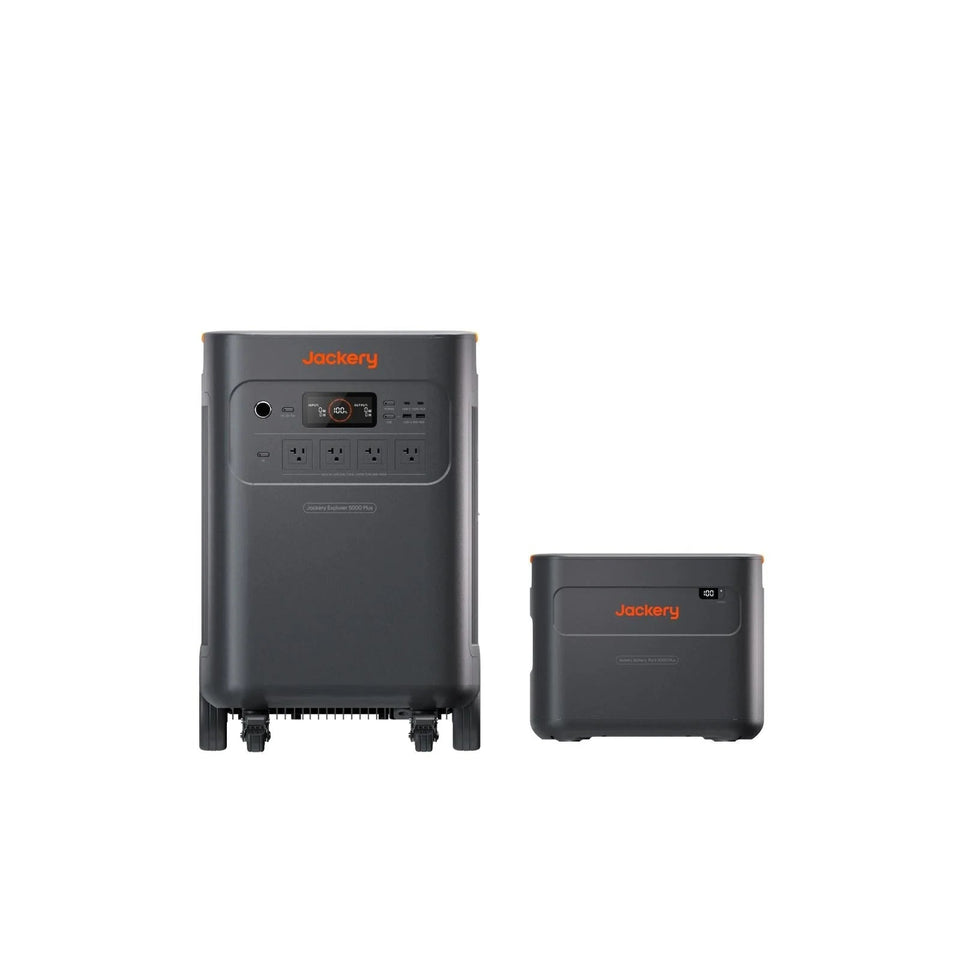
EcoFlow Models in Our Database
- EcoFlow DELTA 3 Plus — 1024Wh • 1800W AC • 27.6 lbs
- EcoFlow DELTA Pro Ultra — 6144Wh • 7200W AC • 181.8 lbs
Jackery Models in Our Database
- Jackery Explorer 2000 v2 — 2042Wh • 2200W AC • 39.5 lbs
- Jackery Explorer 5000 Plus — 5040Wh • 7200W AC • 134.5 lbs
Brand Overview
EcoFlow and Jackery represent the two best-known portable power station ecosystems in North America, yet their hardware philosophies diverge sharply at both the 1kWh–2kWh portable level and the 5kWh–6kWh residential backup tier. EcoFlow (coordinating US operations in the Seattle/Bellevue, WA area) focuses heavily on power electronics speed—leading with rapid AC X-Stream recharging, dual-MPPT solar controllers, HID UPS communication, and split-module 240V stacks. Jackery (headquartered in Fremont, California) emphasizes physical weight reduction via Cell-to-Body packaging, clean consumer usability, high surge specs on flagship 240V towers, and wide US big-box retail distribution.
Key Differences
- Solar Input Speed & Port Architecture: On compact and midsize models, EcoFlow pushes aggressive MPPT headroom—for instance,
1,000Wdual-MPPT solar (11V–60V) on the1,024WhEcoFlow DELTA 3 Plus. By contrast, Jackery’s2,042WhJackery Explorer 2000 v2 caps solar input at just400Wvia dualDC8020ports, prioritizing low weight over off-grid solar speed. In the 240V home tier, EcoFlow DELTA Pro Ultra raises solar input to5,600W(80–450VHigh-PV +30–150VLow-PV) versus4,000WHigh-PV (135–450V) plus1,200WLow-PV on the Jackery Explorer 5000 Plus. - Physical Form Factor & Lifting Weight: Jackery’s Cell-to-Body
2,042WhExplorer 2000 v2 weighs just39.5 lbs, trading away expansion ports for effortless solo trunk loading. At the home-backup end, however, Jackery’s5,040WhExplorer 5000 Plus is a monolithic134.5 lbwheeled unit, whereas EcoFlow’s DELTA Pro Ultra splits into a~70 lbinverter head and~111.8 lbbattery modules. - Cold-Weather Garage Charging & UPS Details: EcoFlow DELTA Pro Ultra includes automatic battery self-heating for sub-freezing charging down to
-4°F(-20°C), whereas Jackery Explorer 5000 Plus requires32°F(0°C) or warmer cell temperatures to accept charge. In compact UPS setups, EcoFlow DELTA 3 Plus adds<10 msswitchover with USB HID signaling for NAS/PC shutdowns, versus<=20 mspass-through on Jackery Explorer 2000 v2.
Which Specifications Matter & Real-World Effects
- Cycle Retention Benchmark (
80%vs>=70%): Both brands use LiFePO4 cells, yet EcoFlow specs3,500–4,000cycles to 80% capacity while Jackery specs4,000cycles to >=70% capacity—a subtle datasheet difference worth checking if you cycle daily off-grid. - X-Boost vs. Native Inverter Output: EcoFlow markets X-Boost voltage step-down for resistive heaters above
1,800Won DELTA 3 Plus; neither brand’s boost mode should replace native continuous wattage for motor compressors. - Price Entry Point: At typical US street prices, Jackery’s Explorer 5000 Plus (
~$2,999) enters the5kWh+240V tier roughly$1,600below EcoFlow’s DELTA Pro Ultra Starter Kit (~$4,599), though EcoFlow includes6,144Whcapacity and higher solar headroom in return.
Best Use Cases
- Choose EcoFlow for: Off-grid solar camps needing
1,000W–5,600Wrecharge velocity, desktop/NAS workstations requiring<10 msHID UPS, or cold-climate garage 240V backup installations. - Choose Jackery for: Lightweight
2kWhportability (39.5 lbs), straightforward blackout readiness backed by wall charging (~2.5 hrstested by OutdoorGearLab), or lower-cost5kWhsingle-tower 240V home backup with14,400Wpublished surge headroom.
Advantages & Trade-offs
Neither brand holds a universal edge. EcoFlow delivers superior charging speed, solar headroom, and split-module ergonomics at higher Starter Kit cost and with more overlapping SKU generations (DELTA 2, DELTA 3, Pro 3, Pro Ultra) to navigate. Jackery wins on 2kWh weight-to-capacity efficiency and accessible retail presence while asking portable 2000 v2 buyers to accept 400W solar limits, non-expandable storage, and DC8020 panel adapters.
Evidence Supporting the Conclusion
Manufacturer datasheets and user manuals confirm EcoFlow’s 80V–450V / 30V–150V dual-PV solar limits, -4°F self-heating on DELTA Pro Ultra, and <10 ms HID UPS on DELTA 3 Plus, alongside Jackery’s 14,400W surge spec on the Explorer 5000 Plus and 400W solar ceiling on the 2000 v2. Independent OutdoorGearLab and TechRadar benchmarks corroborate the Explorer 2000 v2’s 39.5 lb transport advantage, ~2.5 hour AC recharge, and quiet indoor operation while highlighting its solar ceiling as the main off-grid constraint. Remember that any 240V residential integration for either brand requires listed transfer equipment and licensed electrician installation under NFPA 70 / NEC standards.
Final Decision Matrix
- You want faster solar replenishment (1,000W on 1kWh DELTA 3 Plus; up to 5,600W High-PV on DELTA Pro Ultra)
- You need sub-10 ms HID USB UPS protection for desktop workstations or NAS servers
- You store 240V home backup batteries in a cold garage requiring automatic sub-freezing cell self-heating (-4°F)
- You prioritize maximum carryability per watt-hour (such as the 39.5 lb 2,042Wh Explorer 2000 v2)
- You want a single-unit 5kWh 240V home tower with 14,400W published surge headroom around $2,999 street pricing
- You prefer Fremont, CA brand heritage and wide US big-box retail availability
Frequently Asked Questions
Which brand lasts longer: EcoFlow or Jackery?+
Both brands now use LiFePO4 (LFP) cells across current-generation models. EcoFlow specifies 3,500+ to 4,000 cycles to 80% capacity on DELTA Pro Ultra and DELTA 3 Plus, while Jackery specifies 4,000 cycles to >=70% retention on Explorer 2000 v2 and Explorer 5000 Plus.
Can generic MC4 solar panels plug straight into Jackery and EcoFlow stations?+
EcoFlow portable stations use standard XT60/XT60i connectors (widely available with MC4 adapter cables). Jackery portable units like the Explorer 2000 v2 use proprietary DC8020 ports, requiring DC8020-to-MC4 adapters when connecting third-party solar panels.
Which brand is better for an automated 240V whole-home transfer panel?+
Both EcoFlow (Smart Home Panel 2 + DELTA Pro Ultra) and Jackery (Smart Transfer Switch + Explorer 5000 Plus) offer 120V/240V split-phase home integration rated <20 ms automatic switchover. EcoFlow splits inverter and battery lifting weights (~70 lbs / ~111.8 lbs) and adds 5,600W solar plus cell self-heating, while Jackery offers a lower upfront base kit price (~$2,999 vs ~$4,599) and higher 14,400W surge spec.
Sources & Technical References
- View Source →[1]Manufacturer SpecificationEcoFlow US OfficialVerified 2026-11-24EcoFlow DELTA Pro Ultra Product Page & Specifications
Official North American 120V/240V split-phase inverter and 6,144Wh LiFePO4 battery module specs.
- View Source →[2]Manufacturer User ManualEcoFlow Support DocumentationVerified 2026-11-24EcoFlow DELTA Pro Ultra User Manual & Technical Datasheet
Documents High-PV (80-450V, 15A, 4,000W) and Low-PV (30-150V, 15A, 1,600W) limits, operating temps, and UPS switching behavior.
- View Source →[3]Manufacturer SpecificationEcoFlow US OfficialVerified 2026-11-24EcoFlow DELTA 3 Plus Official Specifications
1,024Wh LFP, 1,800W continuous AC, 1,000W dual 500W MPPT solar, <10ms UPS, 1,500W X-Stream AC charging.
- View Source →[4]Manufacturer SpecificationJackery US OfficialVerified 2026-11-24Jackery Explorer 5000 Plus Official Product Specifications
5,040Wh LFP capacity, 7,200W/14,400W AC specs, High-PV (135-450V) and Low-PV (16-60V) limits, and warranty terms.
- View Source →[5]Manufacturer SpecificationJackery US OfficialVerified 2026-11-24Jackery Explorer 2000 v2 Product Page & User Guide
2,042Wh LFP Cell-to-Body design, 39.5 lbs weight, 2,200W continuous AC, 400W dual DC8020 solar input.
- View Source →[6]Third-Party Independent ReviewOutdoorGearLabVerified 2026-11-24Jackery Explorer 2000 v2 Independent Review & Benchmark Testing
Reports ~2.5 hour full AC recharge (~817 Wh/hr average), high portability score for 2kWh class, and solar expansion trade-offs.
- View Source →[7]Third-Party Independent ReviewTechRadarVerified 2026-11-24Jackery Explorer 2000 v2 Hands-On Review
Evaluates kitchen appliance support, Cell-to-Body weight reduction (39.5 lbs), quiet charging profile, and 400W solar ceiling.
- View Source →[8]Technical & Safety StandardNational Fire Protection Association (NFPA)Verified 2026-11-24NFPA 70 National Electrical Code (NEC) Transfer Equipment & Standby Power Overview
Governs transfer switches, panel interlocks, and prohibition of unsafe backfeeding on US residential electrical panels.