EcoFlow vs. BLUETTI (2026): Fast Charging & Modularity vs. Efficiency & RV Ports
Compare EcoFlow and BLUETTI portable power stations across CNET-verified efficiency, RV TT-30R outputs, X-Stream vs Turbo charging, and home backup scaling.
EcoFlow and BLUETTI both build long-life LiFePO4 ecosystems with 5-year US warranties, but they excel in different setups. EcoFlow emphasizes rapid charging, lightweight 1kWh fast-solar portability (DELTA 3 Plus), HID USB UPS support, and split-stack 240V residential systems (DELTA Pro Ultra). BLUETTI stands out for third-party verified inverter efficiency (77.76% RTE on AC200L; 705–730.59 Wh usable AC on AC70), native 30A TT-30R + 48V RV ports, wide 12–145V midsize solar windows, and strong street price-per-Wh value.
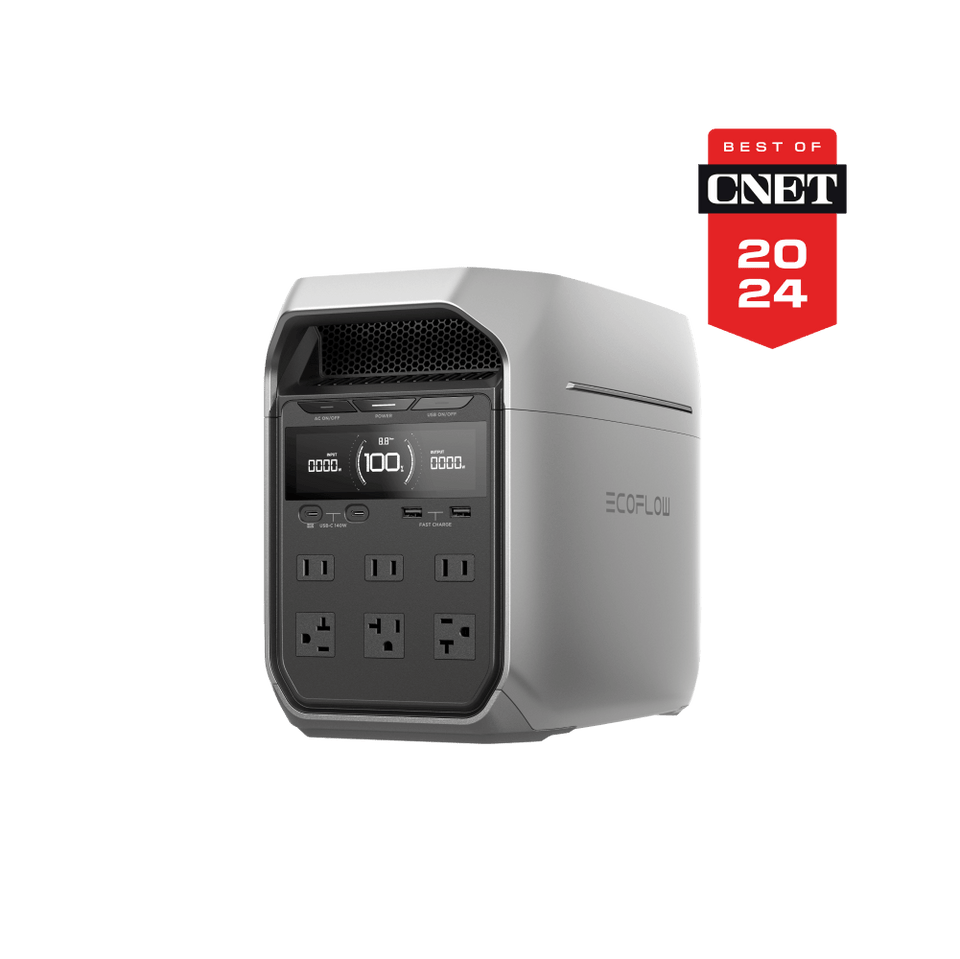
EcoFlow Models in Our Database
- EcoFlow DELTA 3 Plus — 1024Wh • 1800W AC • 27.6 lbs
- EcoFlow DELTA Pro Ultra — 6144Wh • 7200W AC • 181.8 lbs
BLUETTI Models in Our Database
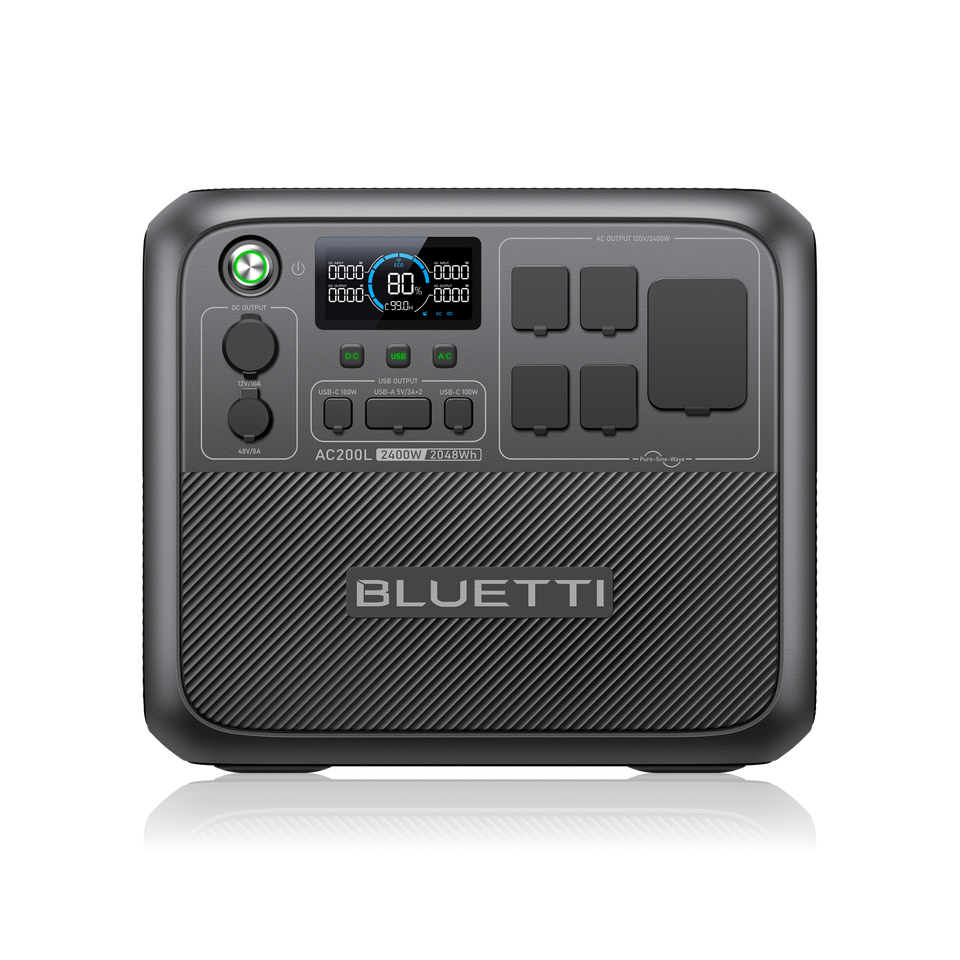
- BLUETTI AC200L — 2048Wh • 2400W AC • 62.4 lbs
- BLUETTI AC70 — 768Wh • 1000W AC • 22.5 lbs
Brand Overview
EcoFlow and BLUETTI (operating in the US from Las Vegas, Nevada) compete directly across entry-level, midsize, and residential LiFePO4 battery tiers, both offering 5-year US warranties on their current flagship models. Yet they approach product engineering from noticeably different angles: EcoFlow optimizes around charging speed, digital software/UPS integration, and split-module 240V home towers, whereas BLUETTI leans into high-efficiency 120V inverters, generous voltage windows (12–145V), RV-ready receptacles, and aggressive promotional street value.
Key Differences
- Verified Efficiency Track Record: BLUETTI holds a clear transparency advantage in our current third-party database. CNET Labs documented 77.76% round-trip efficiency and
>29 hoursof refrigerator runtime on the BLUETTI AC200L, while PowerOffGrid (705 What 250W) and APH Networks (730.59 What 136W) verified low conversion loss on the BLUETTI AC70. Newer EcoFlow models (DELTA 3 Plus,DELTA Pro Ultra) have not yet accumulated equivalent independent usable-Wh records in our source registry. - RV & DC Output Specialization: BLUETTI puts a native
30A NEMA TT-30Rplug and48V/8ARV DC port straight onto the AC200L. EcoFlow’s DELTA 3 Plus omitsTT-30Rin favor of six standard5-20Routlets, dual140WUSB-C PD 3.1 ports, and800Walternator charger ecosystem support. - Connectivity, UPS & Solar Range: On entry portable hardware, EcoFlow DELTA 3 Plus includes Wi-Fi + Bluetooth telemetry and
<10 msHID USB UPS, whereas BLUETTI’s smaller AC70 relies on Bluetooth-only control and<=20 mspass-through. Conversely, in the2kWhbracket, AC200L’s12–145V Voc(1,200W) solar port handles higher-voltage series arrays much more flexibly than60V-capped compact stations. - 240V Split-Phase Home Integration: In our reviewed catalog, EcoFlow DELTA Pro Ultra brings a turnkey
7,200Wsplit-phase modular stack (5,600Wsolar,-4°Fself-heating, Smart Home Panel 2 up to90kWh), whereas BLUETTI’s AC200L is120V-only (BLUETTI offers separate Apex/EP home lines outside our single-SKU review list).
Which Specifications Matter & Real-World Effects
- Weight vs. Footprint: BLUETTI AC200L weighs
62.4 lbswithout built-in wheels (16.5 × 11.0 × 14.4 in), making frequent stair carry cumbersome. EcoFlow splits its heavy181.8 lbDELTA Pro Ultra into a70 lbinverter and111.8 lbbattery atop a rolling cart, while keeping the1kWhDELTA 3 Plus down at27.6 lbs. - Boost Mode Limitations: Both EcoFlow (
X-Boost) and BLUETTI (Power Lifting) alter AC waveform/voltage strictly for simple resistive appliances. Always verify continuous wattage for compressors, pumps, and electronics. - Street Price Value: BLUETTI’s typical street pricing—
~$429for the768WhAC70 (~$0.56/Wh) and~$1,099for the2,048WhAC200L (~$0.54/Wh)—delivers standout value per watt-hour against~$699($0.68/Wh) for the1,024WhDELTA 3 Plus.
Best Use Cases
- Choose EcoFlow for: Home office/NAS
<10 msHID UPS backup, rapid56-minuteAC charging and1,000Wportable solar on a sub-30 lb pack, or a full120V/240Vresidential solar + battery system up to90kWh. - Choose BLUETTI for: 30A RV shore hookups (
TT-30R+48VDC), budget768Wh–2,048Whemergency kits backed by documented third-party AC efficiency, and midsize12–145Vrooftop/ground solar arrays.
Advantages & Trade-offs
Choosing between EcoFlow and BLUETTI depends on your primary load profile rather than brand loyalty. EcoFlow gives you stronger app telemetry (Wi-Fi across compact lines), tighter UPS latency, and split-phase 5,600W solar scaling at higher upfront cost. BLUETTI rewards value-conscious RVers and 120V blackout planners with proven inverter efficiency and high-voltage 2kWh solar input while trading off lighter carry weight (62.4 lbs) and Wi-Fi on smaller AC70 models.
Evidence Supporting the Conclusion
Official specifications confirm EcoFlow’s <10 ms HID UPS, 1,000W dual MPPT on DELTA 3 Plus, and 5,600W solar / -4°F heating on DELTA Pro Ultra. Attributed third-party test reports from CNET (77.76% RTE, >29h fridge on AC200L), PowerOffGrid (705 Wh on AC70), and APH Networks (730.59 Wh on AC70) confirm BLUETTI’s AC conversion efficiency under real sustained loads.
Final Decision Matrix
- You want <10 ms HID USB UPS protection for a workstation/NAS (DELTA 3 Plus) or 0 ms Online UPS
- You are building a 120V/240V split-phase home backup stack with 5,600W solar and -4°F self-heating (DELTA Pro Ultra)
- You need Wi-Fi remote app telemetry even on smaller portable models (BLUETTI AC70 is Bluetooth-only)
- You want a 2kWh RV and home-essential station with a native 30A TT-30R outlet and 48V/8A DC port (AC200L)
- You prioritize independently measured AC round-trip efficiency and budget price per rated Wh ($429 AC70 / $1,099 AC200L)
- You want wide 12V–145V MPPT solar tolerance in a midsize 2kWh unit rather than 60V-capped dual ports
Frequently Asked Questions
Which brand has better independently tested efficiency: EcoFlow or BLUETTI?+
In our verified source registry, BLUETTI has published third-party usable-AC benchmarks on both the AC200L (CNET: 77.76% round-trip efficiency, >29 hours refrigerator runtime) and AC70 (PowerOffGrid: 705 Wh; APH Networks: 730.59 Wh). Independent lab usable-Wh tests for EcoFlow's newer DELTA 3 Plus and DELTA Pro Ultra are not yet recorded in our registry.
Can BLUETTI Power Lifting or EcoFlow X-Boost run an air conditioner above continuous watts?+
No. Both BLUETTI Power Lifting (e.g., 3,600W on AC200L) and EcoFlow X-Boost lower output AC voltage to support purely resistive heating devices like kettles or space heaters. Inductive motor loads like air conditioners, refrigerators, and well pumps must stay within native continuous and surge inverter ratings.
Which brand is better for an RV travel trailer?+
For 30A RVs in the 2kWh tier, BLUETTI AC200L includes a native NEMA TT-30R outlet, 48V/8A DC terminal, and 12–145V solar controller directly on the unit. EcoFlow DELTA 3 Plus suits smaller vans via optional 800W alternator charging, while EcoFlow DELTA Pro Ultra targets stationary off-grid cabins and 240V homes.
Sources & Technical References
- View Source →[1]Manufacturer SpecificationEcoFlow US OfficialVerified 2026-11-24EcoFlow DELTA Pro Ultra Product Page & Specifications
Official North American 120V/240V split-phase inverter and 6,144Wh LiFePO4 battery module specs.
- View Source →[2]Manufacturer User ManualEcoFlow Support DocumentationVerified 2026-11-24EcoFlow DELTA Pro Ultra User Manual & Technical Datasheet
Documents High-PV (80-450V, 15A, 4,000W) and Low-PV (30-150V, 15A, 1,600W) limits, operating temps, and UPS switching behavior.
- View Source →[3]Manufacturer SpecificationEcoFlow US OfficialVerified 2026-11-24EcoFlow DELTA 3 Plus Official Specifications
1,024Wh LFP, 1,800W continuous AC, 1,000W dual 500W MPPT solar, <10ms UPS, 1,500W X-Stream AC charging.
- View Source →[4]Manufacturer SpecificationBLUETTI US OfficialVerified 2026-11-24BLUETTI AC200L Portable Power Station Official Specifications
2,048Wh LFP, 2,400W continuous AC, 3,600W Power Lifting mode, NEMA TT-30R + 48V/8A DC RV port, 1,200W solar (12-145V).
- View Source →[5]Manufacturer SpecificationBLUETTI US OfficialVerified 2026-11-24BLUETTI AC70 Portable Power Station Official Specifications
768Wh LFP, 1,000W continuous AC, 2,000W Power Lifting resistive mode, 500W MPPT solar (12-58V, 10A), 950W Turbo AC charge.
- View Source →[6]Third-Party Independent ReviewCNETVerified 2026-11-24CNET Portable Power Station Lab Efficiency & Refrigerator Runtime Benchmarks
Documents standardized refrigerator runtime and round-trip efficiency testing including BLUETTI AC200L (77.76% RTE, >29h fridge test) and Anker SOLIX F3800 (~25.68h fridge stress runtime due to dual-voltage inverter overhead).
- View Source →[7]Third-Party Independent ReviewAPH NetworksVerified 2026-11-24BLUETTI AC70 Portable Power Station Load Test Review
Constant 136W AC load discharge test measured 730.59 Wh usable output (~95% of rated 768Wh cell capacity; ~92.5% net inverter efficiency).
- View Source →[8]Third-Party Independent ReviewPowerOffGridVerified 2026-11-24BLUETTI AC70 Usable AC Capacity & Inverter Efficiency Test
250W continuous resistive load AC discharge test recorded 705 Wh usable AC output (~90% overall system efficiency).