BLUETTI vs. Jackery vs. Anker vs. EcoFlow: Engineering Trade-Offs (2026)
Compare solar MPPT voltage windows, AC inverter idle draw, UPS switching speed, resistive boost modes, and cost per usable Wh across the top four brands.
Two 2kWh LiFePO4 stations never behave identically under real loads. On AC standby draw, CNET Labs measured the 2,048Wh BLUETTI AC200L at 77.76% round-trip efficiency (>29h fridge runtime), beating the 3,840Wh Anker SOLIX F3800 (~25.68h) due to dual-voltage inverter overhead. Meanwhile, solar MPPT ceilings range from Jackery 2000 v2's 400W (16–60V) to DELTA Pro Ultra's 5,600W (up to 450V), and UPS transfer speeds span <10ms to <=20ms.

Two portable power stations sitting side by side with identical “2,048Wh LiFePO4” stickers can finish a 24-hour residential blackout hours apart—or refuse to harvest a single watt from the exact same string of rigid solar panels. Marketing copy focuses on headline watt-hours and peak surge numbers, yet four hidden electrical engineering trade-offs actually govern real-world performance across BLUETTI, Jackery, Anker SOLIX, and EcoFlow.

Instead of reviewing general brand lineups, this engineering teardown compares how each manufacturer handles MPPT solar voltage windows, AC inverter standby loss, UPS transfer latency, resistive voltage-drop boost modes, and cost per usable AC watt-hour.
Engineering Spec Comparison Across the Top 4 Brands
Looking at flagship and midsize US models side by side exposes how radically different each brand’s internal power electronics are designed.
| Model (Representative Tier) | Solar MPPT Voltage Window & Ceiling | Connector Type | UPS / EPS Transfer Time | Resistive Boost Tech | Verified Third-Party Lab Data |
|---|---|---|---|---|---|
| BLUETTI AC200L (2,048Wh) | 12V–145V Voc (1,200W, 15A) | Aviation / MC4 | <=20 ms EPS | 3,600W Power Lifting (from 2,400W) | CNET: 77.76% RTE, >29h fridge runtime |
| BLUETTI AC70 (768Wh) | 12V–58V Voc (500W, 10A) | XT60 | <=20 ms EPS | 2,000W Power Lifting (from 1,000W) | PowerOffGrid 705Wh; APH 730.59Wh AC |
| Jackery Explorer 2000 v2 (2,042Wh) | 16V–60V Voc (400W, 21A comb.) | Dual DC8020 | <=20 ms EPS | None (2,200W cont. / 4,400W surge) | OutdoorGearLab ~2.5h AC refill (~817Wh/hr) |
| Jackery Explorer 5000 Plus (5,040Wh) | 135V–450V High-PV (4,000W) + 16–60V | High-PV + DC8020 | 0 ms Online / <20 ms STS | None (7,200W native / 14,400W surge) | Manufacturer specs verified |
| Anker SOLIX F3800 (3,840Wh) | 11V–60V Voc × 2 (2,400W)* | Dual XT60 | <20 ms EPS | None (6,000W native dual-voltage) | CNET: ~25.68h fridge stress runtime |
| EcoFlow DELTA 3 Plus (1,024Wh) | 11V–60V Voc × 2 (1,000W, 15A) | Dual XT60i | <10 ms HID UPS | X-Boost resistive mode (1,800W base) | Manufacturer specs verified |
| EcoFlow DELTA Pro Ultra (6,144Wh) | 80V–450V High-PV (4kW) + 30–150V | High-PV + Low-PV | 0 ms Online / <20 ms SHP2 | None (7,200W native) | Manufacturer specs verified |
*Note: Anker’s newer F3800 Plus revision raises the solar Voc limit from 60V up to 165V and increases max solar input to 3,200W—always check exact SKU labels before ordering panels.
1. Solar MPPT Voltage Windows: Low-V vs. High-PV Arrays
The single most expensive hardware compatibility mistake buyers make is ignoring Open-Circuit Voltage (Voc) limits on MPPT controllers:
- Low-Voltage 60V Camps (Jackery 2000 v2, EcoFlow DELTA 3 Plus, Original Anker F3800): Capping solar input at 58V–60V Voc works seamlessly with folding 12V-nominal camp panels (typically 20V–24V Voc) wired individually or 2-in-series. However, you cannot string three standard 400W rigid house panels (each ~37V–48V Voc) in series—that hits 110V–145V and immediately trips over-voltage protection or fries MOSFETs. Achieving high wattage under a 60V cap forces heavy parallel wiring and high amperage (e.g., 25A per XT60 port on the F3800, requiring thick 10AWG wire). Also, Jackery’s proprietary DC8020 barrels force non-Jackery MC4 owners to buy step-down adapters.
- High-Voltage 145V–450V Strings (BLUETTI AC200L, DELTA Pro Ultra, Explorer 5000 Plus): Allowing 145V–450V Voc reduces copper losses across long backyard cable runs and lets homeowners tie standard rooftop/ground-mount strings directly into the unit. The EcoFlow DELTA Pro Ultra (80–450V High-PV + 30–150V Low-PV) and Jackery Explorer 5000 Plus (135–450V High-PV) mirror residential grid-tie string inverters, though note the 5000 Plus requires at least 135V just to wake its High-PV port. Explore how voltage and current trade off in our solar input limits and MPPT guide.
2. AC Inverter Idle Draw & CNET’s Refrigerator Paradox
When an AC inverter stays turned on overnight to run an intermittent appliance—like a refrigerator whose compressor cycles off 60%–70% of the time—the inverter’s internal no-load standby draw (often 15W on compact 120V boxes vs. 40W–75W+ on massive 240V split-phase units) quietly drains the battery continuously.
Independent testing by CNET Labs illustrated this physics dramatically:
- The single-voltage 120V BLUETTI AC200L (2,048Wh) achieved 77.76% round-trip efficiency and ran a standardized refrigerator for over 29 hours.
- Under the same cyclic refrigerator benchmark, the Anker SOLIX F3800 (3,840Wh)—which packs 87.5% more raw battery capacity—managed only ~25.68 hours, because its heavy 6,000W dual-voltage split-phase inverter burns far more idle power while waiting for the compressor to kick back on.
Meanwhile, smaller tightly tuned inverters can push net AC efficiency remarkably high: APH Networks measured 730.59 Wh usable AC output from the 768Wh BLUETTI AC70 at a steady 136W load (~92.5% net inverter efficiency), and PowerOffGrid measured 705 Wh at 250W (~90% system efficiency). Under general field loads, budget for 78%–88% usable AC watt-hours and 88%–93% usable DC watt-hours. Read our full breakdown on understanding power station efficiency.
3. UPS vs. EPS Switching Speed (<10ms vs. <=20ms)
Manufacturers often blur “EPS” (Emergency Power Supply) and true “UPS” (Uninterruptible Power Supply), yet transfer delay matters depending on your plugged-in load:
- 0 ms Online UPS (DELTA Pro Ultra & Explorer 5000 Plus direct outlets): Power continuously routes cleanly through double-conversion or synchronized bypass architecture, keeping zero interruption for sensitive lab or medical workstations (note: external transfer switches still switch in <20ms).
- <10 ms Fast UPS + HID USB (EcoFlow DELTA 3 Plus, Anker SOLIX C300): Fast enough to keep modern ATX desktop power supplies and home NAS servers running without rebooting; the DELTA 3 Plus adds USB HID telemetry so an Unraid/Synology server shuts down safely before battery exhaustion.
- <=20 ms Standard EPS (BLUETTI AC200L, Jackery 2000 v2, Anker F3800): Seamless for refrigerators, sump pumps, CPAP humidifiers, and fiber modems, though high-strung gaming PCs under heavy GPU draw may still trip during a 15–20ms waveform gap. Dive deeper in our UPS vs. EPS switching guide.
4. Resistive Boost Modes: X-Boost, Power Lifting & SurgePad
All three non-Jackery brands market high-wattage “boost” features that frequently confuse buyers:
- EcoFlow X-Boost (on DELTA 3 Plus / DELTA 2 lines)
- BLUETTI Power Lifting (3,600W on AC200L; 2,000W on AC70)
- Anker SurgePad (600W on SOLIX C300)
None of these magically double your inverter’s real copper transformer size. Instead, when a resistive load exceeds continuous ratings, the BMS deliberately sags AC output voltage (often dropping from 120V down toward 85V–100V) so amperage stays safe while heating a kettle, hot plate, or radiant space heater more slowly. Never enable resistive boost modes for induction motors, refrigerators, air conditioners, or computers, where undervoltage overheats windings or triggers power-supply shutdowns.
5. Cost per Rated Wh vs. Cost per Usable AC Wh
Because conversion efficiency and standby draw alter delivered watt-hours, smart buyers evaluate street cost per usable AC watt-hour (applying an ~82% average AC derate—or CNET’s ~78% benchmark for cycle-heavy fridge loads—unless direct lab data exists):
- BLUETTI AC70 (~$429 street / 768Wh rated / 705–730.6Wh measured AC): ~$0.56 / rated Wh and ~$0.59–$0.61 / measured usable AC Wh—extraordinarily efficient value under $500.
- Jackery Explorer 2000 v2 (~$999 street / 2,042Wh rated / ~1,675Wh est. AC): ~$0.49 / rated Wh and ~$0.60 / est. usable AC Wh—with unmatched 39.5 lb portability.
- BLUETTI AC200L (~$1,099 street / 2,048Wh rated / ~1,592Wh at 77.76% RTE): ~$0.54 / rated Wh and ~$0.69 / usable RTE Wh—plus TT-30R RV readiness and 1,200W MPPT solar.
- Anker SOLIX F3800 (~$2,999 street / 3,840Wh rated / ~3,150Wh est. high-load AC): ~$0.78 / rated Wh—higher per watt-hour, justified only when you actually utilize native 6,000W 240V split-phase ports.
Run your own price-to-energy comparison inside our price-per-Wh calculator, or compare brand pairings directly in BLUETTI AC200L vs. Jackery Explorer 2000 v2 and EcoFlow DELTA 3 Plus vs. DJI Power 1000.
Models Discussed in This Article
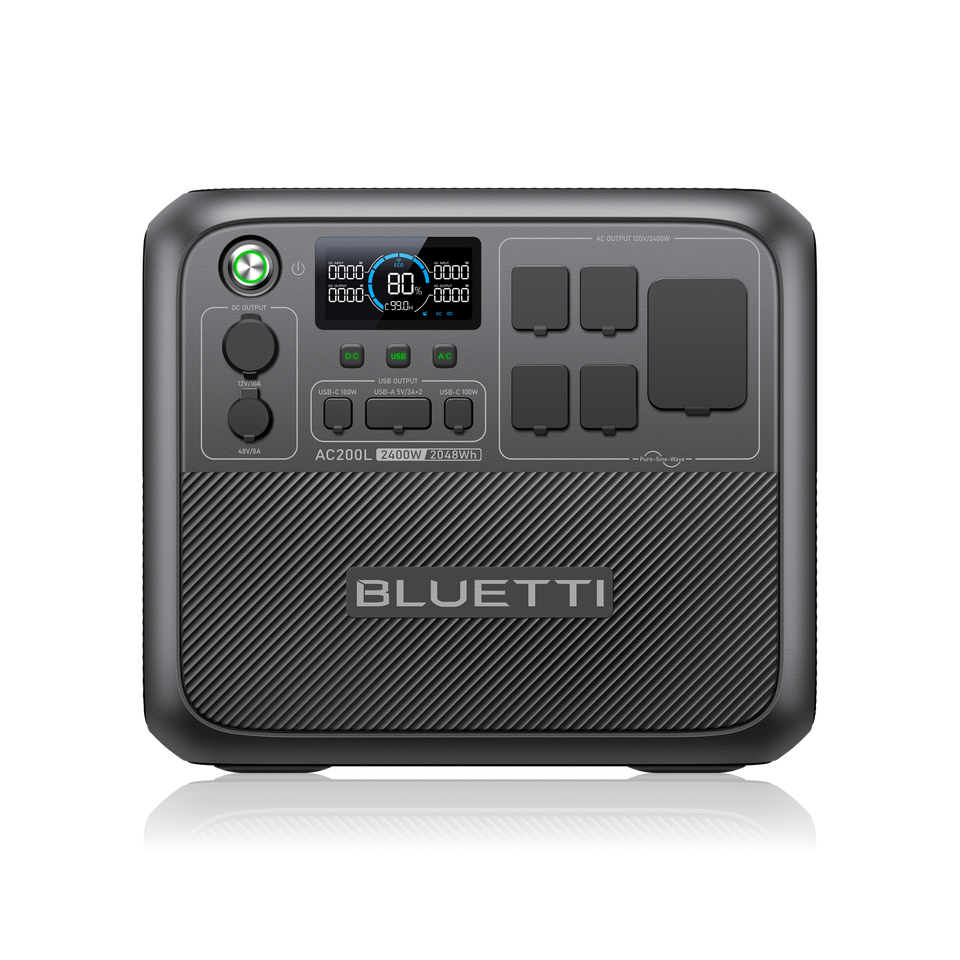
BLUETTI AC200L
Combines a high-efficiency 2,048Wh expandable platform, 1,200W high-voltage solar input (12–145V), and dedicated 30A TT-30R + 48V DC RV outputs at strong street pricing, trading away light weight and built-in wheels.
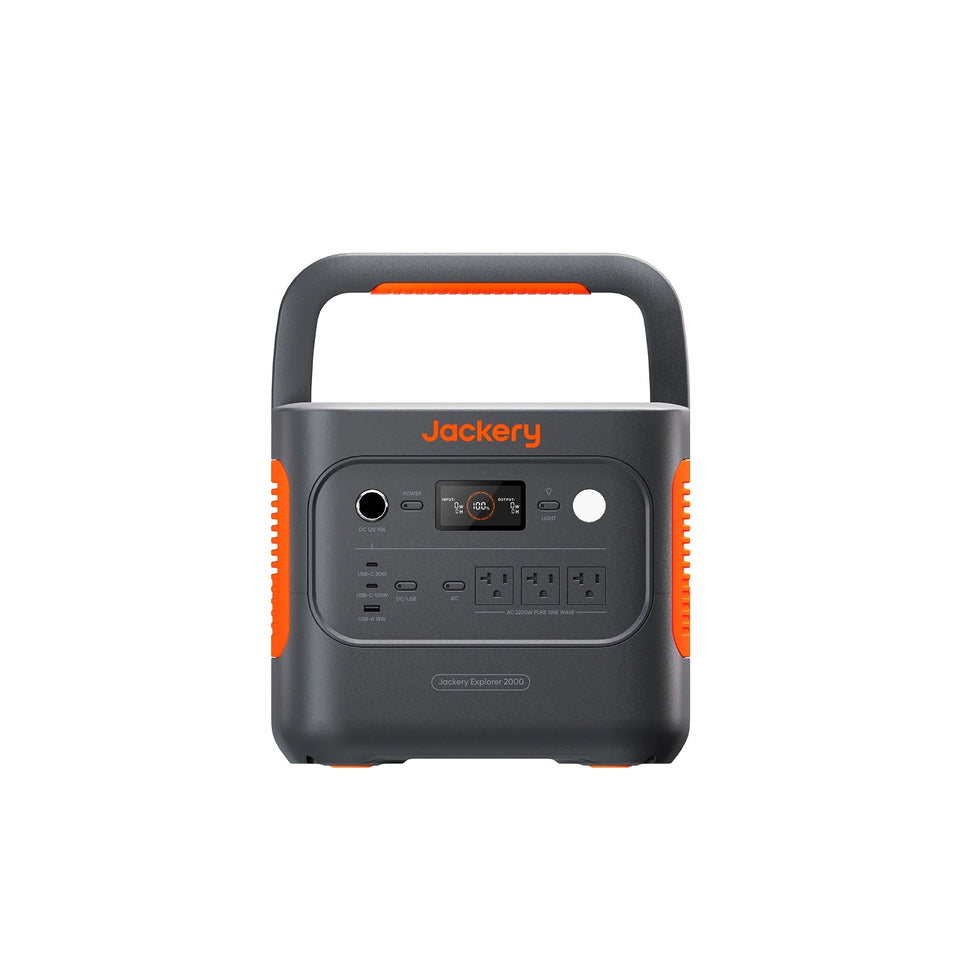
Jackery Explorer 2000 v2
A breakthrough 39.5 lb chassis makes 2,042Wh genuinely single-hand portable for camping and apartments, provided you accept its 400W solar recharge ceiling and non-expandable battery.

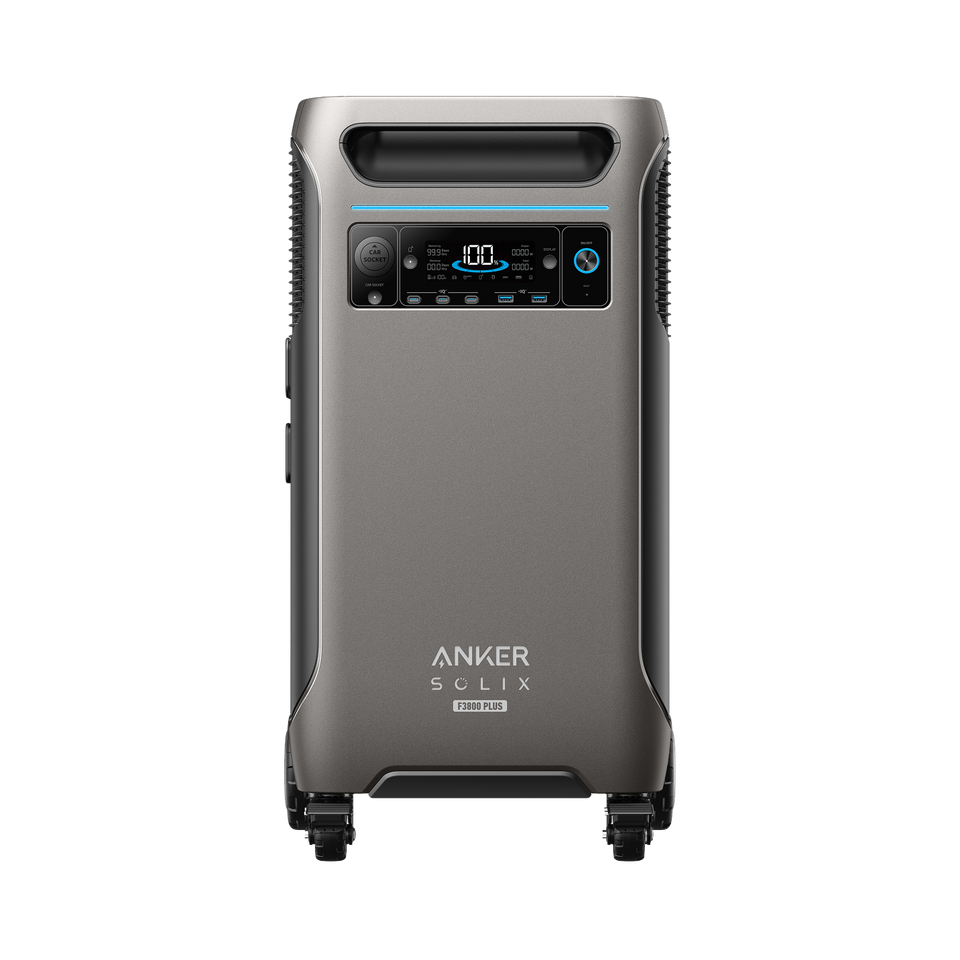
Anker SOLIX F3800
One of the most approachable plug-and-play 120V/240V wheeled units thanks to built-in NEMA 14-50R and L14-30R ports, though high idle overhead on light loads and the 60V solar cap (on the original non-Plus SKU) require careful sizing.
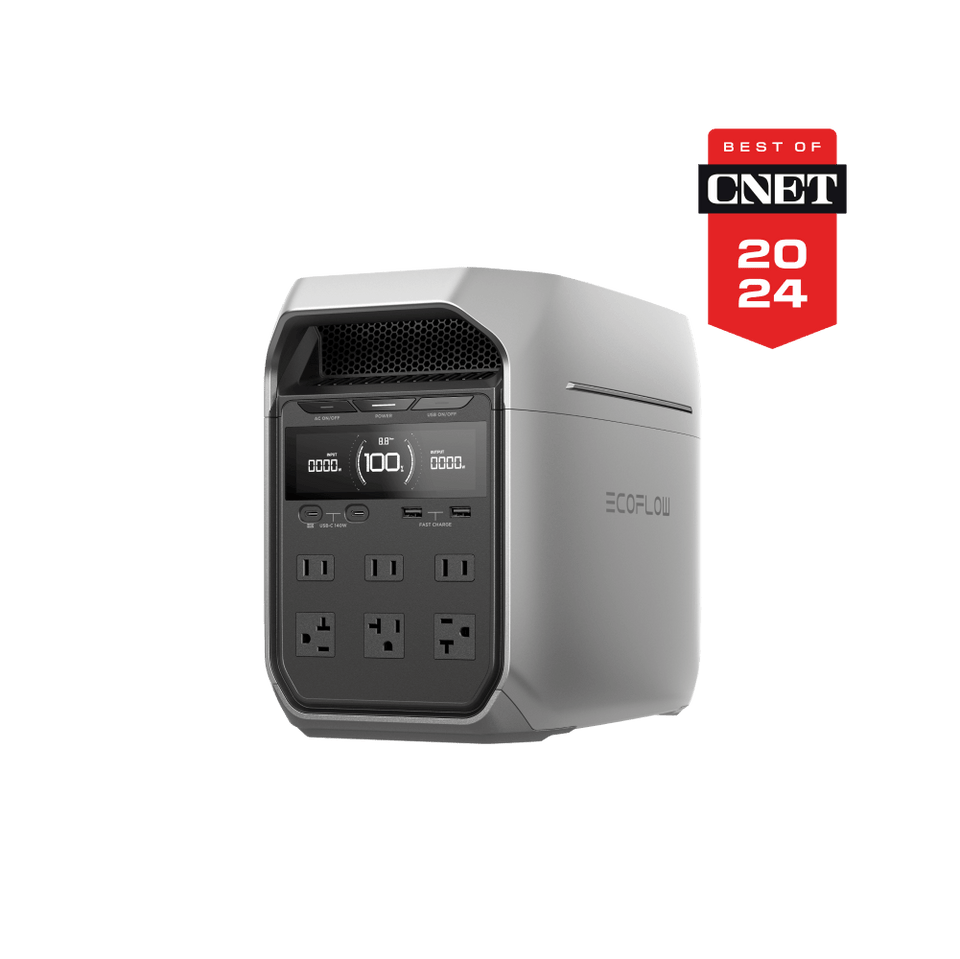
EcoFlow DELTA 3 Plus
Packs 1,000W dual-MPPT solar charging, sub-1-hour AC replenishment, and a sub-10 ms HID-capable UPS into a 27.6 lb chassis, making it more versatile than non-Plus 1kWh units.
Frequently Asked Questions
Why did a 2,048Wh BLUETTI AC200L outlast a 3,840Wh Anker SOLIX F3800 in CNET's refrigerator test?+
Dual-voltage 120V/240V 6,000W inverters like the one inside the Anker SOLIX F3800 draw substantially higher continuous standby overhead than single-voltage 120V inverters. When powering a low-duty-cycle appliance like a refrigerator whose compressor rests for long stretches, inverter idle consumption consumes a huge share of stored watt-hours.
Is resistive boost mode (X-Boost, Power Lifting, SurgePad) safe for refrigerators or power tools?+
No. Resistive voltage-lowering modes—EcoFlow X-Boost, BLUETTI Power Lifting, and Anker SurgePad—intentionally drop AC output voltage to stay within current limits. They are strictly meant for simple heating coils (kettles, hair dryers, space heaters), never induction motors, refrigerators, or sensitive electronics.
What is the real difference between <10ms UPS and <=20ms EPS switching?+
Sub-10ms UPS switching (such as EcoFlow DELTA 3 Plus or Anker SOLIX C300) reliably bridges brief power drops for sensitive desktop PCs and NAS servers—especially with USB HID shutdown alerts. Standard <=20ms EPS switching protects refrigerators, CPAPs, and routers well, though finicky desktop PSUs may occasionally reboot.
Why can't I connect three 400W solar panels in series to a Jackery Explorer 2000 v2 or original Anker F3800?+
Both the Jackery Explorer 2000 v2 (16V–60V Voc) and original Anker SOLIX F3800 (11V–60V Voc per port) enforce strict 60V Open-Circuit Voltage ceilings. Wiring typical 36V–48V residential panels in series doubles or triples voltage above 60V, permanently damaging the MPPT controller.
Sources & Technical References
- View Source →[1]Third-Party Independent ReviewCNETVerified 2026-11-24CNET Portable Power Station Lab Efficiency & Refrigerator Runtime Benchmarks
Documents standardized refrigerator runtime and round-trip efficiency testing including BLUETTI AC200L (77.76% RTE, >29h fridge test) and Anker SOLIX F3800 (~25.68h fridge stress runtime due to dual-voltage inverter overhead).
- View Source →[2]Manufacturer SpecificationBLUETTI US OfficialVerified 2026-11-24BLUETTI AC200L Portable Power Station Official Specifications
2,048Wh LFP, 2,400W continuous AC, 3,600W Power Lifting mode, NEMA TT-30R + 48V/8A DC RV port, 1,200W solar (12-145V).
- View Source →[3]Manufacturer SpecificationJackery US OfficialVerified 2026-11-24Jackery Explorer 2000 v2 Product Page & User Guide
2,042Wh LFP Cell-to-Body design, 39.5 lbs weight, 2,200W continuous AC, 400W dual DC8020 solar input.
- View Source →[4]Manufacturer SpecificationAnker SOLIX US OfficialVerified 2026-11-24Anker SOLIX F3800 Portable Power Station Official Specifications
North American model specs including NEMA 14-50R, L14-30R, 6,000W output, 3,840Wh capacity, and 11-60V dual solar input.
- View Source →[5]Manufacturer SpecificationEcoFlow US OfficialVerified 2026-11-24EcoFlow DELTA 3 Plus Official Specifications
1,024Wh LFP, 1,800W continuous AC, 1,000W dual 500W MPPT solar, <10ms UPS, 1,500W X-Stream AC charging.