Can a Solar Generator Power a Window AC? BTU, Surge & Overnight Runtime Guide
Compare window AC running and surge watts (5,000–12,000 BTU), inverter vs. standard compressors, and real 1kWh–6kWh battery runtime plus solar array sizing.
Yes—a pure sine wave solar generator with a 1,800W–2,400W+ inverter can start and run most 5,000–12,000 BTU window ACs, especially low-surge inverter-compressor models. However, cooling burns energy rapidly: a 1,024Wh unit typically yields only 1–2 hours of summer cooling, whereas overnight bedroom relief requires 2kWh–5kWh+ expandable batteries paired with 1,000W+ solar arrays.
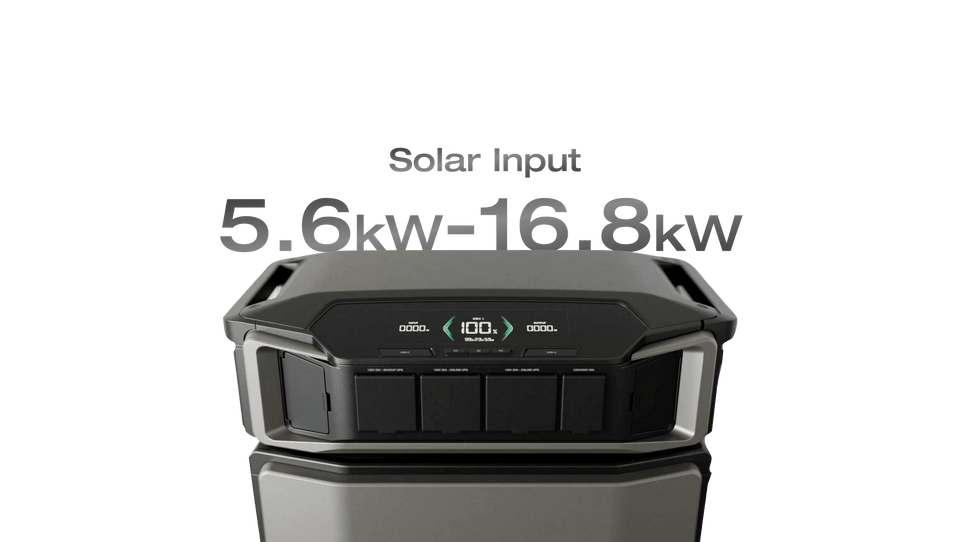
When summer grid failures push indoor temperatures past 90°F, cooling a single bedroom quickly climbs to the top of any blackout checklist. Unfortunately, pairing a window air conditioner with a portable battery exposes the harshest math in off-grid power: cooling takes both high starting wattage and relentless kilowatt-hours.
Buyers frequently plug a bedroom window AC into a 1,000Wh station expecting sleep until sunrise—only to hear the inverter alarm sound 90 minutes later, or watch a legacy compressor trip an overload warning on startup. Sizing a cooling setup accurately requires balancing three variables together: window AC BTU and compressor type, inverter surge headroom, and multi-kilowatt-hour battery plus solar recovery.
Window AC BTU vs. Inverter Watts vs. Compressor Surge
Air conditioner cooling output is rated in BTUs (British Thermal Units per hour), but power stations care about running watts and startup surge watts. Those numbers change dramatically depending on whether your window unit uses a legacy single-speed compressor or a modern variable-speed inverter compressor:
| Window AC Size | Room Coverage | Typical Running Draw | Legacy Non-Inverter Startup Surge | Variable-Speed Inverter AC Startup | Minimum Pure Sine Wave Station |
|---|---|---|---|---|---|
| 5,000–6,000 BTU | 100–250 sq. ft. (small bedroom) |
~450W–600W (drops lower on inverter Eco) | 1,200W–1,800W | Soft-ramped (~500W–800W ramp) |
1,000W–1,800W+ continuous |
| 8,000 BTU | 250–350 sq. ft. (medium bedroom) |
~700W–900W | 1,800W–2,400W+ | Soft-ramped (~800W–1,100W ramp) |
1,800W–2,200W+ continuous |
| 10,000–12,000 BTU | 350–550 sq. ft. (living room / studio) |
~950W–1,300W | 2,200W–3,000W+ | Soft-ramped (~1,100W–1,500W ramp) |
2,000W–2,400W+ continuous |
| 14,000–18,000 BTU | 550–850+ sq. ft. |
~1,300W–1,800W+ (some require 240V) |
3,200W–4,500W+ | Check unit voltage (120V vs 240V) |
2,400W–7,200W (check voltage) |
Why Inverter-Compressor Window ACs Change the Off-Grid Equation
Legacy single-speed compressors stall briefly on every startup—pulling 2.5× to 3.5× their running wattage in locked-rotor current. Because manufacturer power station datasheets rarely publish exact surge durations in milliseconds, cutting startup margin too close on a legacy 8,000–12,000 BTU AC risks nuisance overloads (read Continuous Output vs. Surge Output).
Variable-speed inverter window units (such as Midea U-shaped Inverter or LG Dual Inverter models) solve two problems at once:
- Smooth Ramp-Up: Electronic variable-frequency drives start the compressor gently, eliminating harsh 2,500W–3,000W spikes.
- Throttled Cruise Wattage: Once an insulated bedroom hits 75°F–76°F, an inverter compressor often settles down to
180W–350Winstead of slamming on and off at600W–900Wall night—cutting battery drain noticeably.
Never rely on resistive boost features like EcoFlow X-Boost or BLUETTI Power Lifting to “stretch” an undersized inverter for air conditioning. Those modes intentionally lower output AC voltage for heating elements and will stall or harm inductive AC compressor motors.
Exact Runtime & Solar Recharge Table (1kWh vs. 2kWh vs. 5kWh–6kWh)
Assuming standard 78%–88% AC usable efficiency on moderate-to-heavy cooling loads, here is what real LFP power stations actually deliver—and how much solar array wattage you need to replace that cooling energy under typical sunny outdoor output (58%–72% of rated panel watts across ~4.5–5.5 NREL Peak Sun Hours):
| Power Station Tier | Rated / Usable AC Wh | 5,000–6,000 BTU (~500W steady / ~350W Eco cycling) |
8,000–12,000 BTU (~950W–1,100W avg) |
Max Solar Input & Recovery Reality |
|---|---|---|---|---|
EcoFlow DELTA 3 Plus (1,800W AC) |
1,024 Wh (~800–900 Wh AC) |
~1.6–1.8 hrs steady (~2.3–2.6 hrs cycling) | ~0.7–0.9 hrs (45–55 min) |
1,000W dual MPPT (~1.8–2.2 sun-hrs full refill; battery too small alone for night cooling) |
Jackery Explorer 2000 v2 (2,200W AC) |
2,042 Wh (~1,600–1,800 Wh AC) |
~3.2–3.6 hrs steady (~4.5–5.1 hrs cycling) | ~1.5–1.9 hrs | 400W solar cap (~7.1–8.8 sun-hrs for 1 refill—cannot keep up with multi-day AC cooling) |
BLUETTI AC200L (2,400W AC, expandable to 8.2kWh) |
2,048 Wh (~1,600–1,800 Wh AC) |
~3.2–3.6 hrs base (~8–10+ hrs with 1 × B300K battery) | ~1.5–1.9 hrs base (~3.5–4.5 hrs expanded) | 1,200W MPPT (12–145V Voc; refills base 2kWh in ~2.4–2.9 sun-hrs) |
Jackery Explorer 5000 Plus (7,200W AC, expandable to 60.5kWh) |
5,040 Wh (~3,930–4,435 Wh AC) |
~7.9–8.9 hrs steady (~11–12.5 hrs cycling) | ~3.6–4.7 hrs continuous | 4,000W High-PV + 1,200W Low-PV (supports multi-kilowatt daily cooling arrays) |
EcoFlow DELTA Pro Ultra (7,200W AC, expandable to 90kWh) |
6,144 Wh (~4,790–5,405 Wh AC) |
~9.6–10.8 hrs steady (~13.5–15+ hrs cycling) | ~4.4–5.7 hrs continuous | 5,600W dual MPPT (80–450V + 30–150V; recovers 6kWh quickly on rigid arrays) |
Run your exact BTU wattage and compressor duty cycle in our Battery Runtime Calculator and size panels in the Solar Charging Calculator.
Why 1kWh Batteries Disappoint in Summer Heat—and What Works Overnight
Look closely at the table above: a standalone 1,024Wh power station covers barely 1 to 2 hours of air conditioning—fine for cooling a bedroom right before bedtime, useless for sleeping through a humid 85°F night. Even a 2,048Wh standalone unit struggles to finish a full 8-hour night unless paired with a throttled inverter-compressor 5,000–6,000 BTU AC in a tightly sealed bedroom.
To reliably cool a bedroom overnight (8 hours) and recharge the next day during a multi-day heatwave blackout, target:
- Battery Storage: 4kWh–6kWh+ (for example, an expandable BLUETTI AC200L + B300K expansion stack, a Jackery Explorer 5000 Plus, or an EcoFlow DELTA Pro Ultra).
- Solar Input & Array: 1,000W–2,400W+ of solar panels (matching your station’s MPPT
Voclimit!) so a5–6Peak Sun Hour summer day recovers3,500–8,000 Whfor the upcoming night—or even offsets daytime cooling live while topping off batteries.
Window AC vs. Single-Hose Portable AC vs. DC Camping Units
Not all air conditioners waste the same watt-hours per degree of cooling:
- Window ACs (Best Residential Efficiency): Both the noisy compressor and hot condenser exhaust coil sit outside the window seal, cooling the room cleanly with zero indoor negative pressure.
- Single-Hose Portable ACs (Worst Off-Grid Efficiency): Suck room air across their condenser and blow it out the window, creating negative indoor pressure that pulls hot humid air back in under bedroom doors—often forcing an
1,150Wportable unit (~6.9 kWhover 6 hours) to work nearly twice as hard as a window unit. - 24V DC Micro-Cooling Units (For Tents & Vans Only): Purpose-built portable coolers like
2,300–5,100 BTUcamping units (~240W–450Wvia DC) save DC-to-AC conversion losses for tiny spaces, though they cannot cool a full residential bedroom in a heatwave.
Safe Plug-and-Play Setup & Summer Thermal Limits
- Standard 120V AC Plug-In Only: Plug your window AC’s factory
NEMA 5-15PLCDI safety cord straight into a pure sine wave120VAC outlet on the power station. Never cut cords or run custom DC wiring to an AC air conditioner. If a short extension cord is unavoidable, use a heavy-duty12 AWGappliance-rated cord—thin16 AWGhousehold cords overheat and drop voltage under8A–12Acompressor surges. - Cool One Sealed Room: Hang blankets over doorways if needed, close blinds on sun-facing windows, clean the window AC filter monthly, and set the thermostat to 75°F–78°F (
EcoorSleepmode) rather than62°F. - Protect Your Battery From Summer Heat: Never leave the power station sitting in direct sunlight behind a hot glass window while solar panels charge outdoors. Most LFP packs halt charging above
104°F–113°F(40°C–45°C)—keep the station shaded inside with6+ inchesof vent clearance so inverter fans can cool properly. - Verify Solar
VocLimits: Confirm that your outdoor panel string open-circuit voltage (Voc) stays safely below your station’s manual ceiling (e.g.,60Von DELTA 3 Plus/Jackery 2000 v2 Low-PV vs.145Von AC200L vs.450VHigh-PV on 5000 Plus/DELTA Pro Ultra). See Expandable Battery Systems Explained if planning add-on packs for multi-day heatwaves.
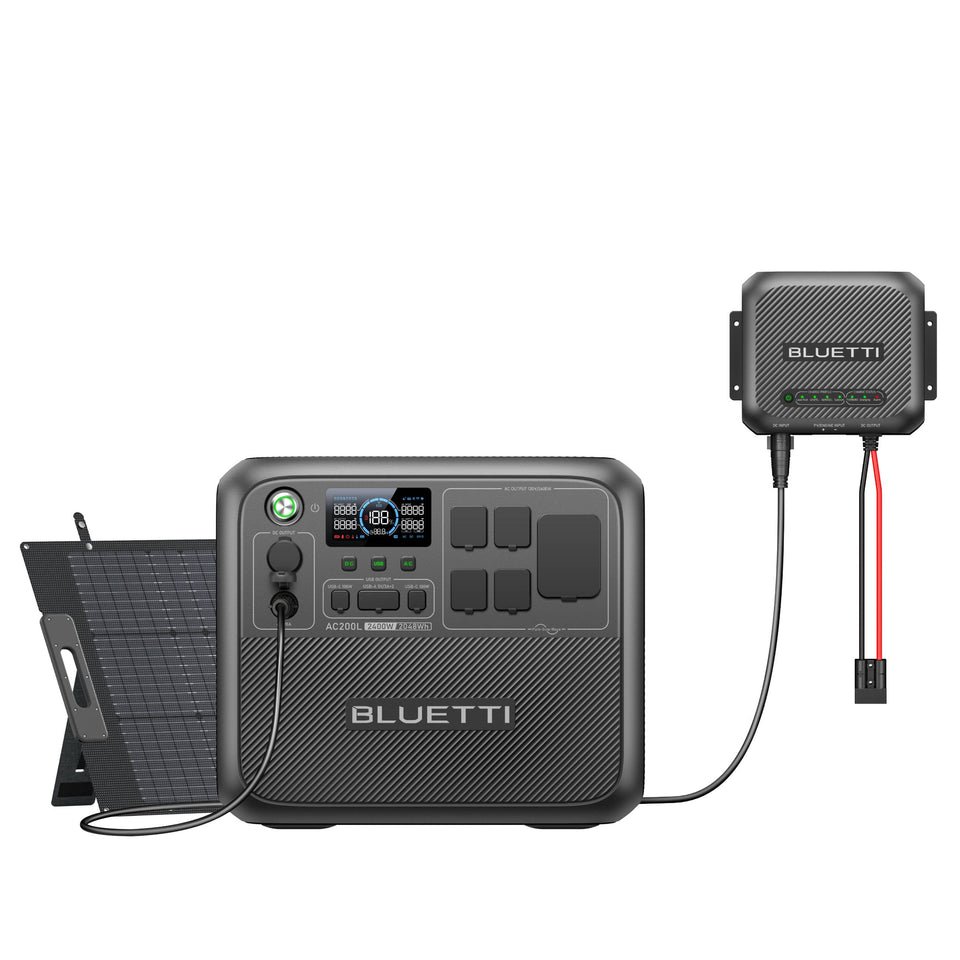
Models Discussed in This Article
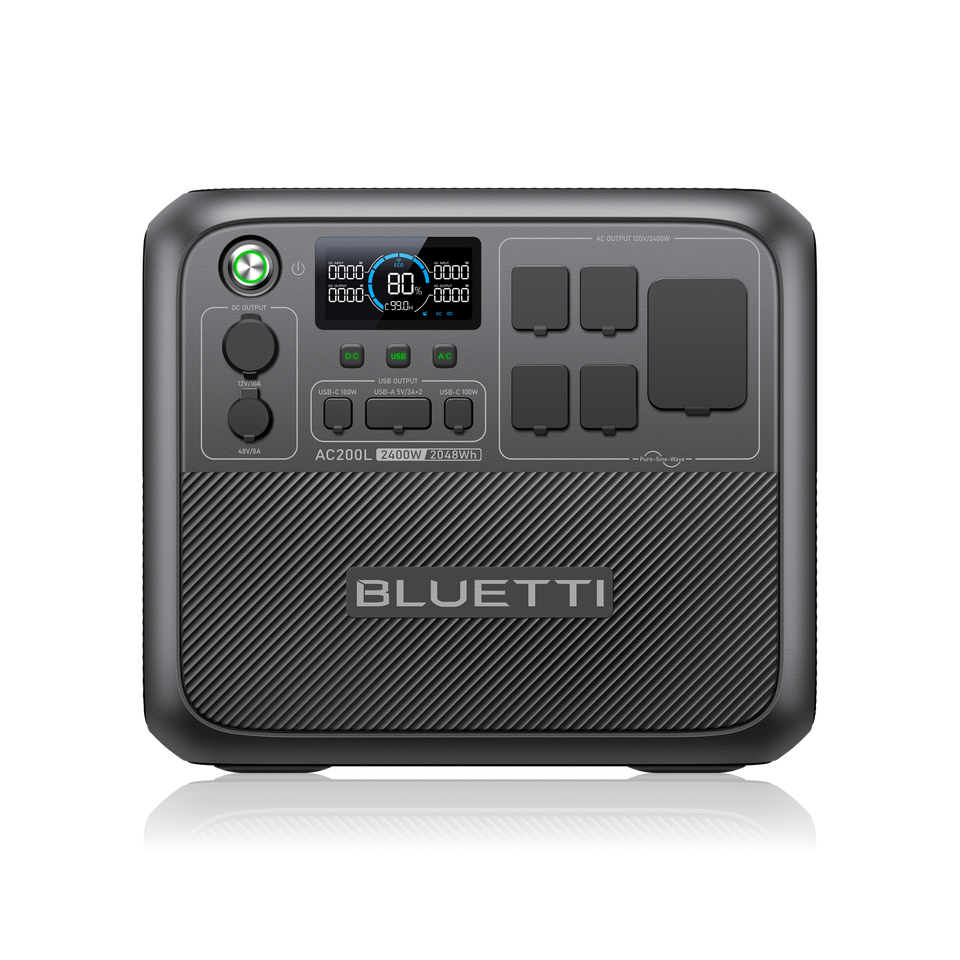
BLUETTI AC200L
Combines a high-efficiency 2,048Wh expandable platform, 1,200W high-voltage solar input (12–145V), and dedicated 30A TT-30R + 48V DC RV outputs at strong street pricing, trading away light weight and built-in wheels.
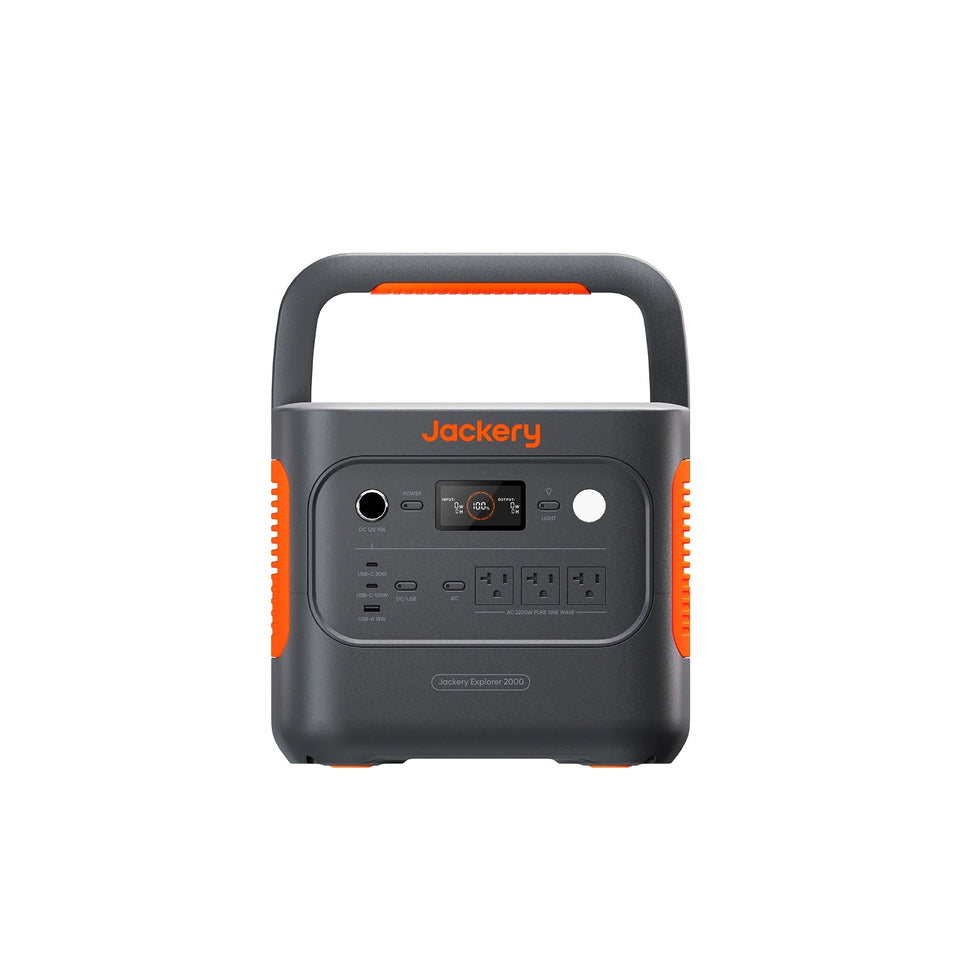
Jackery Explorer 2000 v2
A breakthrough 39.5 lb chassis makes 2,042Wh genuinely single-hand portable for camping and apartments, provided you accept its 400W solar recharge ceiling and non-expandable battery.
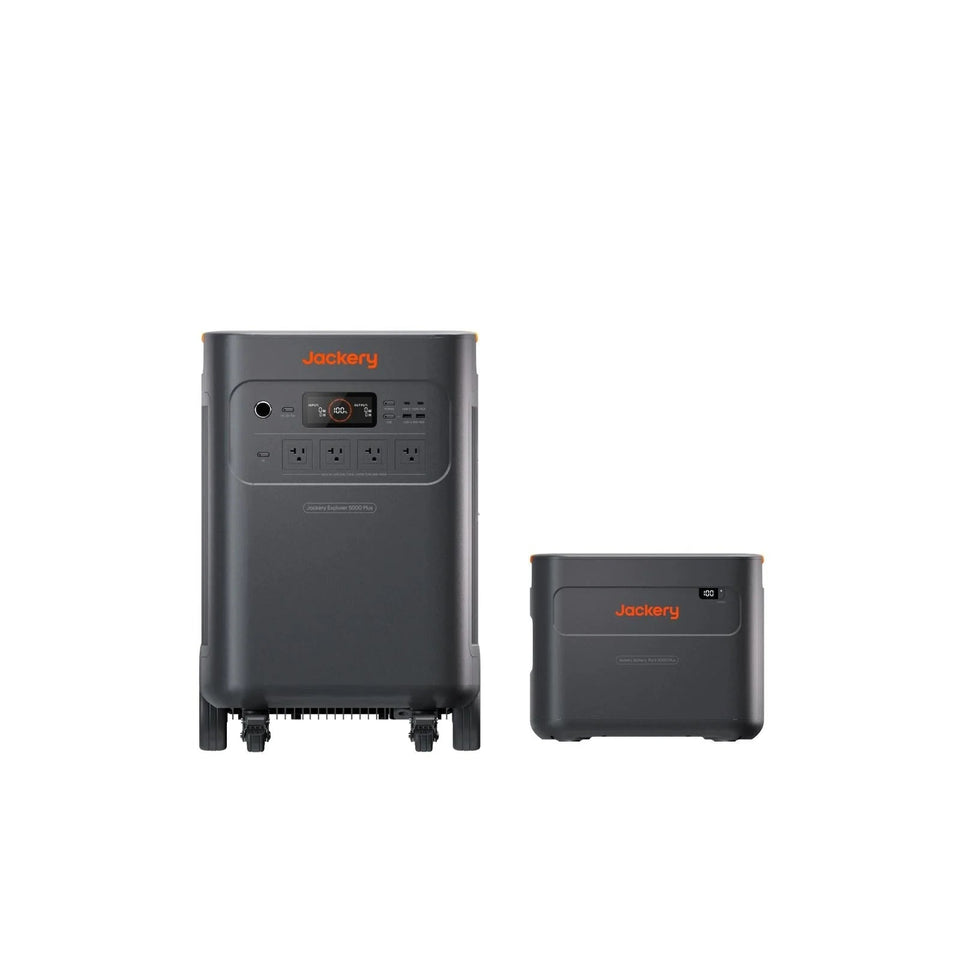
Jackery Explorer 5000 Plus
Combines a 5,040Wh LFP core, 7,200W split-phase output, 14,400W published surge headroom, and both High-PV (135–450V) and Low-PV solar inputs in a single wheeled chassis.
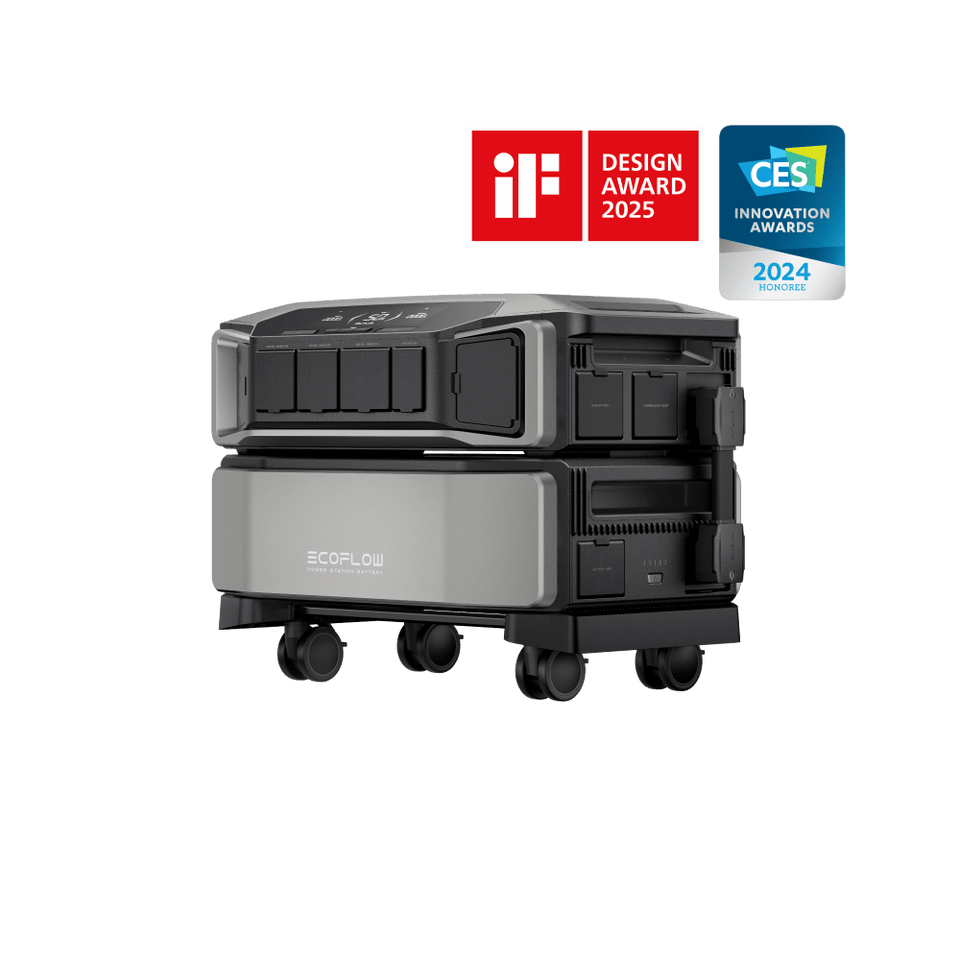
EcoFlow DELTA Pro Ultra
Built specifically for homeowners seeking high-voltage solar input (up to 5,600W) and modular 6kWh-per-stack scaling, though total kit cost and modular footprint exceed casual portable needs.
Frequently Asked Questions
Can a 1,000Wh solar generator run a 5,000 BTU window AC all night?+
No. A 1,024Wh station delivers roughly 800–900 Wh of usable AC energy after DC-to-AC conversion losses. Even an efficient 5,000–6,000 BTU window AC drawing 450W–550W will drain a 1,024Wh pack in roughly 1.5 to 2.2 hours (depending on compressor cycling). Overnight bedroom cooling of 7–8 hours requires 3kWh–5kWh+ of battery capacity or an inverter-compressor AC throttled in Eco mode on an expandable 2kWh+ stack.
Why does an inverter window AC work so much better on a solar generator than a standard unit?+
Traditional fixed-speed window ACs slam the power station with a 1,200W–3,000W+ startup surge every time the thermostat clicks on, then run at 100% power until cycling off. Variable-speed inverter window ACs (such as Midea U-shaped or LG Dual Inverter units) ramp their compressor up gently with almost no surge spike and throttle down to 200W–350W once the room cools.
Can I use BLUETTI Power Lifting or EcoFlow X-Boost to run a large AC on a smaller inverter?+
No. Resistive boost features lower output AC voltage so simple heating coils (like hair dryers or kettles) draw fewer watts without tripping overload. Window AC compressors and electronics require full 120V pure sine wave voltage and will either stall, overheat, or shut down under voltage-throttled modes.
Do I need special DC wiring to connect a window AC to a solar generator?+
No—never splice DC wires onto a household air conditioner. Standard US window ACs run on 120V AC using a factory NEMA 5-15P LCDI safety plug. Plug the air conditioner straight into the power station's 120V pure sine wave AC outlet (keeping the power station indoors in a dry, shaded space).
Sources & Technical References
- View Source →[1]Manufacturer SpecificationBLUETTI US OfficialVerified 2026-11-24BLUETTI AC200L Portable Power Station Official Specifications
2,048Wh LFP, 2,400W continuous AC, 3,600W Power Lifting mode, NEMA TT-30R + 48V/8A DC RV port, 1,200W solar (12-145V).
- View Source →[2]Manufacturer SpecificationJackery US OfficialVerified 2026-11-24Jackery Explorer 2000 v2 Product Page & User Guide
2,042Wh LFP Cell-to-Body design, 39.5 lbs weight, 2,200W continuous AC, 400W dual DC8020 solar input.
- View Source →[3]Manufacturer SpecificationJackery US OfficialVerified 2026-11-24Jackery Explorer 5000 Plus Official Product Specifications
5,040Wh LFP capacity, 7,200W/14,400W AC specs, High-PV (135-450V) and Low-PV (16-60V) limits, and warranty terms.
- View Source →[4]Manufacturer SpecificationEcoFlow US OfficialVerified 2026-11-24EcoFlow DELTA Pro Ultra Product Page & Specifications
Official North American 120V/240V split-phase inverter and 6,144Wh LiFePO4 battery module specs.
- View Source →[5]Government Research ResourceNational Renewable Energy Laboratory (NREL)Verified 2026-11-24PVWatts & US Peak Sun Hours Reference Data
Documents regional peak sun hours and real-world photovoltaic derating factors (ambient heat, angle, shading, controller loss).