EcoFlow WAVE 2 Portable AC & Heater: Pricing Tiers, DC Efficiency & Battery Runtime
EcoFlow WAVE 2 pricing and battery economics: 5,100 BTU cooling, 300W–550W AC vs. XT150 DC power draw, solar limits, and 3–8 hr sleep-mode runtime.
EcoFlow WAVE 2 delivers 5,100 BTU cooling and 6,100 BTU heating while drawing roughly 350W–550W on AC or 300W–495W via XT150 DC (dropping near 200W in Eco cycling). Launched at $1,299 standalone or $1,699 with its 1,159Wh NCM add-on battery (now largely superseded by WAVE 3), overnight Eco runtime spans ~3–8 hours depending on ambient heat—making direct DC XT150 cabling far more efficient than 1,024Wh AC inversion.
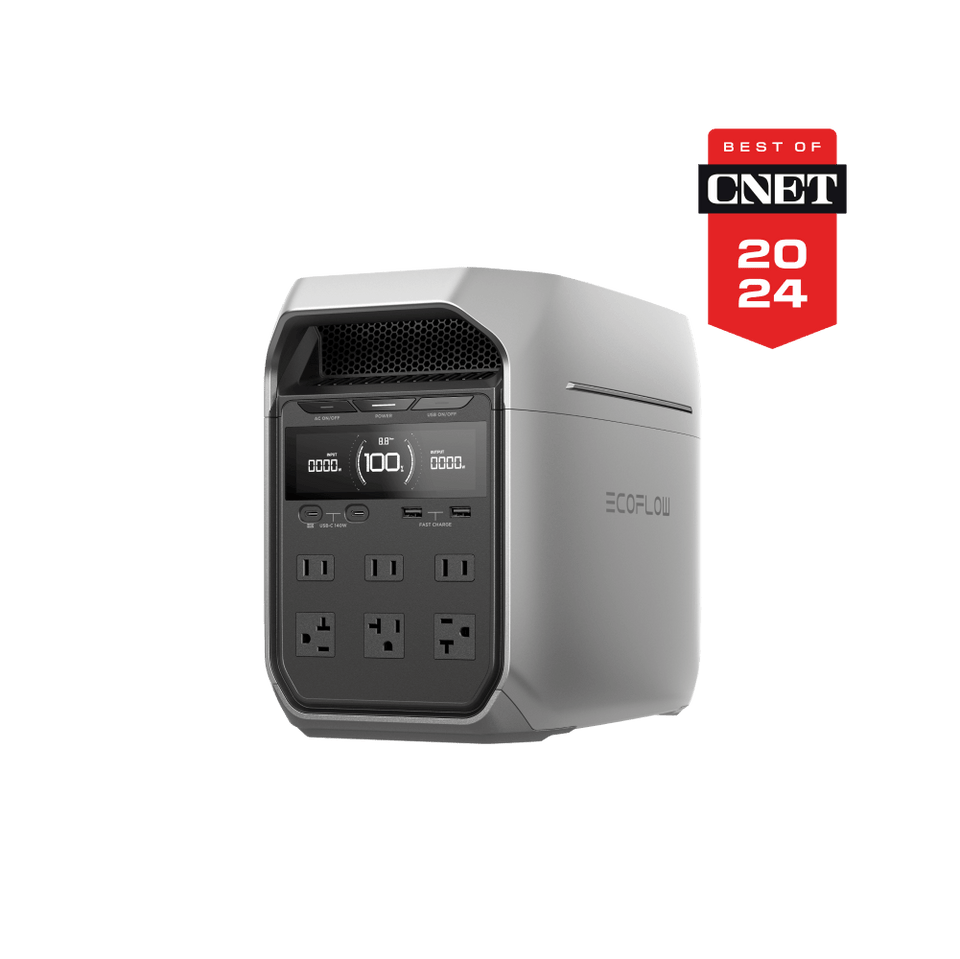
Air conditioning is the quickest way to humble a portable power station. Unlike a 45W 12V camping fridge that cycles gently at 15W average, an inverter compressor pushing refrigerated air through a hot tent or truck sleeper pulls sustained hundreds of watts for hours straight.
EcoFlow designed the WAVE 2 (5,100 BTU cooling / 6,100 BTU heating, ~32 lbs standalone) specifically to bridge that off-grid thermal problem—packing a variable-speed DC compressor, dual-duct ventilation, and direct XT150 DC battery support into a suitcase-sized frame. Knowing how its pricing tiers, AC vs. DC conversion physics, and 2025–2026 WAVE 3 transition affect real battery cost keeps buyers from overpaying or expecting whole-RV central cooling from a 5,100 BTU spot cooler.
Pricing Tiers & The 2026 Market Shift Toward WAVE 3
When EcoFlow launched the WAVE 2 in North America, retail pricing followed two core tiers:
- WAVE 2 Standalone Unit (
$1,299MSRP): The32 lbAC/heater chassis alone (120V/240VAC wall plug included), designed to run on shore power, generator AC, or an external power station. - WAVE 2 +
1,159WhAdd-On Battery Bundle ($1,699MSRP): Added the clip-on50.4V / 1,159Whdock battery for an extra$400(~$0.34/Wh) plus built-in400WXT60 solar input (11V–60V,13A).
Two major updates shape how smart shoppers evaluate WAVE 2 pricing in 2026:
- Succession by WAVE 3 (
April 2025): EcoFlow released the higher-output WAVE 3 (6,100 BTUcooling /6,800 BTUheating) with a1,024WhLiFePO4 dock battery (4,000cycles). As a result, new WAVE 2 inventory sits largely in clearance or refurbished liquidation channels (~$699–$999standalone when stock surfaces), while WAVE 3 bundles occupy the$1,369–$1,799bracket. - NCM vs. LFP Chemistry Trade-Off on the
1,159WhBattery: Unlike current LFP power stations rated for3,000–4,000cycles, the original WAVE 21,159WhAdd-On Battery uses NCM (Li-ion) cells rated for roughly800 cyclesto 80%. Even at$400incremental cost, that dock battery only powers the WAVE unit (plus two minor USB ports) and ages faster than a multi-purpose LiFePO4 power station like the EcoFlow DELTA 3 Plus (4,000LFP cycles) or BLUETTI AC200L (3,000+LFP cycles). (Bonus tip: EcoFlow kept dock compatibility across generations, allowing leftover WAVE 2 add-on batteries to mate with newer WAVE 3 bodies on clearance bundles.)
Wattage Economics: Why AC Power Stations Waste Energy vs. XT150 DC
Look closely at EcoFlow’s official input ratings for the WAVE 2:
| Operating Mode | Rated AC Input (120V Cord) |
Rated DC Input (XT150 Umbilical) |
Approximate Eco / Cycling Draw |
|---|---|---|---|
Cooling (5,100 BTU) |
~550W rated (~400W Normal / ~535–550W Max) |
~495W rated (~345W Normal / ~460–495W Max) |
~198W–300W (DC) vs. ~238W–350W (AC) |
Heating (6,100 BTU) |
~600W rated |
~540W rated |
Varies by ambient delta |
| Max Combined Charge + Run | 820W max AC input |
700W max from dock battery (400W solar) |
Not applicable |
Why does running the WAVE 2 off a standard 120V AC wall plug pull 10%–15% more watts than DC? Because the compressor inside the WAVE 2 runs on DC electricity. Plugging its AC cord into a standalone 1,024Wh AC power station forces double conversion:
- The power station battery steps DC up to
120VAC (shedding~8%–14%in inverter heat and idle overhead). - The WAVE 2’s internal power supply steps
120VAC right back down to DC for the compressor.
Connecting the WAVE 2 directly via EcoFlow’s XT150 DC umbilical cable (native to the 1,159Wh add-on battery and compatible EcoFlow DELTA 2 / DELTA 2 Max / DELTA Pro* ecosystems) eliminates the AC inverter completely—turning a ~550W Max draw down toward ~460W–495W and reclaiming roughly 40–60 minutes of sleep runtime per 1kWh of storage.
(Compare that against micro-compressor camping coolers like the ZERO BREEZE Mark 2, which draws ~240W on 24V DC but outputs only 2,300 BTU—less than half of WAVE 2’s 5,100 BTU cooling capacity.)
Realistic Overnight Runtime Math (3–8 Hours Explained)
Manufacturers frequently advertise “up to 8 hours” of runtime. Here is what the math actually looks like under three realistic power pairings:
| Battery / Power Station Source | Connection Method | Max Cooling (~460–550W) |
Normal Cooling (~345–400W) |
Eco / Sleep Cycling (~200–320W avg) |
|---|---|---|---|---|
WAVE 2 1,159Wh Dock Battery |
Direct XT150 DC (~90% eff.) |
~2.1–2.3 hrs |
~3.0–3.4 hrs |
~4.5–7.5 hrs |
1,024Wh Generic AC Station (e.g., DELTA 3 Plus via AC) |
120V AC Inverter (~82% eff.) |
~1.5–1.7 hrs |
~2.1–2.4 hrs |
~3.0–4.2 hrs |
2,048Wh LFP Station (e.g., DELTA 2 Max via XT150 DC) |
Direct XT150 DC (~90% eff.) |
~3.8–4.2 hrs |
~5.3–5.8 hrs |
~8.0–11.5+ hrs |
2,048Wh LFP Station (e.g., Jackery 2000 v2 or BLUETTI AC200L via AC) |
120V AC Inverter (~82% eff.) |
~3.0–3.3 hrs |
~4.2–4.6 hrs |
~6.0–8.5 hrs |
Two critical variables govern whether you hit 3 hours or 8 hours overnight:
- Ambient Nighttime Drop: In humid
88°FGulf Coast nights inside an uninsulated canvas tent, the compressor barely cycles down—locking Eco power near300W–350W(~3–3.5 hrson1kWh). In dry72°Fmountain nights inside an insulated camper van, compressor cycling drops average power closer to175W–220W, stretching1,159Wh–2,048Whcleanly until sunrise. - Pre-Cooling Before Sunset: Never start running on battery at 9:00 p.m. in a
95°Fvan. Use vehicle alternator power, shore AC, or midday solar to chill the cabin down first, then switch to Eco/Sleep mode strictly to hold temperature through the night.
Solar Compatibility & Dual-Hose Ducting Physics
The WAVE 2 battery ecosystem accepts up to 400W solar (11V–60V Voc, 13A max) via XT60, while external stations like the DELTA 3 Plus (1,000W dual MPPT) or DELTA 2 Max (1,000W dual MPPT) push solar harvesting much higher.
Keep NREL’s real-world solar math in mind (covered in How Long to Charge a Power Station with Solar): a 400W portable panel typically averages 280W–330W under clear afternoon sun. That cleanly offsets Eco mode (~200W–300W DC), letting you run midday spot cooling without draining the battery—but Max mode (~495W) still pulls roughly 200W net from the cells every hour.
Finally, respect the physical envelope of 5,100 BTU (~107 sq ft / 10 m² max space):
- Why Dual-Hose Neutral Pressure Matters: Traditional single-hose portable ACs blow conditioned indoor air outside, pulling hot, humid outside air back in through every door crack and tent zipper. WAVE 2 pulls external air over its condenser coil via a separate intake hose and rejects heat out a separate exhaust hose—keeping small vans and bedrooms at neutral air pressure.
- Insulate the Exhaust Hose: Uninsulated corrugated exhaust ducts turn hot during continuous compressor runs and radiate heat back inside. Positioning the unit close to a window shroud, shortening hose bends, and wrapping the exhaust duct with reflective sleeve insulation noticeably boosts net room temperature drop.
- Remember Drain Routing: In humid climates, cooling extracts water from room air. While EcoFlow uses evaporative condensation slinging in moderate humidity, continuous humid operation still requires hooking up the drain tube (or checking internal water level warnings).
Bottom Line: Standalone vs. Bundle vs. Stepping Up to 2kWh LFP
- Best Value Configuration: Unless you spot a sharp liquidation discount on the
1,159Whbundle, pairing a discounted standalone WAVE 2 (or newer WAVE 3) with a versatile2,048WhLiFePO4 power station like the BLUETTI AC200L (1,200Wsolar,30ARV plug) or EcoFlow DELTA 2 Max (XT150DC compatible) delivers 8–11+ hours of overnight Eco cooling plus a3,000+cycle home backup battery you can use year-round. - When
1,024WhWorks: Compact weekenders running a EcoFlow DELTA 3 Plus (1,000Wsolar,27.6 lbs) work great for 2–4 hours of evening tent cooldown before sleeping—just don’t expect1,024Whover AC to run full blast from 10 p.m. to 6 a.m.
Check exact cable compatibility and calculate your camping climate wattage inside our RV Power Station Compatibility Guide or Power Station Efficiency Guide.
Models Discussed in This Article
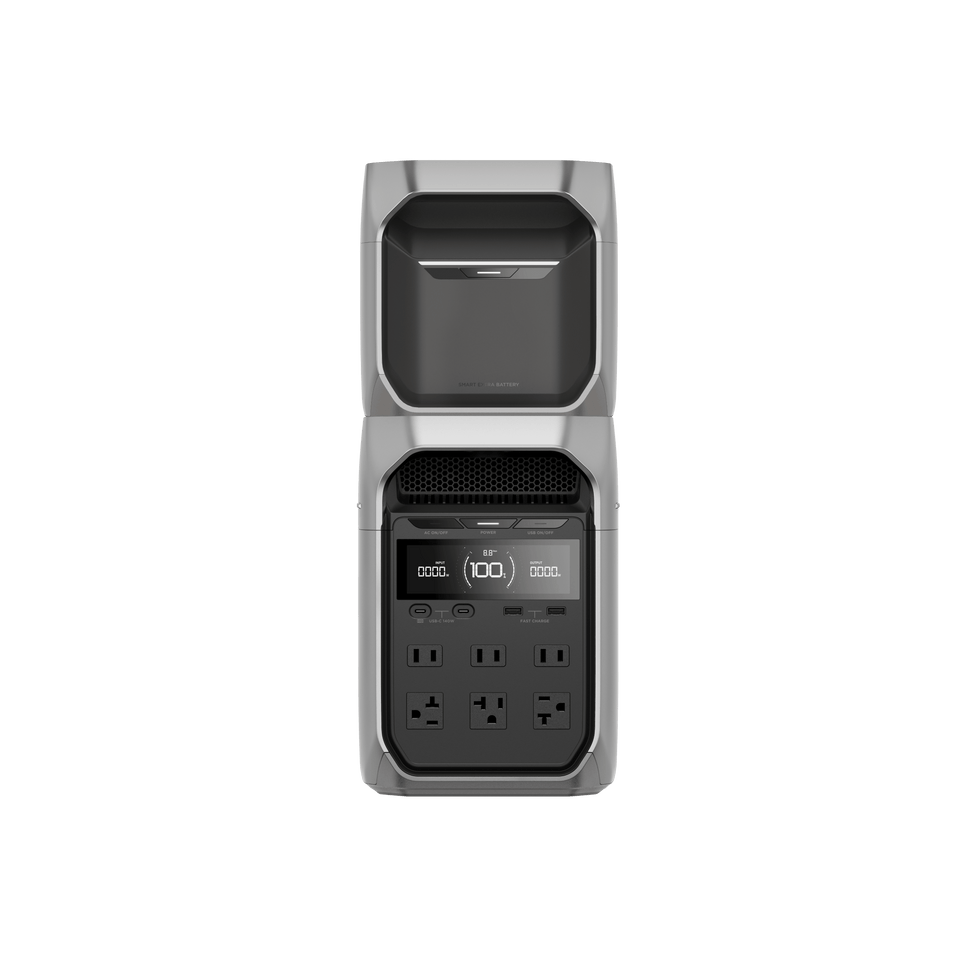
EcoFlow DELTA 3 Plus
Packs 1,000W dual-MPPT solar charging, sub-1-hour AC replenishment, and a sub-10 ms HID-capable UPS into a 27.6 lb chassis, making it more versatile than non-Plus 1kWh units.
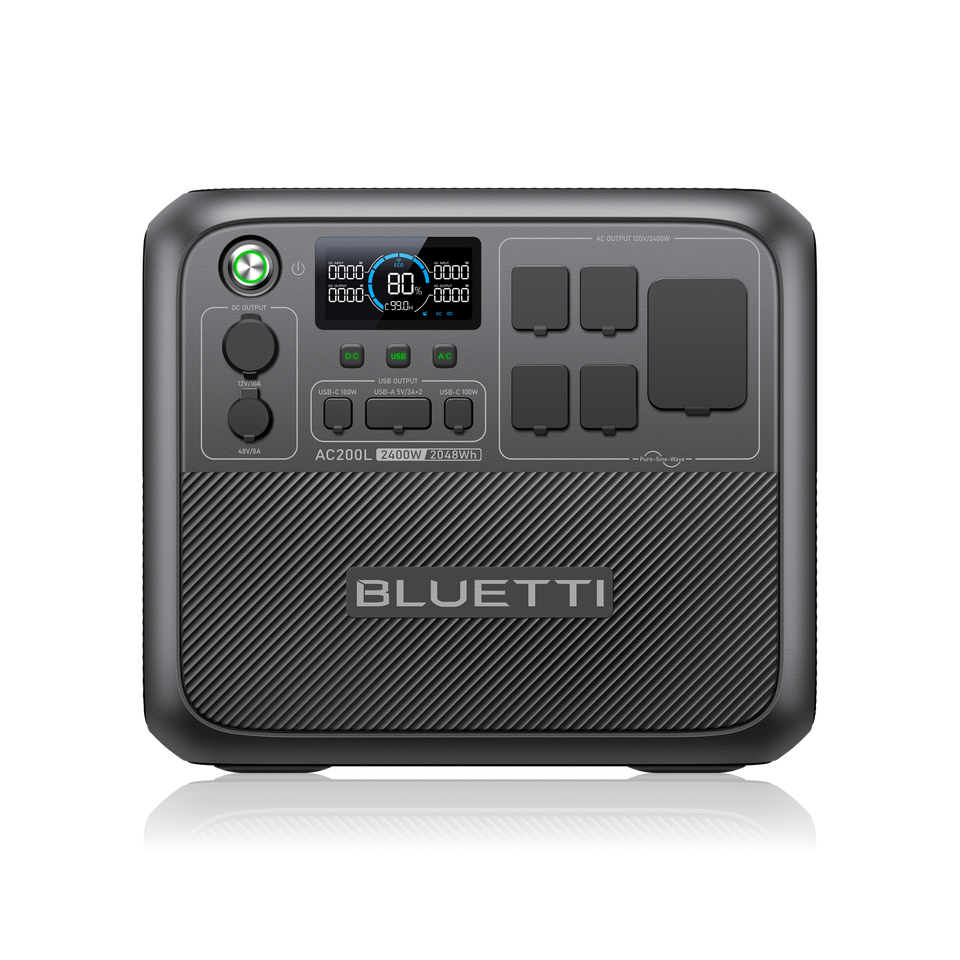
BLUETTI AC200L
Combines a high-efficiency 2,048Wh expandable platform, 1,200W high-voltage solar input (12–145V), and dedicated 30A TT-30R + 48V DC RV outputs at strong street pricing, trading away light weight and built-in wheels.
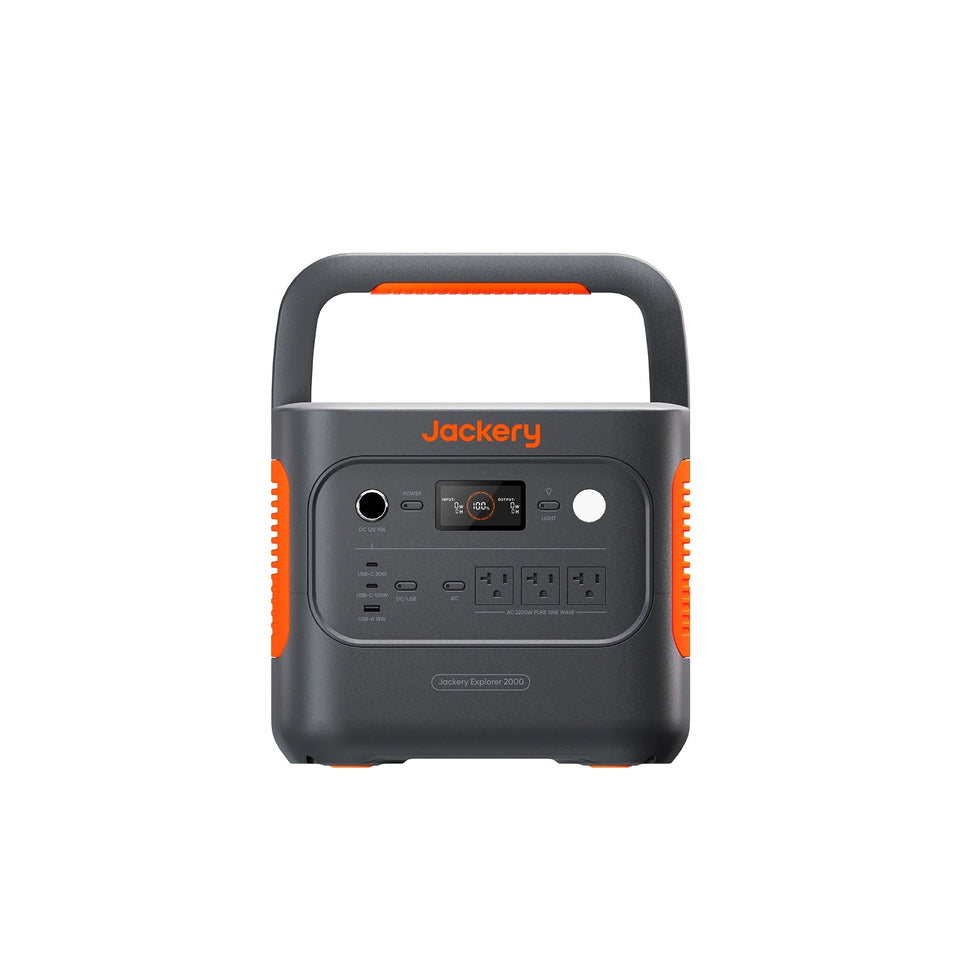
Jackery Explorer 2000 v2
A breakthrough 39.5 lb chassis makes 2,042Wh genuinely single-hand portable for camping and apartments, provided you accept its 400W solar recharge ceiling and non-expandable battery.
EcoFlow DELTA Pro Ultra
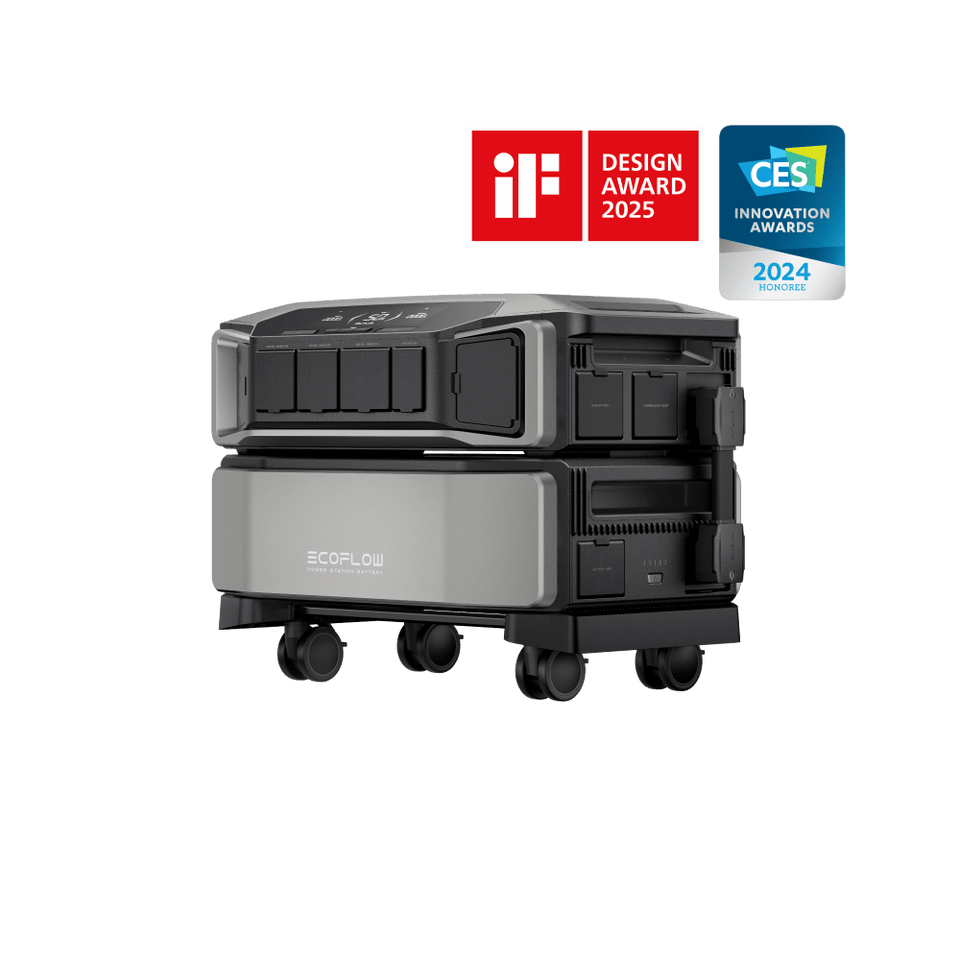
Built specifically for homeowners seeking high-voltage solar input (up to 5,600W) and modular 6kWh-per-stack scaling, though total kit cost and modular footprint exceed casual portable needs.
Frequently Asked Questions
What is the real power consumption of the EcoFlow WAVE 2 on AC vs. DC?+
EcoFlow specifies rated cooling input power at 550W on 120V AC versus 495W on direct XT150 DC (and 600W AC / 540W DC in heating mode). Once a small tent or sleeper cab reaches target temperature, Eco and Sleep cycling commonly pulls roughly 200W–350W average, whereas Max cooling runs closer to 460W–550W continuously.
How long can the EcoFlow WAVE 2 run overnight on its 1,159Wh battery or a 1,024Wh power station?+
Expect roughly 2 to 2.5 hours in continuous Max cooling on a 1,159Wh pack, 3 to 4 hours in Normal mode, and 5 to 8 hours in Eco/Sleep cycling (provided nighttime temperatures drop moderately and the space is insulated). On a generic 1,024Wh AC power station without DC XT150 direct cabling, inverter losses shrink Max runtime to ~1.5–1.8 hours and Eco runtime closer to ~3–4.5 hours.
Is the EcoFlow WAVE 2 Add-On Battery LiFePO4 or NCM, and is WAVE 2 still in production?+
The native 1,159Wh WAVE 2 Add-On Battery uses NCM lithium-ion chemistry rated for ~800 cycles to 80%, unlike modern 3,000–4,000 cycle LiFePO4 power stations. In April 2025, EcoFlow introduced the 6,100 BTU WAVE 3 with a 1,024Wh LiFePO4 battery, pushing remaining WAVE 2 units mostly into clearance and refurbished retail channels.
Can 400W of solar panels keep the EcoFlow WAVE 2 running indefinitely during the day?+
Only partially under peak sun in Eco mode. The WAVE 2 add-on battery accepts up to 400W solar (11V–60V, 13A), which typically yields 280W–330W real-world midday power. That offsets Eco cooling (~200W–300W), but Max cooling (~495W–550W) still slowly drains the battery—and solar stops at dusk, making battery watt-hours the true overnight bottleneck.
Sources & Technical References
- View Source →[1]Manufacturer SpecificationEcoFlow US OfficialVerified 2026-11-25EcoFlow WAVE 2 Portable Air Conditioner & Heater Specs
5,100 BTU cooling / 6,100 BTU heating unit with optional 1,159Wh LFP add-on battery pack and DC XT150 efficiency integration.
- View Source →[2]Manufacturer SpecificationEcoFlow US OfficialVerified 2026-11-24EcoFlow DELTA 3 Plus Official Specifications
1,024Wh LFP, 1,800W continuous AC, 1,000W dual 500W MPPT solar, <10ms UPS, 1,500W X-Stream AC charging.
- View Source →[3]Manufacturer SpecificationEcoFlow US OfficialVerified 2026-11-25EcoFlow DELTA 2 Max Portable Power Station Specifications
2,048Wh LFP expandable to 6,144Wh, 2,400W continuous AC, and dual 500W (1,000W combined) MPPT solar inputs.
- View Source →[4]Manufacturer SpecificationZERO BREEZE OfficialVerified 2026-11-25ZERO BREEZE Mark 2 Portable Air Conditioner Specifications
2,300 BTU 24V DC micro-compressor portable cooling system drawing ~240W average with 840Wh Li-ion dock battery option.
- View Source →[5]Government Research ResourceNational Renewable Energy Laboratory (NREL)Verified 2026-11-24PVWatts & US Peak Sun Hours Reference Data
Documents regional peak sun hours and real-world photovoltaic derating factors (ambient heat, angle, shading, controller loss).