High-Voltage vs. Low-Voltage Solar Inputs on Power Stations: Voc Ranges & Trade-Offs
Compare low-voltage (11–60V), mid-voltage (12–165V), and high-voltage (80–450V) MPPT solar inputs across modern portable power stations without wiring guesswork.
Low-voltage solar ports (11V–60V Voc) work safely with portable folding panels right out of the box but limit array expansion and long cable runs, whereas mid- and high-voltage MPPT inputs (up to 145V–450V Voc) unlock rigid residential panels and multi-kilowatt solar recovery—provided you strictly respect minimum start voltages, cold-weather Voc headroom, and manufacturer safety manuals.
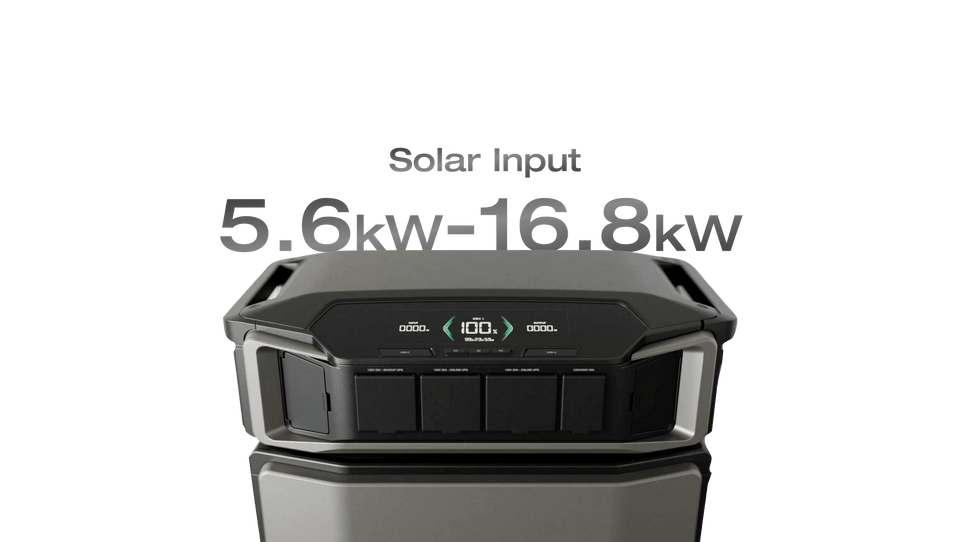
Years ago, nearly every portable power station topped out around 30V to 60V of solar input—limiting users to a few hundred watts of folding camping panels. Today, solar input windows across the US market span from tiny 28V travel ports all the way to 450V residential high-voltage MPPT channels.
Understanding the practical trade-offs between low-voltage, mid-voltage, and high-voltage solar architectures helps you buy a power station that matches the solar panels you actually plan to use—without risking costly controller damage.
Comparing the Three Solar Voltage Tiers in Our Database
| Solar Voltage Class | Example Verified Models | Published Voc Window & Max Watts | Real-World Strengths & Trade-Offs |
|---|---|---|---|
Low-Voltage Portable (<=60V) |
Anker SOLIX C300 (11–28V, 100W)BLUETTI AC70 ( 12–58V, 500W)Jackery 2000 v2 ( 16–60V, 400W)EcoFlow DELTA 3 Plus ( 11–60V, 1,000W dual)Anker SOLIX F3800 ( 11–60V, 2,400W dual) |
Up to 28V–60V max | Plug-and-play safe with standard folding panels; low shock hazard, but high current required for high watts and restricted rigid-panel flexibility. |
Mid-Voltage Flexible (up to 95V–165V) |
Pecron E1500LFP (32–95V + 12–18V, 800W)BLUETTI AC200L ( 12–145V, 1,200W)Zendure V4600 ( 12–150V, 3,000W)Anker F3800 Plus ( 11–165V, 3,200W) |
95V to 165V ceiling | Sweet spot for off-grid RVs, sheds, and midsize home backup; lowers cable current loss while tolerating higher-Voc rigid panels (check min start floors like Pecron’s 32V). |
High-Voltage Residential (up to 450V) |
EcoFlow DELTA Pro Ultra (80–450V High + 30–150V Low, 5,600W)Jackery Explorer 5000 Plus ( 135–450V High + 16–60V Low, 4,000W High) |
450V High-PV + secondary Low-PV | Delivers 4,000W–5,600W solar power with minimal line loss; carries serious high-voltage DC safety rules requiring professional design and installation. |
Why Low-Voltage Inputs Hit a Practical Wall Above 500W–1,000W
Electrical power equals Volts × Amps. When a solar port caps out at 60V max (with typical panel operating voltage around 35V–45V under load), pushing 1,200W requires ~28A–34A of DC current—demanding thick copper cabling and creating steeper voltage drops over a 30-foot extension from the yard into your garage.
That exact limitation drove Anker to release the SOLIX F3800 Plus (raising Voc from the original F3800’s 60V cap up to 165V and boosting total solar input from 2,400W to 3,200W), and explains why the 2,048Wh BLUETTI AC200L (12V–145V) is much easier to feed with 1,200W of rigid panels than a 60V-capped unit.
Watch Minimum Start Voltages and Cold-Morning Voc Spikes
High-voltage capability comes with two critical constraints:
- High Minimum Start Thresholds: On the Jackery Explorer 5000 Plus, the 4,000W High-PV port requires 135V minimum to wake up; similarly, the EcoFlow DELTA Pro Ultra requires 80V on High-PV (and 30V on Low-PV), and the Pecron E1500LFP requires 32V on its 700W GX16MF port. If your panels output less than the minimum floor, you must use a compatible Low-PV port instead.
- Cold-Weather Voc Margin & DC Arc Safety: As detailed conceptually in our Solar Input Limits & MPPT Guide, freezing morning air pushes solar open-circuit voltage significantly higher than STC label ratings—so always leave generous headroom below the maximum Voc ceiling, read manufacturer manuals thoroughly, and engage a qualified solar technician or licensed electrician for high-voltage arrays (especially 150V–450V setups subject to NEC DC arc-fault and rapid-shutdown rules).
Estimate real daily recharge hours for your system in our Solar Charging Time Estimator.

Models Discussed in This Article
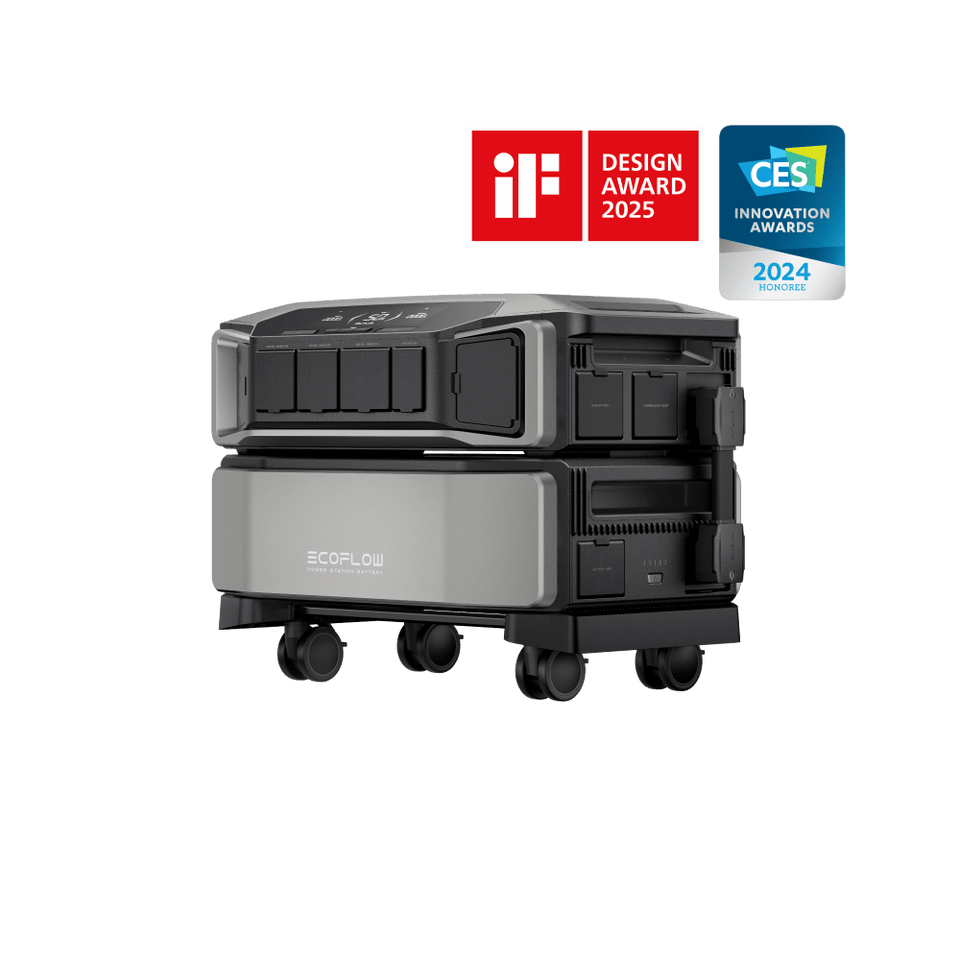
EcoFlow DELTA Pro Ultra
Built specifically for homeowners seeking high-voltage solar input (up to 5,600W) and modular 6kWh-per-stack scaling, though total kit cost and modular footprint exceed casual portable needs.
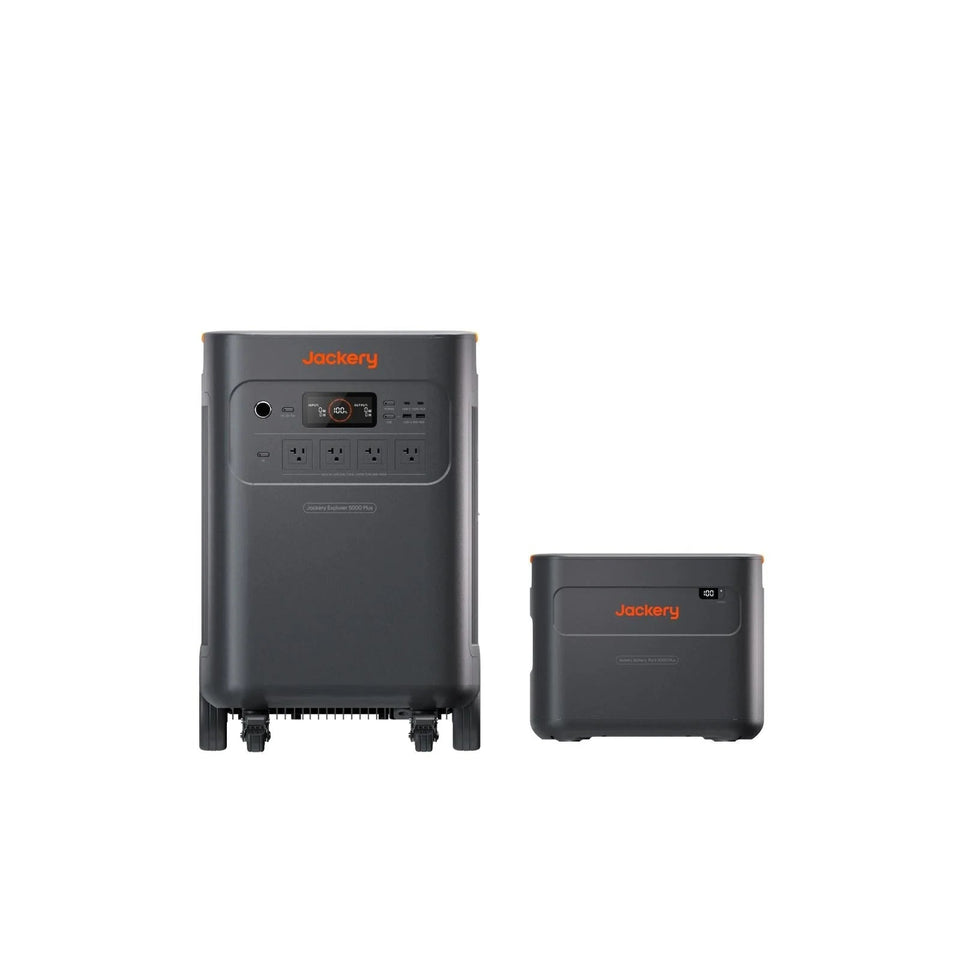
Jackery Explorer 5000 Plus
Combines a 5,040Wh LFP core, 7,200W split-phase output, 14,400W published surge headroom, and both High-PV (135–450V) and Low-PV solar inputs in a single wheeled chassis.
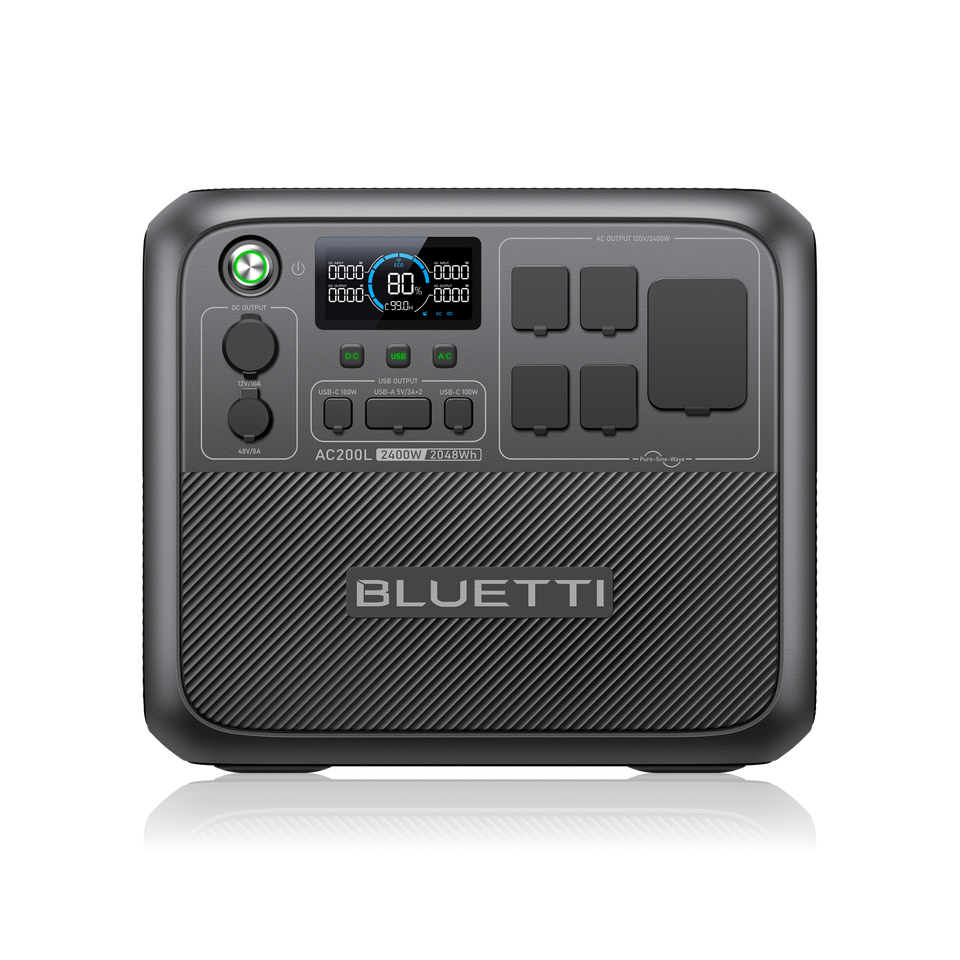
BLUETTI AC200L
Combines a high-efficiency 2,048Wh expandable platform, 1,200W high-voltage solar input (12–145V), and dedicated 30A TT-30R + 48V DC RV outputs at strong street pricing, trading away light weight and built-in wheels.
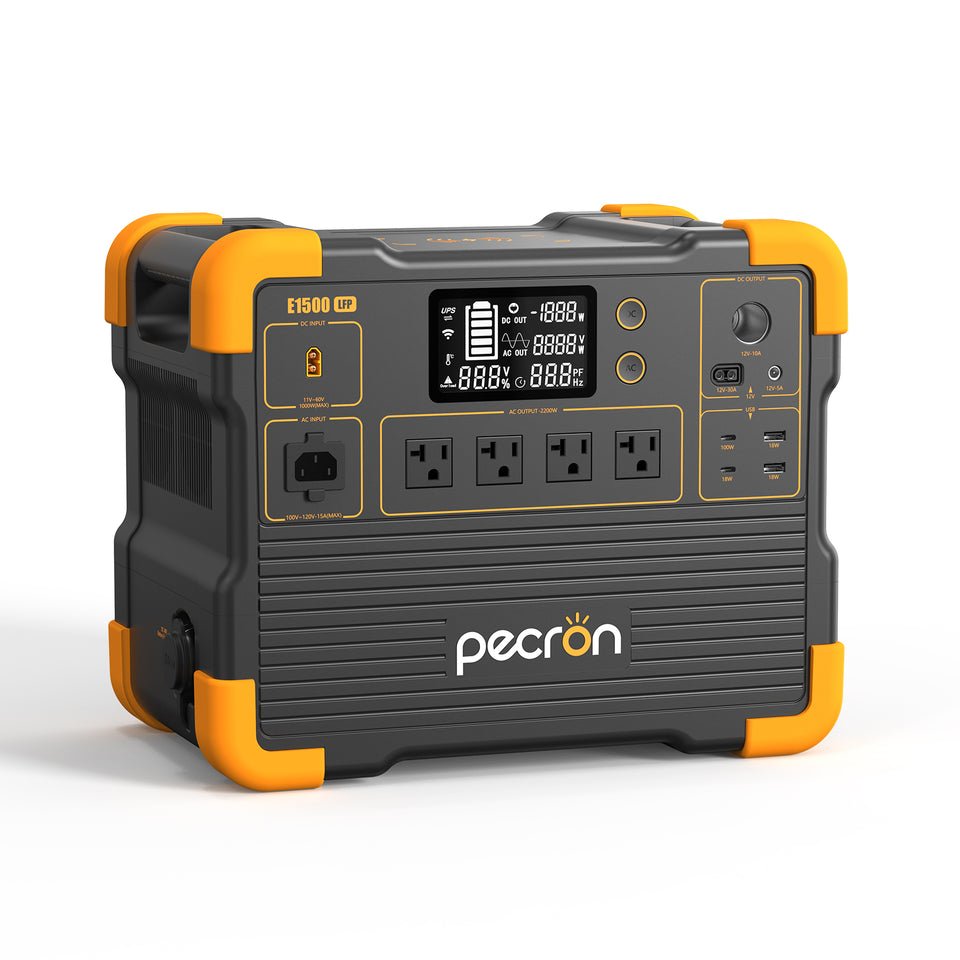
Pecron E1500LFP
Delivers 1,536Wh, a 2,200W continuous inverter, and a rare 12V/30A XT60 DC port around $599 street price, though its asymmetric 32–95V GX16MF solar input requires careful panel voltage matching.
Frequently Asked Questions
Why do some power stations have both a High-PV and a Low-PV solar port?+
Whole-home systems like the EcoFlow DELTA Pro Ultra (80–450V High-PV + 30–150V Low-PV) and Jackery Explorer 5000 Plus (135–450V High-PV + 16–60V Low-PV) provide two separate voltage ranges so homeowners can connect high-voltage residential solar strings to one input while still keeping a Low-PV port compatible with portable camping panels.
What happens if I plug a single 20V portable panel into a 135V–450V High-PV port?+
Nothing breaks, but the battery will not charge because the incoming voltage falls below the MPPT controller's minimum startup voltage (135V on Jackery 5000 Plus High-PV, 80V on DELTA Pro Ultra High-PV, or 32V on Pecron E1500LFP's GX16MF port).
Sources & Technical References
- View Source →[1]Manufacturer User ManualEcoFlow Support DocumentationVerified 2026-11-24EcoFlow DELTA Pro Ultra User Manual & Technical Datasheet
Documents High-PV (80-450V, 15A, 4,000W) and Low-PV (30-150V, 15A, 1,600W) limits, operating temps, and UPS switching behavior.
- View Source →[2]Manufacturer SpecificationJackery US OfficialVerified 2026-11-24Jackery Explorer 5000 Plus Official Product Specifications
5,040Wh LFP capacity, 7,200W/14,400W AC specs, High-PV (135-450V) and Low-PV (16-60V) limits, and warranty terms.
- View Source →[3]Manufacturer SpecificationBLUETTI US OfficialVerified 2026-11-24BLUETTI AC200L Portable Power Station Official Specifications
2,048Wh LFP, 2,400W continuous AC, 3,600W Power Lifting mode, NEMA TT-30R + 48V/8A DC RV port, 1,200W solar (12-145V).
- View Source →[4]Manufacturer SpecificationPecron US OfficialVerified 2026-11-24Pecron E1500LFP Official Specifications
1,536Wh LFP, 2,200W AC, 800W dual-port solar (GX16MF 32-95V 700W + DC5521 100W), EP3000-48V expansion support.
- View Source →[5]Manufacturer SpecificationAnker SOLIX US OfficialVerified 2026-11-24Anker SOLIX F3800 Plus Official Product Page
Successor revision increasing PV voltage range up to 165V and solar input to 3,200W.
- View Source →[6]Government Research ResourceNational Renewable Energy Laboratory (NREL)Verified 2026-11-24PVWatts & US Peak Sun Hours Reference Data
Documents regional peak sun hours and real-world photovoltaic derating factors (ambient heat, angle, shading, controller loss).