Anker SOLIX F3800 Solar Panel Compatibility Guide: Voc Limits, Amps & Recharge Math
Anker SOLIX F3800 & F3800 Plus solar guide: 11-60V vs 11-165V Voc limits, dual XT60 25A-27A current rules, cold-weather Voc safety, and NREL charge math.
The original Anker SOLIX F3800 accepts up to 2,400W of solar across dual XT60 MPPT channels (1,200W each) with a strict 11V–60V Voc ceiling and 25A–27A current cap—whereas the newer F3800 Plus opens voltage tolerance to 11V–165V Voc and 3,200W total. Exceeding Voc in cold morning sunlight can permanently damage the controller; always verify cold-adjusted Voc against your Anker manual and consult certified solar installers for rigid arrays.

One specification typo has caused more MPPT controller failures on the Anker SOLIX F3800 than almost any other error online: legacy blogs routinely claimed the unit accepted 12V–150V of solar voltage. In reality, the original North American Anker SOLIX F3800 (Model A1790) caps solar voltage strictly at 11V–60V Voc per channel—and only the newer F3800 Plus revision raises that ceiling to 11V–165V Voc.
Before purchasing folding kits or commissioning rigid solar panels, verify your exact SKU revision on the unit nameplate, check cold-weather open-circuit voltage (Voc) margins, and consult official Anker SOLIX documentation. For permanent roof-mounted or ground-mounted arrays, always work with a certified solar installer or licensed US electrician rather than improvising DIY array wiring.
Original F3800 vs. F3800 Plus: Verified Solar Input Specifications
Anker built both F3800 generations around dual independent MPPT channels (PV1 and PV2 via XT60 connectors), meaning each port tracks sunlight independently without dragging the other down if one array sits in shade. However, their voltage ceilings and wattage caps divide them into two completely different solar classes:
| Solar Parameter | Original Anker SOLIX F3800 (Model A1790) | Anker SOLIX F3800 Plus (Revision) | Engineering Impact |
|---|---|---|---|
| Total Max Solar Input | 2,400W (1,200W × 2 channels) |
3,200W dual-MPPT total |
F3800 Plus cuts solar recharge duration by ~25% under ideal sun. |
Voltage Window (Voc) |
11V–60V Voc per channel |
11V–165V Voc |
Original F3800 blocks high-Voc series arrays; Plus accommodates multi-panel strings. |
| Per-Channel Current Rating | 25A standard / up to 27A (firmware v2.1.1+) |
Lower amperage @ high voltage (~17A high-Voc tiers) |
Higher voltage lets the Plus push 1,600W per port with thinner copper wire. |
| Connector Interface | Dual XT60 ports (MC4-to-XT60 adapters) |
Dual high-voltage XT60/HV solar input specs |
Always use genuine, properly keyed adapter leads per Anker manual. |
| Compatible Panel Type | Low-voltage portable kits & <=60V Voc setups |
Portable arrays plus mid-voltage rigid rooftop/ground panels | Confirm SKU badge before buying 40V–50V rigid panels. |
If you are still deciding between SKU generations—or comparing Anker’s 60V/165V limits against the 450V High-PV ports on the EcoFlow DELTA Pro Ultra and Jackery Explorer 5000 Plus—read our Anker SOLIX F3800 vs. F3800 Plus generation breakdown.
The Cold-Weather Voc Rise Margin (Why 60V Means Under ~50V–52V at 77°F)
Every solar panel’s specification sticker lists Open-Circuit Voltage (Voc) at Standard Test Conditions (STC: 77°F / 25°C). Open-circuit voltage is the electrical pressure present across disconnected leads as soon as daylight hits the glass—before the F3800 begins drawing current.
Crucially, silicon solar cells produce higher voltage in cold air:
- On a crisp
20°For0°Fwinter morning, panelVocroutinely jumps10% to 15%+above its77°Fsticker rating depending on the module’s thermal coefficient (-0.25%/°Cto-0.35%/°C). - On the original
60VF3800, choosing panels whose77°FVocalready sits around54V–58Vleaves dangerously little margin; cold dawn sunlight can nudge open-circuit voltage past60Vand trigger fault lockouts or permanent MPPT MOSFET failure. - Maintaining at least
15%–20%cold-weather voltage headroom below the power station’s absolute ceiling (targeting under~48V–50VSTCVocper channel on an original60VF3800, or staying conservatively inside the165Vceiling on an F3800 Plus) protects internal electronics year-round.
Review voltage ceiling principles and current clipping behavior in Solar Input Limits & MPPT Explained.
Portable Folding vs. Rigid Solar Panels: Electrical Matching Criteria
Rather than following generic wiring diagrams online, select panels by checking four electrical compatibility rules against your official Anker SOLIX user manual:
- Match Operating Voltage (
Vmp) to Current Limits (25A–27A): Power equalsVolts × Amps. Even though the original F3800 lists1,200WperXT60port, a low-voltage12V-class folding panel operating around18V–20VVmphits the25A–27Aamperage ceiling well below1,200W(20V × 25A = 500W). Approaching1,000W–1,200Wper channel on an original F3800 requires higher operatingVmppanels (such as~36V–48VVmpsetups whose cold-adjustedVocremains safely under60V). - Respect Maximum Short-Circuit Current (
Isc): While MPPT inputs clip normal operating current (Imp) within safe ranges, exceeding a port’s documented maximumIscor mixing mismatched panel orientations can overheat adapters. Never exceed the amperage and connector ratings listed in Anker’s manual. - Why Rigid
40V–50VResidential Panels Challenge the Original F3800: Modern400Wcommercial rigid solar modules frequently carry~37V–49VVocon their own. That leaves zero room to combine them into higher-voltage series arrays on the original60VF3800—and combining multiple rigid panels demands proper overcurrent protection, DC disconnects, and heavy-gauge conductors sized to code. - Leave Permanent Rigid Arrays to Certified Professionals: Rooftop or ground-mounted rigid arrays connected into home backup systems fall under National Electrical Code (NFPA 70 / NEC) rules covering DC arc-fault protection, rapid shutdown, structural wind uplift, and equipment grounding. Always follow the U.S. Department of Energy’s guidance and consult a licensed electrician or NABCEP-certified solar installer rather than DIY string wiring.
NREL Peak-Sun-Hour Recharge Math (3,840Wh to 26.88kWh)
Marketing brochures often divide 3,840Wh by 2,400W (1.6 hours) to advertise unrealistically fast solar recharging. Data from the National Renewable Energy Laboratory (NREL PVWatts) demonstrates why real outdoor yields run lower: solar cell heating on summer afternoons (120°F+ panel glass), fixed tilt angles, partial horizon haze, and DC-to-battery MPPT conversion losses typically constrain real output to 70%–85% of nameplate panel watts.
Here is what realistic daily solar recovery looks like across common US regions averaging 4.0 to 5.5 Peak Sun Hours (PSH) per clear day:
| Array Nameplate Paired | Realistic Field Input (70%–85%) |
Time to Refill 3,840Wh Base F3800 |
Daily Energy Harvest (4.5 PSH Clear Day) |
Practical Storage Fit |
|---|---|---|---|---|
800W Portable Kit |
560W–680W |
~6.0–7.2 hrs (~1.5 days) | ~2,520–3,060Wh/day |
Offsets fridge + router daytime draw; insufficient alone for heavy AC loads. |
1,600W Dual-Channel Array |
1,120W–1,360W |
~3.0–3.7 hrs | ~5,040–6,120Wh/day |
Full 3,840Wh daily recovery on clear days with modest surplus. |
2,400W Max (Original F3800) |
1,680W–2,040W |
~2.0–2.5 hrs | ~7,560–9,180Wh/day |
Supports base F3800 + 1 × BP3800 (7.68kWh) daily outage cycling. |
3,200W Max (F3800 Plus) |
2,240W–2,720W |
~1.5–1.9 hrs | ~10,080–12,240Wh/day |
Ideal for 11.5kWh–15.4kWh expanded home backup stacks. |
(Want to plug in your ZIP code’s sunlight hours and exact panel wattage? Run scenarios in our Solar Charging Time Estimator or read How Long to Charge a Power Station With Solar.)
Pre-Connection Safety & Winter Charging Checklist
Before plugging any solar cable into your Anker SOLIX F3800:
- Check Battery Temperature First: Both F3800 generations lack internal cell heaters and prohibit charging below
32°F (0°C)(32°F–104°Fcharge range). Bring a freezing garage unit indoors to warm above32°Fbefore connecting live PV leads. - Inspect Connectors & Polarity: Confirm
XT60solar adapter polarity (+/-) matches Anker’s pinout before insertion, seat weather seals cleanly, and avoid unplugging high-current DC connectors mid-day under active load to prevent DC arcing—power off or shade/isolate panels according to your manufacturer manual. - Keep Air Vents Unobstructed: Pushing
1,800W–3,200Wof MPPT solar energy while simultaneously powering AC inverters generates heat; leave full ventilation clearance around side intake grilles rather than sealing the unit inside tight cabinets.
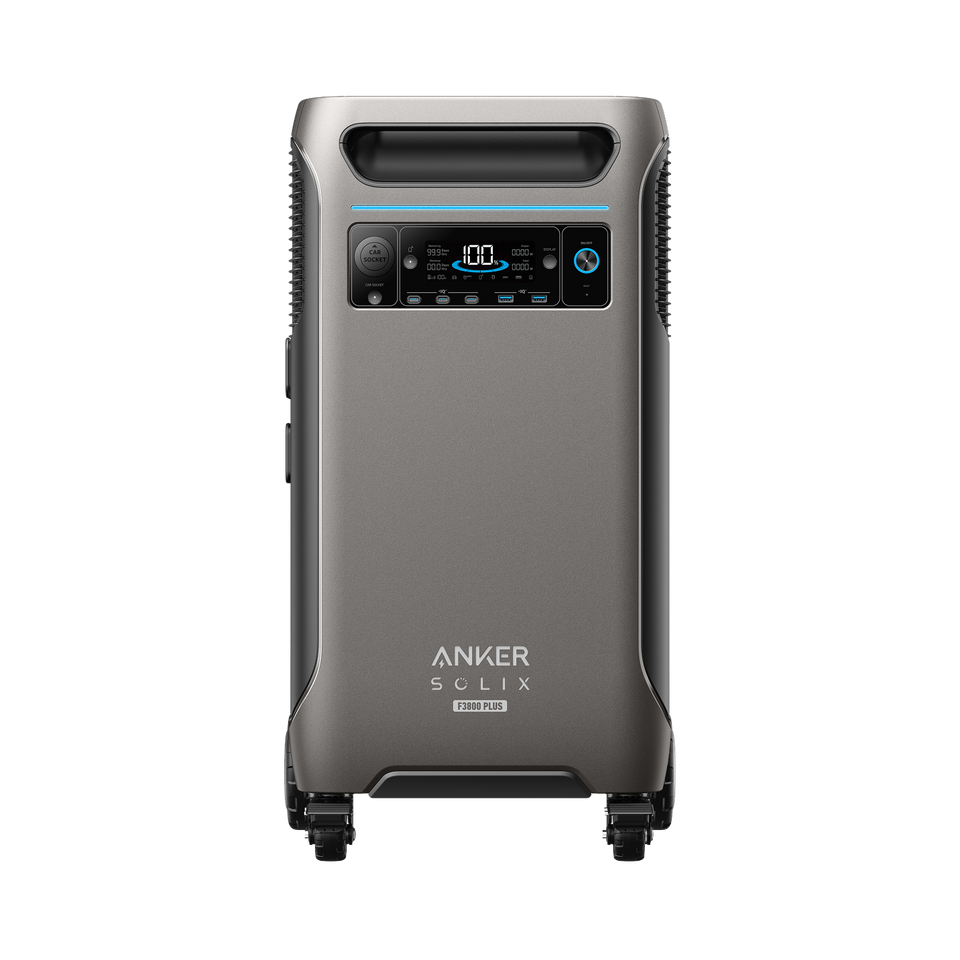
Models Discussed in This Article

Anker SOLIX F3800
One of the most approachable plug-and-play 120V/240V wheeled units thanks to built-in NEMA 14-50R and L14-30R ports, though high idle overhead on light loads and the 60V solar cap (on the original non-Plus SKU) require careful sizing.
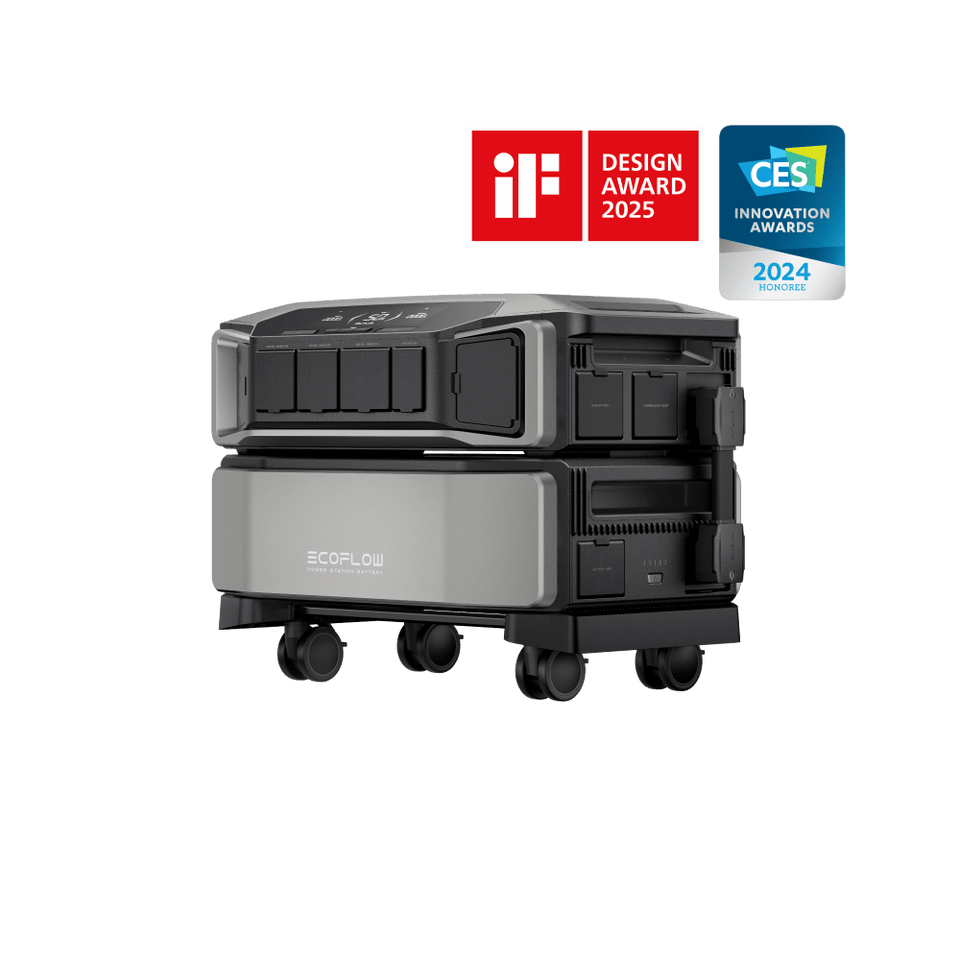
EcoFlow DELTA Pro Ultra
Built specifically for homeowners seeking high-voltage solar input (up to 5,600W) and modular 6kWh-per-stack scaling, though total kit cost and modular footprint exceed casual portable needs.
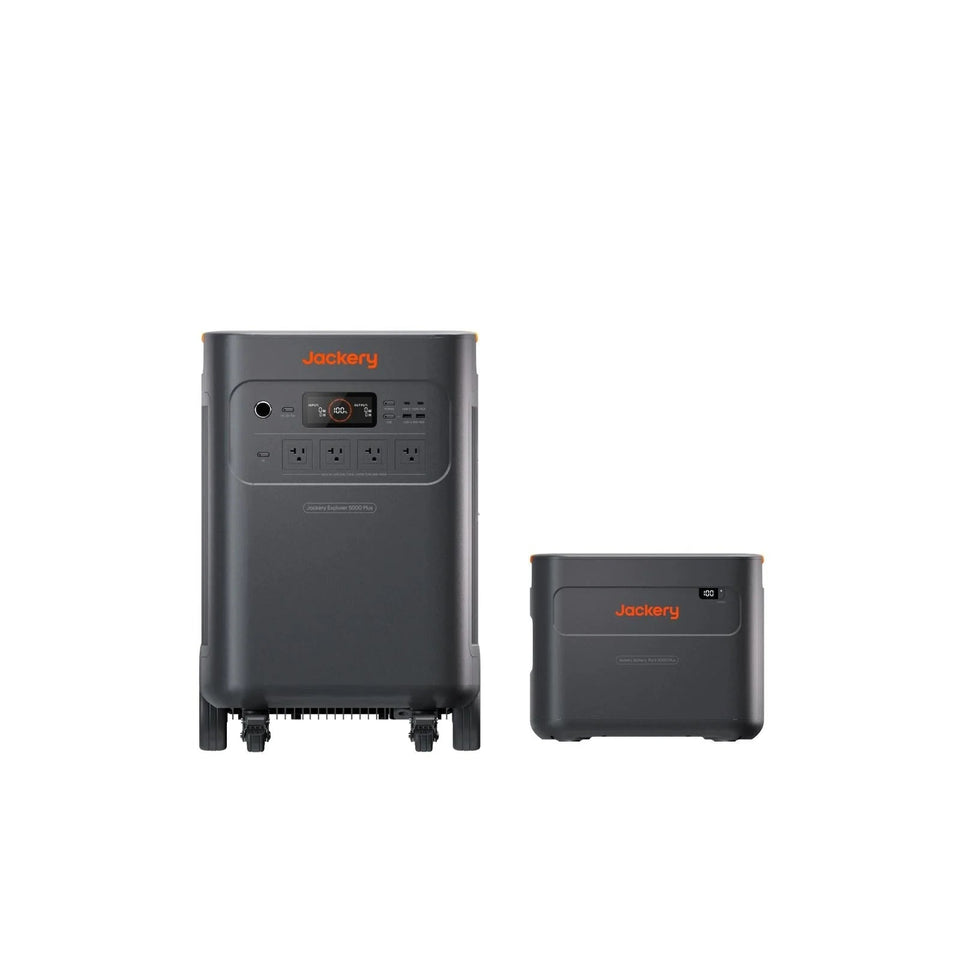
Jackery Explorer 5000 Plus
Combines a 5,040Wh LFP core, 7,200W split-phase output, 14,400W published surge headroom, and both High-PV (135–450V) and Low-PV solar inputs in a single wheeled chassis.
Frequently Asked Questions
Can the original Anker SOLIX F3800 really take 150V of solar input?+
No. Older third-party articles frequently misprinted the original F3800's solar limit as 12–150V. The North American original F3800 (Model A1790) has a strict 11V–60V open-circuit voltage (Voc) ceiling per XT60 channel. Only the newer Anker SOLIX F3800 Plus raises the MPPT ceiling to 11V–165V Voc. Applying 100V+ to an original 60V F3800 risks immediate MPPT controller damage.
Why do some Anker F3800 specs say 25A per solar port while others say 27A?+
Original F3800 launch documentation specified 25A max per 1,200W XT60 port (above 32V), while subsequent Anker firmware updates (v2.1.1+) expanded input current handling up to 27A across 15V–60V operation. Check your unit's firmware version and official Anker SOLIX manual before sizing panel amperage.
How many peak sun hours does it take to recharge a 3,840Wh F3800 with 1,600W–2,400W of solar?+
Accounting for realistic NREL outdoor panel derating (70%–85% of rated wattage due to heat, angle, and MPPT conversion losses), a 2,400W array typically nets 1,680W–2,040W real input—refilling 3,840Wh in roughly 2.0 to 2.5 peak sun hours. A 1,600W portable array netting ~1,120W–1,360W requires roughly 3.0 to 3.7 peak sun hours.
Can the Anker SOLIX F3800 charge from solar panels in freezing winter weather?+
Wait until battery cell temperature rises above freezing. Anker specifies a charging operating window of 32°F to 104°F (0°C to 40°C) because the F3800 lacks internal self-heating elements. Discharging works down to -4°F (-20°C), but cold-soaked batteries must warm above 32°F before accepting solar charge.
Sources & Technical References
- View Source →[1]Manufacturer SpecificationAnker SOLIX US OfficialVerified 2026-11-24Anker SOLIX F3800 Portable Power Station Official Specifications
North American model specs including NEMA 14-50R, L14-30R, 6,000W output, 3,840Wh capacity, and 11-60V dual solar input.
- View Source →[2]Manufacturer SpecificationAnker SOLIX US OfficialVerified 2026-11-24Anker SOLIX F3800 Plus Official Product Page
Successor revision increasing PV voltage range up to 165V and solar input to 3,200W.
- View Source →[3]Government Research ResourceNational Renewable Energy Laboratory (NREL)Verified 2026-11-24PVWatts & US Peak Sun Hours Reference Data
Documents regional peak sun hours and real-world photovoltaic derating factors (ambient heat, angle, shading, controller loss).
- View Source →[4]Government Research ResourceU.S. Department of Energy (DOE)Verified 2026-11-25Homeowner's Guide to Going Solar & Grid Interconnection
Consumer guidance on rooftop/portable solar sizing, net metering rules, utility interconnection, and installer vetting.
- View Source →[5]Technical & Safety StandardNational Fire Protection Association (NFPA)Verified 2026-11-24NFPA 70 National Electrical Code (NEC) Transfer Equipment & Standby Power Overview
Governs transfer switches, panel interlocks, and prohibition of unsafe backfeeding on US residential electrical panels.