Portable Power Station vs. Power Bank: Inverters, Capacity & FAA Rules
Compare sub-100Wh USB-C power banks vs. 288Wh–6,144Wh AC portable power stations across inverter topology, MPPT solar charging, and FAA air-travel limits.
A power bank is a DC-only USB battery capped around 37Wh–99.9Wh to remain carry-on legal under FAA PackSafe rules, delivering up to 65W–140W over USB-C PD. A portable power station adds a pure sine wave 120V/240V AC inverter, built-in MPPT solar controller, and 288Wh–6,144Wh+ LFP capacity—running refrigerators, CPAP machines, and appliances (typically 78%–88% AC or 88%–93% DC usable output) while remaining prohibited on commercial flights.
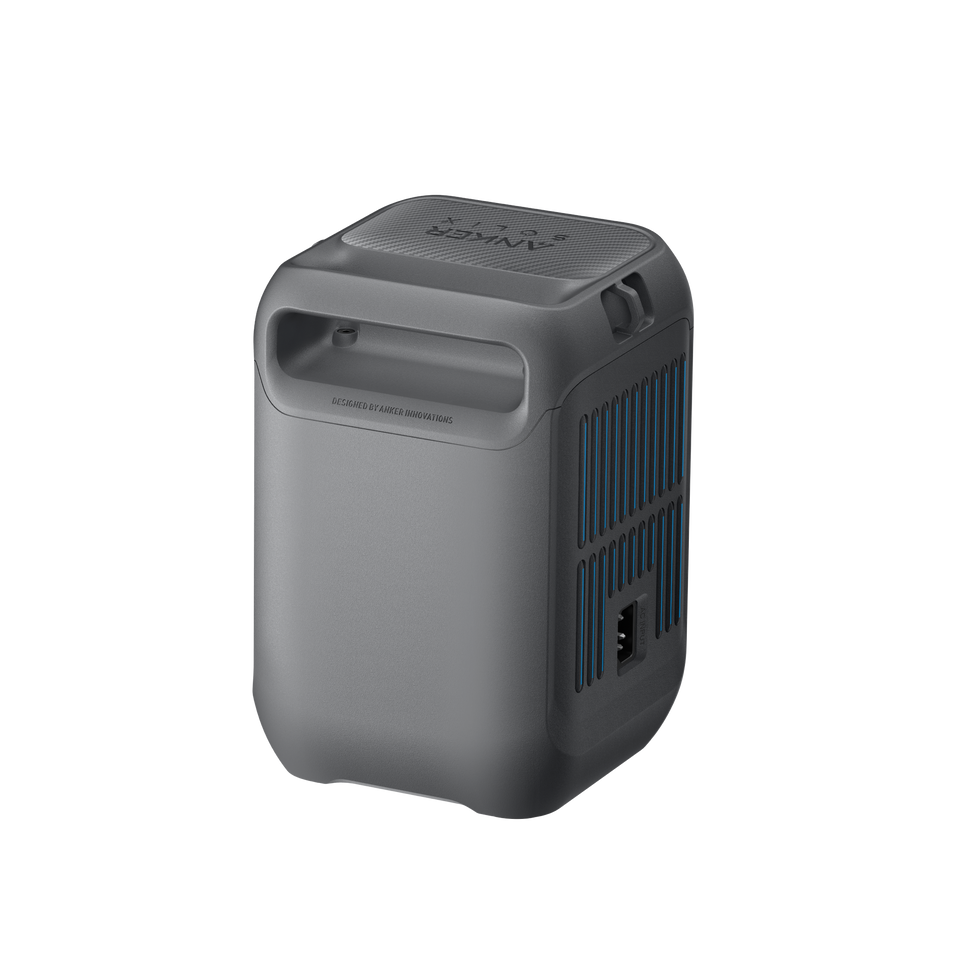
Walk up to an airport TSA checkpoint carrying a 25,000 mAh laptop power bank and you breeze right through. Try walking up to the same checkpoint with even the smallest 288Wh portable power station—such as the 9.1 lb Anker SOLIX C300—and security will turn the battery away at the belt.
That single regulatory line reveals why power banks and portable power stations are not merely “small” and “large” versions of the same gadget. Beneath the plastic housings sit fundamentally different power architectures: DC-only USB voltage regulators built around the FAA’s 100Wh air-travel ceiling versus pure sine wave AC inverter and MPPT solar ecosystems engineered to replace wall outlets off-grid.
The Architecture Split: DC Buck-Boost vs. Pure Sine Wave AC Inverter
A pocket power bank is built to stay lightweight and strictly DC-to-DC. Its internal lithium cells (typically 3.6V–3.7V nominal) feed compact buck-boost DC regulators wired to USB-A and USB-C Power Delivery (PD) ports. Modern flagship laptop banks deliver 65W to 140W over USB-C PD 3.1 (28V / 5A), yet they cannot run a coffee grinder, a desktop monitor, a residential refrigerator, or a standard 120V wall plug.
A portable power station moves up into an entirely different hardware class:
- Built-in Pure Sine Wave AC Inverter: Steps internal battery voltage (usually 24V to 51.2V LiFePO4, or higher in modular stacks) up to grid-grade 120V AC—or 120V/240V split-phase on home-backup stations—at continuous outputs ranging from 300W (
Anker SOLIX C300) to 1,800W–2,400W (EcoFlow DELTA 3 Plus,DJI Power 1000,BLUETTI AC200L) and 7,200W (EcoFlow DELTA Pro Ultra). - Integrated MPPT Solar Charge Controller: Accepts variable DC sunlight (
11V–60Von compact stations up to80V–450Von whole-home models) and steps it efficiently into the battery bank, often at 100W to 5,600W—far above the tiny 5W–15W trickle panels built into novelty camping banks. - LiFePO4 (LFP) Longevity & Thermal Safety: While most pocket power banks still rely on denser lithium-polymer / NMC cells rated around 500–800 cycles to minimize weight, modern power stations overwhelmingly use LiFePO4 chemistry rated for 3,000 to 4,000+ cycles to 70%–80% capacity.
- UPS / EPS Pass-Through Hardware: Many stations double as home-office or medical battery backups with
<10 msto<=20 msswitchover when grid power drops—something standard USB banks cannot handle for desktop AC gear.
FAA Air-Travel Rules: Why 99.9Wh Is the Universal Power Bank Ceiling
Under FAA PackSafe regulations for passenger flights, spare lithium-ion batteries are governed strictly by watt-hours (Wh)—never mAh:
- 100Wh or Less (No Approval Needed): Carry-on allowed without airline permission (checked baggage strictly forbidden). That is why travel laptop banks cluster at
25,000 mAh(92.5What 3.7V) or27,000 mAh(99.9Wh). - 101Wh to 160Wh (Airline Approval Required): Limited to a maximum of two spare batteries per passenger in carry-on only, with advance carrier approval. A rare handful of niche travel stations sit around
140Wh–160Wh, mostly for camera/cinema crews. - Above 160Wh (Banned on Commercial Flights): Virtually every AC-inverter portable power station starts at 256Wh to 288Wh and extends to 6,000Wh+. They must travel by car, RV, boat, or ground freight—never inside commercial passenger cabins or cargo holds.
(Note: Even within ground travel, verify SKU variants carefully. Anker sells both the AC-equipped Anker SOLIX C300 Model A1722 with three 120V outlets and an AC-less C300 DC lantern-style tube—both 288Wh LFP packs that exceed FAA flight caps despite very different outlet panels.)
Side-by-Side Comparison: 99Wh Power Bank vs. 300Wh–2,000Wh Power Stations
| Feature / Spec | 25,000 mAh / ~92.5–99Wh USB-C Bank | Compact 288Wh Station (Anker SOLIX C300) | Midsize 1kWh Station (EcoFlow DELTA 3 Plus) | 2kWh Blackout Station (Jackery Explorer 2000 v2) |
|---|---|---|---|---|
| Stored Energy (Rated) | ~92.5–99 Wh (3.7V Li-ion/LiPo) | 288 Wh LiFePO4 | 1,024 Wh LiFePO4 | 2,042 Wh LiFePO4 |
| FAA Passenger Flight Legal? | Yes (carry-on, no approval needed) | No (>160Wh prohibited) | No (>160Wh prohibited) | No (>160Wh prohibited) |
| 120V AC Inverter Output | None (DC / USB only) | 300 W continuous (600W surge) | 1,800 W continuous (3,600W surge) | 2,200 W continuous (4,400W surge) |
| USB-C Fast Charging | Typically 65W–140W USB-C PD | 2 × 140W + 1 × 15W USB-C | 2 × 140W USB-C PD 3.1 | 1 × 100W + 1 × 30W USB-C |
| 12V Car Socket / Solar MPPT | None / tiny USB solar trickle only | 12V/10A car socket; 100W MPPT (11–28V) |
12V/10A car + DC5521; 1,000W dual MPPT | 12V/10A car; 400W dual DC8020 MPPT |
| Automatic UPS Switchover | None | <10 ms AC UPS |
<10 ms UPS + HID USB PC signal |
<=20 ms EPS |
| Typical Carry Weight | 1.1 – 1.6 lbs | 9.1 lbs | 27.6 lbs | 39.5 lbs |
| Usable Energy Realism | ~88%–93% DC output | ~88%–93% DC / 78%–88% AC est. | ~88%–93% DC / 78%–88% AC est. | ~88%–93% DC / 78%–88% AC est. |
When a 25,000 mAh / 99Wh Power Bank Beats a 300Wh Power Station
Buying a bulky 9 lb to 12 lb power station when a 1.3 lb USB-C bank fits your real workload creates pointless friction:
- Commercial Air Travel & Rail Commutes: Only sub-100Wh banks clear TSA/FAA screening effortlessly and slip into a laptop backpack without straining your shoulder.
- Pure USB-C Workloads: A MacBook Pro, iPad, camera, drone controller, or smartphone charges over USB-C PD at roughly 88%–93% DC efficiency directly from a 99Wh bank. Turning on an AC inverter inside a 300Wh station to power a wall brick adds DC-to-AC-to-DC double conversion losses plus idle wattage overhead—reducing net efficiency down toward the 78%–88% AC range (or lower for tiny 15W loads).
- Daily Carry Price: A solid 25,000–27,000 mAh 100W+ USB-C bank typically runs $60–$120, whereas compact LFP power stations like the Anker SOLIX C300 sit around $229 street ($329.99 MSRP).
When You Must Step Up to a Portable Power Station
Once your backup checklist leaves the laptop bag and enters home emergencies, road trips, or medical readiness, a pocket bank hits an immediate wall:
- You Need Standard 120V AC Outlets or High Surge: Wi-Fi fiber ONTs without USB-C kits, desktop monitors, sump pumps, hair dryers, kitchen refrigerators, and power tools need a pure sine wave inverter. Even a 1kWh station like the EcoFlow DELTA 3 Plus (
1,800WAC) or DJI Power 1000 (2,200WAC) runs full-size microwave ovens and coffee makers that a 140W USB bank cannot touch. - Multi-Night CPAP or Refrigerator Outages: A heated-humidifier CPAP machine or full-size kitchen fridge consumes roughly 400Wh to 1,600Wh+ per day. Even two 99Wh power banks barely survive a few hours, whereas a 768Wh–2,048Wh LFP station comfortably bridges overnight or multi-day outages—especially when paired with solar panels. (Run your exact draw in our Battery Runtime Estimator.)
- Solar & Vehicle Alternator Recovery: During prolonged grid blackouts, wall outlets go dead. Only a portable power station with an MPPT solar input (
100Won entry units,500W–1,200Won midsize stations, up to5,600Won modular home stacks) or an alternator charger turns midday sun or a running car into rapid battery replenishment. - Always-On UPS Protection for Desktops & Routers: Units featuring
<10 msswitchover (Anker SOLIX C300,EcoFlow DELTA 3 Plus) automatically take over in milliseconds when neighborhood power flickers—protecting remote-work video calls and NAS drives without unplugging cords.
Quick Buying Decision Checklist
- Pick a 90Wh–99.9Wh USB-C PD Power Bank if you fly regularly, pack light on foot, and charge phones, cameras, or USB-C laptops exclusively.
- Pick a 288Wh–768Wh Compact Power Station (Best Stations Under $500) if you need 12V car ports, quiet CPAP backup,
<10 msrouter UPS protection, or weekend tent power—and are traveling by car. - Pick a 1,024Wh–2,048Wh+ Station if your priority is keeping a refrigerator cold, running 1,500W+ kitchen gear, and recovering energy from folding solar panels during multi-day blackouts.
Explore how conversion losses shrink real-world battery hours in Understanding Power Station Efficiency, or clarify capacity vs. wattage limits in Watt-Hours (Wh) vs. Watts (W) Explained.
Models Discussed in This Article
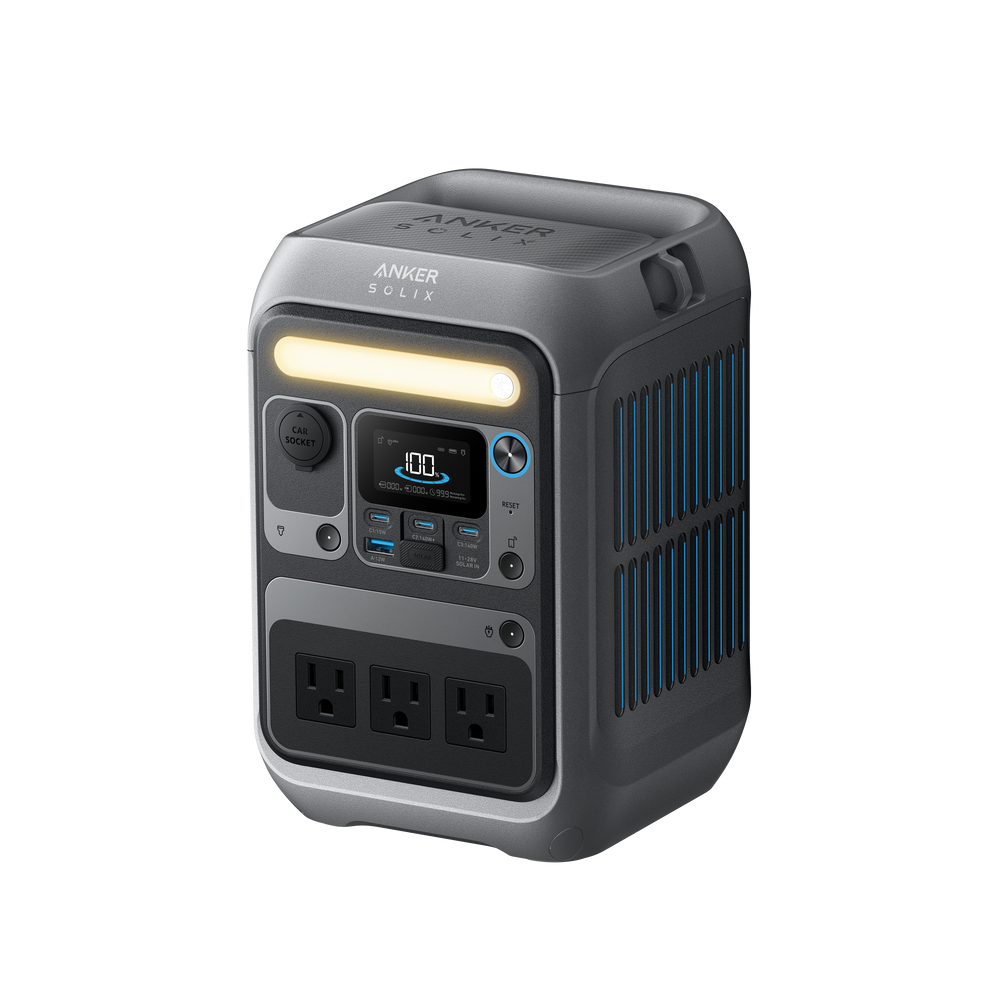
Anker SOLIX C300
A 9.1 lb vertical LiFePO4 station delivering 300W AC, dual 140W USB-C ports, and <10 ms UPS backup for routers, laptops, and day trips — just don't confuse it with the DC-only C300 DC or expect appliance runtime.
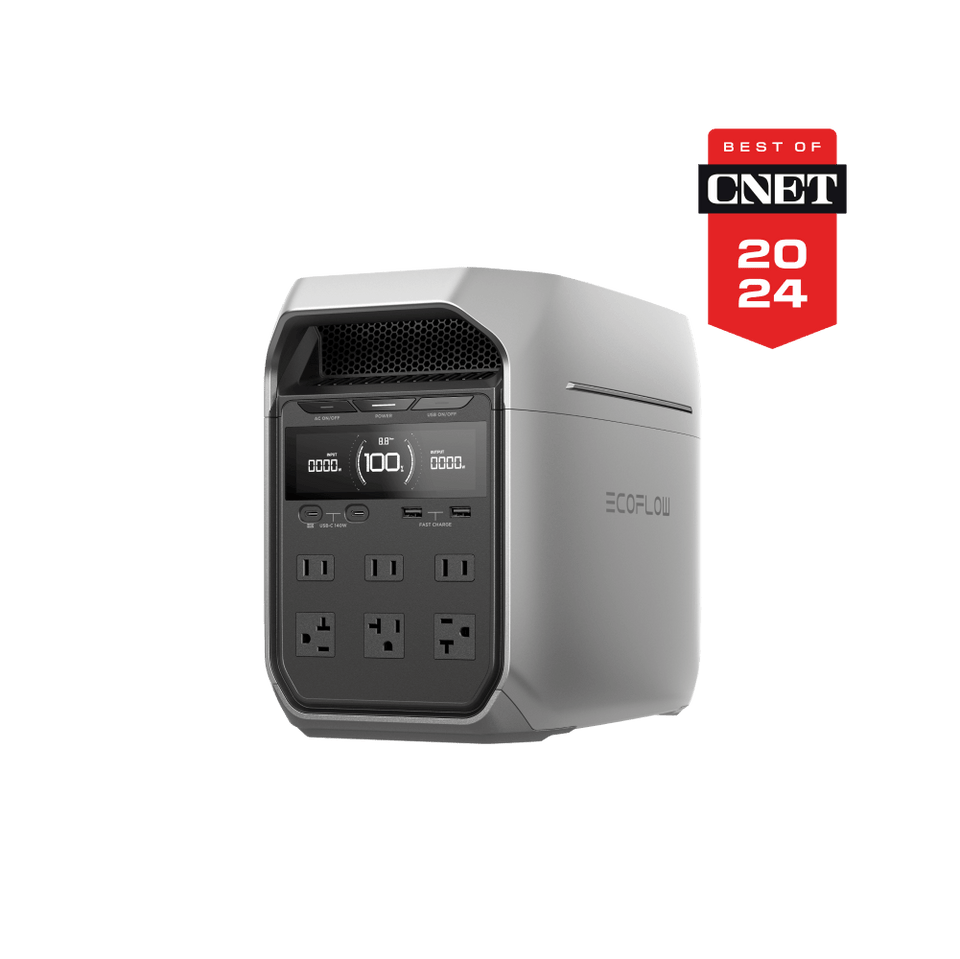
EcoFlow DELTA 3 Plus
Packs 1,000W dual-MPPT solar charging, sub-1-hour AC replenishment, and a sub-10 ms HID-capable UPS into a 27.6 lb chassis, making it more versatile than non-Plus 1kWh units.
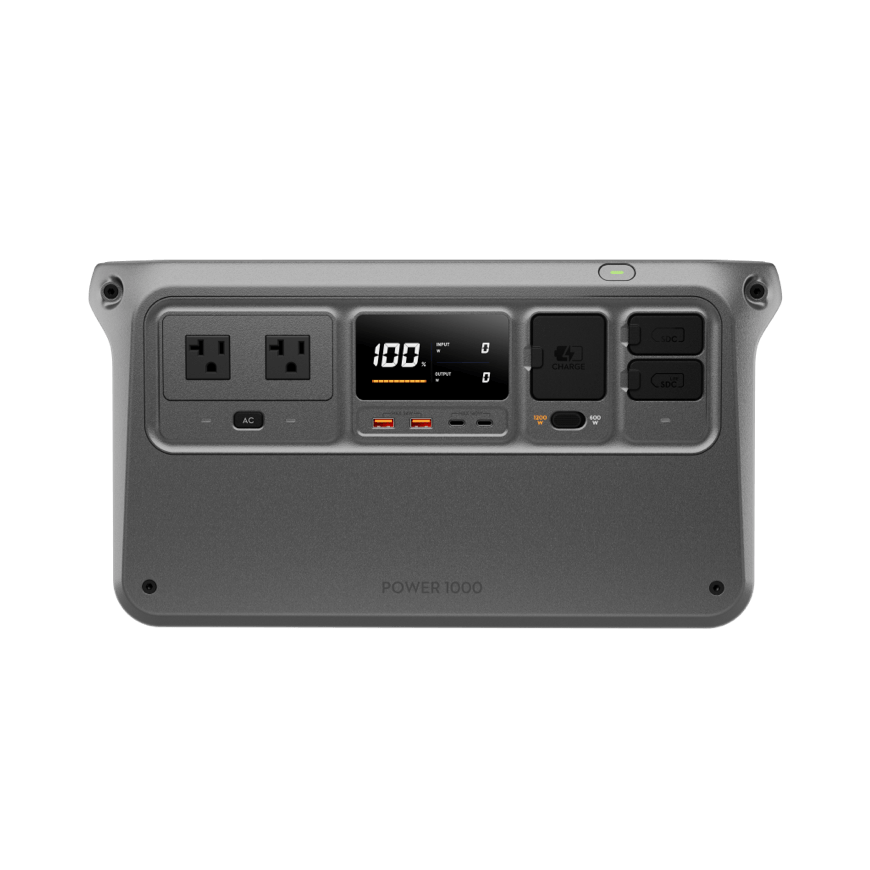
DJI Power 1000
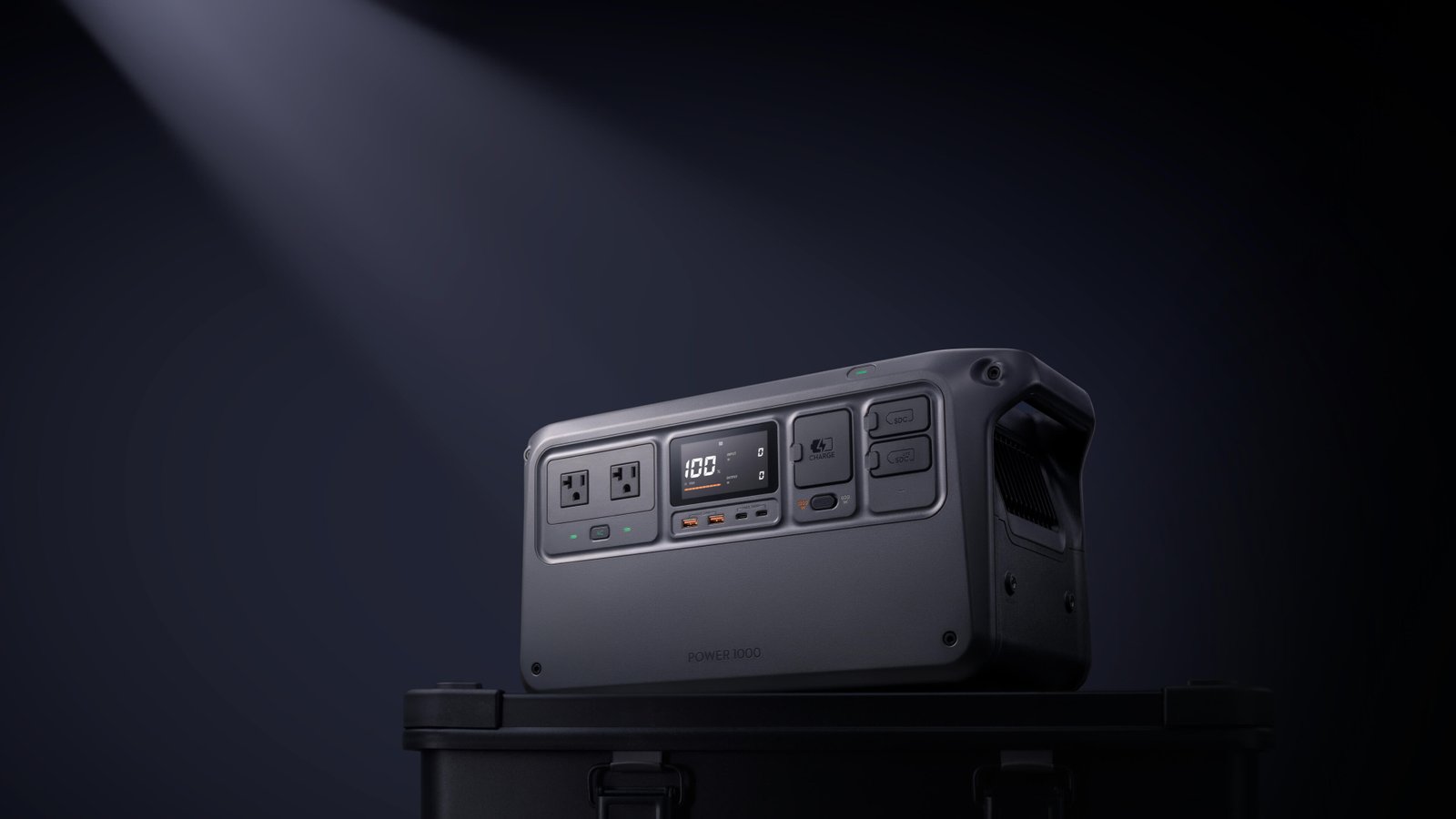
Exceptional 2,200W inverter density and 23 dB acoustic refinement in a 28.7 lb frame, though solar charging and 12V car sockets require optional DJI SDC adapters.
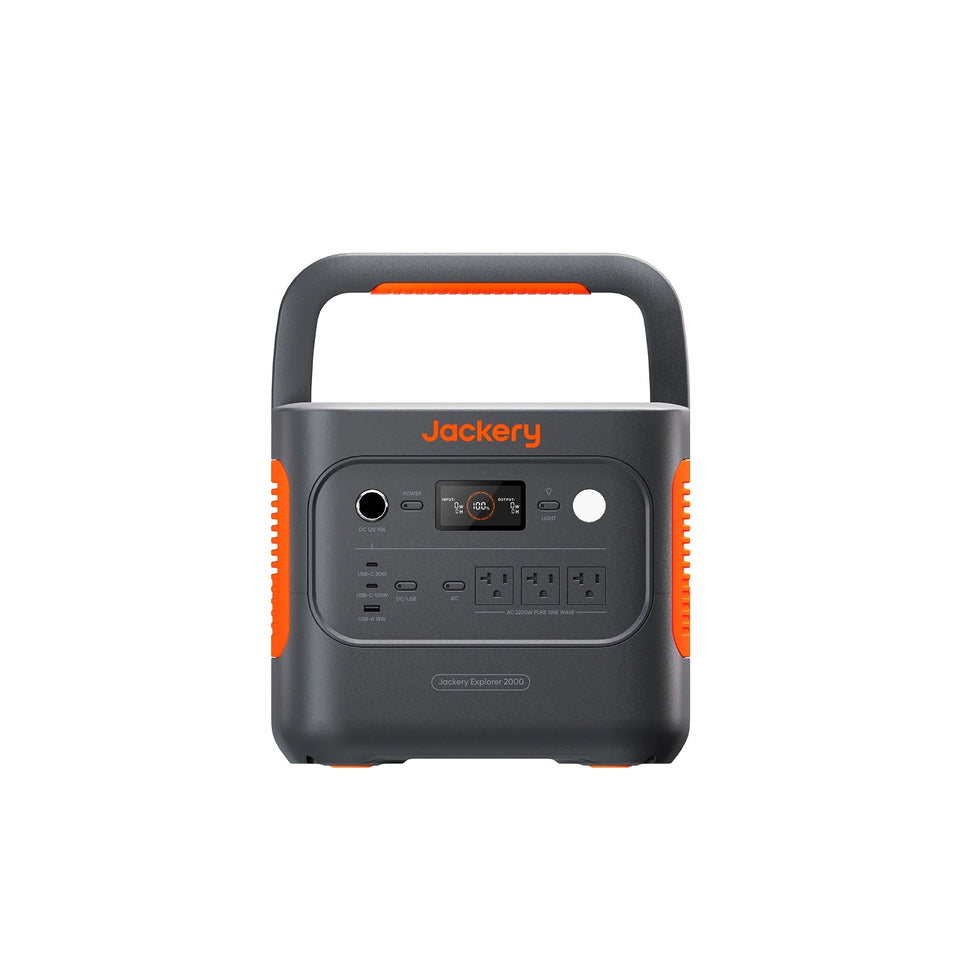
Jackery Explorer 2000 v2
A breakthrough 39.5 lb chassis makes 2,042Wh genuinely single-hand portable for camping and apartments, provided you accept its 400W solar recharge ceiling and non-expandable battery.
Frequently Asked Questions
Can I bring a 300Wh portable power station on a commercial airplane?+
No. Under FAA PackSafe hazardous materials regulations, spare lithium batteries up to 100Wh are permitted in carry-on luggage without airline approval, and batteries between 101Wh and 160Wh require explicit airline approval (maximum two spares). Anything above 160Wh—including compact 256Wh–288Wh portable power stations like the Anker SOLIX C300—is banned from both passenger carry-on and checked baggage.
Why does a 25,000 mAh power bank only equal roughly 92.5Wh instead of 300Wh?+
Manufacturers calculate power bank milliamp-hours (mAh) at the internal lithium cell voltage (typically 3.7V), not at 12V or 20V USB-C output. Multiplying 25 Ah by 3.7V yields 92.5Wh—intentionally below the FAA 100Wh threshold—whereas a 288Wh power station stores more than triple that energy.
When does a high-wattage USB-C power bank make more sense than a 300Wh power station?+
If your load consists strictly of smartphones, tablets, camera batteries, or a USB-C laptop and you need to fly, hike, or slip a charger into a backpack sleeve, a 90Wh–99Wh 140W USB-C PD bank saves roughly 7.5 lbs of bulk and avoids AC inverter idle losses completely.
Can a portable power station charge laptops faster or more efficiently via USB-C than its AC outlet?+
Yes. Using a station's native 100W or 140W USB-C PD port (found on the Anker SOLIX C300, EcoFlow DELTA 3 Plus, and DJI Power 1000) keeps power in DC form at roughly 88%–93% efficiency. Plugging a wall brick into the station's 120V AC socket forces DC-to-AC-to-DC double conversion, dropping efficiency to roughly 78%–88% plus inverter standby draw.
Sources & Technical References
- View Source →[1]Technical & Safety StandardFederal Aviation Administration (FAA)Verified 2026-11-25PackSafe Hazardous Materials Guidance: Spare Lithium Batteries & Power Banks
Establishes the 100Wh standard carry-on threshold (and 160Wh airline approval cap) distinguishing airline-legal power banks from 250Wh+ portable power stations.
- View Source →[2]Manufacturer SpecificationAnker SOLIX US OfficialVerified 2026-11-24Anker SOLIX C300 Portable Power Station (Model A1722) Specifications
288Wh LFP AC-equipped model (distinct from DC-only C300 DC), 300W AC, 600W SurgePad, 100W XT60 solar, <10ms UPS.
- View Source →[3]Manufacturer SpecificationEcoFlow US OfficialVerified 2026-11-24EcoFlow DELTA 3 Plus Official Specifications
1,024Wh LFP, 1,800W continuous AC, 1,000W dual 500W MPPT solar, <10ms UPS, 1,500W X-Stream AC charging.
- View Source →[4]Manufacturer SpecificationDJI OfficialVerified 2026-11-24DJI Power 1000 Specifications & Official Overview
1,024Wh LFP, 2,200W continuous AC (V1 US model; V2 increases to 2,600W), dual 140W USB-C, 800W solar via MPPT adapter.
- View Source →[5]Manufacturer SpecificationJackery US OfficialVerified 2026-11-24Jackery Explorer 2000 v2 Product Page & User Guide
2,042Wh LFP Cell-to-Body design, 39.5 lbs weight, 2,200W continuous AC, 400W dual DC8020 solar input.