Best Portable Solar Generators on the Go (2026): Field & Travel Picks
Best portable solar generators for 2026 across 3 carry tiers (8.3–39.7 lbs): Wh/lb and W/lb benchmarks for Anker C300, AC70, DELTA 3 Plus & Explorer 2000 v2.
Modern Cell-to-Body LiFePO4 framing lets travelers carry high-wattage solar power under 40 lbs without reverting to short-lived NMC cells. For sub-10 lb carry, the 8.27 lb Jackery Explorer 300 Plus and 9.1 lb Anker SOLIX C300 (A1722) deliver ~31.6–34.8 Wh/lb. In the trunk tier, the 27.6 lb EcoFlow DELTA 3 Plus peaks at 65.2 W/lb, while the 39.5 lb Jackery Explorer 2000 v2 hits 51.7 Wh/lb—delivering ~78%–88% usable AC or ~88%–93% DC.
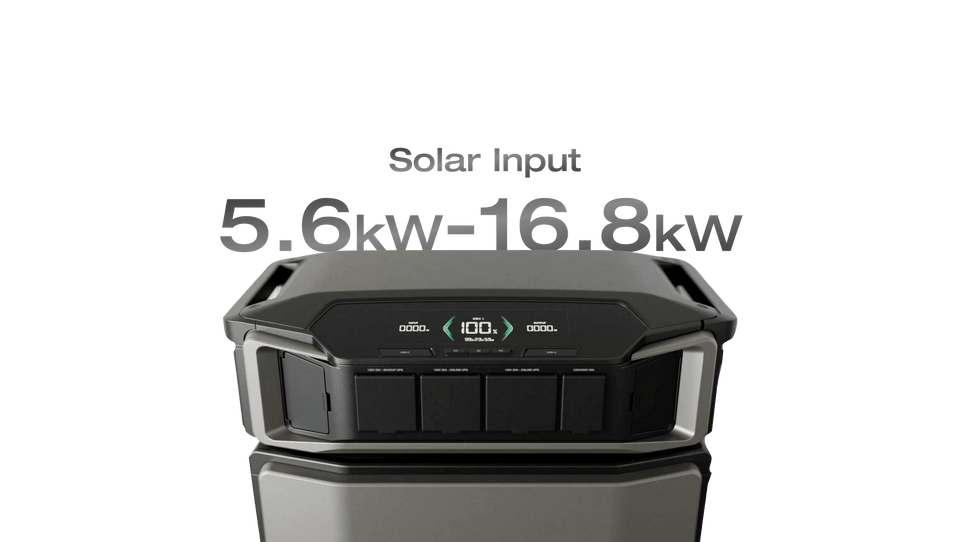
An old 62-pound power station ends up gathering dust in a closet for one simple reason: nobody wants to haul a bowling ball through mud to a tent or lift it solo over a pickup tailgate at dusk. In 2026, structural Cell-to-Body (CTB) framing and denser LiFePO4 (LFP) cell packaging have eliminated the old forced compromise between fragile 500-cycle NMC batteries and back-breaking LFP bricks.
Rather than mixing stationary 130 lb home backup towers into a “portable” list, this guide ranks true field and travel solar generators strictly under 40 lbs across three real carry classes—measuring both energy density (Wh/lb) for trip length and power density (W/lb) for running real appliances on the move. (If you are sizing permanent off-grid cabins rather than mobile travel, see our dedicated Off-Grid Cabin & Homestead Sizing Guide.)
Weight-to-Output Benchmark Matrix: Wh/lb vs. W/lb
Two numbers expose how well a travel generator actually uses every pound in your trunk: Watt-hours per pound (Wh/lb) tells you how much battery runtime you carry per pound of chassis, while Continuous Watts per pound (W/lb) reveals how heavy an inverter sits inside that frame.
| Carry Tier & Model | Rated LFP Capacity | Continuous / Surge AC | Scale Weight | Energy Density (Wh/lb) |
Power Density (W/lb) |
Max Solar Input & Voc |
|---|---|---|---|---|---|---|
| Class 1: Jackery Explorer 300 Plus | 288Wh (3,000 cyc) |
300W / 600W |
8.27 lbs |
34.8 Wh/lb |
36.3 W/lb |
100W (12–27V USB-C) |
| Class 1: Anker SOLIX C300 (A1722 AC) | 288Wh (3,000+ cyc) |
300W / 600W SurgePad |
9.1 lbs (~8.8–9.1 lbs) |
31.6 Wh/lb |
33.0 W/lb |
100W (11–28V XT60) |
| Class 2: Goal Zero Yeti 700 | 677Wh (4,000 cyc) |
600W / 1,000W |
20.3 lbs (IPX4) |
33.3 Wh/lb |
29.6 W/lb |
200W (15–50V) |
| Class 2: BLUETTI AC70 | 768Wh (3,000+ cyc) |
1,000W / 2,000W* |
22.5 lbs |
34.1 Wh/lb |
44.4 W/lb |
500W (12–58V) |
| Class 2: EcoFlow DELTA 3 Plus | 1,024Wh (4,000 cyc) |
1,800W / 3,600W |
27.6 lbs |
37.1 Wh/lb |
65.2 W/lb |
1,000W (11–60V ×2) |
| Class 3: Jackery Explorer 2000 v2 | 2,042Wh (4,000 cyc) |
2,200W / 4,400W |
39.5 lbs |
51.7 Wh/lb |
55.7 W/lb |
400W (16–60V) |
| Class 3: Pecron E1500LFP | 1,536Wh (3,500+ cyc) |
2,200W / 4,400W |
39.7 lbs (18 kg / ~39.6 lb) |
38.7 Wh/lb |
55.4 W/lb |
800W (32–95V + 12–18V) |
*Note: BLUETTI Power Lifting (2,000W) and Anker SurgePad (600W) adjust output voltage solely for simple resistive heating loads—never inductive motors.
Notice two clear engineering winners in that benchmark table:
- Best Power-to-Weight (
65.2 W/lb): The27.6 lbEcoFlow DELTA 3 Plus delivers1,800Wcontinuous AC—nearly double the power per pound of typical camp batteries—handling electric kettles, portable induction burners, or heavy coffee makers cleanly. - Best Capacity-to-Weight (
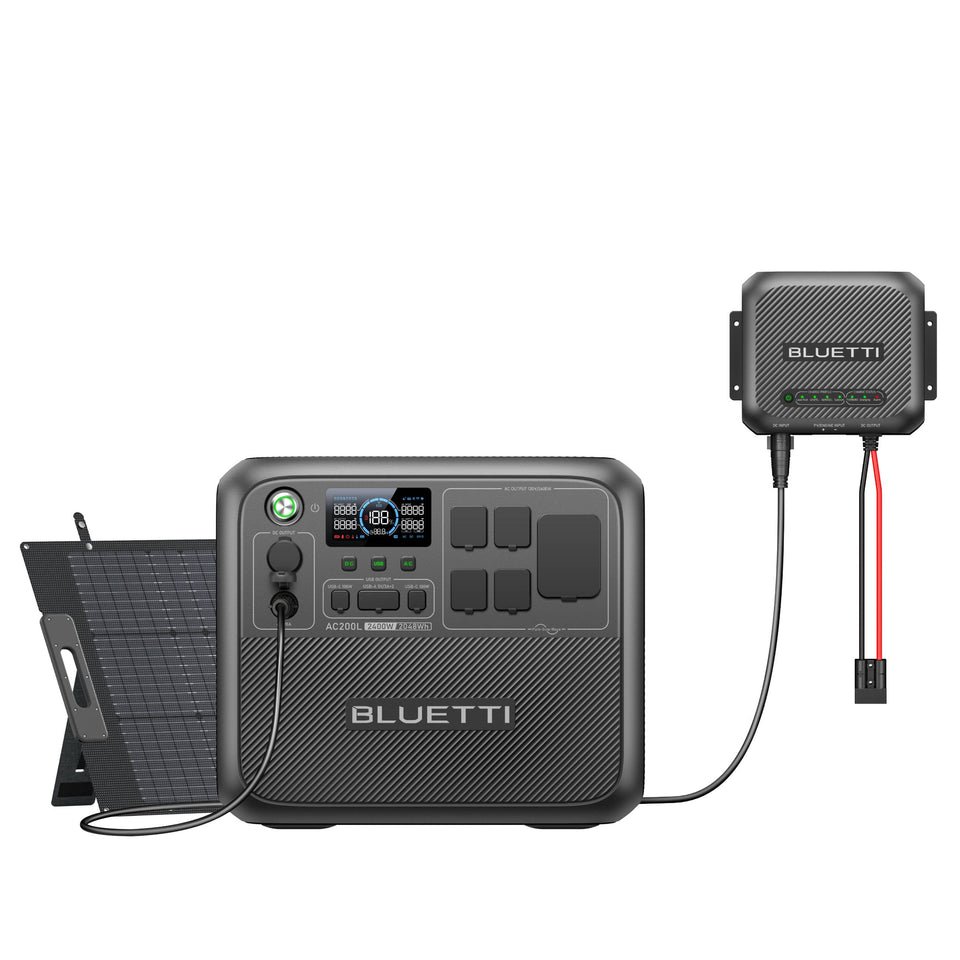
51.7 Wh/lb): The39.5 lbJackery Explorer 2000 v2 packs full2kWhweekend endurance into under40 lbs, beating the62.4 lbBLUETTI AC200L (32.8 Wh/lb) by nearly 58% in energy density per pound.
Carry Class 1: Backpack & Ultralight Day-Trip Tier (8.3–9.1 lbs)
Designed to slide behind a passenger seat, hang from a shoulder strap, or tuck into a tent corner for laptops, drones, cameras, and 12V camp lighting—not kitchen heating gear.
Anker SOLIX C300 (Model A1722) vs. Jackery Explorer 300 Plus
- Anker SOLIX C300 (
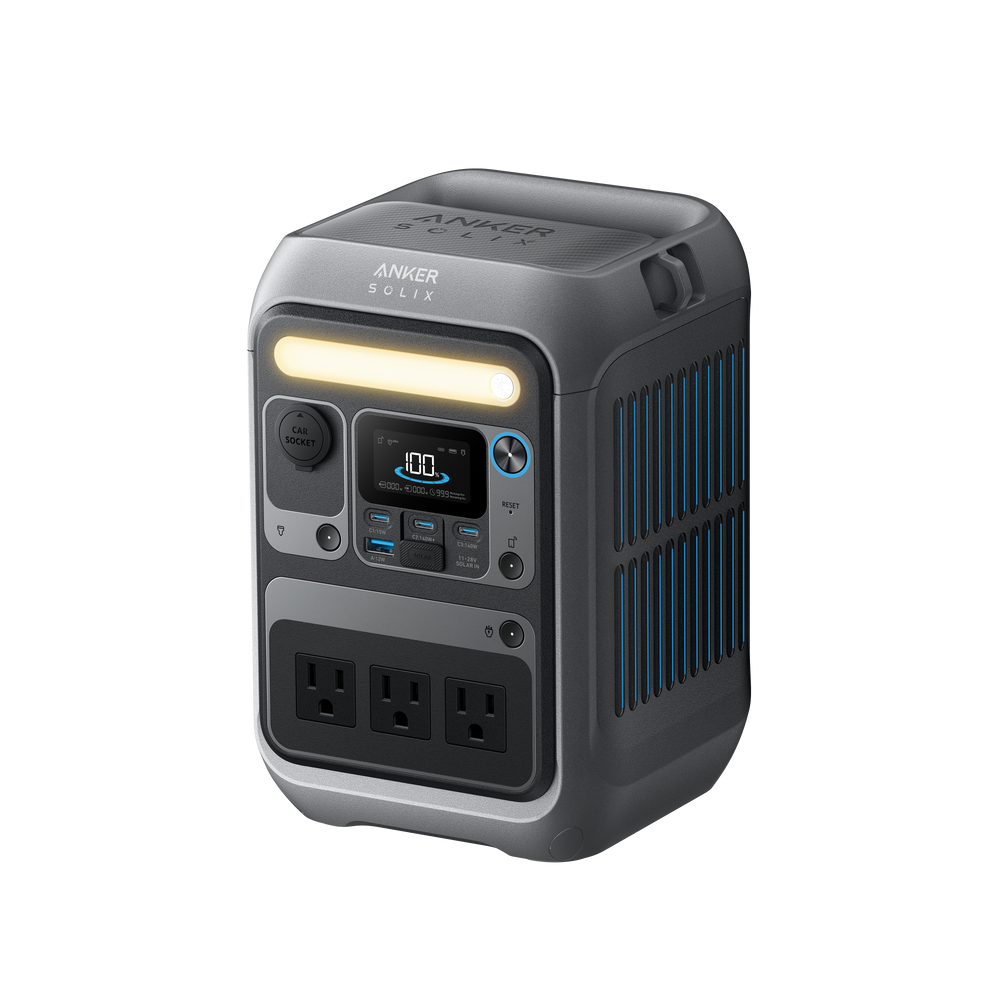
288Wh/300W/9.1 lbsAC ModelA1722,~$229street): Built in a vertical lantern footprint (6.5 × 6.3 × 9.5 in), the AC-equippedA1722(note: distinct from the lighter~6.2 lbDC-onlyC300 DCand early ~8.8 lbspec sheets) squeezes in three120VAC outlets, two140Wbidirectional USB-C PD ports,~25 dBquiet acoustics,68-minutewall charging (330W), and<10 msUPS. Expect~225–253Whusable AC (78%–88%) or~253–268WhDC (88%–93%), stretching to 3–4 USB-C laptop refills without waking the AC inverter. - Jackery Explorer 300 Plus (
288Wh/300W/8.27 lbs): Slightly lighter at8.27 lbs(9.1 × 6.1 × 6.6 in) with a classic horizontal carry handle,100WUSB-C PD, and~2-hourAC charging, though dropping to one AC outlet and~20 msEPS. Both accept100Wmax solar (11–28VXT60 on Anker;12–27VUSB-C adapter on Jackery)—meaning one folding100Wpanel refills either pack in~3.5–4peak sun hours.
FAA Airline Carry-On Reminder: Neither
288Whstation can fly aboard commercial passenger aircraft—FAA regulations cap carry-on lithium batteries at100Wh(160Whmax with explicit airline approval). Keep288Wh+units strictly for vehicle, RV, train, and boat trips.
Carry Class 2: Trunk & Tent Mid-Compact Tier (20.3–27.6 lbs)
Moving into the 20–28 lb class unlocks multi-night 12V camp refrigeration, reliable overnight CPAP support, fast 500W–1,000W solar recovery, and real 120V cooking or workstation resilience.
Goal Zero Yeti 700 (20.3 lbs | 677Wh | IPX4 Weather Sealing)
Where almost all competitors have exposed fan vents vulnerable to spray or dust, the Goal Zero Yeti 700 (677Wh LFP, 4,000 cycles, ~$549 street) wraps its chassis in an IPX4 weather-resistant housing with sealed port doors (11.3 × 7.8 × 8.6 in). For boaters, open truck-bed overlanders, and damp Pacific Northwest camps, that durability is invaluable—provided you accept a conservative 600W AC inverter (1,000W surge) and 200W solar limit (~4–5 hours peak sun).
BLUETTI AC70 (22.5 lbs | 768Wh | Verified AC Efficiency)
At 22.5 lbs (~$429 street), the BLUETTI AC70 hits the highest verified usable energy per dollar under $500. Independent AC discharge tests measured 705 Wh at 250W load (PowerOffGrid) and 730.59 Wh at 136W load (APH Networks)—proving unusually tight inverter overhead (~90%–92.5%). Add 1,000W continuous AC, 950W Turbo wall charging (~1.5 hrs), and 500W MPPT solar (12–58V Voc), and two folding 200W panels recover an entire weekend’s CPAP and cooler draw in ~2–3 sun hours. Its trade-offs are two AC outlets and Bluetooth-only app telemetry.
EcoFlow DELTA 3 Plus (27.6 lbs | 1,024Wh | 1,000W Dual MPPT)
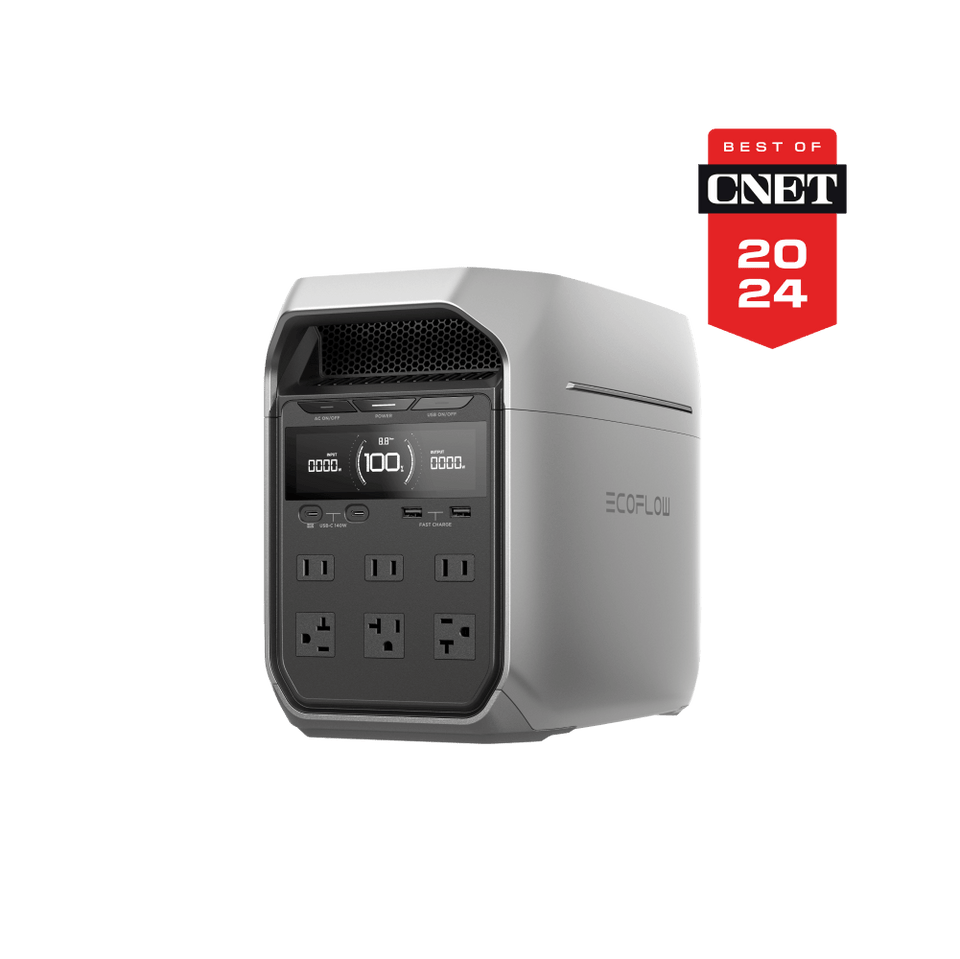
If speed and inverter headroom define your travel workflow, the EcoFlow DELTA 3 Plus (~$699 street) leads every sub-30 lb peer: 1,800W continuous AC (3,600W surge) across six AC outlets, dual 140W USB-C PD 3.1 ports, 56-minute 1,500W AC wall charge, <10 ms HID UPS, and 1,000W dual 500W MPPT solar (11–60V each). Pairing it with EcoFlow’s 800W Alternator Charger lets van and SUV travelers refill 1,024Wh in just ~1.3 hours of highway driving regardless of cloud cover. (Creators prioritizing 2,200W AC and 23 dB ultra-quiet overnight fan noise at 28.7 lbs can also cross-shop the DJI Power 1000, noting it requires separate SDC solar/12V adapters.)
Carry Class 3: The 39 lb Mobile SUV / RV Tier (1,536Wh–2,042Wh)
Historically, carrying 1.5kWh–2kWh meant lifting 55–68 lb units. Two sub-40 lb LiFePO4 models fit effortlessly in midsize SUV hatchbacks while powering full-size coolers, electric skillets, and multi-day trips.
- Jackery Explorer 2000 v2 (
39.5 lbs|2,042Wh|2,200WAC |~$999street): Using Cell-to-Body structural packaging (13.2 × 10.4 × 11.5 in), Jackery shaved nearly23 lbsoff standard2kWhrivals while keeping4,000LFP cycles,~30 dBquiet charging,~2.5 hrreal-world AC recharge (documented by OutdoorGearLab), and TechRadar-confirmed kitchen appliance support. The trade-off for51.7 Wh/lblightness is zero battery expansion and a400Wdual-DC8020 solar cap (~6–8+sun hours empty-to-full)—making it ideal for weekend trips pre-charged from the grid rather than heavy daily solar harvesting. Compare directly against62.4 lbsolar rivals in BLUETTI AC200L vs. Jackery Explorer 2000 v2. - Pecron E1500LFP (
39.7 lbs/~18 kg|1,536Wh|2,200WAC |~$599street): For campers wanting a budget2,200Winverter,12V/30AXT60van DC port,7,680Whexpansion capability, and faster800Wsolar, Pecron hits~39.6–39.7 lbsat$0.39/rated Wh. Watch its asymmetric solar input: the main700WGX16MFport requires32V–95VVoc to wake up (single18V–22Vfolding camp panels only trigger its100Wsecondary port unless panels meet the32Vfloor).
Three Quick Packing & DC Efficiency Habits for Mobile Trips
- Keep the AC Inverter Switched Off Overnight: Running a
12Vcamp fridge or charging two phones viaUSB-C PDwith the AC inverter switched OFF captures88%–93%usable DC efficiency instead of bleeding constant inverter idle watts overnight (78%–88%AC). - Factor Panel Bulk Into Trunk Math: Remember that
2 × 200Wfolding panels add~30–35 lbsand4 × 200Wadd~65–70 lbs. When driving daily on road trips,100WUSB-C car charging or dedicated500W–800Walternator chargers often deliver more energy per cubic inch of cargo space than giant folding solar suitcases. - Never Leave Stations in Sun-Baked Vehicles: Closed SUV interiors exceed
130°F–150°Fwithin an hour, tripping BMS thermal cutoffs (104°F–113°Fupper limit). Keep your battery shaded beneath a tarp or vehicle seat while solar panels sit outside (see Battery Storage & Safety Guide or match exact loads in our Power Station Finder).
Models Discussed in This Article
Anker SOLIX C300
A 9.1 lb vertical LiFePO4 station delivering 300W AC, dual 140W USB-C ports, and <10 ms UPS backup for routers, laptops, and day trips — just don't confuse it with the DC-only C300 DC or expect appliance runtime.

BLUETTI AC70
With 705–730.6 Wh of independently measured usable AC output from a 768Wh battery and 500W solar input at ~$399–$449 street price, the AC70 punches above typical 500Wh–700Wh units.
EcoFlow DELTA 3 Plus
Packs 1,000W dual-MPPT solar charging, sub-1-hour AC replenishment, and a sub-10 ms HID-capable UPS into a 27.6 lb chassis, making it more versatile than non-Plus 1kWh units.
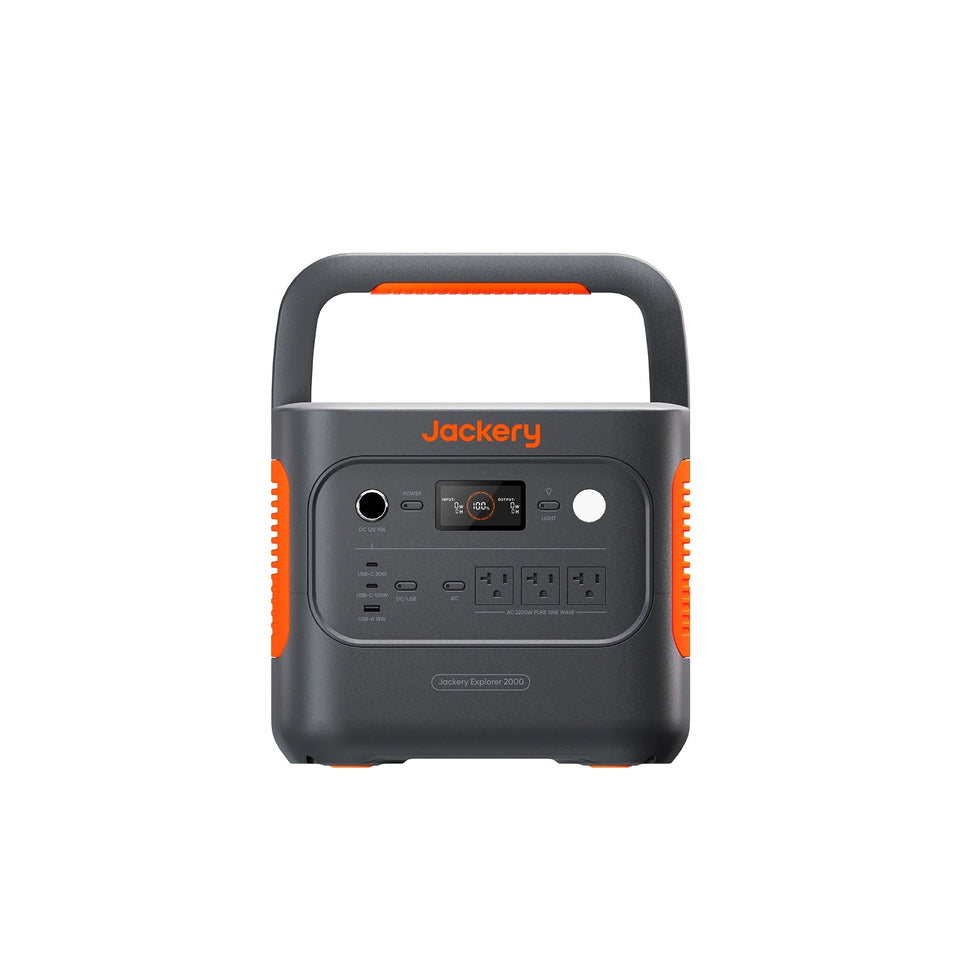
Jackery Explorer 2000 v2
A breakthrough 39.5 lb chassis makes 2,042Wh genuinely single-hand portable for camping and apartments, provided you accept its 400W solar recharge ceiling and non-expandable battery.
Frequently Asked Questions
Which portable solar generator gives the highest battery capacity per pound?+
Among sub-40 lb LiFePO4 stations, the Jackery Explorer 2000 v2 leads energy density at 51.7 Wh per pound (2,042Wh inside a 39.5 lb Cell-to-Body chassis), roughly 35%–55% denser per pound than traditional 1kWh and 700Wh units.
Which travel power station packs the highest AC wattage per pound?+
The 27.6 lb EcoFlow DELTA 3 Plus tops the list at 65.2 continuous AC watts per pound (1,800W / 27.6 lbs), allowing campers and field crews to boil water, run induction cooktops, or brew espresso from a single-hand suitcase footprint.
Can I carry a 288Wh solar generator like the Anker SOLIX C300 or Jackery 300 Plus on a plane?+
No. FAA PackSafe regulations limit commercial airline carry-on lithium batteries to 100Wh (or 160Wh only with explicit airline approval) and ban spare lithium packs from checked luggage. All 288Wh–2,042Wh power stations covered here are strictly for car, RV, van, rail, or boat travel.
Is solar panel weight included in portable power station weight specs?+
No—listed weights cover the power station chassis alone. Always add 9 to 18 lbs per 100W–200W folding solar panel when budgeting cargo weight; compact models paired with 100W USB-C solar pads stay light, while 400W–1,000W folding arrays easily add 30–60+ lbs.
Sources & Technical References
- View Source →[1]Manufacturer SpecificationAnker SOLIX US OfficialVerified 2026-11-24Anker SOLIX C300 Portable Power Station (Model A1722) Specifications
288Wh LFP AC-equipped model (distinct from DC-only C300 DC), 300W AC, 600W SurgePad, 100W XT60 solar, <10ms UPS.
- View Source →[2]Manufacturer SpecificationGoal Zero OfficialVerified 2026-11-24Goal Zero Yeti 700 Portable Power Station Specifications
677Wh LFP, 600W AC, 1,000W surge, 200W solar max, IPX4 weather-resistant chassis, 5-year warranty.
- View Source →[3]Manufacturer SpecificationBLUETTI US OfficialVerified 2026-11-24BLUETTI AC70 Portable Power Station Official Specifications
768Wh LFP, 1,000W continuous AC, 2,000W Power Lifting resistive mode, 500W MPPT solar (12-58V, 10A), 950W Turbo AC charge.
- View Source →[4]Manufacturer SpecificationEcoFlow US OfficialVerified 2026-11-24EcoFlow DELTA 3 Plus Official Specifications
1,024Wh LFP, 1,800W continuous AC, 1,000W dual 500W MPPT solar, <10ms UPS, 1,500W X-Stream AC charging.
- View Source →[5]Manufacturer SpecificationJackery US OfficialVerified 2026-11-24Jackery Explorer 2000 v2 Product Page & User Guide
2,042Wh LFP Cell-to-Body design, 39.5 lbs weight, 2,200W continuous AC, 400W dual DC8020 solar input.