Jackery Explorer 1500 Review (2026): Legacy NMC Specs, Real Limits & Better LFP Alternatives
Assessment of the legacy Jackery Explorer 1500 (1,534Wh NMC, 1,800W AC, 35.3 lbs): 5–6h wall charging, 800-cycle aging, and Pecron E1500LFP / 2000 v2 upgrades.
The discontinued Jackery Explorer 1500 (1,534Wh updated / 1,488Wh early NMC, 1,800W continuous / 3,600W surge AC, 35.3 lbs) delivers an estimated 1,196–1,350Wh of usable AC power (78%–88% efficiency; 88%–93% DC) when new. However, its 500–800 cycle NMC aging, slow 5–6 hour wall brick, proprietary solar adapters, and single USB-C port mean buyers in 2026 get far better longevity from LiFePO4 alternatives like the Pecron E1500LFP or Jackery Explorer 2000 v2.

Every week, used marketplaces, warehouse closeouts, and refurbished listings put the original Jackery Explorer 1500 (E1500) back in front of shoppers hunting for a storm-backup deal. On paper, 1,800W of pure sine wave AC power paired with roughly 1.5kWh of storage at 35.3 lbs still looks capable of running a kitchen fridge, microwave, or job-site circular saw.
Look closely at the engineering underneath that familiar orange handle, however, and time has caught up with the original Explorer 1500. Between its 500–800 cycle NMC battery chemistry, bulky external AC charging brick, proprietary adapter dependencies, and single USB-C port, paying anything close to modern LiFePO4 pricing for a legacy E1500 is a costly mistake in 2026.

Verified Hardware Specs (and the 1,488Wh vs. 1,534Wh Revision Split)
Before evaluating any closeout or secondhand Explorer 1500 listing, verify which production batch you are looking at—because Jackery quietly revised the internal battery pack mid-run without changing the outer model name:
- Original Release Batch (
E1500 v1):1,488WhNMC lithium-ion battery rated at500+cycles to 80% capacity. - Updated Production Batch (
E1500 Revised):1,534Wh(25.2V,60.9Ah) NMC lithium-ion battery rated at800cycles to 80% capacity. - Pure Sine Wave Inverter:
1,800Wcontinuous /3,600Wpeak surge across three120VNEMA 5-20R outlets (designed to accept standard household and 20A corded appliances; 120V only, not 240V). - DC & USB Ports:
1 × 60Wmax USB-C PD port,2 × USB-A(1 × 18WQuick Charge +1 × 12W), and1 × 12V/10Acar socket (120Wmax). - Dimensions & Mass:
35.3 lbs(16 kg),14.0 × 10.4 × 12.7 inches.
Note also that unlike later Explorer Plus or v2 models, the original E1500 carries no Wi-Fi or Bluetooth app monitoring, no battery expansion port, and no fast sub-20ms UPS switching rating.
Appliance Capability & Realistic Runtime Estimates (78%–88% AC / 88%–93% DC)
Where the original Jackery 1500 earned its reputation was pure 120V appliance versatility. An 1,800W continuous inverter (3,600W surge) handles single heavy countertop appliances—a 1,200W microwave, 1,500W kettle, drip coffee maker, hair dryer, or full-size residential refrigerator compressor startup—with steady reliability.
Because standardized controlled-ambient third-party discharge figures are Not Independently Verified for the legacy E1500 in our source registry, calculate realistic runtime using 78%–88% AC conversion efficiency (88%–93% on direct 12V/USB-C ports, bypassing AC inverter standby draw):
- Estimated Usable AC Energy (Healthy
1,534WhPack):~1,196–1,350Wh(or~1,161–1,309Whon1,488Whearly packs). - Estimated Usable DC/USB-C Energy:
~1,350–1,427Wh(~1,309–1,384Whon1,488Wh).
Translating that usable capacity into real outage scenarios (assuming a healthy battery, noting aged secondhand packs hold less):
- Modern Residential Refrigerator (
~55Wcyclic avg + inverter standby): Roughly 18 to 23 hours per charge. - CPAP Machine (
~45WAC or~30Wvia12VDC without humidifier): Roughly 27 to 30 hours on AC, extending to 44 to 47 hours via DC. - 12V Portable Camp Fridge (
~35WDC cyclic avg): Roughly 38 to 41 hours off the12Vsocket. - Job-Site Tools /
1,200WInduction Burner: Roughly 60 to 67 minutes of continuous full load.
Remember two practical safety rules older promotional reviews often glossed over: first, the Explorer 1500 has zero waterproof IP rating, so keep it sheltered indoors or under dry cover with clear vent airflow; second, per FAA PackSafe regulations (100Wh carry-on limit; 160Wh airline approval cap), a 1,534Wh power station cannot travel aboard commercial passenger aircraft.
Four Hardware Drawbacks That Age the Explorer 1500 in 2026
1. 500–800 Cycle NMC Chemistry & Inevitable Calendar Fade
Even if a seller claims an Explorer 1500 was “only used twice,” NMC lithium-ion cells lose capacity simply sitting over years, especially if left at 100% or 0% in a hot garage. Compared to modern LiFePO4 stations rated for 3,500–4,000 cycles, an E1500 manufactured in 2021–2023 is already several years along its chemical calendar clock—making long-term daily cabin, RV, or off-grid cycling unwise. See LiFePO4 vs. NMC Batteries for full cell-chemistry comparisons.
2. Slow ~5.5–6 Hour AC Wall Recharging via External Brick
Modern power stations hide bidirectional AC inverters inside their chassis so you only carry a thin power cord. The legacy Explorer 1500 requires hauling a bulky ~300W external power brick that takes 5.5 to 6 hours to fill the battery from 0% to 100% (requiring a second optional AC brick—and dual adapters—to drop recharge time toward ~3.5 hours). Meanwhile, 12V car charging trickles slowly at roughly 13+ hours.
3. Proprietary Adapter Quirks & 500W–600W Solar Ceiling
To reach its 500W–600W solar charging ceiling (roughly 4–6 hours under strong clear sunlight, or 7+ hours with NREL real-world derating), the Explorer 1500 relies on two DC input ports paired with a proprietary SolarSaga Parallel Adapter (or third-party Anderson / DC8020 conversion cables depending on kit revision). Losing that adapter bag on the secondhand market creates unnecessary hassle when connecting standard MC4 panels.
4. Single 60W USB-C Port & Audible Cooling Fan Swirl
With modern laptops routinely pulling 100W–140W over USB-C PD, having only one 60W USB-C port forces multi-device workspaces onto inefficient AC power bricks. Users also note a distinct high-pitched swirl from the cooling fan under moderate-to-heavy inverter loads, alongside zero app controls to toggle quiet charging speeds.
Legacy Explorer 1500 vs. Modern LiFePO4 Upgrades
Instead of gambling on a discontinued NMC battery, compare what roughly $599–$999 buys brand-new in 2026 with full 5-year manufacturer warranties:
| Specification | Legacy Jackery Explorer 1500 (NMC) | Pecron E1500LFP (Budget LFP) | Jackery Explorer 2000 v2 (Light 2kWh LFP) |
|---|---|---|---|
| Capacity & Chemistry | 1,534Wh (1,488Wh v1) NMC |
1,536Wh LiFePO4 |
2,042Wh LiFePO4 |
| Rated Cycle Life | 500–800 cycles to 80% |
3,500+ cycles to 80% |
4,000 cycles to >=70% |
| Continuous / Surge AC | 1,800W / 3,600W |
2,200W / 4,400W |
2,200W / 4,400W |
| AC Wall Charging | ~5.5–6 hrs (external brick) |
~1.5–1.8 hrs (1,400W built-in) |
~1.7–2.5 hrs (1,800W built-in) |
| Solar Input Ceiling | 500–600W (with adapters) |
800W (GX16MF 32–95V + 12–18V) |
400W (16–60V dual DC8020) |
| Standout Ports / Extras | 1 × 60W USB-C |
12V/30A XT60 DC, wireless pad, expandable |
Wi-Fi App, 100W + 30W USB-C, ~30 dB quiet |
| Weight | 35.3 lbs |
39.7 lbs |
39.5 lbs |
| 2026 Price Context | Used/closeout only | ~$599 street ($0.39/rated Wh) |
~$999 street ($0.49/rated Wh) |
Notice the numbers in that table:
- Pecron E1500LFP (
~$599street): Matches theE1500’s capacity (1,536Wh), boosts continuous AC to2,200W, drops AC wall charge time down to ~1.5–1.8 hours, adds a12V/30AXT60 port for van fuse blocks, and supports cascade expansion up to7,680Wh—at$0.39per rated Wh. Just note Pecron’s mainGX16MFsolar port requires32Vminimum start voltage (32–95VVoc), meaning single18Vportable panels need series pairing or the smaller100WDC5521port. - Jackery Explorer 2000 v2 (
~$999street): For only4.2 lbsmore than the old Explorer 1500 (39.5 lbsvs35.3 lbs), Jackery’s Cell-to-Body2000 v2delivers2,042WhLFP,2,200WAC,OutdoorGearLab-verified~2.5 hrAC wall charging, and a full 5-year warranty (3+2 registered)—trading only a400Wsolar cap and non-expandability.
Final Verdict: What Is a Legacy Jackery Explorer 1500 Worth in 2026?
If you already own a healthy Jackery Explorer 1500, there is zero urgency to throw it out—keep it indoors around 50%–60% charge between storm seasons, use it for 120V refrigerators or corded tools, and avoid heavy daily cycling.
If you are shopping for one today, treat $350–$400 (~$0.23–$0.26/Wh) as your strict walk-away ceiling—and only buy if the seller proves the AC brick and solar adapters are included and demonstrates full-load capacity stability. Above $450, modern LiFePO4 units like the Pecron E1500LFP and Jackery Explorer 2000 v2 crush the legacy E1500 on charging speed, cycle longevity, and total lifetime value. Compare exact cost-per-watt-hour ratios in our Price per Wh Calculator or evaluate efficiency factors in Understanding Power Station Efficiency.
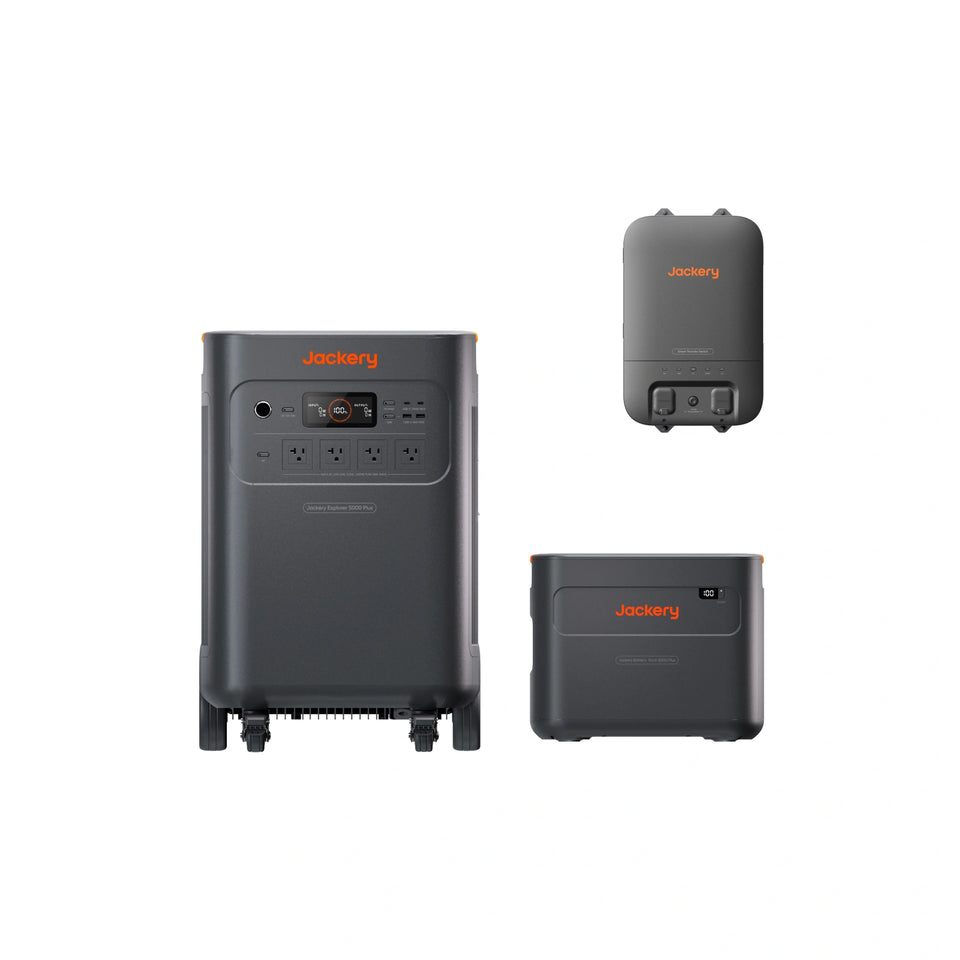
Models Discussed in This Article
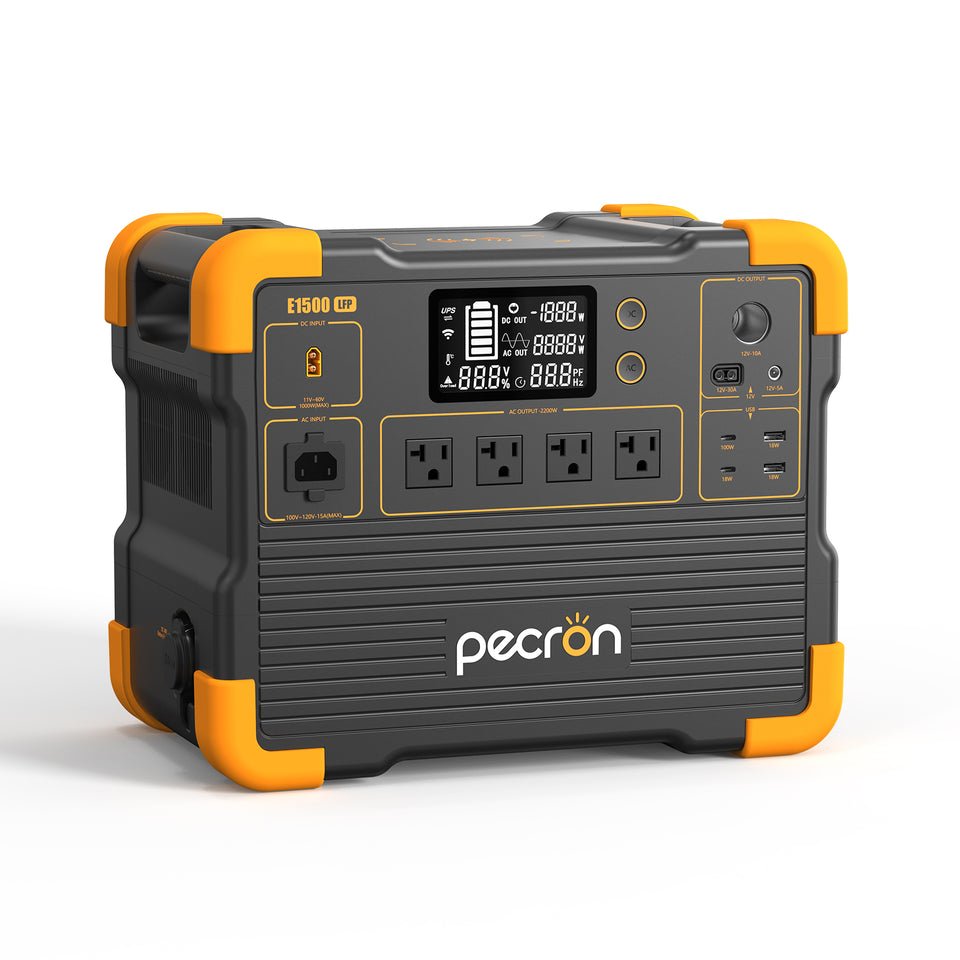
Pecron E1500LFP
Delivers 1,536Wh, a 2,200W continuous inverter, and a rare 12V/30A XT60 DC port around $599 street price, though its asymmetric 32–95V GX16MF solar input requires careful panel voltage matching.
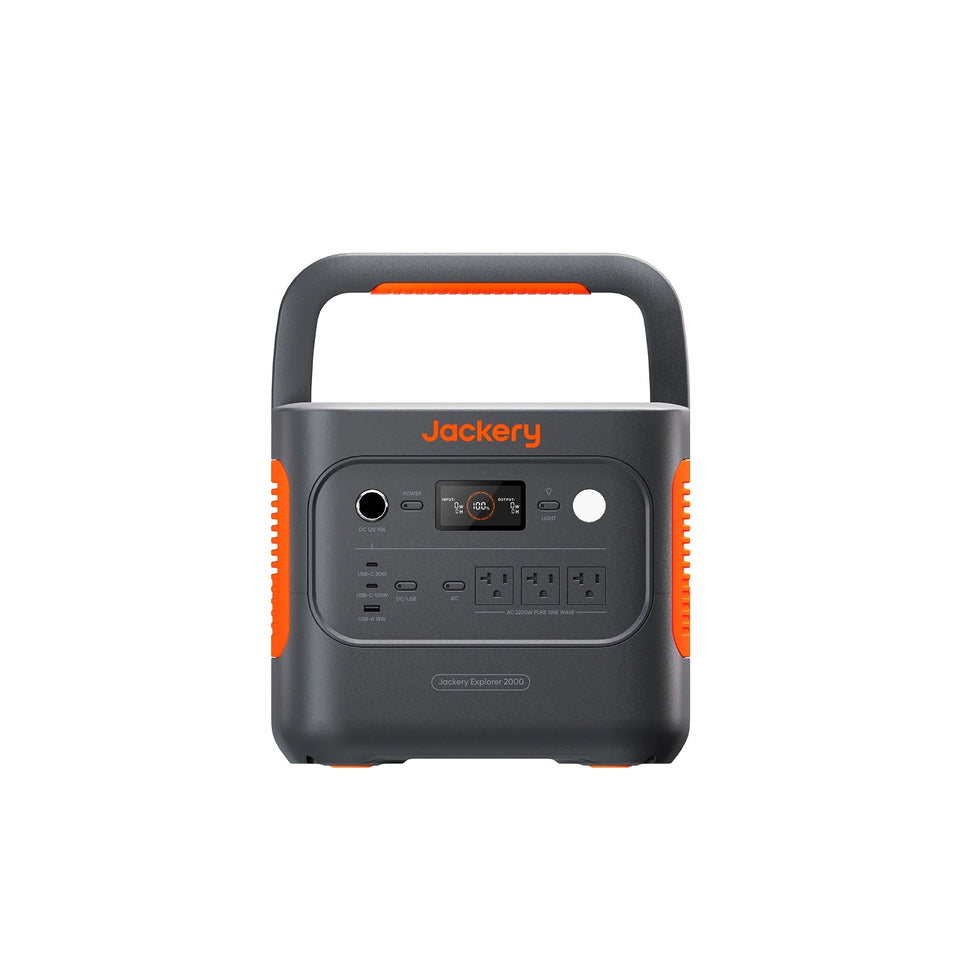
Jackery Explorer 2000 v2
A breakthrough 39.5 lb chassis makes 2,042Wh genuinely single-hand portable for camping and apartments, provided you accept its 400W solar recharge ceiling and non-expandable battery.
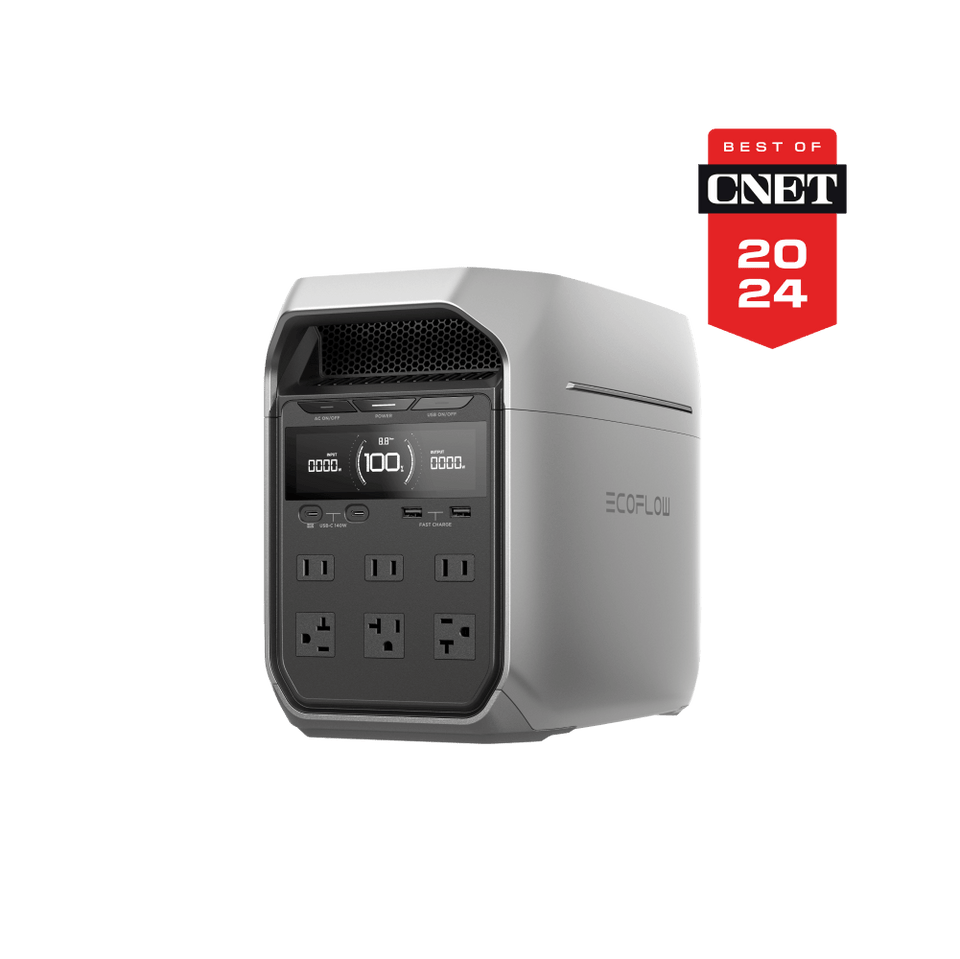
EcoFlow DELTA 3 Plus
Packs 1,000W dual-MPPT solar charging, sub-1-hour AC replenishment, and a sub-10 ms HID-capable UPS into a 27.6 lb chassis, making it more versatile than non-Plus 1kWh units.
Frequently Asked Questions
Why do some Jackery Explorer 1500 listings say 1,488Wh while others say 1,534Wh?+
Jackery quietly updated the original Explorer 1500 (Model E1500) mid-production. Early 2021 units shipped with a 1,488Wh NMC pack rated for 500 cycles to 80%, while later Explorer 1500 units increased nominal capacity slightly to 1,534Wh and raised the cycle rating to 800 cycles.
What is the biggest weakness of buying a used Jackery Explorer 1500 in 2026?+
Calendar aging and slow charging. Even lightly used 3-to-5-year-old NMC packs lose capacity gradually over time, cannot match modern 3,500–4,000 cycle LiFePO4 batteries, and rely on a heavy ~300W external AC brick (~5.5–6 hours per recharge) plus proprietary dual-input solar adapters.
Can I bring the Jackery Explorer 1500 on a commercial airplane?+
No. Under FAA PackSafe hazardous materials rules, standard carry-on lithium batteries are capped at 100Wh (or up to 160Wh with airline approval). At 1,488Wh–1,534Wh, the Explorer 1500 is roughly 10 times over the legal passenger air-travel limit.
Which modern LiFePO4 power stations directly replace the Jackery Explorer 1500?+
For budget-minded 1.5kWh capacity and stronger solar/DC ports, the Pecron E1500LFP offers 1,536Wh LiFePO4, 2,200W AC, and 1.5-hour wall charging around $599 street. If you prefer staying in Jackery's ecosystem, the 39.5 lb Jackery Explorer 2000 v2 delivers 2,042Wh LFP and 2,200W AC for just 4.2 lbs more.
Sources & Technical References
- View Source →[1]Manufacturer SpecificationPecron US OfficialVerified 2026-11-24Pecron E1500LFP Official Specifications
1,536Wh LFP, 2,200W AC, 800W dual-port solar (GX16MF 32-95V 700W + DC5521 100W), EP3000-48V expansion support.
- View Source →[2]Manufacturer SpecificationJackery US OfficialVerified 2026-11-24Jackery Explorer 2000 v2 Product Page & User Guide
2,042Wh LFP Cell-to-Body design, 39.5 lbs weight, 2,200W continuous AC, 400W dual DC8020 solar input.
- View Source →[3]Third-Party Independent ReviewOutdoorGearLabVerified 2026-11-24Jackery Explorer 2000 v2 Independent Review & Benchmark Testing
Reports ~2.5 hour full AC recharge (~817 Wh/hr average), high portability score for 2kWh class, and solar expansion trade-offs.
- View Source →[4]Technical & Safety StandardFederal Aviation Administration (FAA)Verified 2026-11-25PackSafe Hazardous Materials Guidance: Spare Lithium Batteries & Power Banks
Establishes the 100Wh standard carry-on threshold (and 160Wh airline approval cap) distinguishing airline-legal power banks from 250Wh+ portable power stations.