BLUETTI vs. Jackery (2026): Open-PV Solar & RV Power vs. Lightweight Simplicity
Compare BLUETTI and Jackery in 2026: AC200L 12-145V solar, TT-30R RV port, and CNET >29h fridge test vs. Jackery 39.5 lb portability and Explorer 1000 v2.
BLUETTI and Jackery solve opposite real-world constraints. BLUETTI leads on open-PV solar compatibility (12–145V Voc / 1,200W on AC200L), native 30A TT-30R RV ports, modular expansion, and verified AC efficiency—CNET measured >29h fridge runtime (77.76% RTE) on AC200L, while APH Networks and PowerOffGrid measured 705–730.59 Wh on AC70. Jackery counters with lightweight Cell-to-Body design (39.5 lb Explorer 2000 v2; 23.8 lb 1000 v2) and high-surge 240V Explorer 5000 Plus.

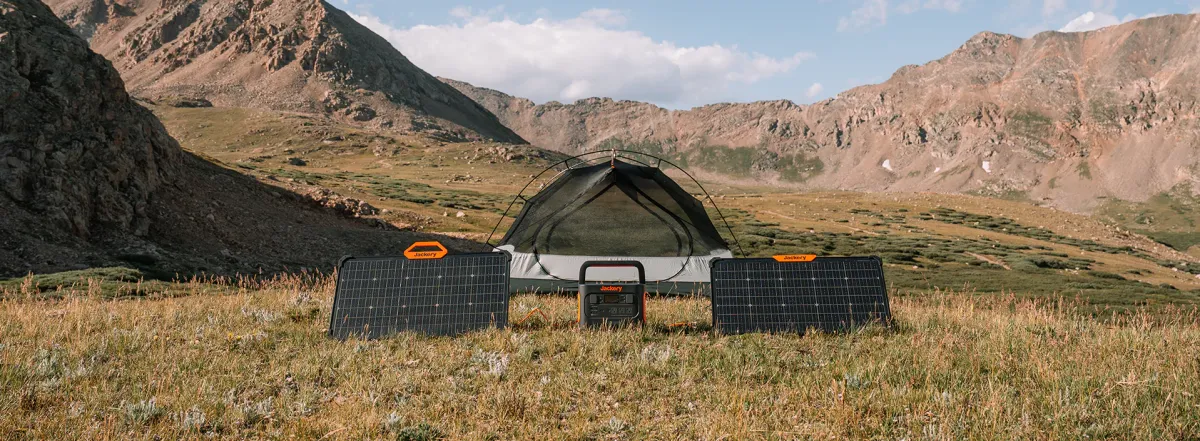
Plug a standard 30-amp travel trailer shore cord—or a pair of 24V rigid rooftop solar panels wired in series—into a portable power station, and the fundamental divide between BLUETTI and Jackery appears immediately.
While both companies now build current-generation LiFePO4 (LFP) hardware backed by 5-year US warranty coverage, they engineer for two different buyers. BLUETTI builds heavy-duty, feature-dense stations centered on wide-voltage MPPT solar inputs, native RV outlets, and independently verified AC inverter efficiency. Jackery strips away niche receptacles and expansion circuitry on its portable v2 line to achieve class-leading weight savings and straightforward consumer usability, reserving high-voltage solar and massive surge ratings for its 240V Explorer Plus home towers.
The 2kWh Flagship Matchup: BLUETTI AC200L vs. Jackery Explorer 2000 v2
Despite sitting within 6 watt-hours and ~$100 street price of each other, the BLUETTI AC200L (2,048Wh) and Jackery Explorer 2000 v2 (2,042Wh) serve practically opposite use cases.
| Specification | BLUETTI AC200L | Jackery Explorer 2000 v2 |
|---|---|---|
| Rated Capacity / Chemistry | 2,048Wh (LiFePO4) | 2,042Wh (LiFePO4) |
| Cycle Life Benchmark | 3,000+ cycles to 80% | 4,000 cycles to >=70% |
| Continuous / Surge AC | 2,400W (3,600W Power Lifting resistive) |
2,200W (4,400W surge) |
| RV & Outlet Layout | 4 × 5-20R + 1 × 30A NEMA TT-30R + 48V/8A DC | 3 × 5-20R (no TT-30R) |
| Solar Input Ceiling | 1,200W (12V–145V Voc, 15A) |
400W (16V–60V Voc, dual DC8020) |
| AC Charging Speed | Up to 2,400W (~1.5 hrs) |
Up to 1,800W (~1.7h Emer. / ~2.5h OutdoorGearLab) |
| Expansion Support | Up to 8,192Wh (B210/B230/B300/B300K) |
Not expandable |
| Weight & Portability | 62.4 lbs (no wheels) | 39.5 lbs (Cell-to-Body top handle) |
| Verified 3rd-Party Evidence | CNET: 77.76% RTE; >29h fridge test | OutdoorGearLab & TechRadar portability/kitchen praise |
| Typical US Street Price | ~$1,099 ($1,599 MSRP) |
~$999 ($1,499 MSRP) |
What Independent Lab Benchmarks Reveal
One of the strongest reasons to cross-check third-party testing before buying in the 2kWh tier is inverter standby overhead. In CNET Labs standardized refrigerator runtime benchmarks, the 120V BLUETTI AC200L achieved 77.76% round-trip efficiency and ran a cycling refrigerator for over 29 hours—surpassing larger 3,840Wh 240V split-phase units (such as the Anker SOLIX F3800 at ~25.68 hours) because its single-voltage inverter wastes far less idle energy between compressor cycles.
On the Jackery side, OutdoorGearLab clocked the Explorer 2000 v2 at roughly 2.5 hours for a full wall recharge and awarded top portability marks in the 2kWh class, while TechRadar praised its ~30 dB quiet indoor mode and ability to drive heavy kitchen loads (2,200W / 4,400W surge)—while noting its 400W solar limit restricts multi-day off-grid independence.
Open-PV Solar Range & RV Compatibility: Why Connectors Matter
For RV owners, overland builders, and cabin users deploying existing rigid solar panels, MPPT open-circuit voltage (Voc) and receptacle selection are often decisive:
- 12V–145V Wide MPPT vs. 400W DC8020 Caps: The BLUETTI AC200L accepts 12V to 145V Voc at up to 1,200W, making it effortless to wire rigid residential or RV rooftop panels in series (keeping cold-weather
Vocsafely under145Vper the manual). By contrast, both the Jackery Explorer 1000 v2 and Explorer 2000 v2 restrict solar input to 400W total (16V–60VVoc) across dual proprietaryDC8020ports—requiringDC8020-to-MC4adapters for non-Jackery panels and prohibiting high-voltage series strings. - Native 30A TT-30R & 48V DC RV Power: Plugging a standard 30A travel trailer cord into the BLUETTI AC200L gives direct access to its full
2,400Woutput via a NEMA TT-30R outlet—no overheating15Adogbone bottleneck—plus a 48V/8A DC port for camper van architectures. Jackery’s 2000 v2 omitsTT-30Rentirely. (RV Pro Tip: Whichever station you plug into an RV shore inlet, switch OFF the trailer’s interior AC-to-12V converter breaker so the power station doesn’t waste 25%–35% efficiency charging your trailer’s lead-acid house battery!) See our RV Power Station Compatibility Guide for full setup math.
Sub-1kWh & 1kWh Matchup: BLUETTI AC70 vs. Jackery 300 Plus & 1000 v2
Shoppers below the 2kWh bracket rarely compare identical capacities between these two brands—instead, BLUETTI AC70 sits cleanly between Jackery’s camp-sized Explorer 300 Plus and midsize Explorer 1000 v2.
| Model | Capacity & Weight | Continuous AC | Solar Input Max | App & Key Trade-Off |
|---|---|---|---|---|
| Jackery Explorer 300 Plus | 288Wh / 8.3 lbs | 300W (600W surge) | 100W (12–27V USB-C) |
Ultra-light camp/laptop power (100W USB-C); too small for kitchen gear. |
| BLUETTI AC70 | 768Wh / 22.5 lbs | 1,000W (2,000W Power Lifting) |
500W (12–58V Voc) |
~$429 street; APH Networks (730.59 Wh @ 136W) & PowerOffGrid (705 Wh @ 250W) verified; Bluetooth-only (no Wi-Fi), 2 AC outlets. |
| Jackery Explorer 1000 v2 | 1,070Wh / 23.8 lbs | 1,500W (3,000W surge) | 400W (16–60V DC8020) |
Wi-Fi + Bluetooth app; ~1.7 hr AC charge; 400W solar cap & no battery expansion. |
Notice how impressive the BLUETTI AC70 is on pure value and verified physics: two separate independent reviewers (APH Networks at 136W and PowerOffGrid at 250W) documented 730.59 Wh (~92.5% net inverter efficiency) and 705 Wh (~91.8% of rated Wh) of real AC energy out of its 768Wh pack, paired with 500W MPPT solar and 950W Turbo AC charging around $349–$449 street pricing. However, if you need 1,500W continuous output for an electric kettle or Wi-Fi remote telemetry at almost the same 23.8 lb carry weight, Jackery’s Explorer 1000 v2 earns its higher price. (For models without verified lab discharge benchmarks, expect roughly 78%–88% AC or 88%–93% DC/USB-C energy recovery.)
Whole-Home 240V Backup, Warranties & Weight Realities
- 240V Residential Power: Within our core reviewed catalog, Jackery enters the
120V/240Vhome backup tier aggressively via the Jackery Explorer 5000 Plus (5,040Wh,7,200Wcontinuous /14,400Wsurge,4,000WHigh-PV135–450Vinput,~$2,999street price) plus the optional Jackery Smart Transfer Switch. BLUETTI’s AC200L (120V-only) expands up to8,192Whfor 120V critical circuits via a manual transfer switch, while BLUETTI reserves240Vsplit-phase home integration for separate Apex/EP home lines. Remember: any hardwired transfer switch or smart panel connection requires a licensed electrician under NFPA 70 (NEC) rules. - 5-Year Warranty Fine Print: Both brands cover flagship LFP lines for 5 years in the US—60 months directly on BLUETTI AC70 and AC200L, and 3 years standard + 2-year registration extension on Jackery Plus and v2 models. Also verify cycle retention specs: BLUETTI rates
3,000+cycles to 80%, whereas Jackery rates 2000 v2 / 5000 Plus at4,000cycles to >=70%. - The Lifting Weight Reality: Do not gloss over
39.5 lbsversus62.4 lbs. Without wheels or a folding cart, hauling a 62 lb BLUETTI AC200L up basement steps during a blackout is exhausting—check our Storage & Safety Guide for safe placement strategies.
Which Brand Fits Your Setup Better?
- Choose BLUETTI if: You own a 30A RV (
TT-30R+48VDC), plan to recharge quickly from 800W–1,200W high-voltage solar arrays, want modular battery expansion (8,192Whon AC200L), or want independently verified AC efficiency under$450(AC70) or$1,100(AC200L). - Choose Jackery if: You carry your power station frequently up stairs or into car trunks (
39.5 lbExplorer 2000 v2 /23.8 lb1000 v2), primarily pre-charge from household wall outlets, prefer big-box US retail convenience, or need a240Vsplit-phase home tower (Explorer 5000 Pluswith14,400Wsurge).
Dive even deeper in our direct BLUETTI AC200L vs. Jackery Explorer 2000 v2 spec breakdown, compare brand philosophies in Jackery vs. BLUETTI, or size your exact RV and fridge draw in our Wattage Calculator.
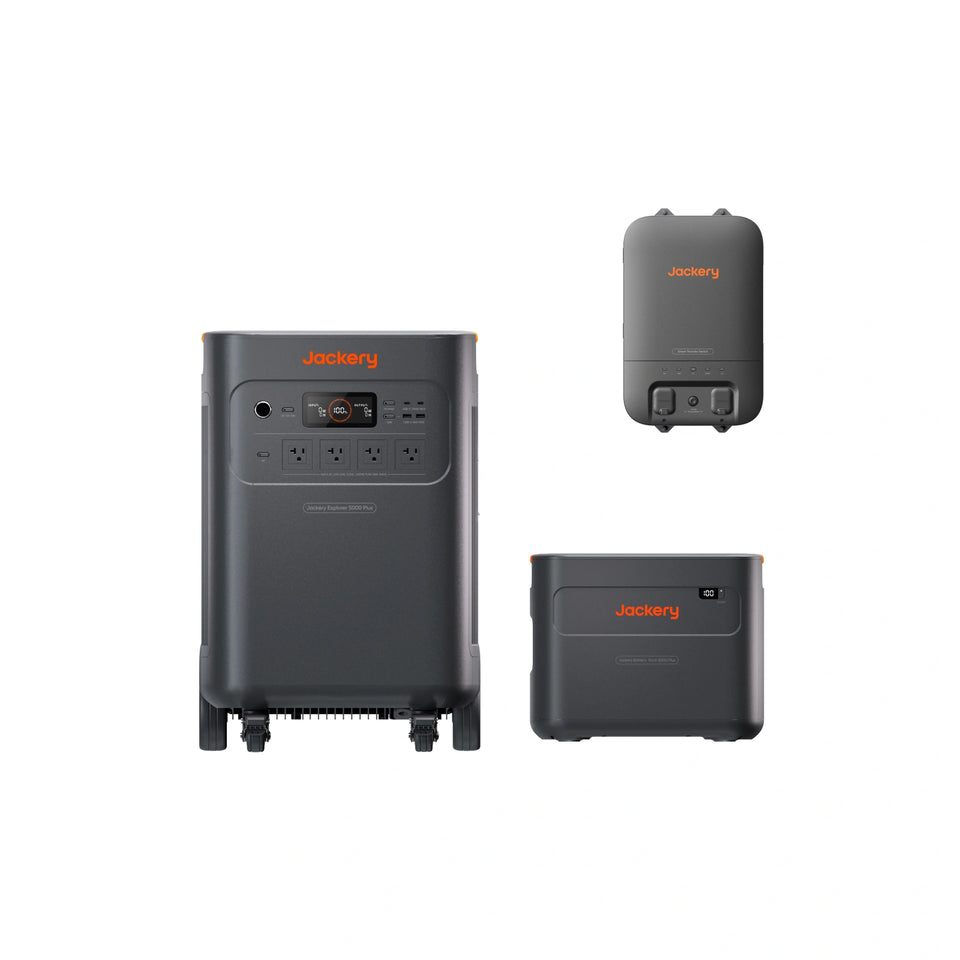
Models Discussed in This Article
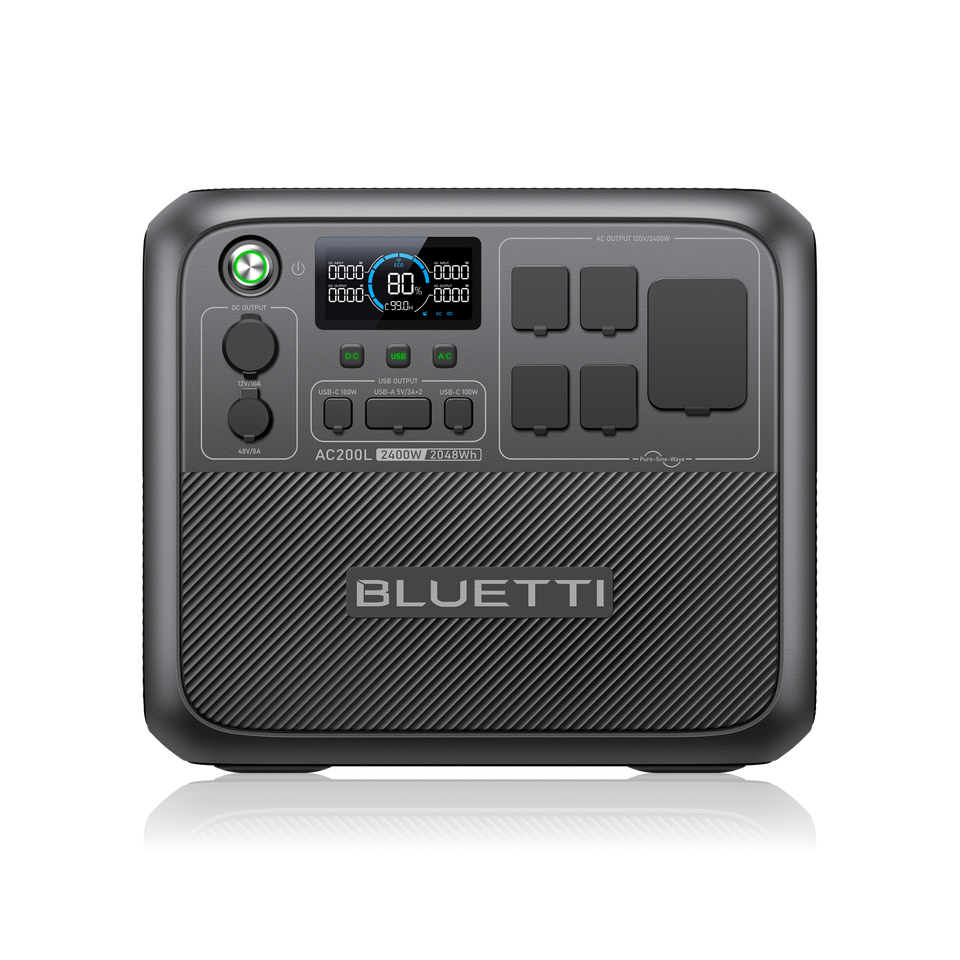
BLUETTI AC200L
Combines a high-efficiency 2,048Wh expandable platform, 1,200W high-voltage solar input (12–145V), and dedicated 30A TT-30R + 48V DC RV outputs at strong street pricing, trading away light weight and built-in wheels.
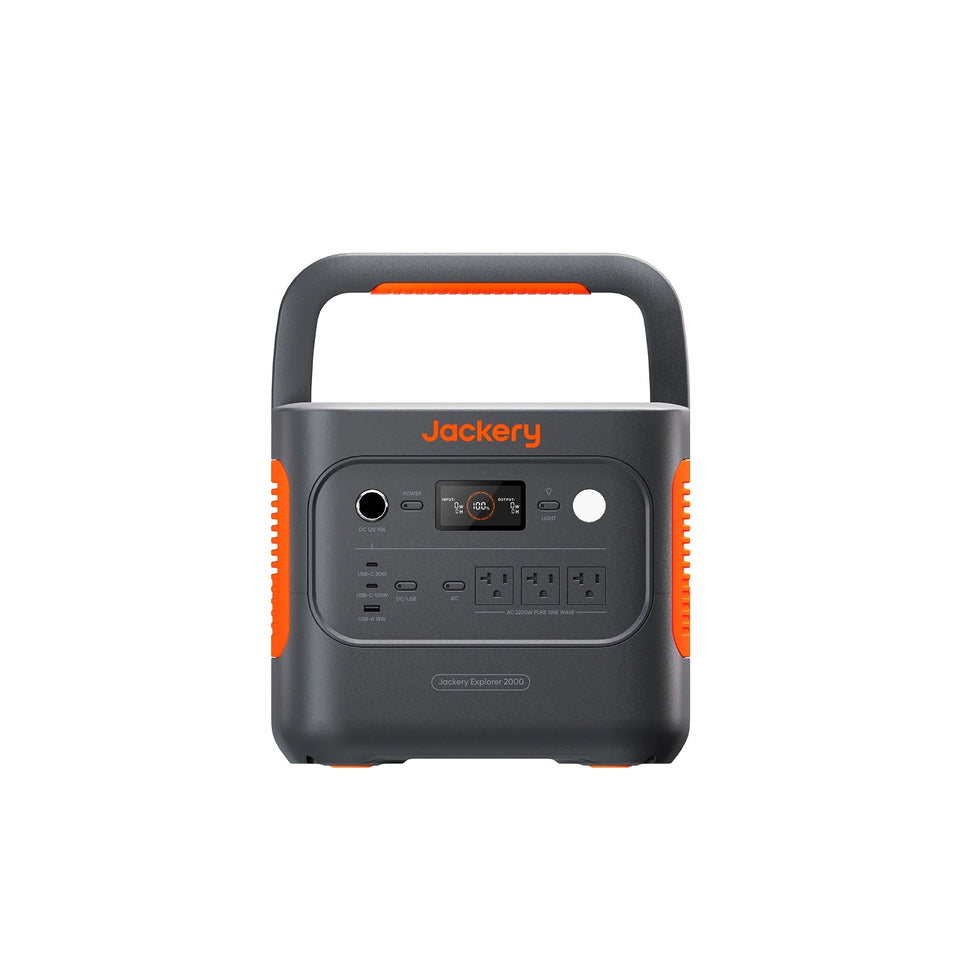
Jackery Explorer 2000 v2
A breakthrough 39.5 lb chassis makes 2,042Wh genuinely single-hand portable for camping and apartments, provided you accept its 400W solar recharge ceiling and non-expandable battery.

BLUETTI AC70
With 705–730.6 Wh of independently measured usable AC output from a 768Wh battery and 500W solar input at ~$399–$449 street price, the AC70 punches above typical 500Wh–700Wh units.
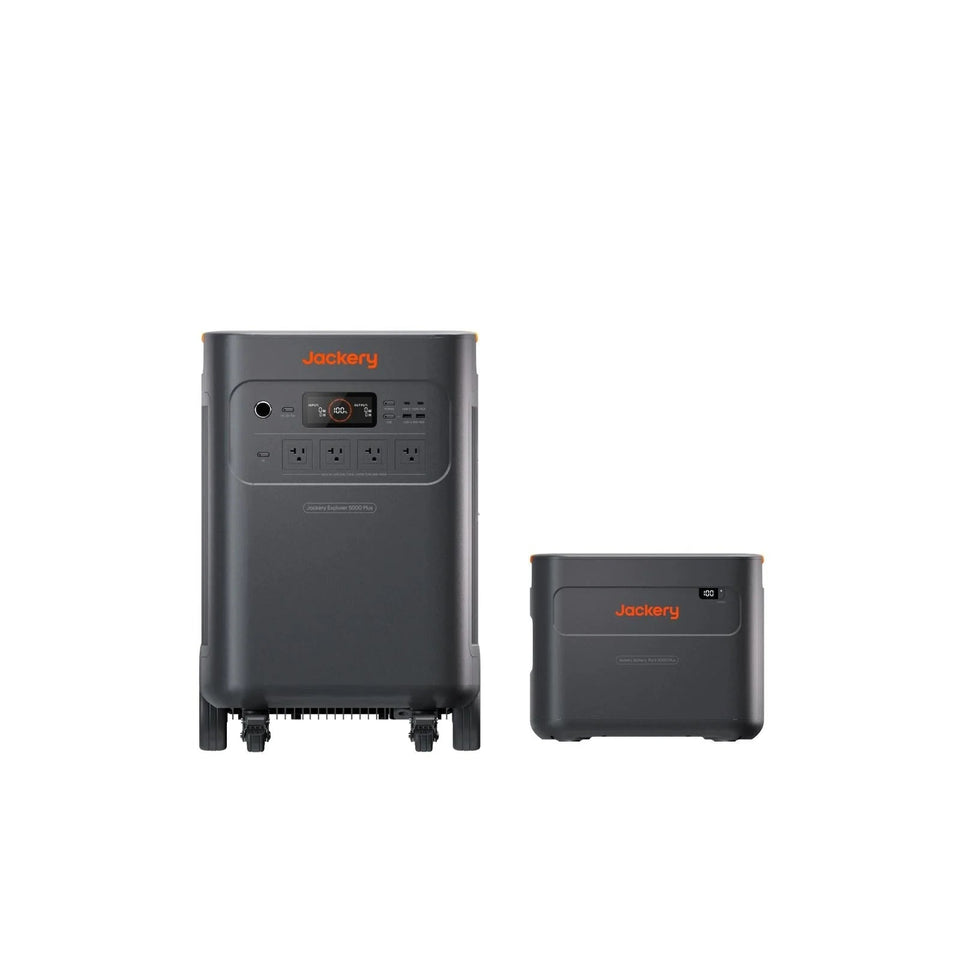
Jackery Explorer 5000 Plus
Combines a 5,040Wh LFP core, 7,200W split-phase output, 14,400W published surge headroom, and both High-PV (135–450V) and Low-PV solar inputs in a single wheeled chassis.
Frequently Asked Questions
Why does the BLUETTI AC200L run a refrigerator longer than larger units and charge faster on solar than the Jackery Explorer 2000 v2?+
Two engineering choices explain it. First, CNET Labs measured 77.76% round-trip efficiency and >29 hours of standardized refrigerator runtime on the 2,048Wh AC200L thanks to low standby inverter losses (outlasting larger dual-voltage 240V units like the 3,840Wh Anker F3800 at ~25.68h). Second, BLUETTI includes a 1,200W (12–145V Voc) MPPT solar controller compared to Jackery's 400W (16–60V) DC8020 cap.
Which 2kWh station is easier to carry into an RV or up apartment stairs: BLUETTI AC200L or Jackery Explorer 2000 v2?+
Jackery wins by a huge margin. The Explorer 2000 v2 weighs just 39.5 lbs with a fold-flat carry handle, whereas the wheelless BLUETTI AC200L weighs 62.4 lbs—nearly 23 lbs heavier. Unless you keep the AC200L stationary inside an RV bay or use a rolling cart, solo stair transport is far more demanding.
Can I plug third-party RV rooftop solar panels into Jackery and BLUETTI models without special hardware?+
BLUETTI's wide 12V–145V Voc input on the AC200L (and 12V–58V on the AC70) pairs cleanly with MC4-terminated portable or series-wired RV solar panels within voltage limits. Jackery's Explorer 1000 v2 and 2000 v2 cap solar voltage at 60V Voc across proprietary DC8020 ports, requiring DC8020-to-MC4 adapters and careful string voltage matching.
Are BLUETTI Power Lifting and Jackery surge ratings safe for heavy motor compressors?+
No—read those specs differently. BLUETTI's Power Lifting mode (3,600W on AC200L; 2,000W on AC70) raises wattage by reducing AC voltage strictly for resistive heating elements like kettles, not inductive motors. Jackery Explorer 2000 v2 publishes a 4,400W peak surge rating on its 2,200W inverter for brief motor startup spikes.
Sources & Technical References
- View Source →[1]Manufacturer SpecificationBLUETTI US OfficialVerified 2026-11-24BLUETTI AC200L Portable Power Station Official Specifications
2,048Wh LFP, 2,400W continuous AC, 3,600W Power Lifting mode, NEMA TT-30R + 48V/8A DC RV port, 1,200W solar (12-145V).
- View Source →[2]Manufacturer SpecificationBLUETTI US OfficialVerified 2026-11-24BLUETTI AC70 Portable Power Station Official Specifications
768Wh LFP, 1,000W continuous AC, 2,000W Power Lifting resistive mode, 500W MPPT solar (12-58V, 10A), 950W Turbo AC charge.
- View Source →[3]Manufacturer SpecificationJackery US OfficialVerified 2026-11-24Jackery Explorer 2000 v2 Product Page & User Guide
2,042Wh LFP Cell-to-Body design, 39.5 lbs weight, 2,200W continuous AC, 400W dual DC8020 solar input.
- View Source →[4]Third-Party Independent ReviewCNETVerified 2026-11-24CNET Portable Power Station Lab Efficiency & Refrigerator Runtime Benchmarks
Documents standardized refrigerator runtime and round-trip efficiency testing including BLUETTI AC200L (77.76% RTE, >29h fridge test) and Anker SOLIX F3800 (~25.68h fridge stress runtime due to dual-voltage inverter overhead).
- View Source →[5]Third-Party Independent ReviewAPH NetworksVerified 2026-11-24BLUETTI AC70 Portable Power Station Load Test Review
Constant 136W AC load discharge test measured 730.59 Wh usable output (~95% of rated 768Wh cell capacity; ~92.5% net inverter efficiency).