EcoFlow RIVER Max Plus Review: Legacy 720Wh NCM Architecture & 2026 Replacement Guide
Reviewing the discontinued 720Wh NCM EcoFlow RIVER Max Plus: modular battery pack, 200W solar cap, used-unit checklist, and 2026 LFP replacements.
The discontinued EcoFlow RIVER Max Plus pairs a 360Wh base station with a removable bottom battery for 720Wh total NCM capacity (17.6 lbs) and a 600W continuous AC inverter. Because its NCM cells age faster (500–800 cycles) and solar caps at 200W (10–25V), modern LFP models like the RIVER 2 Pro (768Wh), BLUETTI AC70 (768Wh), and EcoFlow DELTA 3 Plus (1,024Wh) outperform it in 2026 unless found heavily discounted.
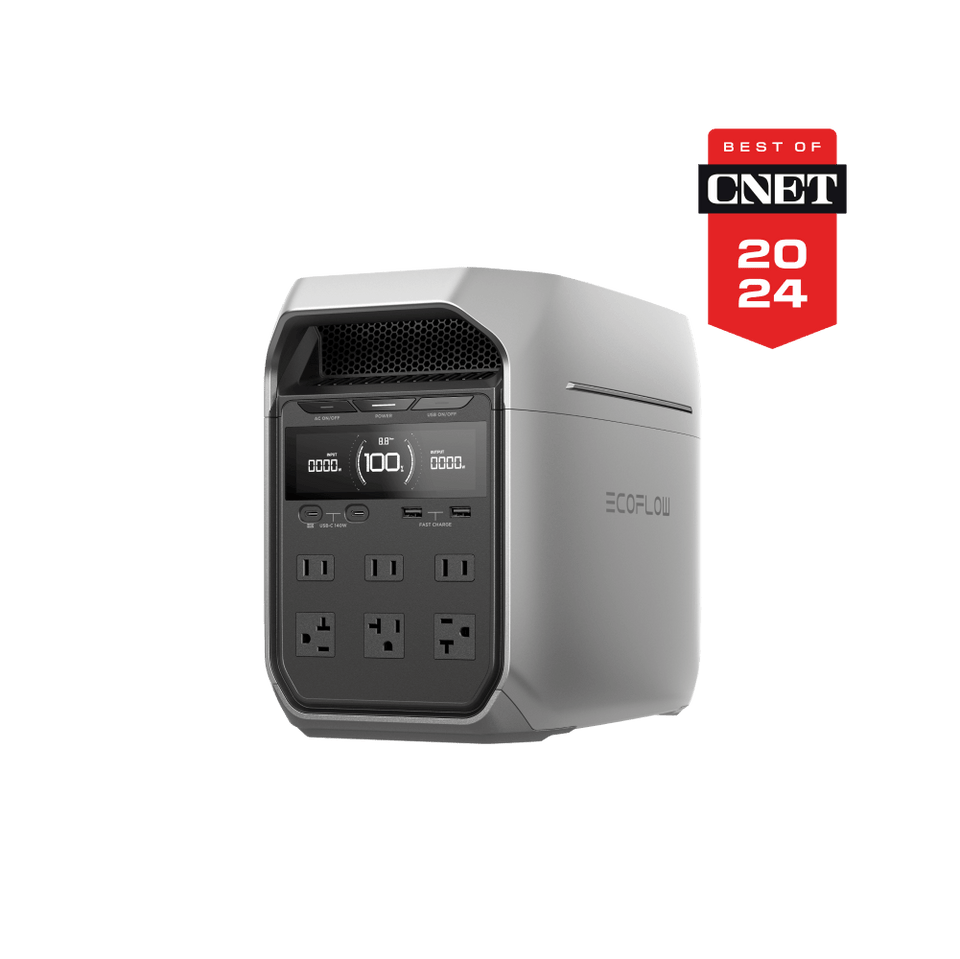
Search marketplaces like eBay, Walmart third-party storefronts, or local classifieds and the EcoFlow RIVER Max Plus still pops up regularly—often wrapped in recycled 2022 marketing copy claiming it outperforms everything under $500. In 2026, treating this discontinued first-generation unit like current hardware is an easy way to overpay for aging lithium chemistry.
Before buying a clearance, refurbished, or secondhand RIVER Max Plus—or deciding whether to retire one you already own—it helps to untangle EcoFlow’s confusing first-generation RIVER naming tree and compare its legacy NCM hardware against today’s LiFePO4 (LFP) standard.
Untangling First-Generation RIVER Revisions (288Wh to 720Wh)
First-generation EcoFlow RIVER stations shared nearly identical outer proportions (~11.4 × 7.3 × 9.3 in), yet shipped under four overlapping names that third-party sellers frequently mislabel:
- RIVER (
288Wh): Non-modular base chassis (600WAC,500NCM cycles). - RIVER Plus (
360Wh): Updated base station (600WAC,800NCM cycles,660WX-Stream AC charge). - RIVER Max (
576Wh): Dark gray288WhRIVER paired with a screw-on288Whbottom battery module (500cycles,500WAC charge). - RIVER Max Plus (
720Wh): White/gray housing pairing a360WhRIVER Plus with a removable360Whbottom Extra Battery module (800cycles to 80%,660WAC charge,17.6 lbscombined).
Notice that legacy web articles occasionally quote "716Wh / 500W" (mixing up BLUETTI EB70 specs) or "360Wh only" (ignoring the bottom pack). The genuine RIVER Max Plus is a 720Wh NCM two-piece stack with a 600W continuous pure sine wave inverter (1,200W surge).
Why the Modular Screw-On Concept Aged Out
When the RIVER Max Plus launched, its party trick was versatility: four bottom screws let owners detach the 360Wh expansion base and shed roughly 5–6 lbs for short outings, turning a 17.6 lb 720Wh weekend box into an ~11–12 lb 360Wh day pack.
In practice, however, two engineering bottlenecks forced EcoFlow to retire the design in favor of unibody RIVER 2 / RIVER 3 units:
- NCM Cycle & Calendar Aging (
500–800Cycles vs.3,000–4,000LFP): Traditional Nickel Manganese Cobalt (NCM) cells maximize energy density per pound, which kept the720Whpack at17.6 lbs. The penalty is chemistry lifespan. Rated for800 cyclesto 80% capacity under standard cycling—and susceptible to irreversible calendar fade if left sitting at100%or0%over three to five years—an older stock RIVER Max Plus in 2026 will not match the10+year service expectation of LiFePO4 packs. Compare the cell physics in LiFePO4 vs. NCM Batteries Explained. - Strict
10V–25VSolar Input Ceiling (200WMax): Modern sub-1kWh power stations accept11V–50Vor12V–58Vsolar strings. The RIVER Max Plus’s legacy DC/XT60 solar input caps strictly at25V(12Amax,200W). Plugging in a modern folding solar panel rated at28V–48Vopen-circuit voltage (Voc) risks frying the internal MPPT controller, and wiring standard12V-nominal panels in series immediately exceeds25V.
Used & Refurbished RIVER Max Plus Inspection Checklist
If you encounter a secondhand or clearance RIVER Max Plus priced sharply below new LFP units, run through these five verification steps before paying:
- Confirm Bottom Battery Communication: Verify the EcoFlow app and front LCD show
720Whclass behavior—and check that removing or flexing the unit does not drop communication over the bottom pogo/pin bus between the360Whhead unit and the360Whbase. - Test a Steady
400W–500WAC Load for 15+ Minutes: Do not trust a quick phone-charge test. Aging NCM packs with imbalanced cells often read40%on the LCD and then crash abruptly to0%under sustained400W+inverter draw. - Check Firmware & Wi-Fi/App Pairing: First-generation RIVER units relied heavily on 2.4 GHz Wi-Fi pairing inside the EcoFlow app. Confirm the previous owner unbound the serial number so you can adjust charge speeds, X-Boost toggles, and screen timeouts.
- Inspect Enclosure & Vent Odors: Check around the bottom battery seam for swelling, cracked screw bosses, or sweet chemical odors—and confirm all cooling fans spin smoothly during
660WX-Stream wall charging without grinding bearings. - Apply a Strict Price Ceiling: Because remaining NCM calendar life and expired factory warranties carry real risk, a used RIVER Max Plus rarely makes sense above
$180–$240in 2026. Once a listing creeps past$300, new warranty-backed LiFePO4 alternatives beat it across almost every metric.
Legacy Port Layout, Charging Quirks, and Support Limits
Evaluating a discontinued model also means verifying how its physical ports and warranty terms fit 2026 gear:
- Three 120V AC Sockets Behind a
600WCeiling: Two outlets sit grounded (3-prong) while one is ungrounded (2-prong) on North American units, sharing a strict600Wcontinuous limit (1,200Wsurge). Legacy X-Boost voltage-reduction mode helps power basic heating coils above600W, though it should stay disabled for electronics or inductive motors. - Unregulated vs. Regulated
13.6VDC Bus: The front13.6Vcar socket (10A/136Wmax) and dualDC5521ports (3Amax each) handle12Vcamp fridges and routers cleanly, paired with one100WUSB-C port and three USB-A sockets (2 × 12W,1 × 18Wfast charge). Missing are the dual140WUSB-C PD 3.1 ports now standard on modern travel stations like the Anker SOLIX C300. - Warranty Transfer & Parts Discontinuation: First-generation RIVER hardware originally carried a
2-yearwarranty—half to two-fifths of the5-yearcoverage now common across EcoFlow DELTA 3 Plus, BLUETTI AC70, and EcoFlow RIVER 2 Pro models—and standalone replacement360Whbottom batteries or screw kits are largely unavailable through official channels. For buyers seeking genuine modular battery expansion today, explore our Best Expandable Power Stations list or compare specifications directly in the Product Comparison Tool.
2026 LiFePO4 Upgrades That Replaced the RIVER Max Plus
| Model | Capacity & Chemistry | Continuous / Surge AC | Solar Input Limit | Weight | Why It Supersedes RIVER Max Plus |
|---|---|---|---|---|---|
| EcoFlow RIVER Max Plus (Legacy) | 720 Wh NCM (800 cycles) |
600W / 1,200W surge |
200W (10–25V, 12A) |
17.6 lbs |
Discontinued; limited solar Voc and NCM lifespan |
| EcoFlow RIVER 2 Pro | 768 Wh LFP (3,000+ cycles) |
800W / 1,600W surge |
220W (11–50V, 13A) |
17.2 lbs |
Lighter (17.2 lbs), 70-min AC charge, 4x cycle life, 5-yr warranty |
| BLUETTI AC70 | 768 Wh LFP (3,000+ cycles) |
1,000W / 2,000W boost |
500W (12–58V, 10A) |
22.5 lbs |
Verified 705–730.59 Wh AC output, 2.5x solar speed under $450 |
| EcoFlow DELTA 3 Plus | 1,024 Wh LFP (4,000 cycles) |
1,800W / 3,600W surge |
1,000W (2 × 500W, 11–60V) |
27.6 lbs |
True appliance inverter (1,800W), <10 ms HID UPS, 5kWh expandable |
| DJI Power 1000 | 1,024 Wh LFP (4,000 cycles) |
2,200W V1 (2,600W V2) |
800W via SDC MPPT |
28.7 lbs |
Ultra-quiet 23 dB charging, dual 140W USB-C, discounted V1 value |
For long-term home emergency storage—where a battery may sit quietly in a closet at 60%–80% state of charge for months between storms—review our Battery Storage Temperature & Safety Guide and explore current under-$500 LFP options on our Best Portable Power Stations Under $500 page.
Verdict: Should You Keep or Upgrade Your RIVER Max Plus?
If you already own a healthy EcoFlow RIVER Max Plus that still passes a 400W load test cleanly, keep using it for 12V coolers, CPAP machines, routers, laptops, and emergency LED lighting until cell degradation noticeably shortens runtime. Just respect its 25V solar input ceiling and store it near 50%–60% charge rather than leaving NCM cells parked at 100% in hot garages.
If you are shopping fresh in 2026, skip leftover high-priced NCM listings altogether. Stepping into a 768Wh BLUETTI AC70, EcoFlow RIVER 2 Pro, or 1,024Wh EcoFlow DELTA 3 Plus delivers three to five times more cycle life, wider 50V–60V solar panel compatibility, higher continuous wattage, and a full 5-year US warranty.
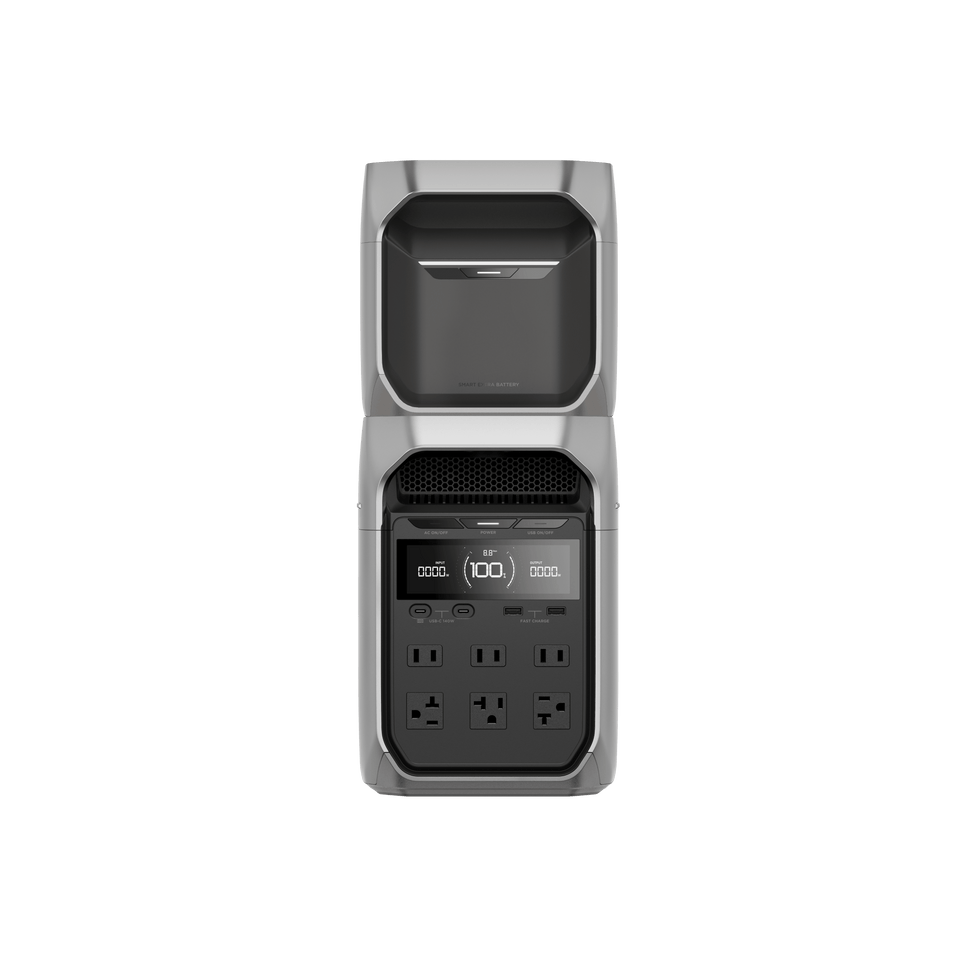
Models Discussed in This Article
EcoFlow DELTA 3 Plus
Packs 1,000W dual-MPPT solar charging, sub-1-hour AC replenishment, and a sub-10 ms HID-capable UPS into a 27.6 lb chassis, making it more versatile than non-Plus 1kWh units.

BLUETTI AC70
With 705–730.6 Wh of independently measured usable AC output from a 768Wh battery and 500W solar input at ~$399–$449 street price, the AC70 punches above typical 500Wh–700Wh units.
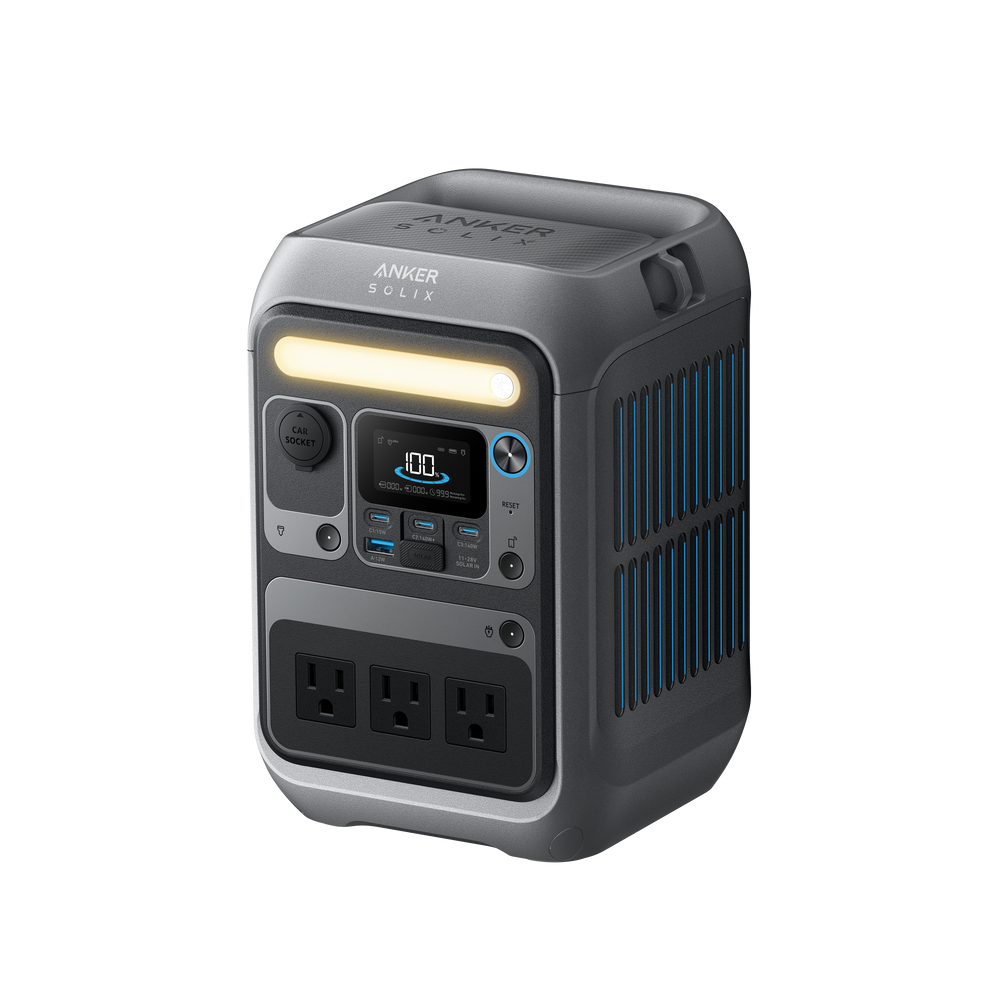
Anker SOLIX C300
A 9.1 lb vertical LiFePO4 station delivering 300W AC, dual 140W USB-C ports, and <10 ms UPS backup for routers, laptops, and day trips — just don't confuse it with the DC-only C300 DC or expect appliance runtime.
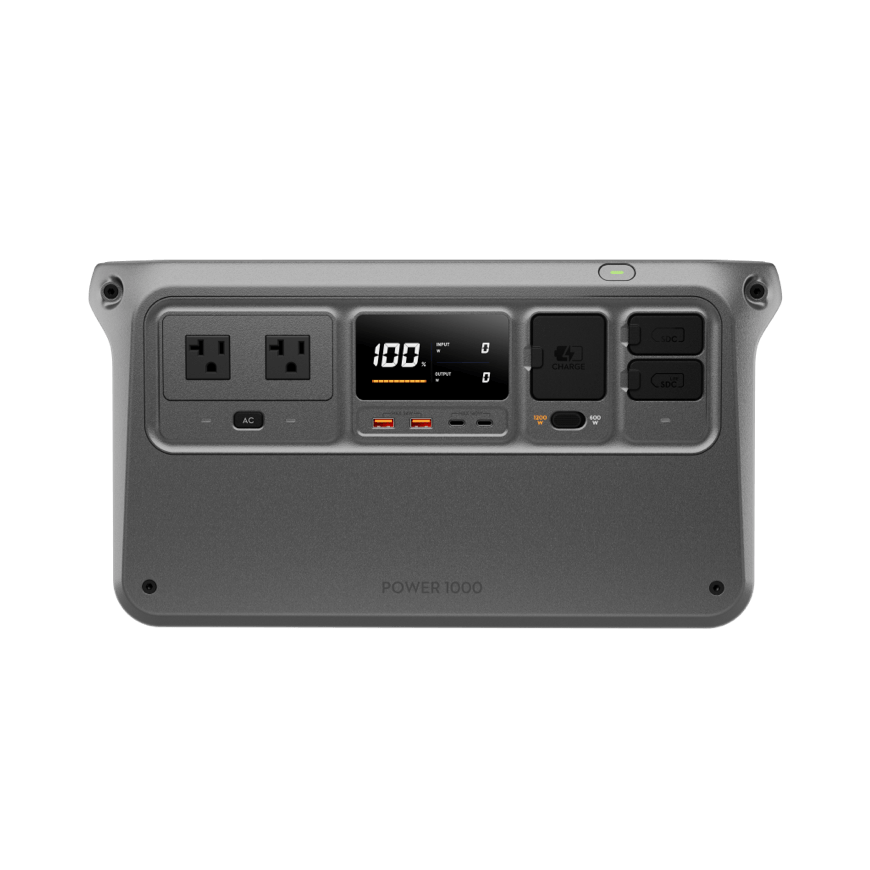
DJI Power 1000
Exceptional 2,200W inverter density and 23 dB acoustic refinement in a 28.7 lb frame, though solar charging and 12V car sockets require optional DJI SDC adapters.
Frequently Asked Questions
What is the exact battery capacity of the EcoFlow RIVER Max Plus vs. the standard RIVER Max?+
The standard first-generation EcoFlow RIVER Max holds 576Wh (288Wh base plus a 288Wh detachable bottom module) rated at 500 cycles. The white-accented EcoFlow RIVER Max Plus holds 720Wh total (360Wh base plus a 360Wh extra battery module) with upgraded 800-cycle NCM cells and 660W AC charging.
Why did EcoFlow discontinue the RIVER Max Plus modular bottom-battery design?+
Replacing NCM lithium-ion cells with heavier, far longer-lasting LiFePO4 (LFP) cells made screw-on bottom modules impractical in sub-800Wh cases. EcoFlow replaced the first-generation RIVER Max/Pro lineup with unibody LFP RIVER 2/RIVER 3 models offering 3,000+ cycles and faster AC/solar charging.
Is a refurbished or used EcoFlow RIVER Max Plus worth buying in 2026?+
Only at sharp clearance pricing—roughly $180–$240 or less in verified healthy condition—because NCM cells manufactured in 2021–2023 experience calendar aging even when lightly cycled, and manufacturer warranty support may have expired. Near $350–$450, a new BLUETTI AC70 (768Wh LFP) or RIVER 2 Pro offers 4x the cycle life and a 5-year warranty.
Can modern 200W+ high-voltage portable solar panels plug directly into a RIVER Max Plus?+
Check the panel's Voc label carefully. The RIVER Max Plus solar controller caps input voltage strictly at 25V DC (10V–25V, 12A max, 200W limit). Many newer 200W–400W portable panels output 26V–48V Voc, which can permanently damage a 25V-capped charge controller.
Sources & Technical References
- View Source →[1]Manufacturer SpecificationEcoFlow US OfficialVerified 2026-11-25EcoFlow RIVER 2 Pro Portable Power Station Specifications
768Wh LiFePO4 portable station, 800W continuous AC (1,600W surge/X-Boost), 220W solar input (11-50V, 13A), 17.2 lbs weight.
- View Source →[2]Manufacturer SpecificationEcoFlow US OfficialVerified 2026-11-24EcoFlow DELTA 3 Plus Official Specifications
1,024Wh LFP, 1,800W continuous AC, 1,000W dual 500W MPPT solar, <10ms UPS, 1,500W X-Stream AC charging.
- View Source →[3]Manufacturer SpecificationBLUETTI US OfficialVerified 2026-11-24BLUETTI AC70 Portable Power Station Official Specifications
768Wh LFP, 1,000W continuous AC, 2,000W Power Lifting resistive mode, 500W MPPT solar (12-58V, 10A), 950W Turbo AC charge.
- View Source →[4]Manufacturer SpecificationEcoFlow US OfficialVerified 2026-11-25EcoFlow RIVER 2 Series Official Specifications
256Wh LiFePO4 entry portable power station with 300W continuous AC, X-Boost, and 110W solar charging input.