Best Expandable Power Stations (2026): Modular Battery Systems Compared
Compare the best expandable portable power stations from 2kWh to 90kWh: EcoFlow DELTA Pro Ultra, Jackery 5000 Plus, Anker F3800, and BLUETTI AC200L.
Expandable power stations let you buy a single inverter core today and scale battery runtime later, though proprietary battery packs carry steep add-on costs. For true modular whole-home scaling up to 90kWh, EcoFlow DELTA Pro Ultra leads; Jackery Explorer 5000 Plus scales cleanly to 60.48kWh with high surge; Anker SOLIX F3800 expands to 53.76kWh with plug-and-play 240V ports; and BLUETTI AC200L offers the most affordable 120V expansion path up to 8,192Wh.
Recommended Models for This Category
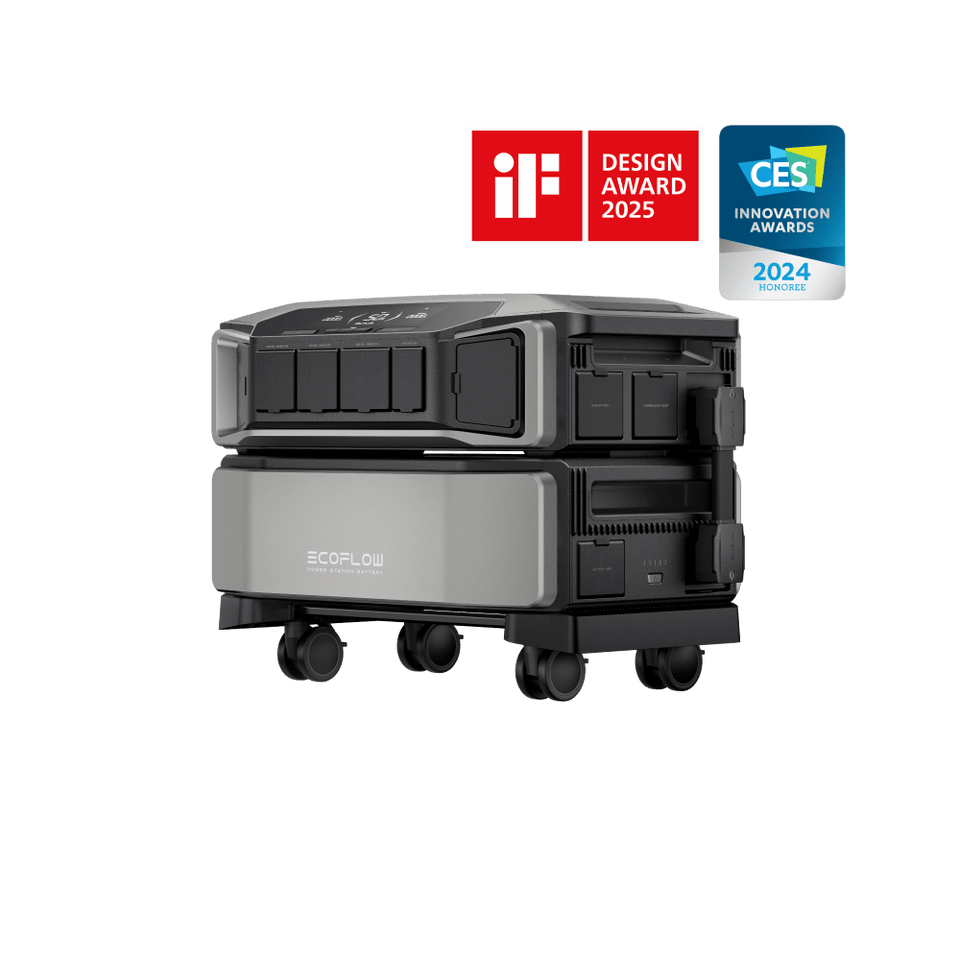
EcoFlow DELTA Pro Ultra
Built specifically for homeowners seeking high-voltage solar input (up to 5,600W) and modular 6kWh-per-stack scaling, though total kit cost and modular footprint exceed casual portable needs.
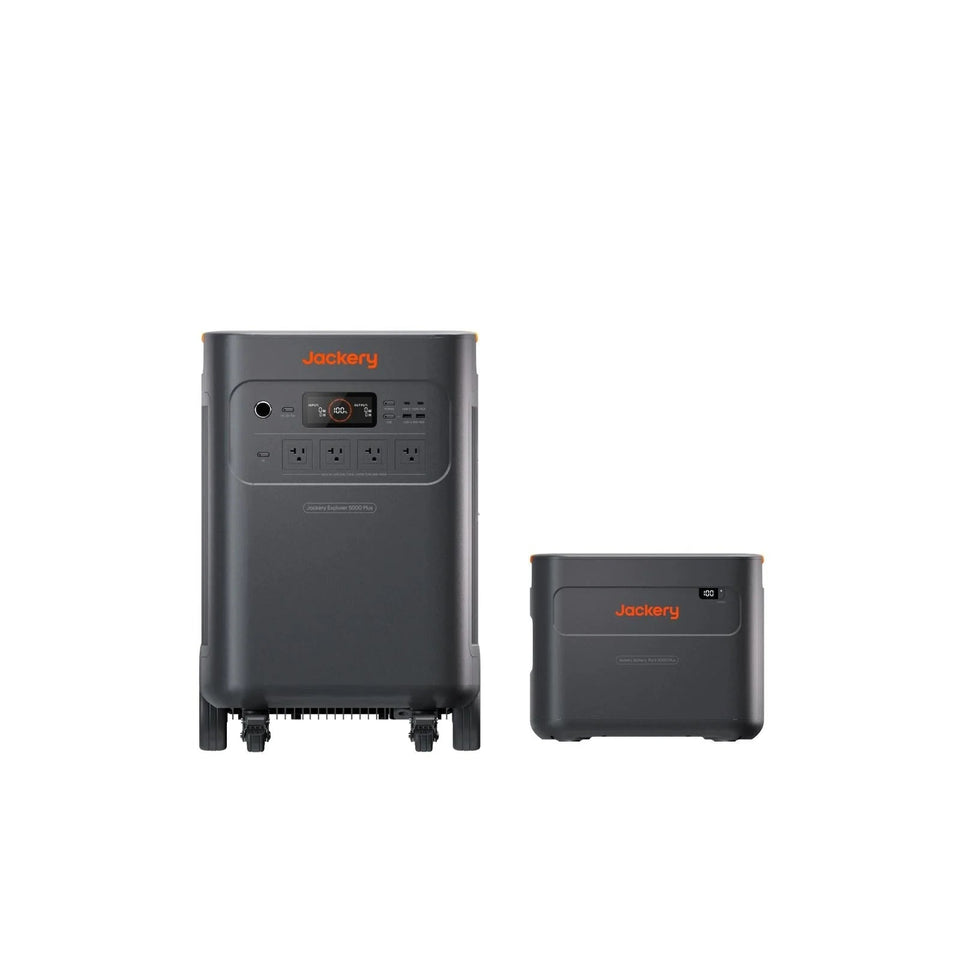
Jackery Explorer 5000 Plus
Combines a 5,040Wh LFP core, 7,200W split-phase output, 14,400W published surge headroom, and both High-PV (135–450V) and Low-PV solar inputs in a single wheeled chassis.

Anker SOLIX F3800
One of the most approachable plug-and-play 120V/240V wheeled units thanks to built-in NEMA 14-50R and L14-30R ports, though high idle overhead on light loads and the 60V solar cap (on the original non-Plus SKU) require careful sizing.
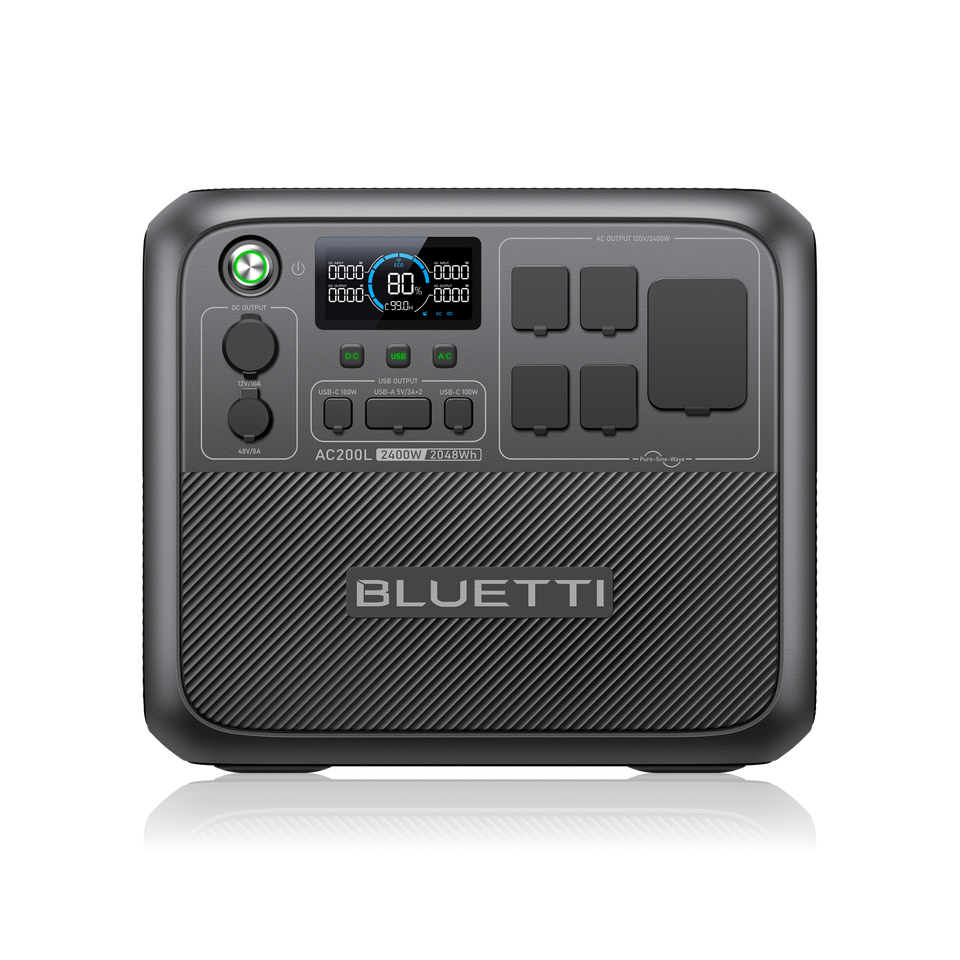
BLUETTI AC200L
Combines a high-efficiency 2,048Wh expandable platform, 1,200W high-voltage solar input (12–145V), and dedicated 30A TT-30R + 48V DC RV outputs at strong street pricing, trading away light weight and built-in wheels.
Side-by-Side Specification Table
| Model | Capacity | Cont. / Surge AC | Solar Max | Weight | UPS | Street ($/Wh) |
|---|---|---|---|---|---|---|
| EcoFlow DELTA Pro Ultra | 6,144 Wh | 7,200W / 10,800W | 5,600 W | 181.8 lbs | 0 ms Online UPS / <20 ms Automatic Transfer Switch | $4,599 ($0.75) |
| Jackery Explorer 5000 Plus | 5,040 Wh | 7,200W / 14,400W | 4,000 W | 134.5 lbs | 0 ms Online UPS (direct) / <20 ms Transfer Switch | $2,999 ($0.60) |
| Anker SOLIX F3800 | 3,840 Wh | 6,000W / 9,000W | 2,400 W | 132.3 lbs | <20 ms (manufacturer rated) | $2,999 ($0.78) |
| BLUETTI AC200L | 2,048 Wh | 2,400W / 3,600W | 1,200 W | 62.4 lbs | <=20 ms (manufacturer rated) | $1,099 ($0.54) |
Selection Criteria for This Guide
- Maximum scalable capacity range (8kWh midsize banks up to 53kWh–90kWh multi-day residential stacks)
- Mechanical stacking ergonomics (modular split inverter/batteries vs parallel wheeled towers vs heavy cascade cables)
- Cross-generation battery compatibility and inverter continuous/surge headroom as capacity grows
- Total system cost-per-kWh and NEC-compliant transfer equipment integration for multi-kilowatt-hour home systems
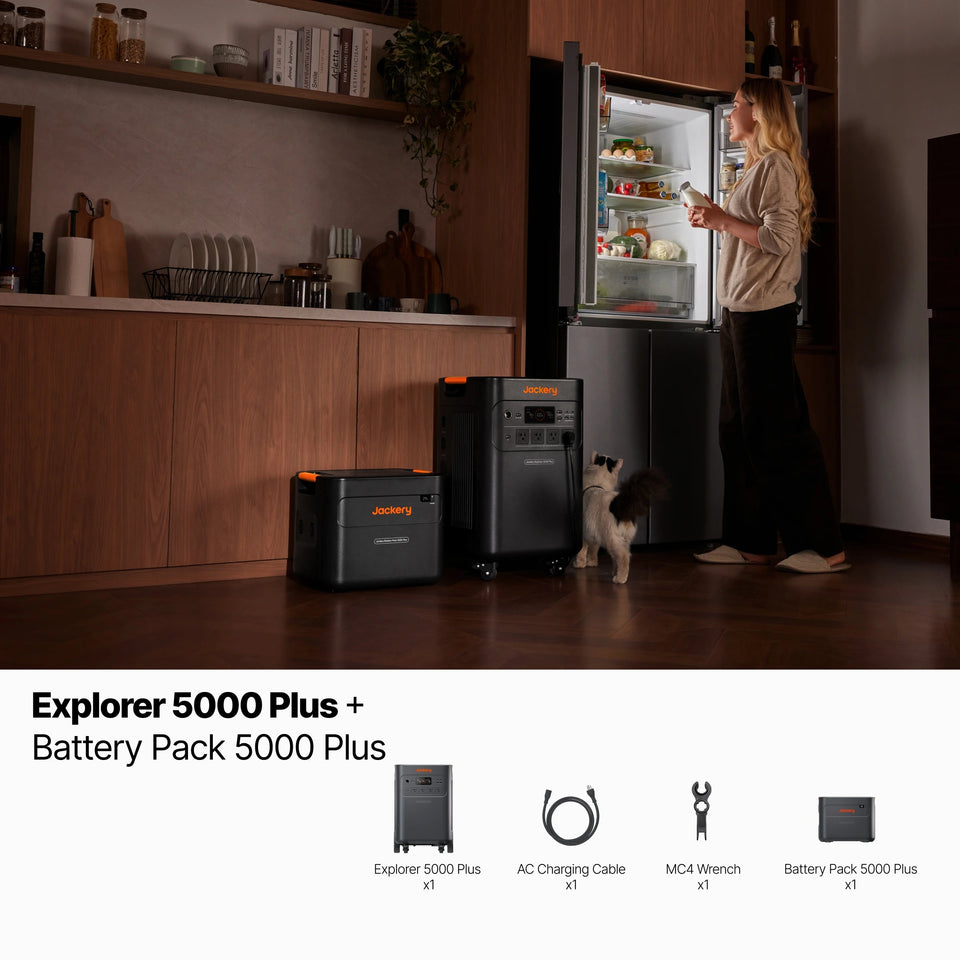
Selection Criteria & Evaluation Priorities
Expandability solves two real problems: keeping individual component weights manageable and preventing buyers from outgrowing a starter battery during multi-day grid failures. However, proprietary expansion cables are bulky, expansion packs rarely match base units in cost-per-Wh unless bundled, and adding battery capacity never increases your inverter’s continuous AC watt limit. We evaluate modular architecture, scaling headroom, and cross-unit flexibility.
Individual Model Summaries
EcoFlow DELTA Pro Ultra — Highest Modular Ceiling (6,144Wh to 90kWh)
Built around vertical stacking on a rolling trolley, the EcoFlow DELTA Pro Ultra separates its 7,200W inverter head (~70 lbs) from 6,144Wh LFP battery modules (~111.8 lbs each). One inverter accommodates five batteries (30,720Wh), and three parallel inverters via Smart Home Panel 2 reach 90,000Wh (90kWh) and 21,600W AC. Automatic battery heating (-4°F) and 5,600W solar keep multi-battery stacks practical year-round.
Jackery Explorer 5000 Plus — High-Surge Vertical Expansion (5,040Wh to 60.48kWh)
The Jackery Explorer 5000 Plus starts at 5,040Wh (7,200W continuous / 14,400W surge) and accepts up to five Battery Pack 5000 Plus modules per unit (30,240Wh), or two parallel units reaching 60,480Wh (60.48kWh). At ~$2,999 street for the base tower, it lowers entry cost relative to EcoFlow’s Starter Kit while maintaining 4,000W High-PV solar support.
Anker SOLIX F3800 — Plug-and-Play 240V Scaling (3,840Wh to 53.76kWh)
With native 14-50R and L14-30R outlets right on the main body, the Anker SOLIX F3800 scales via up to six BP3800 (3,840Wh) modules per unit (26.88kWh) or two linked systems up to 53,760Wh (53.76kWh) and 12,000W AC. Just verify whether you need the newer F3800 Plus (165V solar) instead of the 60V-capped original F3800.
BLUETTI AC200L — Best 120V Midsize Expansion Value (2,048Wh to 8,192Wh)
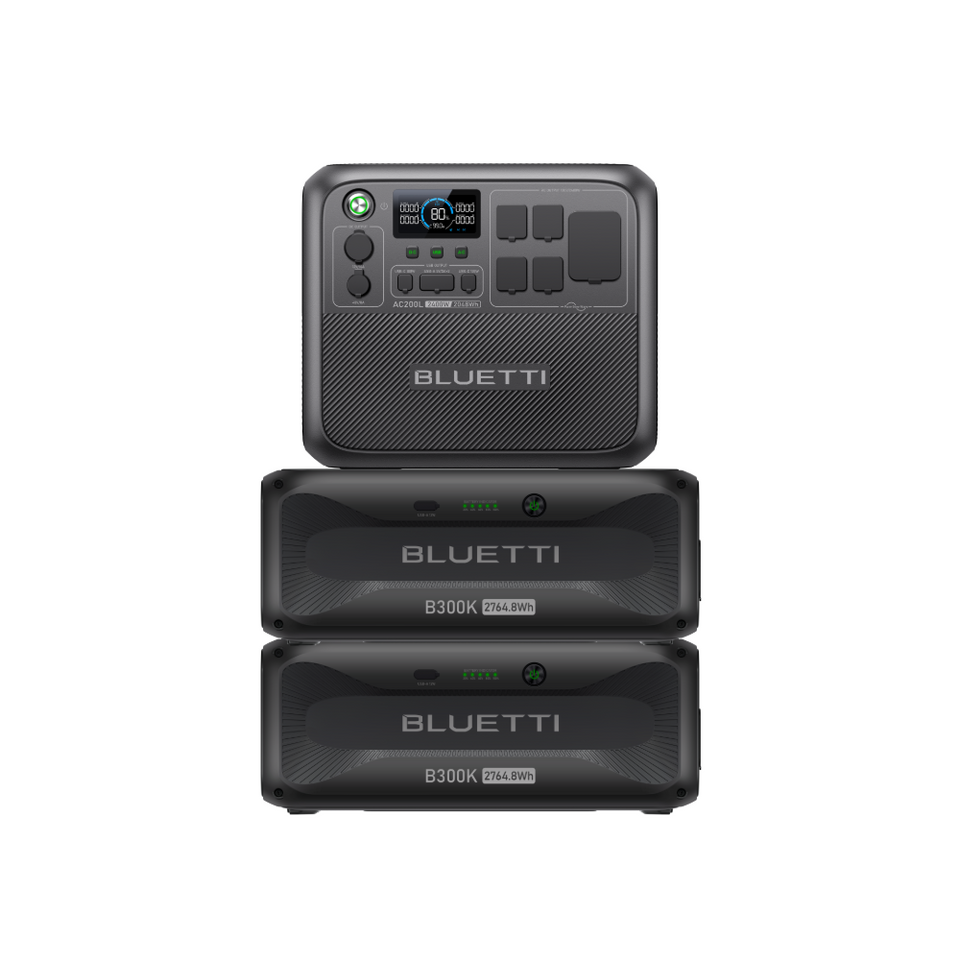
For buyers who don’t need 240V residential circuits, the BLUETTI AC200L (~$1,099 street) scales from 2,048Wh up to 8,192Wh using B210 (2,150Wh), B230, B300, or B300K packs, pairing broad cross-generation battery support with CNET-verified 77.76% round-trip efficiency.
Performance & Specification Analysis
- Inverter Overhead at Large Scale: Adding batteries to a
6,000W–7,200W240V tower increases total runtime, making dual-voltage idle losses (~50W–100W+standby on large inverters) proportionally smaller relative to a10kWh–20kWhreserve than on a lone3.8kWhunit. - Modular Stacking vs. Heavy Cables: EcoFlow’s stacked trolley footprint saves garage floor space without thick exposed side jumper cables, whereas Anker’s
BP3800and BLUETTI’sB-Seriesrely on heavy-gauge umbilical cords linking adjacent packs (requiring clearance beside the main unit). - 120V Mid-Compact Expansion Paths: Even smaller units in our catalog expand cleanly—EcoFlow DELTA 3 Plus scales
1,024Whto5,120Wh, Pecron E1500LFP scales1,536Whto7,680Whvia 48V cascade batteries, and DJI Power 1000 scales up to11,264Whvia Expansion Battery 2000 modules.
Advantages & Disadvantages
- Advantages: Gradual budget staging over multiple years; individual battery modules stay under
115 lbsrather than demanding fixed wall-mounted contractor lifts; portable modularity allows taking one core unit on an RV trip while leaving expansion packs stored. - Disadvantages: Proprietary locking protocols prevent mixing brands; standalone expansion batteries often have high MSRP unless bought in seasonal bundles; large multi-battery stacks feeding residential panels require licensed electrician installation and NEC-compliant transfer hardware.
Buying Considerations
Read Expandable Battery Systems Explained before assuming you’ll expand a 1kWh pack later. Often, stepping directly into a 2,048Wh (AC200L) or 5,040Wh (Explorer 5000 Plus) base station costs less per watt-hour than buying a 1kWh unit plus a 1kWh extra battery. Always verify exact battery SKU compatibility and floor space for parallel cables.
Alternatives
- Budget 48V Cascade Alternative: If
$3,000+modular towers exceed your budget, the~$599Pecron E1500LFP paired withEP3000-48Vbatteries reaches7,680What notably lower upfront cost. - Standalone Non-Expandable Alternative: If you never intend to buy extra battery bricks, the
39.5 lbJackery Explorer 2000 v2 saves substantial weight and cost by eliminating expansion hardware altogether.
Frequently Asked Questions
Is it cheaper to buy an expandable power station with extra batteries or buy a larger unit upfront?+
Buying a larger single-chassis system (or a starter kit bundle) almost always costs less per watt-hour upfront than starting with a 1kWh unit and adding proprietary expansion batteries later. Expansion makes the most financial sense when you need modular split-weight lifting or multi-day scaling beyond 5kWh.
Can I mix expansion batteries from different brands or older models?+
No. Expansion ports use proprietary communication protocols and high-current BMS cables. Even within one brand, verify exact compatibility—for example, BLUETTI AC200L supports B210, B230, B300, and B300K batteries, whereas EcoFlow DELTA Pro Ultra uses dedicated 6kWh stackable batteries.
Does adding expansion batteries increase AC inverter wattage?+
No—adding battery modules only extends runtime (Wh). Increasing continuous AC output watts (W) requires linking a second parallel inverter unit (such as linking two Anker F3800s or up to three EcoFlow DELTA Pro Ultra inverters via compatible hubs).
Sources & Technical References
- View Source →[1]Manufacturer SpecificationEcoFlow US OfficialVerified 2026-11-24EcoFlow DELTA Pro Ultra Product Page & Specifications
Official North American 120V/240V split-phase inverter and 6,144Wh LiFePO4 battery module specs.
- View Source →[2]Manufacturer SpecificationJackery US OfficialVerified 2026-11-24Jackery Explorer 5000 Plus Official Product Specifications
5,040Wh LFP capacity, 7,200W/14,400W AC specs, High-PV (135-450V) and Low-PV (16-60V) limits, and warranty terms.
- View Source →[3]Manufacturer SpecificationAnker SOLIX US OfficialVerified 2026-11-24Anker SOLIX F3800 Portable Power Station Official Specifications
North American model specs including NEMA 14-50R, L14-30R, 6,000W output, 3,840Wh capacity, and 11-60V dual solar input.
- View Source →[4]Manufacturer SpecificationBLUETTI US OfficialVerified 2026-11-24BLUETTI AC200L Portable Power Station Official Specifications
2,048Wh LFP, 2,400W continuous AC, 3,600W Power Lifting mode, NEMA TT-30R + 48V/8A DC RV port, 1,200W solar (12-145V).
- View Source →[5]Technical & Safety StandardNational Fire Protection Association (NFPA)Verified 2026-11-24NFPA 70 National Electrical Code (NEC) Transfer Equipment & Standby Power Overview
Governs transfer switches, panel interlocks, and prohibition of unsafe backfeeding on US residential electrical panels.