How Long Can a Solar-Powered Generator Run? Real Formulas & Runtime Tables
Calculate real solar generator runtime with 78%–88% AC and 88%–93% DC bands, verified BLUETTI AC70/AC200L data, idle draw traps, and NREL solar math.
A portable solar generator runs anywhere from under an hour on heavy heaters to 2+ days on a refrigerator—depending on usable energy (typically 78%–88% via AC outlets or 88%–93% via DC/USB-C), inverter standby draw, and solar recovery. Simultaneous solar only makes runtime indefinite when net daily solar harvest after NREL weather derating exceeds total 24-hour energy use.

Every first-time power station buyer does the same napkin math: “This unit holds 1,024Wh, and my equipment draws 100W, so it will run for 10.2 hours.” Yet when an actual outage hits, one station shuts down at 8.2 hours, another powers a refrigerator for more than 29 hours, and a third large 3,840Wh unit drains faster on a fridge than a battery half its size.
Asking “how long can a solar-powered generator run?” really combines three distinct electrical behaviors: usable conversion efficiency, continuous inverter standby draw, and whether your solar array adds more watt-hours before sundown than your appliances burn across 24 hours.

The Real Battery Runtime Formula: 78%–88% AC vs. 88%–93% DC
Nameplate Watt-hours (Wh) describe the raw energy stored inside the internal lithium battery cells—before electricity ever reaches an AC outlet or USB port. Four unavoidable drains trim what you actually receive:
- Inverter DC-to-AC Conversion Heat (
~5%–12%): Stepping low-voltage DC battery banks up to120Vor240Vpure sine wave AC consumes energy in switching transistors and transformers. - Inverter Idle / No-Load Standby Draw (
10W–50W+continuous): Pressing the “AC On” button keeps control boards, gate drivers, and split-phase coils energized every minute—even while a refrigerator compressor sits paused between cooling cycles. - BMS Safety Reserves (
~3%–8%): The Battery Management System stops discharge slightly above absolute cell zero to preserve3,000–4,000cycle longevity. - Display, Cooling Fans & Telemetry: LCD backlights, Wi-Fi chips, and temperature fans draw directly from the pack.
Use these realistic calculation bands (or test your own model directly in our Battery Runtime Calculator):
- Standard AC Wall Outlets (Moderate Loads):
Estimated Hours = (Rated Wh × 0.78 to 0.88) ÷ Load Watts - Tiny AC Loads (
<150W) on Giant3,800W+240V Inverters: Drop your multiplier to0.72 to 0.84(or lower on 24h runs) because heavy standby overhead eats a disproportionate share of total stored energy. - Native DC / USB-C PD Outputs (With AC Button OFF):
Estimated Hours = (Rated Wh × 0.88 to 0.93) ÷ Load Watts
Verified Third-Party AC Benchmarks & The Idle Draw Trap
Instead of assuming a generic 85% efficiency number fits every unit, inspect real third-party AC load tests from independent labs in our verified registry (explored further in Understanding Power Station Efficiency):
- BLUETTI AC70 (
768WhRated Pack):- APH Networks measured 730.59 Wh of usable AC output at a steady
136Wload (~95%of cell rating /~92.5%net inverter efficiency). - PowerOffGrid measured 705 Wh of usable AC output at a continuous
250Wresistive load (~91.8%of rated Wh /~90%overall system efficiency).
- APH Networks measured 730.59 Wh of usable AC output at a steady
- BLUETTI AC200L (
2,048Wh) vs. Anker SOLIX F3800 (3,840Wh):- CNET Labs recorded
77.76%round-trip efficiency and over 29 hours on a standardized refrigerator test using the 120V BLUETTI AC200L. - On that exact same standardized refrigerator stress test, the much larger 3,840Wh Anker SOLIX F3800 lasted roughly 25.68 hours—a textbook demonstration of the idle draw trap, where a
6,000Wdual-voltage inverter’s hourly standby burn shrinks intermittent, low-wattage endurance.
- CNET Labs recorded
Real-World Runtime Matrix Across 300Wh to 6,144Wh Stations
Below is how five real LFP capacity tiers perform—without solar recharging—across four benchmark loads (45W unheated CPAP, ~65W average refrigerator cycling, 500W home office setup, and 1,500W electric space heater):
| Capacity Tier & Representative Model | 45W CPAP (No Heat) |
~65W Avg. Fridge Cycling (150W run / 600W surge) |
500W Home Office / Essentials |
1,500W Space Heater |
|---|---|---|---|---|
~300Wh Tier (Anker SOLIX C300, 288Wh / 300W AC) |
~5.0–5.6 hrs AC / ~5.6–6.0 hrs DC | Disqualified (300W AC cannot handle ~600W fridge surge) |
Disqualified (exceeds 300W inverter) |
Disqualified (exceeds 300W inverter) |
1,000Wh Tier (EcoFlow DELTA 3 Plus, 1,024Wh / 1,800W AC) |
~17.7–20.0 hrs AC / ~20.0–21.2 hrs DC | ~11–15 hrs est. (handles 600W surge easily; short bridge) |
~1.6–1.8 hrs | ~0.53–0.60 hrs (32–36 min) |
2,048Wh Tier (BLUETTI AC200L, 2,048Wh / 2,400W AC) |
~35–40 hrs AC / ~40–42 hrs DC | >29 hrs verified (CNET standardized test) | ~3.2–3.6 hrs | ~1.06–1.20 hrs (64–72 min) |
3,840Wh Tier (Anker SOLIX F3800, 3,840Wh / 6,000W 240V) |
~45–60 hrs AC (heavy idle drag; ~75–79 hrs DC) | ~25.68 hrs verified (CNET test—idle loss shrinks margin) | ~6.0–6.8 hrs | ~2.0–2.25 hrs |
6,144Wh Tier (EcoFlow DELTA Pro Ultra, 6,144Wh / 7,200W 240V) |
~75–100+ hrs AC (inefficient solo load; use compact unit overnight) | ~50–75 hrs est. (~2–3+ days depending on ambient/idle draw) |
~9.6–10.8 hrs | ~3.2–3.6 hrs |
Important Note: Where a specific station lacks third-party usable-Wh measurements in our source registry, figures above use our transparent 78%–88% AC (72%–84% for small loads on 3,800W+ split-phase inverters) and 88%–93% DC estimation bands.
Simultaneous Solar Recharge: When Runtime Becomes Indefinite
Adding solar panels turns a finite battery tank into a renewable power loop only when average 24-hour energy harvest exceeds 24-hour load plus conversion overhead.
Outdoor panels never hit 100% of their lab Standard Test Conditions (STC) label for eight hours straight. Using NREL PVWatts principles (detailed in How Long Does It Take to Charge a Power Station With Solar?):
- Effective Solar Output: Clear sunny weather typically yields 58%–72% of rated panel watts outdoors due to
120°F–150°Fpanel heating, sun angle, and light atmospheric haze (dropping to 15%–28% under heavy storm overcast). - Charging Efficiency (
~90%): MPPT conversion and battery cell charging consume roughly10%overhead. - US Peak Sun Hours (NREL): Summer Southwest averages 5.5–6.5 Peak Sun Hours/day, whereas cloudy northern winters average 2.0–3.5 Peak Sun Hours/day.
Concrete Example: Running a Refrigerator Indefinitely?
Suppose a cycling kitchen refrigerator plus inverter standby requires roughly 1,600 Wh per 24 hours:
- Scenario A (800W–1,000W Solar Array in 4.5 Sunny Hours):
900W × 0.65 typical sunny output × 4.5 Peak Sun Hours × 0.90 charge efficiency ≈ 2,370 Wh/day. Because2,370 Wh > 1,600 Wh, a solar generator like the BLUETTI AC200L (1,200WMPPT) or EcoFlow DELTA 3 Plus (1,000WMPPT, ideally with an extra battery for cloudy nights) can run that fridge continuously across sunny summer weeks. - Scenario B (400W Solar Cap or Cloudy 2.5-Hour Winter Day):
400W × 0.45 × 2.5 × 0.90 ≈ 405 Wh/day. Even if your station holds2,042Wh, net daily drain (1,600 - 405 = 1,195 Wh/day) empties the pack within two days. Always model your regional harvest using the Solar Charging Calculator and keep panel string open-circuit voltage (Voc) strictly below the manual’s cold-weather ceiling.
Standby Shelf Life & Five Habits That Stretch Runtime
How long does a solar generator hold its charge when sitting idle in a closet? Provided you completely power down the unit (never leaving AC/DC outlets or screen standby awake), modern LiFePO4 batteries typically self-discharge only ~1%–3% per month. For battery health, store indoor units around 50%–80% State of Charge in cool dry conditions (50°F–77°F), and top them back up every 3–6 months per Battery Storage, Temperature & Safety Guide.
When an outage hits, five simple habits maximize every watt-hour:
- Shut Off the AC Inverter Button Whenever Possible: Power laptops via
100W/140W USB-C PD, routers via12V DC, and travel CPAP units via approved DC adapters (88%–93%efficiency). - Use a Smaller Inverter for Light Overnight Loads: Don’t run a
7,200Wsplit-phase unit solely to power a25Wrouter and45WCPAP overnight. - Disable Heated CPAP Humidifiers & Space Heaters: Resistive heating cuts battery endurance in half or worse.
- Shade the Power Station Body While Panels Sit in Sun: High battery heat triggers thermal shutdowns above
104°F–113°F. - Audit Silent Wattage With a Plug-In Meter: Confirm your actual fridge and router draw before storm season arrives.
Models Discussed in This Article

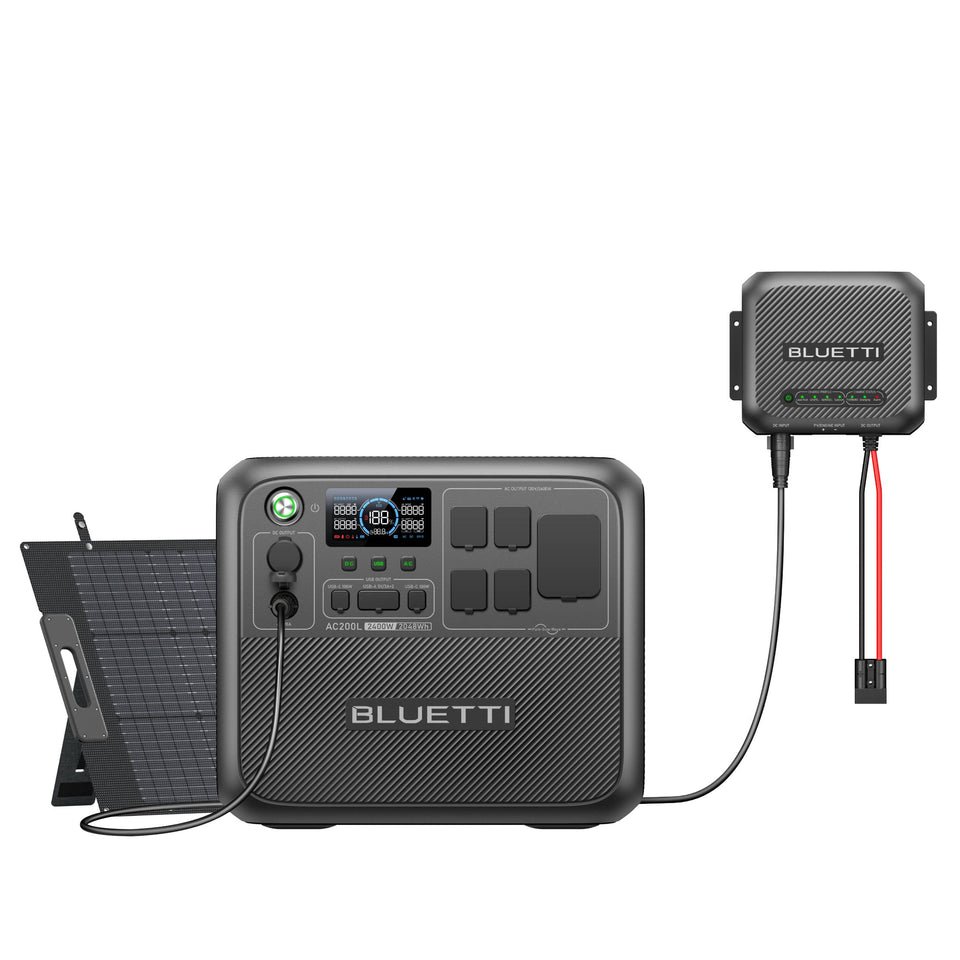
BLUETTI AC70
With 705–730.6 Wh of independently measured usable AC output from a 768Wh battery and 500W solar input at ~$399–$449 street price, the AC70 punches above typical 500Wh–700Wh units.
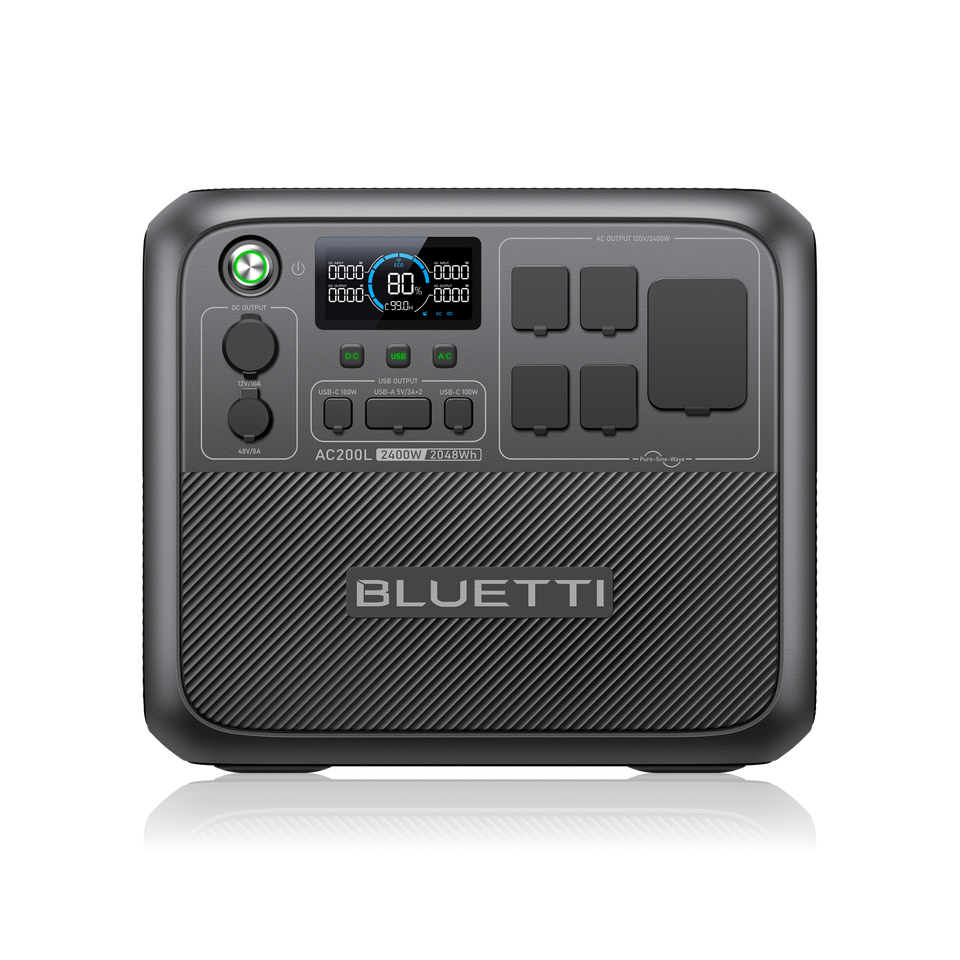
BLUETTI AC200L
Combines a high-efficiency 2,048Wh expandable platform, 1,200W high-voltage solar input (12–145V), and dedicated 30A TT-30R + 48V DC RV outputs at strong street pricing, trading away light weight and built-in wheels.
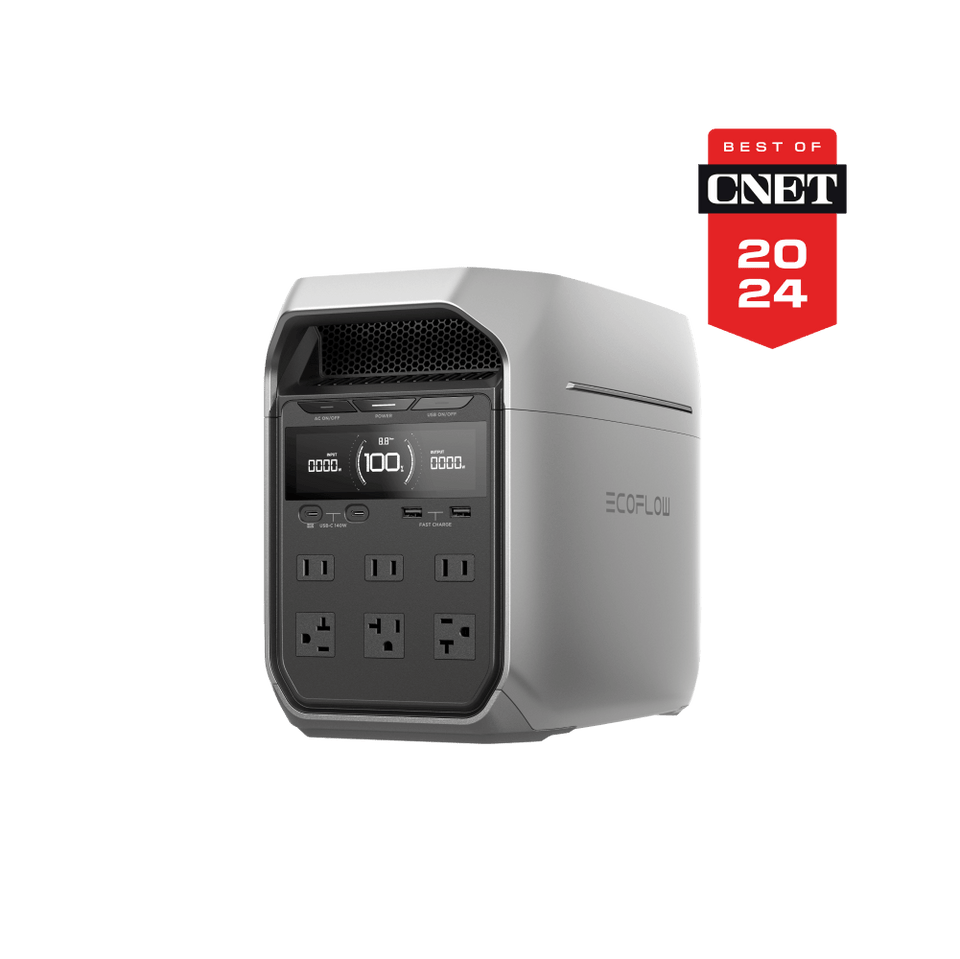
EcoFlow DELTA 3 Plus
Packs 1,000W dual-MPPT solar charging, sub-1-hour AC replenishment, and a sub-10 ms HID-capable UPS into a 27.6 lb chassis, making it more versatile than non-Plus 1kWh units.

Anker SOLIX F3800
One of the most approachable plug-and-play 120V/240V wheeled units thanks to built-in NEMA 14-50R and L14-30R ports, though high idle overhead on light loads and the 60V solar cap (on the original non-Plus SKU) require careful sizing.
Frequently Asked Questions
Why does my solar generator run out faster than Rated Wh divided by Appliance Watts?+
Nameplate Watt-hours measure raw DC energy inside the lithium cells, not delivered wall-outlet power. Stepping battery DC up to 120V/240V AC creates switching heat, keeps cooling fans and BMS monitors alive, and enforces protective cell reserves—typically leaving 78%–88% usable AC energy (or less when giant inverters run small loads).
Can a solar generator run indefinitely with solar panels plugged in?+
Only if average 24-hour solar harvest exceeds 24-hour appliance draw plus conversion losses. After NREL weather and temperature derating, an 800W–1,200W solar array in 4.5+ Peak Sun Hours can often sustain a cycling refrigerator indefinitely, whereas cloudy winter days or continuous 1,500W heating loads drain the pack faster than panels can refill it.
How long does a fully charged solar generator hold its charge in storage?+
When completely powered off (with AC, DC, and Wi-Fi standby switched off), modern LiFePO4 (LFP) stations typically lose only about 1%–3% per month. Manufacturers generally advise storing stations indoors between 50% and 80% State of Charge and cycling/topping up every 3 to 6 months rather than leaving them unattended at 100% or 0%.
Why did a 2,048Wh station outlast a 3,840Wh station on a refrigerator test?+
In CNET Labs' standardized refrigerator test, the 2,048Wh 120V BLUETTI AC200L exceeded 29 hours, whereas the 3,840Wh 120V/240V Anker SOLIX F3800 ran roughly 25.68 hours. A 6,000W split-phase inverter consumes substantially more continuous standby power during the 14–16 hours per day when a fridge compressor rests.
Sources & Technical References
- View Source →[1]Third-Party Independent ReviewAPH NetworksVerified 2026-11-24BLUETTI AC70 Portable Power Station Load Test Review
Constant 136W AC load discharge test measured 730.59 Wh usable output (~95% of rated 768Wh cell capacity; ~92.5% net inverter efficiency).
- View Source →[2]Third-Party Independent ReviewPowerOffGridVerified 2026-11-24BLUETTI AC70 Usable AC Capacity & Inverter Efficiency Test
250W continuous resistive load AC discharge test recorded 705 Wh usable AC output (~90% overall system efficiency).
- View Source →[3]Third-Party Independent ReviewCNETVerified 2026-11-24CNET Portable Power Station Lab Efficiency & Refrigerator Runtime Benchmarks
Documents standardized refrigerator runtime and round-trip efficiency testing including BLUETTI AC200L (77.76% RTE, >29h fridge test) and Anker SOLIX F3800 (~25.68h fridge stress runtime due to dual-voltage inverter overhead).
- View Source →[4]Government Research ResourceNational Renewable Energy Laboratory (NREL)Verified 2026-11-24PVWatts & US Peak Sun Hours Reference Data
Documents regional peak sun hours and real-world photovoltaic derating factors (ambient heat, angle, shading, controller loss).
- View Source →[5]Manufacturer SpecificationBLUETTI US OfficialVerified 2026-11-24BLUETTI AC200L Portable Power Station Official Specifications
2,048Wh LFP, 2,400W continuous AC, 3,600W Power Lifting mode, NEMA TT-30R + 48V/8A DC RV port, 1,200W solar (12-145V).