Jackery Explorer 2000 Plus Review (2026): 3,000W Expandable LFP Hardware & Lineup Fit
In-depth review of the 61.5 lb Jackery Explorer 2000 Plus (2,042.8Wh LFP, 3,000W AC, 1,400W solar, expandable to 24kWh/240V) vs Explorer 2000 v2 and 5000 Plus.
The Jackery Explorer 2000 Plus pairs a 2,042.8Wh LiFePO4 pack (4,000 cycles to >=70%) with a 3,000W continuous / 6,000W surge 120V inverter, a native 30A TT-30R RV port, and 1,400W solar input at 61.5 lbs—delivering ~1,593–1,798Wh usable AC (78%–88%). Expandable to 12kWh per unit or 24kWh/240V across two linked units, it sits strictly between the 39.5 lb non-expandable Explorer 2000 v2 and the native 240V Explorer 5000 Plus.
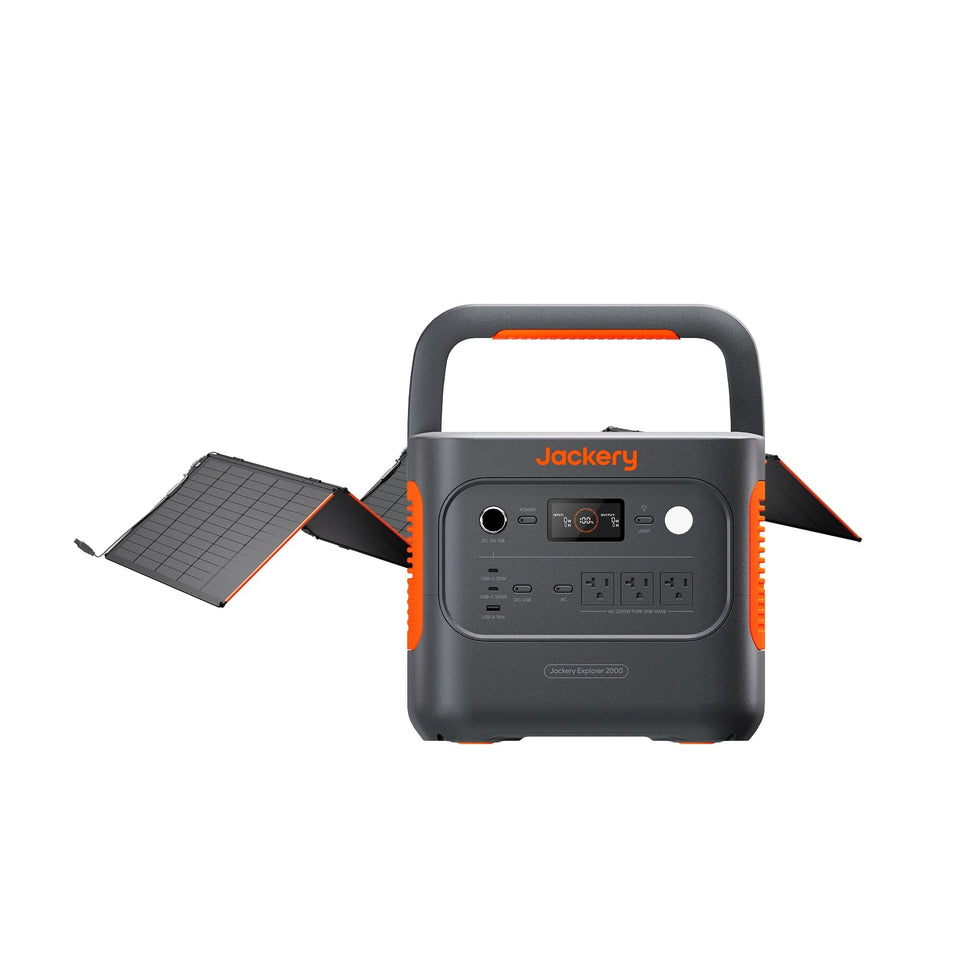
Few model names create more accidental returns in the portable power market than “Jackery Explorer 2000.” Shoppers searching that phrase regularly confuse the 61.5 lb Explorer 2000 Plus with the 39.5 lb Explorer 2000 v2—or assume a single 2000 Plus can power a 240V well pump out of the box like the flagship Explorer 5000 Plus.
In reality, the Jackery Explorer 2000 Plus occupies a specialized heavyweight niche inside Jackery’s LiFePO4 catalog. Built on rolling caster wheels around a 2,042.8Wh base pack, 3,000W continuous AC inverter, 30A TT-30R RV outlet, and 1,400W solar MPPT ceiling, it is engineered for serious RVers, heavy tool trailers, and modular multi-day storage—yet faces fierce internal competition from both Jackery’s lighter 2000 v2 and native 240V 5000 Plus.
Where the Explorer 2000 Plus Fits in Jackery’s Current LFP Lineup
Putting Jackery’s three core high-capacity LFP platforms side by side clears up every weight, voltage, and expansion confusion immediately:
| Specification | Jackery Explorer 2000 v2 | Jackery Explorer 2000 Plus | Jackery Explorer 5000 Plus |
|---|---|---|---|
| Base Capacity (LiFePO4) | 2,042Wh |
2,042.8Wh |
5,040Wh |
| Max Expandable Capacity | Non-expandable | 12kWh (1 unit) / 24kWh (2 units) |
30.2kWh (1 unit) / 60.5kWh (2 units) |
| Rated Cycle Life | 4,000 cycles to >=70% |
4,000 cycles to >=70% |
4,000 cycles to >=70% |
| Continuous / Surge AC | 2,200W / 4,400W |
3,000W / 6,000W |
7,200W / 14,400W |
| Single-Unit AC Voltage | 120V only |
120V only (240V requires 2 units) |
Native 120V / 240V Split-Phase |
RV 30A TT-30R Outlet |
No | Yes (1 × TT-30R + 4 × 20A) |
No native TT-30R (L14-30R / 14-50) |
| Max Solar Input & Voc | 400W (16–60V dual DC8020) |
1,400W (11–60V dual DC8020) |
4,000W High-PV (135–450V) + 1,200W Low |
| AC Wall Charging Speed | 1,800W (~1.7–2.5 hrs) |
1,800W built-in (~2.0 hrs) |
1,800W 120V (~3.5h) / 4,000W 240V (~1.7h) |
| UPS / EPS Switching | <=20 ms EPS |
<=20 ms EPS |
0 ms Online direct / <20 ms STS |
| Weight & Form Factor | 39.5 lbs (CTB hand carry) |
61.5 lbs (handle + wheels) |
134.5 lbs (tall wheeled tower) |
If you want a grab-and-go 2kWh station for apartment storage or SUV trunk camping, jump straight to our Jackery Explorer 2000 v2 Review. If you need native 240V split-phase panel backup, read our Jackery Explorer 5000 Plus Review. The 2000 Plus serves buyers stranded between those two extremes—specifically demanding 3,000W 120V surge headroom, 1,400W portable solar, a 30A RV plug, or incremental modular battery stacking.
Inverter Muscle, RV TT-30R Socket, and Realistic Usable Energy
Most 2,000Wh portable stations top out at 2,200W–2,400W continuous output. By equipping the Explorer 2000 Plus with a 3,000W continuous / 6,000W peak surge pure sine wave inverter, Jackery leaves enough 120V capacity to start demanding inductive loads—such as a 13,500 BTU RV rooftop air conditioner (especially when paired with a soft-start kit), heavy job-site miter saws, or simultaneous 1,500W kitchen appliances—without tripping overload protection.
Its US outlet panel reflects that heavy-utility focus:
- 4 ×
120V20ANEMA 5-20R household outlets - 1 ×
120V30ANEMATT-30RRV shore-power receptacle (allowing travel trailers to plug directly in without adapters) - 2 ×
100WUSB-C PD ports + 2 ×18WUSB-A ports + 1 ×12V/10A(120W) car socket (note: no12V/30Ahigh-amperage Anderson/XT60 DC port for direct camper-van fuse blocks, unlike thePecron E1500LFPorBLUETTI AC200L48V/8ADC option)
Because standardized independent third-party usable AC discharge watt-hours for the Explorer 2000 Plus are Not Independently Verified in our registry, budget off-grid runtime using realistic 78%–88% AC delivery (88%–93% direct USB-C / 12V DC):
- Base
2,042.8WhUnit Alone: Delivers roughly1,593–1,798Whusable AC or1,798–1,900WhDC—running a modern residential fridge (~55Waverage + standby) for roughly 24–32 hours, or a1,200WRV air conditioner compressor cycle for roughly 1.3–1.5 hours continuous. - With One
2,042.8WhExpansion Pack (4,085.6WhTotal): Doubles usable AC energy to roughly3,187–3,595Wh, carrying multi-day storm outages or weekend RV boondocking cleanly.
RV TT-30R Shore Hookups & Soft-Start Reality
For travel trailer and Class B/C motorhome owners, that native NEMA TT-30R plug simplifies shore-cord connection immediately—eliminating bulky dogbone adapters required on three-prong 5-20R units like the 2000 v2. Keep one physical constraint in mind before expecting to run a rooftop 13,500 BTU or 15,000 BTU RV air conditioner overnight: while the 3,000W (6,000W surge) inverter has ample electrical headroom—especially if your AC compressor uses an aftermarket soft-start capacitor—steady 1,100W–1,450W compressor operation still consumes ~1,300Wh per running hour. On an unexpanded 2,042.8Wh unit, expect roughly 1.2 to 2 hours of compressor duty unless paired with one or two expansion batteries and steady daytime solar harvest. Review our RV Power Station Compatibility Guide and estimate custom trip loads in the Battery Runtime Calculator.
1,400W Solar Speed, 2-Hour Wall Charging & 12kWh -> 24kWh Scaling
Where the Explorer 2000 Plus dramatically outperforms the 400W-capped Explorer 2000 v2 is off-grid solar recovery and expandable endurance.
Its built-in MPPT inputs accept up to 1,400W combined across dual DC ports (designed around 11V–60V / 16V–60V low-voltage portable arrays, supporting up to six 200W SolarSaga panels). Accounting for NREL real-world irradiance losses (60%–75% of panel STC nameplate output), 1,200W–1,400W of portable solar yields ~720W–1,050W real midday input—refilling the base 2,042.8Wh battery in roughly 2 to 3 peak sun hours. Just take extreme care never to series-wire solar panels past Jackery’s 60V Voc ceiling, especially in freezing winter mornings when open-circuit panel voltage rises above label specs (see Solar Input Limits & MPPT Explained).
On grid power, an internal 1,800W AC charger (no external brick) brings the standalone unit from 0% to 100% in roughly 2 hours, with <=20 ms EPS switchover and Wi-Fi / Bluetooth app toggles for ~30 dB Quiet Charging Mode overnight. Note that <=20 ms EPS protects routers, CPAPs, and refrigerators cleanly, but desktop PCs or RAID servers needing <10 ms switchover or 0 ms Online UPS protection belong on dedicated workstation UPS units or the Explorer 5000 Plus direct outlets.
Expansion works in two stages (detailed conceptually in our Expandable Battery Systems guide):
- Single-Unit
120VStack (Up to~12.26kWh): Daisy-chain up to fiveJackery Battery Pack 2000 Plus(2,042.8Wheach) modules directly beneath or beside one inverter head. - Dual-Unit
240VSplit-Phase Parallel (Up to ~24.5kWh): Connect two Explorer 2000 Plus base units via Jackery’s parallel connector box to synthesize240Vsplit-phase power (6,000Wcontinuous across paired inverters). Important safety requirement: connecting any120Vor240Vbackup system into home circuit breakers requires listed transfer switches or panel interlocks installed by a licensed electrician in strict compliance with NFPA 70 (NEC) rules—never backfeed household wiring directly. Review Transfer Equipment & Professional Installation and 120V vs. 240V Home Backup Explained before planning panel integration.
Cost-per-Watt-Hour Economics: Base vs. Modular Stack
Evaluating the 2000 Plus purely on base capacity misses its real purchasing dynamic. Because the 2000 Plus packs a 3,000W inverter and heavy expansion hardware inside its 61.5 lb chassis, its standalone street cost per rated watt-hour regularly sits noticeably higher than the non-expandable 39.5 lb Explorer 2000 v2 (~$999 typical street, $0.49/rated Wh). Where the 2000 Plus catches up economically is only when you actually add expansion batteries or use its 1,400W solar and TT-30R RV outputs: adding 2kWh expansion packs spreads that initial 3,000W inverter investment across 4kWh–8kWh without buying a second head unit. Conversely, if you plan to buy two 2000 Plus units plus a 240V combiner just to reach 4kWh and 240V, pricing frequently eclipses a single native 5,040Wh / 7,200W Jackery Explorer 5000 Plus (~$2,999 typical street, $0.60/rated Wh). Check live ratios in our Price per Wh Calculator.
Hardware Trade-offs: 61.5 lb Mass, 70% Cycle Benchmark & Cold-Weather Limits
Before pulling the trigger on a 2000 Plus bundle, weigh four real constraints honestly:
- Carry Ergonomics (
61.5 lbs): Retractable luggage handles and rubberized wheels roll smoothly across driveways and RV pads, yet lifting61.5 lbssolo into a pickup bed or up apartment stairs is taxing compared to the39.5 lbExplorer 2000 v2. - Jackery’s
>=70%Cycle Rating Threshold: Jackery rates its LiFePO4 cells for4,000cycles to>=70%original capacity rather than the80%end-of-life mark reported by BLUETTI and EcoFlow—still roughly a decade of regular use, though worth recognizing when comparing datasheets. - Cold Charging Cutoff (
32°F) & No Self-Heating: Charging stops below32°F (0°C)and discharge stops below5°F (-15°C)without integrated battery heating pads. Unheated winter garages in northern climates require indoor storage or careful pre-warming. - Low
60VSolar Ceiling vs. Rigid Roof Arrays: Because2000 Plussolar inputs stay capped at60VVoc, installing standard rigid residential panels (often37V–49VVoc each) forces parallel wiring rather than clean higher-voltage series strings. By contrast, the BLUETTI AC200L (62.4 lbs,2,048Wh,2,400WAC,TT-30R+48V/8ARV port, andCNET-verified77.76%round-trip efficiency />29 hrrefrigerator benchmark) supports12V–145VVoc solar up to1,200W. Compare both heavyweight 2kWh rivals alongside the2000 v2in BLUETTI AC200L vs. Jackery Explorer 2000 v2.
Final Verdict: Who Should Buy the Jackery Explorer 2000 Plus?
- Buy the Jackery Explorer 2000 Plus if: You are a 30A RV traveler (
TT-30Rport), off-grid camper with800W–1,400Wof portable<=60Vsolar panels, or contractor needing3,000W120Vcontinuous power and the ability to add2kWhbattery modules later up to12kWh—and its61.5 lbwheeled weight stays mostly at ground level. - Choose the Jackery Explorer 2000 v2 instead if: You rarely exceed
2,200WAC, recharge mainly from grid outlets before outages, and value saving22 lbsof carry weight (39.5 lbs) and several hundred dollars upfront over solar speed and expansion. - Choose the Jackery Explorer 5000 Plus instead if: Your primary goal is whole-home
240Vbackup via a Smart Transfer Switch or high-voltage solar arrays (135V–450V). Buying one native5,040Wh / 7,200W5000 Plusaround$2,999street delivers far simpler wiring,0 msOnline UPS outlets, and14,400Wsurge headroom than pairing two separate2000 Plussystems.
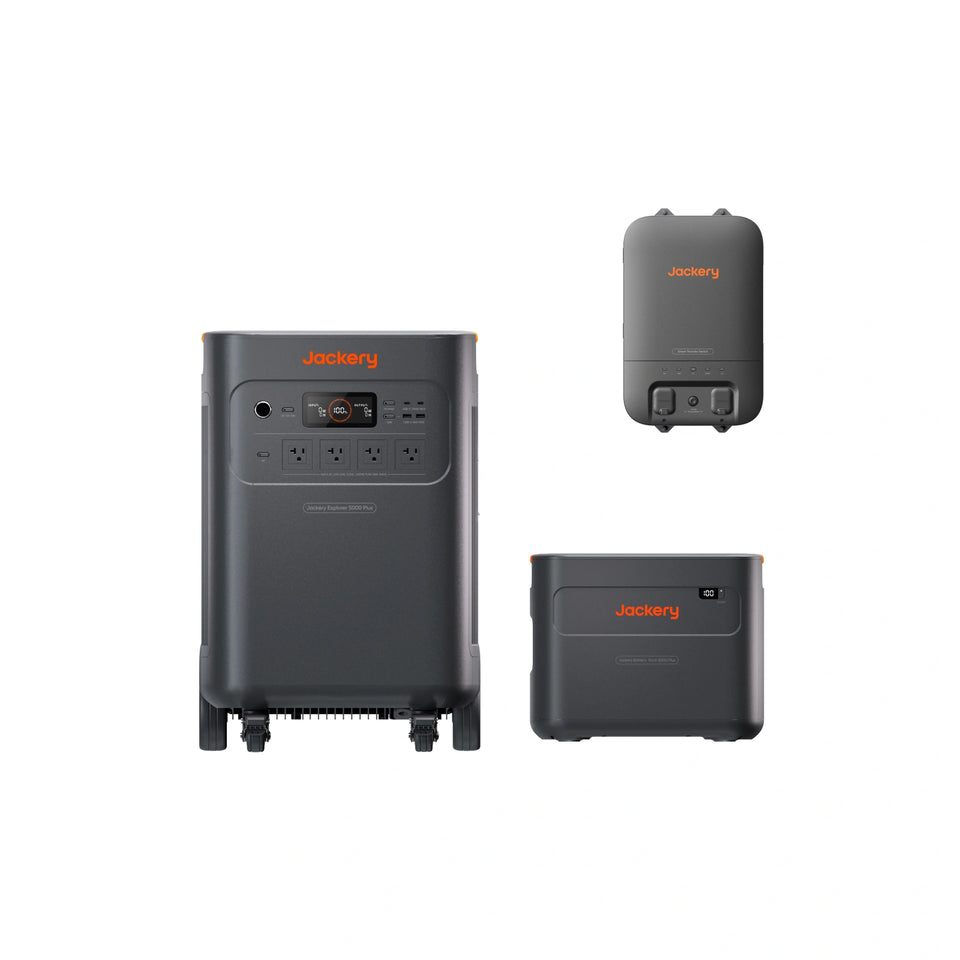
Models Discussed in This Article
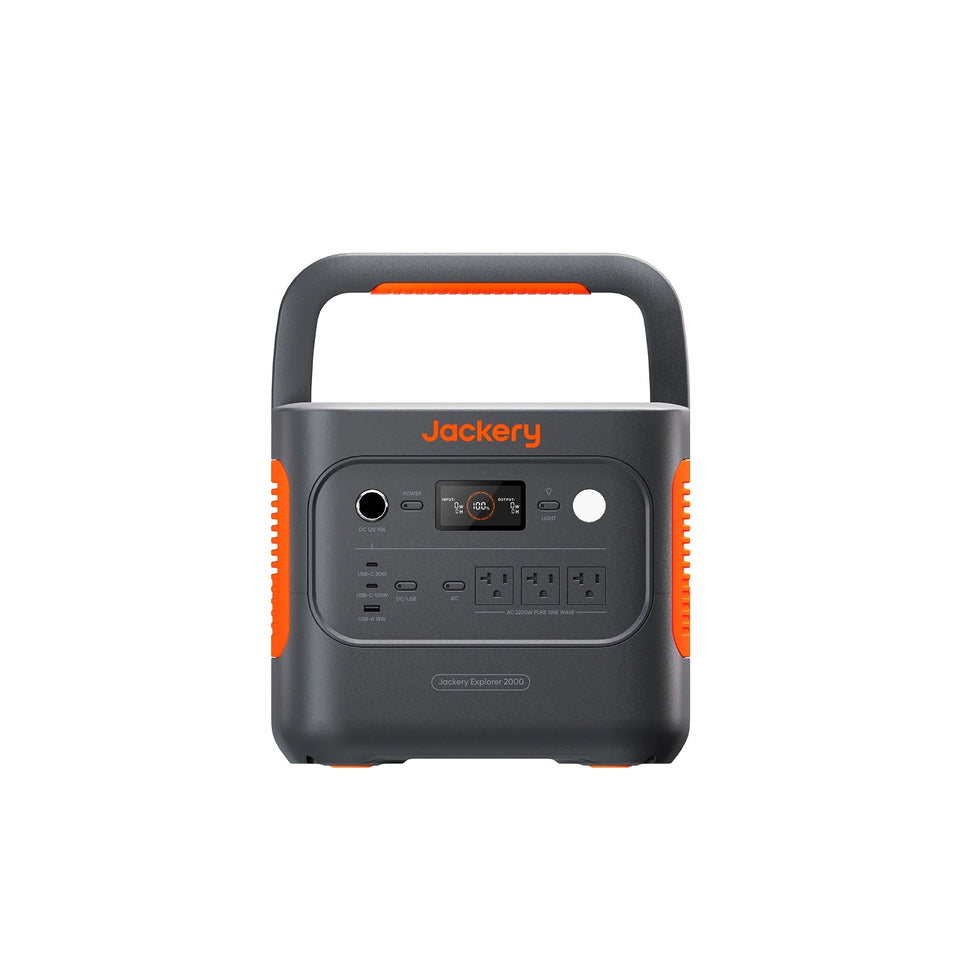
Jackery Explorer 2000 v2
A breakthrough 39.5 lb chassis makes 2,042Wh genuinely single-hand portable for camping and apartments, provided you accept its 400W solar recharge ceiling and non-expandable battery.
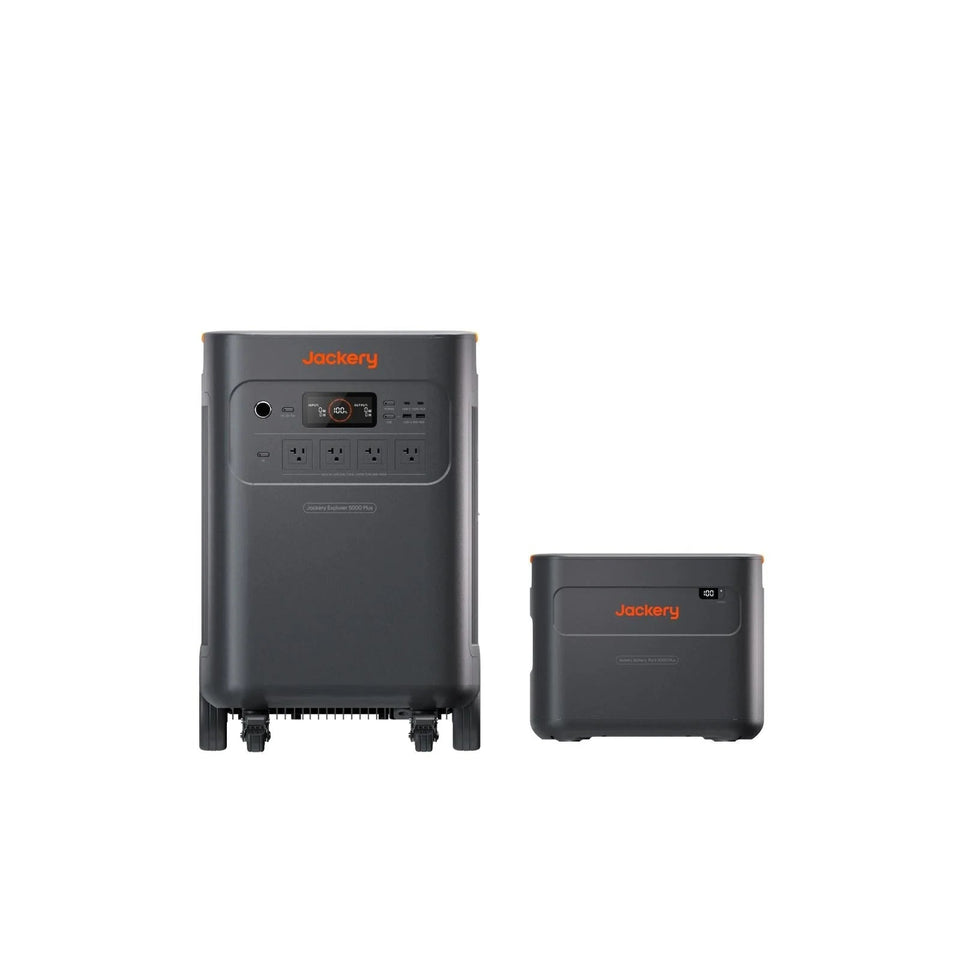
Jackery Explorer 5000 Plus
Combines a 5,040Wh LFP core, 7,200W split-phase output, 14,400W published surge headroom, and both High-PV (135–450V) and Low-PV solar inputs in a single wheeled chassis.
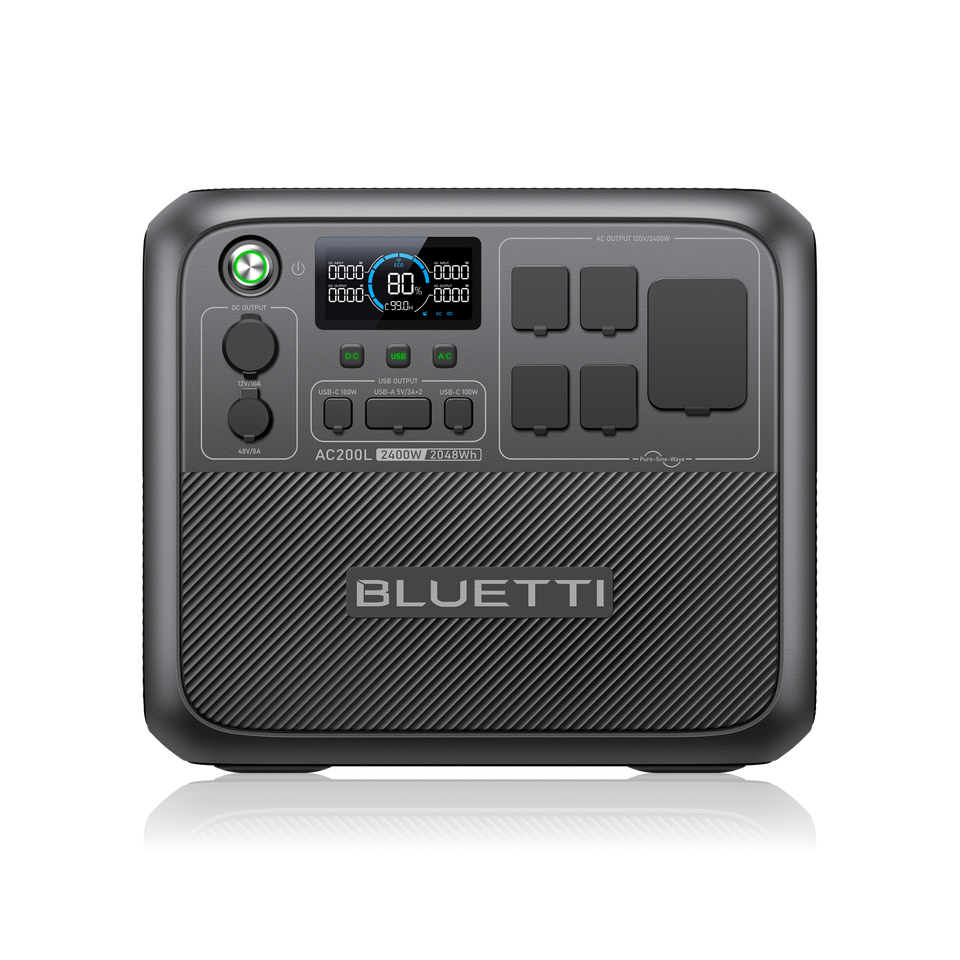
BLUETTI AC200L
Combines a high-efficiency 2,048Wh expandable platform, 1,200W high-voltage solar input (12–145V), and dedicated 30A TT-30R + 48V DC RV outputs at strong street pricing, trading away light weight and built-in wheels.
Frequently Asked Questions
What is the exact difference between the Jackery Explorer 2000 Plus and Explorer 2000 v2?+
They serve opposite priorities despite sharing ~2,042Wh capacity. The Explorer 2000 Plus weighs 61.5 lbs on wheels, outputs 3,000W continuous AC with a 30A TT-30R RV outlet, accepts 1,400W of solar, and expands up to 12kWh (24kWh/240V dual-unit). The Explorer 2000 v2 drops weight to 39.5 lbs using a non-expandable Cell-to-Body frame, caps AC at 2,200W without TT-30R, and limits solar to 400W.
Does a single Jackery Explorer 2000 Plus output 240V power for a home well pump or dryer?+
No. A single Explorer 2000 Plus supplies 120V AC only (up to 3,000W continuous). Achieving 240V split-phase output requires connecting two separate Explorer 2000 Plus units through Jackery's parallel/dual-voltage connector kit, or choosing the native single-unit 240V Jackery Explorer 5000 Plus instead.
How do I expand the Jackery Explorer 2000 Plus up to 12kWh or 24kWh?+
A single Explorer 2000 Plus base unit connects up to five Jackery Battery Pack 2000 Plus modules (2,042.8Wh each) via high-current expansion cables to reach ~12.26kWh at 120V. Linking two 2000 Plus systems together in parallel doubles total capacity potential up to ~24.5kWh and enables 240V split-phase output.
Is the Jackery Explorer 2000 Plus or Explorer 5000 Plus better for home backup?+
If you need native 240V split-phase backup (well pumps, HVAC blowers, or whole-home transfer panels), a single Jackery Explorer 5000 Plus (5,040Wh, 7,200W 120V/240V, 4,000W High-PV solar, ~$2,999 typical street) is generally cleaner, more powerful, and cheaper than buying two Explorer 2000 Plus base units plus a combiner.
Sources & Technical References
- View Source →[1]Manufacturer SpecificationJackery US OfficialVerified 2026-11-25Jackery Explorer 2000 Plus Official Specifications
2,042.8Wh LiFePO4 expandable up to 24kWh in dual-unit 240V configuration, 3,000W continuous AC, 1,400W solar input, 61.5 lbs base weight.
- View Source →[2]Manufacturer SpecificationJackery US OfficialVerified 2026-11-24Jackery Explorer 2000 v2 Product Page & User Guide
2,042Wh LFP Cell-to-Body design, 39.5 lbs weight, 2,200W continuous AC, 400W dual DC8020 solar input.
- View Source →[3]Manufacturer SpecificationJackery US OfficialVerified 2026-11-24Jackery Explorer 5000 Plus Official Product Specifications
5,040Wh LFP capacity, 7,200W/14,400W AC specs, High-PV (135-450V) and Low-PV (16-60V) limits, and warranty terms.
- View Source →[4]Manufacturer SpecificationBLUETTI US OfficialVerified 2026-11-24BLUETTI AC200L Portable Power Station Official Specifications
2,048Wh LFP, 2,400W continuous AC, 3,600W Power Lifting mode, NEMA TT-30R + 48V/8A DC RV port, 1,200W solar (12-145V).
- View Source →[5]Technical & Safety StandardNational Fire Protection Association (NFPA)Verified 2026-11-24NFPA 70 National Electrical Code (NEC) Transfer Equipment & Standby Power Overview
Governs transfer switches, panel interlocks, and prohibition of unsafe backfeeding on US residential electrical panels.