Jackery Explorer 2000 Plus Solar Generator Kit Review: SolarSaga Scaling & Expansion Math (2026)
Jackery Explorer 2000 Plus solar kit review: 2x/4x/6x SolarSaga 200W NREL recovery math, 2kWh-to-24kWh scaling, and kit value vs Explorer 5000 Plus & DPU.
Paired with two to six SolarSaga 200W panels, the 2,042.8Wh Jackery Explorer 2000 Plus accepts up to 1,400W of 11V–60V solar input, delivering ~1,593–1,798Wh usable AC (78%–88%) or ~1,798–1,900Wh DC (88%–93%) per module. While single-unit expansion scales from 2kWh to 12kWh (120V) and dual units reach 24kWh (240V), buyers seeking native 240V or rooftop High-PV strings often get stronger value from the Explorer 5000 Plus or EcoFlow DELTA Pro Ultra.
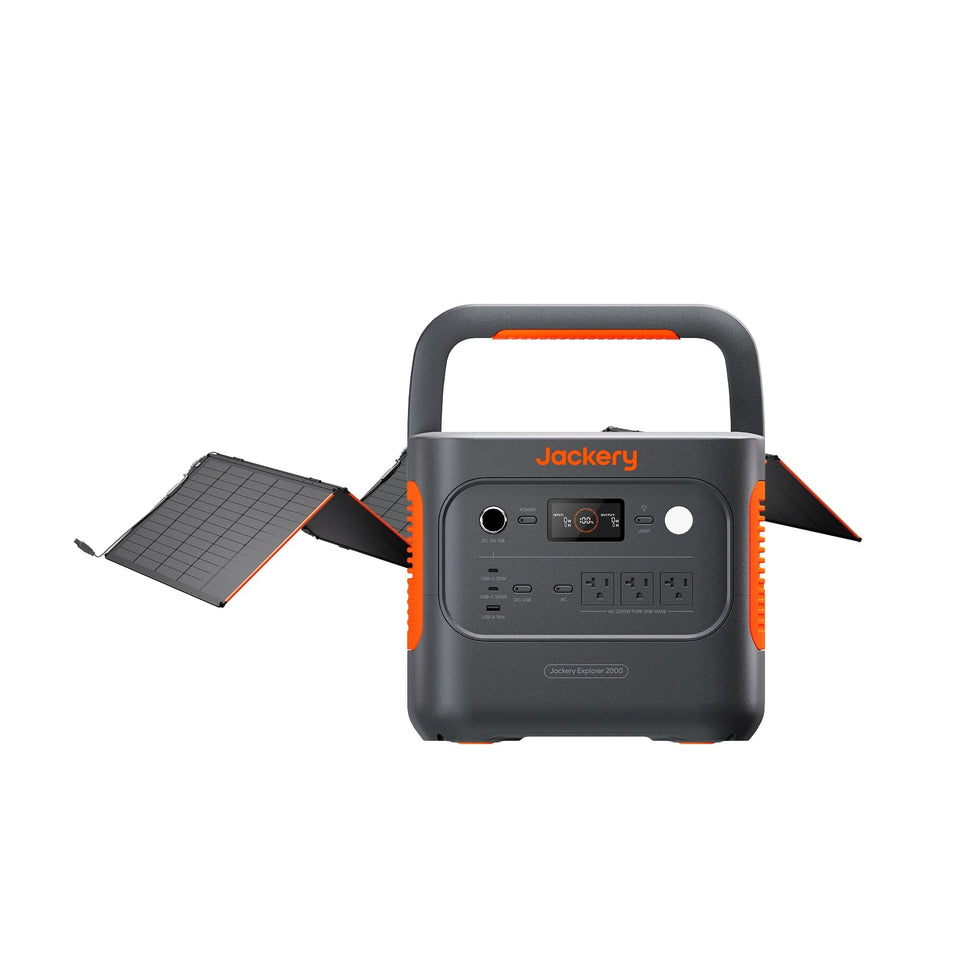
Buying a standalone power station is straightforward—buying a multi-panel solar generator kit is where budgets quietly balloon. Shoppers looking at the Jackery Solar Generator 2000 Plus quickly discover a critical fork in the road: pairing the 2,042.8Wh base unit with two, four, or six SolarSaga 200W folding panels and expansion packs changes both your daily solar autonomy and whether you accidentally outspend native 240V home backup flagships.
While our Jackery Explorer 2000 Plus hardware review breaks down single-unit ergonomics, TT-30R RV output, and how it differs from the 39.5 lb 2000 v2, this guide isolates the Solar Kit Math: how 2×, 4×, and 6× SolarSaga 200W arrays perform against NREL irradiance curves, how 2kWh -> 12kWh -> 24kWh expansion scales financially, and when stepping up to the Jackery Explorer 5000 Plus or EcoFlow DELTA Pro Ultra saves thousands.
Solar Generator Kit Architecture: Base Unit + SolarSaga Specs
Before calculating multi-day recovery, anchor every kit tier to the verified electrical boundaries published by Jackery:
- Base Storage & Usable Energy:
2,042.8WhLiFePO4 (4,000cycles to>=70%), yielding an estimated~1,593–1,798Whusable AC (78%–88%conversion range) or~1,798–1,900Whdirect DC (88%–93%) per module. (Standardized third-party AC capacity tests on the 2000 Plus remain unverified in our source registry, so conservative78%–88%budgeting protects against overestimating runtime.) - Inverter Output:
3,000Wcontinuous /6,000Wpeak surge (120Vsingle unit), including4 × 20ANEMA 5-20Routlets and1 × 30ANEMA TT-30RRV outlet. - Solar Input Ceiling:
1,400Wmax across dualDC8020MPPT channels (11V–60Voperating/Voc range,24Acombined max; verify exact single-port current limits in the Jackery 2000 Plus manual). - AC Wall & Hybrid Charging:
1,800Winternal AC fast charge (~2.0hours0%–100%), plus simultaneous solar-priority + AC top-up. - Physical Footprint:
61.5 lbsbase station on integrated caster wheels and telescoping handle; add~17.5 lbsper foldingSolarSaga 200Wpanel (6panels alone add~105 lbsof stowed solar hardware).
Important Lineup Warning: Do not confuse the
61.5 lbexpandable Explorer 2000 Plus (1,400Wsolar max) with the39.5 lbnon-expandable Jackery Explorer 2000 v2 (400Wsolar cap). If your primary goal is fast multi-panel solar recovery, the2000 v2throttles arrays above400Wpermanently.
Modular Solar Kit Performance: 2× vs. 4× vs. 6× SolarSaga 200W
Marketing banners regularly claim “2-hour solar recharge” for the 2000 Plus. In field conditions across the continental US, National Renewable Energy Laboratory (NREL) irradiance models show portable panels rarely average 100% of their Standard Test Conditions (STC) rating. Once dark cell heating (120°F+ surface temps), imperfect tilt angles, thin cloud haze, and MPPT conversion losses stack up, portable folding kits realistically harvest ~65%–75% of sticker wattage during midday peak sun—typically across 3.5 Peak Sun Hours (PSH) in overcast winter states up to 5.5 PSH in sunny Southwestern summers.
The table below shows realistic daily solar harvest across Jackery’s three core SolarSaga 200W kit tiers:
| SolarSaga 200W Kit Config | Nameplate STC Watts | Realistic Field Input (~65%–75%) |
3.5 PSH Daily Harvest (Winter / Northern) | 5.0 PSH Daily Harvest (Sunny Summer) | Empty-to-Full Time (2,042.8Wh Base) |
|---|---|---|---|---|---|
| 2 × SolarSaga 200W (Starter Kit) | 400W |
~260W–300W |
~910–1,050Wh/day |
~1,300–1,500Wh/day |
~7.0–8.0 peak sun hrs (~1.5 days) |
| 4 × SolarSaga 200W (Balanced Kit) | 800W |
~520W–600W |
~1,820–2,100Wh/day |
~2,600–3,000Wh/day |
~3.5–4.0 peak sun hrs (Single clear day) |
| 6 × SolarSaga 200W (Max Kit) | 1,200W |
~780W–900W |
~2,730–3,150Wh/day |
~3,900–4,500Wh/day |
~2.3–2.7 peak sun hrs (Surplus for 1–2 extra packs) |
(To test 1,400W full-ceiling harvest or custom regional ZIP-code tilt factors, plug your exact array wattage into our Solar Charging Time Calculator.)
What Those Three Solar Tiers Mean in Practice
- Why the
2 × 200W(400W) Bundle Falls Short Off-Grid: A1,200–1,500Whkitchen refrigerator + Wi-Fi router load already consumes virtually all daily energy harvested by2 × 200Wpanels—leaving zero surplus for cloudy days or extra battery packs. Treat400Wstrictly as emergency trickle insurance rather than full off-grid autonomy. - Why
4 × 200W(800W) Hits the Practical Camping Sweet Spot: Four panels refill a depleted2,042.8Whbase battery in one clear afternoon while keeping total stowed panel weight around~70 lbsand fitting comfortably beside a travel trailer or SUV camp. - Why
6 × 200W(1,200W) Unlocks Expansion Packs: Once you step up to4kWh–6kWhof total battery storage (1or2expansion packs),1,200Wof portable solar becomes mandatory to recover overnight refrigerator, CPAP, and microwave cycles inside a single US winter solar window (~2.7–3.1kWhrecovered at3.5 PSH). Keep strictly inside Jackery’s60VVoc limit using Jackery’s dedicated multi-panel parallel solar connectors—never experiment with high-voltage series strings that climb past60Von cold mornings (review Solar Input Limits & MPPT Explained).
Expansion Math: Scaling 2kWh -> 12kWh (120V) -> 24kWh (240V)
Unlike standalone units, the Explorer 2000 Plus relies on two distinct architectural tiers as storage grows (analyzed broadly in Expandable Battery Systems Explained):
| Expansion Stage | Hardware Required | Total Rated Capacity | Est. Usable AC (78%–88%) |
Continuous AC & Voltage | Max Combined Solar Input |
|---|---|---|---|---|---|
| Stage 1: Base Unit | 1 × Explorer 2000 Plus |
2,042.8Wh |
~1,593–1,798Wh |
3,000W (120V only) |
1,400W (11–60V dual DC8020) |
Stage 2: Mid 120V Stack |
1 × Base + 2 × Battery Pack 2000 Plus |
6,128.4Wh |
~4,780–5,393Wh |
3,000W (120V only) |
1,400W (+ extra battery DC inputs) |
Stage 3: Max 120V Stack |
1 × Base + 5 × Battery Pack 2000 Plus |
12,256.8Wh |
~9,560–10,786Wh |
3,000W (120V only) |
1,400W on head (packs accept limited DC charge) |
Stage 4: Dual 240V Stack |
2 × Base + Parallel Connector + 0–10 Packs |
4.09kWh – 24.51kWh |
~3,187–21,572Wh |
6,000W (120V / 240V Split-Phase) |
2,800W combined (1,400W per base unit) |
Two Mechanical Realities of Scaling to 12kWh or 24kWh
First, note the cable-tethered footprint: while each Battery Pack 2000 Plus adds ~42 lbs and 2,042.8Wh of LFP storage, connecting three to five expansion modules creates heavy umbilical cabling and spreads across garage floor space unless stacked neatly on utility carts.
Second, a single 2000 Plus stack remains strictly 120V no matter how many battery packs you add. Even at 12.26kWh, a single head unit cannot power a 240V submersible well pump, central HVAC condenser, or electric dryer. Creating 240V split-phase output requires purchasing two separate Explorer 2000 Plus base heads plus Jackery’s parallel connector kit—and integrating either 120V or 240V output into residential panel breakers requires a UL-listed transfer switch or interlock installed by a licensed electrician per NFPA 70 (NEC) (see 120V vs. 240V Home Backup Explained).
Kit Value Showdown: 2000 Plus Bundles vs. Explorer 5000 Plus & EcoFlow DELTA Pro Ultra
This is where sharp buyers save serious money. The moment you price out a multi-pack 2000 Plus solar bundle—or consider buying two 2000 Plus heads for 240V split-phase power—Jackery’s own flagship and EcoFlow’s modular stack reshape the economics completely.
| Kit Comparison Metric | Jackery 2000 Plus (1× Base + 2× Packs + 4× 200W) |
Dual Jackery 2000 Plus (2× Base + 240V Connector) |
Jackery Explorer 5000 Plus (Base + High-PV Ready) |
EcoFlow DELTA Pro Ultra (Inverter + 6.1kWh Battery) |
|---|---|---|---|---|
| Base / Bundle Rated Capacity | 6,128.4Wh (120V) |
4,085.6Wh (240V expandable to 24.5kWh) |
5,040Wh (expands to 30.2kWh / 60.5kWh) |
6,144Wh (expands to 30.7kWh / 90kWh) |
| Continuous / Surge Output | 3,000W / 6,000W (120V) |
6,000W / 12,000W (120V/240V) |
7,200W / 14,400W (120V/240V) |
7,200W / 10,800W (120V/240V) |
| Max Solar & Voc Window | 1,400W (11V–60V portable only) |
2,800W (11V–60V split across 2 heads) |
4,000W High-PV (135V–450V) + 1,200W Low |
5,600W (80V–450V High-PV + 30V–150V Low) |
| Cold-Weather Charge Support | 32°F–113°F (no self-heat) |
32°F–113°F (no self-heat) |
32°F–113°F (no self-heat) |
-4°F–113°F (auto self-heating) |
| UPS / Online Protection | <=20 ms EPS |
<=20 ms EPS |
0 ms Online UPS (direct) / <20 ms STS |
0 ms Online UPS / <20 ms SHP2 |
| Typical Street Anchor | ~$3,400–$4,200 bundle est. |
~$2,800–$3,500+ before packs/panels |
~$2,999 base unit (no panels) |
~$4,599 base kit (no panels) |
Three Cost Traps Revealed by the Table
- Never Buy Two
2000 PlusHeads Just to Get240V: Two2000 Plusbase units plus Jackery’s parallel connector box gives you4,085.6Wh(120V/240V,6,000W), awkward dual-unit cord routing, and low-voltage60Vsolar limits—all for roughly the same street outlay (or more) as a single Jackery Explorer 5000 Plus (~$2,999street), which delivers5,040Wh,7,200W/14,400Wsurge,0 msOnline UPS, and4,000WHigh-PV (135V–450V) in one tower. - Rigid Residential Panels Crush Folding Panel
$/WattAbove800W: Buying six foldingSolarSaga 200Wpanels (~$1,800–$2,600+depending on bundle discounts) pays for weatherproof portability you do not need if the panels live permanently on a cabin roof or backyard tilt rack. Stationary homesteaders save substantially by pairing standard400Wrigid residential panels (~$0.30–$0.50/Wstreet) into a high-voltageMPPTsystem like the EcoFlow DELTA Pro Ultra (80V–450VHigh-PV) or Explorer 5000 Plus (135V–450VHigh-PV)—or even the12V–145VBLUETTI AC200L for120Voff-grid cabins. - Where the
2000 PlusSolar Kit Still Wins: If you travel in a30A(TT-30R) RV, work remote off-grid job sites needing3,000W120Vsurge, or want modular42–61 lbpieces you can carry down basement stairs solo and gradually grow from2kWhto6kWhwith folding200Wpanels, no monolithic134.5 lb5000 Plusmatches its split mobility.
Verdict: Selecting the Right Explorer 2000 Plus Kit Strategy
- Get the
2000 Plus+2 ×or4 × SolarSaga 200WKit If: You camp in a30Atravel trailer, haul equipment in an SUV/pickup where61.5 lbwheeled modularity matters, and want single-day~520W–600Wreal-world solar recovery without crossing60VVoc wiring rules. - Add Expansion Batteries (
4kWh–6kWh) Only Alongside4×–6×Panels: Adding2kWhbattery modules without upgrading past400Wof solar creates multi-day recharge deficits during storms. - Skip
Dual-2000 PlusBundles for Home240VBackup: Step directly into the Jackery Explorer 5000 Plus for the cleanest~$2,999single-unit240Vvalue, or choose the EcoFlow DELTA Pro Ultra if winter self-heating (-4°F) and5,600Wflexible High-PV (80V–450V) rooftop compatibility top your list.
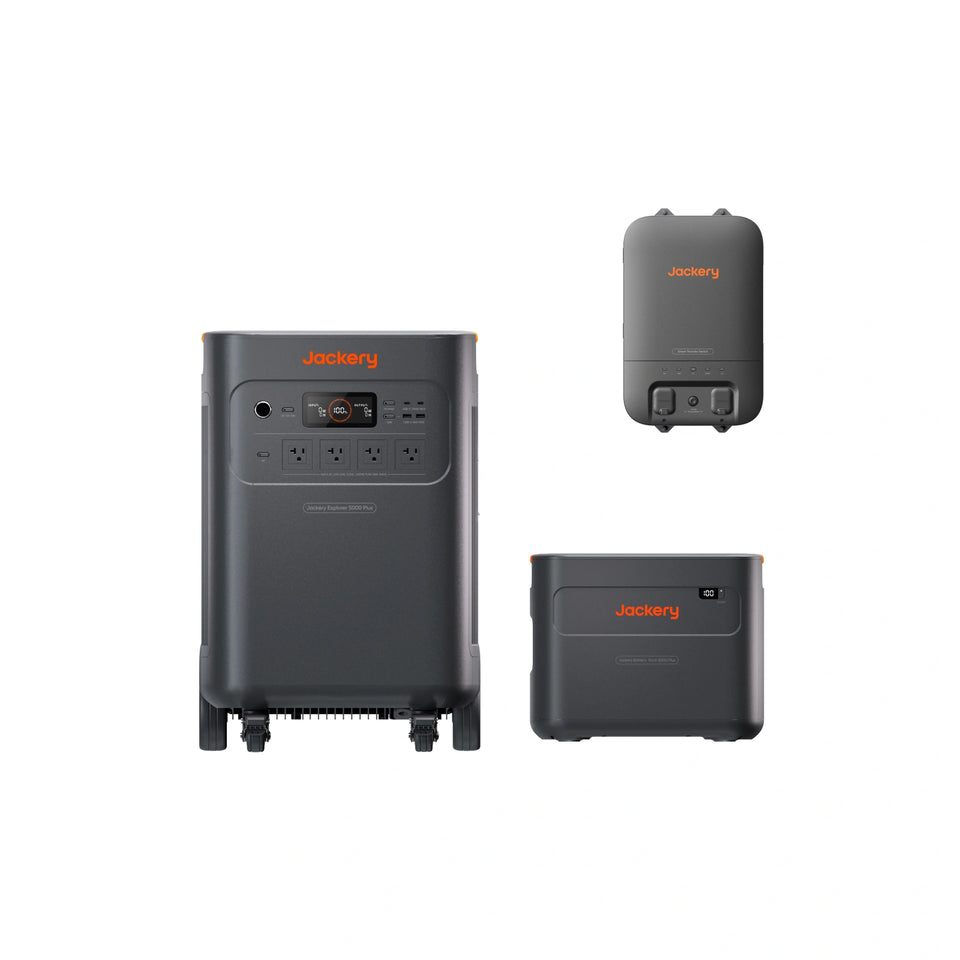
Models Discussed in This Article
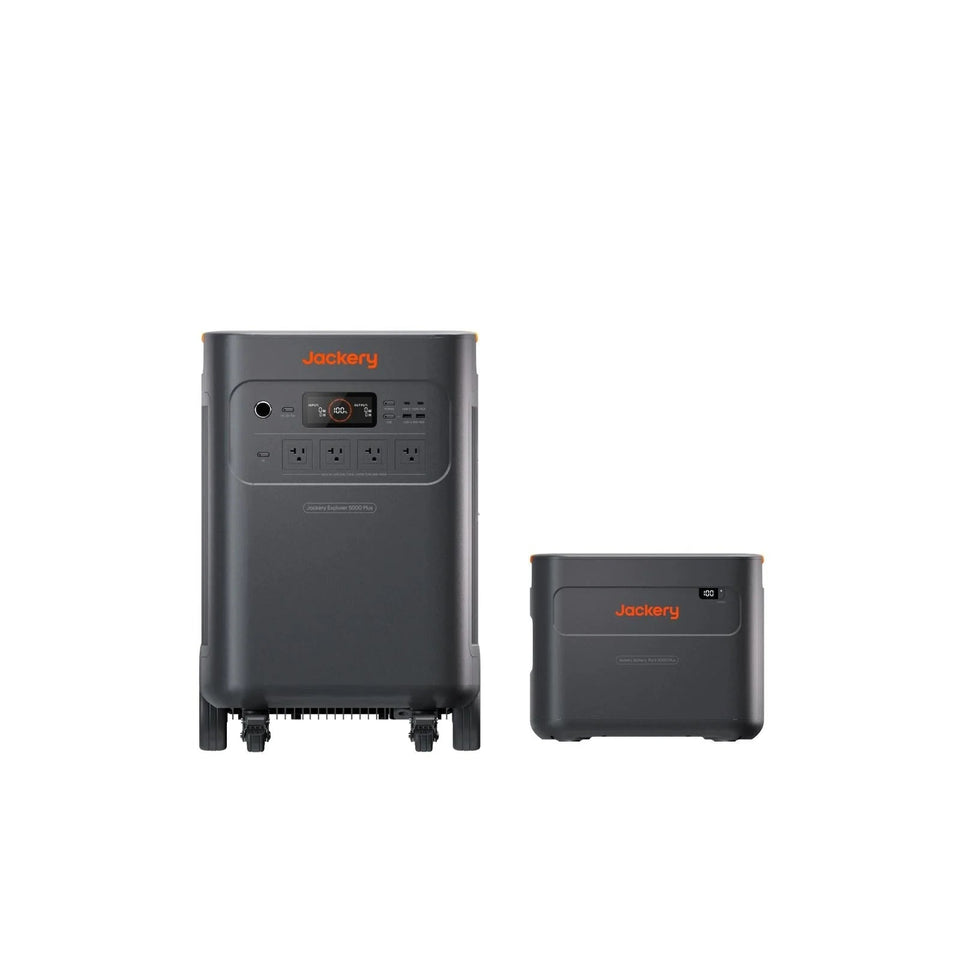
Jackery Explorer 5000 Plus
Combines a 5,040Wh LFP core, 7,200W split-phase output, 14,400W published surge headroom, and both High-PV (135–450V) and Low-PV solar inputs in a single wheeled chassis.
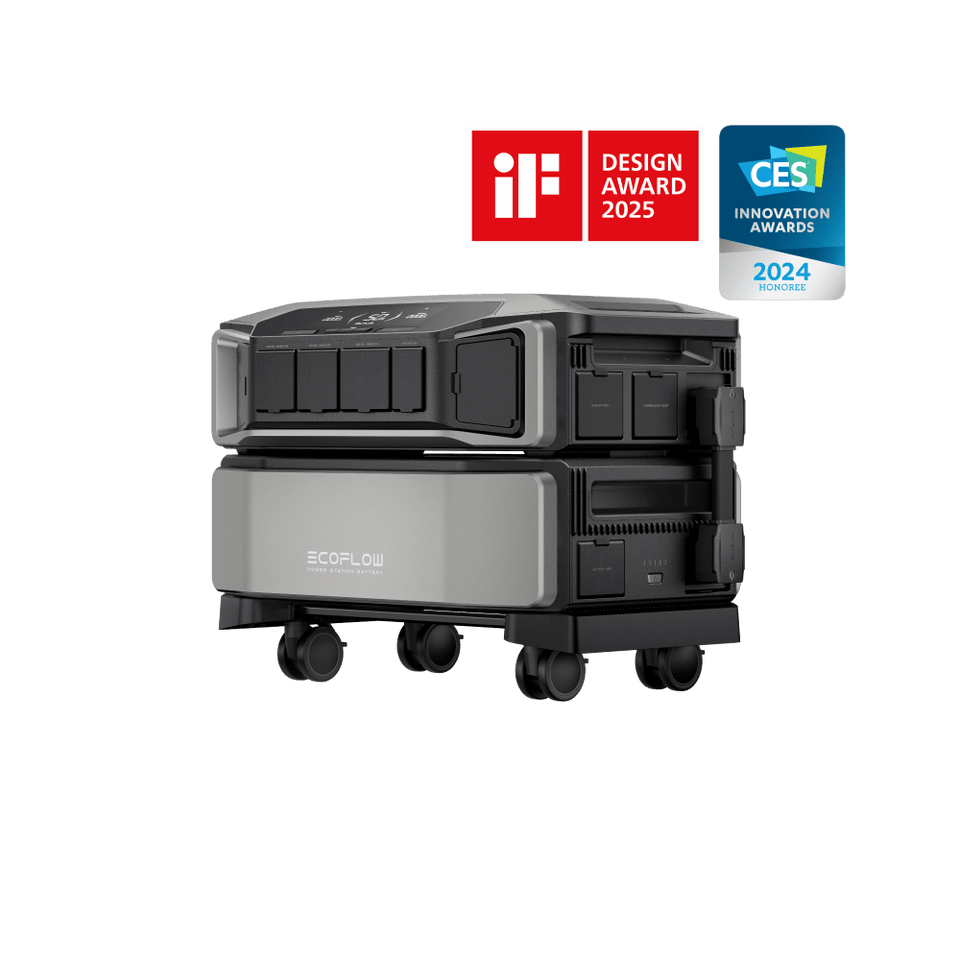
EcoFlow DELTA Pro Ultra
Built specifically for homeowners seeking high-voltage solar input (up to 5,600W) and modular 6kWh-per-stack scaling, though total kit cost and modular footprint exceed casual portable needs.
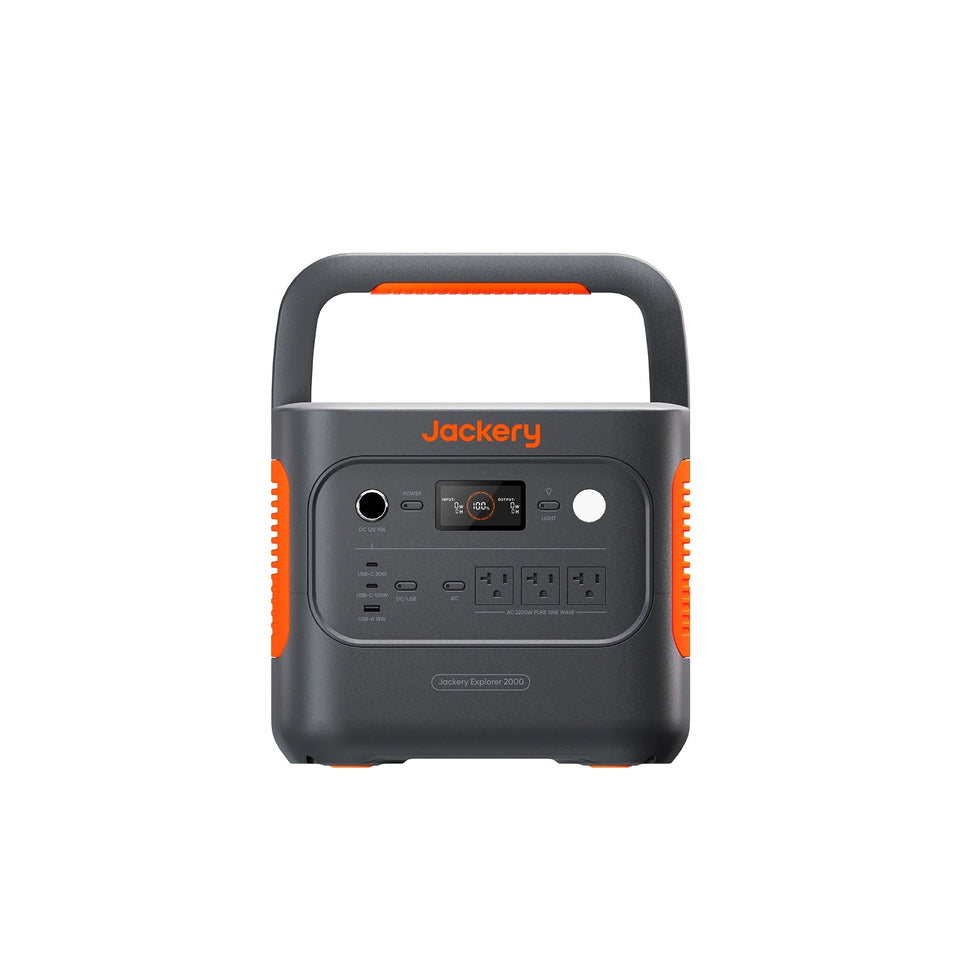
Jackery Explorer 2000 v2
A breakthrough 39.5 lb chassis makes 2,042Wh genuinely single-hand portable for camping and apartments, provided you accept its 400W solar recharge ceiling and non-expandable battery.
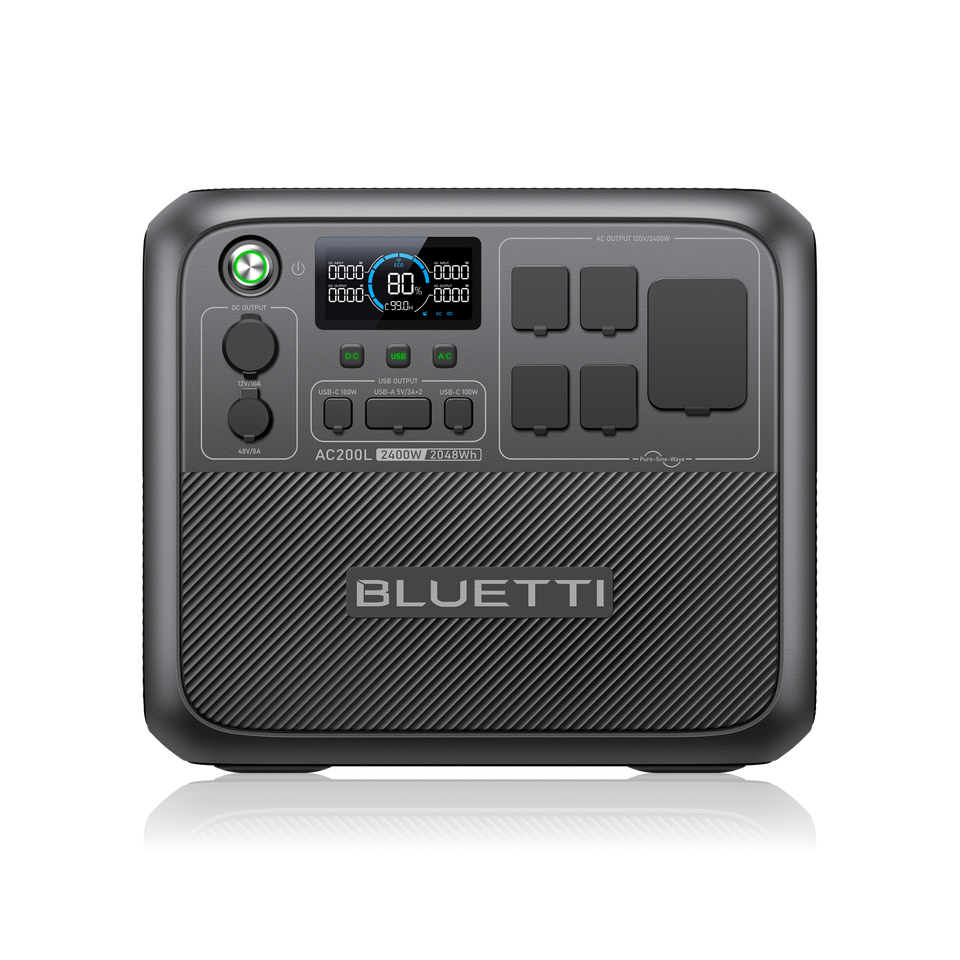
BLUETTI AC200L
Combines a high-efficiency 2,048Wh expandable platform, 1,200W high-voltage solar input (12–145V), and dedicated 30A TT-30R + 48V DC RV outputs at strong street pricing, trading away light weight and built-in wheels.
Frequently Asked Questions
How fast do two, four, or six SolarSaga 200W panels recharge the Jackery Explorer 2000 Plus?+
Using NREL real-world derating (roughly 65%–75% of STC sticker output), two SolarSaga 200W panels (400W) deliver ~260W–300W real-world input and need ~7–8 peak sun hours to refill 2,042.8Wh. Four panels (800W) yield ~520W–600W (~3.5–4 hours), while six panels (1,200W) supply ~780W–900W (~2.3–2.7 hours)—safely inside the 1,400W dual DC8020 limit.
How do I wire six SolarSaga 200W panels without exceeding the 60V Voc limit?+
Jackery's dual DC8020 inputs carry a strict 11V–60V open-circuit voltage (Voc) window (up to 12A single / 24A dual via official SolarSaga parallel connectors). Because each SolarSaga 200W outputs roughly 23V–25V Voc, Jackery's official solar connector cables wire up to three panels per input port safely—always consult the manual and avoid exceeding 60V Voc in freezing weather.
Does buying a 4kWh or 6kWh Jackery 2000 Plus kit make sense vs. a Jackery Explorer 5000 Plus?+
If you need incremental 120V portability (two-person liftable 61.5 lb base + ~42 lb expansion packs) or a built-in 30A TT-30R RV port, stacking the 2000 Plus works well. If your goal is stationary 120V/240V home backup or 5kWh+ storage, a standalone Jackery Explorer 5000 Plus (~$2,999 street) delivers native 240V, 7,200W output, and 4,000W High-PV for less money than dual 2000 Plus bundles.
Can a solar-charged 24kWh dual Jackery 2000 Plus stack run a whole house legally?+
Linking two Explorer 2000 Plus units with up to 10 extra batteries creates a 24,513.6Wh / 6,000W 120V/240V system, but safe connection to residential circuits requires a UL-listed manual transfer switch or panel interlock installed by a licensed electrician under NFPA 70 (NEC) rules. It still cannot exceed 6,000W continuous across combined 240V loads.
Sources & Technical References
- View Source →[1]Manufacturer SpecificationJackery US OfficialVerified 2026-11-25Jackery Explorer 2000 Plus Official Specifications
2,042.8Wh LiFePO4 expandable up to 24kWh in dual-unit 240V configuration, 3,000W continuous AC, 1,400W solar input, 61.5 lbs base weight.
- View Source →[2]Government Research ResourceNational Renewable Energy Laboratory (NREL)Verified 2026-11-24PVWatts & US Peak Sun Hours Reference Data
Documents regional peak sun hours and real-world photovoltaic derating factors (ambient heat, angle, shading, controller loss).
- View Source →[3]Manufacturer SpecificationJackery US OfficialVerified 2026-11-24Jackery Explorer 5000 Plus Official Product Specifications
5,040Wh LFP capacity, 7,200W/14,400W AC specs, High-PV (135-450V) and Low-PV (16-60V) limits, and warranty terms.
- View Source →[4]Manufacturer SpecificationEcoFlow US OfficialVerified 2026-11-24EcoFlow DELTA Pro Ultra Product Page & Specifications
Official North American 120V/240V split-phase inverter and 6,144Wh LiFePO4 battery module specs.
- View Source →[5]Technical & Safety StandardNational Fire Protection Association (NFPA)Verified 2026-11-24NFPA 70 National Electrical Code (NEC) Transfer Equipment & Standby Power Overview
Governs transfer switches, panel interlocks, and prohibition of unsafe backfeeding on US residential electrical panels.