Inverter Generator vs. Portable Power Station vs. Open-Frame Generator
Compare <3% THD inverter fuel generators, LiFePO4 battery power stations, and open-frame gas units across surge power, CO safety, noise, and storm endurance.
Inverter fuel generators use variable-RPM engines and microprocessors to output clean <3% THD electricity at ~52–65 dB outdoors with indefinite runtime if refueled. Battery portable power stations ('solar generators') use silent DC-to-AC pure sine inverters safe for indoor operation, yielding ~78%–88% AC efficiency within fixed Wh limits. Open-frame gas generators offer maximum surge watts per dollar at 70–90+ dB and rough 15%–25% THD.
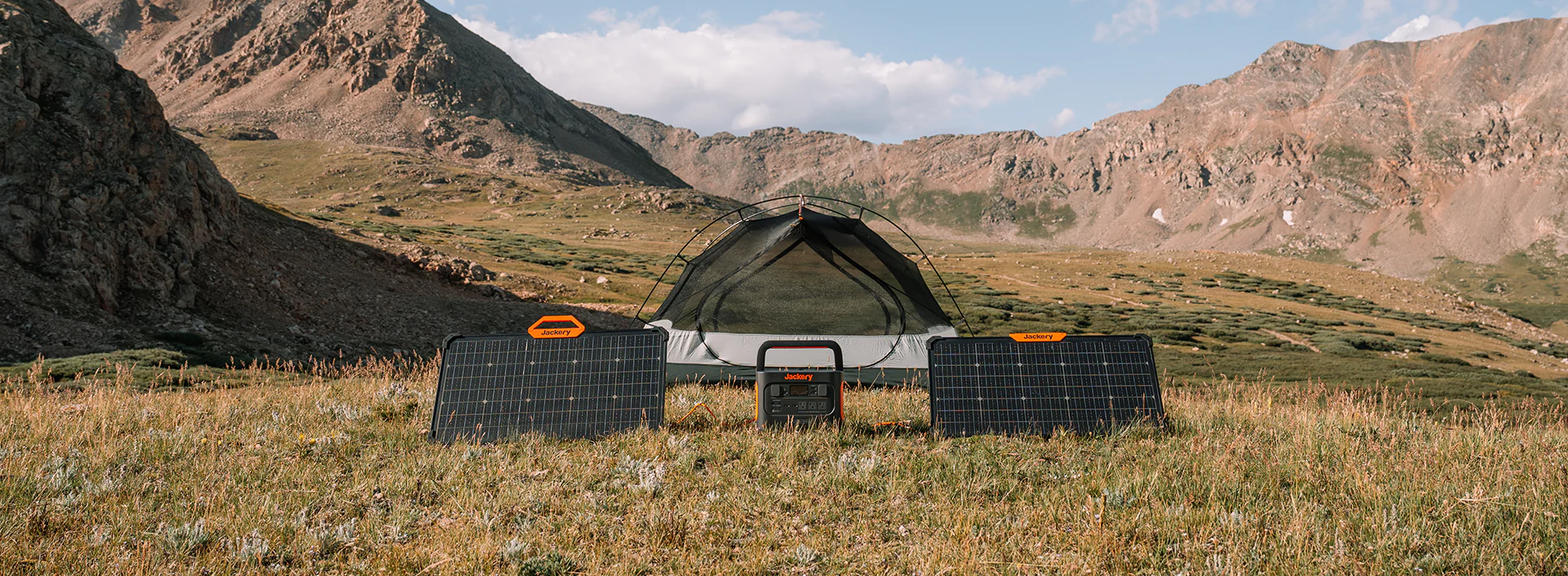
Half the confusion around “inverter vs. generator” starts with language. Ask a camping neighbor about an “inverter,” and they may point to a quiet enclosed gasoline inverter generator humming softly beside their RV. Ask a solar-prepper about an “inverter,” and they mean the DC-to-AC pure sine wave electronics mounted inside a silent LiFePO4 portable power station (often marketed as a “solar generator”). Meanwhile, hardware stores still stack loud, fixed-speed open-frame synchronous gas generators right beside both.
Comparing only “inverters” against “generators” blurs three completely different machines. Separating how each one makes electricity, handles waveform distortion (THD), survives multi-day storms, and behaves around living spaces makes choosing the right backup hardware straightforward.
Three Machines, Three Very Different Electrical Designs
1. Inverter Fuel Generators (Variable-RPM Gas / Dual-Fuel)
An inverter generator still burns gasoline or liquid propane inside an internal combustion engine. However, instead of wiring the spinning alternator straight to the outlets, it rectifies raw alternating current to DC, then uses a microprocessor-controlled inverter board to synthesize a fresh, tightly regulated pure sine wave at 60 Hz.
- Waveform Quality: Typically
<3%Total Harmonic Distortion (THD)—often cleaner than neighborhood utility lines. Safe for smart refrigerators, ECM furnace blowers, laptops, and high-speed power station chargers. - Noise & Fuel Economy: Because the inverter decouples engine speed from 60 Hz frequency, Eco-Throttle slows the engine RPM under light loads—dropping outdoor noise into the 52–65 dB bracket and trimming fuel burn dramatically.
- Safety Boundary: Zero tolerance indoors. Like all fuel engines, inverter generators emit colorless, odorless carbon monoxide (CO) and must run outdoors far away from open windows, doors, vents, and attached garages.
2. Battery Portable Power Stations (“Solar Generators” with DC-to-AC Inverters)
A portable power station generates zero energy on its own; it stores electricity inside LiFePO4 cells (288Wh up to 6,144Wh+) and uses an internal DC-to-AC pure sine wave inverter (plus native USB-C PD and 12V/48V DC bucks) to deliver clean grid-equivalent power silently.
- Waveform Quality & Acoustics: Pure sine wave (
<3%THD) at near-silent acoustic levels—for example, manufacturer-rated around<30 dBunder light-to-moderate output on stations like the EcoFlow DELTA 3 Plus and EcoFlow DELTA Pro Ultra. - Efficiency Reality: Converting stored DC battery power into 120V/240V AC costs roughly 12%–22% in inverter heat and standby draw (yielding an estimated 78%–88% AC usable capacity—or 77.76% round-trip efficiency verified by CNET Labs on the BLUETTI AC200L).
- Safety Boundary: Zero tailpipe emissions, making them safe inside apartments, bedrooms, and indoor utility areas. Still, lithium batteries are not risk-free: observe cooling vent clearances, avoid moisture, stay within outlet amperage ratings, and follow NFPA 70 / NEC transfer rules for panel tie-ins.
3. Conventional Open-Frame Synchronous Gas Generators
Classic contractor-style generators mechanically lock a 2-pole alternator to an exposed engine spinning constantly at 3,600 RPM regardless of whether you draw 200 watts or 6,000 watts.
- Waveform Quality: Typically 15%–25% THD with voltage/frequency dips whenever heavy motors start. Fine for incandescent lights, space heaters, circular saws, and older resistive tools—risky for sensitive circuit boards and frequently rejected by modern power station AC charging inputs.
- Noise & Surge: Loud 70–90+ dB exhaust roar and mechanical rattle, paired with rugged rotating copper-winding inertia that absorbs heavy inductive well pump and air-compressor surges cheaply per dollar.
Head-to-Head Comparison: Which Platform Wins Each Metric?
| Decision Criterion | Inverter Fuel Generator | Battery Power Station (“Solar Generator”) | Conventional Open-Frame Gas Generator |
|---|---|---|---|
| Power Source | Gasoline or Propane | Pre-charged LFP battery + Solar / AC | Gasoline / Propane / Diesel |
| Waveform Cleanliness (THD) | <3% THD (Pure Sine Wave) |
<3% THD (Pure Sine Wave) |
15%–25% THD (Rough/Distorted) |
| Safe Indoor / Apartment Use? | No (fatal CO exhaust) | Yes (zero exhaust; maintain airflow) | No (fatal CO exhaust) |
| Operating Sound Level | Moderate (52–65 dB outdoors) | Ultra-quiet (<30 dB light load / silent DC) | Very loud (70–90+ dB @ 3,600 RPM) |
| Multi-Day Storm Endurance | High (refuels indefinitely with cans) | Limited by battery kWh + sun/cloudy weather | High (burns more fuel per kWh at light load) |
| Motor Startup Surge Headroom | Good (Eco-mode lags slightly on big surges) | Strong on 240V units (10.8kW–14.4kW peak) | Excellent mechanical inertia per dollar |
| Upfront Cost for ~2kW–3kW | ~$600–$1,500 | ~$999–$1,600 (AC200L / 2kWh class) | ~$450–$900 |
| Maintenance Burden | Oil, spark plugs, carb/stabilizer | Minimal (SoC check every 3–6 months) | Heavy oil/filter upkeep & carb risks |
Surge Headroom, Well Pumps, and Residential Transfer Safety
Heavy inductive motors—like deep-well pumps, sump pumps, or 15,000 BTU RV rooftop air conditioners—pull 3x to 5x their running wattage for a fraction of a second during startup.
- If your home needs 240V split-phase backup for a well pump, a small 120V inverter generator or 1,000Wh power station will fail immediately. You must step up either to a 240V fuel generator or a split-phase battery platform such as the Jackery Explorer 5000 Plus (
7,200Wcontinuous /14,400Wsurge) or EcoFlow DELTA Pro Ultra (7,200W/10,800Wsurge). Learn how startup spikes behave in Continuous Output vs. Surge Output. - Critical Electrical Code Note: Whether using a fuel generator or a 240V power station, never backfeed a residential wall outlet or dryer receptacle. Utility backfeed threatens utility lineworkers’ lives and violates NFPA 70 (NEC). Safe home integration requires either keeping appliances isolated on heavy-duty outdoor-rated extension cords or hiring a licensed electrician to install a listed manual transfer switch, generator interlock kit, or smart home panel. See Transfer Equipment & Professional Installation.
Why Hybrid Pairing Beats Buying Strictly One Type
For homeowners facing multi-day winter ice storms or summer hurricanes, choosing strictly between an inverter fuel generator and a battery power station forces an awkward compromise: run a gas engine 24 hours straight in the rain just to keep a 120W fridge cold, or watch a battery hit 0% under three straight days of storm clouds.
Pairing a 2kWh LiFePO4 power station indoors with a compact <3% THD inverter generator outdoors eliminates both headaches:
- Silent Indoor Nights: Let the BLUETTI AC200L or EcoFlow DELTA 3 Plus run your fridge, CPAP, and Wi-Fi quietly inside while you sleep with locked windows.
- 2-Hour Daytime Refills: Roll the inverter generator outside onto an open patio (well away from soffits and windows) for 1 to 2 hours in the morning to pump
1,500W–2,400Wof clean<3%THD AC power back into the battery—running the engine in its most efficient sweet spot instead of idling all day. (Dedicated DC hybrid units like the EcoFlow Dual Fuel Smart Generator even connect over DC to skip AC charger losses altogether.) - Zero-Fuel Sunny Days: Whenever skies clear, solar panels top off the battery silently without burning a drop of stored fuel.
Compare real fuel versus lithium trade-offs in Portable Power Station vs. Gas Generator or calculate your exact household load list first with our Appliance Wattage Calculator.
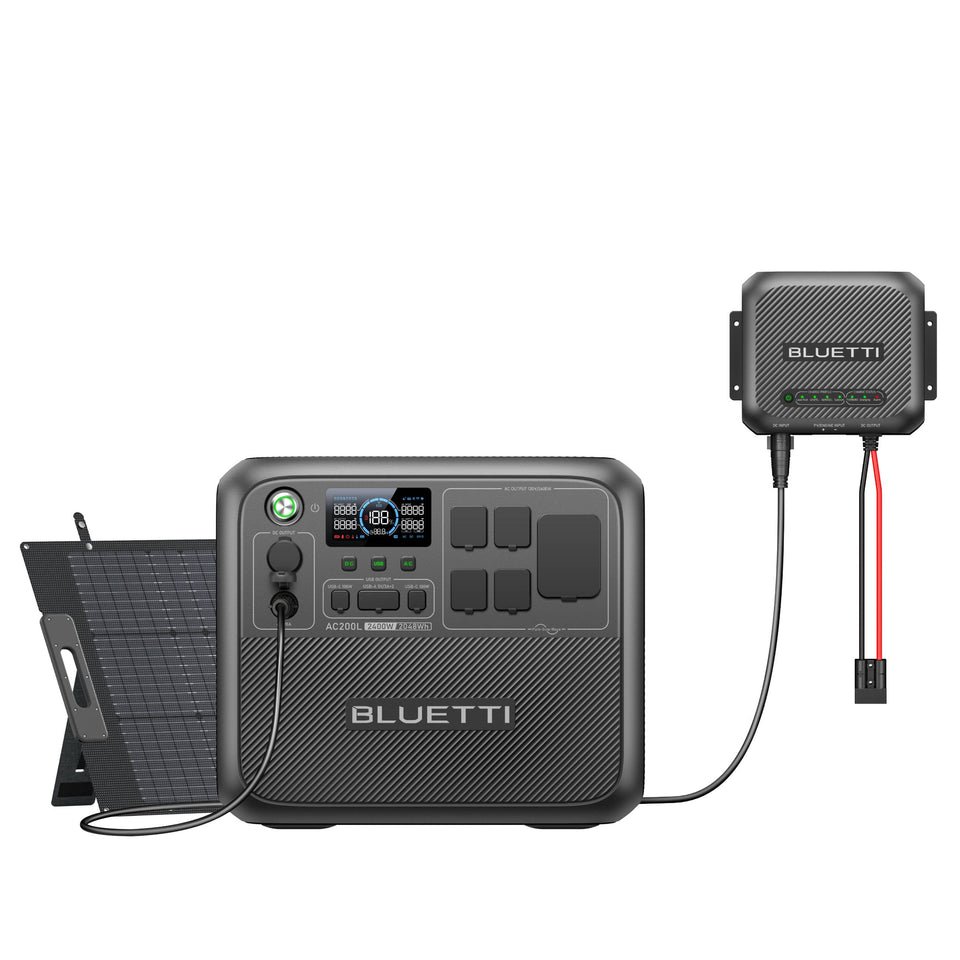
Models Discussed in This Article
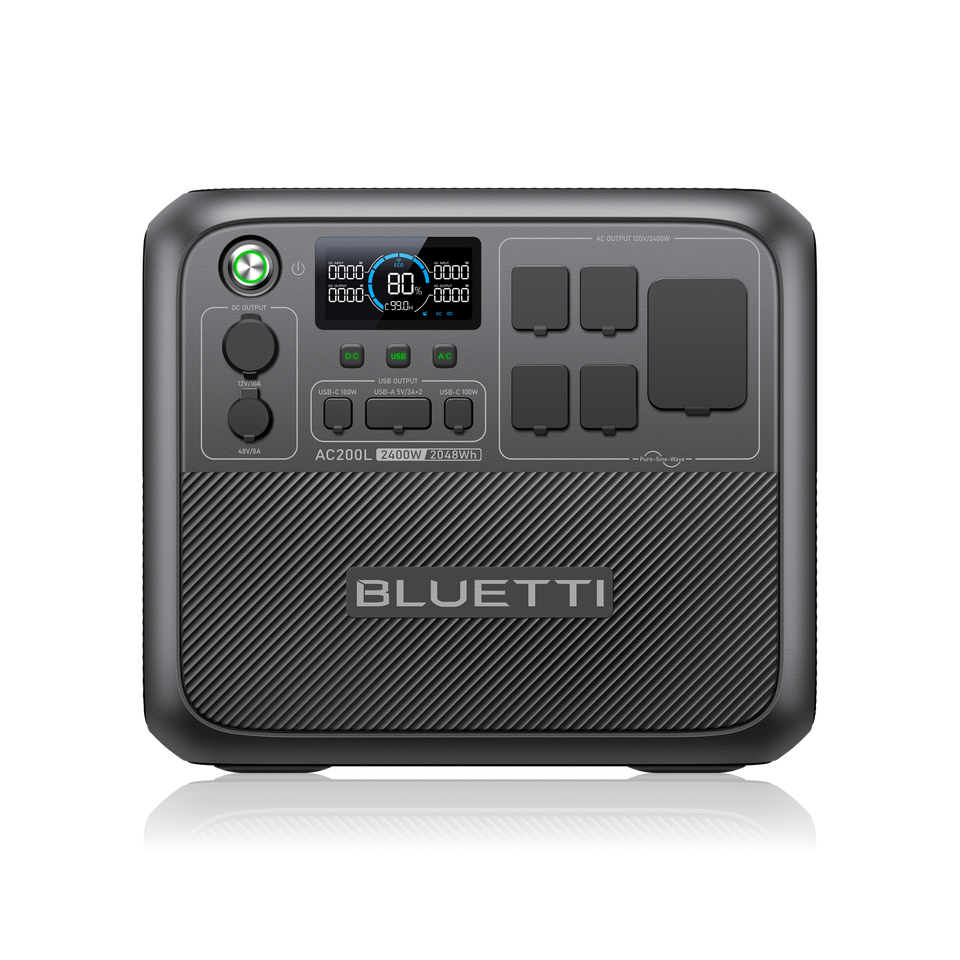
BLUETTI AC200L
Combines a high-efficiency 2,048Wh expandable platform, 1,200W high-voltage solar input (12–145V), and dedicated 30A TT-30R + 48V DC RV outputs at strong street pricing, trading away light weight and built-in wheels.
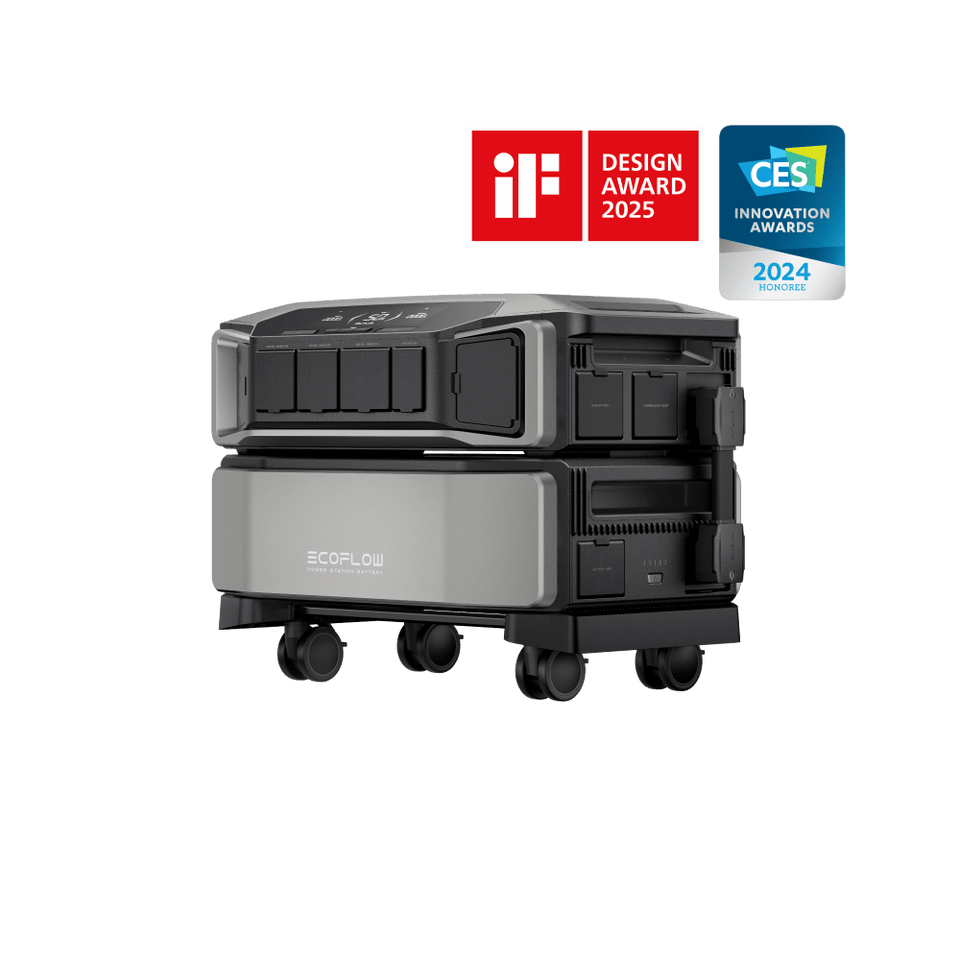
EcoFlow DELTA Pro Ultra
Built specifically for homeowners seeking high-voltage solar input (up to 5,600W) and modular 6kWh-per-stack scaling, though total kit cost and modular footprint exceed casual portable needs.
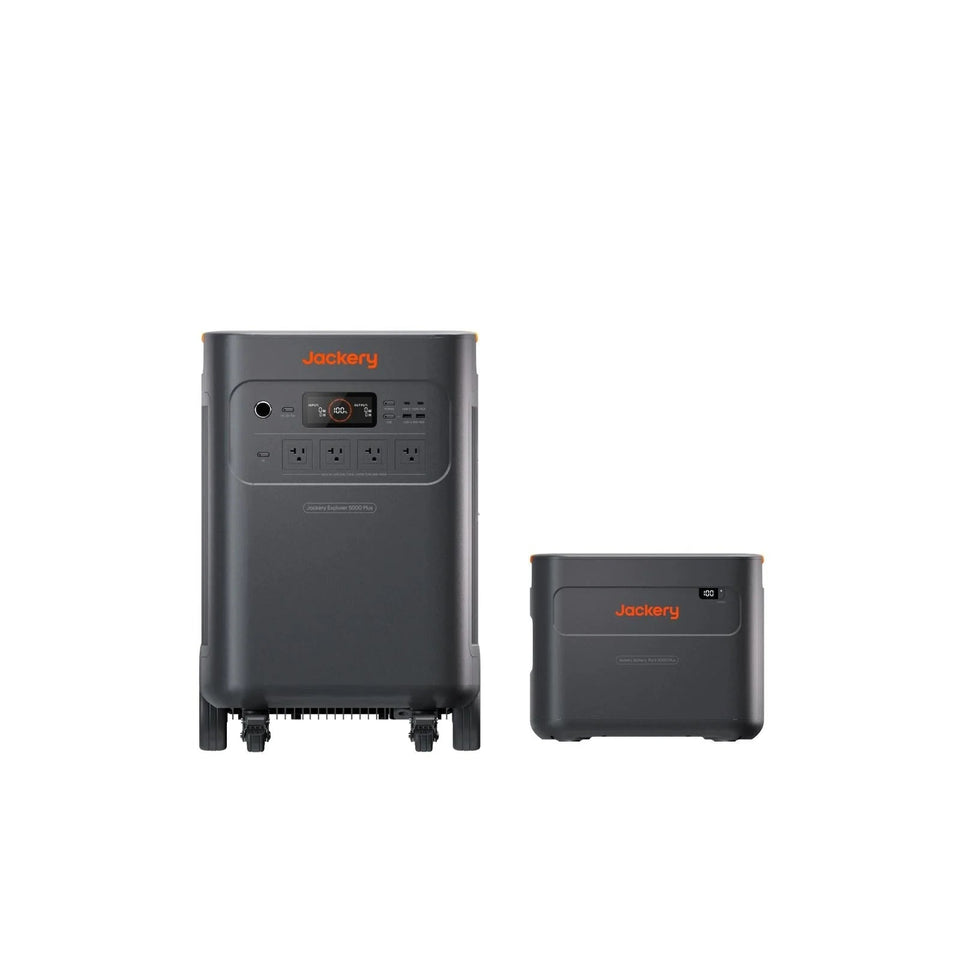
Jackery Explorer 5000 Plus
Combines a 5,040Wh LFP core, 7,200W split-phase output, 14,400W published surge headroom, and both High-PV (135–450V) and Low-PV solar inputs in a single wheeled chassis.
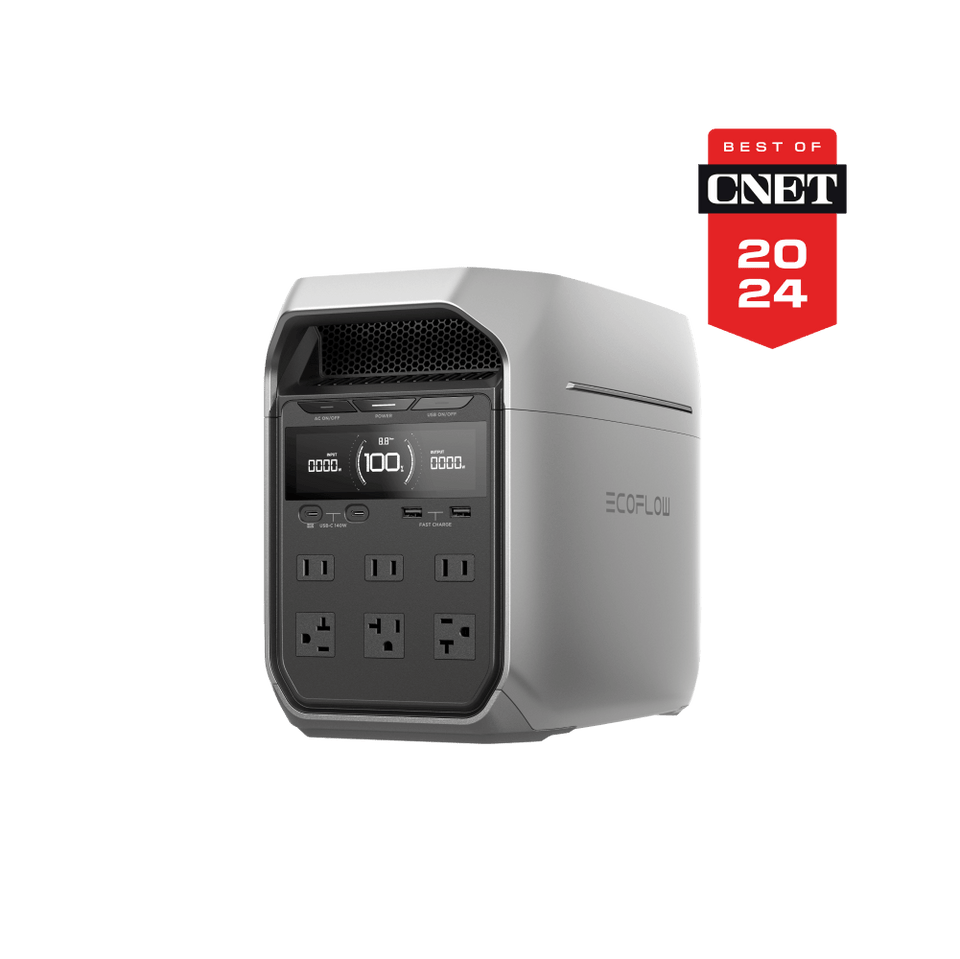
EcoFlow DELTA 3 Plus
Packs 1,000W dual-MPPT solar charging, sub-1-hour AC replenishment, and a sub-10 ms HID-capable UPS into a 27.6 lb chassis, making it more versatile than non-Plus 1kWh units.
Frequently Asked Questions
What is the real difference between an inverter generator and a battery 'solar generator'?+
An inverter generator burns gasoline or propane in an engine, converts mechanical rotation to DC, and uses an inverter module to output ultra-clean (<3% THD) AC power—so it must run strictly outdoors due to carbon monoxide. A battery power station ('solar generator') stores electricity in LiFePO4 cells and converts it via a pure sine wave DC-to-AC inverter with zero exhaust for indoor use.
Can I recharge my portable power station using a conventional open-frame gas generator?+
Often not reliably. Conventional fixed-RPM (3,600 RPM) open-frame generators commonly produce 15%–25% Total Harmonic Distortion (THD) and frequency swings, which cause sensitive power station AC chargers to reject grid input or trip repeatedly. A <3% THD inverter fuel generator—or direct DC hybrid charging—is strongly recommended.
Which handles heavy well pumps, sump pumps, or 30A RV air conditioners better?+
Fuel generators (both inverter and open-frame models) generally deliver more sustained high-wattage output per dollar for multi-day storms. However, 120V/240V battery power stations with high surge inverters—like the Jackery Explorer 5000 Plus (7,200W continuous / 14,400W surge) or EcoFlow DELTA Pro Ultra (7,200W / 10,800W surge)—also handle major inductive startups cleanly without noise or fuel fumes.
Is it safe to plug an inverter or generator straight into a household wall outlet during a blackout?+
Never. Using a double-ended male 'suicide cord' to backfeed a household receptacle creates severe electrocution and fire hazards for you and utility lineworkers, violating the National Electrical Code (NFPA 70). Always isolate circuits with dedicated extension cords, a listed manual transfer switch, or a panel interlock installed by a licensed electrician.
Sources & Technical References
- View Source →[1]Technical & Safety StandardNational Fire Protection Association (NFPA)Verified 2026-11-24NFPA 70 National Electrical Code (NEC) Transfer Equipment & Standby Power Overview
Governs transfer switches, panel interlocks, and prohibition of unsafe backfeeding on US residential electrical panels.
- View Source →[2]Manufacturer SpecificationEcoFlow US OfficialVerified 2026-11-25EcoFlow Smart Generator (Dual Fuel) Specifications
1,800W gasoline / 1,600W LPG hybrid DC/AC backup generator with automatic DC battery charging trigger for DELTA Pro and DELTA 2 ecosystems.
- View Source →[3]Manufacturer SpecificationBLUETTI US OfficialVerified 2026-11-24BLUETTI AC200L Portable Power Station Official Specifications
2,048Wh LFP, 2,400W continuous AC, 3,600W Power Lifting mode, NEMA TT-30R + 48V/8A DC RV port, 1,200W solar (12-145V).
- View Source →[4]Manufacturer SpecificationEcoFlow US OfficialVerified 2026-11-24EcoFlow DELTA Pro Ultra Product Page & Specifications
Official North American 120V/240V split-phase inverter and 6,144Wh LiFePO4 battery module specs.
- View Source →[5]Manufacturer SpecificationJackery US OfficialVerified 2026-11-24Jackery Explorer 5000 Plus Official Product Specifications
5,040Wh LFP capacity, 7,200W/14,400W AC specs, High-PV (135-450V) and Low-PV (16-60V) limits, and warranty terms.