What Size Solar Generator Do You Need for a House? (2026 Whole-Home Sizing Reality)
Whole-house solar generator sizing reality: compare 3 US backup tiers (1.5kWh 120V, 6kWh 240V, 30kWh+ High-PV), motor LRA surge math, and NEC transfer rules.
No single 2,000W 120V portable power station can run a whole US house. True whole-home sizing spans three realistic tiers: 1.5kWh–2kWh 120V essentials only, 3.8kWh–6kWh 120V/240V selective transfer circuits (Anker SOLIX F3800, Jackery 5000 Plus, or EcoFlow DELTA Pro Ultra), and 15kWh–30kWh+ High-PV multi-day stacks. Account for 78%–88% AC efficiency, motor LRA startup surges, and mandatory UL-listed transfer equipment installed by a licensed electrician per NFPA 70 (NEC).

One of the most persistent—and expensive—myths circulating in backup power guides is the claim that “a 2,000W solar generator is enough to power a typical whole house.”
Put that claim to the test during a real American blackout and three physical bottlenecks hit immediately:
- The
120Vvs.240VWall: Standard2,000Wunits output120Vsingle-phase power only. They cannot energize240Vdouble-pole home circuits—meaning zero power for submersible well pumps, central HVAC air handlers/condensers, electric water heaters, or electric dryers. - The Motor Surge Gap: Even on
120Vor240Vloads, inductive motors demand massive Locked Rotor Amps (LRA) for a fraction of a second on startup—often3×to5×their running wattage. - The Energy Storage Chasm: A
2,048Whbattery holds barely1.6–1.8kWhof usable AC energy, whereas an unthrottled US household consumes25–30kWhper day (roughly15×more energy).
Sizing residential backup honestly means retiring the marketing phrase “whole house” unless you match continuous watts, LRA startup surge, 120V/240V split-phase architecture, and multi-day kWh storage to one of three realistic US backup tiers.
Why Inverter Wattage Alone Never Equals Whole-Home Capability
Before picking battery capacity, separate power (Watts), surge (LRA), voltage phase (120V vs 240V), and stored energy (Watt-Hours):
- Running Watts vs. Motor
LRAStartup Surge: Solid-state gear (Wi-Firouter25W,LEDlights50W) and resistive heaters (1,200Wcoffee maker) draw steady watts with negligible surge. Inductive motors behave violently: a1/2 HP120Vsump pump runs at~800Wyet surges~2,200W, while a1 HP240Vsubmersible well pump runs near~1,800Wyet spikes~4,800WLRA at startup. Traditional3-toncentral AC compressors frequently spike10,000W–15,000W+unless equipped with an aftermarket soft-start module. Look closely at manufacturer datasheets: resistive “boost” modes (Power Lifting,SurgePad,X-Boost) lower output voltage strictly for simple heating elements and cannot start high-surge motors (see Continuous vs. Surge Output Explained). 78%–88%Usable AC Losses & Dual-Voltage Idle Drain: A battery labeled5,040Whor3,840Whnever delivers100%to wall outlets. Inverter switching heat, battery cutoff margins, and 24/7 standby idle draw reduce delivered AC energy to~78%–88%under moderate loads—and even less under tiny overnight loads on massive inverters. In CNET Labs’ standardized cyclic refrigerator benchmark, the single-voltage2,048WhBLUETTI AC200L ran>29 hours(77.76%round-trip efficiency)—actually beating the3,840Whdual-voltage Anker SOLIX F3800 (~25.68 hours) because theF3800’s6,000Wsplit-phase inverter burns higher standby overhead.- Resistive Heat Kills Battery Reserves: Never expect batteries alone to substitute for electric resistance heating. A single
1,500Wspace heater consumes4,500Whin 3 hours—wiping out an entire5kWhbattery before bedtime. Stick to natural gas/propane furnace blowers (120V~400W–600Wblower) or efficient mini-splits where backup heating is essential.
Walk through your specific critical circuits in our Appliance Wattage Calculator before choosing a tier below.
The 3 Realistic US Home Backup Tiers
| Home Backup Tier | Target Battery Range & Usable AC (78%–88%) |
Inverter Output & Voltage | What It Realistically Runs | Representative Verified Hardware |
|---|---|---|---|---|
Tier 1: 120V Essentials Only |
1.5kWh–2.1kWh (~1.2–1.8kWh usable) |
2,200W–2,400W (120V only) |
Kitchen fridge (~24–30h), chest freezer, Wi-Fi router, LEDs, CPAP, microwave bursts; zero 240V. |
BLUETTI AC200L, Jackery Explorer 2000 v2, Pecron E1500LFP |
Tier 2: Selective 120V/240V Transfer Circuits |
3.8kWh–6.1kWh (~3.0–5.4kWh usable) |
6,000W–7,200W continuous (9,000W–14,400W surge, 120V/240V) |
Selected panel circuits: fridge, freezer, gas furnace blower, lighting, plus intermittent 240V well pump or single appliance (with load management). |
Anker SOLIX F3800, Jackery Explorer 5000 Plus, EcoFlow DELTA Pro Ultra |
| Tier 3: Multi-Day Expanded Stack + High-PV | 15kWh–30kWh+ (~11.7–26.4kWh+ usable) |
7,200W single (14.4kW–21.6kW multi-inverter parallel) |
Multi-day selective whole-home circuits, 240V well pump, soft-started mini-split/HVAC, laundry bursts, refilled daily via 4,000W–5,600W High-PV. |
EcoFlow DELTA Pro Ultra (3–5 × 6.1kWh, 5.6kW PV), Explorer 5000 Plus (3–5 × 5kWh, 4kW PV) |
Tier 1 (1.5kWh–2kWh): Apartment & Essential-Cord Backup
Ideal for renters, urban condos, and short 8–24 hour storms where heating/water remain municipal (120V). You roll a 39.5 lb Jackery Explorer 2000 v2 or 62.4 lb BLUETTI AC200L near the kitchen, plug the refrigerator, chest freezer, and router straight into 120V outlets using heavy-gauge indoor cords (12 AWG), and preserve 1,600–1,800Wh usable AC for food spoilage protection without hiring an electrician.
Tier 2 (3.8kWh–6kWh): 120V/240V Selective Circuit Panel Backup
The minimum threshold for rural homes with 240V submersible well pumps, hardwired gas/oil furnace air handlers, or multi-circuit kitchen/office backup. Three units anchor this tier:
- Anker SOLIX F3800 (
3,840Wh,6,000W/9,000Wsurge): Lowest entry price around~$2,999street with built-inNEMA L14-30Rand14-50R240Vreceptacles, though original F3800 solar input caps at60VVoc (F3800 Plusupgrades to165V/3,200W). - Jackery Explorer 5000 Plus (
5,040Wh,7,200W/14,400Wsurge): Massive14,400Wpublished surge headroom handles tough240Vwell-pump LRA starts cleanly around~$2,999base street price, while adding4,000WHigh-PV (135V–450V) and0 msOnline UPS direct outlets. - EcoFlow DELTA Pro Ultra (
6,144Wh,7,200W/10,800Wsurge): Modular split stack (70 lbinverter +111.8 lbbattery) offering-4°Fautomated self-heating and5,600Wsolar (80V–450V+30V–150V), though base pricing sits higher (~$4,599street).
Note the runtime caveat in Tier 2: 3.8kWh–6kWh carries essential 120V circuits plus occasional 240V well-pump refills for roughly 24–36 hours—not continuous central air conditioning.
Tier 3 (15kWh–30kWh+ + High-PV): True Multi-Day Home Resilience
To bridge multi-day storms or run higher-duty 240V circuits without babysitting every breaker, you need modular expansion batteries backed by high-voltage rooftop or ground solar arrays:
- Battery Autonomy: Three to five expansion modules scale the
DELTA Pro Ultra(18.4kWh–30.7kWhper inverter, up to90kWhacross3parallel inverters /21.6kW) orExplorer 5000 Plus(15.1kWh–30.2kWhper unit, up to60.5kWhacross2units /14.4kW). - Solar Replenishment Match: A
20kWhstack needs4,000W–5,600Wof High-PV (80V–450V/135V–450V) solar to recover~10–14kWh/dayeven in3.5NREL winter Peak Sun Hours. Without High-PV solar or a secondary dual-fuel inverter generator, a20kWhbattery depleted by an HVAC heat pump simply sits empty until utility power returns.
Mandatory NEC Compliance: Transfer Switches, Interlocks & MWBC Safety
Critical Electrical Code Notice: Never connect any portable power station or
240Vbattery backup stack to residential wall receptacles, dryer outlets, or main service panels using a double-ended male plug (“suicide cord”) or improvised DIY wiring.
Under NFPA 70 (National Electrical Code / NEC) and local US Authority Having Jurisdiction (AHJ) permitting rules:
- Use Only UL-Listed Transfer Equipment: Permanent or semi-permanent panel backup requires a UL-listed manual transfer switch (
6–10circuit Reliance/ProTran style viaL14-30inlet), a listed main-panel mechanical interlock kit, or a brand’s Smart Home Panel / Smart Transfer Switch. These mechanisms physically prevent your battery from backfeeding utility lines where it could electrocute lineworkers or destroy equipment when utility power snaps back. - Hire a Licensed Electrician: Only a licensed US electrician should evaluate your breaker box, verify neutral-ground bonding behavior per the manufacturer’s manual and NEC rules, and inspect for Multi-Wire Branch Circuits (
MWBC)—older shared-neutral circuits that can overheat dangerously if energized improperly by single-phase120Vpower. Review 120V vs. 240V Home Backup Explained and Transfer Equipment & Professional Installation before requesting contractor quotes.
Bottom-Line Sizing Checklist
- List Only Critical Outage Circuits (
fridge,freezer,Wi-Fi,medical,gas heat,well pump) and sum totalWh/day+ highestLRAmotor surge in our Wattage Calculator. - Divide Daily
Whby0.82(~78%–88%usable AC midpoint) and add~40W–75W × 24hif running a large240Vinverter continuously. - Multiply by Desired Cloudy Days Without Sun (
1.5–3×), or verify that a30AL14-30manual transfer switch plus a compact outdoor inverter generator can replenish a smaller3.8kWh–6kWhbattery cleanly during prolonged winter storms.
Models Discussed in This Article
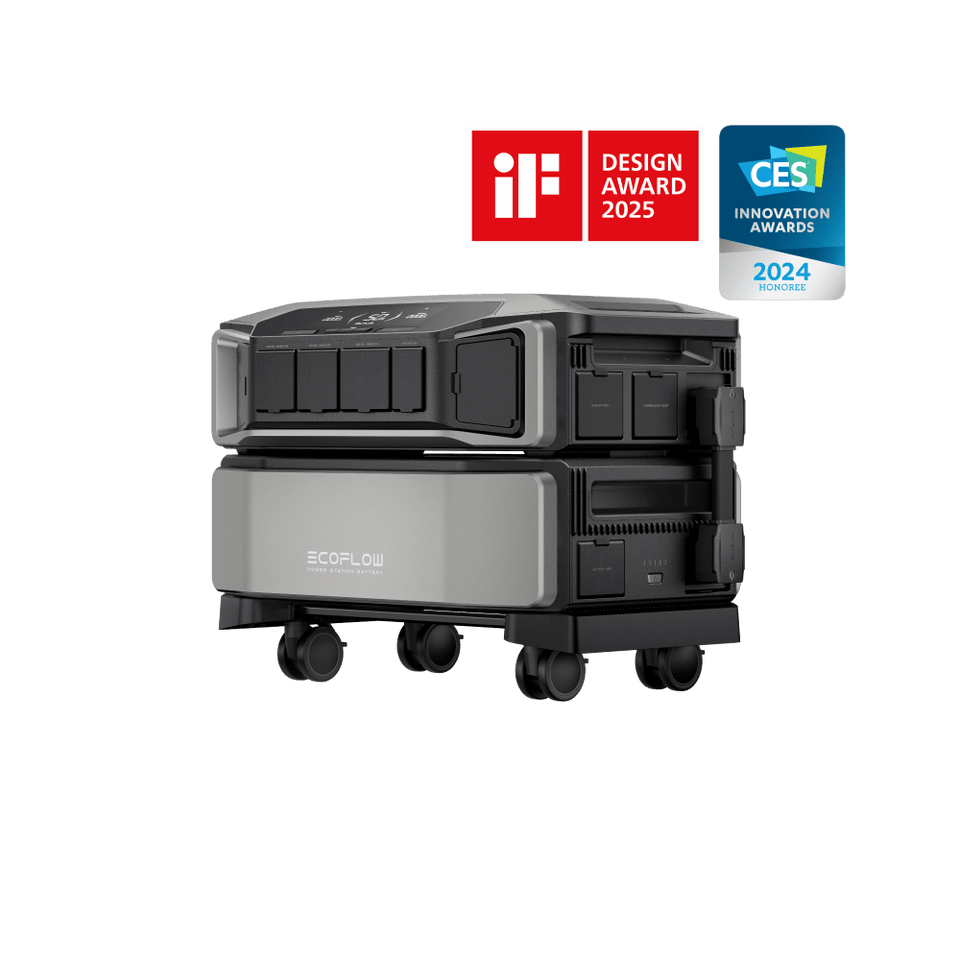
EcoFlow DELTA Pro Ultra
Built specifically for homeowners seeking high-voltage solar input (up to 5,600W) and modular 6kWh-per-stack scaling, though total kit cost and modular footprint exceed casual portable needs.

Anker SOLIX F3800
One of the most approachable plug-and-play 120V/240V wheeled units thanks to built-in NEMA 14-50R and L14-30R ports, though high idle overhead on light loads and the 60V solar cap (on the original non-Plus SKU) require careful sizing.
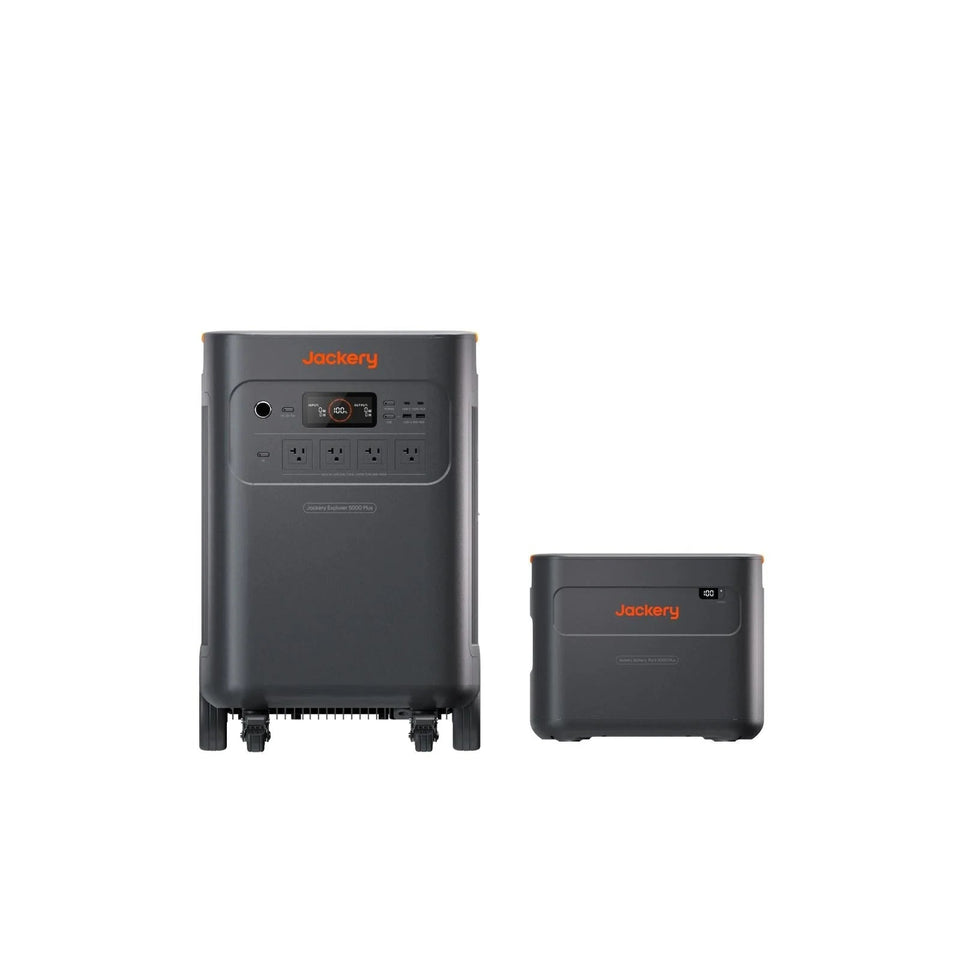
Jackery Explorer 5000 Plus
Combines a 5,040Wh LFP core, 7,200W split-phase output, 14,400W published surge headroom, and both High-PV (135–450V) and Low-PV solar inputs in a single wheeled chassis.
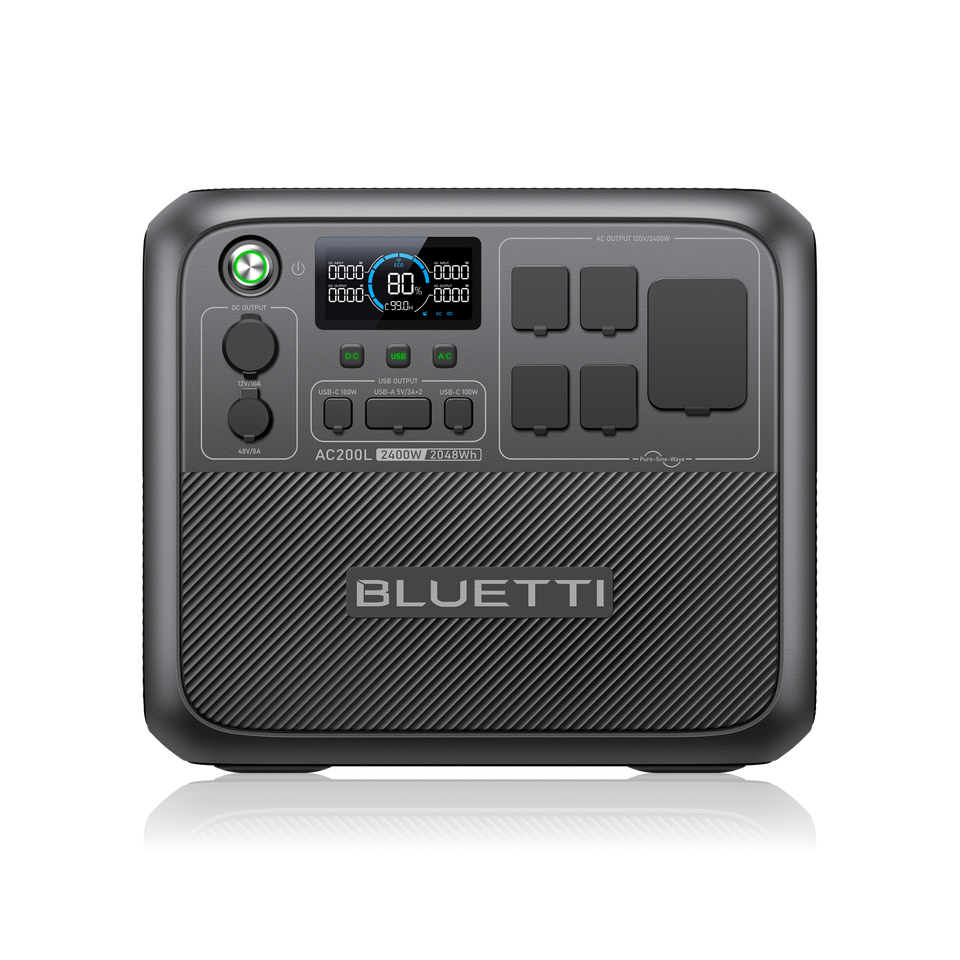
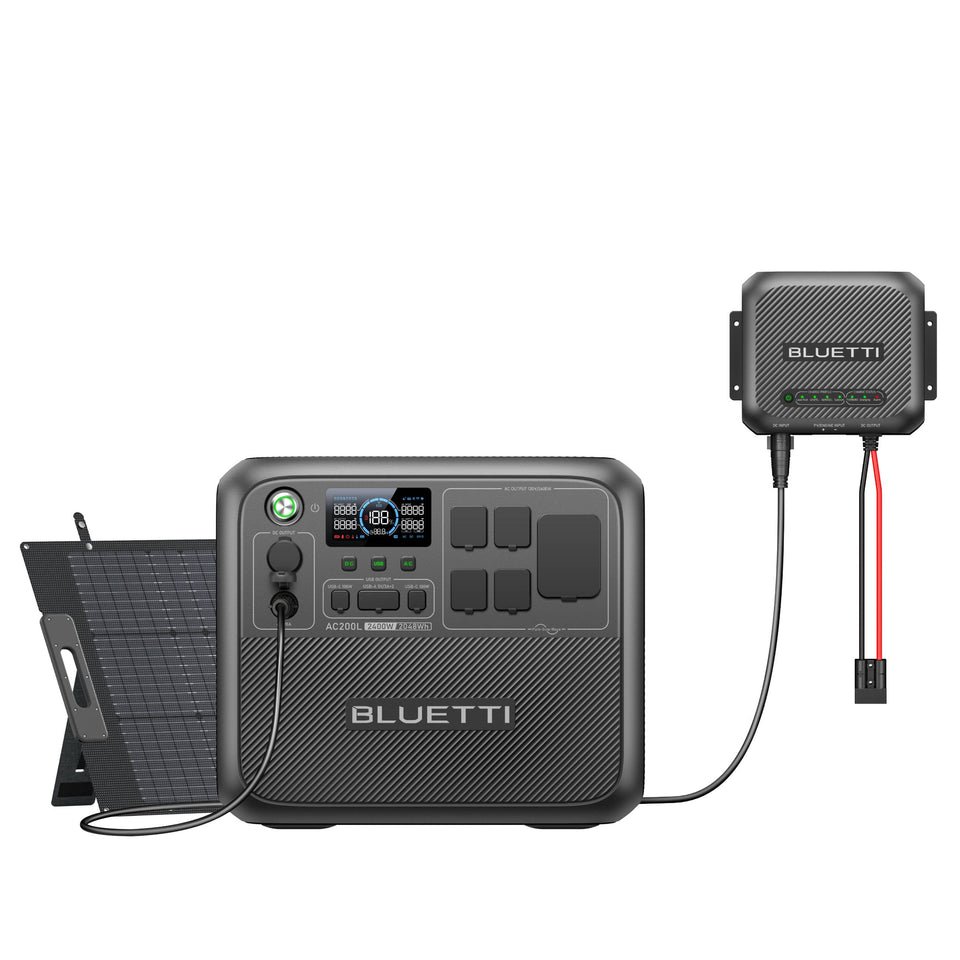
BLUETTI AC200L
Combines a high-efficiency 2,048Wh expandable platform, 1,200W high-voltage solar input (12–145V), and dedicated 30A TT-30R + 48V DC RV outputs at strong street pricing, trading away light weight and built-in wheels.
Frequently Asked Questions
Can a 2,000W solar generator really power a whole house?+
No. First, standard 2,000W–2,400W units output 120V only, making it physically impossible to power 240V well pumps, central HVAC, electric water heaters, or clothes dryers. Second, a 2,048Wh battery yields roughly 1,600–1,800Wh usable AC—lasting about one day for a refrigerator and Wi-Fi router, whereas an average US home burns 25–30 kWh daily.
How do I know if my solar generator can start my central air conditioner or well pump?+
Check the appliance nameplate or HVAC condenser tag for Locked Rotor Amps (LRA). Multiply LRA by 240V to estimate brief startup demand—a 1 HP submersible well pump (~1,800W running) commonly surges ~4,800W, while older 3-ton central AC compressors can spike past 10,000W–15,000W unless fitted with an HVAC soft-starter by a technician.
Do I need an electrician to connect a solar generator to my home breaker panel?+
Yes. Under NFPA 70 (National Electrical Code / NEC), connecting any 120V or 240V backup battery to building wiring requires a UL-listed transfer switch, mechanical panel interlock kit, or smart home panel installed by a licensed electrician. Never backfeed household wall or dryer outlets with double-ended male cords.
Why does a 6,000W 240V battery sometimes drain faster on just a fridge than a smaller 2,048Wh 120V unit?+
High-wattage split-phase inverters consume substantial internal idle power whenever switched on 24/7. In CNET Labs' standardized refrigerator runtime tests, the 2,048Wh 120V BLUETTI AC200L ran >29 hours (77.76% round-trip efficiency), outlasting the larger 3,840Wh 240V Anker SOLIX F3800 (~25.68 hours) because of F3800's dual-voltage inverter overhead.
Sources & Technical References
- View Source →[1]Technical & Safety StandardNational Fire Protection Association (NFPA)Verified 2026-11-24NFPA 70 National Electrical Code (NEC) Transfer Equipment & Standby Power Overview
Governs transfer switches, panel interlocks, and prohibition of unsafe backfeeding on US residential electrical panels.
- View Source →[2]Manufacturer SpecificationEcoFlow US OfficialVerified 2026-11-24EcoFlow DELTA Pro Ultra Product Page & Specifications
Official North American 120V/240V split-phase inverter and 6,144Wh LiFePO4 battery module specs.
- View Source →[3]Manufacturer SpecificationAnker SOLIX US OfficialVerified 2026-11-24Anker SOLIX F3800 Portable Power Station Official Specifications
North American model specs including NEMA 14-50R, L14-30R, 6,000W output, 3,840Wh capacity, and 11-60V dual solar input.
- View Source →[4]Manufacturer SpecificationJackery US OfficialVerified 2026-11-24Jackery Explorer 5000 Plus Official Product Specifications
5,040Wh LFP capacity, 7,200W/14,400W AC specs, High-PV (135-450V) and Low-PV (16-60V) limits, and warranty terms.
- View Source →[5]Third-Party Independent ReviewCNETVerified 2026-11-24CNET Portable Power Station Lab Efficiency & Refrigerator Runtime Benchmarks
Documents standardized refrigerator runtime and round-trip efficiency testing including BLUETTI AC200L (77.76% RTE, >29h fridge test) and Anker SOLIX F3800 (~25.68h fridge stress runtime due to dual-voltage inverter overhead).