EcoFlow DELTA Pro Ultra vs. Anker SOLIX F3800 (2026): 240V Home Backup Matchup
Compare EcoFlow DELTA Pro Ultra and Anker SOLIX F3800 across 240V output, modular vs wheeled weight, 450V vs 60V solar limits, self-heating, and street price.
Both the EcoFlow DELTA Pro Ultra and Anker SOLIX F3800 provide native 120V/240V split-phase home backup with 5-year US warranties, yet they serve different budgets and solar setups. Choose the EcoFlow DELTA Pro Ultra (~$4,599 kit street) for 6,144Wh base capacity, 7,200W output, split-module lifting weight (70 lb inverter + 111.8 lb battery), 5,600W dual MPPT solar (up to 450V Voc), and -4°F automatic cell heating. Choose the Anker SOLIX F3800 (~$2,999 street) for ~$1,600 lower upfront entry cost, direct NEMA 14-50R and L14-30R ports on one wheeled unit, and 3,840Wh capacity if 60V portable solar suffices.
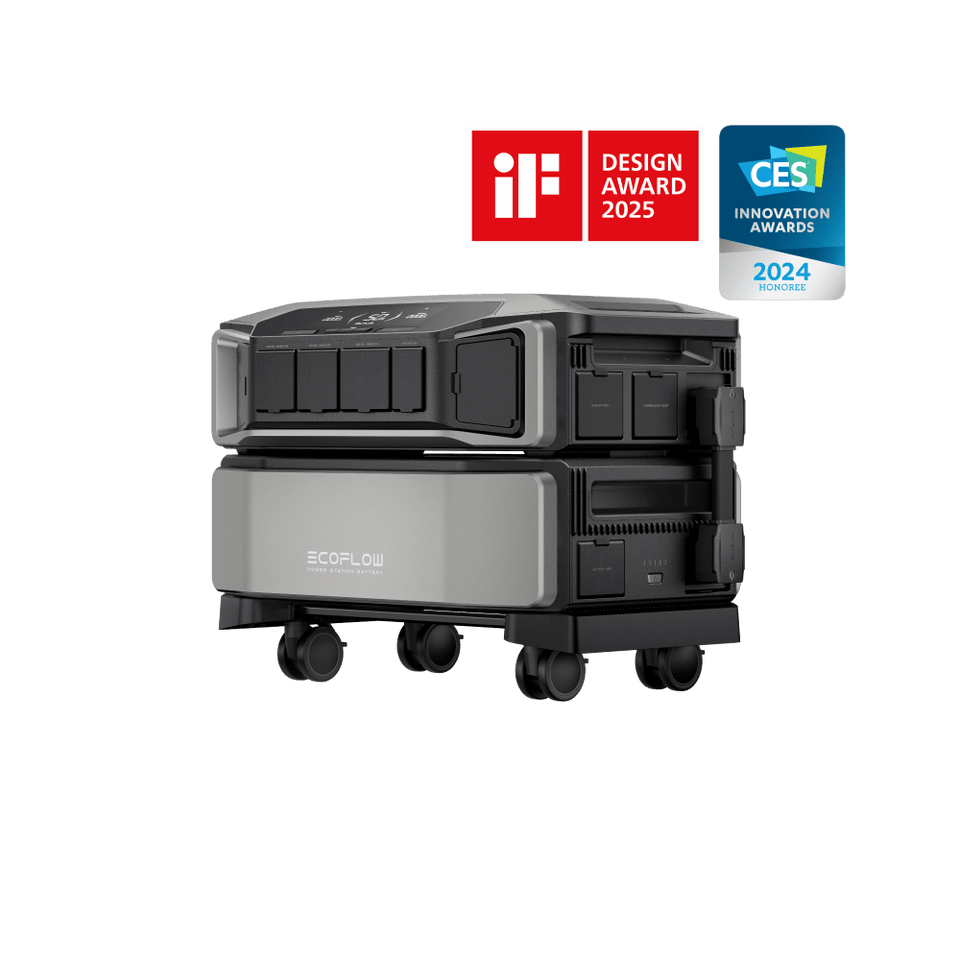

Technical Specifications Comparison
| Specification | EcoFlow DELTA Pro Ultra | Anker SOLIX F3800 |
|---|---|---|
| Hardware Visual | | |
| Battery Capacity | 6,144 Wh (LiFePO4 (LFP)) | 3,840 Wh (LiFePO4 (LFP)) |
| Continuous / Surge AC | 7,200W / 10,800W | 6,000W / 9,000W |
| AC Output Voltage | 120V / 240V Split-Phase | 120V / 240V Split-Phase |
| Solar Input & Voc | 5,600W (High-PV: 80V–450V Voc | Low-PV: 30V–150V Voc) | 2,400W (11V–60V Voc per dual XT60 port (Note: F3800 Plus expands to 11V–165V / 3,200W)) |
| Weight & Portability | 181.8 lbs — Modular split weight: ~70 lbs (inverter) + ~111.8 lbs (1 × 6,144Wh battery) | 132.3 lbs — Single-chassis wheeled suitcase unit (~60 kg) with telescopic handle |
| 3rd-Party Usable AC Wh | Not Independently Verified | Not Independently Verified |
| Typical Street / $/Rated Wh | $4,599 ($0.75/Wh) | $2,999 ($0.78/Wh) |
Built specifically for homeowners seeking high-voltage solar input (up to 5,600W) and modular 6kWh-per-stack scaling, though total kit cost and modular footprint exceed casual portable needs.
One of the most approachable plug-and-play 120V/240V wheeled units thanks to built-in NEMA 14-50R and L14-30R ports, though high idle overhead on light loads and the 60V solar cap (on the original non-Plus SKU) require careful sizing.
Product Overview
The EcoFlow DELTA Pro Ultra and Anker SOLIX F3800 sit at the center of residential split-phase backup shopping in the US. Both utilize LiFePO4 (LFP) chemistry with 5-year manufacturer warranties and native 120V/240V output, yet they target different buyer budgets and installation environments. EcoFlow’s Starter Kit (~$4,599 street / $5,799 MSRP) combines a 7,200W inverter head with a separate 6,144Wh battery module, while Anker’s F3800 (~$2,999 street / $3,999 MSRP) packs a 6,000W inverter and 3,840Wh battery into one wheeled 132.3 lb suitcase.
Key Differences
- Capacity & Street Cost per Wh: DELTA Pro Ultra delivers
6,144Wh(~$0.75/rated What$4,599street) and expands to30.72kWhper inverter (90kWhacross three inverters). Anker F3800 starts smaller at3,840Wh(~$0.78/rated What$2,999street) and expands to26.88kWhper unit (53.76kWhacross two parallel units). - Solar Input & Voltage Headroom: EcoFlow supports
5,600Wsolar across dual MPPT inputs (80V–450V VocHigh-PV4,000W+30V–150V VocLow-PV1,600W). The original Anker F3800 caps solar at2,400Wand11V–60V Voc(note the newerF3800 Plusupgrades solar to3,200W/165V Voc). - 240V Port Layout: Anker mounts both a
NEMA 14-50RandNEMA L14-30Rright on the single chassis, making EV emergency range top-offs and manual inlet cord connections straightforward. EcoFlow providesL14-30R,L6-30R, and its Smart Home Panel 2 port. - Weight Ergonomics & Cold Garages: Moving the
132.3 lbsingle-piece F3800 over steps requires two people, whereas EcoFlow splits181.8 lbsinto a~70 lbinverter and~111.8 lbbattery module. EcoFlow also includes automatic self-heating for charging down to-4°F(-20°C), while F3800 locks out charging below32°F(0°C).
Which Specifications Matter & Real-World Effects
- Inverter Idle Draw on Light Outage Loads: CNET’s standardized testing recorded
~25.68 hoursof cyclic refrigerator runtime on the3,840WhAnker SOLIX F3800—demonstrating how a6,000Wdual-voltage inverter consumes standby power continuously when powering light intermittent120Vappliances. Neither unit should be purchased solely to run one150Wkitchen fridge unless expanded or paired with solar. - UPS Latency (
0 msvs<20 ms): EcoFlow DELTA Pro Ultra provides0 msOnline UPS on supported ports (<20 msvia Smart Home Panel 2), whereas Anker F3800 specifies<20 msautomatic backup on designated 120V UPS bypass outlets. - Surge Ratings: EcoFlow rates
10,800Wpeak surge versus9,000Won the F3800 (neither datasheet specifies millisecond surge duration, so verify motor locked-rotor amps with an electrician).
Best Use Cases
- EcoFlow DELTA Pro Ultra excels for: Multi-day whole-circuit residential backup with Smart Home Panel 2, off-grid cabins using rigid
80–450Vsolar arrays, and northern garages below freezing. - Anker SOLIX F3800 excels for: Budget-conscious
240Vpreparedness around$3,000, emergency EV charging (NEMA 14-50R), and flat-ground garage-to-inlet rolling via its telescoping suitcase handle.
Advantages & Trade-offs
Picking solely on Anker’s lower $2,999 entry price overlooks its smaller 3,840Wh base battery, 60V solar limit on the non-Plus SKU, and lack of sub-freezing cell heating. Conversely, picking EcoFlow solely on 7,200W / 5,600W specs costs roughly $1,600 more before adding Smart Home Panel 2 hardware and licensed electrician installation. Match the architecture to whether your outage plan relies on high-voltage solar arrays (EcoFlow) or straightforward wheeled 240V access (Anker).
Evidence Supporting the Conclusion
Official EcoFlow manuals (80–450V High-PV, -4°F heating, 0 ms Online UPS) and Anker SOLIX specifications (11–60V on F3800 vs 11–165V on F3800 Plus, 14-50R/L14-30R ports) define the hardware gap, while CNET’s refrigerator endurance test underscores real-world dual-voltage inverter idle consumption. Review 120V vs. 240V Home Backup Explained and consult a licensed electrician before integrating either unit with residential wiring.
Final Decision Matrix
- You plan to connect high-voltage rigid solar strings (80V–450V High-PV, up to 5,600W total solar)
- You store backup batteries in an unheated cold-climate garage requiring automatic -4°F self-heating
- You want 6,144Wh starting capacity, 7,200W continuous output, 0 ms Online UPS ports, and modular split lifting weights
- You want native 120V/240V backup with direct NEMA 14-50R and L14-30R ports around $2,999 street pricing
- You want a single wheeled suitcase chassis without stacking separate inverter and battery cabinets
- Your solar needs fit within 2,400W / 11V–60V Voc (or you upgrade to the F3800 Plus for 165V solar)
Frequently Asked Questions
Why does the EcoFlow DELTA Pro Ultra cost roughly $1,600 more than the Anker SOLIX F3800?+
The EcoFlow Starter Kit includes 60% more base battery capacity (6,144Wh vs 3,840Wh), a larger 7,200W inverter (vs 6,000W), more than double the solar capacity (5,600W up to 450V Voc vs 2,400W at 60V Voc), and automatic sub-freezing battery self-heating.
Can the Anker SOLIX F3800 run residential rooftop solar panels directly?+
Only if your panel configuration stays within the original F3800's 11V–60V Voc limit per XT60 input. High-voltage rooftop strings require either the newer Anker SOLIX F3800 Plus (11V–165V Voc) or the EcoFlow DELTA Pro Ultra (80V–450V High-PV).
Do either of these systems automatically back up my entire breaker panel out of the box?+
No. Both require listed transfer equipment—such as a manual transfer inlet, interlock, EcoFlow Smart Home Panel 2, or Anker Home Power Panel—installed by a licensed electrician in compliance with NFPA 70 / NEC.
Sources & Technical References
- View Source →[1]Manufacturer SpecificationEcoFlow US OfficialVerified 2026-11-24EcoFlow DELTA Pro Ultra Product Page & Specifications
Official North American 120V/240V split-phase inverter and 6,144Wh LiFePO4 battery module specs.
- View Source →[2]Manufacturer User ManualEcoFlow Support DocumentationVerified 2026-11-24EcoFlow DELTA Pro Ultra User Manual & Technical Datasheet
Documents High-PV (80-450V, 15A, 4,000W) and Low-PV (30-150V, 15A, 1,600W) limits, operating temps, and UPS switching behavior.
- View Source →[3]Manufacturer SpecificationAnker SOLIX US OfficialVerified 2026-11-24Anker SOLIX F3800 Portable Power Station Official Specifications
North American model specs including NEMA 14-50R, L14-30R, 6,000W output, 3,840Wh capacity, and 11-60V dual solar input.
- View Source →[4]Manufacturer SpecificationAnker SOLIX US OfficialVerified 2026-11-24Anker SOLIX F3800 Plus Official Product Page
Successor revision increasing PV voltage range up to 165V and solar input to 3,200W.
- View Source →[5]Third-Party Independent ReviewCNETVerified 2026-11-24CNET Portable Power Station Lab Efficiency & Refrigerator Runtime Benchmarks
Documents standardized refrigerator runtime and round-trip efficiency testing including BLUETTI AC200L (77.76% RTE, >29h fridge test) and Anker SOLIX F3800 (~25.68h fridge stress runtime due to dual-voltage inverter overhead).
- View Source →[6]Technical & Safety StandardNational Fire Protection Association (NFPA)Verified 2026-11-24NFPA 70 National Electrical Code (NEC) Transfer Equipment & Standby Power Overview
Governs transfer switches, panel interlocks, and prohibition of unsafe backfeeding on US residential electrical panels.