Best 400W Portable Solar Panels (2026): Folding vs. Rigid Voc Matching Guide
Compare 400W ETFE folding solar panels vs. rigid 400W modules on Voc voltage limits (16–165V MPPT), port specs, weight, cost per watt, and real 240–340W yield.
Folding 400W ETFE suitcase panels weigh 28–42 lbs with 44V–48V Voc, matching 60V–150V MPPT ports on units like the BLUETTI AC200L, Pecron E1500LFP, and EcoFlow DELTA 3 Plus, while Jackery's 2000 v2 caps dual DC8020 ports at 400W total (16–60V). Rigid 400W home panels weigh 45–50 lbs at roughly one-third the cost per watt. Expect 240W–340W real midday field yield.
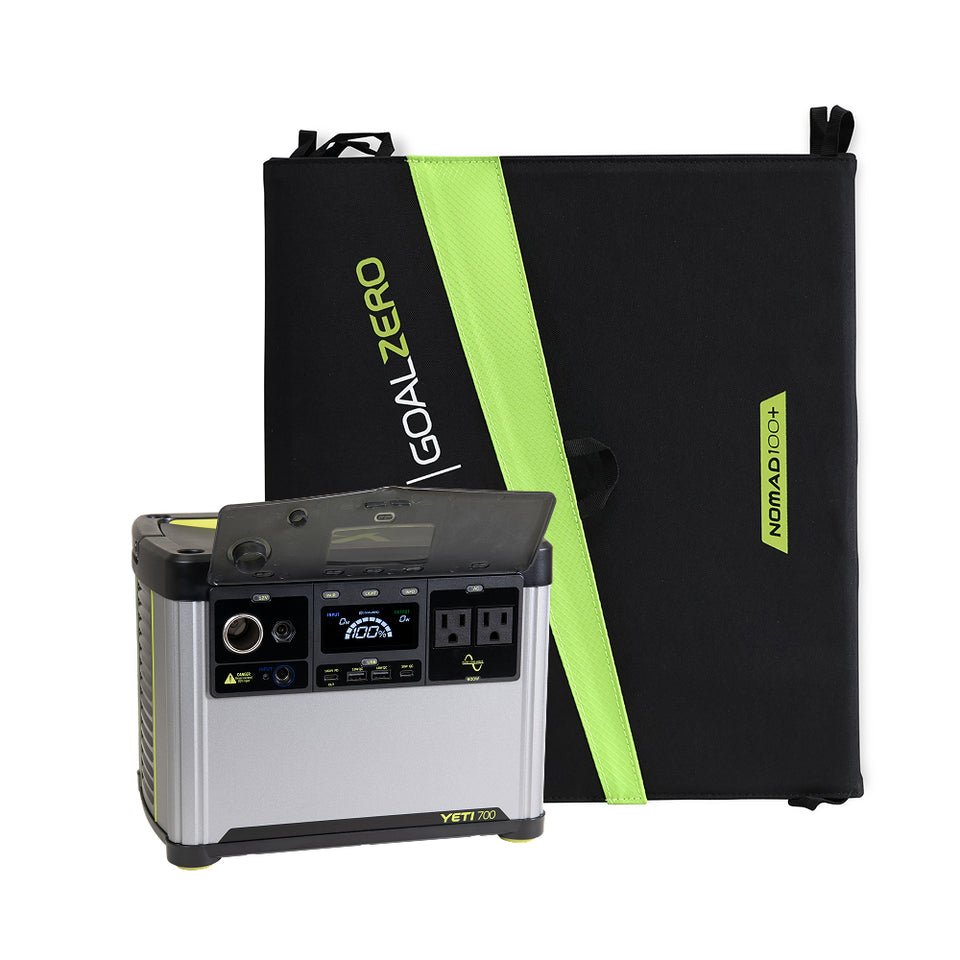
Buyers shopping for a 400W solar panel rarely run into trouble because a panel lacks watts. Most headaches start when a 400W folding suitcase arrives at camp and either trips a power station’s voltage window, hits a proprietary connector bottleneck, or produces 275W instead of 400W at noon.
Before spending $600 to $1,050 on a folding 400W solar blanket—or roughly $180 to $420 on a rigid residential 400W module—you have to evaluate two completely separate engineering questions: physical form factor (ETFE folding portability vs. rigid glass longevity) and open-circuit voltage (Voc) compatibility with your battery’s MPPT port.
Folding 400W Suitcases vs. Rigid 400W Monocrystalline Panels
Every 400W solar panel uses monocrystalline silicon cells (or N-type TOPCon/PERC variants) rated around 22%–23.5% cell efficiency, yet folding camp panels and rigid home panels are built for opposite jobs.
| Specification | 400W ETFE Folding Suitcase | Rigid 400W Monocrystalline Module |
|---|---|---|
| Typical Weight | ~28–42 lbs (e.g., BLUETTI PV420 ~30.8 lbs; EcoFlow 400W ~35.3 lbs panel / ~41.9 lbs with kickstand case; dual 200W SolarSaga ~28 lbs total) | ~45–50 lbs per rigid tempered-glass aluminum frame (e.g., ~48.1 lbs typical 108-cell module) |
| Deployed Footprint | Multi-panel accordion fold; collapses into ~38” × 26” × 2” carry pack | Fixed ~67.8” × 44.6” × 1.4” rigid slab (won’t fit most sedans) |
| Typical Voc Rating | ~44V–48V Voc (single 400W folding unit) or ~24.8V per 200W pair | ~36V–38V Voc (typical 108-cell) or ~45V–49V (144-cell) |
| Weatherproofing | IP65 to IP68 laminated ETFE polymer; built for rain splashes, not permanent 25-year hail/UV mounting | Tempered low-iron glass + anodized frame; 25-year hail, snow-load, and permanent roof/ground exposure |
| Typical Street Cost / Watt | ~$1.75–$2.50 per watt ($700–$1,000+ retail; 1–2 yr standard warranty) | ~$0.75–$1.40 per watt ($150–$450 typical off-grid/home module; ~1/3 the cost per watt) |
The bottom line on form factor: If you load gear into an SUV, dry-camp in clearings, or deploy solar only during grid outages from a garage shelf, an IP67/IP68 ETFE folding panel (28–42 lbs with integrated kickstand cases) is vastly easier for one person to haul and aim. By contrast, if panels will live mounted on a camper roof, shed rack, or ground array feeding a whole-home battery, rigid 400W panels cost roughly one-third per watt, endure UV and wind far longer, and shed heat more effectively because air circulates beneath the glass frame.
(Note: EcoFlow also markets a lighter 400W portable variant around ~22.5 lbs with lower rigidity; check exact SKU weight and kickstand stability before buying if you camp in gusty terrain.)
Why Open-Circuit Voltage (Voc) Decides Everything
Every portable power station regulates incoming solar power through an MPPT (Maximum Power Point Tracking) charge controller with two rigid boundaries: a minimum start voltage and an absolute maximum Voc ceiling.
Remember the core MPPT safety rule detailed in our Solar Input Limits & MPPT Guide:
- Exceeding maximum
Vocpermanently damages the controller. AndVocrises when panels sit idle in cold morning air. A panel labeled48V Vocat Standard Test Conditions (77°F / 25°C) can climb roughly 10% to 15% (~53V–55V) on a crisp 20°F winter morning before current begins flowing. - Amperage (
A) simply clips—up to the port’s safeIsclimit. If your panel stays safely inside the voltage window, the station pulls only up to its rated amp ceiling. - Series vs. Parallel warning: Wiring two
48V Vocpanels in series doubles voltage to96V Voc(instantly frying any60Vpower station port!). Only high-voltage MPPT inputs (145V–450V) accept multi-panel 400W series strings.
Verified 400W Panel Compatibility Across Real Power Stations
Looking at verified US manufacturer specifications from our database illustrates exactly how differently modern power stations handle a single 400W folding panel (~44V–48V Voc) or rigid 400W module (~37V Voc):
| Power Station Model | Solar Input Limit | Voltage Window (Voc) |
Connector / Max Current | 400W Panel Matching Verdict |
|---|---|---|---|---|
| BLUETTI AC200L (2,048Wh) | 1,200W | 12V–145V |
MC4 adapter / 15A | Effortless match. Accepts 1× 400W (~48V Voc) or 2× 400W in series (~96V Voc, ~800W) with generous cold-morning margin. |
| Anker SOLIX F3800 (3,840Wh) | 2,400W (1,200W × 2) | 11V–60V (Plus: 11–165V) |
Dual XT60 / 25A per port | Single 48V panel per port max on original F3800. Never wire two 48V panels in series on the 60V original F3800; use F3800 Plus (165V) for series strings. |
| EcoFlow DELTA 3 Plus (1,024Wh) | 1,000W (500W × 2) | 11V–60V per port |
Dual XT60i / 15A per port | Clean 1-per-port fit. One ~44V–48V Voc 400W panel fits inside a single 60V XT60i port (and two separate 400W panels can feed both ports independently for ~800W). |
| Pecron E1500LFP (1,536Wh) | 800W (700W + 100W) | GX16MF: 32V–95V / DC5521: 12V–18V |
GX16MF (15A) + DC5521 (7A) | Great match for 44V–48V folders. Unlike single 20V panels (which fail the 32V floor), a 44V–48V 400W folding panel wakes the 700W port cleanly. |
| Jackery Explorer 2000 v2 (2,042Wh) | 400W total cap | 16V–60V |
Dual DC8020 (12A single / 21A dual) | Connector & port ceiling caution. Dual DC8020 inputs cap total solar at 400W. A single 400W MC4 panel needs an adapter and may clip near the 12A single-port ceiling (12A × ~38V Vmp or lower if Vmp is ~32V), whereas 2× SolarSaga 200W (~24.8V Voc) saturate 400W directly. |
| Anker SOLIX C300 (288Wh) | 100W | 11V–28V |
XT60 / 8.2A | Incompatible / Unsafe. Any 37V–48V 400W panel exceeds the 28V Voc ceiling and risks immediate controller failure. |
Why the Jackery Explorer 2000 v2 is a classic edge case: At 39.5 lbs for 2,042Wh, the Explorer 2000 v2 leads its weight class—but its dual DC8020 inputs max out at 400W combined and 12A per individual port (21A combined across both ports). If you plug a single 400W third-party panel operating around 33V Vmp / 12.1A into just one DC8020 port via an MC4-to-DC8020 adapter, that single port tops out around 12A (~360W–400W depending on voltage) and leaves zero room for a second panel. Feeding both DC8020 ports with two matched 200W panels (~24.8V Voc each, ~8A per port) hits the full 400W design envelope smoothly with no adapter hassle.
Real-World Field Yield: Why “400W” Means 240W–340W in Practice
Manufacturer solar brochures often print idealized recharge times assuming a constant 400W from sunrise to sunset. According to solar irradiance modeling from the National Renewable Energy Laboratory (NREL), real-world photovoltaic output drops substantially below nameplate STC ratings because of four cumulative factors:
- Cell Temperature Derating (Biggest Drop): Rated 400W specs assume solar cells are sitting at
77°F (25°C). Under direct summer sunlight, dark ETFE folding panels resting over grass or hot pavement routinely reach125°F–145°F, shaving 10% to 16% off peak voltage and power. - Sun Angle & Tracking Error: Unless you tilt kickstands every 60–90 minutes perpendicular to the sun, off-axis light reflections steal another 10%–20% outside the midday window.
- Atmospheric Haze, Humidity & Thin Cloud Wisps: Even faint high-altitude cirrus haze drops irradiance from
1,000 W/m²down to700–850 W/m². - Cable Drop & MPPT Conversion Overhead: Long 25–30 ft thin extension runs plus internal DC-DC MPPT conversion cost another 4%–8%.
| Sunlight Condition | Typical Field Output from a 400W Panel | Estimated Net Energy Over 5 Peak Sun Hours |
|---|---|---|
| Crisp Cool Spring/Fall Noon (Tilted Perpendicular) | 310W – 340W (~78%–85% of rating) | ~1,450 – 1,650 Wh stored |
| Typical Hot Summer Midday (Grass / Camp Setup) | 240W – 300W (~60%–75% of rating) | ~1,100 – 1,400 Wh stored |
| Bright Overcast / Thin Marine Cloud Cover | 60W – 130W (~15%–33% of rating) | ~300 – 650 Wh stored |
Want to check exact daily recovery hours against your refrigerator or medical backup load? Plug 280W–320W realistic panel output into our Solar Charging Time Estimator rather than 400W, and factor in realistic AC/DC conversion efficiency (78%–88% AC / 88%–93% DC).
How to Pick the Right 400W Folding or Rigid Setup
Before buying a single panel, match your power station and use case to one of these proven hardware tiers:
- Best Folding 400W Choice for 60V–150V Stations (
BLUETTI AC200L,Pecron E1500LFP,DELTA 3 Plus): Look at single-piece IP67/IP68 ETFE suitcases like the BLUETTI PV420 (~30.8 lbs,44.3V Voc, MC4 output) or EcoFlow 400W Portable (~35.3 lbspanel /41.9 lbswith kickstand case,48V Voc, IP68). The PV420’s slightly lower44.3V Vocgives wider cold-morning safety headroom on60V-capped stations like theDELTA 3 Plus, while its30.8 lbweight is easier to carry solo. - Best Modular Choice for Dual-Port or Compact Vehicles (
Jackery 2000 v2, tight hatchback packing): Choose two matched 200W folding panels (~14 lbseach,~21V–25V Voc) wired independently or via parallel Y-adapters rather than wrestling a single 400W panel that spans nearly 8 to 9 feet wide in wind. Splitting into two 200W panels makes solo setup dramatically easier and prevents a single tree branch shadow from killing the entire 400W string. - Best Value for Fixed Cabin, Shed, or Yard Backup (
DELTA Pro Ultra,Jackery 5000 Plus,BLUETTI AC200L): Skip $900+ ETFE suitcases and buy rigid 400W monocrystalline modules (~37V Voc,45–50 lbs, ~$150–$450 per panel depending on retail shipping). On high-voltage inputs like the EcoFlow DELTA Pro Ultra (80V–450VHigh-PV /30V–150VLow-PV) or Jackery Explorer 5000 Plus (135V–450VHigh-PV), rigid panels deliver three times the solar wattage per dollar—provided high-voltage strings are designed and installed safely in compliance with manufacturer manuals and NEC rules.
Field Durability & Wind Safety Checklist
A 400W folding panel opens into a broad 20+ square foot sail. Never leave unanchored folding panels propped on kickstands during gusty afternoons: a sudden 25 mph gust can flip an unsecured 35 lb panel face-down onto gravel, snapping solder tabs inside the cells.
- Stake or weight kickstands: Loop paracord or heavy sandbags through the integrated corner grommets on dirt, sand, or grass.
- Avoid flexing hot ETFE laminates: Let panels cool slightly or fold along designated factory hinges only—never kneel on or bend active cell zones, which causes invisible micro-cracks that degrade output over time.
- Use thick
10 AWGsolar extension runs: Keeping extension cables at10 AWG(MC4) limits voltage drop over 25–30 ft runs when parking your station inside a cool shaded garage or RV compartment (32°F–104°Fsafe battery charging window).
Still deciding which battery station pairs best with your solar goal? Compare top solar-ready models in our Best Solar Generators Guide or read How Long Does It Take to Charge a Power Station With Solar?.
Models Discussed in This Article
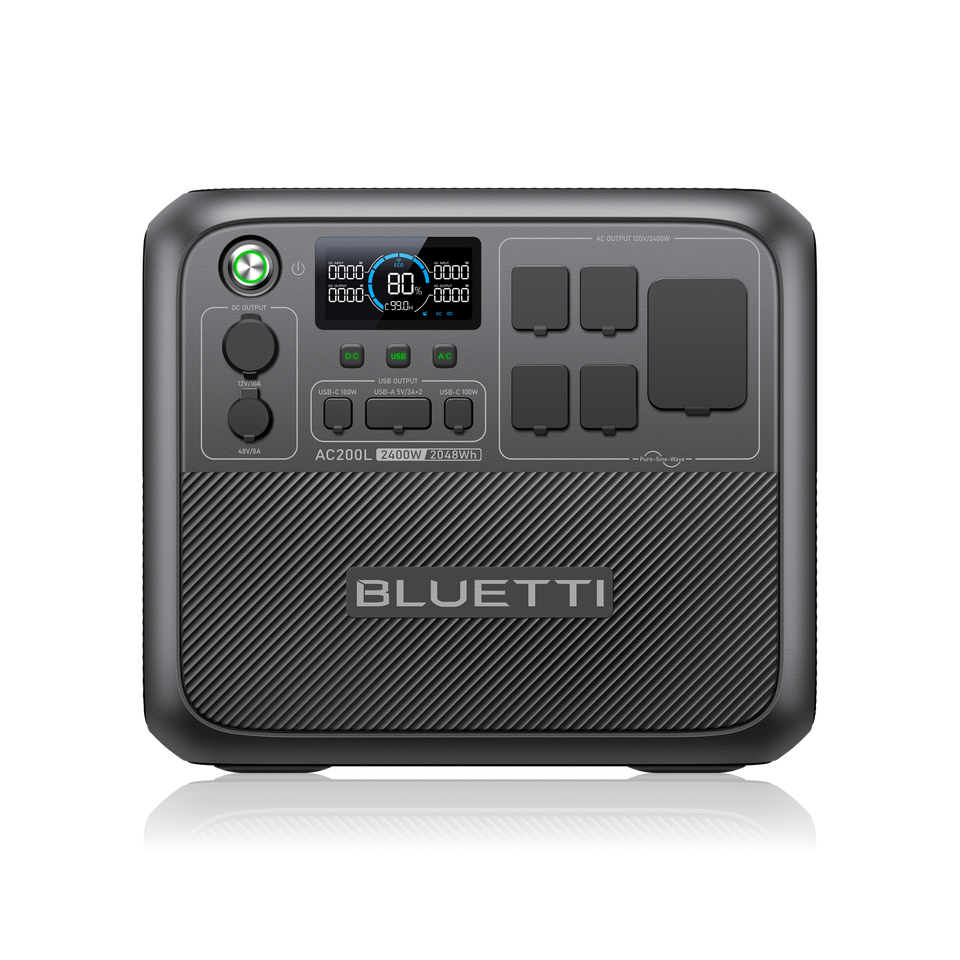
BLUETTI AC200L
Combines a high-efficiency 2,048Wh expandable platform, 1,200W high-voltage solar input (12–145V), and dedicated 30A TT-30R + 48V DC RV outputs at strong street pricing, trading away light weight and built-in wheels.
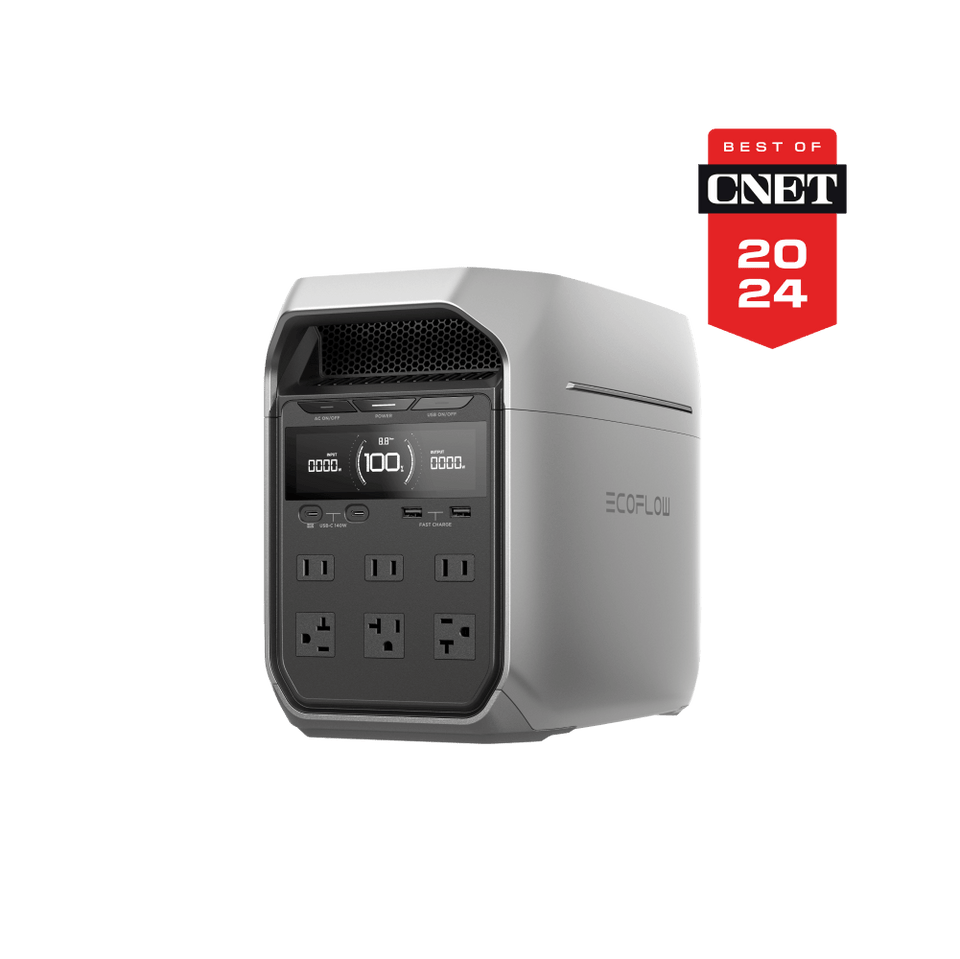
EcoFlow DELTA 3 Plus
Packs 1,000W dual-MPPT solar charging, sub-1-hour AC replenishment, and a sub-10 ms HID-capable UPS into a 27.6 lb chassis, making it more versatile than non-Plus 1kWh units.
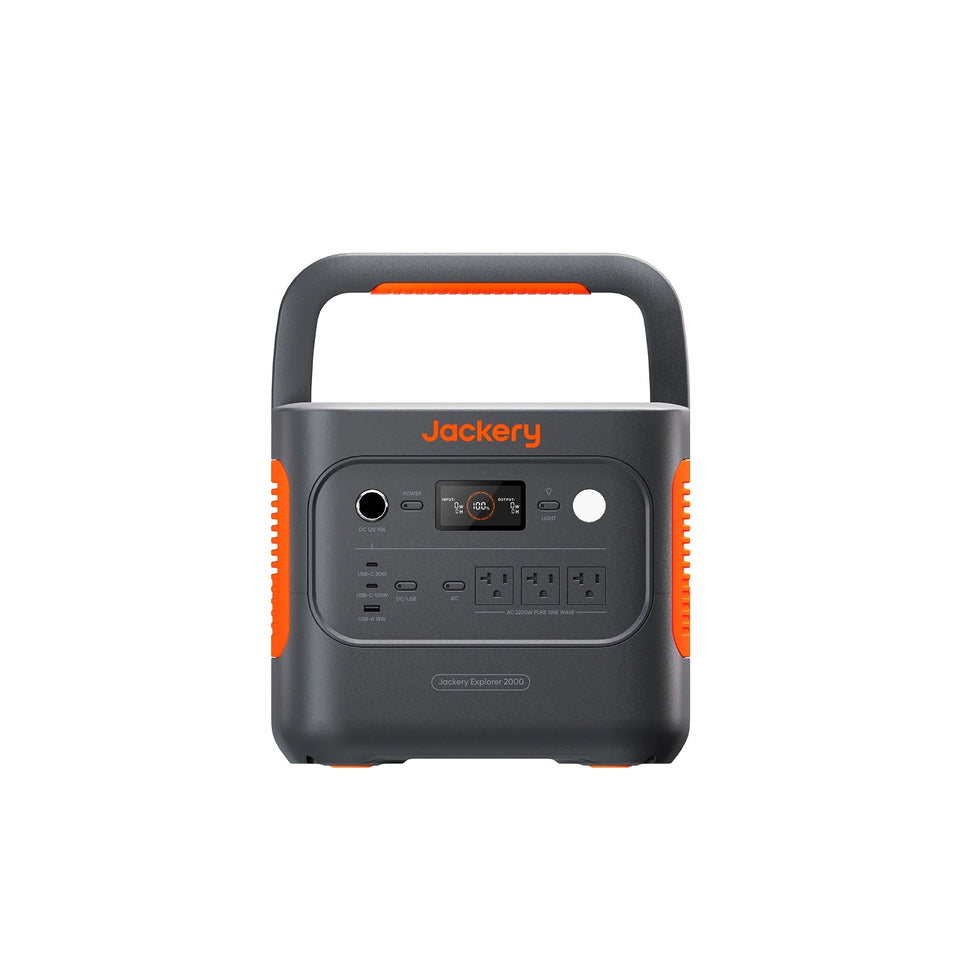
Jackery Explorer 2000 v2
A breakthrough 39.5 lb chassis makes 2,042Wh genuinely single-hand portable for camping and apartments, provided you accept its 400W solar recharge ceiling and non-expandable battery.
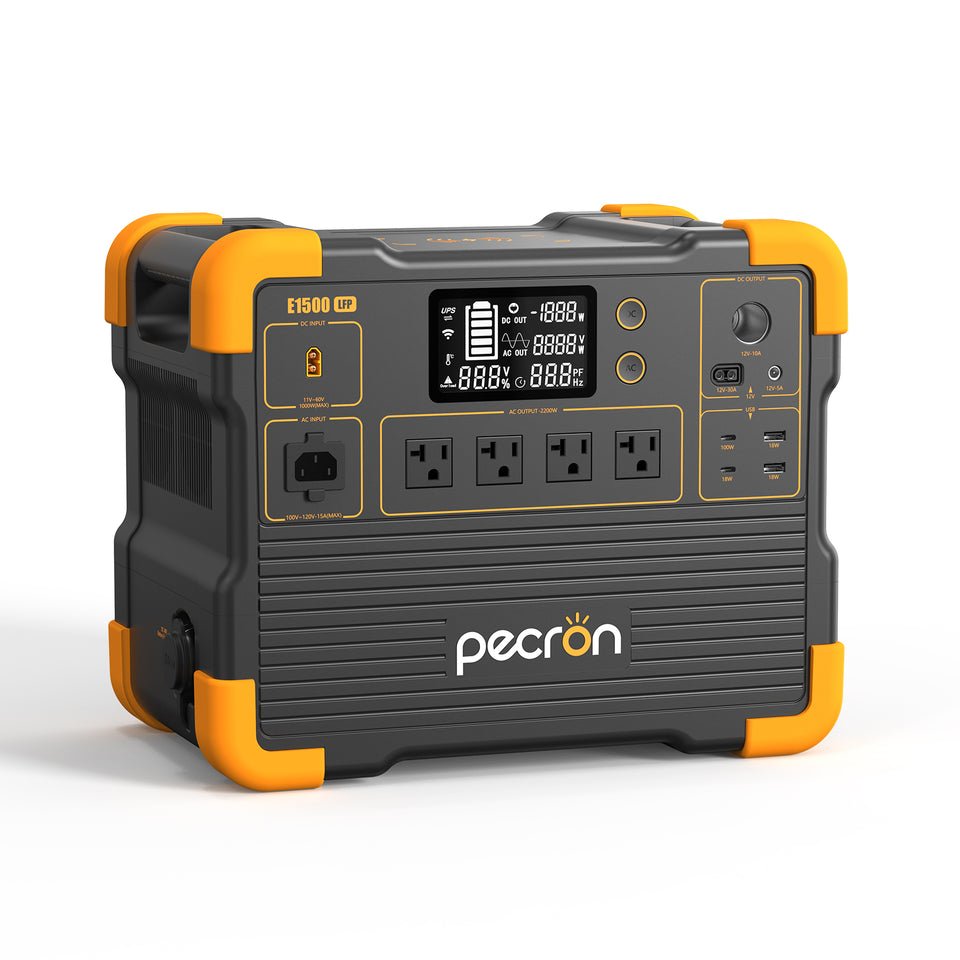
Pecron E1500LFP
Delivers 1,536Wh, a 2,200W continuous inverter, and a rare 12V/30A XT60 DC port around $599 street price, though its asymmetric 32–95V GX16MF solar input requires careful panel voltage matching.
Frequently Asked Questions
Can a single 400W folding solar panel damage a 60V portable power station?+
Check the panel's open-circuit voltage (Voc) at 77°F plus a 10%–15% cold-weather margin before connecting. A 44.3V Voc panel like the BLUETTI PV420 leaves comfortable headroom below a 60V MPPT ceiling, whereas a 48V Voc panel like the standard EcoFlow 400W approaches roughly 53V–55V on freezing bright mornings—still under 60V individually, though wiring two in series would exceed 90V and destroy a 60V port.
Why does my 400W solar panel only output 260W to 320W in bright midday sun?+
Solar panel wattages are rated at Standard Test Conditions (1,000 W/m² irradiance and 77°F/25°C cell temperature). Under real outdoor sun, dark solar cells quickly heat up to 120°F–145°F, which lowers operating voltage, while sun angle, haze, and cable/MPPT losses trim real output to roughly 60%–85% of label rating—about 240W to 340W.
Can I connect two 400W panels to the Jackery Explorer 2000 v2?+
No. While the Jackery Explorer 2000 v2 has dual DC8020 ports (16V–60V Voc, 12A per port / 21A combined), its internal solar charge controller caps total combined solar input at 400W maximum. Pairing two Jackery SolarSaga 200W panels (~24.8V Voc each) saturates that 400W ceiling without needing third-party MC4 adapters.
When does a rigid 400W monocrystalline panel make more sense than a folding suitcase?+
Choose rigid 400W glass-and-aluminum panels if the array stays mounted on an RV roof, cabin rack, or backyard ground mount and your station accepts their ~37V Voc safely. Rigid panels cost roughly one-third as much per watt ($0.75–$1.40/W vs. $2.00–$2.50/W for ETFE suitcases) and endure decades of UV exposure, though each 45–50 lb rigid module spans nearly 68 by 45 inches and cannot fit inside a car trunk.
Sources & Technical References
- View Source →[1]Manufacturer SpecificationBLUETTI US OfficialVerified 2026-11-24BLUETTI AC200L Portable Power Station Official Specifications
2,048Wh LFP, 2,400W continuous AC, 3,600W Power Lifting mode, NEMA TT-30R + 48V/8A DC RV port, 1,200W solar (12-145V).
- View Source →[2]Manufacturer SpecificationEcoFlow US OfficialVerified 2026-11-24EcoFlow DELTA 3 Plus Official Specifications
1,024Wh LFP, 1,800W continuous AC, 1,000W dual 500W MPPT solar, <10ms UPS, 1,500W X-Stream AC charging.
- View Source →[3]Manufacturer SpecificationJackery US OfficialVerified 2026-11-24Jackery Explorer 2000 v2 Product Page & User Guide
2,042Wh LFP Cell-to-Body design, 39.5 lbs weight, 2,200W continuous AC, 400W dual DC8020 solar input.
- View Source →[4]Manufacturer SpecificationPecron US OfficialVerified 2026-11-24Pecron E1500LFP Official Specifications
1,536Wh LFP, 2,200W AC, 800W dual-port solar (GX16MF 32-95V 700W + DC5521 100W), EP3000-48V expansion support.
- View Source →[5]Government Research ResourceNational Renewable Energy Laboratory (NREL)Verified 2026-11-24PVWatts & US Peak Sun Hours Reference Data
Documents regional peak sun hours and real-world photovoltaic derating factors (ambient heat, angle, shading, controller loss).