NEMA 14-50 vs. NEMA 6-50 for EV Charging & 240V Backup: NEC 80% Rule & Wiring Guide
Learn why NEMA 14-50 carries a neutral for 120V/240V RVs and backup boxes while 3-prong NEMA 6-50 saves wire for 240V EV charging under NEC 80% load rules.
NEMA 14-50 uses 4 prongs (two 120V hots, neutral, ground) to supply both 240V and 120V for RVs, transfer switches, and stations like the Anker SOLIX F3800, whereas NEMA 6-50 uses 3 prongs (two hots, ground, no neutral) strictly for 240V EVSEs and welders. Under NEC 80% continuous load rules, a 50A breaker limits continuous charging to 40A (9.6 kW), while hardwiring reduces worn-receptacle fire risk.
When an electrician prices out a garage circuit for a Level 2 electric vehicle charger or backup transfer box, one single wire inside the conduit changes both the material bill and everything you can plug into that wall box: the Neutral conductor.
Both NEMA 14-50 and NEMA 6-50 receptacles sit on 50-amp, 240-volt circuits and deliver identical maximum Level 2 EV charging speeds. Yet online confusion persists because one receptacle splits cleanly into 120V and 240V (NEMA 14-50), while the other locks strictly into 240V-only (NEMA 6-50). Worse, cheap hardware-store outlets wired onto 50A circuits have become a well-documented thermal failure hazard under multi-hour EV loads.
Here is the exact electrical distinction between NEMA 14-50 and NEMA 6-50, how the NEC 80% continuous load rule governs charging amperage, and where 240V portable power stations fit—or fail—compared to utility circuits.
Electrical Architecture: NEMA 14-50 (4-Prong) vs. NEMA 6-50 (3-Prong)
US split-phase residential panels supply two 120V hot legs (L1 and L2) running 180 degrees out of phase. Measuring across L1 and L2 yields 240V, while measuring either hot leg to the panel’s Neutral (N) busbar yields 120V.
| Specification | NEMA 14-50 (4-Prong) | NEMA 6-50 (3-Prong) |
|---|---|---|
| Prong / Conductor Count | 4 prongs (4 wires): Hot 1 (L1), Hot 2 (L2), Neutral (N), Ground (G) |
3 prongs (3 wires): Hot 1 (L1), Hot 2 (L2), Ground (G) — NO Neutral |
| Available Voltages | Both 240V (L1–L2) AND 120V (L1–N / L2–N) |
240V ONLY (L1–L2) |
| Typical Panel Cable | 4-conductor copper (e.g., 6/3 NM-B w/ ground or 4 THHN conductors in conduit; verify sizing per NEC) | 3-conductor copper (e.g., 6/2 NM-B w/ ground or 3 THHN conductors in conduit) |
| Common Equipment Uses | 50A RV pedestals, kitchen ranges, 240V generator/backup boxes, Anker SOLIX F3800 & Jackery 5000 Plus ports | Dedicated plug-in Level 2 EVSEs (J1772 / NACS), arc welders, large shop air compressors |
| Max Continuous Load (NEC 80%) | 40A (9.6 kW @ 240V) on a 50A breaker |
40A (9.6 kW @ 240V) on a 50A breaker |
Why NEMA 14-50 Powers RVs and Home Backup Gear (While EVs Ignore the Neutral)
- Why RVs and backup panels demand
NEMA 14-50: A 50-amp motorhome has two separate120Velectrical sub-legs powering microwaves, rooftop air conditioners, and wall outlets—none of which run on straight240V. Without that fourth Neutral wire, half of a split-phase circuit floats unevenly, risking severe over-voltage damage to120Velectronics. For the same reason, portable split-phase backup stations like the Anker SOLIX F3800 (6,000W) and Jackery Explorer 5000 Plus (7,200W) build NEMA 14-50R and NEMA L14-30R (both 4-prong with Neutral) into their faceplates so household transfer switches can feed both120Vrefrigerators and240Vwell pumps safely. - Why EV chargers work fine on
NEMA 6-50: Every Level 2 North American EV connector (J1772andNACS) sends onlyL1,L2, andEquipment Ground(plus low-voltage pilot/proximity communication pins) into the vehicle. Even when you plug an EVSE with a 4-prong14-50Pcord into aNEMA 14-50outlet, the neutral blade inside the EV charger housing is typically unconnected or unused for the vehicle traction battery. Dropping the unused neutral wire on a dedicated garage run (NEMA 6-50) cuts copper wire cost—especially over a 60-to-100-foot basement run.
(Note: Never use a cheap passive adapter to plug a 4-prong RV or 120V/240V appliance into a 3-prong NEMA 6-50 outlet, and never bond ground to neutral inside an adapter—both create lethal shock and equipment-damage hazards.)
The NEC 80% Continuous Load Rule Explained
Per NFPA 70 (National Electrical Code) and U.S. Department of Energy (DOE) Alternative Fuels Data Center guidance, electric vehicle charging is legally classified as a continuous load because vehicles routinely draw maximum sustained current for 3 hours or longer.
Under the NEC 80% rule, continuous loads cannot exceed 80% of the branch circuit breaker and wire ampacity rating—preventing breakers from nuisance-tripping and preventing conductors from overheating inside insulated walls:
| Circuit Breaker Rating | NEC 80% Continuous Max | Charging Power @ 240V | Connection Requirement |
|---|---|---|---|
| 30A Breaker | 24A continuous | 5.76 kW | NEMA 14-30 / L14-30 or hardwired |
| 40A Breaker | 32A continuous | 7.68 kW | Hardwired or 50A receptacle (with 40A breaker label/limit) |
| 50A Breaker | 40A continuous | 9.60 kW | NEMA 14-50 or NEMA 6-50 receptacle, or hardwired |
| 60A Breaker | 48A continuous | 11.52 kW | Hardwired EVSE ONLY (exceeds 50A plug ratings) |
Notice two practical truths from that table:
- A
NEMA 14-50or6-50receptacle never lets you charge at48Aor50Acontinuously. Even though50Ais stamped on the face, continuous EV charging on any50Areceptacle circuit is capped at40A(9.6 kW)—and on a40Abreaker behind a14-50outlet, capped at32A(7.68 kW). - If you own a
48Awall unit (like a 11.5 kW Wall Connector), you must hardwire it onto a60Adedicated circuit sized with properly rated conductors.
Hardwired EVSE vs. Receptacle: Preventing Worn-Plug Fires
Electrical inspectors and fire investigators have documented repeated melted NEMA 14-50 outlets in residential garages—not because 14-50 is inherently flawed, but because installers used cheap $10–$15 residential range receptacles designed for intermittent oven cycling rather than 8-hour nightly 40A resistance heating.
Why receptacles fail under daily EV duty:
- Blade spring fatigue & frequent unplugging: Every time a portable cord is unplugged and re-inserted, brass wipe contacts loosen slightly. Higher contact resistance generates heat (
I²R), which accelerates oxidation in a thermal runaway loop. - Under-torqued terminals: Aluminum or copper conductors clamped hastily without a calibrated torque screwdriver loosen as copper expands and contracts across winter/summer temperature swings.
- GFCI breaker requirements: Under modern NEC cycles (
2017/2020/2023 NEC 625.54), plug-in receptacles in garages or outdoors generally require an expensive GFCI breaker at the main panel. Certain EVSE internal ground-monitoring self-tests clash with upstream GFCI breakers, causing frustrating overnight charging faults.
Best practice from licensed electricians:
- For a permanent daily garage charger: Hardwire the EVSE directly to the branch circuit inside a sealed terminal block. Hardwiring eliminates plug/blade wear points, reduces melted-outlet fire risk, unlocks
48A(11.5 kW) charging on a60Acircuit, and often avoids receptacle-triggered GFCI conflicts depending on local code enforcement. - If you truly need a plug-in
14-50or6-50outlet (for renters, road-trip portable cords, or shared RV/welder utility): Specify an industrial EV-rated heavy-duty receptacle (such as Hubbell or Bryant commercial-grade$50–$90units featuring thicker nylon housings and heavy brass clamps), require a calibrated torque wrench on all lugs, and leave the EVSE plugged in permanently rather than cycling the plug weekly.
Portable 240V Power Stations vs. Utility EV Circuits
Many EV shoppers ask whether a high-output 240V portable power station with a NEMA 14-50R port—such as the Anker SOLIX F3800 (6,000W, 3,840Wh) or Jackery Explorer 5000 Plus (7,200W, 5,040Wh)—can substitute for a garage EV circuit.
Looking closely at the power math separates marketing hype from emergency utility:
- Inverter Amperage Limit (
25A–30Avs.40A–48A): A6,000Wsplit-phase inverter maxes out at25Aat240V(6,000W / 240V = 25A), and a7,200Winverter maxes out at30A(7,200W / 240V = 30A). Plugging a40Aportable EV cord straight into anF3800without throttling the car’s charging amperage down to16A–24A(or using a16A/24A-capable EVSE) immediately trips overload shutdown. - Usable Watt-Hours = Emergency Miles Only: After AC inverter conversion losses (
~78%–88%net efficiency) plus the EV’s onboard charger and coolant pump overhead, a standalone3,840Whbase battery delivers roughly3.0–3.2 kWhinto an EV traction pack—enough for roughly 10 to 13 miles of emergency range to reach the nearest working DC fast charger during an extended blackout. (Scaling up with expansion batteries likeBP3800modules or a stacked EcoFlow DELTA Pro Ultra multiplies that range proportionally.) - Neutral Bonding & EVSE Ground Checks: Portable stations often feature floating or selectively bonded neutrals (
<20 mstransfer behavior), which can cause strict EVSEs to reject aNEMA 14-50outlet with a “Ground Fault / Missing Ground” error unless paired with an approved grounding plug per the manufacturer’s manual. - Charging the Power Station From an EV Charger: Conversely, high-voltage backup platforms like the Zendure SuperBase V4600 (
3,600W240V/EV charging) and EcoFlow DELTA Pro Ultra (with official EV X-Stream adapter) can plug into publicJ1772or homeNEMA 14-50/ EV stations to recharge 4.6–6.1 kWh emergency home backup batteries in roughly 1.5–2 hours when household grid power is out locally!
Always Hire a Licensed Electrician for 240V Circuits
Any 240V branch circuit—whether a NEMA 6-50 EV outlet, a NEMA 14-50 RV/utility box, a 60A hardwired EVSE, or a 30A–50A manual transfer switch—carries lethal voltage and continuous thermal load. Always engage a licensed US electrician to evaluate main panel load calculations (NEC Article 220), pull local electrical permits, size conductors correctly (THHN or NM-B per temperature ratings), torque lugs to manufacturer specs, and verify grounding/AFCI/GFCI compliance.
Before choosing home backup hardware, review 120V vs. 240V Home Backup Explained and Transfer Equipment & Professional Installation.
Models Discussed in This Article

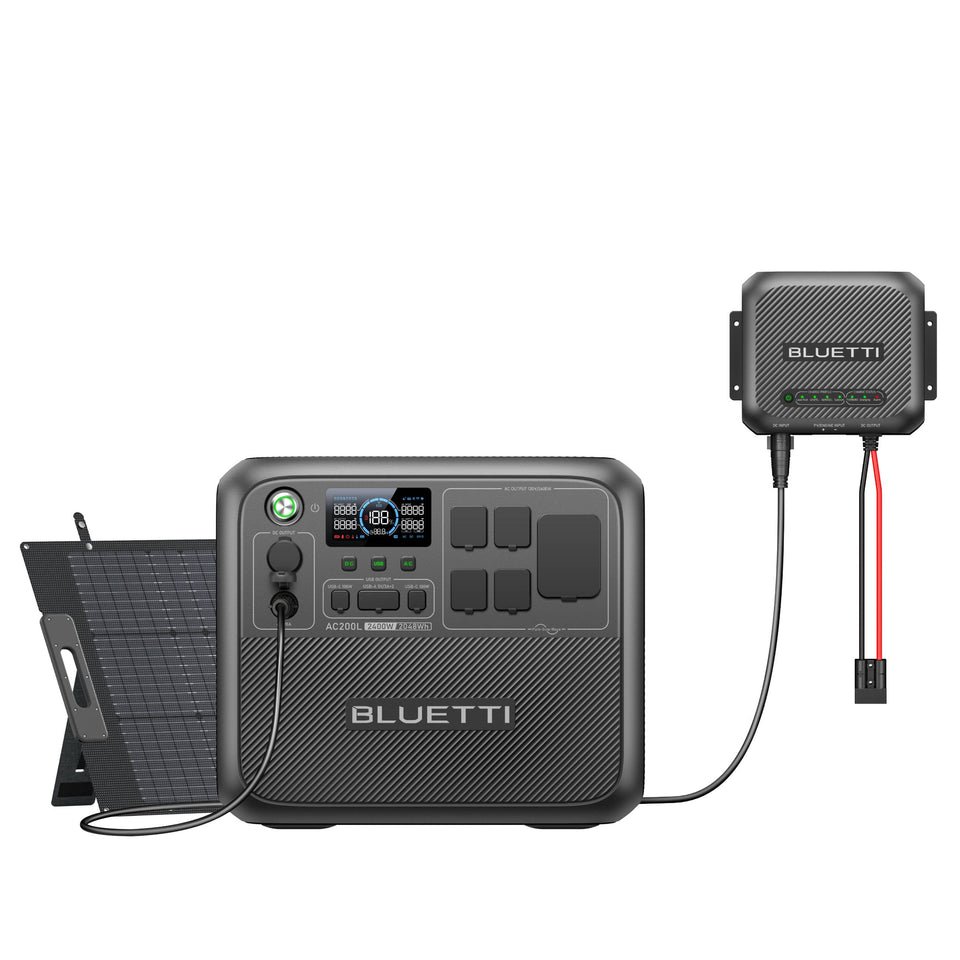
Anker SOLIX F3800
One of the most approachable plug-and-play 120V/240V wheeled units thanks to built-in NEMA 14-50R and L14-30R ports, though high idle overhead on light loads and the 60V solar cap (on the original non-Plus SKU) require careful sizing.
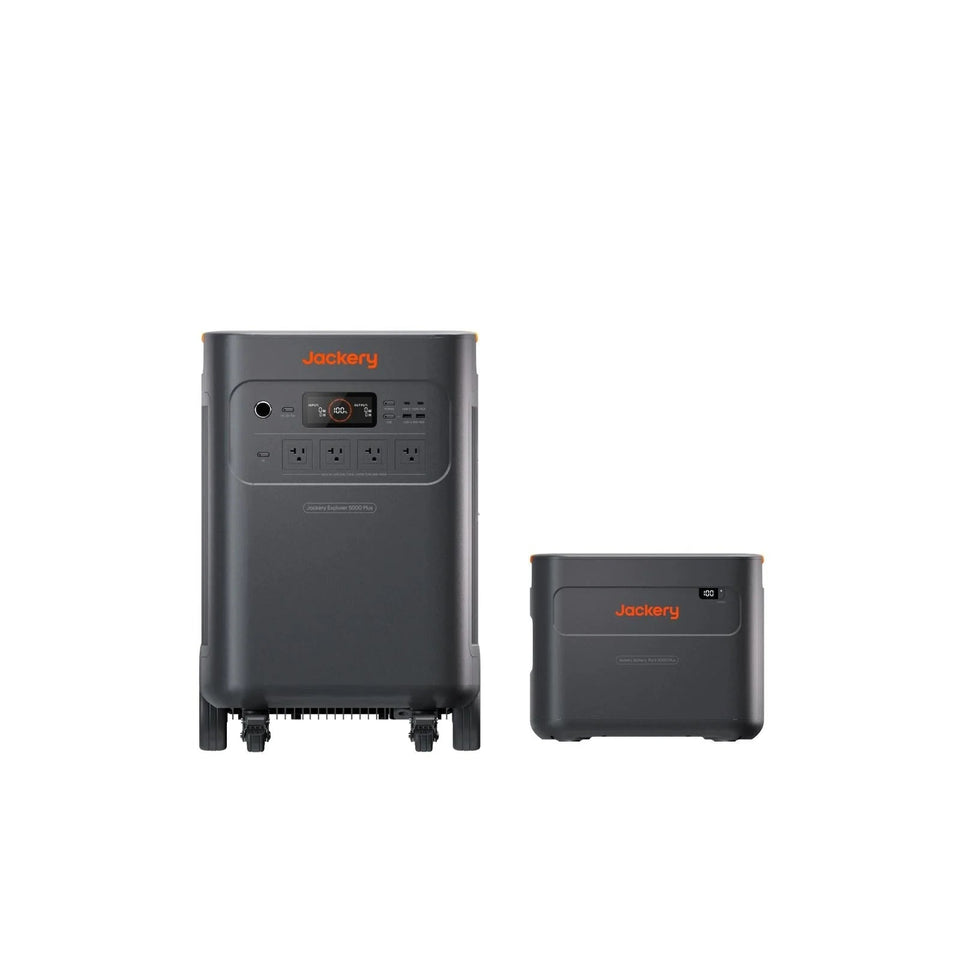
Jackery Explorer 5000 Plus
Combines a 5,040Wh LFP core, 7,200W split-phase output, 14,400W published surge headroom, and both High-PV (135–450V) and Low-PV solar inputs in a single wheeled chassis.
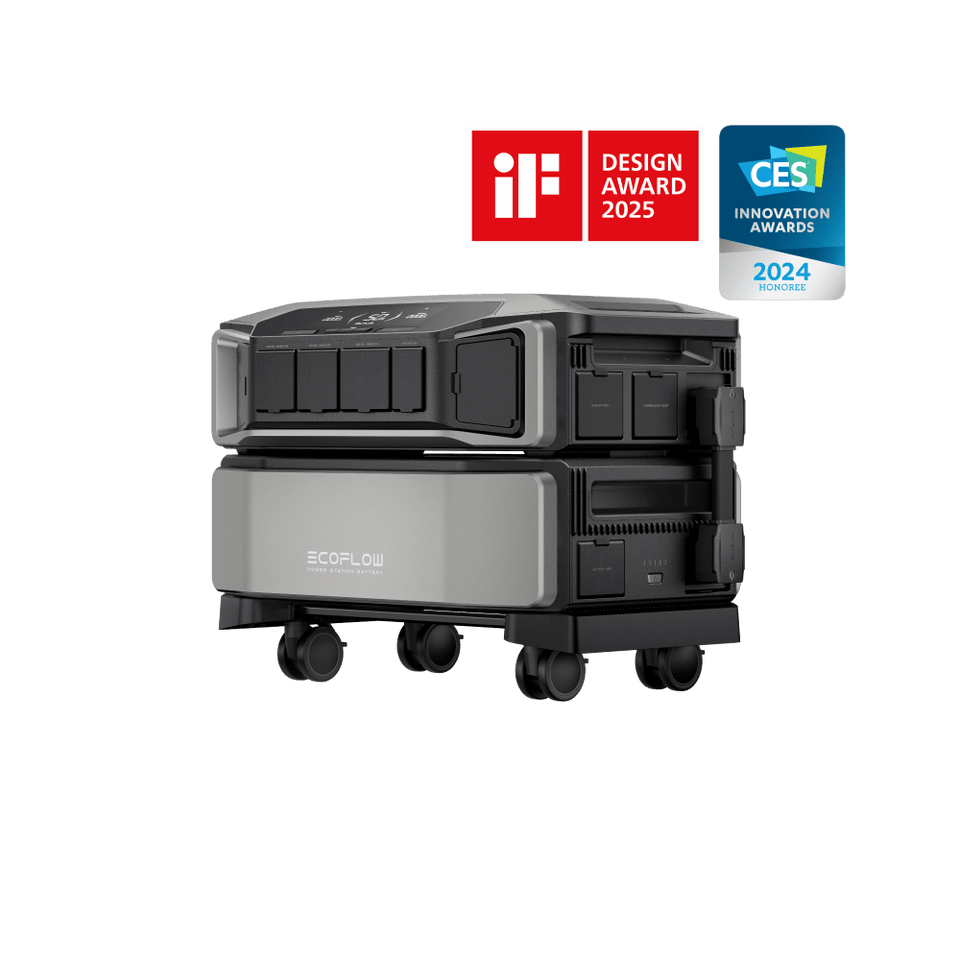
EcoFlow DELTA Pro Ultra
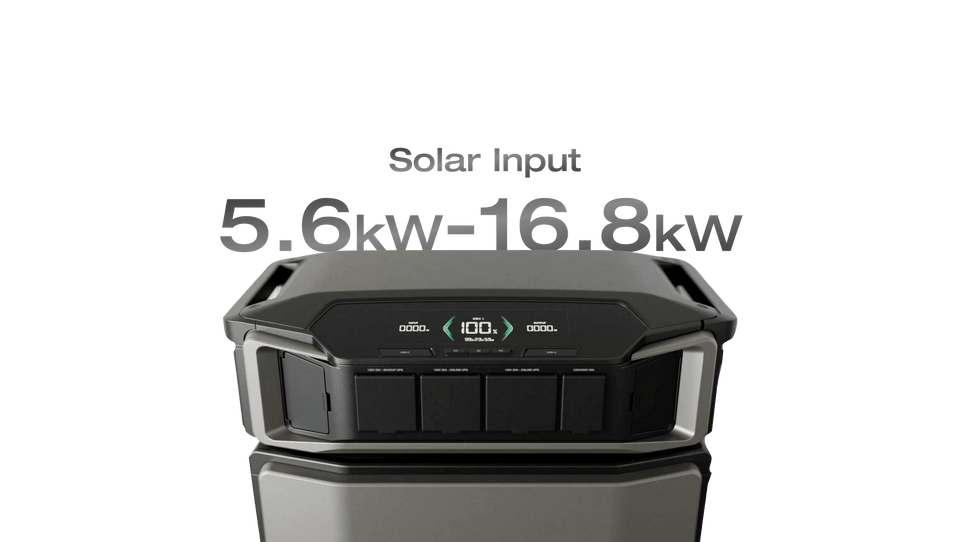
Built specifically for homeowners seeking high-voltage solar input (up to 5,600W) and modular 6kWh-per-stack scaling, though total kit cost and modular footprint exceed casual portable needs.
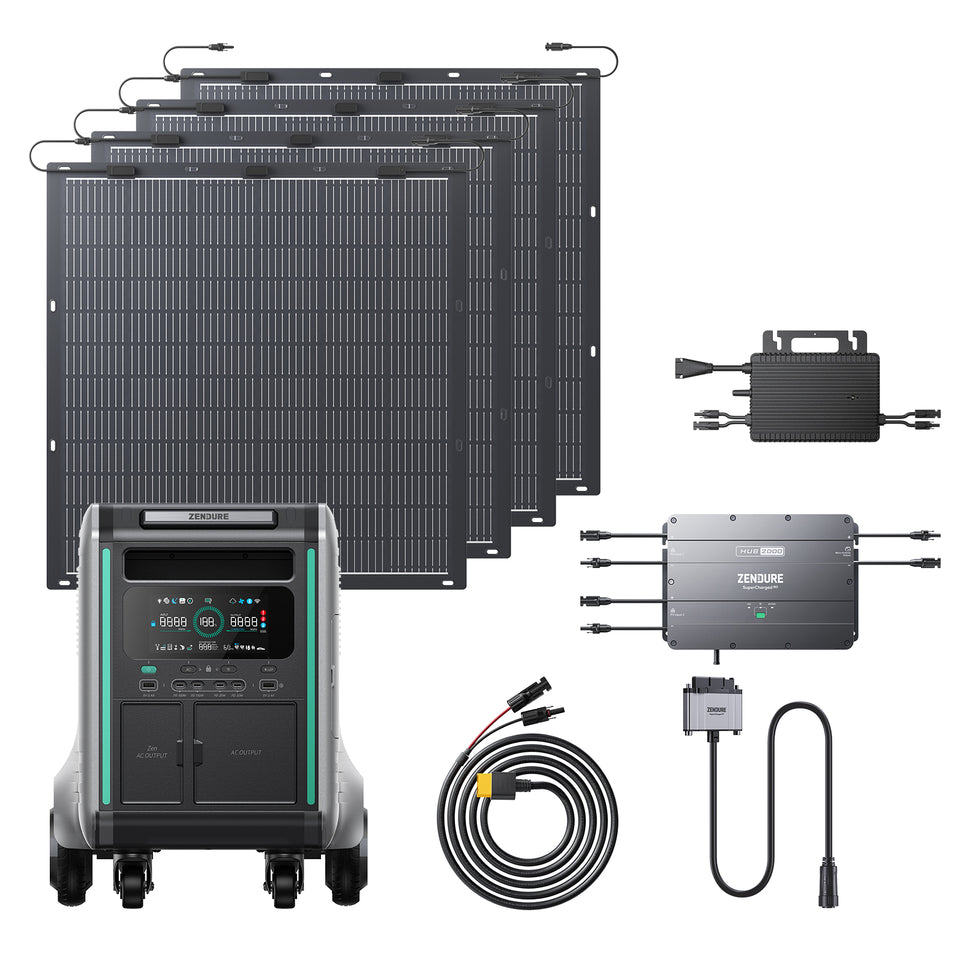
Zendure SuperBase V4600
Stands out for 3,000W single-port 12–150V solar flexibility and EV Level 2 charging support, though its 3,800W single-unit inverter output and 3-year US warranty trail 5-year 7,200W competitors.
Frequently Asked Questions
Does a NEMA 14-50 charge an electric vehicle faster than a NEMA 6-50?+
No. Both receptacles are rated for 50A maximum circuits and limit continuous Level 2 EV charging to 40A (9.6 kW at 240V) under the National Electrical Code 80% continuous load rule. Because EV onboard chargers ignore the neutral wire entirely, charging speeds are identical when using the same EVSE.
Why does a NEMA 14-50 require 4 wires while a NEMA 6-50 only uses 3 wires?+
A NEMA 14-50 carries two 120V hot conductors (L1 and L2), a dedicated neutral conductor, and an equipment ground—providing both 240V (hot-to-hot) and 120V (either hot-to-neutral) for RVs, electric ranges, and transfer switches. A NEMA 6-50 drops the neutral wire, delivering strictly 240V between its two hots plus ground for Level 2 EVSEs and shop welders.
Why do electricians often recommend hardwiring a Level 2 EVSE instead of installing a NEMA 14-50 outlet?+
Cheap residential-grade 14-50 outlets ($10–$15 hardware store units) are built for intermittent oven loads, not 40A continuous EV draws lasting 6–10 hours nightly. Over time, thermal cycling loosens plug contacts and risks melted receptacles or electrical fires. Hardwiring eliminates plug blade friction, permits 48A charging on a 60A breaker, and often avoids nuisance GFCI receptacle-breaker trips.
Can a 6,000W portable power station power a full 40A Level 2 EV charger?+
No. A 6,000W 240V portable station like the Anker SOLIX F3800 outputs a maximum of 25A at 240V (6,000W / 240V = 25A). To avoid overloading the inverter, you must dial your EV or portable EVSE down to 16A–24A—making portable stations practical only for emergency stranded-range recovery (~10–13 miles from a 3,840Wh pack) rather than daily EV charging.
Sources & Technical References
- View Source →[1]Government Research ResourceU.S. DOE Alternative Fuels Data CenterVerified 2026-11-25Electric Vehicle Charging Levels, NEMA Receptacles & Home Circuit Loads
Documents Level 1 (120V) vs. Level 2 (240V) continuous 80% NEC circuit loading rules and NEMA 6-50 / 14-50 wiring distinctions.
- View Source →[2]Technical & Safety StandardNational Fire Protection Association (NFPA)Verified 2026-11-24NFPA 70 National Electrical Code (NEC) Transfer Equipment & Standby Power Overview
Governs transfer switches, panel interlocks, and prohibition of unsafe backfeeding on US residential electrical panels.
- View Source →[3]Manufacturer SpecificationAnker SOLIX US OfficialVerified 2026-11-24Anker SOLIX F3800 Portable Power Station Official Specifications
North American model specs including NEMA 14-50R, L14-30R, 6,000W output, 3,840Wh capacity, and 11-60V dual solar input.
- View Source →[4]Manufacturer SpecificationJackery US OfficialVerified 2026-11-24Jackery Explorer 5000 Plus Official Product Specifications
5,040Wh LFP capacity, 7,200W/14,400W AC specs, High-PV (135-450V) and Low-PV (16-60V) limits, and warranty terms.
- View Source →[5]Manufacturer SpecificationEcoFlow US OfficialVerified 2026-11-24EcoFlow DELTA Pro Ultra Product Page & Specifications
Official North American 120V/240V split-phase inverter and 6,144Wh LiFePO4 battery module specs.