Anker SOLIX F3800 Review: Single-Box 120V/240V Home Backup Engineering Breakdown
Anker SOLIX F3800 engineering review: 3,840Wh LFP to 26.9kWh, 6,000W/9,000W 14-50R/L14-30R split-phase ports, CNET ~25.68h fridge data, and NEC transfer.
The Anker SOLIX F3800 (Model A1790) integrates a 3,840Wh LiFePO4 battery (expandable to 26.88kWh per unit) and a 6,000W continuous / 9,000W surge 120V/240V split-phase inverter with native NEMA 14-50R and L14-30R ports inside one 132.3 lb wheeled case. While street pricing near $2,999 lowers 240V backup cost, CNET measured ~25.68 hours on a refrigerator due to dual-voltage inverter overhead, and safe panel integration requires a licensed electrician.

Early portable whole-home batteries forced a messy compromise: if you wanted true 120V/240V split-phase residential power from portable units, you had to buy two 120V stations and bridge them through an external double-voltage hub box. The Anker SOLIX F3800 (North American Model A1790) eliminated that clutter by packaging a 3,840Wh LiFePO4 (LFP) bank and a 6,000W continuous split-phase inverter inside a single rolling suitcase chassis.
Yet engineering 6,000W of dual-voltage output into one 132.3 lb box brings real electrical and ergonomic trade-offs—from higher standby inverter draw on intermittent kitchen loads (documented in independent CNET testing) to a 60V Voc solar ceiling on the original SKU. Before committing to a transfer-switch setup, read our complete specification summary on the Anker SOLIX F3800 review page alongside this hardware breakdown.
Native 120V/240V Split-Phase Architecture & 9,000W Surge Limits
Unlike 120V-only midsize models such as the BLUETTI AC200L, the F3800 generates both 120V legs (L1 + L2, 180° out of phase) natively from one chassis. That means a single F3800 can feed 240V residential branch circuits—well pumps, electric water heaters, septic pumps, or split-phase subpanels—without buying a second inverter unit.
On the front panel, Anker groups heavy-duty and everyday ports cleanly:
- Split-Phase High-Output Receptacles:
1 × 120V/240V NEMA 14-50R(up to6,000Wfor appliances or emergency Level 2 EV charging) and1 × 120V/240V NEMA L14-30Rtwist-lock (ideal for listed home generator inlets or50A/30ARV adapter setups). - Standard Household Outlets:
6 × 120V/20A NEMA 5-20Rsockets (three designated for automatic<20msUPS/EPS pass-through). - DC & Mobile Ports:
3 × 100WUSB-C PD ports,2 × 12WUSB-A ports, and1 × 12V/10A(120W) car socket.
Anker rates peak startup output at 9,000W surge, though the published surge duration is Not Disclosed in primary spec sheets. While 9,000W easily covers typical residential refrigerators, sump pumps, and workshop saws, 240V central A/C compressors or deep-well submersible pumps with high Locked Rotor Amps (LRA) can still exceed single-unit startup limits unless equipped with a soft-starter or stepped up to a 14,400W-surge unit like the Jackery Explorer 5000 Plus.
CNET’s ~25.68-Hour Fridge Benchmark & Inverter Idle Overhead
A 3,840Wh nameplate battery looks massive on paper—until you examine what a 6,000W dual-voltage inverter consumes simply staying awake while an appliance cycles on and off.
In CNET Labs’ May 2025 standardized refrigerator benchmark, the 3,840Wh Anker SOLIX F3800 delivered roughly 25.68 hours of continuous refrigerator runtime—actually finishing behind the smaller 2,048Wh 120V BLUETTI AC200L, which cleared >29 hours (77.76% measured round-trip efficiency). That counterintuitive outcome comes down to idle standby overhead: energizing large dual-phase inverter transformers and control boards pulls substantial continuous wattage even during the 60%–70% of each hour when a modern fridge compressor is resting.
Because exact standalone usable AC watt-hours for the F3800 are Not Independently Verified beyond CNET’s cyclic fridge test, model steady-load runtimes using conservative conversion bands (78%–88% usable AC = ~2,995–3,379Wh; 88%–93% usable DC = ~3,379–3,571Wh) while discounting light intermittent loads:
| Household Load Scenario | Running Draw | Realistic F3800 Expectation | Efficiency Context |
|---|---|---|---|
| Full-Size Kitchen Refrigerator | ~120W–160W cyclic |
~25.68 hrs (CNET observed) | High 6,000W inverter idle loss lowers overnight efficiency vs. 120V 2kWh peers. |
| Medical CPAP + Router (AC On) | ~60W–75W combined |
~30–42 hrs | Idle inverter overhead trims theoretical hours; DC/USB-C (AC OFF) stretches significantly longer. |
| Home Office + Sump Pump Standby | ~350W avg mixed |
8.5–9.6 hrs | Moderate steady loads sit closer to the inverter’s 78%–88% efficiency sweet spot. |
| Window AC / Electric Space Heater | 1,200W continuous |
2.5–2.8 hrs | Heavy continuous draws empty a 3,840Wh core rapidly—expansion packs needed for overnight comfort. |
| 240V Well Pump (Cycling) | 1,500W–2,200W active |
20–40+ pump cycles (if LRA < 9kW) | Confirm pump LRA nameplate and check voltage/wire sizing with an electrician. |
Check Understanding Power Station Efficiency or test custom appliance schedules in our Wattage Calculator.
Scaling to 26.88kWh (or 53.76kWh), Thermal Windows & Cycle Life
Out of the box, 3,840Wh handles roughly one day of disciplined essential loads. To turn the F3800 into multi-day outage storage, Anker uses stackable BP3800 (3,840Wh) LFP expansion batteries:
- Single-Inverter Stack: Base unit + up to
6 × BP3800packs =26,880Wh(26.88kWh) at6,000Woutput. - Dual-Unit Parallel Home Kit: Two F3800 inverters linked together +
12 × BP3800packs =53,760Wh(53.76kWh) and12,000Wcontinuous120V/240Voutput.
Anker specifies 3,000 cycles to 80% capacity under 25°C cycling—solidly durable for weekly or seasonal outage use, though slightly behind the 3,500+ cycles (80%) on the EcoFlow DELTA Pro Ultra. Pay attention to winter storage as well: while discharging operates down to -4°F (-20°C), charging locks out below 32°F (0°C) because the F3800 lacks internal battery self-heating elements. Unheated northern garages require warming the unit indoors before solar or wall recharging can resume.
132.3 lb Transport Reality & Licensed NEC Transfer Integration
At 27.6 × 15.1 × 14.6 inches and 132.3 lbs, the F3800 behaves like a dense wheeled trunk. Its telescopic handle and 2.56-inch rear wheels let one adult roll it across smooth garage concrete or paved driveways without breaking a sweat. Lifting a single 132.3 lb block over a pickup tailgate, curb, or basement staircase, however, is unequivocally a two-person lift (or ramp job)—unlike the modular EcoFlow DELTA Pro Ultra, whose ~70 lb inverter head detaches from its ~111.8 lb battery module.
For residential panel backup, never use dangerous DIY “suicide cords” to backfeed dryer outlets. Safe integration under NFPA 70 (National Electrical Code / NEC) relies on one of two professional paths installed by a licensed US electrician:
- Manual Transfer Switch or Listed
L14-30Power Inlet Box + Mechanical Interlock: Economical6-to10-circuitisolation for selective outages—you plug the F3800’sNEMA L14-30Rtwist-lock cord into an outdoor or garage inlet and flip chosen breakers manually. - Anker SOLIX Home Power Panel: Dedicated automatic whole-home gateway supporting
<=20msswitchover across up to 12 circuits and smart load shedding without extension cords.
Review code rules and cost drivers in 120V vs. 240V Home Backup Explained and Transfer Equipment & Professional Installation before requesting electrician quotes.
Charging Speeds & Original F3800 vs. F3800 Plus Caution
Recharging the base 3,840Wh unit from a standard 120V/15A household wall receptacle tops out at 1,800W, taking roughly 2.7 hours from empty (when grid power is live or paired with a gas inverter generator).
Off-grid solar replenishment is where generation SKU verification becomes critical:
- Original F3800 (Model A1790): Dual
XT60MPPT channels allow2,400Wmax solar (1,200W × 2,25Amax), strictly capped at11V–60VVoc—limiting direct compatibility with multi-panel high-voltage rigid arrays. - F3800 Plus Revision: Expands solar tolerance to
11V–165VVoc (3,200Wmax) and incorporates a dedicated30A TT-30RRV outlet alongside240Vconnectivity.
For buyers recharging mostly from utility AC, transfer switches, or portable low-voltage folding panels (<=60V Voc), discounted original F3800 pricing around $2,999 ($0.78/rated Wh) backed by a 5-year warranty remains one of the simplest ways to put native 6,000W 120V/240V power on wheels.
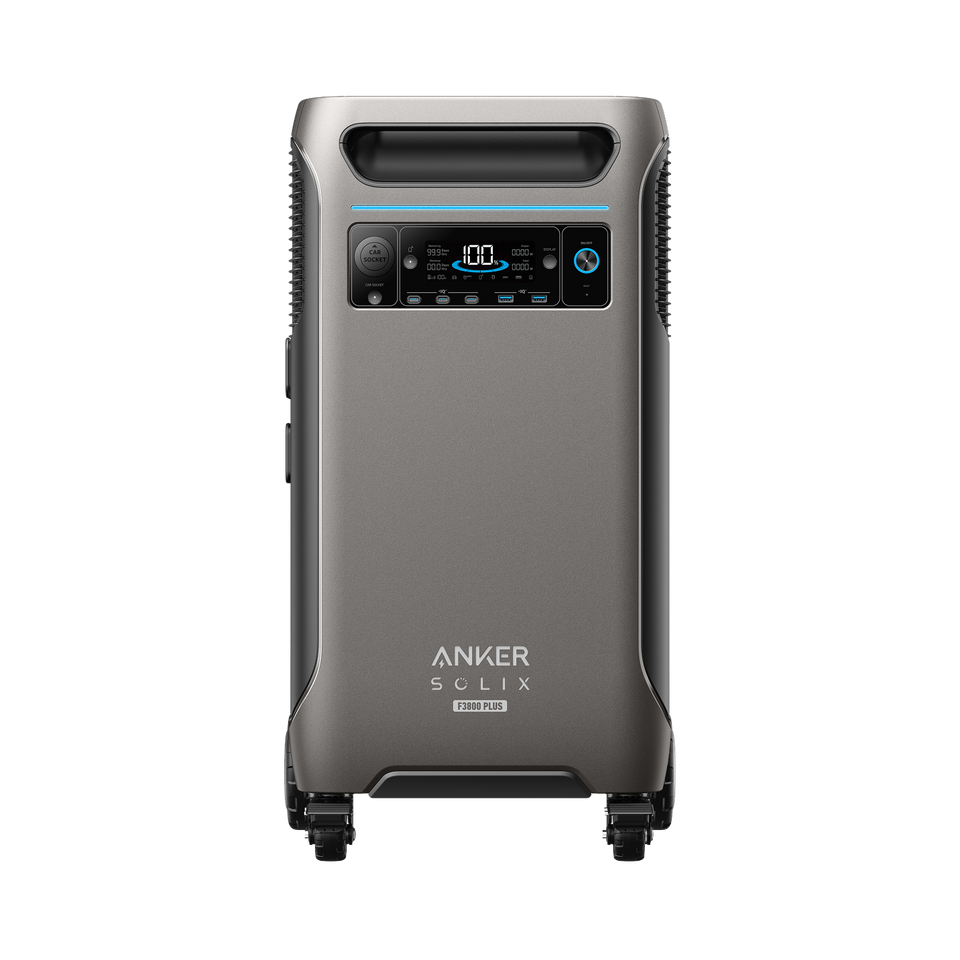
Models Discussed in This Article

Anker SOLIX F3800
One of the most approachable plug-and-play 120V/240V wheeled units thanks to built-in NEMA 14-50R and L14-30R ports, though high idle overhead on light loads and the 60V solar cap (on the original non-Plus SKU) require careful sizing.
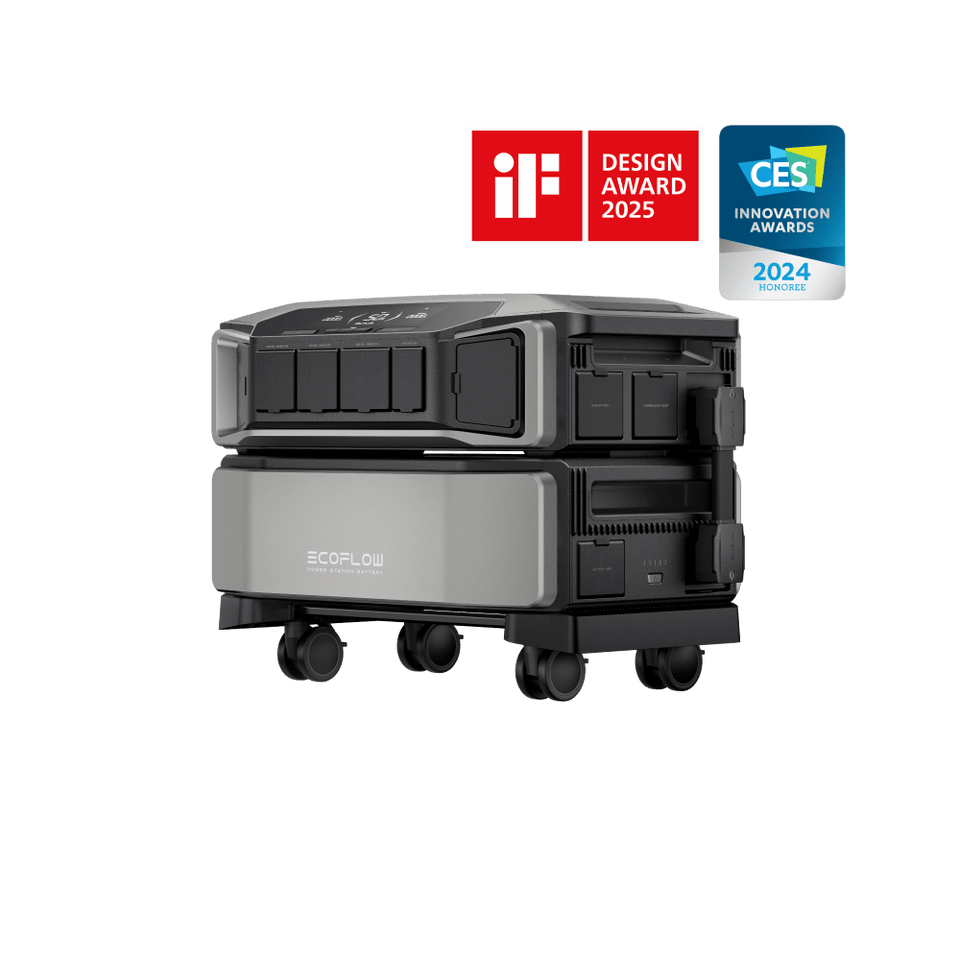
EcoFlow DELTA Pro Ultra
Built specifically for homeowners seeking high-voltage solar input (up to 5,600W) and modular 6kWh-per-stack scaling, though total kit cost and modular footprint exceed casual portable needs.
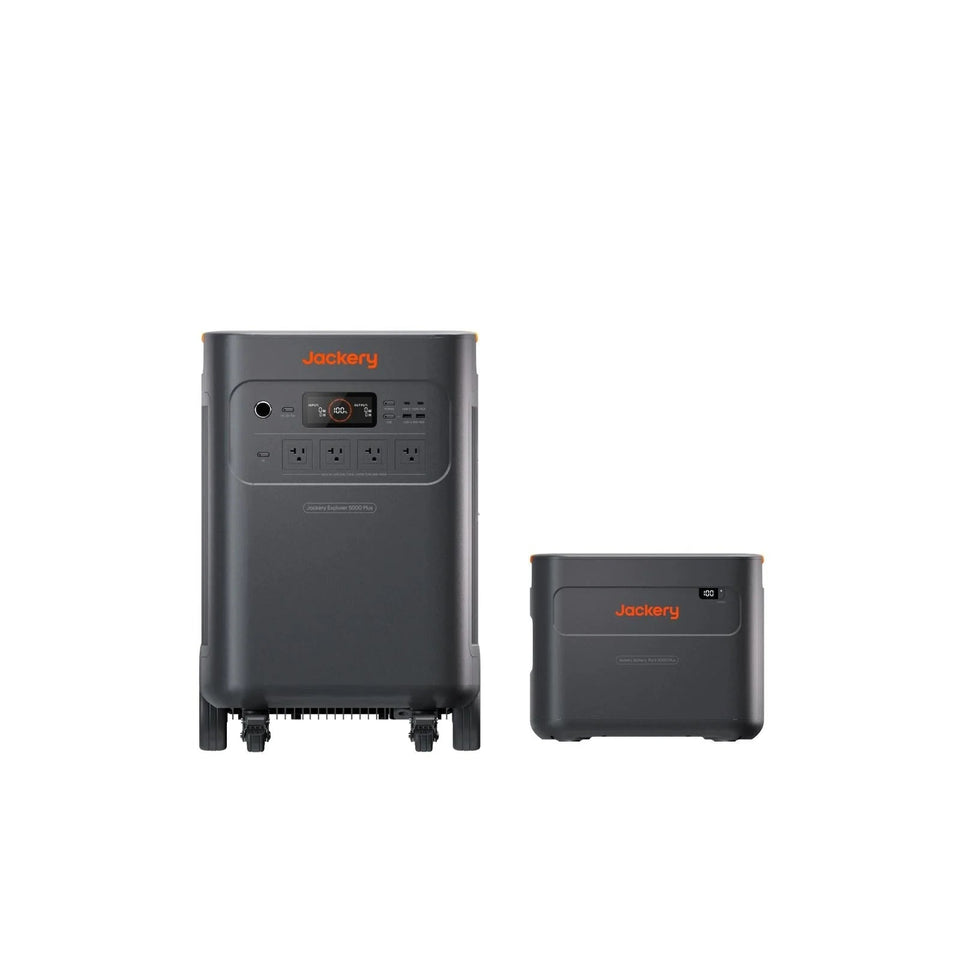
Jackery Explorer 5000 Plus
Combines a 5,040Wh LFP core, 7,200W split-phase output, 14,400W published surge headroom, and both High-PV (135–450V) and Low-PV solar inputs in a single wheeled chassis.
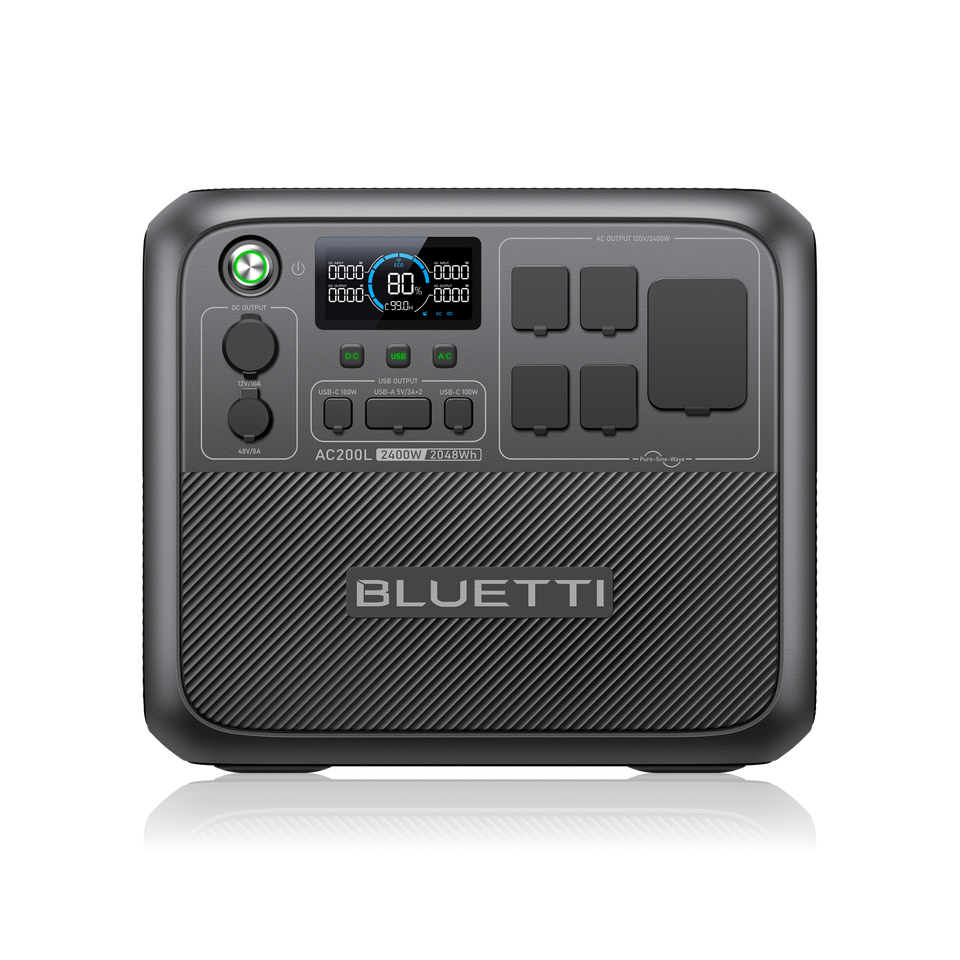
BLUETTI AC200L
Combines a high-efficiency 2,048Wh expandable platform, 1,200W high-voltage solar input (12–145V), and dedicated 30A TT-30R + 48V DC RV outputs at strong street pricing, trading away light weight and built-in wheels.
Frequently Asked Questions
Why did the 3,840Wh Anker SOLIX F3800 run a refrigerator for ~25.68 hours in CNET testing?+
In CNET Labs' standardized cyclic refrigerator stress test, the F3800 lasted roughly 25.68 hours—shorter than the smaller 2,048Wh BLUETTI AC200L (>29 hours). A large 6,000W 120V/240V dual-voltage inverter consumes noticeably higher continuous standby idle power between compressor cycles than a smaller single-voltage 120V inverter.
Can I wire the Anker SOLIX F3800 into my home electrical panel myself?+
No. Connecting a 240V/6,000W power source to residential branch circuits via a manual transfer switch, generator inlet box, or Anker Home Power Panel must be performed by a qualified, licensed electrician under NFPA 70 (NEC) rules. Improper wiring creates severe electrocution, fire, and utility line backfeed hazards.
What is the real maximum expandable capacity of the Anker SOLIX F3800?+
A single F3800 stores 3,840Wh internally and connects up to six BP3800 (3,840Wh) expansion batteries for 26,880Wh (26.88kWh) total. Linking two parallel F3800 stations with twelve BP3800 packs scales system capacity to 53,760Wh (53.76kWh) and 12,000W output.
What is the difference between the original F3800 and F3800 Plus solar limits?+
The original Model A1790 F3800 caps solar input at 2,400W across a low 11V–60V Voc window per dual XT60 port. The newer F3800 Plus raises the voltage ceiling to 11V–165V Voc (3,200W solar) and revises RV outlet compatibility (adding TT-30R).
Sources & Technical References
- View Source →[1]Manufacturer SpecificationAnker SOLIX US OfficialVerified 2026-11-24Anker SOLIX F3800 Portable Power Station Official Specifications
North American model specs including NEMA 14-50R, L14-30R, 6,000W output, 3,840Wh capacity, and 11-60V dual solar input.
- View Source →[2]Manufacturer SpecificationAnker SOLIX US OfficialVerified 2026-11-24Anker SOLIX F3800 Plus Official Product Page
Successor revision increasing PV voltage range up to 165V and solar input to 3,200W.
- View Source →[3]Third-Party Independent ReviewCNETVerified 2026-11-24CNET Portable Power Station Lab Efficiency & Refrigerator Runtime Benchmarks
Documents standardized refrigerator runtime and round-trip efficiency testing including BLUETTI AC200L (77.76% RTE, >29h fridge test) and Anker SOLIX F3800 (~25.68h fridge stress runtime due to dual-voltage inverter overhead).
- View Source →[4]Technical & Safety StandardNational Fire Protection Association (NFPA)Verified 2026-11-24NFPA 70 National Electrical Code (NEC) Transfer Equipment & Standby Power Overview
Governs transfer switches, panel interlocks, and prohibition of unsafe backfeeding on US residential electrical panels.
- View Source →[5]Government Research ResourceU.S. DOE Alternative Fuels Data CenterVerified 2026-11-25Electric Vehicle Charging Levels, NEMA Receptacles & Home Circuit Loads
Documents Level 1 (120V) vs. Level 2 (240V) continuous 80% NEC circuit loading rules and NEMA 6-50 / 14-50 wiring distinctions.