Best Solar Generators & Portable Kits Ranked by Real-World Tier (2026)
2026 solar generator picks grouped strictly by daily solar recharge capacity (400W camp kits to 5,600W home arrays) using NREL Peak Sun Hours and MPPT math.
Solar generators rarely harvest 100% of panel sticker ratings; real-world US output averages 58%–85% of STC wattage across 3.5 to 5.5 NREL Peak Sun Hours. Grouped by daily solar recovery, EcoFlow DELTA Pro Ultra leads 5,600W High-PV home arrays, BLUETTI AC200L leads 1,200W RV/off-grid arrays, EcoFlow DELTA 3 Plus tops 1,000W fast-recovery 1kWh kits, and Jackery Explorer 2000 v2 or Goal Zero Yeti 700 serve 200W–400W portable setups.
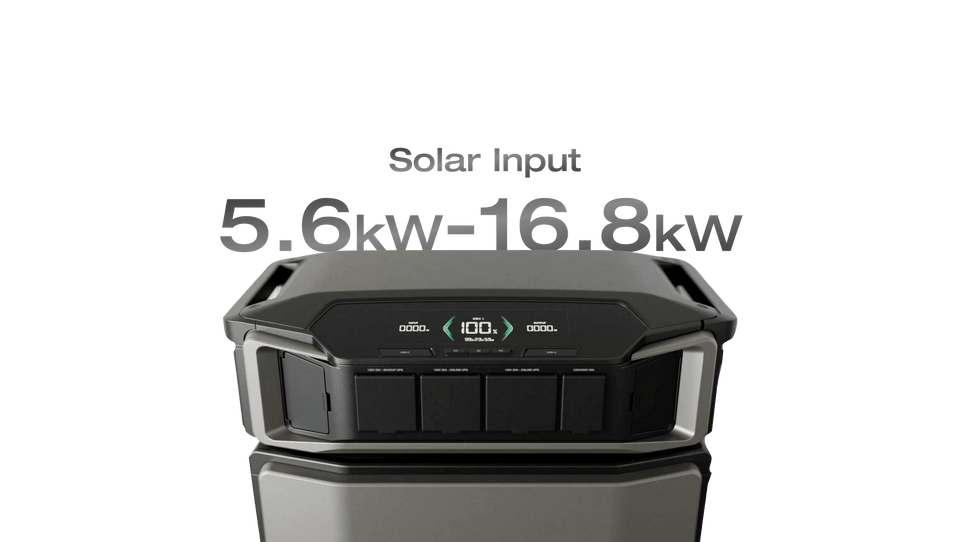
Most “best solar generator” roundups make a fundamental sizing mistake: they rank stations by battery watt-hours while treating solar input as an afterthought. In a multi-day outage or extended off-grid trip, your battery is only as sustainable as the daily solar harvest feeding it. Pairing a huge 2,048Wh battery with a throttled 200W or 400W solar port creates an energy deficit every time clouds roll in.
Instead of recycling discontinued 2023 models like the MaxOak EB240 or legacy NMC Yeti 1500X, this 2026 guide groups current LiFePO4 solar generators strictly by daily solar recharge capacity—anchored to real-world NREL Peak Sun Hours (PSH) and realistic field derating rather than idealized box claims.
Real-World Solar Derating Math (58%–85% STC Reality)
Solar panel stickers reflect Standard Test Conditions (STC)—intense 1,000 W/m² laboratory light hitting panels held at 77°F (25°C). Outdoors, dark silicon cells routinely heat to 120°F–140°F, lowering output voltage, while sun angle, atmospheric haze, dust, and MPPT conversion losses shave off additional energy. Across typical US deployments, expect 58%–85% of rated STC panel wattage (roughly 70%–75% as a dependable clear-sky planning average).
Multiply your panel wattage by that field factor and your local NREL Peak Sun Hours (ranging from ~3.5 PSH in winter or northern regions to ~5.0–5.5 PSH across sunny southern summers):
| Solar Input Tier | Typical Array Size Connected | Realistic Field Output (~72% STC) | Est. Daily Harvest (3.5 PSH Winter / Low Sun) | Est. Daily Harvest (5.0 PSH Sunny Summer) |
|---|---|---|---|---|
| 4,000W–5,600W High-PV Home | 4,000W–5,600W rigid array | ~2,880W–4,030W | 10,080Wh–14,100Wh/day | 14,400Wh–20,150Wh/day |
| 1,200W–2,400W RV & Off-Grid | 1,200W–2,400W roof/ground | ~860W–1,730W | 3,010Wh–6,050Wh/day | 4,300Wh–8,640Wh/day |
| 500W–1,000W Fast 1kWh Kit | 600W–1,000W portable folding | ~430W–720W | 1,500Wh–2,520Wh/day | 2,160Wh–3,600Wh/day |
| 100W–400W Light Portable | 200W–400W camp panels | ~145W–290W | 500Wh–1,015Wh/day | 720Wh–1,440Wh/day |
Keep in mind that AC appliance loads lose another 12%–22% through the inverter (78%–88% AC efficiency), while 12V/USB-C DC loads preserve 88%–93%. To dial in your ZIP code’s exact recovery hours, run your array through our solar charging calculator.
Tier 1: High-PV Home & Off-Grid Arrays (3,000W–5,600W Solar Input)
If you want true multi-day autonomy for residential circuits—keeping a refrigerator, freezer, furnace blower, internet, and intermittent 240V loads fed indefinitely—you need High-PV MPPT strings that accept rigid residential panels without bulky combiner wiring.
Best High-PV Solar Generator: EcoFlow DELTA Pro Ultra (5,600W Solar)
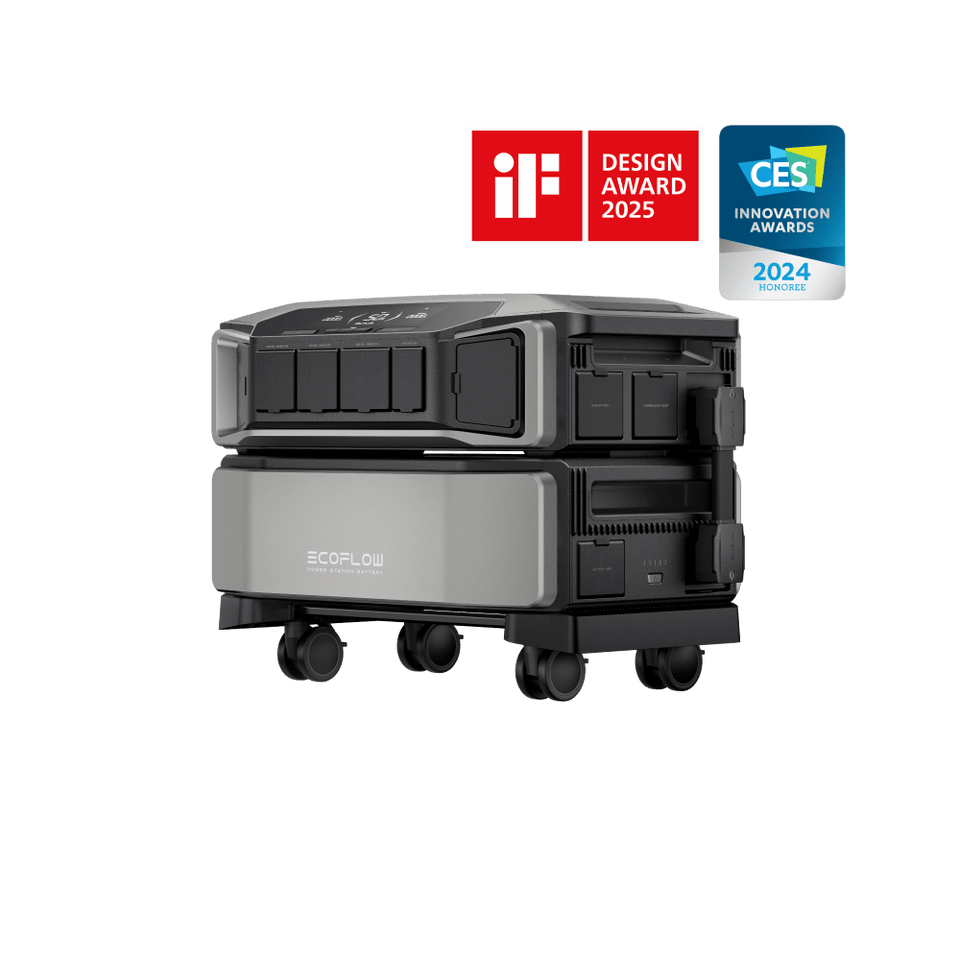
The EcoFlow DELTA Pro Ultra dominates solar recovery in the portable-modular class. It separates dual independent MPPT inputs: a High-PV port (80V–450V Voc, 15A, 4,000W max) engineered for standard rooftop/ground solar strings, plus a Low-PV port (30V–150V Voc, 15A, 1,600W max) for smaller portable arrays. Together, 5,600W of solar input can replenish a single 6,144Wh LFP battery stack inside two peak sun hours or sustain 10–20kWh/day of household energy when stacked with expansion modules (up to 90kWh across three inverters). Note its 80V minimum startup voltage on the High-PV input—always string enough panels in series to clear 80V under hot-weather Vmp sag while staying well below 450V on freezing mornings.
High-Surge Alternative: Jackery Explorer 5000 Plus (4,000W High-PV + 1,200W Low-PV)
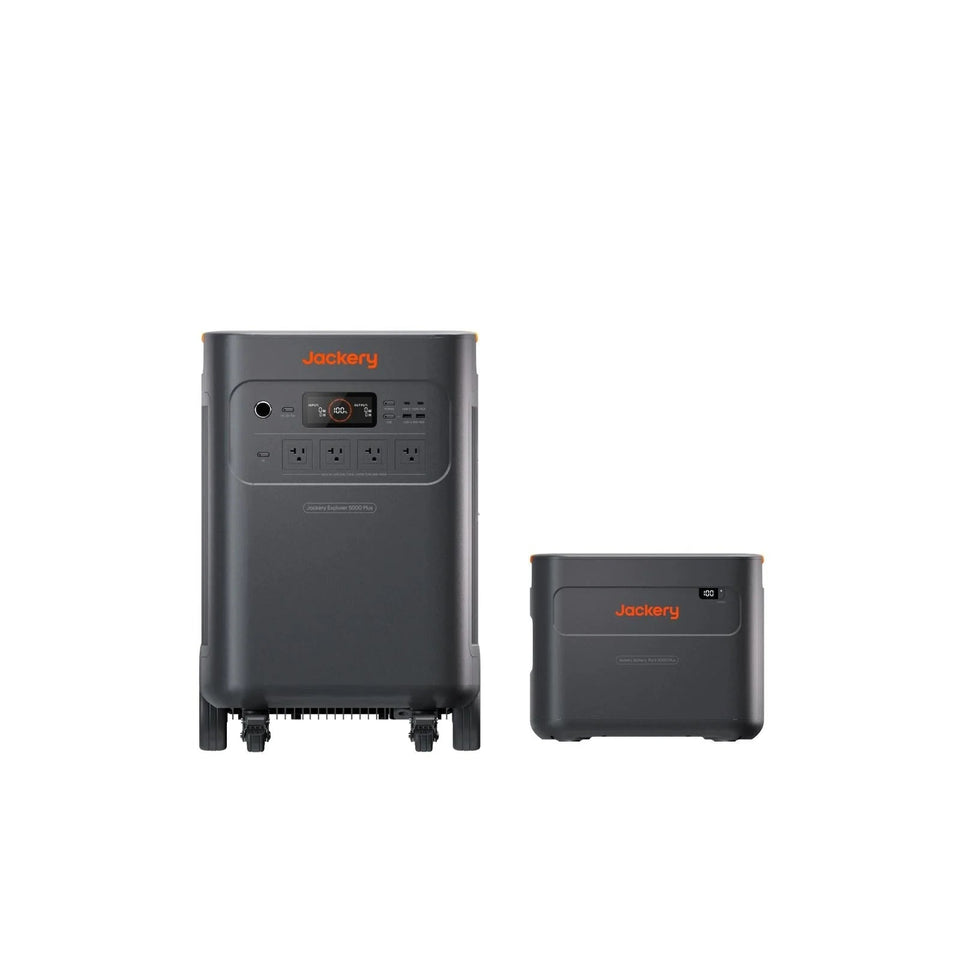
The Jackery Explorer 5000 Plus combines 5,040Wh LFP capacity, 7,200W continuous 120V/240V output (14,400W surge), and a 4,000W High-PV controller (135V–450V Voc) plus dual 600W Low-PV ports (16V–60V). Watch that 135V minimum High-PV floor: it requires at least three to four high-voltage rigid panels in series just to wake the High-PV input. For buyers who prefer a single-port 12V–150V (3,000W max) tolerance that wakes easily on smaller camp panels too, the Zendure SuperBase V4600 offers exceptional MPPT flexibility despite a shorter 3-year US warranty.
Tier 2: Mid-High Off-Grid & RV Roof Arrays (1,200W–2,400W Solar Input)
This sweet spot keeps a 2,000Wh–4,000Wh bank cycling continuously during storms or full-time RV boondocking without spending $4,000+ on 240V home stacks.
Best 1,200W–2,400W Solar Hub: BLUETTI AC200L (1,200W | 12V–145V Voc)
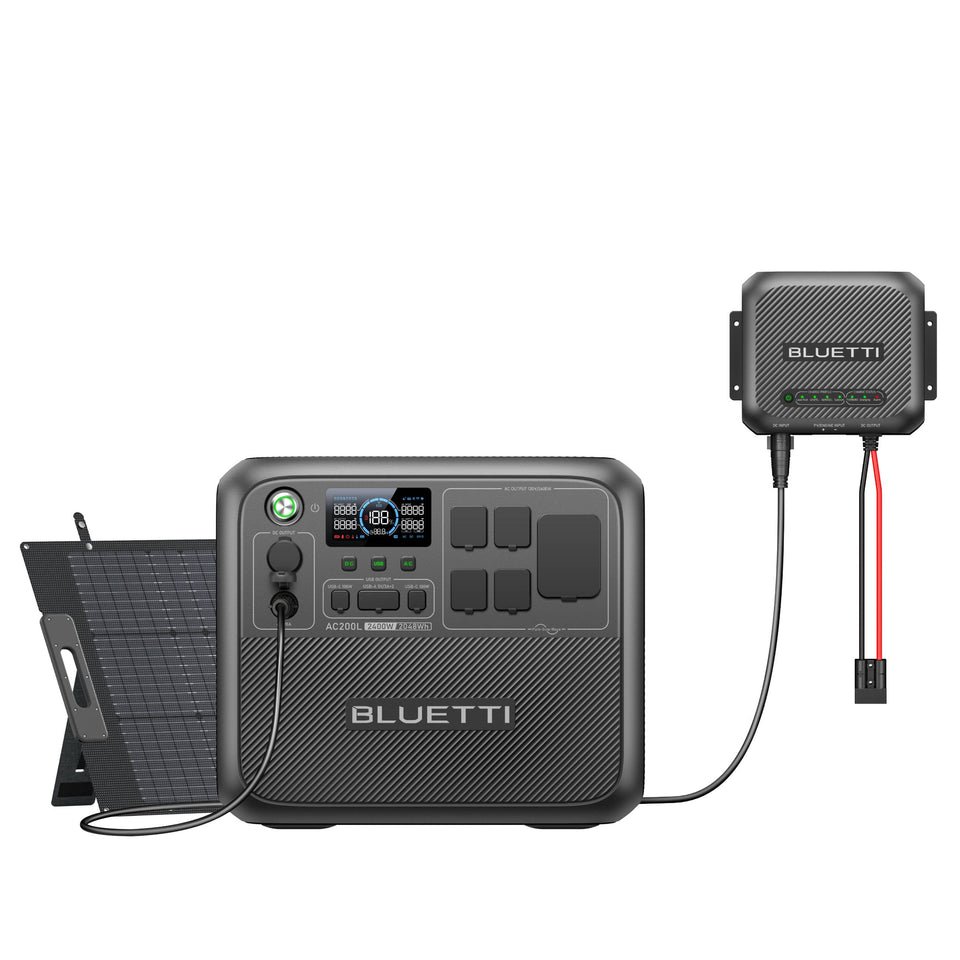
The BLUETTI AC200L pairs 2,048Wh LFP storage and 2,400W AC output (plus 30A TT-30R and 48V/8A RV DC outputs) with a 1,200W MPPT input spanning 12V–145V Voc. That ultra-wide voltage window makes it effortless to rewire existing RV roof arrays or three rigid 400W backyard panels in series—recovering 3.0 to 4.8kWh per day across typical US sun hours. Paired with CNET Labs’ verified 77.76% round-trip efficiency (>29h fridge test), it balances solar harvest with frugal standby power. (Need even faster midsize solar recovery? Value-focused alternatives like the OUPES Mega 2 push high-voltage solar up to 2,100W, while the Anker SOLIX F3800 accepts 2,400W across dual 11–60V XT60 ports—or 3,200W up to 165V on the F3800 Plus.)
Tier 3: Fast-Recovery 1kWh Overland & Camp Kits (500W–1,000W Solar Input)
Most sub-30-pound camping batteries throttle solar charging to 200W–300W, leaving hikers and weekenders scrambling when afternoon clouds roll in. Two current LFP units break that bottleneck cleanly:
Best 1,000W Compact Solar Kit: EcoFlow DELTA 3 Plus (Dual 500W MPPT)
At 27.6 lbs, the EcoFlow DELTA 3 Plus squeezes dual independent 500W XT60i MPPT controllers (1,000W total, 11V–60V Voc each) onto a 1,024Wh battery. Under strong midday sun (~700W–800W real-world), it refills from empty in roughly 90 minutes, recovering even faster when paired with portable bifacial 220W–400W panels. Add 1,800W continuous AC and a <10ms HID UPS, and it easily doubles as an apartment workstation backup. (By contrast, the ultra-quiet 23 dB DJI Power 1000 supports up to 800W solar, but requires purchasing external DJI SDC MPPT adapter modules separately.)
Best 500W Value Compact Kit: BLUETTI AC70 (500W | 12V–58V Voc)
For budget-minded campers under $450 street price, the BLUETTI AC70 (768Wh, 1,000W AC, 22.5 lbs) delivers 500W MPPT solar charging alongside independently verified usable AC capacity (705 Wh @ 250W via PowerOffGrid; 730.59 Wh @ 136W via APH Networks). Two 200W folding panels replenish a full night of CPAP and 12V camp-fridge draw before lunch.
Tier 4: Light Weekend & Entry Portable Kits (100W–400W Solar Input)
Light solar input works well when your daily energy burn stays low—or when grid wall charging covers most refills and solar acts as emergency trickle insurance:
- Jackery Explorer 2000 v2 (400W Dual DC8020 Solar | 2,042Wh): At 39.5 lbs, the Jackery Explorer 2000 v2 delivers unmatched weight-to-capacity ergonomics for apartment closets and car camping, backed by OutdoorGearLab (~2.5h AC recharge) and TechRadar appliance tests. Just recognize its 400W solar limit: refilling 2,042Wh on solar alone takes 6–8+ hours of strong sun, making it a grid-first outage unit rather than a heavy off-grid solar generator.
- Goal Zero Yeti 700 (200W Solar | 677Wh) & Anker SOLIX C300 (100W Solar | 288Wh): The IPX4 weather-resistant Goal Zero Yeti 700 shrugs off damp trailhead weather for light 12V coolers and camera kits, while the 9.1 lb Anker SOLIX C300 (Model A1722 with AC outlets) pairs cleanly with a single 100W folding panel to keep phones, laptops, and Wi-Fi routers alive indefinitely.
Safe Solar Array Matching Rules
Before purchasing panels for any tier above, verify three electrical checks from your generator’s user manual:
- Never Exceed Max Voc: Add the panel’s rated Open-Circuit Voltage (
Voc) for every panel wired in series, then add a 15%–20% cold-weather safety buffer if you live in freezing climates. - Match Port Connector Types: Check whether your unit uses universal MC4-to-XT60/XT90 leads, Jackery DC8020 plugs, or Pecron GX16MF ports requiring a minimum 32V wake-up voltage.
- Compare Top Solar-Ready Models: Browse our curated best solar generators list, read how long it takes to charge a power station with solar, and verify your exact panel voltage math inside solar input limits and MPPT explained.
Models Discussed in This Article
EcoFlow DELTA Pro Ultra
Built specifically for homeowners seeking high-voltage solar input (up to 5,600W) and modular 6kWh-per-stack scaling, though total kit cost and modular footprint exceed casual portable needs.
Jackery Explorer 5000 Plus
Combines a 5,040Wh LFP core, 7,200W split-phase output, 14,400W published surge headroom, and both High-PV (135–450V) and Low-PV solar inputs in a single wheeled chassis.
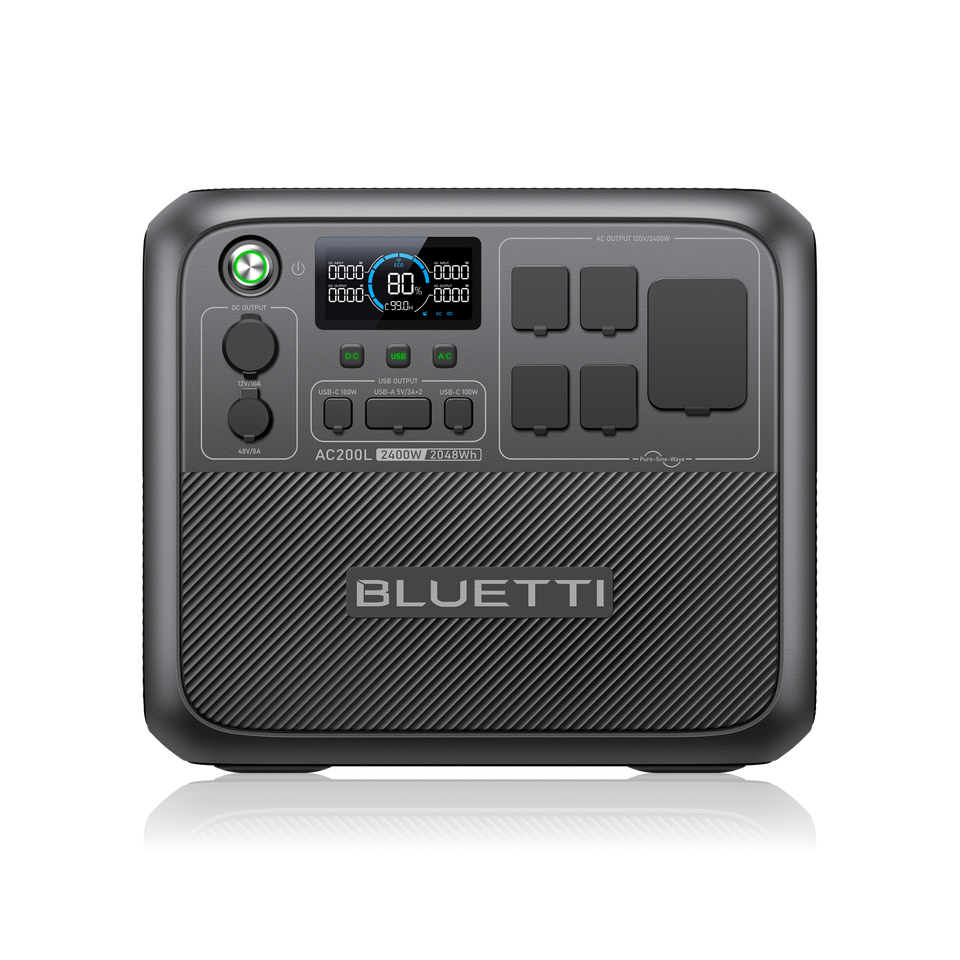
BLUETTI AC200L
Combines a high-efficiency 2,048Wh expandable platform, 1,200W high-voltage solar input (12–145V), and dedicated 30A TT-30R + 48V DC RV outputs at strong street pricing, trading away light weight and built-in wheels.
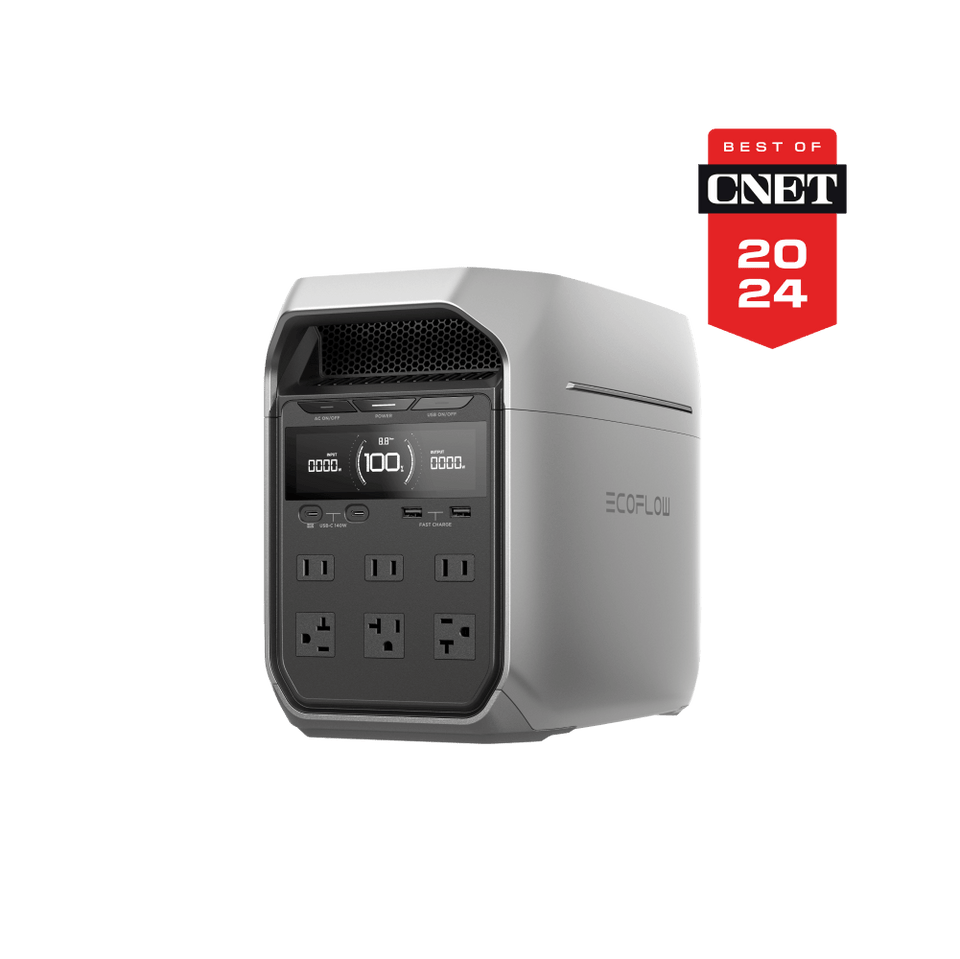
EcoFlow DELTA 3 Plus
Packs 1,000W dual-MPPT solar charging, sub-1-hour AC replenishment, and a sub-10 ms HID-capable UPS into a 27.6 lb chassis, making it more versatile than non-Plus 1kWh units.
Frequently Asked Questions
Why do my 400W solar panels only produce 260W to 320W into my solar generator?+
Solar panels are rated under laboratory Standard Test Conditions (STC) at 77°F (25°C) cell temperature with perpendicular irradiance. Outdoors, hot rooftop/ground temperatures, non-ideal sun angles, haze, cable resistance, and MPPT conversion losses typically trim real-world output to roughly 58%–85% of STC sticker ratings.
What happens if I plug too much solar panel wattage into an MPPT port vs. too much voltage?+
Exceeding the solar port's wattage or amperage rating (over-paneling) is generally safe as long as you stay strictly under the maximum Open-Circuit Voltage (Voc) limit; the MPPT controller simply clips excess current. Exceeding the maximum Voc voltage limit—especially during cold winter mornings when Voc rises—will permanently damage internal electronics.
How many watt-hours can a 1,200W solar array harvest in a typical US day?+
Using NREL Peak Sun Hours (typically 3.5 PSH in winter or cloudy northern states up to 5.5 PSH in sunny southern states) and a realistic 70%–75% derating factor, a 1,200W array delivers roughly 3,000Wh on short winter days and 4,500Wh–5,000Wh on clear summer afternoons.
Is a 400W solar limit like the Jackery Explorer 2000 v2 enough for multi-day off-grid outages?+
Only if your daily power draw stays modest (under ~1,200Wh–1,500Wh/day) and you get strong sun. At 400W max input (~280W–320W real-world), refilling a depleted 2,042Wh battery requires 6 to 8+ strong solar hours—meaning extended cloudy storms will drain the battery faster than solar can replace it.
Sources & Technical References
- View Source →[1]Government Research ResourceNational Renewable Energy Laboratory (NREL)Verified 2026-11-24PVWatts & US Peak Sun Hours Reference Data
Documents regional peak sun hours and real-world photovoltaic derating factors (ambient heat, angle, shading, controller loss).
- View Source →[2]Manufacturer User ManualEcoFlow Support DocumentationVerified 2026-11-24EcoFlow DELTA Pro Ultra User Manual & Technical Datasheet
Documents High-PV (80-450V, 15A, 4,000W) and Low-PV (30-150V, 15A, 1,600W) limits, operating temps, and UPS switching behavior.
- View Source →[3]Manufacturer SpecificationBLUETTI US OfficialVerified 2026-11-24BLUETTI AC200L Portable Power Station Official Specifications
2,048Wh LFP, 2,400W continuous AC, 3,600W Power Lifting mode, NEMA TT-30R + 48V/8A DC RV port, 1,200W solar (12-145V).
- View Source →[4]Manufacturer SpecificationEcoFlow US OfficialVerified 2026-11-24EcoFlow DELTA 3 Plus Official Specifications
1,024Wh LFP, 1,800W continuous AC, 1,000W dual 500W MPPT solar, <10ms UPS, 1,500W X-Stream AC charging.
- View Source →[5]Manufacturer SpecificationJackery US OfficialVerified 2026-11-24Jackery Explorer 2000 v2 Product Page & User Guide
2,042Wh LFP Cell-to-Body design, 39.5 lbs weight, 2,200W continuous AC, 400W dual DC8020 solar input.