Using an EcoFlow DELTA Pro for Whole-Home Power Backup: 2026 Engineering Guide
Realistic home backup guide for the 3,600Wh EcoFlow DELTA Pro: 120V vs dual-unit 240V Double Voltage Hub limits, NEC transfer switches, and DELTA Pro Ultra.
One 3,600Wh / 3,600W EcoFlow DELTA Pro (3,500-cycle LFP) outputs 120V only—covering critical 120V fridge and furnace circuits via a 30A TT-30R transfer switch, not 240V well pumps or dryers. Backing up 240V split-phase panels requires two DELTA Pro units plus an EcoFlow Double Voltage Hub (7,200W / 7,200Wh) and UL-listed transfer gear installed by a licensed electrician under NFPA 70 (NEC), making native single-box 240V units like the DELTA Pro Ultra or Anker SOLIX F3800 cleaner choices.
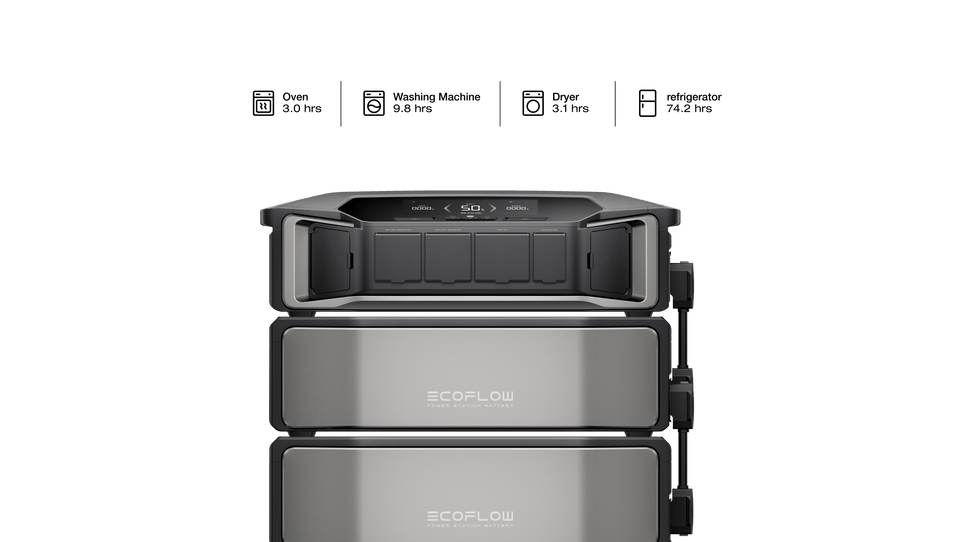
Connecting a portable battery station to a residential breaker panel starts with one electrical reality that glossy marketing brochures routinely blur: 120V single-phase backup versus 240V split-phase whole-home power.
When the original EcoFlow DELTA Pro (3,600Wh LiFePO4, 3,600W continuous AC) launched, homeowners embraced it as an indoor-safe, fume-free alternative to pull-start gas generators. Yet many shoppers still assume a single 99 lb DELTA Pro can feed an entire US breaker panel out of the box—or run 240V well pumps, central air conditioners, and clothes dryers overnight without draining flat. Understanding exact circuit voltage limits, Double Voltage Hub requirements, NFPA 70 compliance, and newer single-chassis 240V alternatives prevents costly installation mistakes.
Why One EcoFlow DELTA Pro Outputs 120V Only
Every standard North American residential main panel receives 240V split-phase power across two opposing 120V hot legs (L1 and L2) plus neutral and ground. A single EcoFlow DELTA Pro (3,600Wh LFP rated 3,500 cycles to 80%, 25 × 11 × 16 in, 99 lbs) has only one 120V inverter leg:
- Outlets on One Unit: Four
20ANEMA 5-20Routlets plus one30ANEMA TT-30RRV outlet (3,600Wcontinuous,7,200Wpeak surge,4,500Wresistive X-Boost). - What One Unit CAN Back Up: Plug-in critical cords or a dedicated
120V-only critical-load subpanel/transfer switch feeding a kitchen refrigerator, chest freezer, gas/propane furnace air handler, sump pump, Wi-Fi modem/router, medical devices, and selected room lights. - What One Unit CANNOT Run: Any true
240Vdouble-pole breaker circuit—submersible deep-well pumps, electric water heaters, central heat pumps/AC compressors, electric ranges, or240Velectric clothes dryers.
Look at the energy math honestly, too: standardized third-party AC capacity tests for the original DELTA Pro are not recorded in our lab registry, so applying standard 78%–88% AC conversion bands yields roughly 2,810–3,170Wh of usable AC output (88%–93% / 3,170–3,350Wh via DC). Averaging 300W across essential 120V appliances yields 9 to 10.5 hours of runtime from a single base unit—meaning multi-day outages demand either EcoFlow Smart Extra Batteries (scaling one unit up to 10.8kWh), 1,600W (11V–150V Voc, 15A) solar recharging, or an EcoFlow Dual Fuel Smart Generator.
Read 120V vs. 240V Home Backup Explained before mapping out breaker circuits.
Running 240V Split-Phase: The Two-Unit + Double Voltage Hub Workaround
To power true 240V split-phase circuits using original DELTA Pro hardware, EcoFlow requires linking two DELTA Pro units together (7,200Wh base storage / 7,200W continuous AC / up to 21.6kWh with four extra batteries):
- Standalone
240VTransfer Switch Path: Two DELTA Pros plug into the standard EcoFlow Double Voltage Hub (~3.7 lbs) via their Infinity ports, outputting120V/240Vsplit-phase (30Amax,7,200W) through aNEMA L14-30Rtwist-lock receptacle and dualNEMA 6-20Rports. ThatL14-30Routlet feeds a UL-listed30Amanual transfer switch or permitted generator inlet box. - Smart Home Panel / Smart Home Panel 2 Path: EcoFlow’s original Smart Home Panel natively integrates 1 or 2 DELTA Pros (allowing single-unit
120Vcircuit backup or dual-unit240V). If pairing original DELTA Pros with the newer Smart Home Panel 2, EcoFlow specifies a dedicated Double Voltage Hub – Power Input/Output adapter—and notes that two DELTA Pro units are required to discharge backup power into the panel (1unit alone only charges).
Reality Check on High-Draw 240V Appliances
Even when linked at 7,200W (7,200Wh dual capacity -> ~5,600–6,330Wh usable AC), avoid pretending batteries replace utility power for electric heating hogs:
- Electric Clothes Dryer (
~5,000W–5,500W): Runs—but empties a7.2kWhdual DELTA Pro stack in roughly 60–75 minutes. - Electric Oven (
~2,500W–4,000W): Rapidly consumes multi-hour fridge reserve for a single meal. - 240V Well Pump (
~1,200W–2,000Wintermittent): Very practical with7,200Wsurge headroom (~15–20minutes daily pumping uses only~400–600Wh).
Always prioritize refrigerators, medical gear, communications, water pumps, and gas furnace blowers during extended grid failures—shedding resistive heat loads onto propane or gas cooking appliances.
Safe Panel Connection Under NFPA 70 (NEC)
Never attempt backfeeding a wall outlet with an illegal double-male “suicide cord,” and never wire breaker-box modifications DIY. Dangerous backfeeding can energize neighborhood utility lines and fatally injure linemen.
Any residential panel connection in the United States must satisfy NFPA 70 (National Electrical Code) transfer equipment rules, local Authority Having Jurisdiction (AHJ) permits, and utility safety standards through a licensed electrician:
- UL-Listed Manual Transfer Switch (6-to-10 Circuit): Cleanly isolates selected circuits (
120VviaTT-30for one unit, or120V/240VviaL14-30for two units) from utility power with mechanical break-before-make switching. - Permitted Panel Interlock Kit + Exterior/Garage Generator Inlet: Uses a mechanical interlock plate on the main breaker box so the main utility breaker and generator inlet breaker can never engage simultaneously. Note that your licensed electrician must verify neutral-ground bonding configuration (portable EcoFlow stations operate with a floating neutral by default unless bonded via Smart Home Panel or a bonded transfer setup per NEC rules).
- Automated Smart Home Panel Ecosystem: Hardwired sub-panel providing automatic outage cutover (
~20–30 msdepending on panel/station generation), circuit-level app control, and240Vfast recharging up to3,000W+.
Consult Transfer Equipment & Professional Installation for a full licensed-electrician checklist.
2026 Contrast: Original DELTA Pro vs. Native Single-Box 240V Successors
Paying $4,500–$5,500+ for two 99 lb DELTA Pros (198 lbs combined) plus a Double Voltage Hub rarely makes financial or electrical sense in 2026 when newer platforms pack native 120V/240V split-phase output inside one system:
| Backup Architecture | Original EcoFlow DELTA Pro (2-Unit 240V Kit) | EcoFlow DELTA Pro Ultra (Starter Stack) | Anker SOLIX F3800 (Original A1790) | Jackery Explorer 5000 Plus |
|---|---|---|---|---|
How 240V Is Achieved |
2 units + Double Voltage Hub | Native single-stack inverter | Native single wheeled unit | Native single wheeled unit |
| Base Capacity | 7,200Wh (2 × 3,600Wh LFP) |
6,144Wh LFP |
3,840Wh LFP |
5,040Wh LFP |
| Continuous / Surge AC | 7,200W (2 × 3,600W) |
7,200W / 10,800W surge |
6,000W / 9,000W surge |
7,200W / 14,400W surge |
| Native 240V Port | Hub L14-30R + 6-20R |
L14-30R + Smart Home Panel 2 |
14-50R + L14-30R |
14-50R + L14-30R + STS |
| Max Solar Input & Voc | 3,200W (2 × 1,600W, 11–150V) |
5,600W (80–450V + 30–150V) |
2,400W (11–60V; Plus: 165V) |
4,000W High-PV (135–450V) |
| UPS / Cold Charging | ~30 ms EPS / 32°F charge cutoff |
0 ms Online UPS / -4°F self-heat |
<20 ms EPS / 32°F cutoff |
0 ms UPS claims on select ports |
| Weight & Form | ~202 lbs across 2 rolling boxes + hub |
181.8 lbs split (70 lb head / 111.8 lb batt) |
132.3 lbs single wheeled chassis |
134.5 lbs single wheeled chassis |
Hidden Idle-Drain Consideration
Notice one subtle trade-off proven in CNET Labs benchmarks: large 240V split-phase inverters carry noticeably higher internal idle draw during light intermittent tasks than 120V-only inverters. In CNET’s standardized refrigerator test, the 3,840Wh split-phase Anker SOLIX F3800 delivered roughly 25.68 hours, actually trailing the 2,048Wh 120V-only BLUETTI AC200L (>29 hours). That means if your home has gas heat, gas water heating, and city water (no 240V well pump), running one single 120V unit (DELTA Pro or AC200L) into a 120V manual transfer switch often beats a 240V stack on runtime efficiency and cost.
Bottom Line: When Does the Original DELTA Pro Still Fit?
- Buy a discounted single EcoFlow DELTA Pro (
3,600Wh) if you already own compatible EcoFlow batteries, need a wheeled99 lb120Vstation with a built-in30A TT-30Routlet for an RV or120Vessential-circuits transfer switch, and want1,600W(150V) solar headroom. - Skip building a two-unit DELTA Pro stack from scratch if you need true
240Vhome panel backup—compare the EcoFlow DELTA Pro Ultra (5,600Wrooftop-class PV +-4°Fself-heating), Anker SOLIX F3800 (~$2,999street entry with native14-50R/L14-30R), or Jackery Explorer 5000 Plus (14,400Wsurge headroom) using our Product Comparison Tool.
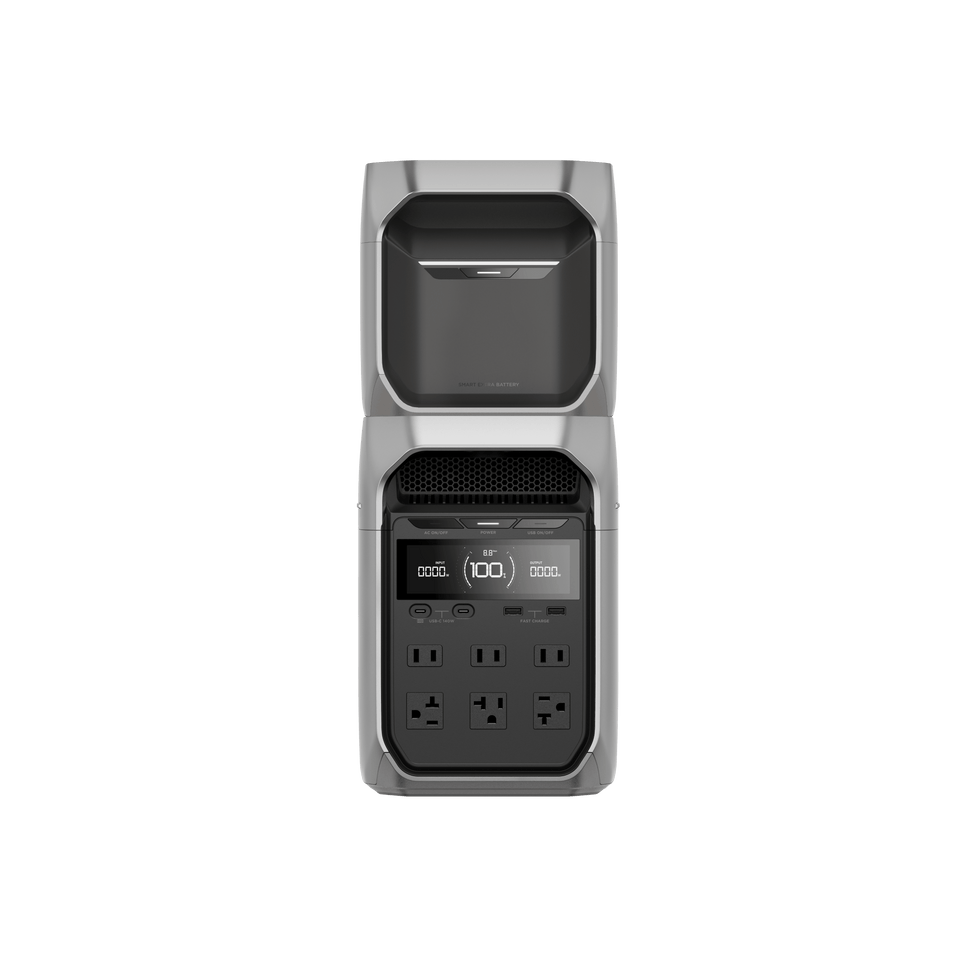
Models Discussed in This Article
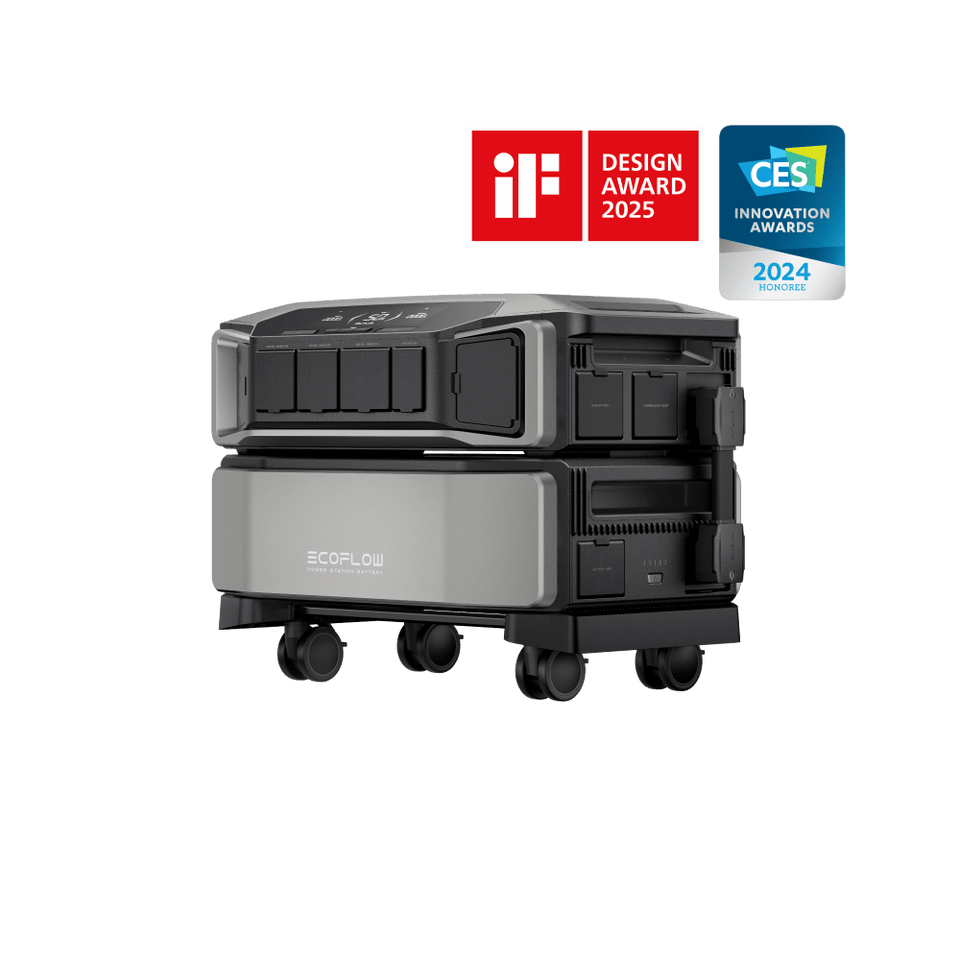
EcoFlow DELTA Pro Ultra
Built specifically for homeowners seeking high-voltage solar input (up to 5,600W) and modular 6kWh-per-stack scaling, though total kit cost and modular footprint exceed casual portable needs.

Anker SOLIX F3800
One of the most approachable plug-and-play 120V/240V wheeled units thanks to built-in NEMA 14-50R and L14-30R ports, though high idle overhead on light loads and the 60V solar cap (on the original non-Plus SKU) require careful sizing.
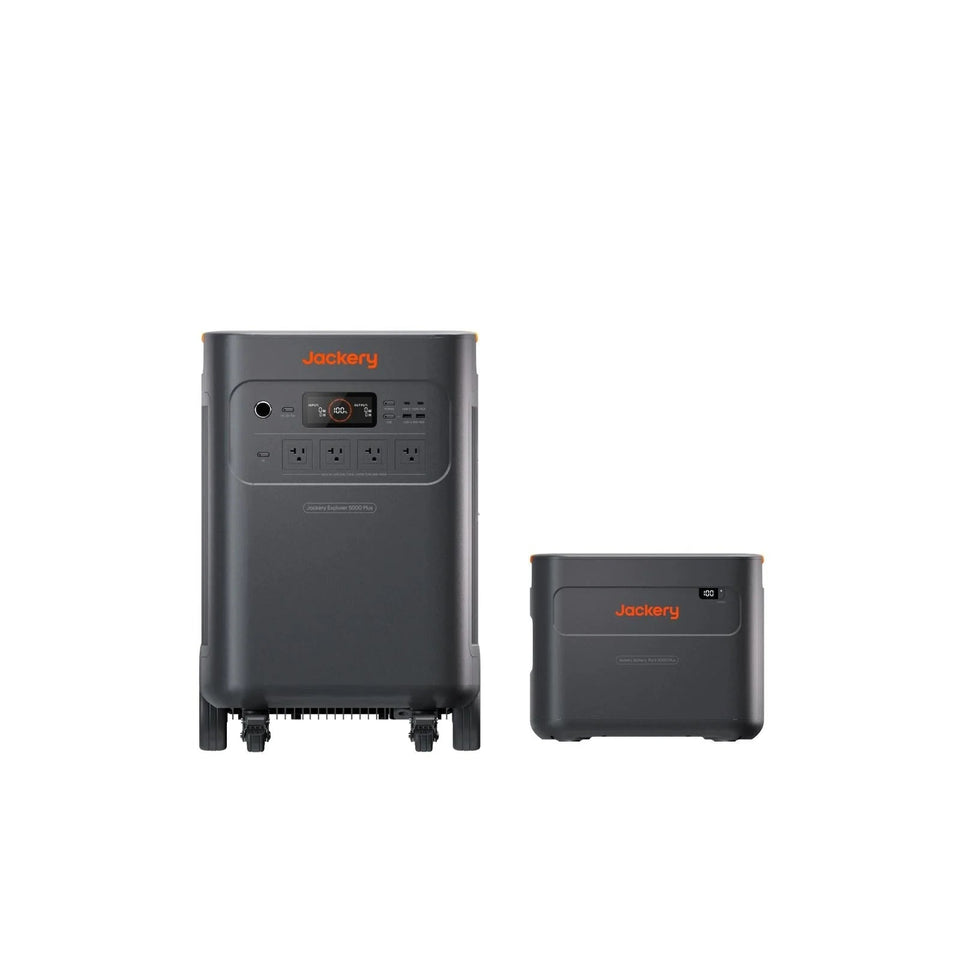
Jackery Explorer 5000 Plus
Combines a 5,040Wh LFP core, 7,200W split-phase output, 14,400W published surge headroom, and both High-PV (135–450V) and Low-PV solar inputs in a single wheeled chassis.
Frequently Asked Questions
Can a single EcoFlow DELTA Pro run 240V home appliances like a well pump or electric dryer?+
No. One EcoFlow DELTA Pro outputs 120V AC only (four 20A NEMA 5-20R outlets plus one 30A NEMA TT-30R RV outlet, 3,600W continuous). To generate 240V split-phase power (7,200W), you must link two DELTA Pro units using EcoFlow's Double Voltage Hub or Smart Home Panel hardware.
Which Double Voltage Hub do I need to connect two DELTA Pros to a Smart Home Panel 2?+
EcoFlow offers two distinct hubs: the standard Double Voltage Hub (outputs 240V via NEMA L14-30R and dual 6-20R ports for manual transfer switches/inlet boxes) and the Double Voltage Hub Power Input/Output version specifically engineered to bridge two DELTA Pro units into the Smart Home Panel 2 for charging and discharging. Always verify exact SKU compatibility with your electrician.
How long does a 3,600Wh DELTA Pro actually run a house during an outage?+
One 3,600Wh DELTA Pro delivers roughly 2,800–3,170Wh of usable AC output (78%–88% AC conversion window). Running strictly essential 120V loads averaging 250W–350W (fridge cycling, router, LED lights, intermittent gas furnace blower) lasts roughly 8–12 hours per unit—not days without solar or extra batteries. Heavy 240V heaters or electric dryers (5,000W+) drain even a 7,200Wh dual-unit stack in about an hour.
Do I need an electrician to connect a DELTA Pro to my breaker box?+
Yes. Any connection to household branch wiring via a manual transfer switch, Smart Home Panel, or panel interlock + generator inlet box must comply with NFPA 70 (National Electrical Code), local Authority Having Jurisdiction (AHJ) permits, and utility anti-backfeeding rules—and should be installed by a licensed US electrician.
Sources & Technical References
- View Source →[1]Manufacturer SpecificationEcoFlow US OfficialVerified 2026-11-25EcoFlow DELTA Pro Portable Power Station Specifications
3,600Wh LFP expandable up to 25kWh ecosystem, 3,600W continuous AC (7,200W split-phase with Double Voltage Hub), 1,600W 11-150V solar input.
- View Source →[2]Manufacturer SpecificationEcoFlow US OfficialVerified 2026-11-24EcoFlow DELTA Pro Ultra Product Page & Specifications
Official North American 120V/240V split-phase inverter and 6,144Wh LiFePO4 battery module specs.
- View Source →[3]Manufacturer SpecificationAnker SOLIX US OfficialVerified 2026-11-24Anker SOLIX F3800 Portable Power Station Official Specifications
North American model specs including NEMA 14-50R, L14-30R, 6,000W output, 3,840Wh capacity, and 11-60V dual solar input.
- View Source →[4]Manufacturer SpecificationJackery US OfficialVerified 2026-11-24Jackery Explorer 5000 Plus Official Product Specifications
5,040Wh LFP capacity, 7,200W/14,400W AC specs, High-PV (135-450V) and Low-PV (16-60V) limits, and warranty terms.
- View Source →[5]Technical & Safety StandardNational Fire Protection Association (NFPA)Verified 2026-11-24NFPA 70 National Electrical Code (NEC) Transfer Equipment & Standby Power Overview
Governs transfer switches, panel interlocks, and prohibition of unsafe backfeeding on US residential electrical panels.
- View Source →[6]Third-Party Independent ReviewCNETVerified 2026-11-24CNET Portable Power Station Lab Efficiency & Refrigerator Runtime Benchmarks
Documents standardized refrigerator runtime and round-trip efficiency testing including BLUETTI AC200L (77.76% RTE, >29h fridge test) and Anker SOLIX F3800 (~25.68h fridge stress runtime due to dual-voltage inverter overhead).