What Can a 5,000-Watt Generator Run? 240V Home Loads, Surge & Runtime
Learn what a 5,000W–7,200W 120V/240V generator runs, how LRA motor surges affect well pumps and central AC, 5kWh battery drain math, and NEC transfer rules.
A 5,000W–7,200W 120V/240V split-phase battery system can power essential 120V kitchen and furnace circuits plus select 240V loads like 1 HP well pumps—provided peak surge covers locked-rotor amperage (LRA). However, sustained 3,000W–5,000W draws drain a 5kWh pack in just 0.8–1.5 hours at 78%–88% AC efficiency, and panel tie-ins require a licensed electrician and UL-listed transfer switch.
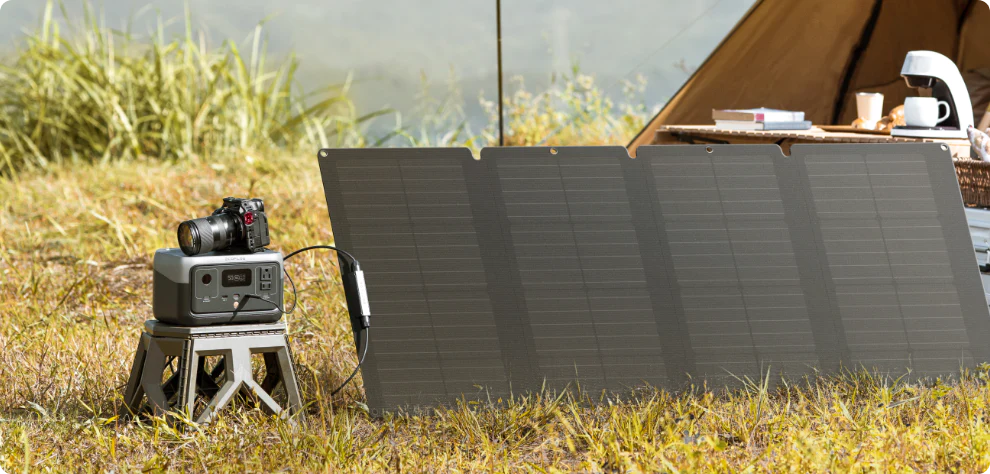
Stepping up from a 2,000W portable unit into the 5,000W–7,200W class crosses the most important dividing line in North American residential backup: true 120V/240V split-phase capability. At 2,000W, you are mostly running extension cords to keep food cold and laptops online. At 5,000W to 7,200W, a single unit can feed dedicated household circuits through a listed transfer switch—including gas furnace blowers, sump pumps, well pumps, and multiple kitchen appliances at once.
Yet two traps catch buyers at this level. First, not every high-wattage battery outputs 240V (and dual-120V hacks don’t work). Second, wattage is not endurance: pulling 4,000W–5,000W out of a 5kWh battery empties it faster than most homeowners expect.
120V vs. 120V/240V Split-Phase Systems in the 5,000W–7,200W Class
In US homes, standard wall outlets pull 120V from one hot leg (L1 or L2) to Neutral, while heavy double-pole breakers pull 240V across both opposite hot legs simultaneously. Stacking two generic 120V units does not produce split-phase 240V unless their manufacturer engineers synchronized dual-phase linking—or unless the power station houses a native split-phase inverter inside one chassis.
Current US battery stations specifically built around 5,000W–7,200W native 120V/240V split-phase power include:
| System | Base Capacity (Expandable Max) | Continuous / Surge Output | Split-Phase Outlets | Solar Input Ceiling | Weight & Chassis |
|---|---|---|---|---|---|
| Jackery Explorer 5000 Plus | 5,040 Wh (60.48 kWh max) |
7,200W / 14,400W surge | NEMA L14-30R + NEMA 14-50 |
4,000W High-PV (135–450V) + 1,200W Low-PV |
134.5 lbs wheeled tower |
| Anker SOLIX F3800 | 3,840 Wh (53.76 kWh max) |
6,000W / 9,000W surge | NEMA L14-30R + NEMA 14-50R |
2,400W (11–60V; F3800 Plus raises to 165V / 3,200W) |
132.3 lbs wheeled suitcase |
| EcoFlow DELTA Pro Ultra | 6,144 Wh (90 kWh max via 3 units) |
7,200W / 10,800W surge | NEMA L14-30R + L6-30R / SHP2 |
5,600W (80–450V + 30–150V) |
70 lb inverter + 111.8 lb battery |
| Zendure SuperBase V4600 | 4,608 Wh (46.08 kWh max) |
3,800W single (7,600W dual-unit) |
TT-30R + 240V twist-lock |
3,000W (12–150V XT90) |
121.3 lbs motorized wheels |
Compare the Zendure SuperBase V4600 carefully if you need heavy 240V power: a single unit stops at 3,800W, requiring a second linked SuperBase V to match the 7,200W single-unit ceiling of the Jackery Explorer 5000 Plus or EcoFlow DELTA Pro Ultra.
What about traditional 5,000W gas or dual-fuel portable generators? While combustion units can refuel with gasoline or propane cans during week-long grid failures, they produce roughly 70–80+ dB of engine noise and deadly carbon monoxide (CO) exhaust—requiring outdoor placement at least 20 feet away from doors, windows, and vents. Battery-based LFP inverters operate safely indoors (~30 dB quiet mode on Jackery 5000 Plus / <30 dB under 2,000W on EcoFlow DELTA Pro Ultra) when properly ventilated and permitted.
Understanding Locked-Rotor Amperage (LRA): Well Pumps, Sump Pumps & Central AC
Advertised continuous wattage (5,000W–7,200W) only tells half the story for motorized appliances. Whenever an electric motor starts from a dead stop, its rotor briefly stalls against magnetic inertia—pulling Locked-Rotor Amperage (LRA) for a fraction of a second before spinning up to normal running current.
To estimate peak motor startup watts before relying on a backup battery, multiply the motor nameplate’s LRA rating × operating voltage (120V or 240V):
- 1/2 HP Sump Pump (120V): Runs near 800W, but inductive startup spikes reach roughly 2,200W (and old or bound impellers push higher). A 6,000W–7,200W split-phase unit handles a 120V sump pump easily alongside kitchen appliances.
- 1 HP Submersible Well Pump (240V): Typically draws around 1,800W once pumping, yet startup surges hit ~4,800W–6,500W+ depending on pump depth and control-box capacitor design. Always read the pump control box or breaker panel notes—on 240V units with
9,000W–14,400Wsurge specs (like the Jackery 5000 Plus’s14,400Wpublished ceiling), verify LRA first because manufacturer datasheets often omit exact surge duration in milliseconds. - 13,500 BTU RV Roof Air Conditioner (120V): Draws roughly 1,500W running, with raw startup surges exceeding 3,200W unless fitted with an RV soft-starter.
- Central Home Air Conditioner (2.5 to 4 Ton, 240V): Typically pulls 3,000W–4,500W continuously, while raw LRA startups commonly spike to 10,000W–18,000W+ (
45A–80ALRA ×240V). Without an HVAC technician installing an aftermarket soft starter—and confirming the reduced LRA still clears your inverter’s surge rating—a single 5,000W–7,200W inverter frequently trips when central AC kicks on.
For deeper motor-surge analysis, read Continuous Output vs. Surge Output Explained.
Heavy Load Battery Drain: Why 5kWh Empties in ~0.8–1.5 Hours at High Draw
Gas generator owners often assume a 5,000W battery works like a 5,000W engine with a 7-gallon fuel tank. Here is the reality check for a 5,040Wh LiFePO4 battery (which delivers roughly 3,930–4,435 Wh of usable AC energy under realistic 78%–88% conversion efficiency):
| Continuous Scenario | Total AC Draw | Estimated Runtime (3,840Wh Anker F3800) | Estimated Runtime (5,040Wh Jackery 5000 Plus) | Estimated Runtime (6,144Wh DELTA Pro Ultra) |
|---|---|---|---|---|
| Max Sustained Heavy Load (e.g., Central AC + Well + Appliances) | 5,000W | ~0.6–0.7 hrs (36–41 min) | ~0.8–0.9 hrs (47–53 min) | ~1.0–1.1 hrs (58–65 min) |
| Moderate Heavy Load (e.g., 2.5-ton AC or Electric Water Heater) | 3,000W | ~1.0–1.1 hrs | ~1.3–1.5 hrs | ~1.6–1.8 hrs |
| Realistic Essential Circuit Mix (Fridge + Gas Furnace Fan + Sump + Wi-Fi/Lights avg.) | 600W avg | ~4.5–5.4 hrs (note idle draw) | ~6.5–7.4 hrs | ~8.0–9.0 hrs |
Overnight Fridge-Only Draw (~65W cyclic avg) |
65W avg | ~25.68 hrs verified (CNET test) | ~35–48 hrs est. | ~45–60 hrs est. |
Notice two crucial takeaways from that math:
- Sustained
3,000W–5,000Wdraws burn through a single 5kWh pack in0.8–1.5 hours. If you actually intend to run 240V central air conditioning, electric cooking, or heavy water heating during multi-day blackouts, plan on 10kWh–30kWh+ of modular expansion batteries paired with 3,000W–5,600W of solar input (or hybrid dual-fuel generator recharging). - Oversized 240V inverters burn noticeable idle power on tiny loads. As CNET Labs documented on the 3,840Wh Anker SOLIX F3800, its large 6,000W dual-voltage inverter ran a solo refrigerator for roughly 25.68 hours—shorter than the 2,048Wh 120V BLUETTI AC200L (
>29 hours), because split-phase hardware draws heavier baseline standby watts every hour it stays switched on.
Amperage & NEC Transfer Compliance: Never Improvise Panel Hookups
Understanding amperage prevents tripped breakers on the power station outlets themselves (Amps = Watts ÷ Volts):
- At 120V, delivering
5,000Wwould require41.7A—far beyond a single15Aor20Ahousehold wall outlet (1,800W–2,400Wmax). - At 240V split-phase,
5,000Wsplits across two opposite 120V legs at20.8Aper leg, and7,200Wreaches30.0A—matching the standardNEMA L14-30R(30A) twist-lock inlet common on US residential transfer switches (whileNEMA 14-50Rsupports up to 50A receptacles, capped by each inverter’s6,000Wor7,200Wcontinuous limit).
NFPA 70 (NEC) & Electrician Requirement: Integrating a 5,000W–7,200W 120V/240V system into household circuits—whether via a manual UL-listed transfer switch, a listed breaker panel interlock kit, or a manufacturer Smart Transfer Switch / Smart Home Panel—must be performed by a licensed electrician under local Authority Having Jurisdiction (AHJ) permitting and NFPA 70 (National Electrical Code) standards. Do not attempt DIY breaker panel wiring, and pay close attention to neutral-ground bonding rules and multi-wire branch circuits (MWBC).
Read our full conceptual guide to Transfer Equipment & Professional Installation and compare the top three 240V flagships head-to-head in EcoFlow DELTA Pro Ultra vs. Anker SOLIX F3800 or size your prioritized home circuits with the Appliance Wattage Calculator.
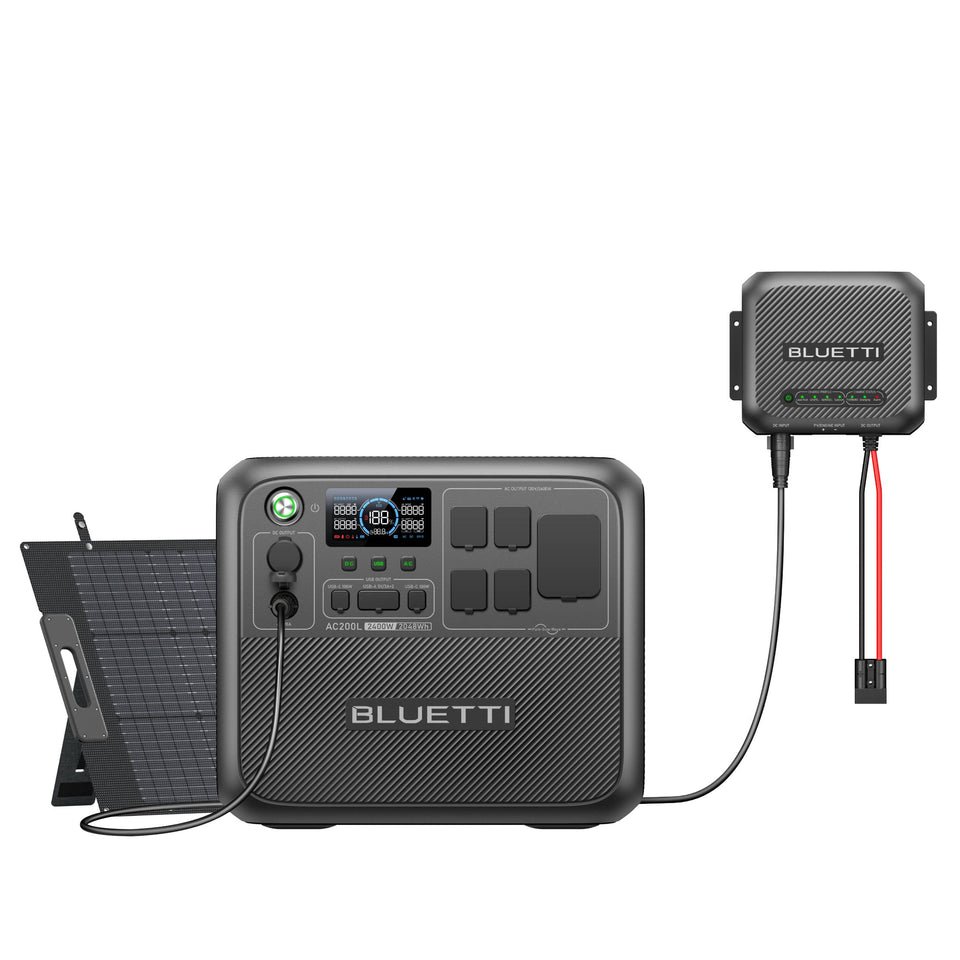
Models Discussed in This Article
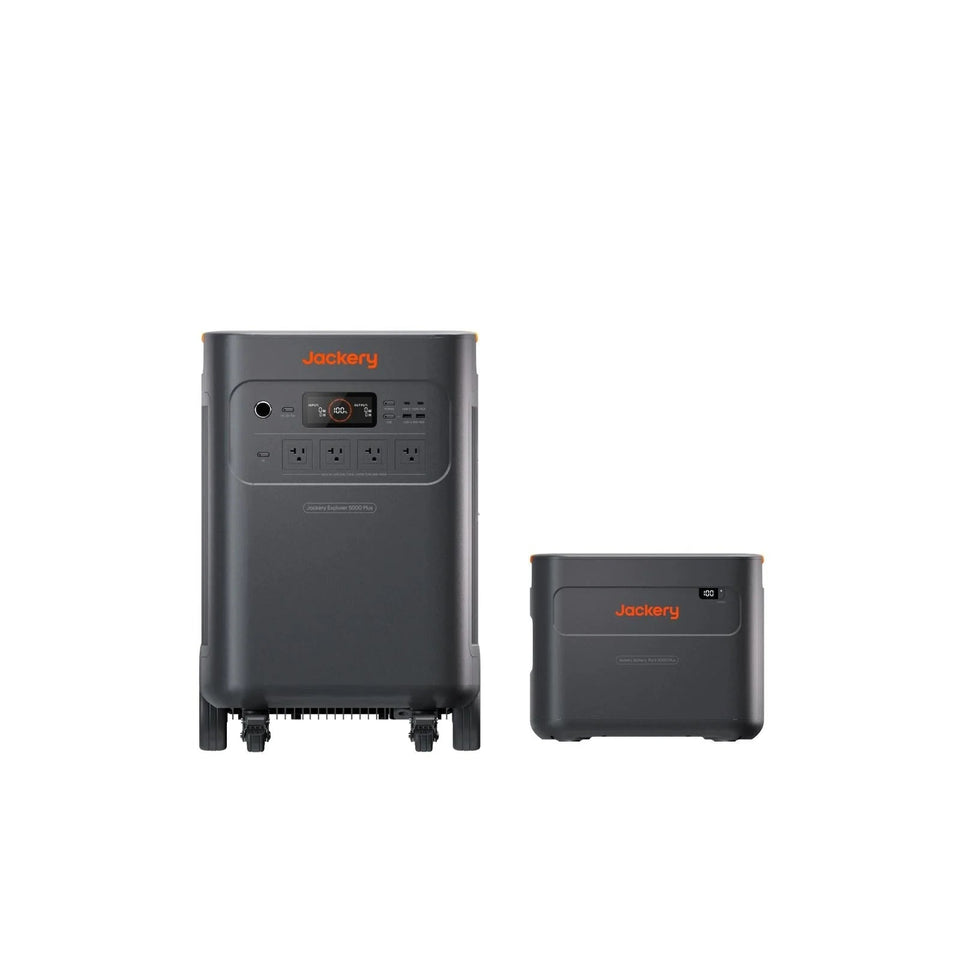
Jackery Explorer 5000 Plus
Combines a 5,040Wh LFP core, 7,200W split-phase output, 14,400W published surge headroom, and both High-PV (135–450V) and Low-PV solar inputs in a single wheeled chassis.

Anker SOLIX F3800
One of the most approachable plug-and-play 120V/240V wheeled units thanks to built-in NEMA 14-50R and L14-30R ports, though high idle overhead on light loads and the 60V solar cap (on the original non-Plus SKU) require careful sizing.
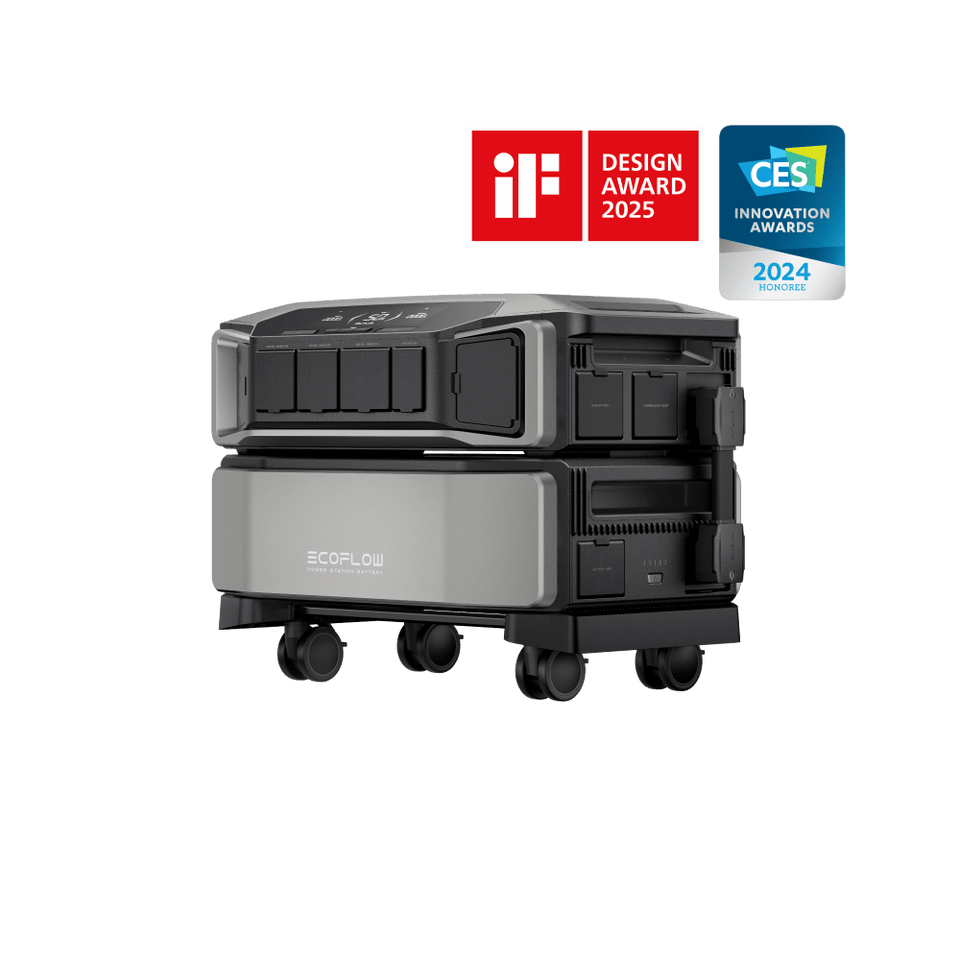
EcoFlow DELTA Pro Ultra
Built specifically for homeowners seeking high-voltage solar input (up to 5,600W) and modular 6kWh-per-stack scaling, though total kit cost and modular footprint exceed casual portable needs.
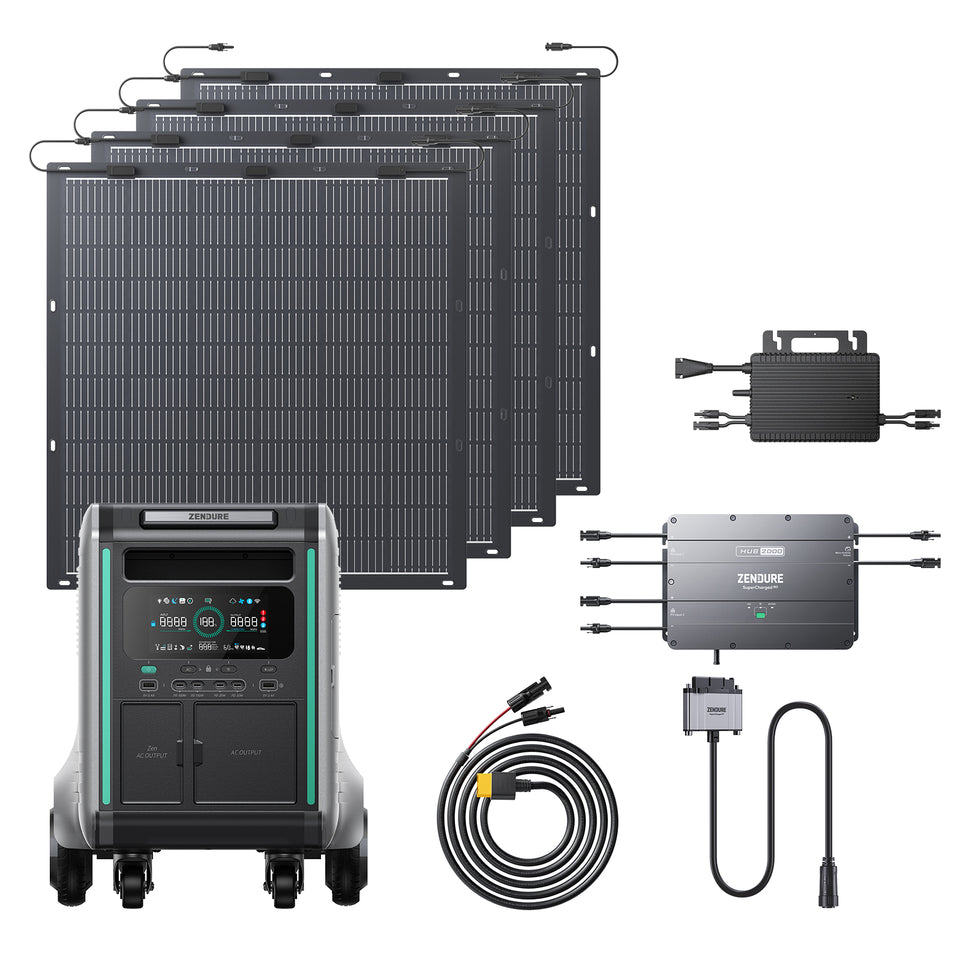
Zendure SuperBase V4600
Stands out for 3,000W single-port 12–150V solar flexibility and EV Level 2 charging support, though its 3,800W single-unit inverter output and 3-year US warranty trail 5-year 7,200W competitors.
Frequently Asked Questions
Can a 5,000-watt to 7,200-watt solar generator run a central air conditioner?+
Often not without modifications or load management. A typical 2.5- to 4-ton central AC draws 3,000W–4,500W continuously, while its compressor Locked-Rotor Amperage (LRA) startup spike can reach 10,000W–18,000W+. Unless your HVAC contractor installs a compatible soft starter and your system's published surge output clears that reduced LRA draw—with substantial battery expansion—central AC can overload a 5,000W–7,200W inverter.
How long will a 5kWh battery last if I pull 3,000W to 5,000W continuously?+
Roughly 47 minutes to 1.5 hours. Using realistic 78%–88% AC delivery on a 5,040Wh battery (around 3,930–4,435 Wh usable), a constant 5,000W load depletes the pack in ~0.8–0.9 hours, while 3,000W lasts ~1.3–1.5 hours. Whole-home systems sustain multi-hour outages by cycling essential 400W–800W circuits and adding expansion batteries.
Do I need a 120V/240V split-phase generator if I have a well pump?+
Check your well pump's breaker and pressure-switch nameplate first. Most deep residential submersible well pumps operate on 240V double-pole circuits (a 1 HP 240V pump typically runs near 1,800W and surges near 4,800W+), which 120V-only power stations cannot power. Shallow jet pumps on 120V circuits can run on 120V inverters if startup surge is covered.
Can I plug a 5,000W generator into my dryer outlet using a male-to-male cord?+
Never. Double-ended male adapter cords ('suicide cords') violate NFPA 70 (NEC), create lethal exposed live prongs, can electrocute utility lineworkers via backfeeding, and risk electrical fires. Connecting any backup generator to home wiring requires a UL-listed transfer switch, listed interlock kit, or smart home panel installed by a licensed electrician.
Sources & Technical References
- View Source →[1]Manufacturer SpecificationJackery US OfficialVerified 2026-11-24Jackery Explorer 5000 Plus Official Product Specifications
5,040Wh LFP capacity, 7,200W/14,400W AC specs, High-PV (135-450V) and Low-PV (16-60V) limits, and warranty terms.
- View Source →[2]Manufacturer SpecificationAnker SOLIX US OfficialVerified 2026-11-24Anker SOLIX F3800 Portable Power Station Official Specifications
North American model specs including NEMA 14-50R, L14-30R, 6,000W output, 3,840Wh capacity, and 11-60V dual solar input.
- View Source →[3]Manufacturer SpecificationEcoFlow US OfficialVerified 2026-11-24EcoFlow DELTA Pro Ultra Product Page & Specifications
Official North American 120V/240V split-phase inverter and 6,144Wh LiFePO4 battery module specs.
- View Source →[4]Technical & Safety StandardNational Fire Protection Association (NFPA)Verified 2026-11-24NFPA 70 National Electrical Code (NEC) Transfer Equipment & Standby Power Overview
Governs transfer switches, panel interlocks, and prohibition of unsafe backfeeding on US residential electrical panels.
- View Source →[5]Third-Party Independent ReviewCNETVerified 2026-11-24CNET Portable Power Station Lab Efficiency & Refrigerator Runtime Benchmarks
Documents standardized refrigerator runtime and round-trip efficiency testing including BLUETTI AC200L (77.76% RTE, >29h fridge test) and Anker SOLIX F3800 (~25.68h fridge stress runtime due to dual-voltage inverter overhead).