EcoFlow Portable Power Stations & Solar Generators: Brand Guide
Compare EcoFlow RIVER and DELTA portable power stations, X-Stream charging, dual-MPPT solar inputs, LFP longevity, and Smart Home Panel 2 trade-offs.
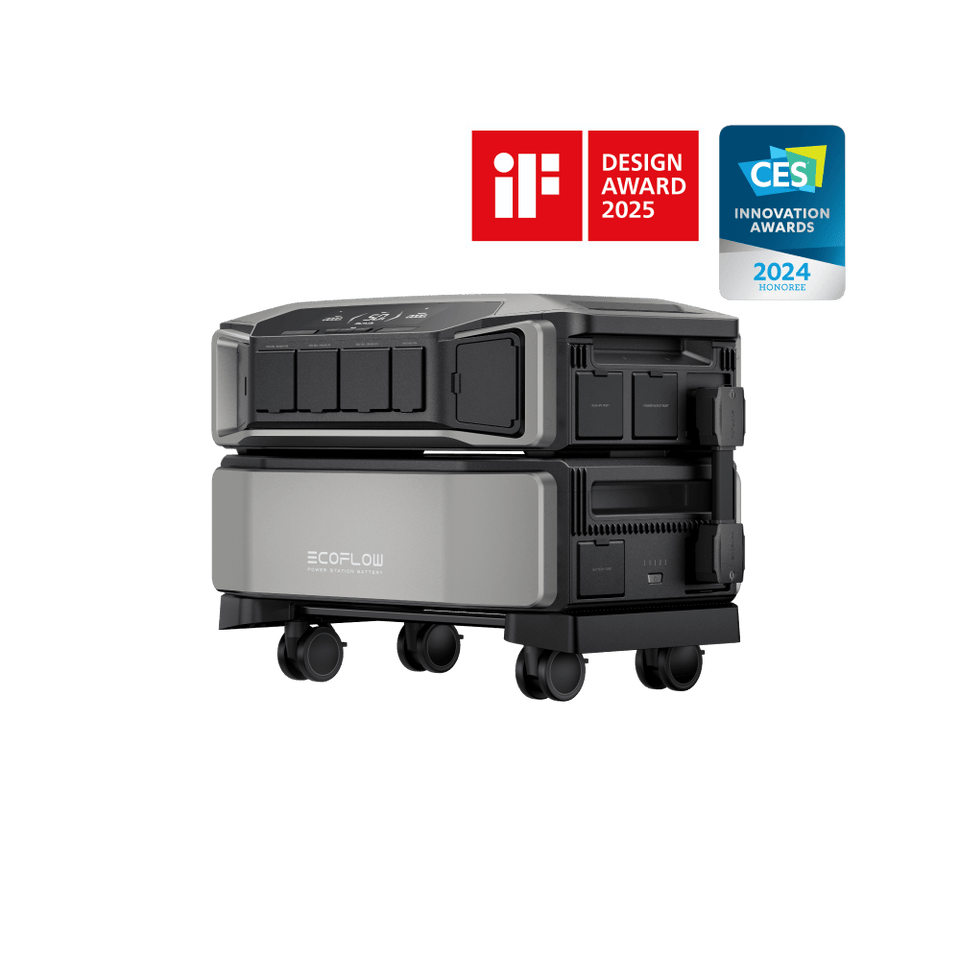
EcoFlow Brand Strengths
- ✓Industry-leading AC fast charging (X-Stream) and high dual-MPPT solar voltage support on flagship units
- ✓Sub-10 ms UPS and 0 ms Online UPS options (plus HID USB signaling on DELTA 3 Plus)
- ✓Modular Smart Home Panel 2 integration scales from single-stack 6kWh up to 90kWh whole-home backup
Brand Trade-offs & Considerations
- !Full home-circuit automation adds significant cost for Smart Home Panel 2 and licensed electrician labor
- !X-Boost raises resistive wattage limits by dropping voltage — unsuitable for motors or sensitive electronics
- !Frequent overlapping generations (DELTA 2, DELTA 2 Max, DELTA 3, Pro 3, Pro Ultra) require careful SKU matching
Reviewed EcoFlow Models
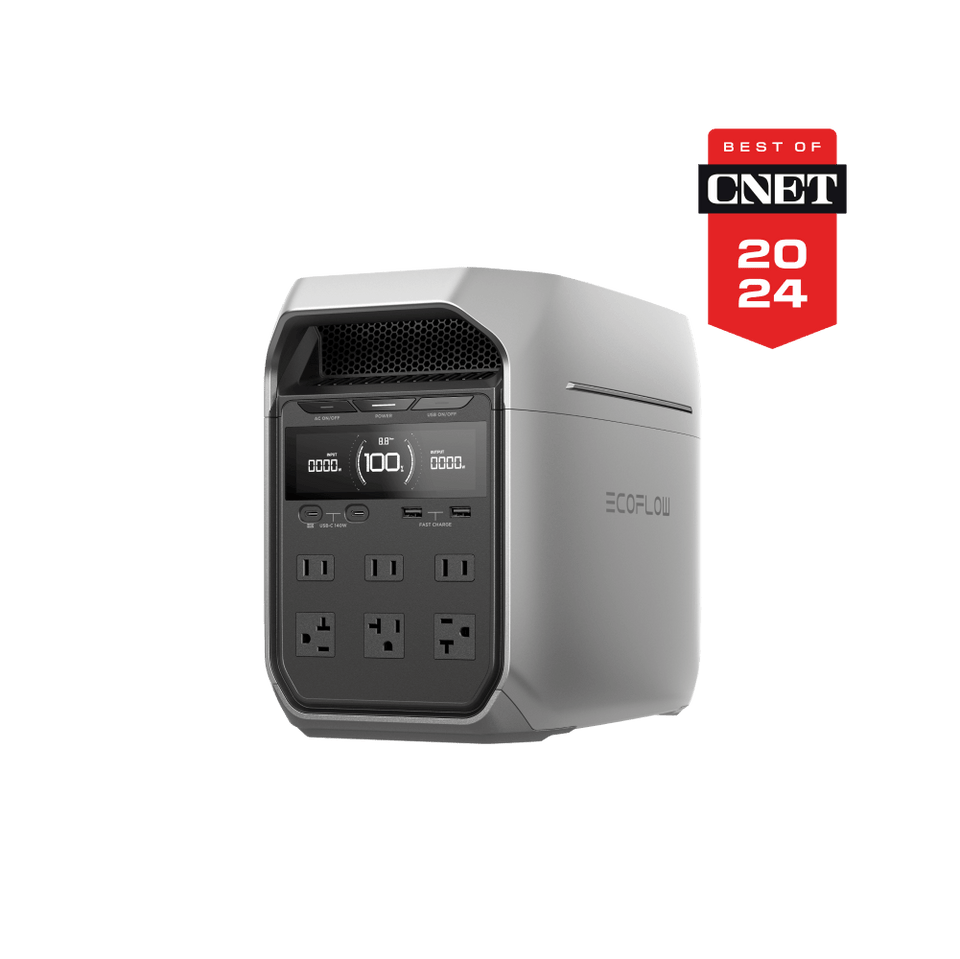
EcoFlow DELTA 3 Plus
Packs 1,000W dual-MPPT solar charging, sub-1-hour AC replenishment, and a sub-10 ms HID-capable UPS into a 27.6 lb chassis, making it more versatile than non-Plus 1kWh units.
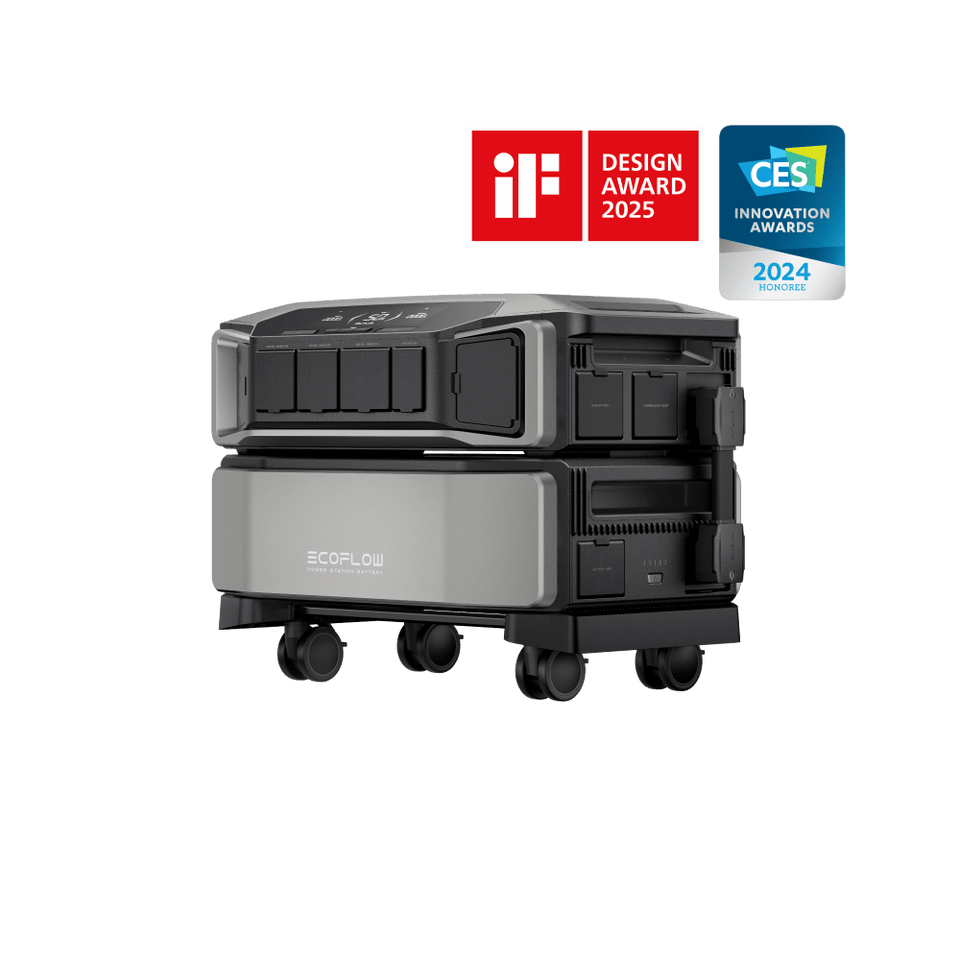
EcoFlow DELTA Pro Ultra
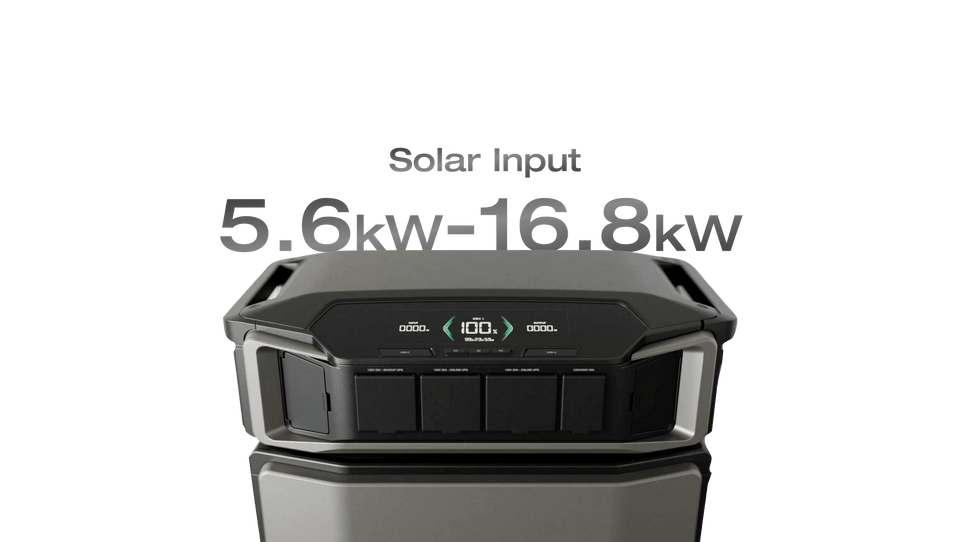
Built specifically for homeowners seeking high-voltage solar input (up to 5,600W) and modular 6kWh-per-stack scaling, though total kit cost and modular footprint exceed casual portable needs.
EcoFlow Official Hardware & Application Gallery

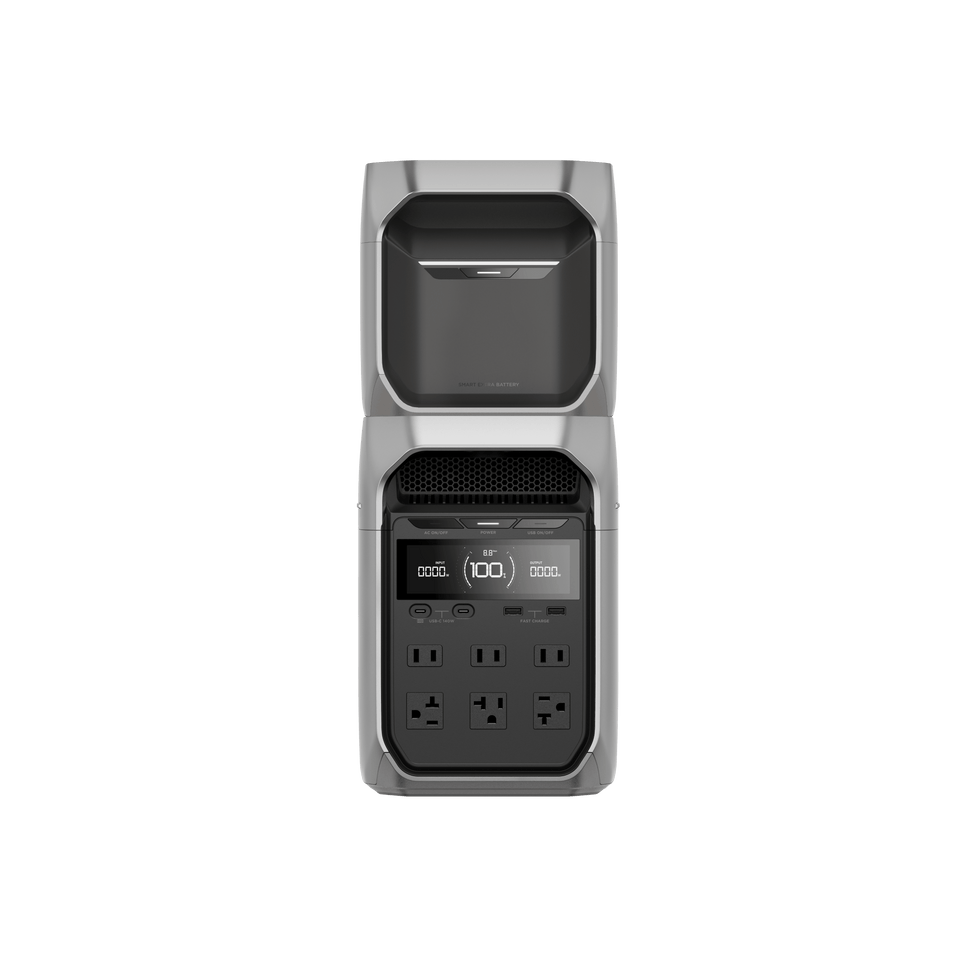
Brand Overview & US Market Position
EcoFlow is one of the highest-volume portable power station and residential backup manufacturers in the United States, coordinating North American operations out of the Seattle/Bellevue, Washington region. Rather than focusing strictly on recreational camping packs, EcoFlow spans ultra-compact sub-1kWh stations all the way up to split-phase 120V/240V residential battery stacks paired with automated transfer panels.
For US shoppers, EcoFlow’s core appeal lies in charging speed, dual-channel MPPT solar flexibility, and granular app telemetry. At the same time, rapid product iteration means buyers must carefully distinguish between older NMC-era units, second-generation LiFePO4 releases, and current third-generation or modular Ultra hardware.
Product Families & Lineup Architecture
EcoFlow organizes its US portable and home backup portfolio into distinct tiers:
- RIVER Series (Compact Outdoor & Day-Trip Tier): Sub-1kWh portable stations built for laptops, LED lighting, cameras, and 12V coolers where low weight and fast wall top-offs matter more than running heavy kitchen appliances.
- DELTA Series (Midsize 1kWh–4kWh Core): Units such as the EcoFlow DELTA 3 Plus target the 1,024Wh–2,048Wh sweet spot with 1,800W+ continuous AC output, rapid X-Stream charging, and expandability via EcoFlow Extra Battery packs.
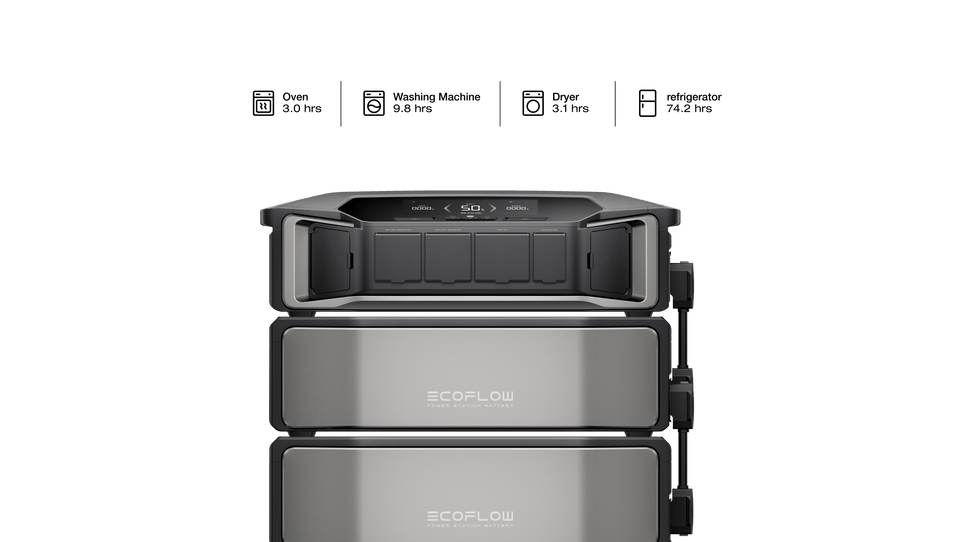
- DELTA Pro & DELTA Pro Ultra (High-Capacity & Split-Phase Home Tier): Designed for extended outages, off-grid workshops, and integrated residential backup. The flagship EcoFlow DELTA Pro Ultra separates the 7,200W 120V/240V inverter head (~70 lbs) from stackable 6,144Wh battery modules (~111.8 lbs each).
- Smart Home Panel & Alternator Ecosystem: Accessories including the EcoFlow Smart Home Panel 2 and 800W Alternator Charger bridge portable stations with residential sub-panels or vehicle alternators.
Battery Chemistry & Expansion Ecosystem
Current-generation EcoFlow stations use Lithium Iron Phosphate (LiFePO4 / LFP) cells rated for 3,500 to 4,000+ cycles to 80% original capacity under standard 25°C test conditions. Compared with legacy nickel-manganese-cobalt (NMC) packs, LFP cells tolerate thousands more daily or weekly cycles and exhibit higher thermal stability—a topic covered in depth in our LiFePO4 vs. NMC Batteries guide.
EcoFlow’s expansion architecture varies by series:
- On the midsize DELTA 3 Plus, capacity scales from 1,024Wh up to 5,120Wh using compatible DELTA 3, DELTA 2 Max, or DELTA Pro 3 Extra Battery packs.
- On the modular DELTA Pro Ultra, a single inverter stack accommodates up to five 6,144Wh battery modules (30,720Wh), and up to three parallel inverters with a Smart Home Panel 2 reach 90kWh total storage. Importantly, the DELTA Pro Ultra includes automatic battery self-heating for sub-freezing charging down to -4°F (-20°C), which is uncommon among portable units.
Hardware Differentiators & Engineering Trade-Offs
EcoFlow differentiates itself primarily through power electronics:
- Dual-MPPT Solar Windows: Rather than forcing every user into one low-voltage connector, models like the DELTA 3 Plus provide dual 500W (11–60V) MPPT ports, while the DELTA Pro Ultra offers a 4,000W High-PV input (80–450V Voc) alongside a 1,600W Low-PV input (30–150V Voc). High-PV support enables direct integration with rigid residential solar strings without violating voltage limits, though users must always confirm array
Vocin cold weather stays within manual boundaries. - Low-Latency UPS & HID Signaling: The DELTA 3 Plus pairs
<10 msUPS switchover with USB HID communication so compatible NAS servers and desktop workstations can trigger graceful shutdowns during prolonged blackouts. The DELTA Pro Ultra adds0 msOnline UPS mode on designated outputs alongside<20 msautomatic transfer switching via the Smart Home Panel 2. - X-Boost Voltage Step-Down Caveat: EcoFlow markets X-Boost to power resistive heating loads above nominal inverter wattage (for instance, pushing a 1,800W inverter higher on simple heating elements). Because X-Boost achieves this by reducing output voltage, it should never be relied upon for induction motors, variable-speed compressors, or sensitive electronics.
US Warranty, Documentation & Customer Support
In the United States, EcoFlow provides a tiered limited warranty ranging from 24 months on entry accessories up to 5 years (60 months) on flagship LFP stations including the DELTA 3 Plus and DELTA Pro Ultra when purchased from EcoFlow or an authorized US retailer. EcoFlow publishes detailed North American user manuals specifying exact PV Voc ceilings, surge behavior, and cold-weather charging cutoffs.
Buyer feedback consistently praises firmware updates, Storm Guard weather alerts, and quiet acoustic tuning (~30 dB under moderate loads on current models), while noting that customer service ticket turnaround can slow during major regional storm events and that Smart Home Panel 2 integration requires hiring a licensed electrician under NFPA 70 / NEC transfer guidelines.
Brand Pros & Cons Summary
Strengths:
- Fast X-Stream AC recharging (under 1 hour on 1kWh models like DELTA 3 Plus) and 5,600W max solar capability on DELTA Pro Ultra
- Split-module inverter/battery stacking makes 6kWh+ hardware easier to wheel or position than monolithic 130+ lb cabinets
- Clear published US manuals documenting dual-PV ranges and UPS modes
Trade-Offs:
- Total home backup cost climbs steeply once transfer hardware and licensed electrician installation are factored in
- Overlapping generations (DELTA 2 vs. DELTA 3; Pro vs. Pro 3 vs. Pro Ultra) complicate accessory and battery compatibility checks
- Independent standardized third-party usable-AC-Wh lab measurements are still missing in our source registry for several newer EcoFlow SKUs
Buyer Guidance: Who Should Choose EcoFlow
Choose EcoFlow if your priority is solar input speed, fast grid top-offs between outage waves, or a scalable 120V/240V modular home architecture. Compare EcoFlow directly against top rivals in our EcoFlow vs. Jackery, EcoFlow vs. BLUETTI, and EcoFlow vs. Anker SOLIX brand breakdowns, or filter exact specifications in our Power Station Finder.
Sources & Technical References
- View Source →[1]Manufacturer SpecificationEcoFlow US OfficialVerified 2026-11-24EcoFlow DELTA Pro Ultra Product Page & Specifications
Official North American 120V/240V split-phase inverter and 6,144Wh LiFePO4 battery module specs.
- View Source →[2]Manufacturer User ManualEcoFlow Support DocumentationVerified 2026-11-24EcoFlow DELTA Pro Ultra User Manual & Technical Datasheet
Documents High-PV (80-450V, 15A, 4,000W) and Low-PV (30-150V, 15A, 1,600W) limits, operating temps, and UPS switching behavior.
- View Source →[3]Manufacturer SpecificationEcoFlow US OfficialVerified 2026-11-24EcoFlow DELTA 3 Plus Official Specifications
1,024Wh LFP, 1,800W continuous AC, 1,000W dual 500W MPPT solar, <10ms UPS, 1,500W X-Stream AC charging.
- View Source →[4]Technical & Safety StandardNational Fire Protection Association (NFPA)Verified 2026-11-24NFPA 70 National Electrical Code (NEC) Transfer Equipment & Standby Power Overview
Governs transfer switches, panel interlocks, and prohibition of unsafe backfeeding on US residential electrical panels.